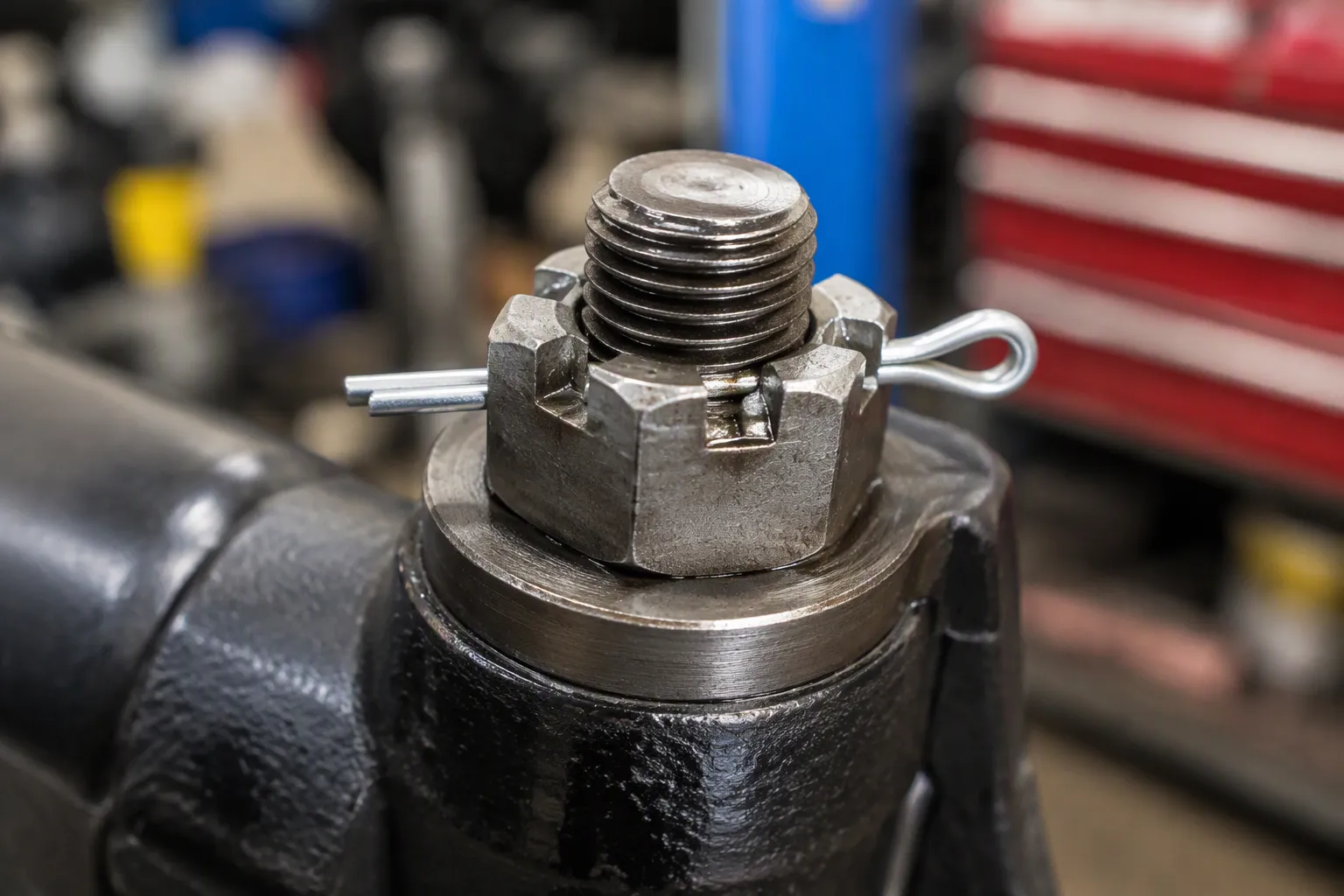
Castle nuts are used in automotive and machinery applications primarily to lock fasteners securely and prevent loosening under vibration. These slotted nuts provide a mechanical locking method that remains reliable in high-stress, moving environments. Their design allows for easy inspection and reuse, which is critical for maintenance and safety. Engineers choose castle nuts when fastener failure could lead to dangerous or costly outcomes. A custom fasteners manufacturer often supplies these parts to the automotive and aerospace industries. The castle nut remains a trusted choice for securing nuts and bolts in demanding conditions. This explains why castle nuts are used so widely. Slotted nuts offer a dependable solution for critical joints. Custom fasteners with this design meet strict safety standards. The automotive sector relies on them for many assemblies. Understanding why castle nuts are used helps technicians make better decisions.
How Castle Nuts Work
The Castle Nut Design
Slots Cut Into the Nut Top
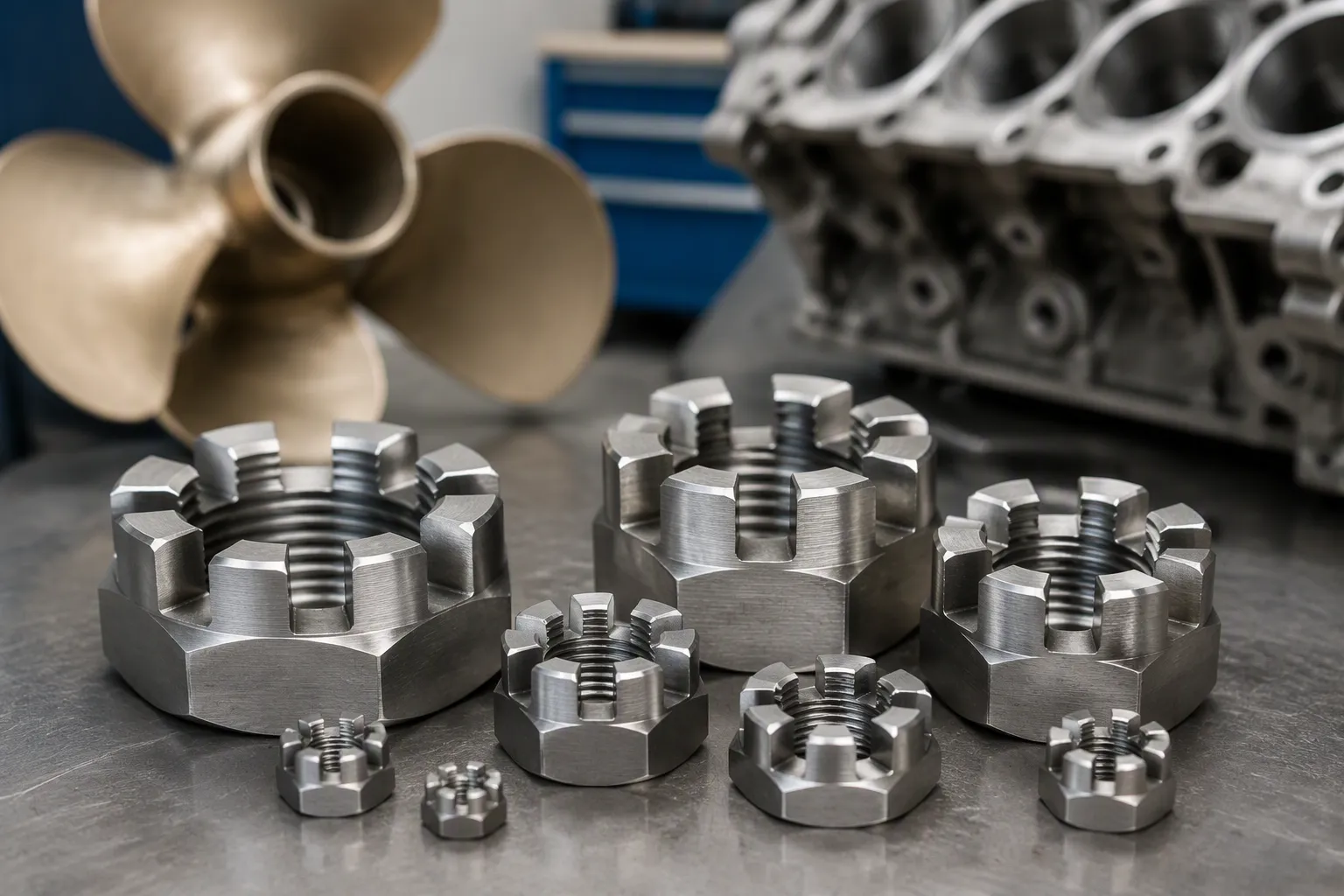
A castle nut features a hexagonal base with distinct slots cut into its top surface. These slots resemble the battlements of a castle tower, which gives the fastener its name. Manufacturers typically cut six slots at equal intervals around the nut’s upper edge. Each slot extends downward to a specific depth that varies by nut size. The slots create openings that allow a pin to pass through the nut body.
Matching Hole in the Bolt Shaft
The bolt or stud that pairs with a castle nut has a small hole drilled through its shaft. This hole in the bolt aligns with the slots when the nut reaches the proper torque position. The hole sits perpendicular to the bolt axis and passes completely through the shaft. Standard dimensions ensure compatibility between the nut slots and the bolt hole. A castle nut works only when the bolt has this drilled hole.
| Nominal Size | Hex Width (in) | Slot Width (in) | Material | Hardness |
|---|---|---|---|---|
| 3/4 | 1-1/8 | 13/16 | Low carbon steel; Grade-5 steel | Rockwell C32 max |
| 7/8 | 1-5/16 | 29/32 | Low carbon steel; Grade-5 steel | Rockwell C32 max |
| 1 | 1-1/2 | 1 | Low carbon steel; Grade-5 steel | Rockwell C32 max |
| 1-1/4 | 1-7/8 | 1-1/4 | Low carbon steel; Grade-5 steel | Rockwell C32 max |
The Cotter Pin Mechanism
Inserting the Pin Through the Slots
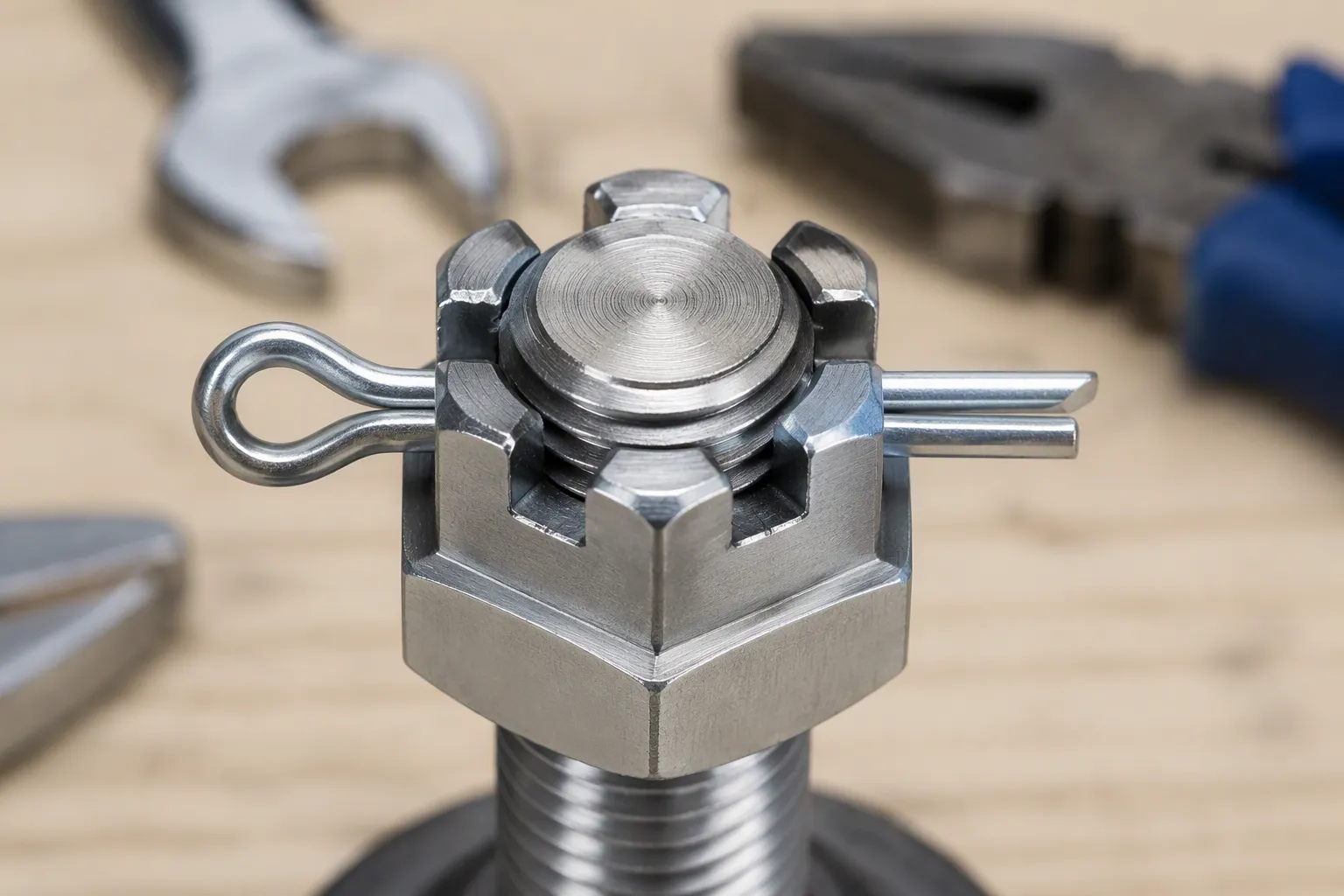
A technician tightens the castle nut until a slot aligns with the hole in the bolt. The cotter pin then slides through the slot and passes completely through the bolt shaft. The pin exits through the opposite slot on the other side. This creates a physical connection between the nut and the bolt.
Bending the Pin to Lock the Nut
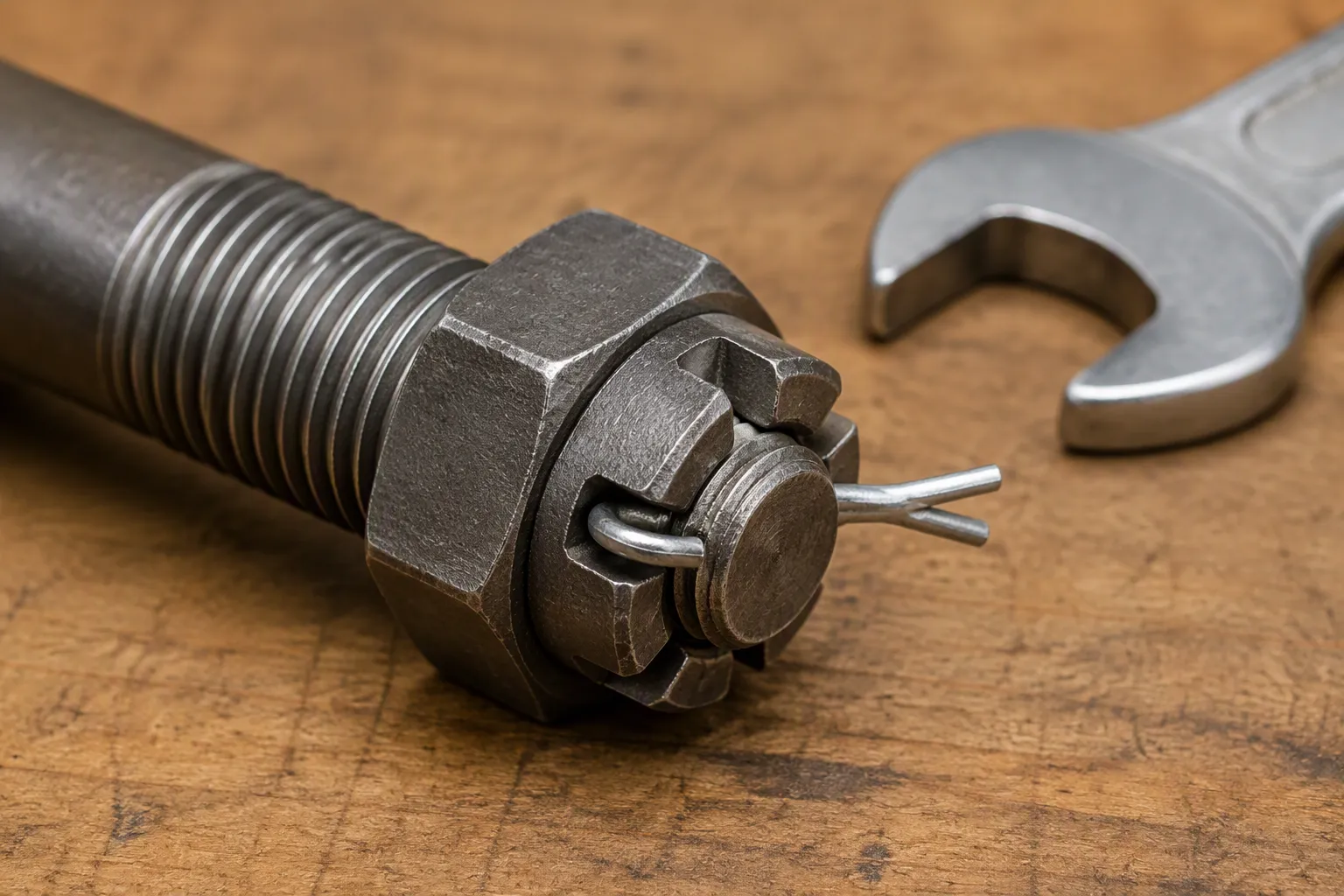
After insertion, the technician bends the cotter pin legs to lock the nut in place. One leg bends over the top of the nut, and the other wraps around a flat side. This bending action prevents the pin from sliding back out. The bent pin creates secure locking of the nut.
The cotter pin generates an outward force, creating a wedge effect to prevent a nut or bolt from loosening. On a castle nut, inserting the cotter pin is the final critical step ensuring the assembly remains safely attached. Correct installation follows specific standards defining pin size, bending angles, and locking methods (e.g., double-wrap in aircraft) to guarantee the pin’s full locking potential under extreme vibration.
Why This Mechanism Prevents Loosening
Mechanical Interference Against Rotation
The cotter pin creates a positive mechanical stop that prevents loosening. Any rotational force on the nut meets direct physical resistance from the pin. The pin acts in double shear through the bolt, which doubles its effective resistance. This mechanical interference cannot fail unless the pin’s shear strength is exceeded.
Resistance to Vibration and Torque Changes
Castle nuts and castellated nuts resist vibration better than many other locking methods. The table below compares common locking approaches.
| Locking Method | Locking Principle | Temperature Limit | Vibration Performance |
|---|---|---|---|
| Castle nut + cotter pin | Positive mechanical interference | Base metal limit | Absolute resistance |
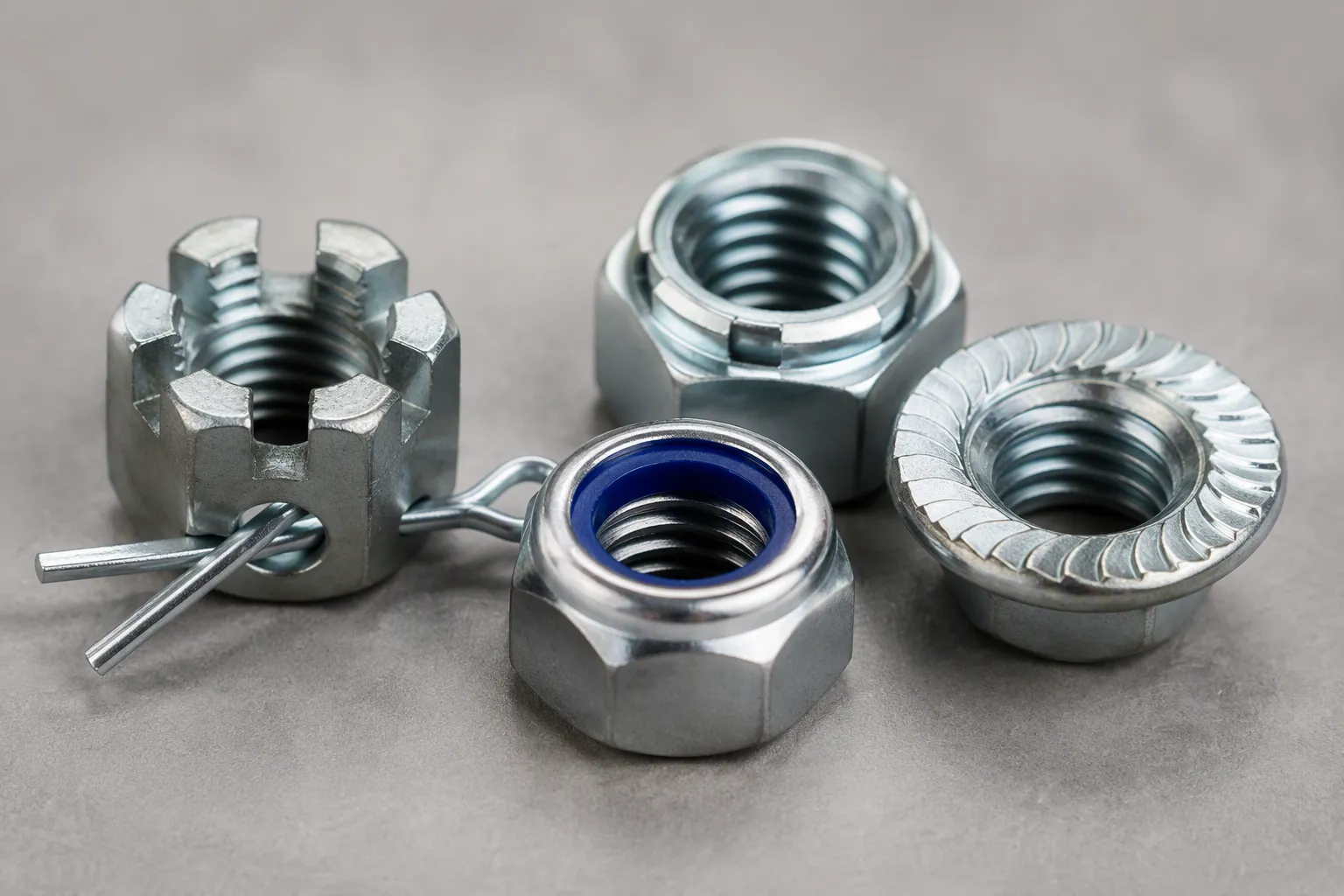
| Nylon-insert locknut | Friction from nylon insert | ~120°C (250°F) | Degrades with heat |
| Split lock washer | Friction/spring tension | N/A | Largely ineffective |
| Liquid threadlocker | Adhesive bonding | Degrades under heat | Can degrade |
Slotted nuts and slotted nut designs maintain their locking ability across wide temperature ranges. The all-metal construction allows these fasteners to perform where other methods fail. This reliability explains why castle nuts remain essential in demanding applications.
Key Benefits of Castle Nuts
Vibration Resistance
Staying Tight on Moving Parts
Vibration represents the most persistent threat to threaded fasteners. Constant oscillation causes standard nuts to rotate backward over time. Castle nuts solve this problem through positive mechanical locking. The cotter pin creates a physical barrier that stops nut rotation completely. This design keeps assemblies tight on wheel hubs, suspension components, and steering mechanisms. Automotive applications rely on this feature for critical safety systems. The cotter pin locking mechanism prevents loosening caused by vibrations and dynamic loads. This provides a critical safety feature for components where reliability is essential.
Performance in High-Shock Environments
High-shock environments demand fasteners that resist sudden impact forces. Castle nuts excel in these conditions because the cotter pin absorbs shock energy. The pin bends slightly under extreme loads without failing. This flexibility prevents the nut from backing off during impact events. Heavy machinery across multiple industries uses castle nuts to keep critical components securely fastened. These fasteners perform even under forces that would loosen standard nuts. This reduces the risk of equipment failure and improves safety. Racing vehicles, construction equipment, and aerospace assemblies all benefit from this shock-resistant design.
Safety and Reliability
Visual Inspection of Locking
Safety and reliability depend on proper fastener installation. Castle nuts offer a unique advantage in this area. A technician can verify the locking mechanism with a simple visual check. The cotter pin remains visible after installation. Inspectors see immediately whether the pin sits properly in the slots. This transparency makes castle nuts ideal for pre-flight checks and pre-operation inspections. No special tools or testing equipment are needed. The locking status is obvious at a glance. This inspection-friendly design saves time during maintenance routines.
Preventing Catastrophic Failures
Fastener failure can cause accidents, injuries, or expensive downtime. Castle nuts prevent these outcomes through reliable locking. The cotter pin creates a fail-safe mechanism that cannot loosen without visible damage. Even if the nut loses torque, the pin holds it in position. This secondary retention system provides an extra layer of protection. Critical joints in brake systems, steering linkages, and axle assemblies depend on this reliability. The consequences of fastener loosening in these applications range from inconvenient to deadly. Castle nuts eliminate this risk through simple mechanical interference.
Reusability and Maintenance
Replacing Only the Cotter Pin
Castle nuts offer significant cost advantages in maintenance programs. The nut itself remains reusable after removal. Technicians simply discard the old cotter pin and install a new one. This practice reduces replacement costs compared to other locking methods. The table below compares reusability across common locking approaches.
| Locking Method | Reusability | Cost Level | Maintenance Cost Implication |
|---|---|---|---|
| Castle / Slotted Hex Nuts | Reusable if undamaged and uncorroded; must use a new cotter pin | Medium Cost | Lower replacement cost due to reusability, but requires semi-frequent inspection and new cotter pins, adding recurring maintenance expense |
| K-Lock Nuts | Sometimes reusable; limited if washer teeth flatten | Low Cost | Low upfront cost, but limited reusability can increase replacement frequency and long-term maintenance costs |
| Nylon Insert Lock Nuts | Sometimes reusable; debated, nylon insert may wear down | Low Cost | Low upfront cost, but difficult removal and uncertain reusability can raise maintenance costs for critical applications |
| Top Lock Nuts | Not reusable; locking mechanism permanently deforms | Low Cost | Low purchase cost, but non-reusability requires full replacement after removal, increasing maintenance costs |
| Wedge Lock Hex Nuts | Reusable | Highest Cost | High upfront cost, but reusability may offset long-term maintenance costs |
| Jam Nuts | Reusable if undamaged and uncorroded | Medium Cost | Reusable, but requires two nuts and more assembly time, increasing manufacturing and maintenance-related costs |
The slotted nut design allows repeated service without replacing the entire fastener. This feature makes castle nuts economical for applications requiring frequent maintenance access.
Ease of Disassembly and Reassembly
Field repairs and overhauls require fasteners that come apart quickly. Castle nuts meet this need through straightforward removal. A technician straightens the cotter pin legs and pulls the pin out. The nut then unscrews with standard tools. Reassembly follows the same simple process in reverse. This ease of service reduces labor time and training requirements. Maintenance crews appreciate the simplicity of the design. The slotted nuts work well in cost-sensitive maintenance programs. Organizations save money through reduced downtime and simpler procedures.
Titanium castle nuts add further benefits for demanding applications. These fasteners resist rust and corrosion in environments exposed to moisture and chemicals. This extends component lifespan and reduces replacement costs. Titanium is significantly lighter than steel, which contributes to weight reduction in assemblies. This improves fuel efficiency in vehicles and aircraft. The material offers exceptional strength, often exceeding steel while being lighter. This high strength-to-weight ratio allows smaller, lighter fasteners without compromising structural integrity. High-performance vehicles use titanium castle nuts in suspension systems, engine components, and other critical areas. Industrial equipment benefits from titanium’s integrity under high stress and temperature. Reduced weight improves machinery efficiency, while reliability enhances overall performance and reduces operational costs.
Cost and Availability
Simple Manufacturing and Low Cost
Manufacturers produce castle nuts through straightforward machining processes. A worker starts with a standard hex nut blank and cuts slots into the top surface. This operation requires basic milling or broaching equipment found in most fastener factories. The simple design avoids complex tooling or specialized machinery. This keeps production costs low compared to more intricate locking fasteners.
The raw material options further reduce expenses. Producers offer castle nuts in low carbon steel, Grade-5 steel, stainless steel, and titanium. Carbon steel versions cost the least and suit most general applications. Stainless steel provides corrosion resistance at a moderate price increase. Buyers select the material that matches their environmental and strength requirements.
Market prices reflect this manufacturing efficiency. The table below shows typical price ranges for castle nuts in various sizes and materials.
| Product Description | Price Range | Minimum Order |
|---|---|---|
| DIN935 Stainless Steel Castle Nuts Hex Slotted Castle Nuts with Metric Coarse and Fine Pitch Thread | US $0.1-0.2 / Piece | 1000 Pieces |
| Stainless steel hexagon thin slotted and castle nuts | US $0.001-0.21 / Piece | 3000 Pieces |
| High quality stainless steel hex k nut castle nut with teeth | US $0.01-0.5 / Piece | 2000 Pieces |
| Stainless Steel Castle nuts | US $0.01-10 / Piece | 1000 Pieces |
| UNC and UNF thread slotted hex slotted nuts and castle nuts ASME B18.2.2 | US $1000-1500 / Ton | 150 Tons |
| Stainless steel hex slotted nut castle nut | US $0.1-0.5 / Piece | 1000 Pieces |
| Yellow zinc plated Hexagon slotted and castle nuts din937 din979 | US $0.001-0.5 / Piece | 1000 Pieces |
| M2.5 M3 M4 M5 M6 M7 M24 M26 A2 A4 A4-70 A4-80 SS304 SS316 Stainless Steel Hex/Hexagon Slotted Nut Castle Nut DIN935 | US $0.012-0.05 / Piece | 1000 Pieces |
| DIN937 carbon steel hex castle slotted nut | US $0.01-2 / Piece | 1000 Pieces |
| Carbon steel hexagon slotted castle nut | US $0.01-2 / Piece | 1000 Pieces |
| Zinc plated hex slotted castle nut DIN979 | US $0.01-0.5 / Piece | 1000 Pieces |
| Hex slotted and castle nut | US $0.1-1 / Piece | 5000 Pieces |
| Yellow zinc plated hex thin slotted & castle nut | US $0.02-3 / Piece | 5000 Pieces |
These prices demonstrate the affordability of castle nuts across a wide range of specifications. Bulk orders reduce unit costs even further. A large manufacturer ordering by the ton pays significantly less per piece than a small shop buying individual units.
Industry sources note that slotted nuts are generally more affordable than castle nuts because their manufacturing process is simpler. The widespread use of slotted nuts makes them readily available in various sizes and materials. Castle nuts, by contrast, are typically slightly more expensive due to their specialized design and locking mechanism. They remain widely available, especially in industrial settings. Both types appear commonly in hardware stores and online suppliers.
Wide Range of Standard Sizes
Castle nuts follow established dimensional standards that ensure interchangeability. The table earlier in this article lists nominal sizes from 3/4 inch to 1-1/4 inch with corresponding hex widths and slot dimensions. These standard sizes cover the majority of automotive and machinery applications.
Metric sizes follow DIN 935 and DIN 937 standards. These specifications define thread pitch, hex dimensions, and slot geometry for M2.5 through M24 and beyond. A buyer can order a slotted nut in nearly any standard metric or imperial size. This availability eliminates the need for custom manufacturing in most cases.
Material and finish options expand the selection further. Suppliers stock castle nuts in plain carbon steel, zinc-plated steel, yellow zinc-plated steel, and multiple stainless steel grades including SS304 and SS316. Each option suits different environments. Zinc plating protects against mild corrosion. Stainless steel handles harsh chemical exposure and marine conditions. Titanium serves aerospace and high-performance applications where weight matters.
Distribution networks make these fasteners accessible worldwide. Industrial suppliers, automotive parts stores, and online marketplaces all carry castle nuts in common sizes. A maintenance technician can source replacements quickly without waiting for custom orders. This ready availability reduces downtime and keeps maintenance schedules on track.
The combination of low cost and wide availability makes castle nuts a practical choice for both original equipment manufacturers and aftermarket repair operations. Designers specify standard sizes knowing that replacements will remain available throughout a product’s service life. This long-term supply security adds value beyond the initial purchase price.
Castle Nuts Used in Automotive Applications
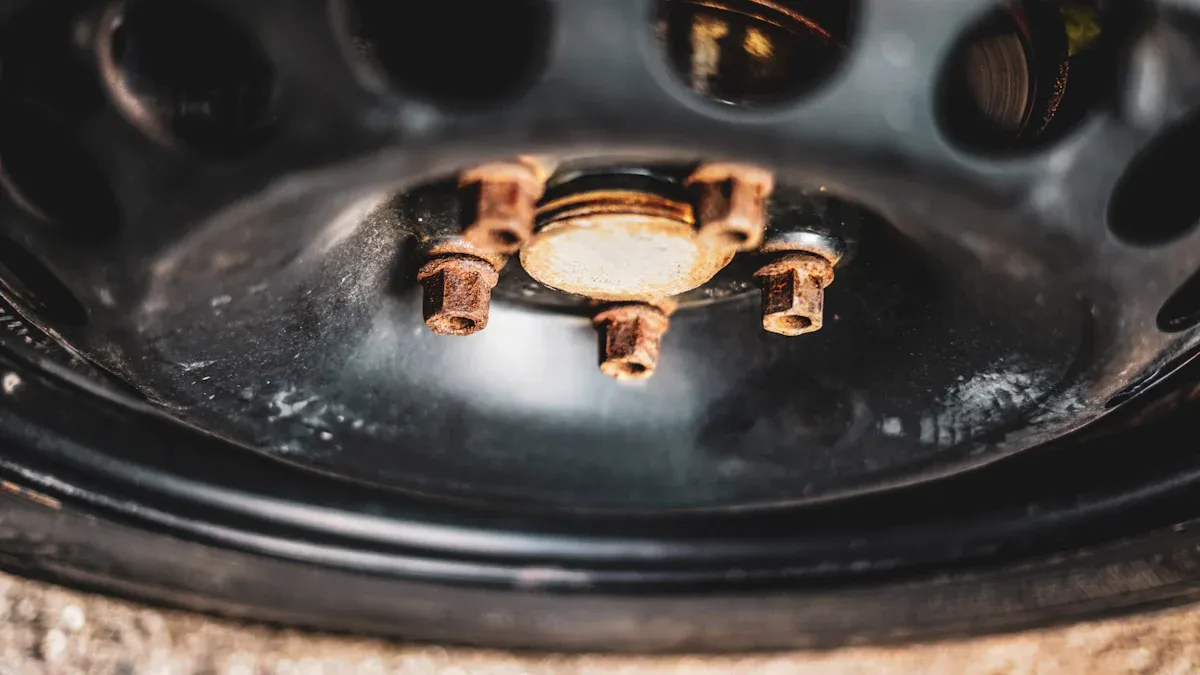
Automotive engineers face a constant challenge: keeping critical fasteners tight on vehicles that vibrate, shock, and move continuously. Castle nuts used in automotive applications solve this problem through positive mechanical locking. These fasteners appear throughout vehicles in locations where loosening could cause accidents or expensive repairs. A castle nut paired with a cotter pin creates a locking system that resists the toughest conditions on the road.
Wheel Hub and Axle Assemblies
Securing Wheel Bearings
Wheel bearings sit between the spindle and the hub assembly on non-powered wheels. These bearings require proper pre-load to function correctly. A castle nut secures the bearings and maintains the correct tension on the spindle. The locking mechanism prevents the nut from backing off during operation.
In vehicles with non-powered wheels, the hub and wheel rotate on a spindle via tapered or double row ball bearings. These bearings sit between the spindle and the hub/wheel assembly and are then secured using a castle nut tightened to a specified torque. Proper torque on the spindle nut is required to apply sufficient pre-load to the tapered bearings; without it, the bearings may generate excessive friction or seat improperly on the spindle, causing poorly distributed forces. The paper examines a spindle and wheel assembly failure caused by fatigue from improper pre-load of the spindle nut.
Technicians debate the exact torque values for these applications. A forum member references the Corvair chassis shop manual and supplement, which both specify 12 foot-pounds for the castle nut on front wheel hub assemblies, but notes uncertainty whether this is a typo for inch-pounds. Another member states that the shop manual contains errors and suspects the 12 ft-lbs specification may be incorrect, noting that in practice the nut is snugged down and then backed off per the manual’s adjustment procedure. A long-time mechanic with 60 years of experience questions whether a torque specification even exists for front spindle nuts on rear-wheel-drive vehicles, stating he has never used a torque wrench for this task and instead adjusts by feel—snugging the nut while turning the hub until drag is felt, then backing off until the hub turns easily. Another member advises tightening the castle nut and adjusting 2–3 times to ensure proper seating before installing the cotter pin, without citing a specific torque value. The general consensus in the thread is that no definitive typical torque range is established; instead, the procedure involves tightening to seat bearings, then backing off to the nearest cotter pin hole, with the manual’s 12 ft-lbs figure being debated as possibly erroneous.
| Method | Typical Hardware | Best Application | Verification Required | Reuse Policy |
|---|---|---|---|---|
| Torque-only | Locknut, castle nut with split pin, or specified washer | Applications where the OEM publishes one final value | Final torque, smooth rotation, and retention check | Follow the OEM rule. Replace damaged or one-time-use hardware |
Withstanding Road Vibration
Road vibration attacks wheel hub fasteners constantly. Every bump, turn, and brake application sends forces through the wheel assembly. Standard nuts gradually rotate loose under this treatment. Castle nuts resist this motion through the cotter pin. The pin creates a physical barrier that stops rotation completely. This locking action protects wheel bearings from damage caused by loose nuts. Vehicles traveling on rough roads or carrying heavy loads depend on this reliability.
Steering and Suspension Systems
Tie Rod Ends and Ball Joints
Steering and suspension components connect through ball joints and tie rod ends. These joints allow movement while maintaining alignment. Castle nuts secure these critical connections. The installation process follows specific steps to ensure proper locking.
- Insert the stud of the new ball joint through the tapered hole of the knuckle and install either a self-locking nut or the slotted nut, also known as a castle nut, as supplied.
- Thread the nut on by hand until it stops, making sure it threads evenly and smoothly.
- Using a hand torque wrench, torque to the specification listed in the repair manual or, if applicable, to the specification listed on the MOOG instruction sheet supplied with the part.
- For applications using a castle nut, if the castle nut does not align with the hole in the stud when the specified torque is reached, tighten the nut to the next slot, then install the supplied cotter pin.
- Never loosen the nut to align it with the stud.
Castle nuts are widely used in applications where vibration, movement, or rotating parts could cause standard nuts to loosen over time. Compared with ordinary hex nuts, a castle nut features slots on the top section that allow a cotter pin to pass through the bolt, creating a safer and more secure fastening method. Because of this design, Castle Nuts are commonly found in automotive systems, machinery equipment, and other industrial assemblies that require reliable locking performance. One of the most common castle nut applications is in the automotive industry. Vehicles experience constant vibration, shock, and movement during operation, so many critical parts require extra locking protection. Castle nuts are often used in wheel hub assemblies, suspension systems, steering linkages, ball joints and axle connections. In these applications, the castle nut works together with a cotter pin to help prevent accidental loosening. This is especially important for components related to driving safety and vehicle stability.
Maintaining Alignment Under Load
Suspension components endure dynamic loads during every drive. Cornering, braking, and acceleration all stress these joints. The castle nut maintains its grip through mechanical interference. The cotter pin prevents any rotation that would change alignment. This stability keeps steering response predictable and tire wear even. Slotted nuts provide the reliability that suspension components demand. Drivers feel the difference through improved handling and safety.
Drivetrain and Transmission Components
Output Shafts and Yokes
Drivetrain components transfer power from the engine to the wheels. Output shafts and yokes connect through fasteners that endure constant rotational forces. Castle nuts secure these connections with reliable locking. The Eaton Fuller Castle Nut X2-500 is identified as a genuine manual transmission component used in transmission gear service. It is designed to accept a cotter pin or safety wire to prevent loosening under load, which supports its application in heavy-duty drivetrain service.
| Attribute | Evidence |
|---|---|
| Product | 5/8-18 Spindle Slotted Jam Nut (Castle Nut) |
| Application areas | Spindle axles, wheel hubs, chassis components, racing go-karts, lawnmowers, custom chassis |
| Function | Securely locks nuts in place with cotter pin, R-clip, or safety wire |
| Benefit | Prevents loosening due to vibration or rotational force |
| Common uses | Locking down spindle axles, securing wheel hubs or rotating components, safety retention on steering arms or chassis mounts |
Handling Torque Fluctuations
Transmission components experience rapid torque changes during gear shifts. These fluctuations create forces that work against threaded fasteners. Castle nuts handle these conditions through positive locking. The cotter pin absorbs shock and prevents rotation. This reliability keeps drivetrains functioning properly through thousands of miles. Automotive applications rely on this performance for long-term durability. The slotted nut design provides the security that transmission assemblies require.
- Castle Nut – Toyota Upper Ball Joint OEM M14 Castle Nut (2003-2021) 90171-A0001
Brake and Safety-Critical Systems
Brake Caliper Mounting Points
Brake calipers squeeze the brake pads against the rotor to stop a vehicle. These components mount to the steering knuckle or axle bracket through high-strength bolts. Castle nuts often secure these mounting points on heavy-duty trucks, performance vehicles, and certain passenger cars. The locking mechanism provides an extra layer of safety that friction-based fasteners cannot match.
A brake caliper experiences intense vibration during every stop. The caliper also faces heat cycles that expand and contract metal components. Standard nuts can lose torque under these combined stresses. Castle nuts eliminate this risk through the cotter pin. The pin creates a positive mechanical stop that prevents any rotation. Even if the nut loses preload, the pin holds it in position. This secondary retention system keeps the caliper aligned with the rotor.
Technicians must follow specific procedures when installing castle nuts on brake calipers. They torque the nut to the manufacturer’s specification first. Then they check whether a slot aligns with the hole in the bolt. If no slot aligns, they tighten the nut to the next available slot. They never loosen the nut to achieve alignment. This rule ensures the proper clamping force remains on the caliper. A loose caliper can shift under braking loads and cause uneven pad wear. In extreme cases, a loose caliper can separate from its mount entirely.
The cotter pin material matters for brake applications. Stainless steel pins resist corrosion from road salt and moisture. This corrosion resistance ensures the pin remains intact for the life of the brake job. A corroded pin could fail and release the locking function. Technicians inspect pins during every brake service and replace them as needed.
Ensuring Consistent Braking Performance
Consistent braking depends on every component in the system working together. The caliper must stay perfectly aligned with the rotor. The mounting bolts must maintain their clamping force through thousands of braking cycles. Castle nuts provide this consistency through their reliable locking action.
Slotted nuts offer a key advantage in brake systems: visual inspection. A technician can see immediately whether the cotter pin sits properly in place. This quick check takes seconds during a routine inspection. No torque wrench or special tool is needed to verify the locking status. Fleet maintenance programs value this simplicity because it reduces inspection time and catches problems early.
Brake systems on commercial vehicles endure extreme conditions. Delivery trucks make hundreds of stops per day. Their brakes generate tremendous heat and vibration. Castle nuts on caliper mounts keep these systems safe through years of punishing service. The automotive industry trusts this locking method for safety-critical joints because it cannot fail without visible damage.
A failed cotter pin or a missing pin signals an immediate problem. Inspectors can spot this issue before it causes an accident. This fail-safe characteristic makes castle nuts essential for brake systems. Other locking methods, such as thread-locking compounds, offer no visual indication of failure. A technician cannot see whether the compound has degraded or broken down. Castle nuts provide clear, unambiguous evidence of their locking status.
Brake caliper mounting points represent one of the most safety-critical applications for any fastener. A loose caliper can cause brake drag, uneven stopping, or complete brake failure. Castle nuts prevent these outcomes through simple mechanical interference. The cotter pin holds the nut in position regardless of vibration, heat, or torque changes. This reliability explains why castle nuts remain the preferred choice for brake systems on trucks, race cars, and heavy machinery.
Castle Nuts Used in Machinery and Equipment
Machinery and equipment operate under relentless vibration, heavy loads, and constant motion. Castle nuts used in machinery and equipment provide the reliable locking that these demanding conditions require. Engineers specify these fasteners when joint failure could halt production or endanger workers.
Engine and Powertrain Equipment
Connecting Rods and Main Bearings
Engine internals endure extreme forces during every combustion cycle. Connecting rods and main bearings connect through fasteners that must never loosen. Castle nuts secure these critical joints with positive mechanical locking. The cotter pin prevents rotation even when the engine runs at high RPM for thousands of hours.
Resisting Continuous Vibration
Engines generate constant vibration that attacks threaded fasteners. Standard nuts gradually rotate loose under this treatment. Slotted nuts resist this motion through the cotter pin. The pin creates a physical barrier that stops rotation completely. This locking action keeps engine components properly torqued throughout their service life.
Industrial and Manufacturing Equipment
Conveyors and Rotating Shafts
Conveyor systems move materials continuously through factories and warehouses. Rotating shafts spin at high speeds for hours each day. These components require fasteners that stay tight despite constant motion. Castle nuts provide this reliability through their mechanical locking design.
| Sector | Applications | Reason for Use |
|---|---|---|
| Mechanical Assemblies | Wheels on farm equipment, moving joints in heavy machines, conveyor systems | Repetitive movement and vibration; slots allow cotter pin installation and quick visual checks |
| Industrial Equipment | Rotating shafts, drive mechanisms | Constant rotation and shock loads; cotter pin prevents loosening |
Pumps and Compressors
Pumps and compressors handle fluids and gases under pressure. These machines vibrate intensely during operation. A slotted nut paired with a cotter pin keeps critical connections secure. Maintenance crews can inspect the locking status with a quick visual check.
Agricultural and Construction Machinery
Hitch and Linkage Assemblies
Tractors and construction vehicles pull heavy implements through fields and job sites. Hitch and linkage assemblies connect these loads to the machine. Castle nuts secure these connections against vibration, dirt, and varying environmental conditions. The locking mechanism ensures reliable fastening when equipment operates in harsh environments.
Heavy-Duty Load-Bearing Joints
Construction and mining equipment face extreme loads and harsh operating conditions. Joint integrity determines whether these machines operate safely. Heavy-duty castle nut variants provide reinforced construction for high loads. These fasteners maintain joint integrity under conditions that would destroy standard hardware. Agricultural equipment relies on this same reliability when exposed to vibration and dirt. Locking depends on correct pin-and-slot alignment per specification. Technicians never rely on tightening torque alone.
Aerospace and Marine Equipment
Control Linkages and Actuators
Aerospace engineers demand fasteners that perform flawlessly under extreme conditions. Castle nuts used in the aerospace industry secure flight-control linkages and actuator connections where failure is not an option. These fasteners provide positive mechanical locking that self-locking nuts cannot match in certain configurations. Slotted nuts paired with cotter pins create a reliable locking system for clevis pins and hinge points on control surfaces.
The table below shows key aerospace and marine applications for these fasteners.
| Domain | Specific Equipment / Application | Role of Castle Nut |
|---|---|---|
| Aerospace | Flight-control linkage clevis pins and hinge points | Slotted (DIN 935) nuts paired with cotter pins to provide positive rotational locking where self-locking nuts (MS 21043) are unsuitable |
| Aerospace / Defence | F-16 and F-22 landing gear and control-surface hinges | Castle and slotted nuts with cotter-pin locking for safety-critical joints |
| Marine / Offshore | Subsea connector body retention | Pellet-lock nut variants chosen for corrosion resistance, vibration resistance, and non-prevailing torque to avoid gripping issues at depth |
Aircraft landing gear and control-surface hinges on military fighters rely on this locking method. The cotter pin creates a physical barrier that helps prevent loosening during flight. Vibration from engines, aerodynamic forces, and landing impacts cannot rotate the nut past the pin. Technicians inspect these joints before every flight. A quick visual check confirms the pin sits properly in the slots. This inspection simplicity makes castle nuts ideal for aerospace applications where safety checks must be fast and reliable.
Corrosion-Resistant Locking Needs
Marine environments attack fasteners with saltwater, humidity, and constant motion. Castle nuts used in marine applications resist these conditions through proper material selection and reliable locking. Stainless steel and titanium versions provide the corrosion resistance that saltwater demands. Subsea connector bodies use pellet-lock castle-nut variants for their corrosion resistance and vibration resistance. These fasteners also offer non-prevailing torque, which avoids gripping issues at extreme depths.
DIN 935 slotted nuts appear on aerospace flight-control linkages. Pellet-lock castle-nut variants secure subsea connector bodies. Both applications share a common need: locking that cannot fail under vibration. The cotter pin mechanism works equally well in air and underwater. Machinery and equipment operating in coastal or offshore environments benefit from this same reliability. Maintenance crews value the visual inspection feature because they can verify locking status without special tools. This simplicity reduces downtime and keeps critical systems operational.
Castle Nut Uses vs. Other Locking Methods
Engineers choose among several locking methods for threaded fasteners. Each option offers distinct advantages and limitations. Understanding these differences helps technicians select the right fastener for each application.
Nylon Insert Lock Nuts
Temperature and Reuse Limitations
Nylon insert lock nuts rely on a nylon ring to create friction against the bolt threads. This design works well in moderate conditions. High temperatures degrade the nylon material and reduce locking effectiveness. The table below compares key limitations.
| Nut Type | Temperature Limitations | Reuse Limitations |
|---|---|---|
| Nylon insert lock nut | Operates up to about 248°F (120°C); in extreme cold the nylon insert can become brittle and break; non-metal insert makes it more sensitive to temperature and chemicals. | Should not be reused because the nylon ring is damaged during installation; if reused, it weakens each time as the nylon is eaten away and the ring may pop out; never reuse in safety-critical applications. |
| Castle nut | Not mentioned in the retrieved source. | Not mentioned in the retrieved source. |
Castle nuts contain no plastic components. Their all-metal construction allows reliable performance across wide temperature ranges. Technicians can reuse slotted nuts after inspection and simply replace the cotter pin.
Differences in Vibration Performance
Nylon insert nuts resist vibration through friction alone. This friction degrades over time and with heat exposure. Castle nuts provide positive mechanical interference that cannot degrade. The cotter pin creates a physical barrier against rotation. This difference matters in high-vibration environments where reliability is critical.
Thread-Locking Compounds
Permanent vs. Removable Locking
Thread-locking compounds bond threads through chemical adhesion. Permanent grades require heat and special tools for removal. Removable grades allow disassembly with standard tools. Castle nut uses differ because the cotter pin provides purely mechanical locking. Technicians remove slotted nuts with basic hand tools and no chemical solvents.
Maintenance and Inspection Challenges
Chemical locking methods offer no visual indication of their condition. A technician cannot see whether the compound remains intact. Castle nuts provide clear visual confirmation through the visible cotter pin. Inspectors verify locking status in seconds without special equipment.
Split Beam and Serrated Flange Nuts
When Mechanical Locking Is Preferred
Split beam nuts feature slots that create spring tension against the bolt. Serrated flange nuts use teeth that bite into the mounting surface. Both designs rely on friction or deformation for locking. Mechanical locking with a cotter pin provides absolute resistance that these methods cannot match. Safety-critical joints often require this level of security.
Application-Specific Trade-Offs
Split beam and serrated flange nuts install faster than castle nuts. They require no pin insertion or bending. These fasteners work well in low-vibration applications with moderate loads. Slotted nut designs demand more installation time but deliver superior reliability. Engineers weigh these trade-offs based on joint criticality and maintenance requirements.
When Castle Nuts Are Essential
High-Vibration Environments
Engines, Axles, and Rotating Equipment
Engines, axles, and rotating equipment generate constant vibration that attacks threaded fasteners. Standard nuts rotate loose over time under this treatment. Castle nuts solve this problem through a slotted crown and cotter pin that form a positive mechanical lock. This lock stops the nut from backing off under vibration. Manufacturers design these fasteners specifically for rotating or high-vibration assemblies. Suspensions, steering linkages, agricultural equipment, and heavy machinery all rely on this locking method. The mechanical lock remains visible and serviceable after installation. A technician aligns a crown slot with a drilled hole in the bolt, inserts the cotter pin, and bends it to create a lock that will not loosen under vibration.
Safety-Critical Joints
Safety-critical joints demand fasteners that cannot fail. Castle nuts are the preferred solution for these high-vibration assemblies. Unlike nylon-insert locknuts that depend on polymer friction, castle nuts use a physical pin. This makes them highly reliable in conditions involving heat, oils, or solvents where polymers may fail.
Castle nuts are frequently deployed in safety-critical assemblies where loss of locking integrity may lead to catastrophic mechanical failure. Therefore, inspection extends beyond dimensional conformity to include mechanical reliability, material traceability, process validation, and regulatory compliance.
Applications Requiring Visual Inspection
Pre-Flight and Pre-Operation Checks
Visual inspection confirms locking integrity in seconds. Castle nuts offer excellent inspection friendliness compared to other locking methods. The table below compares common nut types.
| Nut Type | Locking Principle | Reusable | High Temp | Inspection Friendly |
|---|---|---|---|---|
| Nylon Insert | Polymer friction | Limited | No | Medium |
| All-metal Lock Nut | Prevailing torque | Yes | Yes | Low |
| Double Nut | Friction | Yes | Yes | Low |
| Castle Nut | Positive lock | Yes | Yes | Excellent |
Maintenance-Friendly Designs
Slotted nuts help ensure critical components remain securely fastened during routine checks. Technicians favor castle nuts when human safety depends on retention. They also choose them when scheduled maintenance is practiced or when regulatory standards demand mechanical locking.
Reusable and Serviceable Assemblies
Field Repairs and Overhauls
Field repairs require fasteners that come apart quickly. Castle nuts allow technicians to straighten the cotter pin and remove it with basic hand tools. The nut then unscrews without special equipment. Reassembly follows the same simple process. This design reduces labor time during overhauls.
Cost-Sensitive Maintenance Programs
Slotted nuts reduce replacement costs because the nut itself remains reusable. Technicians simply discard the old cotter pin and install a new one. This practice prevents loosening while keeping maintenance budgets low. Organizations save money through reduced downtime and simpler procedures.
Proper Installation and Safety Practices
Correct Torque and Alignment
Aligning the Slot With the Bolt Hole
Proper alignment begins before tightening. A technician verifies the stud fits securely in its receiving hole. Looseness may indicate damage and can lead to stud breakage. After installing the stud, the technician torques the castle nut to the manufacturer’s specification using a torque wrench, not an impact gun. If a washer is provided, it goes under the nut before installation. Omitting the washer can cause the cotter pin hole to sit below the castle nut. The technician then ensures the cotter pin hole aligns with the slots in the nut. If needed, the technician tightens the nut slightly to improve alignment. Never back the nut off to achieve alignment. If the cotter hole sits too high or too low, this may indicate poor stud fit or an incorrect part for the application.
Avoiding Over-Torque and Under-Torque
No universal torque setting exists for castle nuts. The correct specification depends on bolt diameter, material strength, and the specific application. Manufacturers typically provide a torque range, and technicians must follow it carefully.
- Over-tightening can damage threads or break the bolt.
- Under-tightening can cause loosening over time.
- A calibrated torque wrench applies the correct amount of force.
- Technicians should always check the manufacturer’s recommendations for exact torque requirements.
In automotive applications, castle nuts often secure parts that experience vibration. Firm tightening prevents loosening. After reaching the specified torque, the technician secures the castle nut with a cotter pin installed correctly through the bolt hole and bent securely against the nut.
Cotter Pin Selection and Installation
Choosing the Right Pin Material and Size
Cotter pins are identified by AN part numbers, such as AN380 for cadmium plated steel or AN381 for stainless steel, or MS24655, with suffixes for diameter and length. Stainless steel pins resist corrosion. Carbon steel pins suit high-stress applications. Technicians should choose high-quality materials that match the environment and load requirements.
Bending and Securing the Pin Correctly
After aligning the nut slots with the cotter hole, the technician inserts the cotter pin completely. The technician then bends the legs of the pin back to prevent it from slipping out. This provides additional assurance that the nut will not back off in service. Proper tightening prevents excess movement in the joint, which can lead to excessive wear and failure. For rod end connections, rotation must occur in the rod end and not around the bolt. Only proper tightening achieves this.
Inspection and Replacement Guidelines
Checking for Wear and Corrosion
Regular inspection and timely replacement of cotter pins maintain mechanical reliability. Wear, bending, or corrosion can compromise effectiveness. Technicians inspect the cotter pin after removal. If it is damaged or bent, they replace it instead of reusing it. To remove a cotter pin, a technician straightens its bent prongs with pliers and pulls it out. A slight twisting motion may help if it is difficult to remove.
Replacing Pins and Nuts When Needed
Never reuse a cotter pin once it has been installed and removed. Discard any cotter pin that is gouged or bent. Cotter pins are inexpensive, but failure can cause catastrophic damage. Slotted nuts remain reusable if undamaged and uncorroded. Technicians replace slotted nuts when they show wear, corrosion, or thread damage. When using a cotter pin and castle nut at a rotating connection, tighten the nut to the torque listed in standard torque tables unless otherwise specified.
Castle nuts provide a simple, mechanical, and highly reliable way to lock fasteners against vibration. This explains why castle nuts are used across so many demanding assemblies. Their design allows for visual inspection, reuse, and easy maintenance, which proves critical in automotive and machinery settings. These fasteners are essential in safety-critical applications where loosening could cause accidents or expensive downtime. Choosing castle nuts is a practical decision that balances cost, performance, and long-term reliability. Engineers continue to rely on castle nuts because they deliver dependable locking without complex installation or specialized tools.
FAQ
What is a castle nut?
A castle nut is a hexagonal fastener with slots cut into its top surface. These slots resemble castle battlements. A cotter pin passes through the slots and a hole in the bolt shaft. This design creates a mechanical lock that prevents loosening under vibration.
Why do automotive engineers prefer castle nuts over nylon lock nuts?
Castle nuts use all-metal construction. They perform reliably at high temperatures where nylon inserts degrade. The cotter pin provides positive mechanical locking instead of friction. This difference matters in safety-critical applications like brakes and steering systems. Nylon lock nuts also lose effectiveness after reuse.
Can technicians reuse castle nuts?
Yes, castle nuts remain reusable if undamaged and uncorroded. Technicians inspect the nut for wear or thread damage before reinstalling it. They must always replace the cotter pin with a new one. Reusing a bent or gouged pin compromises the locking function.
How does a technician install a castle nut correctly?
The technician torques the nut to the manufacturer’s specification first. Then they check whether a slot aligns with the bolt hole. If no slot aligns, they tighten the nut to the next slot. They never loosen the nut to achieve alignment. Finally, they insert and bend the cotter pin.
What happens if no slot aligns with the bolt hole?
The technician tightens the nut further until the next slot aligns with the hole. This slight additional tightening maintains proper clamping force. Loosening the nut to align a slot reduces preload and creates a loose joint. A loose joint can cause vibration damage or component failure.
Which cotter pin material suits marine or corrosive environments?
Stainless steel cotter pins resist corrosion from saltwater and chemicals. Carbon steel pins suit high-stress applications in dry environments. Technicians select the pin material based on the operating conditions. Stainless steel pins cost more but last longer in harsh environments.
Why do brake systems use castle nuts?
Brake calipers experience intense vibration and heat cycles. Standard nuts can lose torque under these stresses. Castle nuts provide positive mechanical locking through the cotter pin. This secondary retention system prevents caliper loosening. A loose caliper can cause uneven braking or complete brake failure.
How does a technician inspect a castle nut installation?
The technician performs a visual check of the cotter pin. The pin must sit properly in the slots and remain bent against the nut. No special tools are needed for this inspection. This quick check confirms the locking mechanism works correctly.