Rivet nuts serve as essential fastening solutions in industries such as aerospace, automotive, electronics, and metal fabrication. They allow for secure attachment where traditional nuts and bolts cannot reach, especially in thin or blind materials. A custom fasteners manufacturer often recommends rivet nuts for their versatility and efficient installation. The global market for these custom fasteners is projected to grow rapidly, reaching $28.8 billion by 2033. This complete guide explores why rivet nuts outperform standard options and how they address unique assembly challenges.
Understanding Rivet Nuts
Definition and Basic Function
A rivet nut, also known as a rivnut, belongs to the family of fasteners designed to create strong, threaded connections in materials where traditional nuts and bolts cannot work. Engineers often select this solution when dealing with thin sheets, tubes, or assemblies that only allow access from one side. The rivet nut provides a permanent, load-bearing thread in metal, plastic, or composite panels.
The table below summarizes how engineering standards define and specify the basic mechanical functions of rivet nuts:
| Aspect | Description |
|---|---|
| Definition | Rivet nuts are fasteners used to create a threaded connection in materials where traditional fasteners are impractical. |
| Mechanical Function | They provide a threaded hole for attaching bolts or screws, ensuring strong connections in various materials. |
| Interchangeability | Standards ensure that rivet nuts can be sourced from different suppliers without compatibility issues. |
| Grip Ranges | Defined grip ranges and hole sizes are specified to ensure proper installation and function. |
| Strength Specifications | Minimum torque-out and pull-out strength are established to guarantee reliability in applications. |
| Material Standards | Acceptable materials and coatings are outlined to meet strength and corrosion resistance needs. |
| Applications | Used in industries like automotive, aerospace, and electronics, especially where access is limited. |
How Rivet Nuts Work
A rivet nut works by inserting into a pre-drilled hole in the workpiece. The installer uses a special tool to pull the threaded shaft, causing the unthreaded portion to expand and grip the material from behind. This process forms a secure anchor point, even in thin or soft materials. The rivet nut remains fixed in place, allowing repeated assembly and disassembly of bolts or screws without damaging the base material.
Tip: Rivet nuts can be installed from one side of the workpiece, making them ideal for blind applications where the back side is inaccessible.
Manufacturers produce several types of fasteners, but the rivet nut stands out for its ability to create strong threads in challenging environments. The rivnut adapts to a wide range of grip thicknesses and hole sizes, ensuring compatibility with different materials and assembly requirements.
Key Advantages of Rivet Nuts
Rivet nuts offer several advantages over other fastening methods, such as weld nuts and self-tapping screws. These benefits make them a preferred choice in many industries:
- Ideal for thin sheets and tubular shapes.
- Forms a permanent anchor even in limited thickness.
- Supports repeat fastening without damaging the base material.
- Single-sided installation allows for use in tight spaces.
- Provides a strong thread in thin materials, supporting repeated fastening.
- Available in various finishes, enhancing versatility.
- Large flange options help distribute load effectively.
The following table compares the advantages of rivet nuts with weld nuts and self-tapping screws:
| Advantage | Rivet Nuts | Weld Nuts / Self-Tapping Screws |
|---|---|---|
| Installation | Single-sided, easy with tooling | Requires access to both sides |
| Strength | Stronger threads, resistant to spin | Varies, can be weaker |
| Versatility | Wide variety of shapes and sizes | Limited options |
| Cost | Similar to clinch nuts | Varies significantly |
Rivet nuts provide a reliable solution for applications where traditional fasteners fail. Their unique design supports efficient installation, strong mechanical performance, and adaptability to different environments. As a result, engineers and manufacturers frequently choose rivet nuts for automotive, aerospace, electronics, and other demanding sectors.
Types of Rivet Nuts
Open-End Rivet Nuts
Features
Open-end rivet nuts feature an open interior that allows a bolt or screw to pass completely through the fastener. This design supports applications where the installer does not need to seal the back of the workpiece. Open-end rivet nuts offer flexibility for a wide range of grip thicknesses and material types. They provide reliable threads in thin or soft panels and allow for easy inspection of the installed bolt or screw.
Open-end rivet nuts work best in environments where moisture and debris do not pose a significant risk to the assembly.
Typical Applications
- Automotive body panels where drainage is not a concern
- Metal enclosures in electronics that require through-bolting
- Furniture frames that need accessible fastener removal
- General-purpose assemblies in consumer products
Closed-End Rivet Nuts
Features
Closed-end rivet nuts include a sealed back that protects the internal threads from contamination. This feature prevents dirt, moisture, and other fluids from entering the fastener, which helps maintain thread integrity over time. The closed-end design also limits the length of the inserted bolt, providing a consistent stop point for assembly.
Closed-end rivet nuts excel in applications where fluid ingress or environmental exposure could compromise the connection. The sealed back ensures that the rivet nut remains reliable, even in harsh conditions.
Typical Applications
- Marine equipment exposed to water or humidity
- Electrical enclosures that require protection from dust and liquids
- HVAC systems where condensation may occur
- Outdoor lighting fixtures and signage
Knurled Body Rivet Nuts
Features
Knurled body rivet nuts have a textured exterior that grips the sides of the installation hole. The knurled surface increases friction, which prevents the rivet nut from spinning during installation or use. This design works well in soft or painted materials, where traditional smooth-body rivet nuts might slip.
The table below outlines the mechanical strengths and limitations of knurled body rivet nuts:
| Feature | Description |
|---|---|
| Anti-rotation | Knurled surface enhances grip, preventing spinning in soft materials. |
| Torque resistance | Lower than hex-body types, as they do not lock into shaped holes. |
| Surface compatibility | Suitable for soft or painted surfaces without causing damage. |
| Installation ease | Installs easily without the need for special hole shapes. |
| Typical applications | Used in electronics, bicycle frames, and enclosures for solid thread support. |
Typical Applications
- Consumer electronics housings that require strong threads in thin walls
- Bicycle frames where lightweight and secure fasteners are essential
- Sheet metal enclosures in industrial equipment
- Applications where installers need to avoid damaging painted surfaces
Knurled body rivet nuts provide a practical solution for assemblies that demand anti-rotation and easy installation without complex hole preparation.
This overview highlights the main types of rivet nuts and their unique features. By understanding these differences, engineers and technicians can select the right rivnut for each project, ensuring reliable and efficient assembly with the appropriate types of fasteners.
Hexagonal Rivet Nuts
Features
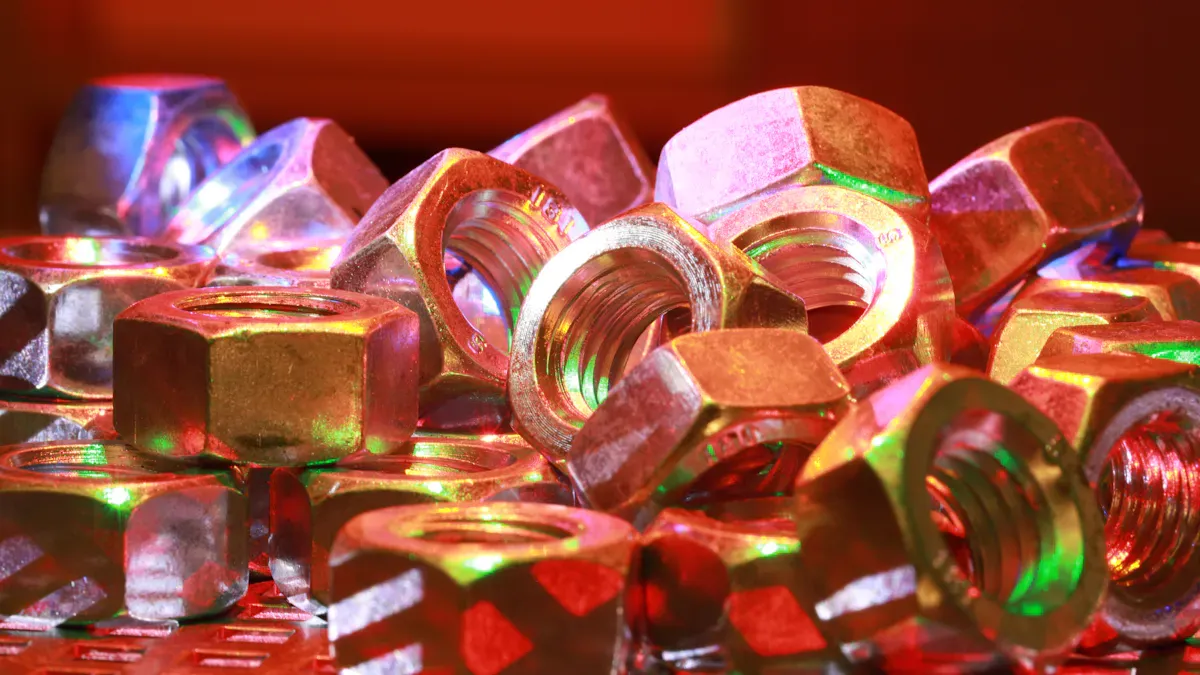
Hexagonal rivet nuts feature an external hex shape that fits into a matching hex or dimpled hole. This design creates a mechanical interlock between the rivet and the workpiece. The hex profile prevents the rivnut from spinning, even when subjected to high torque during installation or service. The increased surface contact area between the nut and the surrounding material allows for greater torque resistance and improved reliability.
The table below highlights how hexagonal rivet nuts resist rotation in demanding applications:
| Feature | Description |
|---|---|
| Anti-Rotation | Hex profile locks into hex or dimpled holes, preventing spin-out |
| Surface Contact | Larger contact area increases torque resistance |
| Mechanical Interlock | External hex shape creates a secure fit within the workpiece |
| Application Suitability | Ideal for high-torque and vibration-prone environments |
Hexagonal rivet nuts provide a robust solution for assemblies that require strong resistance to rotation and high mechanical loads.
Typical Applications
- Automotive chassis and suspension systems
- Industrial machinery subject to vibration
- Heavy-duty enclosures in electrical and construction sectors
- Equipment that requires frequent maintenance or high-torque fastening
Countersunk Rivet Nuts
Features
Countersunk rivet nuts offer a head style that sits flush with the surface of the panel. This feature is essential for applications where a smooth, unobtrusive finish is required. The flush fit prevents any protrusions that could interfere with adjacent components or moving parts. Installers often choose this rivnut type for its ability to create a clean and professional appearance.
Countersunk rivet nuts also enhance safety by eliminating sharp edges and reducing snag points. The design supports both aesthetic and functional requirements in modern assemblies.
Typical Applications
- Consumer electronics with visible panels
- Automotive interiors and dashboards
- Architectural fixtures requiring a seamless look
- Furniture and appliances where a flush finish is critical
Installers select countersunk rivet nuts when they need a fastener that blends into the surface and maintains a sleek profile.
Swaged Rivet Nuts
Features
Swaged rivet nuts use a swaging process to secure the fastener within the workpiece. During installation, the rivet body expands and forms a tight grip on the panel. This method produces a strong, permanent attachment that resists loosening under vibration or repeated use. Swaged rivet nuts accommodate a wide range of material thicknesses and provide consistent performance in both metal and composite panels.
The swaging process also minimizes stress on the base material, reducing the risk of cracks or deformation.
Typical Applications
- Aerospace structures where weight and reliability are critical
- Electronics enclosures that require vibration resistance
- Sheet metal assemblies in transportation equipment
- Applications demanding a permanent, tamper-resistant connection
Swaged rivet nuts deliver secure and lasting performance in environments where reliability cannot be compromised.
Threaded Inserts for Plastic
Features
Threaded rivet nut inserts designed for plastic materials address the unique challenges of fastening into soft or brittle substrates. These inserts expand or knurl into the plastic, creating a secure hold without cracking or distorting the base material. Manufacturers often use heat or ultrasonic installation methods to embed the rivet into the plastic, which ensures a strong bond. Threaded inserts for plastic provide reusable threads, allowing for repeated assembly and disassembly. This feature extends the lifespan of the product and maintains structural integrity.
Key features of threaded rivet nut inserts for plastic include:
- Expansion or knurled designs for maximum grip
- Compatibility with thermoplastics and thermosets
- Resistance to pull-out and torque
- Support for blind installation
- Lightweight construction
Note: Threaded rivet nut inserts for plastic prevent thread stripping, a common issue in direct-tapped holes.
Typical Applications
Engineers select threaded rivet nut inserts for plastic in many industries. These inserts appear in consumer electronics, automotive interiors, and appliance housings. Designers use them to attach covers, mount circuit boards, or secure handles. Furniture manufacturers rely on threaded inserts to assemble modular components. Medical device makers also use these fasteners for reliable, hygienic connections.
Common applications include:
- Mounting brackets in plastic enclosures
- Securing hinges or latches in molded panels
- Attaching hardware to composite assemblies
- Reinforcing screw joints in lightweight products
- Providing serviceable threads in 3D-printed parts
Material Options
Steel
Steel threaded rivet nut inserts offer high strength and durability. They withstand heavy loads and resist deformation under stress. Engineers choose steel for automotive frames, industrial machinery, and heavy equipment. Steel rivet nuts provide reliable performance in demanding environments.
Stainless Steel
Stainless steel threaded rivet nut inserts deliver excellent corrosion resistance. These inserts perform well in marine, medical, and food processing applications. Stainless steel resists rust and maintains its appearance over time. This material suits environments with moisture, chemicals, or frequent cleaning.
Aluminum
Aluminum threaded rivet nut inserts combine light weight with moderate strength. They suit applications where reducing mass is critical, such as aerospace and electronics. Aluminum resists corrosion and conducts electricity, making it ideal for electrical enclosures and lightweight structures.
Brass
Brass threaded rivet nut inserts provide good corrosion resistance and electrical conductivity. They offer a decorative finish and easy machinability. Engineers use brass in plumbing, electronics, and decorative hardware. Brass rivet nuts suit applications that require both function and appearance.
Tip: Selecting the right material for threaded rivet nut inserts ensures optimal performance and longevity in any application.
A comparison table for material options:
| Material | Strength | Corrosion Resistance | Weight | Typical Use Cases |
|---|---|---|---|---|
| Steel | High | Moderate | Heavy | Automotive, machinery |
| Stainless Steel | High | Excellent | Heavy | Marine, medical, food processing |
| Aluminum | Moderate | Good | Light | Aerospace, electronics |
| Brass | Moderate | Good | Moderate | Plumbing, decorative hardware |
The basic types of threaded rivet nut inserts cover a wide range of needs, from high-strength steel to lightweight aluminum. By understanding the properties of each material, engineers can select the best threaded inserts for their specific requirements.
Rivet Nut Applications Across Industries
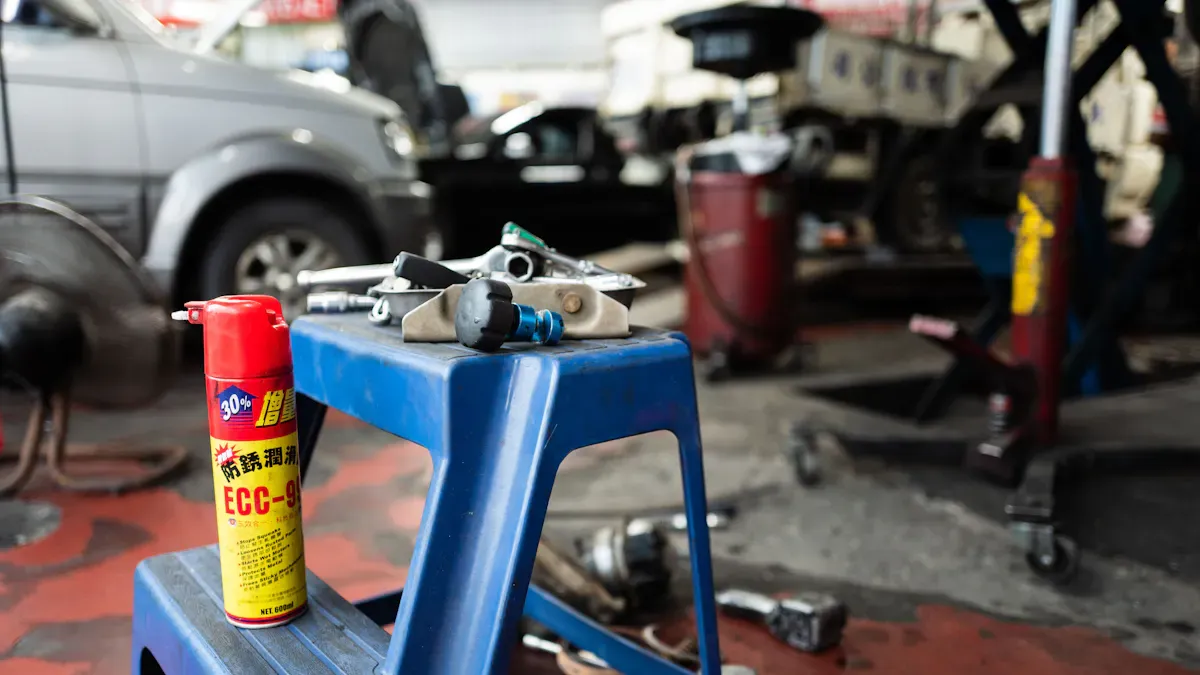
Rivet nuts support a wide range of manufacturing applications across many sectors. Their unique design and installation method allow engineers to solve fastening challenges in thin materials, blind holes, and complex assemblies. The following sections highlight how rivet nuts deliver value in varied applications.
Automotive Industry
Body Panels
Automotive manufacturers rely on rivet nuts to attach body panels securely to vehicle frames. These fasteners create strong threads in thin sheet metal, which traditional nuts and bolts cannot achieve. Rivet nuts allow technicians to install and remove panels for maintenance or repair without damaging the base material. This feature reduces assembly time and improves serviceability. The use of rivet nuts also supports modular vehicle designs, enabling efficient production and streamlined repairs.
Interior Components
Interior automotive assemblies demand both strength and aesthetics. Rivnut fasteners provide hidden, flush-mounted threads for attaching dashboards, consoles, and trim pieces. This approach eliminates the need for visible welds or protruding hardware. Rivet nuts also support the installation of safety equipment, such as airbags and seatbelt anchors, by delivering consistent performance in thin-walled structures. Their versatility ensures compatibility with steel, aluminum, and composite materials found in modern vehicle interiors.
Aerospace and Aviation
Lightweight Structures
Aerospace engineers prioritize weight reduction to enhance aircraft performance. Rivet nuts play a critical role in this effort. These lightweight, high-strength fasteners help reduce an aircraft’s overall weight. Lower weight leads to improved fuel efficiency and extends the operational range of the aircraft. Rivet nuts meet strict safety and weight requirements, ensuring durability and the ability to withstand high gravity pressures. Their use in thin panels and composite structures supports the aerospace industry’s focus on advanced materials and efficient design.
- Lightweight rivet nuts contribute to significant weight savings.
- Improved fuel efficiency results from reduced structural mass.
- Extended operational range benefits airlines and operators.
- Fasteners maintain safety and reliability under demanding conditions.
Maintenance and Repairs
Aircraft maintenance teams require fasteners that allow for quick, reliable repairs. Rivet nuts enable technicians to install threaded anchors in blind or hard-to-reach locations. This capability reduces downtime and ensures that repairs meet stringent safety standards. The rivnut design allows for repeated assembly and disassembly, which is essential for routine inspections and component replacement. Aerospace manufacturers select rivet nuts for their proven performance in both new builds and ongoing maintenance.
Electronics and Electrical Enclosures
Mounting Circuit Boards
Electronics manufacturers use rivet nuts to mount circuit boards inside enclosures made from thin steel or aluminum. These fasteners provide secure attachment points for delicate components, such as PCBs, DIN rails, and cable tray brackets. Brass rivet nuts are especially popular for PCB mounting due to their corrosion resistance and high-quality threads. This feature is crucial for fine-pitch screws used in electronics assembly. The rivet nut ensures that connections remain stable, even when subjected to vibration or thermal cycling.
Securing Panels
Electrical cabinets, server racks, and control panels require reliable fastening solutions. Rivet nuts allow engineers to secure access panels and doors without compromising the enclosure’s integrity. The rivnut supports blind installation, which is essential when only one side of the panel is accessible. This method streamlines assembly and maintenance, reducing labor costs and minimizing the risk of damage to sensitive electronic equipment. Rivet nuts also provide tamper-resistant connections, enhancing security in critical infrastructure.
Note: Rivet nuts offer unmatched versatility in electronics and electrical enclosure applications, supporting both structural integrity and ease of maintenance.
Manufacturers across these industries continue to adopt rivet nut technology for its adaptability, reliability, and efficiency. The ability to address unique challenges in automotive, aerospace, and electronics sectors demonstrates the value of rivet nuts in modern manufacturing applications.
Construction and Infrastructure
Metal Framing
Rivet nuts play a vital role in metal framing within construction and infrastructure projects. Engineers often select these fasteners for high-strength attachments in thin-walled materials such as sheet metal and structural panels. Traditional methods like tapping or welding can be impractical or time-consuming, especially when working with lightweight or pre-finished materials. Rivet nuts provide a permanent, vibration-resistant thread, ensuring that connections remain secure even under dynamic loads.
- Rivet nuts allow for installation from one side, which is essential when access to the reverse side is restricted.
- They create strong, load-bearing threads in thin metal, supporting the structural integrity of frames.
- The use of rivet nuts eliminates the need for secondary operations like welding, reducing labor costs and production time.
This approach enhances efficiency and reliability in the assembly of metal frameworks for buildings, bridges, and modular structures.
HVAC Systems
Heating, ventilation, and air conditioning (HVAC) systems require robust and reliable fastening solutions. Rivet nuts have become the preferred choice for securing air ducts, metal panels, and ventilation components. Their design addresses common challenges in HVAC assembly, such as articulation loosening and noise caused by vibration.
- Rivet nuts ensure high-strength attachment in thin-walled ductwork and panels.
- They streamline the assembly process, allowing technicians to install fasteners quickly and efficiently.
- The use of rivet nuts reduces the risk of leaks and improves the overall durability of HVAC installations.
By providing permanent, vibration-resistant threading, rivet nuts help maintain system performance and minimize maintenance needs over time.
Furniture and Appliances
Assembly of Frames
Manufacturers in the furniture and appliance industries rely on rivet nuts to simplify the assembly of frames and support structures. These fasteners offer several advantages over traditional options, making them ideal for modern production environments.
| Advantage | Description |
|---|---|
| Wider Range of Applications | Rivet nuts can be installed from one side, ideal for thin materials and enclosed structures. |
| Quick and Efficient Installation | Installation occurs in a single step, streamlining the assembly process. |
| Protects Surface Finishes | No hammering or welding required, preserving the appearance of the workpiece. |
| Strong, Vibration-Resistant Connections | Secure connections resist loosening over time. |
| Eliminates Need for Tapping or Welding | Simplifies installation on thin materials, reducing complexity and costs. |
| Easy to Replace and Maintain | Rivet nuts can be removed and reinstalled without damaging components. |
Rivet nuts support the rapid assembly of modular frames, shelving units, and appliance housings. Their ability to form strong, reusable threads in thin panels ensures that products remain sturdy and easy to service.
Attaching Hardware
The installation of hardware such as handles, hinges, and brackets often requires a secure and aesthetically pleasing solution. Rivet nuts excel in these applications by providing hidden, flush-mounted threads that do not compromise the appearance of the finished product.
- Rivet nuts eliminate the need for exposed bolts or welds, resulting in a clean, professional look.
- They allow for repeated assembly and disassembly, which is essential for maintenance and upgrades.
- The use of rivet nuts protects delicate surface finishes, a key consideration in high-end furniture and appliances.
This approach ensures that hardware remains securely attached throughout the product’s lifespan, even in environments subject to vibration or frequent use.
DIY and Home Projects
Custom Fabrications
DIY enthusiasts and home project builders benefit greatly from the versatility of rivet nuts. These fasteners enable users to join materials permanently while providing a load-bearing thread, even in thin sheet materials as slim as 0.5mm. The ability to install rivet nuts from one side speeds up the assembly process and allows for creative solutions in custom fabrications.
- Rivet nuts provide robust threads in thin materials, essential where traditional fasteners fail.
- They enable installation in enclosed workpieces, making assembly possible when access is limited.
- Users can create strong, reusable threads for mounting brackets, shelves, or custom fixtures.
Rivet nuts empower DIYers to tackle complex projects with professional results.
Repairs and Upgrades
Home repairs and upgrades often require the addition of new components to existing structures. Rivet nuts offer a practical solution by allowing for the creation of strong, load-bearing threads without the need for specialized equipment.
- Automotive projects benefit from rivet nuts when disassembly is necessary for future maintenance.
- Electronics projects use rivet nuts to mount components securely inside enclosures.
- Construction projects rely on rivet nuts for strong, reliable fastening in thin or difficult-to-access materials.
Tip: Rivet nuts make it easy to upgrade or repair furniture, appliances, and home fixtures without damaging the original material.
The use of rivet nuts in DIY and home projects ensures that repairs and upgrades remain durable, efficient, and accessible to builders of all skill levels.
Marine and Outdoor Equipment
Corrosion-Resistant Fastening
Marine and outdoor environments expose fasteners to harsh conditions. Saltwater, humidity, and temperature changes accelerate corrosion. Engineers select rivet solutions with corrosion-resistant materials to ensure long-term performance. Stainless steel and aluminum rivet nuts resist rust and maintain structural integrity in boats, docks, and outdoor recreational equipment. These fasteners provide secure threads in thin-walled hulls, railings, and mounting brackets. The use of a rivnut in marine applications prevents premature failure and reduces maintenance costs.
Tip: Stainless steel rivet nuts offer the best protection against saltwater corrosion, making them ideal for marine hardware and outdoor installations.
Waterproof Assemblies
Waterproof assemblies require fasteners that prevent leaks and maintain a tight seal. Rivet nuts with closed-end designs block moisture from entering the assembly. Installers often pair these fasteners with sealing washers or gaskets to enhance water resistance. This approach ensures that electrical enclosures, navigation lights, and deck fittings remain dry and operational. The rivet creates a permanent anchor point, even in thin or composite panels, supporting the reliability of marine electronics and outdoor lighting systems.
- Closed-end rivet nuts stop water ingress.
- Sealing accessories improve waterproofing.
- Rivet fasteners maintain strength in wet environments.
Industrial Machinery
Heavy-Duty Fastening
Industrial machinery demands robust fastening solutions. Rivet nuts deliver strong threaded connections in thin panels and structural components. The rivet reinforces surfaces, allowing bolts or screws to withstand high torque forces. This feature ensures that machine guards, access panels, and support brackets remain secure during operation. The rivnut simplifies assembly by enabling installation from one side, which is essential in confined spaces.
The following table highlights how rivet nuts improve maintenance access and heavy-duty fastening in industrial machinery:
| Feature | Benefit |
|---|---|
| Installation from one side | Ideal for limited access applications, enhancing maintenance access. |
| Easy disassembly and replacement | Facilitates quick maintenance operations, crucial for industrial machinery. |
| Strong threaded connections | Provides reliable fastening in thin materials, improving overall durability. |
Maintenance Access
Maintenance teams value fasteners that support quick repairs and replacements. Rivet nuts allow technicians to remove and reinstall components without damaging the base material. The rivet enables simple and cost-efficient connections between thin materials. It also protects against torque forces, ensuring reliability during repeated maintenance cycles. The rivnut design streamlines service operations, reducing downtime and labor costs.
- Simple and cost-efficient connections between thin materials.
- Reinforces surfaces with the holding force of threaded fasteners.
- Protects against torque forces from bolts or screws, ensuring reliability.
Note: Rivet nuts enhance both the durability and serviceability of industrial machinery, making them a preferred choice for manufacturers and maintenance professionals.
Selecting the Right Rivet Nut for Your Application
Choosing the correct rivet nut for a project ensures reliable performance and long-term durability. Engineers and technicians must evaluate several factors before making a selection. The following sections outline the most important considerations.
Assessing Material Thickness
Material thickness plays a crucial role in rivet selection. If the wall is too thin, the rivet may deform or strip under load. If the material is too thick, the rivet may not anchor securely. Proper assessment prevents installation failures and ensures the rivet nut performs as intended.
The table below summarizes key factors to consider:
| Factor | Description |
|---|---|
| Wall Thickness | Critical for maintaining torque and pull-out resistance; too thin can lead to deformation or thread stripping. |
| Grip Range | Defines allowable thickness of base material; too thin leads to weak anchoring, too thick reduces holding strength. |
| Installation Force | Necessary to ensure proper deformation and mechanical interlock with the parent material. |
| Hole Size | Must be compatible with rivet specifications for effective installation. |
| Environmental Factors | Consideration of conditions that may affect the performance of the rivet nut. |
Tip: Always match the grip range of the rivet nut to the actual thickness of the workpiece for optimal results.
Load and Strength Requirements
The load a joint must bear determines the type of rivet and material required. High-strength applications demand robust solutions, while lightweight assemblies may prioritize reduced mass over maximum strength.
- The choice of material affects the reliability and safety of the connection.
- Lightweight materials are suitable for applications where weight is a concern but may have lower strength.
- Steel rivet nuts provide a robust solution for load-bearing threads in various applications.
The table below compares common rivet nut types and their application contexts:
| Rivet Nut Type | Material | Application Context |
|---|---|---|
| High-strength rivet nut | Carbon steel | Suitable for load-bearing applications, providing higher strength and resistance to deformation. |
| Lightweight rivet nut | Aluminum | Preferred in structures where weight reduction is critical, but with lower strength. |
| Galvanized steel rivet nut | Galvanized steel | Economical for standard applications, but not suitable for damp environments without additional coatings. |
| Stainless steel rivet nut | Stainless steel | Ideal for outdoor use and applications requiring high corrosion resistance and mechanical load capacity. |
- High-strength rivet nuts are necessary for applications with higher loads or frequent vibrations.
- Carbon steel rivet nuts offer better strength and resistance to deformation compared to aluminum.
- The body design, such as hex body or large flange, enhances performance under load.
Environmental Considerations
Environmental factors can significantly impact the long-term performance of a rivet. Vibration, temperature, and humidity all influence how well the rivet nut maintains its hold.
- Vibration, temperature, and humidity can impact long-term performance of rivet nuts.
- For applications with high vibration, using knurled or hex body rivet nuts enhances anti-rotation performance.
- High temperatures can lead to accelerated corrosion and material degradation.
- Regular inspections of riveted joints are recommended to identify signs of loosening or corrosion.
- Stainless steel rivet nuts offer superior corrosion resistance compared to standard steel when exposed to elements like water and salt.
- They perform well in extreme temperatures, making them suitable for applications affected by temperature changes.
Note: Selecting the right rivet nut for the environment extends the lifespan of the assembly and reduces maintenance needs.
Choosing the Right Material and Finish
Selecting the appropriate material and finish for a rivet is crucial for ensuring long-term performance and durability. Engineers evaluate the environment and mechanical demands before making a decision. Stainless steel offers excellent corrosion resistance, making it suitable for marine and outdoor applications. Aluminum provides a lightweight option for aerospace and electronics. Steel delivers high strength for industrial machinery and automotive frames. Brass combines corrosion resistance with electrical conductivity, often used in electronics and decorative hardware.
Finishes protect the rivet from environmental damage. Zinc plating resists rust and extends the lifespan of the nut. Anodized coatings on aluminum improve surface hardness and appearance. Passivation on stainless steel enhances corrosion resistance. Choosing the right finish prevents premature failure and reduces maintenance needs.
Tip: Always match the rivet material and finish to the operating environment for optimal performance.
A comparison table helps clarify material and finish options:
| Material | Finish | Best Use Case |
|---|---|---|
| Steel | Zinc Plated | Automotive, machinery |
| Stainless Steel | Passivated | Marine, medical, food |
| Aluminum | Anodized | Aerospace, electronics |
| Brass | Polished | Electronics, decorative |
Matching Thread Size and Type
Thread size and type directly impact the reliability of rivet installations. Engineers must select the correct thread to ensure a secure grip and prevent loosening under load. Threads are available in metric and imperial sizes, with coarse or fine pitches. The right pitch depends on the required clamping force and vibration resistance.
- Correct thread size ensures effective grip on the material.
- The type of thread influences clamping force and vibration resistance.
- Threads come in metric and imperial, coarse or fine.
- Choosing the right pitch is essential for the application.
Hex Body rivet nuts resist rotation by locking into hex-shaped or dimpled holes. The external hex profile creates a mechanical interlock, preventing spin-out under torque loads.
Note: Matching thread size and type to the application increases reliability and reduces the risk of installation failures.
Compatibility with Installation Tools
Compatibility with installation tools determines the efficiency and quality of rivet installation. Manual tools suit small-scale projects and repairs. Pneumatic and power tools offer speed and consistency for high-volume production. Engineers check tool specifications to ensure they match the rivet nut type and size. Some rivets require specialized mandrels or adapters for proper setting.
Installers must verify that the tool can apply the necessary force without damaging the rivet or workpiece. Using the correct tool prevents misalignment and ensures a secure anchor. Compatibility also affects maintenance, as easy tool access speeds up repairs and replacements.
Tip: Always test installation tools with sample rivets before starting large-scale assembly.
Installation Methods and Best Practices for Rivet Nuts
Required Tools
Manual Tools
Manual tools remain a popular choice for small-scale rivet nut installation. Installers use hand-operated rivet nut tools, such as lever or plier-style devices, to set the rivnut. These tools provide control and precision, making them suitable for prototypes, repairs, or low-volume production. Operators can quickly switch between different rivet nut characteristics by changing mandrels or nosepieces. Manual tools require minimal setup and work well in environments without access to compressed air or electricity.
Pneumatic and Power Tools
Pneumatic and power tools increase efficiency in high-volume settings. Spin-spin tools use air power and torque to collapse the rivet nut, offering a lightweight and cost-effective solution for smaller batches. However, these tools often require separate units for each thread size. Spin-pull tools, on the other hand, handle a wider range of thread sizes and provide versatility for large-scale projects. Although heavier and more expensive, spin-pull tools deliver consistent results and reduce operator fatigue. Choosing the right rivet nut tool depends on project size, material, and production speed.
Step-by-Step Installation Guide
Preparing the Workpiece
Installers begin by marking and drilling a hole that matches the rivet nut’s specifications. Clean edges and remove debris to ensure a flush fit. Accurate hole sizing prevents slippage and supports durable fastening.
Inserting the Rivet Nut
Operators insert the rivet nut into the prepared hole. Proper alignment is essential for secure anchoring. The nut should sit flush with the surface, with no gaps or tilting.
Setting the Rivet Nut
Using the selected rivet nut tool, the installer pulls the mandrel to expand the rivet body behind the panel. This action locks the rivet in place. For best practices, follow the manufacturer’s guidelines for tool settings and force to avoid over-compression or deformation.
Checking Installation Quality
After setting, technicians inspect the rivet nut for tightness and alignment. A secure installation shows no movement or rotation. Use a torque wrench or automatic tool to verify proper clamping force.
Tips for a Secure Installation
Professional installation relies on proper installation techniques and the right tools. Always match the rivet nut tool to the application and material.
Installers can avoid common mistakes by following best practices. The table below outlines frequent errors and prevention strategies:
| Mistake | Description | How to Avoid |
|---|---|---|
| Incomplete or Improper Installation | Rivet nut not fully compressed or tightened | Use correct tools and ensure compatibility with material thickness |
| Rivet Nut Slippage or Rotation | Insufficient grip between nut and base material | Choose appropriate rivet nuts and ensure proper alignment |
| Over-Compression Leading to Deformation | Excessive force damages fastener and surrounding material | Refer to manufacturer’s guidelines for installation force |
| Rivet Nut Misalignment | Uneven clamping pressure, poor performance | Ensure correct insertion and alignment with the hole |
| Rivet Nut Failure Due to Over-tightening | Stripped threads or pull-out from material | Use a torque wrench or automatic setting tool |
Installers should always use compatible installation tools and follow installation insights from manufacturers. This approach ensures reliable rivnut installation and supports long-term performance. By applying best practices, teams achieve secure, durable fastening and minimize rework.
Safety Precautions
Safety remains a top priority during any rivet installation process. Industrial environments present unique hazards, so workers must follow strict guidelines to prevent injuries and ensure reliable results. Proper preparation and attention to detail help maintain a safe workspace and protect both personnel and equipment.
Operators should always wear protective gear. Safety glasses shield the eyes from flying debris, while gloves protect hands from sharp edges on panels and tools. These simple measures reduce the risk of cuts, abrasions, and eye injuries. In busy workshops, personal protective equipment (PPE) forms the first line of defense.
Selecting the correct tool for the job is essential. Each rivet tool, whether manual, cordless, or air-powered, has specific requirements and limitations. Using the wrong tool can lead to improper setting, tool damage, or even personal injury. Workers should inspect tools before use and confirm compatibility with the chosen rivet and nut size.
Following the manufacturer’s instructions ensures safe and effective installation. Each rivnut and tool comes with detailed guidelines for operation, maintenance, and troubleshooting. Adhering to these instructions helps prevent accidents and extends the lifespan of both tools and fasteners. Supervisors should provide training and encourage workers to review manuals regularly.
Securing the workpiece before installation prevents movement that could cause misalignment or tool slippage. Clamps or vises hold panels steady, allowing the operator to focus on accurate rivet placement. A stable setup also reduces the chance of damaging the material or surrounding components.
Proper torque application is critical. Over-tightening a rivet can deform the base material or strip threads, while under-tightening may result in a loose connection. Installers should use calibrated tools and check settings before each job. Consistent technique ensures that each rivet nut performs as intended and maintains structural integrity.
Key safety practices for rivet installation include:
- Wearing safety glasses and gloves at all times.
- Using the correct tool for each rivet and nut size.
- Following all manufacturer instructions for installation and removal.
- Securing the material to prevent movement during installation.
- Avoiding over-tightening or under-tightening to protect both the rivet and the workpiece.
Note: Regular safety audits and refresher training sessions help reinforce best practices and reduce workplace incidents.
By prioritizing these safety precautions, teams can achieve efficient, high-quality results while minimizing risks. A disciplined approach to rivet installation protects workers and ensures the long-term reliability of every assembly.
Troubleshooting and Common Pitfalls in Rivet Nut Applications
Stripped Threads
Stripped threads represent a frequent issue during rivet installation. This problem often arises when the installer selects an incorrect mandrel size or applies excessive force. High friction between the mandrel and the rivet can also contribute to thread damage. When threads strip, the fastener loses its ability to hold bolts securely, which compromises the integrity of the assembly. To prevent stripped threads, technicians should always match the mandrel to the rivet specifications. Lubricating the mandrel before use reduces friction and helps achieve a smooth installation. Applying only the recommended force ensures that the threads remain intact and functional. Regular inspection of tools and adherence to manufacturer guidelines further minimize the risk of thread failure.
Tip: Always check the mandrel size and apply lubricant before starting the installation process.
Spinning Rivet Nuts
A spinning rivnut can disrupt the assembly process and lead to costly rework. This issue occurs when the rivet fails to grip the base material properly. Several factors can cause spinning, such as oversized holes, insufficient deformation during setting, or using the wrong rivet body style for the application. When the rivet spins, it cannot provide a stable anchor for bolts or screws. Installers should verify that the hole diameter matches the rivet’s requirements. Selecting a knurled or hexagonal body style increases resistance to rotation, especially in soft or painted materials. Proper tool calibration and technique ensure that the rivet deforms correctly and locks into place. If spinning occurs, removing the faulty rivet and preparing a new hole with the correct dimensions restores assembly reliability.
Incorrect Grip Range
Incorrect grip range selection can undermine the performance of any rivet nut. Each rivet has a specified grip range, which defines the material thickness it can accommodate. If the workpiece is thinner than the minimum grip range, the rivet may not deform fully, resulting in a loose fit. If the material exceeds the maximum grip range, the rivet cannot anchor securely, leading to potential pull-out or failure under load. Installers must measure the workpiece thickness accurately before choosing a rivet. Reference charts and manufacturer data sheets provide guidance on suitable grip ranges for each rivet type. Using the correct grip range ensures that the rivet forms a strong mechanical bond and maintains long-term performance.
| Common Pitfall | Cause | Prevention Strategy |
|---|---|---|
| Stripped Threads | Incorrect mandrel, over-tightening | Use correct mandrel, lubricate, avoid excess force |
| Spinning Rivet Nuts | Oversized hole, wrong body style | Match hole size, select anti-rotation body |
| Incorrect Grip Range | Mismatched material thickness | Measure thickness, consult grip range data |
Note: Careful preparation and attention to detail during rivet installation prevent most common failures.
Misalignment Issues
Misalignment remains a common challenge during rivet installation. When the hole does not align with the intended axis, the rivet may not seat properly. This issue can lead to weak joints, uneven clamping, or premature failure. Technicians often encounter misalignment when they rush the drilling process or use worn-out tools. Accurate hole placement ensures that the rivet sits flush with the workpiece and provides maximum holding strength.
Several signs indicate misalignment:
- The rivet head does not sit flat against the surface.
- The installed rivet rotates or shifts under load.
- The bolt or screw does not thread smoothly into the rivnut.
To prevent these problems, technicians should mark hole locations carefully before drilling. They should use sharp, properly sized drill bits and check alignment with a gauge or template. Clamping the workpiece during drilling helps maintain accuracy. After drilling, they should remove burrs and debris to ensure a clean fit.
Tip: A simple alignment check before setting the rivet can save time and reduce rework.
If misalignment occurs, removing the faulty rivet and redrilling the hole often restores the assembly’s integrity. Consistent attention to detail during each step of the process helps maintain the reliability of rivet nuts in any application.
Preventing Material Damage
Material damage can compromise the strength and appearance of an assembly. Rivet installation sometimes causes cracks, deformation, or surface scratches, especially in thin or delicate materials. Technicians must take steps to protect the workpiece throughout the process.
Common causes of material damage include:
- Using excessive force during rivet setting
- Selecting an oversized or undersized hole
- Failing to support the material during installation
- Skipping surface preparation steps
The table below outlines best practices for preventing damage:
| Risk Factor | Prevention Strategy |
|---|---|
| Excessive force | Use calibrated tools and follow guidelines |
| Incorrect hole size | Match drill bit to rivet specifications |
| Unsupported material | Clamp or back up the workpiece |
| Poor surface preparation | Deburr and clean holes before installation |
Technicians should always select the correct rivet and nut for the material type and thickness. They should avoid over-tightening, which can deform the panel or strip threads. For painted or coated surfaces, using protective washers or sleeves prevents scratches. Regular inspection of tools and adherence to manufacturer recommendations further reduces the risk of damage.
Note: Careful preparation and proper technique ensure that each rivet installation maintains both structural integrity and a professional finish.
This complete guide delivers essential insights for anyone seeking reliable rivet performance. The table below highlights the most important takeaways for every complete guide to rivet nut application:
| Key Aspect | Best Practice |
|---|---|
| Material Selection | Choose the correct rivet and nut material for the substrate to prevent corrosion and maximize strength. |
| Hole Preparation | Prepare clean, deburred holes to avoid stress risers and ensure proper rivet seating. |
| Installation | Use calibrated tools and follow manufacturer guidelines for each rivet and rivnut combination. |
| Quality Control | Inspect thread engagement and conduct pull-out tests for every complete guide installation. |
| Grip Range | Match thread size, material thickness, and hole diameter for optimal rivet performance. |
Engineers who follow these steps achieve durable, high-quality assemblies. This complete guide encourages every user to apply best practices for each rivet nut installation.
FAQ
What is the main advantage of using rivet nuts over weld nuts?
Rivet nuts allow installation from one side of the workpiece. They do not require heat or welding, which reduces assembly time and risk of material distortion. This feature makes them ideal for thin or coated materials.
Can rivet nuts be used in plastic materials?
Yes, manufacturers design special threaded inserts for plastics. These inserts expand or knurl into the plastic, providing strong threads without cracking or damaging the base material. They support repeated assembly and disassembly.
How do you select the correct grip range for a rivet nut?
Measure the total thickness of the material where the rivet nut will be installed. Choose a rivet nut with a grip range that matches or slightly exceeds this thickness. Always consult manufacturer specifications for best results.
What tools are required for installing rivet nuts?
Installers use manual, pneumatic, or power tools. Manual tools suit small projects or repairs. Pneumatic and power tools increase speed and consistency in high-volume production. Always match the tool to the rivet nut type and size.
Are rivet nuts reusable after removal?
Rivet nuts remain fixed in the material after installation. If removed, they usually cannot be reused in the same hole because the hole may deform. For repeated assembly, use the same installed rivet nut with new bolts or screws.
How can you prevent rivet nuts from spinning during installation?
Select knurled or hexagonal body rivet nuts for better grip. Ensure the hole size matches the rivet nut specifications. Proper tool calibration and technique also help prevent spinning. Anti-rotation features increase reliability in soft or painted materials.
What materials are available for rivet nuts?
Rivet nuts come in steel, stainless steel, aluminum, and brass. Each material offers different strengths and corrosion resistance. The table below summarizes their typical uses:
| Material | Best Use Case |
|---|---|
| Steel | Automotive, machinery |
| Stainless Steel | Marine, medical, food |
| Aluminum | Aerospace, electronics |
| Brass | Electronics, decorative |