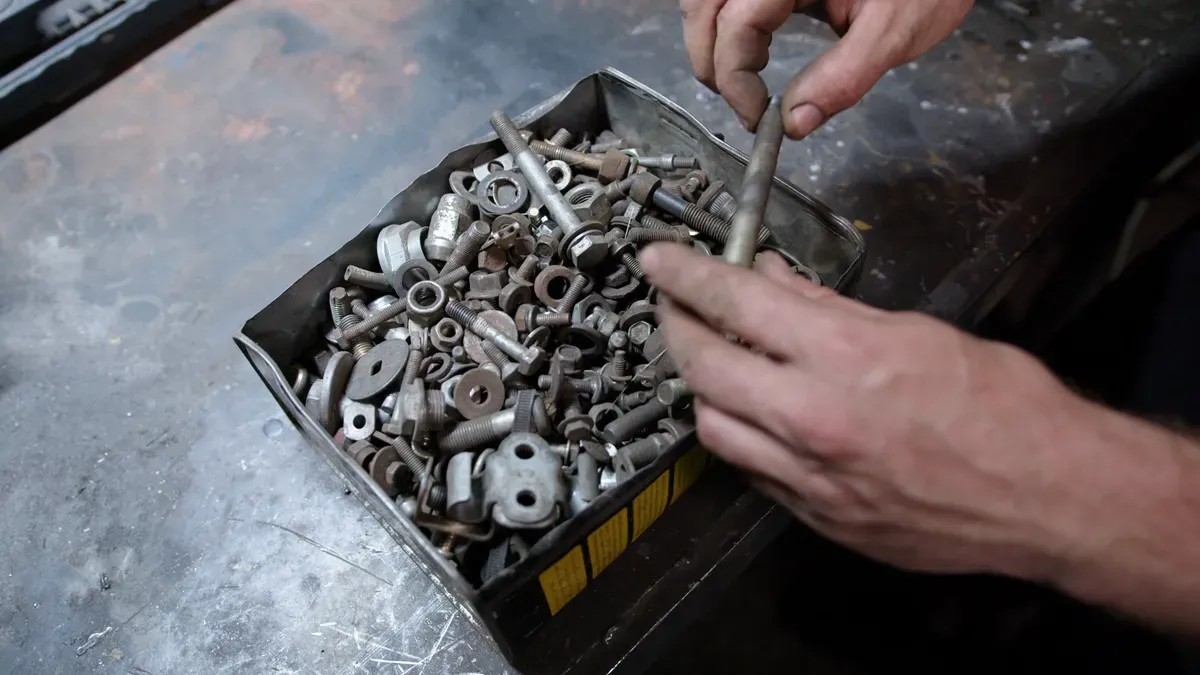
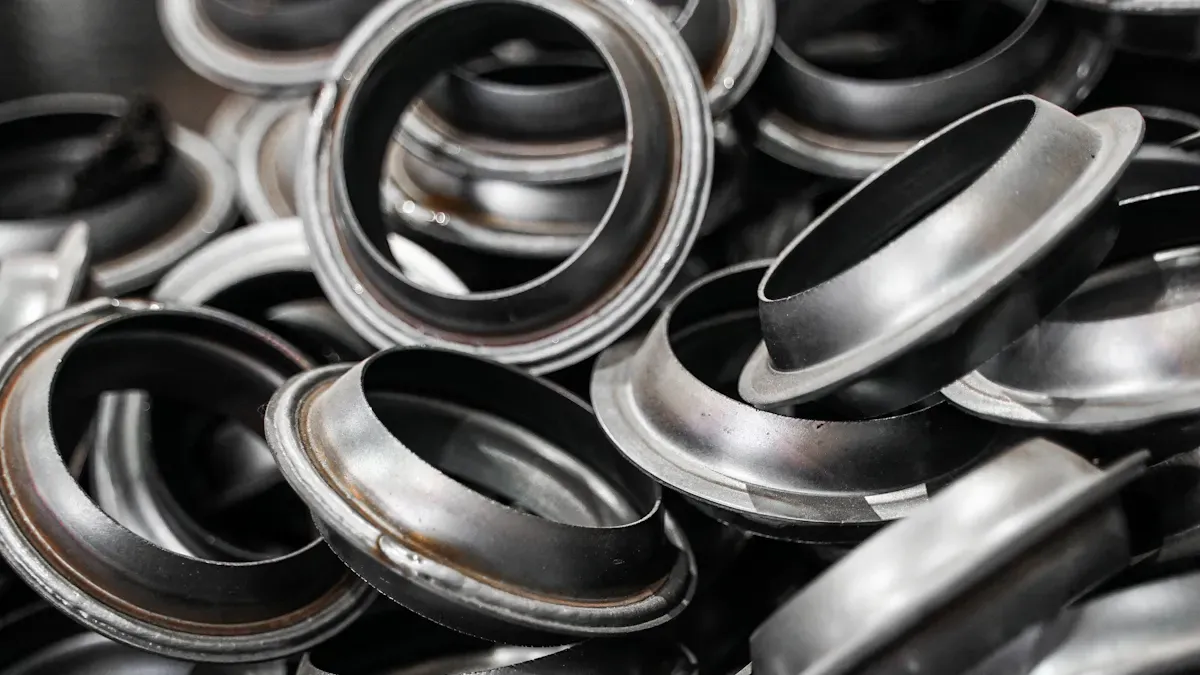
A flange nut features a wide flange at one end, which acts as an integrated washer to distribute pressure evenly during fastening. This design reduces surface damage and enhances resistance to loosening, especially in environments subject to vibration. Flange nuts differ from standard nuts by combining washer functionality with compact form, making them ideal for nuts and bolts applications. Automotive and aerospace industries rely on flange nuts for vehicle assembly and vibration control, while electronics and construction sectors use them for circuit board mounting and structural fastening. Custom fasteners manufacturers often supply flange nuts for specialized requirements.
Key Features and Design of Flange Nuts
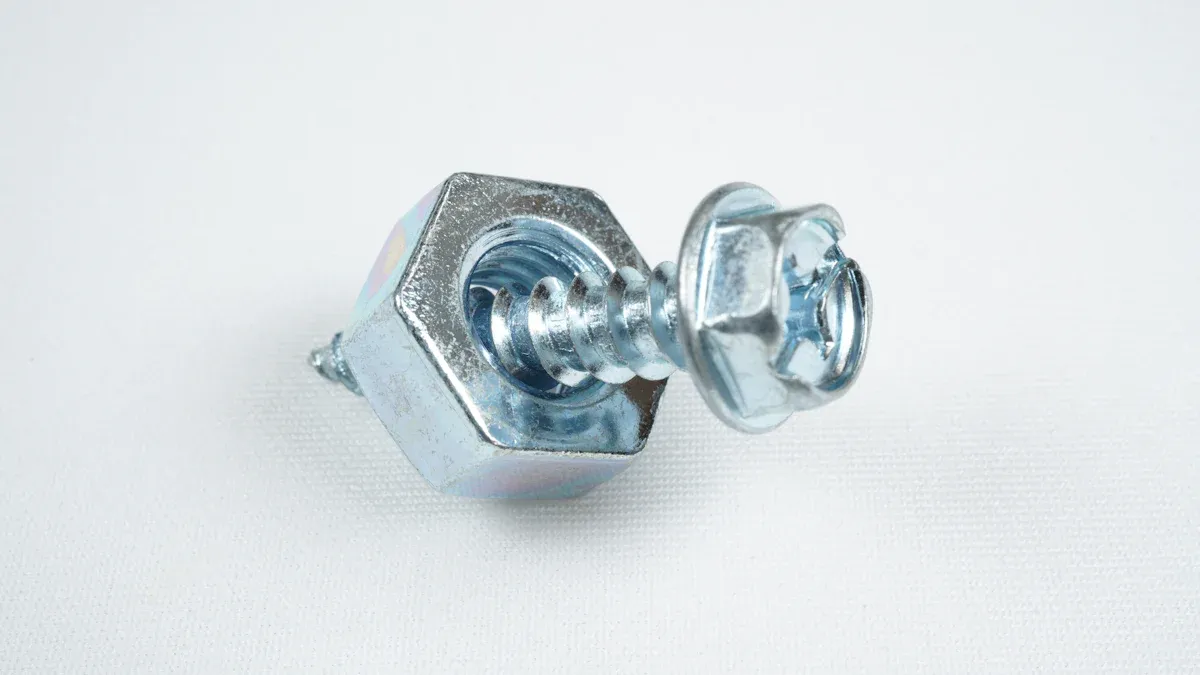
Structure of a Flange Nut
Integrated Flange Base
A flange nut features a broad, circular flange at its base. This flange acts as a built-in washer, increasing the contact area between the nut and the mounting surface. The design enhances friction, which helps prevent loosening in environments subject to vibration. The flange also spreads the clamping force over a larger area, protecting delicate surfaces and improving the structural integrity of components. Engineers often select flange nuts for applications where stability and reliability are critical.
The integrated flange base simplifies assembly by reducing the need for separate washers. This design minimizes hardware shifting during operation and ensures a secure connection.
Threaded Interior
The interior of flange nuts contains precision-cut threads that match the corresponding bolt or stud. These threads provide a strong mechanical grip, allowing the nut to hold components tightly together. Manufacturers produce flange nuts in various thread sizes to accommodate different fastener requirements. The combination of a threaded interior and a wide flange base delivers both strength and stability.
How Flange Nuts Work
Load Distribution
Flange nuts excel at distributing load evenly across the mounting surface. The wide flange acts as a built-in washer, spreading pressure and reducing material damage. This feature is especially important when fastening softer materials or components that require protection from concentrated stress.
| Evidence Description | Source Link |
|---|---|
| The wide flange acts as a built-in washer, spreading the pressure or load and reducing material damage better. | Flange Nut vs. Lock Nut |
| The presence of a flange in flange nylock nuts offers a larger contact surface area compared to standard nuts, allowing for better load distribution. | Understanding the Function and Benefits of Flange Nylock Nuts |
| The flange provides a larger bearing surface, helping to distribute the clamping load more evenly, preventing damage to the material being fastened. | Flange Nuts: Uses and Functionality Explained |
Vibration Resistance
Flange nuts offer superior resistance to loosening caused by vibration. The increased surface area of the flange creates more friction between the nut and the mounting surface. This friction makes it harder for the nut to loosen, even in dynamic environments. The flange also assists in centering the nut on the bolt, which improves alignment and stability.
| Feature | Flange Nuts | Standard Nuts |
|---|---|---|
| Design | Wide flange acts as a built-in washer | No built-in washer |
| Load Distribution | Spreads load over a larger area | Concentrated load |
| Vibration Resistance | Provides additional support against loosening | More prone to loosening under vibration |
| Centering | Assists in centering on the bolt | No centering feature |
Mechanical applications such as automotive engine assembly and machinery mounting benefit from the vibration resistance of flange nuts. This feature helps prevent malfunctions and accidents by maintaining a stable connection.
Materials and Finishes
Common Materials
Manufacturers produce flange nuts using a variety of materials to suit different environments and performance requirements. The most commonly used materials include carbon steel, stainless steel, alloy steel, brass, aluminum, and titanium. Each material offers unique advantages:
| Material | Advantages |
|---|---|
| Carbon Steel | Strength and cost-effectiveness; suitable for various applications without major corrosion concerns. |
| Stainless Steel | Excellent corrosion resistance; ideal for moist or chemical-prone environments; more durable. |
| Alloy Steel | Additional strength and wear resistance; can be heat treated for specific hardness levels. |
| Brass | Good corrosion resistance and electrical conductivity; suitable for electrical and corrosive applications. |
| Aluminum | Lightweight and good corrosion resistance; ideal for aerospace, automotive, and marine applications. |
| Titanium | Exceptional strength-to-weight ratio and corrosion resistance; used in high-performance applications. |
Surface Treatments
Surface finishes enhance the durability and corrosion resistance of flange nuts. Common treatments include zinc plating, black oxide, nickel plating, and Dacromet coating. These finishes protect the nut from environmental factors and extend its service life.
| Surface Finish | Description |
|---|---|
| Zinc Plating | A thin layer of zinc applied to enhance corrosion resistance. |
| Black Oxide | A finish that provides a degree of corrosion resistance and a black appearance. |
| Nickel Plating | A layer of nickel that offers good corrosion resistance and a shiny finish. |
| Dacromet Coating | A coating that combines zinc and chromate for enhanced corrosion protection. |
Tip: Selecting the right material and surface finish for flange nuts ensures optimal performance and longevity in demanding environments.
Differences Between Flange Nuts and Other Nuts
Comparison with Standard Hex Nuts
Washer Integration
Flange nuts stand out from standard hex nuts due to their integrated washer design. The wide flange at the base of flange nuts acts as a built-in washer, which eliminates the need for a separate component during assembly. This feature not only simplifies the installation process but also reduces the risk of missing parts. In contrast, hex nuts require a separate washer to distribute load and protect surfaces, which adds extra steps and components to the assembly process. The integrated design of flange nuts ensures consistent load distribution and enhances the reliability of the connection.
Space-Saving Design
Space efficiency plays a crucial role in many engineering projects. Flange nuts offer a more compact solution compared to standard hex nuts with separate washers. Their all-in-one design allows them to fit into tighter spaces, making them ideal for applications where clearance is limited. The following table highlights key differences between flange nuts and hex nuts in terms of installation efficiency and space requirements:
| Feature | Flange Nut | Hex Nut |
|---|---|---|
| Integrated Design | Yes, includes a built-in flange | No, requires a separate washer |
| Assembly Steps | Fewer steps, simplifies installation | More steps, requires additional components |
| Risk of Missing Parts | Lower risk due to fewer components | Higher risk due to multiple components |
| Space Efficiency | More compact, suitable for tight spaces | Less compact, may require more space |
Engineers often select flange nuts for mechanical applications where both reliability and space-saving design are essential.
Comparison with Lock Nuts
Anti-Loosening Features
Lock nuts and flange nuts both address the challenge of loosening under vibration, but they use different mechanisms. Flange nuts rely on their wide flange and, in some cases, serrated surfaces to create friction and resist loosening. This design provides a self-locking effect, especially in environments with dynamic loads. Lock nuts, on the other hand, often use nylon inserts or deformed threads to prevent rotation. While both types offer anti-loosening features, flange nuts simplify the assembly process by eliminating the need for additional washers.
Application Scenarios
Flange nuts excel in scenarios where vibration resistance and assembly efficiency are critical. They are preferred in the following situations:
- Automotive and heavy machinery industries require fasteners that maintain preload under constant vibration.
- Applications benefit from the larger contact area of flange nuts, which enhances stability and reduces the risk of loosening.
- Projects that demand simplified assembly and fewer components rely on flange nuts to improve reliability and reduce installation time.
- High-strength connections in structural and mechanical applications often use flange nuts for their ability to maintain tightness without extra hardware.
Lock nuts remain a strong choice for applications where extreme vibration or rotational forces are present, but flange nuts provide a versatile and efficient alternative for many industries.
Main Uses and Applications of Flange Nuts
Automotive Industry
Engine Assembly
Flange nuts play a critical role in the automotive sector, especially in engine assembly. Engineers use these nuts to secure vital engine components such as cylinder heads and intake manifolds. These parts experience high levels of vibration and temperature changes during operation. Flange nuts provide a secure connection that maintains engine integrity and prevents loosening. Many technicians add a lock washer with flange nuts to further enhance their resistance to vibration, ensuring the engine continues to function properly.
Flange nuts help maintain safety and reliability in engine assemblies by preventing fastener failure under harsh conditions.
Suspension Systems
Suspension systems in vehicles demand robust fastening solutions. Flange nuts attach components like control arms and shock absorbers, where their load-distributing properties become essential for safety and reliability. Their design resists loosening under constant movement and vibration, which enhances vehicle reliability and occupant safety. Automotive manufacturers rely on flange nuts to maintain the structural integrity of chassis components over time.
| Application Area | Importance |
|---|---|
| Engine mounts | Provides stability and support for engines. |
| Suspension systems | Enhances vibration resistance for safety. |
| Chassis components | Maintains structural integrity over time. |
Construction and Machinery
Structural Fastening
Flange nuts serve as a preferred choice in construction and heavy machinery assembly. Their wide flange distributes load evenly, which is crucial for maintaining the strength of structural joints. Workers use flange nuts to secure beams, frames, and other load-bearing elements, ensuring a secure connection that withstands stress and vibration. This application supports the long-term durability of buildings and equipment.
Equipment Mounting
In equipment mounting, flange nuts prevent loosening during operation. Their enhanced clamping force makes them ideal for high-stress environments. Construction professionals depend on flange nuts to keep machinery parts firmly attached, reducing the risk of mechanical failure. These nuts are essential for securing parts in heavy machinery, ensuring both safety and operational efficiency in mechanical and construction applications.
Home Improvement and DIY
Furniture Assembly
Home improvement enthusiasts and DIYers often choose flange nuts for furniture assembly. The wide, flat base acts like a built-in washer, spreading pressure and preventing damage to softer materials such as wood or plastic. This feature ensures a secure connection and extends the life of assembled furniture.
Appliance Installation
Flange nuts also provide a stable and secure hold in appliance installation projects. They resist loosening even when appliances experience vibration or movement. Their ability to enhance connection strength makes them a reliable choice for homeowners seeking durable and long-lasting results.
| Benefit/Feature | Explanation |
|---|---|
| Wide, flat base | Acts like a built-in washer, spreading pressure to prevent material damage. |
| Stable and secure hold | Essential for projects that experience vibration or movement. |
| Prevents damage to softer materials | Ideal for fastening softer woods and plastics without causing harm. |
| Resists loosening | Keeps connections tight even in dynamic conditions. |
| Enhances connection strength | Makes assemblies more durable and long-lasting. |
Electronics and Electrical Applications
Circuit Board Mounting
Flange nuts play a vital role in electronics, especially during circuit board mounting. Engineers often select flange nuts because they combine the functions of a nut and washer into a single component. This integration reduces the number of parts needed for assembly and simplifies the process. The flange increases the contact area, making these nuts suitable for applications with oversized holes or delicate surfaces.
- Flange nuts provide superior clamping force, which helps secure circuit boards firmly in place.
- The built-in flange distributes load more effectively across a larger surface area, protecting sensitive electronic components.
- These nuts resist loosening due to vibrations, which is essential in dynamic environments where electronic devices may experience movement.
Technicians appreciate that flange nuts can incorporate locking features for enhanced joint stability. This feature ensures that connections remain tight, even when devices operate under constant vibration or thermal cycling.
Device Enclosures
Device enclosures require reliable and durable fastening solutions. Flange nuts offer several advantages in this context. Their hexagonal shape improves pressure distribution and frictional stability, which helps maintain the integrity of the enclosure.
- Flange nuts eliminate the need for separate washers, streamlining the assembly process and reducing material use.
- The enhanced anti-loosening capabilities of flange nuts make them a durable choice for securing panels and covers.
- Their overall life-cycle reliability surpasses that of ordinary nuts, ensuring long-term performance in electrical devices.
Note: Flange nuts simplify assembly and improve reliability in electronics and electrical applications, making them a preferred choice for manufacturers and technicians.
Aerospace Industry
Aircraft Assembly
The aerospace industry demands the highest standards for fasteners. Flange nuts provide anti-loosening properties, which are crucial in high-vibration environments such as engine compartments. Engineers select flange nuts made from corrosion-resistant materials to ensure longevity in harsh conditions.
- Flange nuts maintain secure connections in critical aircraft systems, supporting both safety and performance.
- Their ability to resist loosening under vibration helps prevent mechanical failures during flight.
- Weight and cost considerations remain significant, as flange nuts can be heavier and more expensive than regular nuts, but their benefits often outweigh these factors.
Vibration-Prone Components
Aircraft contain many components exposed to constant vibration. Flange nuts excel in these scenarios by providing stable and reliable fastening. Their design ensures that connections remain tight, even when subjected to intense and repeated movement.
- Flange nuts distribute load evenly, reducing the risk of material fatigue or failure.
- The use of corrosion-resistant materials extends the service life of fasteners in demanding aerospace environments.
- Engineers rely on flange nuts to maintain the structural integrity of vibration-prone components, ensuring the safety of both crew and passengers.
Tip: Selecting the right flange nuts for aerospace applications enhances both reliability and safety, especially in environments where vibration and corrosion present ongoing challenges.
Advantages and Benefits of Flange Nuts
Enhanced Load Distribution
Prevents Surface Damage
Flange nuts deliver superior load distribution due to their broad, flat base. This design increases the surface area in contact with the material, which helps spread pressure more evenly than standard nuts and washers. As a result, flange nuts minimize the risk of surface damage, especially when used with softer materials or components that require extra care. The wide flange also provides a larger load-bearing surface, which contributes to improved resistance against vibration and enhances the overall fastening effect.
- The broad flange base increases the contact area, allowing for better pressure distribution.
- The design helps prevent loosening caused by vibrations, supporting a secure and reliable connection.
- The wide, flat flange offers a larger load-bearing surface, reducing the chance of material damage.
Reduces Need for Separate Washers
Flange nuts often eliminate the need for separate washers in many applications. The integrated flange performs the same functions as a washer, such as distributing load, covering clearance holes, and providing a stable bearing surface. Serrated flange nuts, in particular, feature built-in serrations that prevent loosening and distribute load efficiently. Using a washer with a serrated flange nut would negate the serrations’ effect, so the flange nut itself fulfills the washer’s role.
- Serrated flange nuts have built-in serrations that prevent loosening and distribute load.
- The flange provides a bearing surface and covers clearance holes, making separate washers unnecessary.
- Flange nuts inherently fulfill the roles of washers, streamlining the assembly process.
Improved Vibration Resistance
Maintains Tightness
Flange nuts excel in environments where vibration is a concern. The wide flange increases friction between the nut and the mounting surface, which helps maintain tightness over time. This feature is essential in automotive, machinery, and aerospace applications, where a secure connection must withstand constant movement.
Reduces Loosening
The design of flange nuts, especially those with serrated bases, provides additional grip and vibration resistance. This characteristic reduces the likelihood of nuts working loose under dynamic loads. Flange nuts help prevent loosening, ensuring that assemblies remain stable and safe throughout their service life.
Space and Time Efficiency
Faster Installation
Flange nuts streamline the assembly process by eliminating the need for separate washers. Companies that use optimized fastening solutions report reduced assembly times by up to 30%. The integrated flange not only simplifies installation but also reduces the number of components required, which is especially valuable in automated production lines.
- Flange nuts eliminate the need for washers, speeding up installation.
- The integrated design reduces assembly steps and potential errors.
- The flange provides additional grip, making installation quicker and more efficient.
Compact Design
The compact design of flange nuts allows them to fit into tight spaces where traditional nut and washer combinations may not work. The reduced number of components also decreases overall weight, which is crucial in industries like aerospace. Flange nuts provide a secure connection in limited spaces, supporting both efficiency and reliability.
Tip: Flange nuts offer a combination of enhanced load distribution, vibration resistance, and installation efficiency, making them a preferred choice for engineers seeking a secure and reliable connection.
Types of Flange Nuts
Serrated Flange Nuts
Anti-Loosening Mechanism
Serrated flange nuts feature a series of angled serrations on the underside of the flange. These serrations bite into the mating surface, creating a mechanical grip that resists rotation. This design helps prevent loosening caused by vibration or torque. The serrations act as a locking mechanism, making these nuts highly effective in environments where fasteners face constant movement or dynamic loads. Compared to non-serrated types, serrated flange nuts provide a stronger hold and greater resistance to loosening.
Serrated flange nuts do not require additional washers, which streamlines assembly and reduces costs.
Common Uses
Manufacturers and engineers use serrated flange nuts in a wide range of industries. These nuts appear frequently in automotive assembly, marine applications, and heavy industrial equipment. Their ability to grip irregular or oversized holes makes them suitable for joining metal parts or sheets. Serrated flange nuts also perform well in situations where vibration is a concern, such as in machinery or vehicle components. Many users appreciate their reusability, although it is important to follow manufacturer guidelines for repeated use.
Non-Serrated Flange Nuts
Smooth Flange Surface
Non-serrated flange nuts have a smooth, flat flange that distributes pressure evenly across the mounting surface. This design reduces the risk of damaging softer materials. Unlike serrated types, non-serrated flange nuts do not grip the surface mechanically. Instead, they rely on friction and the increased contact area to maintain a secure connection. These nuts work well in applications where surface protection is a priority.
Application Differences
Non-serrated flange nuts suit projects that require a gentle touch, such as fastening plastic or wood components. They also fit applications where the use of serrations could damage coatings or finishes on the mating surface. While they do not offer the same level of vibration resistance as serrated types, non-serrated flange nuts still provide reliable load distribution and ease of installation. Many furniture and appliance manufacturers prefer these nuts for their smooth, non-marring properties.
Metric vs. Imperial Flange Nuts
Sizing Standards
Flange nuts come in both metric and imperial sizing standards. Metric flange nuts follow international standards, such as ISO, and use millimeter-based measurements. Imperial flange nuts use inch-based measurements, which remain common in certain regions and industries. Selecting the correct sizing standard ensures compatibility with bolts and other fasteners in the assembly.
Regional Preferences
Regional preferences influence the choice between metric and imperial flange nuts. North America primarily uses imperial sizes, especially in manufacturing, construction, and electronics. Europe and Asia favor metric standards, aligning with global manufacturing practices. Australia, New Zealand, and the United Kingdom mostly use metric, though some older systems still require imperial sizes. The Middle East and Africa use both systems, depending on equipment origin and trade partners. South America follows European norms and prefers metric fasteners.
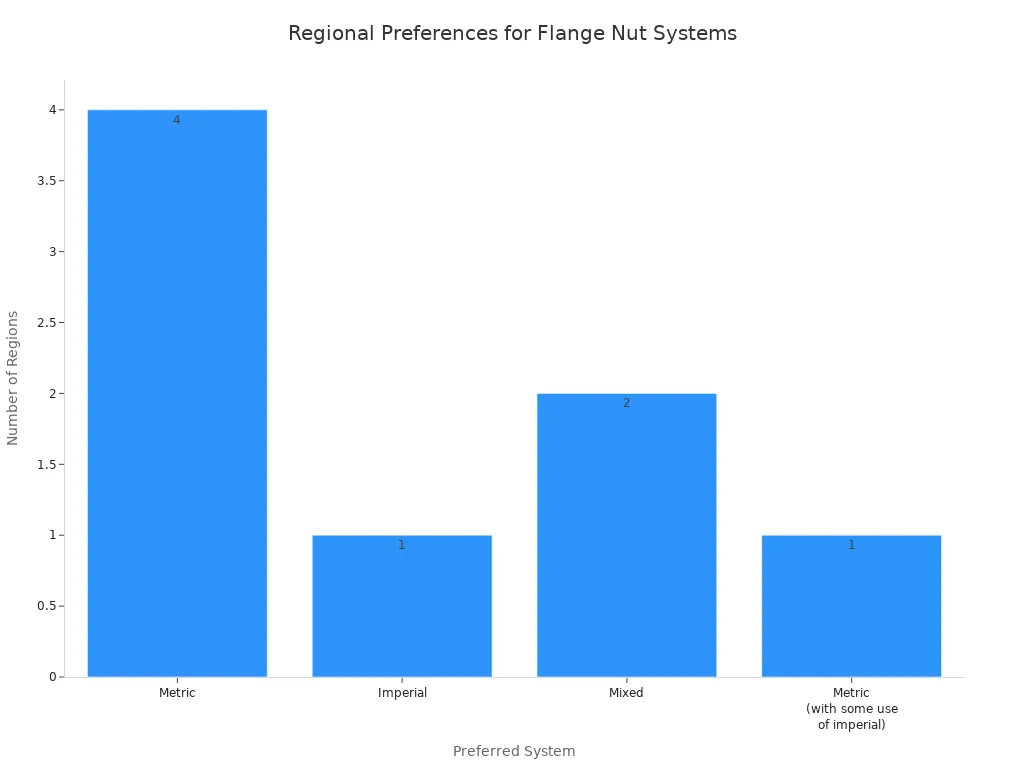
Understanding regional preferences and sizing standards helps engineers select the right flange nut for each project, whether they need metric, imperial, or specialized types like hexagonal flange face nuts.
Custom and Specialty Flange Nuts
Unique Designs
Manufacturers create custom and specialty flange nuts to address unique engineering challenges. These nuts often feature modifications that standard types cannot provide. Some custom flange nuts include extra-wide flanges for increased load distribution. Others use non-standard shapes, such as square or oval flanges, to fit into specialized slots or recesses.
Engineers may specify flange nuts with integrated locking features, such as nylon inserts or spring-loaded mechanisms. These additions improve vibration resistance in critical assemblies. Some specialty flange nuts use captive washers that rotate independently from the nut body. This design allows for smoother tightening and reduces friction during installation.
Note: Custom flange nuts can include unique thread patterns, left-hand threads, or even color-coded finishes for easy identification during assembly.
The table below highlights several unique design features found in specialty flange nuts:
| Feature | Description | Common Use Case |
|---|---|---|
| Extra-wide flange | Distributes load over a larger area | Soft or thin materials |
| Non-standard shapes | Fits into custom slots or recesses | Aerospace, electronics |
| Integrated locking mechanism | Enhances vibration resistance | Automotive, heavy machinery |
| Captive washer | Reduces friction and allows smoother tightening | Precision equipment |
| Left-hand threads | Prevents loosening in rotating assemblies | Rotating shafts, turbines |
Specialized Applications
Specialty flange nuts serve industries that require advanced performance or compliance with strict standards. The aerospace sector often uses lightweight titanium or aluminum flange nuts with precise tolerances. These fasteners must withstand extreme temperatures and resist corrosion. Defense contractors may request flange nuts with tamper-resistant features to enhance security in sensitive equipment.
Medical device manufacturers rely on custom flange nuts made from biocompatible materials. These nuts must meet rigorous cleanliness and safety requirements. In the energy sector, engineers use flange nuts with special coatings to resist chemicals and high temperatures found in oil and gas operations.
- Automotive racing teams select custom flange nuts for weight reduction and quick assembly.
- Electronics companies use miniature flange nuts for compact circuit board mounting.
- Renewable energy projects require corrosion-resistant flange nuts for outdoor installations.
Tip: Engineers should consult with fastener specialists when selecting custom or specialty flange nuts. Proper selection ensures safety, reliability, and compliance with industry standards.
Custom and specialty flange nuts provide solutions for demanding environments. Their unique designs and materials help engineers achieve optimal performance in challenging applications.
How to Select the Right Flange Nut
Selecting the right flange nut ensures safety, reliability, and efficiency in any assembly. Engineers and technicians must evaluate several factors before making a final choice.
Assessing Application Needs
Load Requirements
Every application places unique demands on fasteners. Flange nuts must withstand the pressure and forces present in the system. High-load environments, such as structural frameworks or heavy machinery, require nuts with higher tensile strength. The correct flange nut prevents joint failure and maintains system integrity.
Environmental Factors
Environmental conditions play a significant role in flange nut selection. Exposure to moisture, chemicals, or extreme temperatures can affect material performance. For example, stainless steel flange nuts resist corrosion in marine or chemical settings, while coated carbon steel suits harsh industrial environments. Temperature fluctuations may cause thermal expansion or contraction, impacting clamping force. Engineers often use flexible gaskets or spring washers to address these challenges.
Note: Installation space and ease of assembly also influence the choice. Compact areas may require smaller flange nuts, while frequent maintenance calls for easy-to-remove designs.
Key Factors for Flange Nut Selection:
| Factor | Description |
|---|---|
| Pressure Levels | Flange nuts must withstand operating pressures; higher pressures may require specific types. |
| Environmental Conditions | Exposure to corrosive substances or extreme temperatures affects material choice. |
| Ease of Assembly and Disassembly | Important for maintenance; easier assembly can lead to operational efficiencies. |
| Physical Space | Installation space can limit flange type selection. |
| Cost Considerations | Weighing costs against benefits is essential for an economically sound choice. |
Choosing Material and Finish
Corrosion Resistance
Material selection impacts both performance and longevity. Stainless steel offers excellent corrosion resistance, making it ideal for outdoor, marine, or chemical environments. Coated carbon steel provides enhanced protection in harsh conditions. Engineers must match the material to the environment to prevent premature failure.
Strength Considerations
Different materials provide varying levels of strength. Alloy steel delivers higher tensile strength for high-load applications, while carbon steel offers a cost-effective solution for general use. The right combination of material and finish ensures the flange nut meets both mechanical and environmental demands.
| Material Type | Key Characteristics | Suitable Environments |
|---|---|---|
| Carbon Steel | Cost-effective, strong, requires coatings for corrosion protection | General-purpose applications |
| Alloy Steel | Higher tensile strength, suitable for high-load applications | Industrial machinery, structural frameworks |
| Stainless Steel | Excellent corrosion resistance, ideal for outdoor and chemical environments | Marine, chemical, high-humidity settings |
| Coated Carbon Steel | Enhanced corrosion resistance through surface treatments | Harsh conditions |
Sizing and Compatibility
Thread Size
Proper sizing ensures a secure and reliable connection. Selecting the correct thread size prevents inadequate clamping force or component damage. Engineers must match the flange nut to the bolt or stud for optimal performance.
Flange Diameter
The flange diameter affects load distribution and fit. A larger flange covers more surface area, reducing the risk of material damage. Compatibility with the mating surface and other components remains essential for a stable assembly.
| Consideration | Description |
|---|---|
| Proper Sizing | Selecting the correct size for flange bolts is essential for a secure seal. Incorrect sizes can lead to inadequate clamping force or damage to components. |
| Torque Specifications | Applying the correct torque is crucial to ensure that bolts provide necessary clamping force without causing damage. Following specified torque values prevents leaks and system instability. |
| Material Compatibility | Flange bolts must be made from materials that can withstand environmental stresses. Incompatible materials may corrode or crack, compromising joint integrity. Matching materials with flanges and gaskets is vital for compatibility. |
| Environmental Factors | Temperature changes can cause thermal expansion or contraction, affecting clamping force. Using flexible gaskets and techniques like spring washers can help mitigate these effects. |
Tip: Careful consideration of application needs, material properties, and sizing ensures the right flange nut delivers long-term performance and safety.
A flange nut combines a wide flange with a threaded body to deliver secure fastening and efficient load distribution. This design protects materials and simplifies installation across many industries. The table below highlights the main benefits and applications:
| Benefit/Application | Description |
|---|---|
| Load Distribution and Material Protection | Flange nuts and bolts spread weight evenly, protecting materials and reducing stress points. |
| Vibration Resistance | They remain tight in dynamic environments, preventing failures due to vibrations. |
| Simplified Installation | The flange eliminates the need for washers, speeding up assembly and reducing component count. |
| Sealing Capabilities | Flange nuts create tight seals, preventing leaks in systems with fluids or gases. |
| Versatility Across Applications | Used in various industries including construction, automotive, plumbing, and aerospace. |
Selecting the correct flange nut for each application ensures:
- Mechanical stability in vibration-prone environments
- Reduced risk of unscrewing in vehicles and aircraft
- Enhanced performance and safety through proper material and environmental choices
Engineers and technicians can improve reliability and efficiency by choosing flange nuts for their next project.
FAQ
What is the main advantage of using a flange nut?
A flange nut distributes load across a wider area. This design reduces surface damage and eliminates the need for a separate washer. Engineers prefer flange nuts for vibration resistance and efficient installation.
Can flange nuts be reused?
Manufacturers recommend reusing flange nuts only if they show no signs of wear or damage. Serrated flange nuts may lose grip after repeated use. Always inspect the nut before reinstallation.
Are flange nuts suitable for outdoor applications?
Stainless steel or coated flange nuts resist corrosion. These materials perform well in outdoor environments. Selection depends on exposure to moisture, chemicals, and temperature extremes.
How do serrated flange nuts prevent loosening?
Serrated flange nuts feature angled ridges on the flange. These ridges grip the mounting surface, increasing friction and resisting rotation. This mechanism helps maintain tightness under vibration.
What industries commonly use flange nuts?
Automotive, aerospace, construction, electronics, and machinery industries rely on flange nuts. These nuts provide secure fastening and vibration resistance in critical assemblies.
How should you select the correct flange nut size?
Engineers match the thread size and flange diameter to the bolt and application. Proper sizing ensures secure fastening and prevents material damage. Refer to manufacturer specifications for guidance.
Do flange nuts require special installation tools?
Standard wrenches or sockets fit most flange nuts. No special tools are necessary. Always follow torque recommendations to avoid over-tightening.
Can flange nuts be used with plastic or wood materials?
Non-serrated flange nuts suit plastic and wood. The smooth flange prevents surface damage. Serrated types may cause marks or indentations.