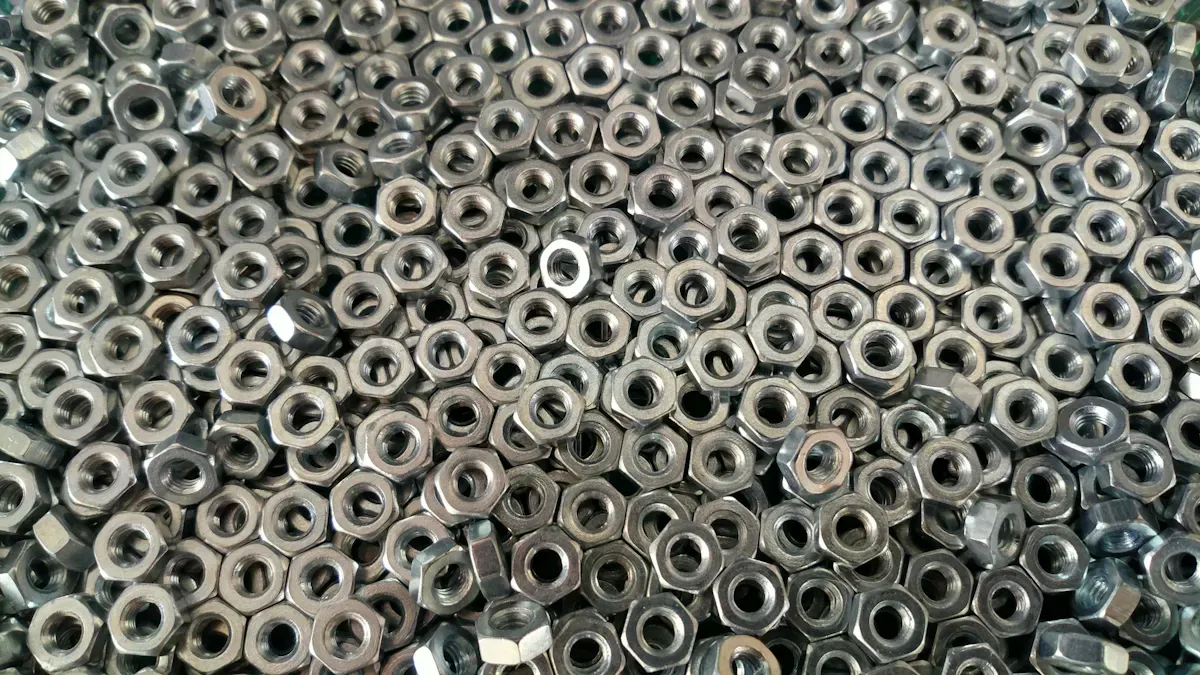
Nylock nuts deliver reliable locking performance and resist loosening caused by vibration. The advantages of nylock nuts include easy installation and enhanced safety for nuts and bolts in many settings. A nylon insert lock nut features a nylon ring that grips the threads, preventing accidental loosening.
The nylon insert creates friction, securing the fastener without damaging threads. This mechanism appeals to a custom fasteners manufacturer and those seeking custom fasteners for specialized applications.
What Is a Nylon Insert Lock Nut?
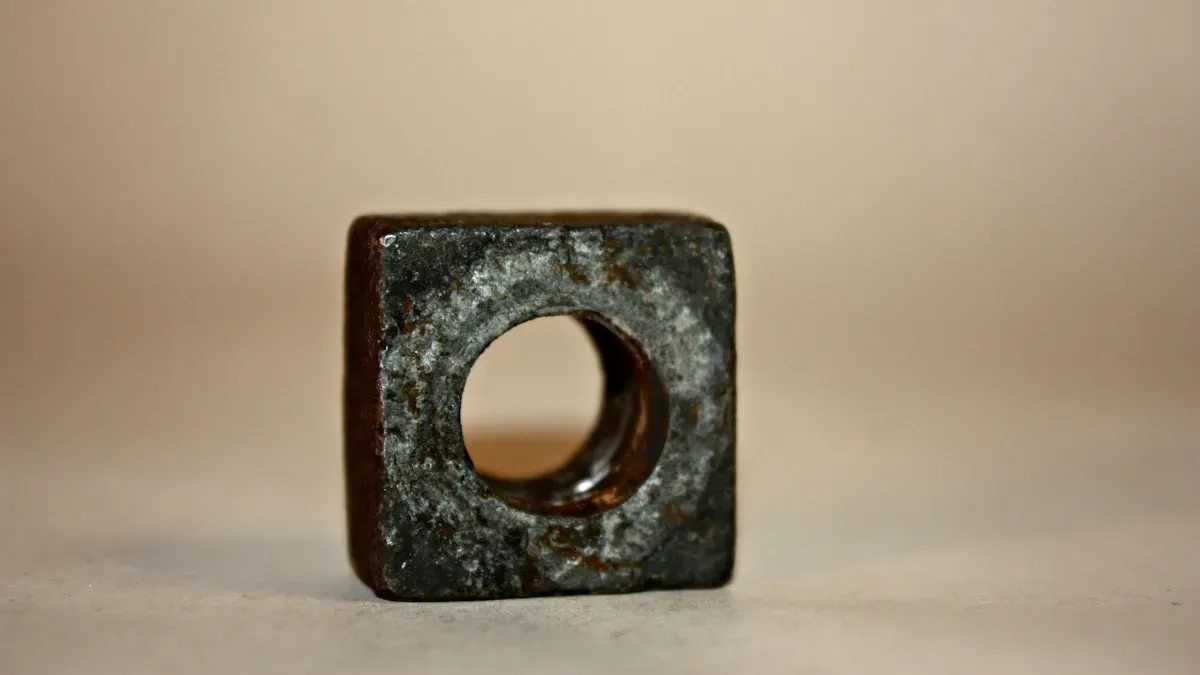
Basic Definition
A nylon insert lock nut belongs to a specialized category of fasteners designed to prevent loosening under stress. Engineers often refer to this component as a nyloc nut. It features a nylon collar positioned inside the nut. This collar increases friction on the screw thread, which enhances the locking mechanism. The nylon insert deforms elastically over the threads when tightened. This deformation creates a secure grip that resists loosening. Most nyloc nuts maintain their locking ability at temperatures up to 250 °F (121 °C).
Professionals in automotive, aerospace, and industrial sectors rely on nylon insert locking nuts for their consistent performance and reliability.
How Nylon Insert Lock Nuts Work
The unique design of these nuts ensures a tight and reliable fit. The nylon insert is slightly oversized compared to the bolt threads. When a technician tightens the nut, the nylon material compresses and conforms to the threads. This process generates significant friction between the nut and the bolt. The frictional resistance created by the nylon insert effectively prevents the nut from loosening, even when exposed to constant vibration or movement.
The locking action does not damage the threads. Instead, it provides a reusable solution for applications where safety and stability are critical. Many industries choose this type of lock nut for assemblies that experience frequent vibration or require periodic maintenance.
Common Types of Nylon Insert Lock Nuts
Manufacturers produce several types of nylon insert lock nuts to meet different engineering requirements. The most common types include:
- Standard hex nylon insert lock nuts: These feature a six-sided shape for easy installation with standard tools.
- Thin nylon insert lock nuts: These have a reduced height, making them suitable for applications with limited space.
- Flange nylon insert lock nuts: These include a built-in washer-like flange that distributes load and prevents surface damage.
- Metric nylon insert lock nuts: These conform to international metric sizing standards for global compatibility.
Each type offers specific advantages for various applications. Selection depends on factors such as available space, load requirements, and environmental conditions.
Advantages of Nylock Nuts
Vibration Resistance
Nylock nuts excel in environments where vibration poses a risk to fastener integrity. The nylon insert acts as a built-in locking mechanism, gripping the bolt threads and maintaining tension. This feature plays a crucial role in preventing loosening, especially in machinery or vehicles that experience constant movement.
The following table compares the vibration resistance of M5 nylock nuts to standard M5 nuts:
| Property | M5 Nyloc Nut | Standard M5 Nut | Notes |
|---|---|---|---|
| Vibration Resistance | Excellent (due to nylon insert) | Poor (requires external lock washer) | Nyloc provides built-in locking feature |
This comparison highlights one of the main advantages of nylock nuts. They provide reliable performance without the need for additional components, such as lock washers. Engineers often select these nuts for applications where safety and reliability are critical.
Tip: Nylock nuts reduce the risk of fastener failure in vibrating assemblies, which can help extend equipment lifespan.
Reusability and Maintenance
Nylock nuts offer a degree of reusability, which benefits maintenance routines. The nylon insert maintains its grip for a limited number of cycles, depending on the application. In high-stakes environments, such as aerospace or automotive safety systems, technicians typically treat nylock nuts as single-use items. For non-critical uses, these nuts can withstand two to three reuse cycles if the nylon insert remains undamaged.
The table below summarizes typical reuse cycles:
| Application Type | Reuse Cycles | Notes |
|---|---|---|
| High-stakes applications | Single-use | Treated as single-use due to degradation of nylon insert after first use. |
| Non-critical applications | 2-3 times | Can be reused if inspected for damage and still provides resistance. |
This characteristic supports efficient maintenance schedules in less demanding settings. The unique properties of the nylon insert allow for some flexibility, but users should always inspect the nut before reuse.
Ease of Installation
Nylock nuts simplify the installation process. Workers can use standard hand tools to secure these nuts, eliminating the need for specialized equipment. The nylon insert provides immediate resistance as the nut is tightened, which helps installers recognize when the correct torque has been reached.
Some key points regarding installation include:
- No need for additional locking devices, such as split washers or adhesives.
- Reduced assembly time due to the integrated locking feature.
- Lower risk of over-tightening, as the nylon insert offers tactile feedback.
The advantages of nylock nuts in installation make them a preferred choice for both professional technicians and DIY enthusiasts. Their design streamlines assembly and reduces the chance of installation errors.
Cost-Effectiveness
Nylock nuts deliver significant value for both large-scale industrial projects and smaller DIY tasks. Manufacturers produce these fasteners using standard materials and efficient processes, which keeps production costs low. The integrated nylon insert eliminates the need for additional locking devices, such as washers or adhesives. This feature reduces the total number of components required in an assembly. Companies benefit from lower inventory costs and simplified procurement.
Maintenance teams appreciate the reduced labor costs associated with nylock nuts. Workers install these fasteners quickly using basic tools. The locking mechanism remains reliable without expensive specialty equipment. Bulk purchasing further enhances cost savings, especially for organizations that require thousands of fasteners each year. The advantages of nylock nuts include their ability to provide secure fastening at a fraction of the cost compared to more complex locking solutions.
Tip: Choosing nylock nuts for routine maintenance or mass production can help organizations control expenses and improve operational efficiency.
Corrosion Resistance
Nylock nuts resist corrosion in many environments. Manufacturers often use stainless steel, zinc-plated steel, or brass to produce these fasteners. The nylon insert acts as a barrier, reducing the risk of moisture and contaminants reaching the threads. This feature protects the integrity of the assembly and extends the lifespan of the fastener.
Corrosion resistance proves essential in outdoor applications, marine environments, and industrial settings where exposure to chemicals or humidity occurs. The unique properties of the nylon insert help maintain performance even when the fastener faces challenging conditions. Engineers select nylock nuts for projects that demand durability and reliability over time.
A comparison table highlights corrosion resistance among common materials:
| Material | Corrosion Resistance | Typical Use Cases |
|---|---|---|
| Stainless Steel | Excellent | Marine, outdoor, food industry |
| Zinc-Plated Steel | Good | Automotive, machinery |
| Brass | Moderate | Electrical, decorative |
Versatility in Applications
Nylock nuts serve a wide range of industries due to their adaptable design. Engineers and technicians rely on these fasteners for assemblies that require vibration resistance, secure locking, and easy installation. The advantages of nylock nuts extend to both high-performance and everyday applications.
Industries that commonly use nylock nuts include:
- Automotive & Heavy Machinery
- Construction & Structural Engineering
- Industrial Equipment & Machinery
- Railway & Aerospace Engineering
- Renewable Energy & Wind Turbines
Each sector values the reliability and safety provided by the nylon insert. Nylock nuts perform well in environments with frequent vibration, temperature changes, or exposure to harsh elements. Their versatility allows engineers to specify them for both critical and non-critical assemblies. The fasteners adapt to metric and imperial standards, making them suitable for global projects.
Note: The broad application range of nylock nuts demonstrates their effectiveness in both specialized and general-purpose assemblies.
Enhanced Safety
Nylock nuts provide a significant boost to safety in mechanical assemblies. Engineers and technicians rely on these fasteners to maintain secure connections, especially in environments where vibration or movement threatens the integrity of joints. The nylon insert inside the nut creates a friction barrier that prevents accidental loosening. This feature reduces the risk of catastrophic failures in machinery, vehicles, and structural components.
Safety remains a top priority in industries such as automotive, aerospace, and construction. Nylock nuts help prevent bolts from backing out, which can lead to equipment malfunction or structural collapse. Workers trust these fasteners to deliver consistent performance under stress. The locking mechanism ensures that assemblies stay intact during operation, even when exposed to dynamic forces.
Key safety benefits include:
- Prevention of Accidental Loosening: The nylon insert grips the threads, keeping the nut firmly in place. This action protects against vibration-induced failures.
- Reduction of Maintenance-Related Hazards: Assemblies using nylock nuts require less frequent retightening. Technicians spend less time checking fasteners, lowering the risk of injury during maintenance.
- Enhanced Reliability in Critical Systems: Nylock nuts support safety systems in vehicles and aircraft. Their locking action helps maintain the integrity of seat belts, suspension components, and control surfaces.
- Minimized Risk of Equipment Damage: Secure fasteners prevent parts from shifting or separating. This protection extends the lifespan of machinery and reduces downtime.
Note: The advantages of nylock nuts include their ability to safeguard both personnel and equipment. Reliable locking reduces the likelihood of accidents caused by loose fasteners.
A comparison table highlights the safety performance of nylock nuts versus standard nuts:
| Safety Feature | Nylock Nut | Standard Nut |
|---|---|---|
| Vibration Resistance | High | Low |
| Accidental Loosening Prevention | Excellent | Poor |
| Maintenance Frequency | Reduced | Increased |
| Suitability for Critical Systems | Preferred | Not recommended |
Manufacturers design nylock nuts to meet stringent safety standards. These fasteners undergo rigorous testing to ensure they perform reliably in demanding conditions. Engineers select nylock nuts for assemblies where failure is not an option. Their use contributes to safer workplaces, vehicles, and public infrastructure.
Disadvantages of Nylock Nuts
Temperature Limitations
Nylock nuts face significant challenges in high-temperature environments. The nylon insert inside each nut begins to lose its elasticity when exposed to temperatures above 250 °F (121 °C). This loss of elasticity reduces the locking force that holds the nut in place. In extreme cases, the nylon can melt or deform, causing the nut to lose its self-locking properties. Applications such as automotive exhaust systems, industrial ovens, or aerospace engines often reach temperatures that exceed the safe operating range for these fasteners.
Engineers must consider the operating temperature before selecting a nylock nut for any assembly. When temperatures rise above the recommended threshold, the nylon insert may fail, leading to potential loosening of the fastener. In these situations, all-metal lock nuts or other high-temperature alternatives provide better performance and safety.
Caution: Using nylock nuts in high-heat environments can compromise the integrity of the entire assembly.
Limited Reusability
Nylock nuts offer only a limited number of reuse cycles. The nylon insert deforms to grip the threads during installation. Each time a technician removes and reinstalls the nut, the insert loses some of its original shape and frictional properties. Over time, this wear reduces the effectiveness of the locking mechanism.
Laboratory testing demonstrates how repeated use affects the locking performance of these nuts. The following table summarizes the results:
| Time Interval | Movement Observed | Assembly Security |
|---|---|---|
| 0-30 seconds | No noticeable movement | Secure |
| 30-60 seconds | Slight movement | Secure |
| 60-90 seconds | Noticeable movement | Still secure |
The table shows that, while the assembly remains secure during initial cycles, movement increases with each use. After several installations, the nylon insert may no longer provide adequate resistance. For critical applications, engineers recommend replacing the nut after each use to maintain safety and reliability.
Note: Reusing nylock nuts in safety-critical assemblies increases the risk of fastener failure.
Chemical Compatibility Issues
Nylock nuts do not perform well in environments with aggressive chemicals. The nylon insert can degrade when exposed to strong acids and alkalis. Substances such as concentrated sulfuric acid and sodium hydroxide attack the nylon material in DIN985 Nylon Lock Nuts. This chemical reaction causes the insert to deteriorate over time. As the nylon breaks down, the nut loses its locking function, which can compromise safety and stability in chemical processing plants or laboratories.
Engineers must evaluate the chemical environment before specifying a nylon insert lock nut for any project. In settings with frequent exposure to harsh chemicals, alternative locking solutions with higher chemical resistance should be considered.
Tip: Always check the compatibility of fastener materials with the chemicals present in the application environment.
Not Suitable for High-Load Applications
Nylock nuts do not perform well in assemblies that require high load-bearing capacity. The nylon insert limits the nut’s ability to withstand extreme forces. Engineers often avoid using these fasteners in high-stress applications, such as heavy machinery or structural supports. The nylon material compresses under pressure, which reduces the locking strength. When subjected to intense loads, the insert may deform or lose its grip, causing the nut to loosen.
Manufacturers recommend all-metal lock nuts for situations where maximum strength is essential. These alternatives maintain their integrity under heavy loads and resist deformation. Nylock nuts serve best in light to moderate duty assemblies. Their locking mechanism works reliably when the forces remain within the recommended range.
Note: Selecting the correct fastener for the load requirements ensures safety and prevents unexpected failures.
A comparison table illustrates the suitability of nylock nuts versus all-metal lock nuts:
| Application Type | Nylock Nut Suitability | All-Metal Lock Nut Suitability |
|---|---|---|
| Light Duty | Excellent | Good |
| Moderate Duty | Good | Excellent |
| High Load | Poor | Excellent |
| High-Stress Applications | Not recommended | Preferred |
Installation Considerations
Proper installation of nylock nuts requires attention to torque values and assembly methods. The nylon insert creates additional friction, which affects the torque needed to secure the nut. Technicians must adjust their approach to achieve reliable locking.
- Some users suggest adding 5 in-lbs to the torque value for nylock nuts. This adjustment may not suit larger diameter fasteners.
- Using a torque wrench to measure the drag of the nylock nut and adding that value to the final torque ensures consistent results.
- Another method involves measuring the bolt length with a plain nut, then tightening the nylock until the bolt length matches. Nylock nuts do not provide consistent torque values across multiple uses.
Installers must avoid over-tightening, which can damage the nylon insert and reduce its effectiveness. Under-tightening may lead to insufficient locking and increased risk of loosening. The nylon insert offers tactile feedback during installation, helping technicians recognize when the nut reaches proper tension.
Tip: Always use calibrated tools and follow manufacturer guidelines to achieve optimal performance.
Potential for Nylon Degradation
Nylon inserts in nylock nuts degrade when exposed to certain environmental conditions. Moisture absorption causes the nylon to swell, resulting in improper fitting for precision applications. Water reduces the mechanical strength of nylon, making it more susceptible to failure in high-stress situations. Moisture softens the insert, decreasing friction and increasing the likelihood of loosening in assemblies subject to vibration.
High humidity and elevated temperatures accelerate moisture absorption, further degrading the nylon material. Mold and mildew growth, promoted by moisture, can secrete enzymes that break down nylon, hastening its deterioration. These factors compromise the locking mechanism and reduce the lifespan of the fastener.
Installers must evaluate the environment before choosing nylock nuts. Assemblies exposed to water, humidity, or biological contaminants require alternative locking solutions. Stainless steel or all-metal lock nuts offer better resistance to environmental degradation.
Alert: Environmental factors such as moisture and heat can significantly shorten the service life of nylon insert lock nuts.
A summary table highlights environmental risks:
| Environmental Factor | Effect on Nylon Insert | Impact on Fastener Performance |
|---|---|---|
| Moisture Absorption | Swelling, softening | Improper fit, loosening |
| High Humidity | Accelerated degradation | Reduced lifespan |
| Elevated Temperature | Increased moisture uptake | Loss of mechanical strength |
| Mold/Mildew Growth | Enzyme breakdown of nylon | Faster deterioration |
Typical Applications of Nylon Insert Lock Nuts
Automotive Industry
Automotive engineers rely on nylon insert lock nuts to secure critical components. These fasteners hold together suspension systems, steering assemblies, and brake mechanisms. The nylon insert prevents loosening caused by road vibrations and sudden movements. Mechanics install these nuts during routine maintenance and repairs. They appreciate the ease of installation and the consistent locking performance. Manufacturers select nylon insert lock nuts for both passenger vehicles and commercial trucks. The nuts maintain their grip under moderate temperatures and resist corrosion from road salt and moisture. Automotive applications demand reliability, and nylon insert lock nuts deliver dependable results.
Tip: Technicians inspect the nylon insert for wear during maintenance. Replacing worn nuts ensures continued safety and performance.
Aerospace Applications
Aerospace technicians use nylon insert lock nuts in assemblies that experience constant vibration and movement. The friction created by the nylon insert against the threads provides reliable locking performance. Engineers value the prevailing torque generated by these nuts, which helps resist loosening from vibrations. Safety remains a top priority in aerospace environments. Nylon insert lock nuts contribute to secure connections in control surfaces, avionics mounts, and interior fittings. The nuts offer compatibility with various materials and thread sizes, making them versatile for different uses.
- Nylon insert lock nuts deliver reliable locking in vibration-prone environments.
- The prevailing torque ensures safety by resisting loosening.
- Cost-effective design supports compatibility with multiple materials and thread sizes.
Aerospace manufacturers choose these fasteners for non-critical assemblies where moderate temperatures prevail. The nuts help maintain the integrity of components during flight, supporting both safety and operational efficiency.
Home Improvement and DIY Projects
Homeowners and DIY enthusiasts use nylon insert lock nuts for furniture assembly, shelving units, and garden equipment. The nuts simplify installation and provide a secure hold without the need for additional locking devices. The nylon insert prevents accidental loosening, even when subjected to movement or vibration. Users appreciate the versatility of these fasteners in various home projects. Nylon insert lock nuts work well with wood, metal, and plastic components. They resist corrosion, making them suitable for outdoor applications such as fencing and playground equipment.
Note: DIY users benefit from the tactile feedback during installation. The nylon insert signals when the nut reaches proper tension, reducing the risk of over-tightening.
Nylon insert lock nuts serve various industries, including automotive, aerospace, and home improvement. Their adaptability and reliable performance make them a preferred choice for securing assemblies in environments where vibration and safety matter.
Industrial Machinery
Engineers in the industrial machinery sector depend on nylon insert lock nuts to secure moving parts and maintain equipment reliability. These nuts play a crucial role in assemblies that experience frequent vibration, such as conveyor systems, pumps, and compressors. The nylon insert creates friction against the bolt threads, which prevents loosening during operation. Technicians value this locking mechanism because it reduces the risk of mechanical failure and minimizes downtime.
Manufacturers select nylon insert lock nuts for machinery that requires periodic maintenance. Workers can remove and reinstall these nuts without damaging the threads, which streamlines repair processes. The nuts also resist corrosion, making them suitable for environments exposed to moisture, lubricants, or chemicals. This property extends the lifespan of fasteners and protects critical components.
Industrial machinery often operates under moderate loads and temperatures. Nylon insert lock nuts perform well within these parameters. However, engineers avoid using them in applications with extreme heat or heavy loads. All-metal lock nuts provide better performance in those situations.
Key benefits in industrial machinery include:
- Enhanced vibration resistance for moving assemblies
- Reduced maintenance time due to easy installation and removal
- Protection against corrosion in harsh environments
- Reliable locking action for moderate-duty applications
Tip: Regular inspection of nylon inserts ensures continued performance and safety in machinery.
Electronics and Electrical Installations
Technicians in electronics and electrical installations use nylon insert lock nuts to secure circuit boards, enclosures, and mounting brackets. These nuts offer several advantages that make them ideal for sensitive electrical environments.
The nylon material provides excellent electrical insulation. This property reduces the risk of short circuits and protects delicate components from accidental contact. Nylon insert lock nuts also resist corrosion, which proves valuable in installations exposed to moisture or chemicals. Their lightweight design benefits applications where weight reduction is critical, such as portable devices or aerospace electronics.
Assemblies in electronics often face vibration from moving parts or external forces. The elasticity of the nylon insert dampens these vibrations, preventing fasteners from loosening and maintaining system integrity.
The following table summarizes the advantages of nylon insert lock nuts in electronics and electrical installations:
| Advantage | Description |
|---|---|
| Corrosion resistance | Nylon nuts do not rust or corrode, making them suitable for moist or chemical-exposed areas. |
| Insulation properties | They provide good electrical insulation, reducing the risk of short circuits in electrical applications. |
| Vibration resistance | Their elasticity helps dampen vibrations, preventing loosening of fasteners in dynamic environments. |
| Lightweight | Being lighter than metal nuts, they are beneficial in weight-sensitive applications. |
Note: Nylon insert lock nuts help maintain safety and reliability in electrical systems by combining insulation, corrosion resistance, and secure fastening.
Technicians choose these fasteners for control panels, sensor mounts, and power distribution units. The nuts support efficient assembly and protect sensitive electronics from environmental hazards.
Nylon Insert Lock Nut vs. Other Lock Nuts
Nylock Nuts vs. All-Metal Lock Nuts
Engineers often compare nylock nuts and all-metal lock nuts when selecting the best solution for vibration resistance and durability. Each type offers unique benefits and limitations. The following points highlight the main differences:
- Nylock nuts provide good vibration resistance in moderate conditions. The nylon insert grips the threads, but this material may wear down after repeated use.
- All-metal lock nuts excel in high-vibration environments. Their metal-to-metal locking mechanism ensures a longer service life, even under extreme stress.
- Nylock nuts generally cost less upfront. This affordability makes them attractive for general-purpose applications where budget constraints matter.
- All-metal lock nuts require more intricate manufacturing, which increases their price. However, their durability often delivers better long-term value, especially in demanding settings.
Selecting between these options depends on the specific requirements of the assembly. Nylock nuts suit projects with moderate vibration and lower temperatures. All-metal lock nuts remain the preferred choice for high-stress or high-temperature environments.
Note: For assemblies exposed to frequent vibration or heat, all-metal lock nuts offer superior reliability and longevity.
Nylock Nuts vs. Standard Nuts with Washers
Nylock nuts and standard nuts with washers represent two common approaches in fastening technology. The table below outlines their key differences:
| Feature | Nylock Nuts | Standard Nuts with Washers |
|---|---|---|
| Locking Mechanism | Uses nylon insert for friction locking | Relies on washer for load distribution |
| Reusability | Not reliable for reuse due to nylon wear | Can be reused if washer is intact |
| Temperature Sensitivity | Sensitive to high temperatures and chemicals | Generally more tolerant to temperature variations |
| Installation | Requires tools for installation | Can be installed by hand |
| Surface Protection | Limited surface protection | Washer helps protect surfaces from damage |
Nylock nuts deliver a built-in locking feature, reducing the need for extra components. Standard nuts with washers focus on distributing load and protecting surfaces but lack a dedicated locking mechanism. Users must consider the environment and maintenance needs when choosing between these options.
Nylock Nuts vs. Prevailing Torque Nuts
Prevailing torque nuts use a deformed thread or other mechanical feature to create resistance during installation. Unlike nylock nuts, they do not rely on a nylon insert. This design allows prevailing torque nuts to withstand higher temperatures and more aggressive chemical environments. However, nylock nuts often provide smoother installation and better performance in moderate conditions. Technicians appreciate the tactile feedback from the nylon insert, which signals proper tension.
Prevailing torque nuts excel in heavy-duty applications where heat and chemical exposure are concerns. Nylock nuts remain popular for general-purpose use, especially where ease of installation and cost-effectiveness matter.
Tip: When selecting a lock nut, always match the fastener to the application’s temperature, vibration, and chemical exposure requirements.
When to Choose Nylock Nuts Over Alternatives
Selecting the right locking fastener requires careful evaluation of application needs. Nylock nuts offer unique advantages, but engineers must assess several factors before making a decision. The following ordered list outlines essential considerations for choosing nylock nuts over other locking solutions:
Know Your Requirements
Engineers start by identifying load and torque specifications. Steel provides strength, while nylon inserts deliver locking efficiency. Assemblies with moderate loads and vibration benefit from this combination.Environmental Factors
Temperature and exposure to elements influence fastener performance. Stainless steel nylock nuts resist corrosion in humid or outdoor environments. Assemblies exposed to extreme heat or chemicals require alternative lock nuts.Thread Compatibility
Matching bolt specifications ensures proper fit. Material hardness must align with the application. Nylock nuts work best when paired with compatible bolts, preventing thread damage.Locking Mechanism
Nylon inserts excel at vibration resistance. Serrated or all-metal lock nuts suit high-temperature or heavy-duty applications. Engineers select nylon inserts for assemblies with frequent movement and moderate stress.Size and Dimensions
Proper sizing guarantees load-bearing capacity. Oversized or undersized nuts compromise safety. Engineers measure assembly requirements and choose nylock nuts that fit precisely.Finish Type
Plain, coated, or plated finishes protect against corrosion. Zinc-plated or stainless steel options extend fastener lifespan. The finish must match environmental demands.Load Type
Static and dynamic loads require different materials. Nylock nuts handle moderate dynamic loads well. Heavy machinery or structural supports need all-metal alternatives.Quantity Needed
Bulk purchasing reduces costs. Material selection impacts price. Organizations calculate usage requirements and choose nylock nuts when cost-effectiveness matters.Regulatory Standards
Industry standards dictate material certifications. Engineers verify compliance before specifying nylock nuts. Assemblies in regulated sectors require certified fasteners.Vendor Reputation
Reliable suppliers ensure quality assurance. Engineers research vendors and select those with proven track records. Consistent quality supports safety and performance.
Tip: Engineers should review these factors before selecting nylock nuts. Proper evaluation prevents assembly failures and maximizes reliability.
A comparison table helps clarify when nylock nuts outperform alternatives:
| Factor | Nylock Nuts | All-Metal Lock Nuts | Standard Nuts with Washers |
|---|---|---|---|
| Vibration Resistance | Excellent | Good | Poor |
| Temperature Tolerance | Moderate | High | High |
| Corrosion Resistance | Good | Excellent | Moderate |
| Ease of Installation | High | Moderate | High |
| Cost | Low | Higher | Low |
Engineers choose nylock nuts for assemblies with moderate loads, vibration, and environmental exposure. All-metal lock nuts suit high-temperature and heavy-duty applications. Standard nuts with washers work for basic fastening needs. Careful assessment ensures optimal fastener selection and assembly integrity.
Factors to Consider Before Using Nylock Nuts
Environmental Conditions
Engineers must evaluate environmental factors before selecting nylock nuts for any project. Temperature and humidity can significantly impact the performance of these fasteners. High temperatures degrade the nylon insert, which reduces its ability to lock securely. Standard nylon works well up to 250°F (120°C). For assemblies exposed to temperatures above 300°F (150°C), advanced heat-resistant polymers become necessary. Humidity also plays a role in fastener longevity. Moisture can cause corrosion in the metal components of nylock nuts, especially in outdoor or marine environments.
- High temperatures can degrade the nylon insert, reducing its locking capability.
- Humidity can cause corrosion in the materials used for nylock nuts.
- Standard nylon is effective up to approximately 250°F (120°C), but advanced heat-resistant polymers are necessary for temperatures exceeding 300°F (150°C).
Selecting the right material and insert type ensures reliable performance in challenging environments. Engineers should always match the fastener to the specific conditions of the application.
Load and Stress Requirements
Understanding load and stress requirements is essential when choosing nylock nuts. Different applications place varying demands on fasteners. The table below outlines the main load types and their implications for nylock nut selection:
| Load Type | Description |
|---|---|
| Static | Load that does not change over time; requires matching strength grades. |
| Dynamic | Load that changes over time; necessitates consideration of fatigue failure. |
| Cyclic | Repeated loading; requires higher-grade lock nuts to prevent thread damage. |
Static loads require nylock nuts with strength grades that match the assembly. Dynamic and cyclic loads introduce additional stress, which can lead to fatigue failure or thread damage. In these cases, engineers often select higher-grade lock nuts or alternative fastening technology to ensure safety and durability.
Frequency of Assembly and Disassembly
The number of times an assembly will be taken apart and reassembled affects the choice of nylock nuts. The nylon insert deforms each time the nut is installed or removed. After several cycles, the insert loses its original shape and frictional properties. For assemblies that require frequent maintenance or adjustments, standard nylock nuts may not provide long-term reliability. In such cases, engineers might consider reusable locking nuts or other fastening solutions designed for repeated use.
Tip: Always inspect the nylon insert before reusing a nylock nut. If the insert appears worn or damaged, replace the nut to maintain secure fastening.
Careful consideration of these factors helps engineers select the most suitable fastener for each application. Proper selection ensures safety, reliability, and optimal performance in any environment.
Cost and Availability
Cost and availability play a crucial role in the selection of nylock nuts for any project. Engineers and procurement specialists often evaluate these factors before specifying fasteners for assemblies. Nylock nuts generally offer a cost-effective solution compared to other locking mechanisms. Manufacturers produce them in large quantities, which helps keep prices competitive. The integrated nylon insert eliminates the need for additional locking devices, such as washers or adhesives, further reducing overall assembly costs.
A comparison table highlights the typical price range and availability of nylock nuts versus other common lock nuts:
| Fastener Type | Average Unit Cost | Availability in Market | Bulk Purchase Options |
|---|---|---|---|
| Nylock Nut | Low to Moderate | Widely Available | Yes |
| All-Metal Lock Nut | Moderate to High | Readily Available | Yes |
| Standard Nut + Washer | Low | Very Widely Available | Yes |
| Prevailing Torque Nut | Moderate | Available | Yes |
Nylock nuts remain widely available through hardware suppliers, industrial distributors, and online marketplaces. Most suppliers stock a broad range of sizes, thread types, and materials, including stainless steel, zinc-plated steel, and brass. This variety ensures that engineers can source the right fastener for nearly any application. Bulk purchasing further reduces per-unit costs, making nylock nuts attractive for large-scale manufacturing or maintenance operations.
Note: Local availability may vary based on region and specific material requirements. Specialty sizes or finishes may require longer lead times or custom orders.
Procurement teams often consider the total cost of ownership when selecting fasteners. Nylock nuts reduce labor costs due to their ease of installation. The built-in locking feature streamlines assembly, which saves time on the production line or during field repairs. Fewer components mean less inventory management and lower risk of missing parts during assembly.
Engineers also weigh the cost of potential failures. Nylock nuts provide reliable locking, which helps prevent costly downtime or repairs caused by loose fasteners. In many cases, the slightly higher upfront cost of a nylock nut pays off through improved safety and reduced maintenance.
A quick checklist for evaluating cost and availability:
- Assess project budget and required fastener quantities.
- Check local and online suppliers for stock levels and delivery times.
- Compare the total cost of nylock nuts with alternative locking solutions.
- Factor in labor savings from simplified installation.
- Consider long-term savings from reduced maintenance and improved reliability.
Nylock nuts strike a balance between affordability and performance. Their widespread availability and cost-effectiveness make them a preferred choice for many industries, from automotive to electronics. When engineers need a reliable, easy-to-source locking fastener, nylock nuts often provide the best value.
Nylock nuts deliver strong, lightweight fastening with excellent resistance to impact and abrasion. They suit high-stress and versatile applications but absorb water and lack UV resistance. The table below summarizes their strengths and weaknesses:
| Advantages | Disadvantages |
|---|---|
| Strong and lightweight | Quickly melts but is fire-resistant |
| Excellent resistance to impact and abrasion | Lacks UV resistance and can turn yellow |
| Highly resistant to wear and tear | Absorbs water, lowering mechanical properties |
| Ideal for high-stress applications | High shrinkage in cast applications |
| Versatile for various uses | Low resistance to strong bases and acids |
Engineers select nylon insert lock nuts for assemblies needing vibration resistance and easy installation. These fasteners perform best in moderate environments and non-critical systems.
FAQ
What is the maximum temperature for nylock nuts?
Nylock nuts perform reliably up to 250°F (121°C). The nylon insert loses strength above this temperature. Engineers recommend all-metal lock nuts for assemblies exposed to higher heat.
Can nylock nuts be reused?
Technicians can reuse nylock nuts two or three times in non-critical applications. The nylon insert wears with each use. For safety-critical assemblies, they replace the nut after removal.
Are nylock nuts resistant to chemicals?
Nylock nuts resist mild chemicals but degrade in strong acids or bases. The nylon insert breaks down when exposed to aggressive substances. Engineers select alternative lock nuts for harsh chemical environments.
How do nylock nuts compare to all-metal lock nuts?
| Feature | Nylock Nut | All-Metal Lock Nut |
|---|---|---|
| Vibration Resistance | Excellent | Excellent |
| Temperature Limit | Moderate | High |
| Reusability | Limited | High |
All-metal lock nuts suit high-temperature and heavy-duty applications.
Do nylock nuts require special tools for installation?
Installers use standard hand tools for nylock nuts. The nylon insert provides resistance during tightening. No specialized equipment is necessary.
What industries commonly use nylock nuts?
Automotive, aerospace, industrial machinery, electronics, and home improvement sectors rely on nylock nuts. These fasteners secure assemblies that face vibration or moderate environmental stress.
Are nylock nuts suitable for outdoor use?
Nylock nuts resist corrosion when made from stainless steel or zinc-plated steel. They perform well outdoors but may degrade if exposed to extreme moisture or UV light.
What should engineers check before selecting nylock nuts?
Engineers review temperature, chemical exposure, load requirements, and frequency of assembly. They inspect the nylon insert for wear before reuse. Proper selection ensures safety and reliability.