A u bolt clamp secures pipes, rods, or tubes in various industrial applications. Companies often rely on bolt casting for strength and resilience in these clamps. U bolt clamps offer a dependable solution for holding heavy loads and maintaining structural stability. The global market for u bolt clamps continues to expand, as shown below:
| Year | Market Size (USD Billion) | CAGR (%) |
|---|---|---|
| 2024 | 2.77 | N/A |
| 2032 | 4.36 | 5.8 |
Many industries depend on these components, including:
- The automotive industry, which secures suspension systems and axles
- The construction sector, especially in infrastructure projects
- Agriculture, where custom fasteners and custom fasteners manufacturer products provide essential support
Understanding the differences between each u bolt type ensures proper selection for safety and performance.
What Is a U-Bolt Clamp?
Basic Structure and Design
U-shape and Threaded Ends
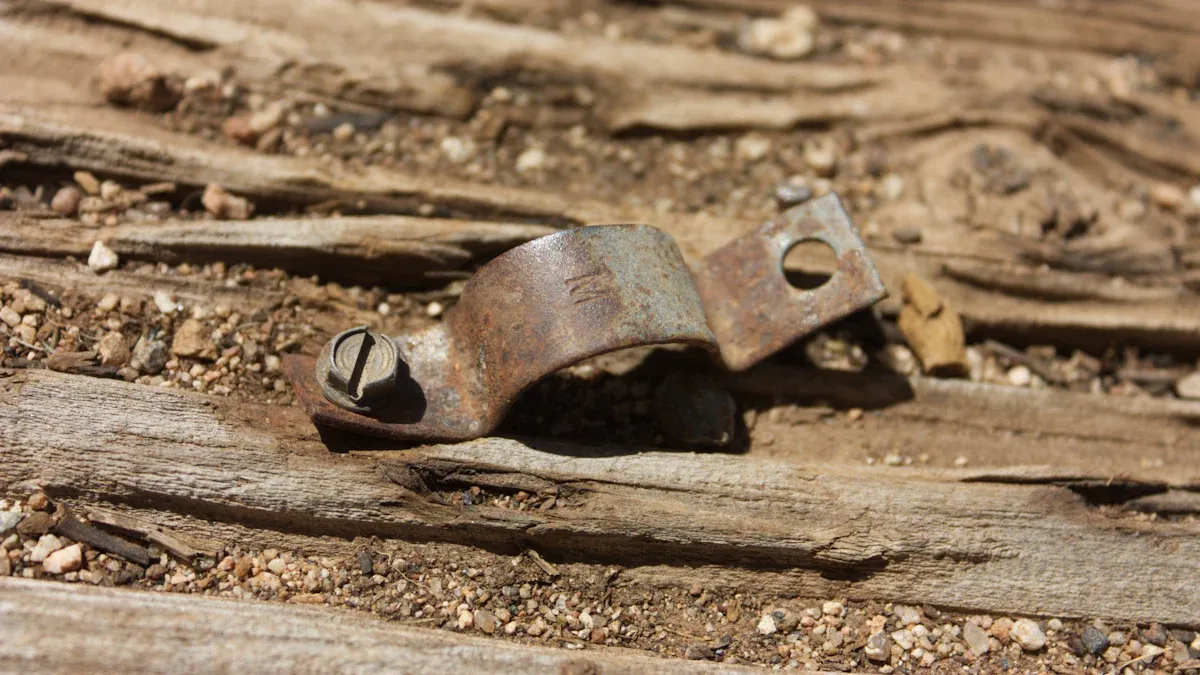
A u-bolt clamp features a simple yet effective design. The main body forms a “U” shape, which allows it to wrap around pipes, rods, or tubes. Each end of the “U” includes threaded sections. These threads accommodate nuts and washers, which secure the clamp tightly against the object. The design ensures a firm grip and distributes pressure evenly across the surface.
| Specification | Value |
|---|---|
| Design Load | 1,000 lbs (4.45 kN) |
| Hole Diameter | 9/16″ (14mm) |
| Hole Spacing (From End) | 13/16″ (21mm) |
| Hole Spacing (On-Center) | 1 7/8″ (48mm) |
| Width | 1 5/8″ (41mm) |
| Thickness | + 1/4″ (6.4mm) or + 0.220″ (5.6mm) |
This table shows standard dimensions and load ratings for u-bolt clamps. The robust construction supports heavy loads and ensures compatibility with various pipe sizes.
How U-bolt Clamps Work
U-bolt clamps operate by encircling the target object and tightening the nuts on each threaded end. This action pulls the clamp together, creating a secure hold. The clamp resists both vertical and horizontal forces, making it suitable for demanding applications. Studies show that the failure load of a u-bolt often exceeds its design load, especially under horizontal stress. The clamp behaves like a uniaxial tension member when loaded vertically, which enhances its structural integrity.
- U-bolts withstand high mechanical stress.
- They maintain stability under both vertical and horizontal loads.
- The design allows for easy installation and removal.
Key Features
Versatility
U-bolt clamps adapt to a wide range of uses. They secure pipes in plumbing, support conduits in construction, and fasten components in automotive systems. Their ability to fit different diameters and shapes makes them a preferred choice for engineers and technicians. Customization options allow manufacturers to produce u-bolts for unique requirements, further expanding their application range.
| Feature | U-bolts | U-pipe Clamps |
|---|---|---|
| Primary Use | Structures needing high tensile and shear forces | Securing pipes (water, gas, heating) |
| Strength and Stability | Provides higher strength and stability | Prevents pipes from loosening or falling off |
| Application Areas | Bridges, buildings, mechanical equipment | Water supply pipes, gas pipes, heating pipes |
| Customization | Can be customized for various applications | Can be customized for different pipe sizes |
| Quality Testing | Subject to stringent quality testing | Subject to stringent quality testing |
This table highlights the differences between u-bolts and other pipe clamps. U-bolts offer greater strength and stability, making them suitable for structural and mechanical applications.
Strength and Durability
Engineers value u-bolt clamps for their exceptional strength. The structure allows them to handle significant tensile and shear forces. The clamps undergo rigorous quality testing to ensure reliability in critical environments. The mechanical properties of a u-bolt make it ideal for supporting heavy loads in bridges, buildings, and industrial machinery. The durability of these clamps reduces maintenance needs and extends the lifespan of the supported structures.
Note: U-bolt clamps provide a reliable solution for securing heavy or high-stress components. Their robust design and proven performance make them indispensable in many industries.
Main Types of U-Bolt Clamps
Standard U-Bolt Clamps
Description
Standard u-bolt clamps represent the most common form found in industrial and commercial settings. Manufacturers design these clamps with a classic U-shaped body and threaded ends, allowing them to wrap securely around pipes, rods, or tubes. The design accommodates a wide range of diameters and lengths, making them suitable for many fastening tasks. Technical standards guide their production, ensuring consistency and reliability across different applications.
| ASTM Specification | Description |
|---|---|
| A153 | Hot dip galvanizing specification |
| A193 | Alloy steel and stainless steel bolting materials for high temperature service |
| A194 | Carbon and alloy nuts for bolts for high pressure and high temperature service |
| A307 | Carbon steel bolts and studs ranging from 1/4″ through 4″ diameter |
| A320 | Alloy steel and stainless steel bolting materials for low temperature service |
| A325 | Structural bolts, steel, heat treated, 120/105 ksi minimum tensile strength |
| A354 | Quenched and tempered alloy bolts, studs, and other externally threaded fasteners |
| A449 | Quenched and tempered steel bolts and studs |
| A490 | Structural bolts, alloy steel, heat treated, 150 ksi tensile strength |
| A563 | Standard specification for carbon and alloy steel nuts |
| F1554 | Anchor bolts designed to anchor structural supports to concrete foundations |
| F2329 | New specification covering hot dip galvanizing |
These ASTM specifications define the material, coating, and performance requirements for standard u-bolt clamps, ensuring they meet industry expectations for strength and durability.
Typical Uses
Standard u-bolt clamps serve a variety of purposes in construction, plumbing, and automotive industries. They secure pipes to walls or ceilings, fasten rods to structural supports, and hold exhaust systems in place. Their versatility comes from a broad range of available sizes and load capacities.
- Diameter options range from 1/4 inch to 1 inch or more.
- Inside width matches the object being secured.
- Leg length determines the depth of the clamp.
| Nom Bolt Size (in) | Clamp Load (lbf) |
|---|---|
| 1/4 | 1313 |
| 5/16 | 2175 |
| 3/8 | 3188 |
| 1/2 | 5850 |
| 1 | 15000 |
| 1 1/2 | 34800 |
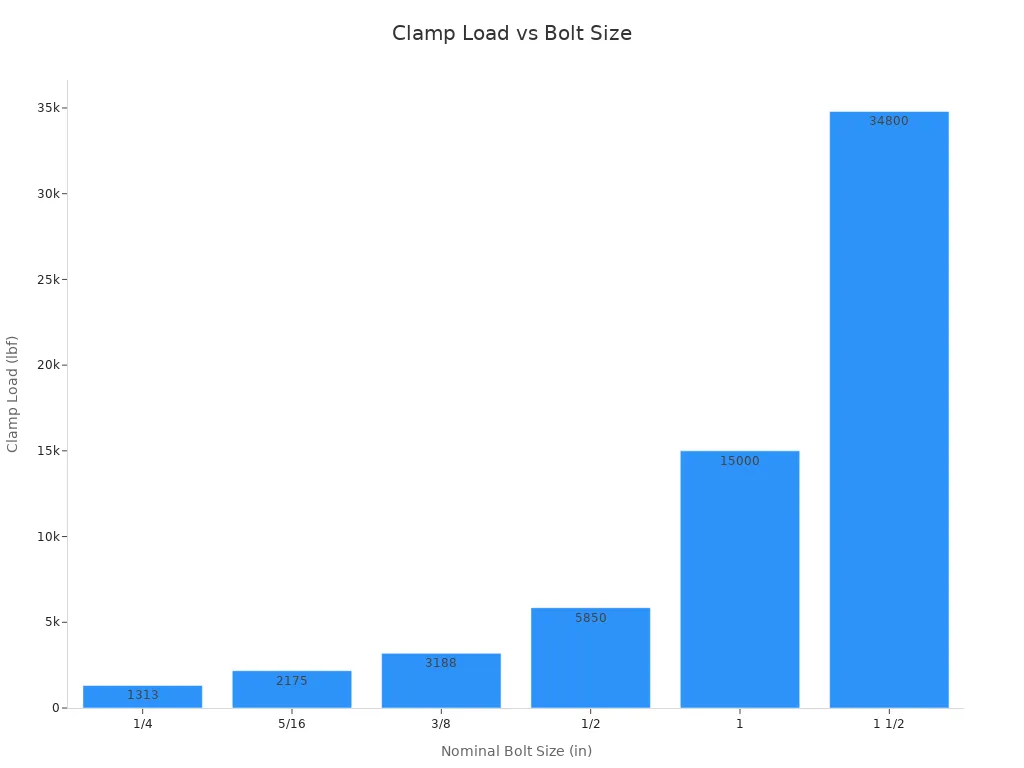
Note: Engineers select the appropriate size and load rating based on the specific requirements of each project.
Square U-Bolt Clamps
Description
Square u-bolt clamps feature a squared-off shape, with right-angle bends instead of the traditional curved profile. This design allows the clamp to fit snugly around square or rectangular objects, such as steel tubing, wooden beams, or metal frameworks. The flat contact surfaces provide greater stability and reduce the risk of rotational movement, especially in vibration-prone environments.
Typical Uses
Square u-bolt clamps excel in structural and mechanical installations. They provide full-surface contact on flat structures, enhancing clamping stability and minimizing movement. Common applications include:
- Structural frameworks and pipe racks
- Equipment mounting and mechanical assemblies
- Electrical installations and automotive frames
- Vibration-sensitive equipment
- Square u-bolts deliver full-surface contact on flat structures.
- They enhance clamping stability.
- They reduce rotational movement under vibration.
Tip: Square u-bolt clamps are ideal for installations where vibration or shifting could compromise safety or performance.
Round U-Bolt Clamps
Description
Round u-bolt clamps retain the classic U-shaped profile, designed specifically to fit around cylindrical objects. The curved shape ensures even pressure distribution and a secure grip on round pipes, poles, or tubing. Manufacturers offer these clamps in various diameters and lengths to accommodate different pipe sizes and load requirements.
Typical Uses
Round u-bolt clamps typically attach items to round poles or pipes. They are the preferred choice for plumbing, HVAC, and utility installations where cylindrical components require secure fastening. Key uses include:
- Securing pipes in plumbing systems
- Fastening conduit in electrical installations
- Attaching equipment to round poles or posts
Note: Round u-bolts provide optimal grip and stability for round surfaces, while square u-bolts suit flat or angular structures.
Exhaust U-Bolt Clamps
Description
Exhaust u-bolt clamps play a critical role in automotive exhaust systems. Manufacturers typically produce these clamps from mild steel or stainless steel, offering both durability and resistance to corrosion. The design features a U-shaped bolt with threaded ends and a pressed or folded saddle. When tightened, the clamp deforms the exhaust tube slightly, creating a solid and leak-free connection. This deformation ensures a tight seal, which is essential for maintaining exhaust system integrity.
Note: Exhaust u-bolt clamps are best suited for connections that do not require frequent disassembly. The deformation of the tube can make future removal or adjustments more challenging.
Typical Uses
Automotive professionals rely on exhaust u-bolt clamps for several reasons:
- Secure exhaust pipes and mufflers in place
- Create leak-proof joints between exhaust components
- Provide a cost-effective solution for permanent or semi-permanent connections
These clamps remain the most common choice in automotive applications due to their simplicity and effectiveness. They deliver reliable performance in environments exposed to heat, vibration, and corrosive gases.
Pipe Support U-Bolt Clamps
Description
Pipe support u-bolt clamps provide essential support for pipes in industrial, commercial, and residential settings. The classic U-shaped design allows the clamp to wrap around pipes of various diameters. Threaded ends accommodate nuts and washers, which secure the pipe to structural supports such as beams, walls, or ceilings. Manufacturers often use materials like carbon steel, stainless steel, or galvanized steel to enhance strength and resist corrosion.
Pipe support u-bolt clamps absorb vibrations and maintain pipe alignment, even in dynamic environments. This feature helps prevent damage to piping systems and reduces maintenance needs.
Typical Uses
Engineers and installers use pipe support u-bolt clamps in a wide range of applications:
- Securing water, gas, or steam pipes to building structures
- Supporting conduit in electrical installations
- Fastening process piping in industrial plants
- Reducing pipe movement caused by thermal expansion or vibration
Tip: Proper installation of pipe support u-bolt clamps extends the lifespan of piping systems and minimizes the risk of leaks or structural failures.
Custom and Specialty U-Bolt Clamps
Unique Designs and Modifications
Custom and specialty u-bolt clamps address unique challenges in specialized industries. Manufacturers modify the standard U-shaped design to create solutions for non-standard shapes, extended reach, or enhanced load-bearing capacity. Some variations include semi-round, long-tangent, and J-shaped u-bolts. These designs allow for secure fastening in configurations where traditional clamps may not fit.
| Type of U-Bolt | Unique Applications |
|---|---|
| Round U-Bolts | Support roofing or foundation stability |
| Semi-round U-Bolts | Versatile applications in various structures |
| Square U-Bolts | Secure piping on structural beams |
| Long-tangent U-Bolts | Custom applications requiring extended reach |
| J-shaped U-Bolts | Specialized fastening needs in unique configurations |
| Carbon Steel | General use in construction and automotive applications |
| Stainless Steel | Marine and food-processing applications for hygiene |
| Galvanized Carbon Steel | Moisture-exposed environments |
| Coatings | Enhance durability and corrosion resistance |
Applications for Specialized Needs
Custom and specialty u-bolt clamps serve a broad range of industries and functions. Their versatility makes them suitable for:
- Body mounting in vehicles and machinery
- Piping and conduit support in construction and electrical setups
- Framing fasteners for structural assemblies
- Foundation and roof anchors in building projects
- Wire, cable, and motor fasteners in industrial equipment
- Suspension mounting in automotive and heavy equipment
U-bolt clamps with unique modifications absorb vibrations and maintain alignment in demanding environments. These features make them indispensable for marine, electrical, and construction projects where standard clamps may not suffice.
Materials and Coatings for U-Bolt Clamps
Common Materials
Stainless Steel
Stainless steel stands out as a preferred material for u-bolt clamps in demanding environments. Its high chromium content provides exceptional resistance to rust and corrosion. Grade 316 stainless steel, in particular, contains molybdenum and nickel, which enhance its durability against saltwater and harsh chemicals. This makes stainless steel u-bolt clamps ideal for marine, coastal, and food processing applications.
Carbon Steel
Carbon steel offers a strong and cost-effective option for general-purpose u-bolt clamps. Manufacturers often select carbon steel for its excellent mechanical properties and ease of fabrication. While it does not naturally resist corrosion as well as stainless steel, carbon steel can be treated with protective coatings to extend its service life in less aggressive environments.
Galvanized Steel
Galvanized steel combines the strength of carbon steel with a protective zinc layer. The hot-dip galvanizing process coats the steel, creating a barrier that prevents rust and degradation. This method allows galvanized u-bolt clamps to perform reliably in outdoor, industrial, and construction settings.
| Material | Market Share |
|---|---|
| Stainless Steel | N/A |
| Carbon Steel | N/A |
| Alloy Steel | N/A |
| Others | N/A |
Coating Options
Zinc Plating
Zinc plating provides an economical solution for protecting u-bolt clamps from corrosion. This thin zinc layer suits indoor or dry environments where exposure to moisture remains limited. Zinc-plated clamps offer a clean appearance and basic protection for light-duty applications.
Hot-Dip Galvanizing
Hot-dip galvanizing involves immersing steel in molten zinc, resulting in a thick, durable coating. This process delivers superior moisture protection and extends the lifespan of u-bolt clamps in outdoor or industrial environments. The zinc layer acts as both a physical barrier and a sacrificial anode, ensuring the underlying steel remains intact.
Polymer and Epoxy Coatings
Polymer and epoxy coatings add another layer of defense against harsh chemicals and saltwater. These coatings adhere tightly to the clamp surface, providing excellent resistance to abrasion and chemical attack. Epoxy-coated u-bolt clamps perform well in marine, food processing, and chemical plant settings.
| Coating Type | Advantages |
|---|---|
| Hot-Dip Galvanization | Thick zinc layer, excellent moisture protection. |
| Zinc Plating | Economical, suitable for indoor use. |
| 316 Stainless Steel | Superior corrosion resistance, ideal for marine use. |
| Epoxy Coating | Good for saltwater exposure, durable and protective. |
| Thermoplastic Coating | Chemical-resistant, suitable for food processing. |
| Fluoropolymer Coating | Exceptional resistance to chemicals and high temperatures. |
Tip: Coated u-bolts offer enhanced durability and resistance to corrosion in industrial and marine settings. Seamless polyolefin coatings provide additional protection against environmental factors.
Why Materials and Coatings Matter
Corrosion Resistance
Material and coating choices directly impact the corrosion resistance of u-bolt clamps. For example, 316 stainless steel resists corrosion up to 200 times better than metals without chromium, making it suitable for marine and coastal installations. Hot-dip galvanizing creates a robust barrier that prevents rust, while PTFE and epoxy coatings further extend service life in chemical or saltwater environments.
Strength and Longevity
Selecting the right material ensures that u-bolt clamps maintain their strength and performance over time. Malleable iron and casting steel provide high strength and ductility, while protective coatings add another layer of defense. The combination of proper materials and coatings guarantees that u-bolt clamps deliver reliable support, even in the most challenging conditions.
| Material Type | Benefits |
|---|---|
| Malleable Iron | High strength and ductility |
| Casting Steel | Excellent mechanical properties |
| Hot-Dip Galvanized | Corrosion resistance and enhanced durability |
| Protective Coatings | Additional corrosion resistance |
Common Applications of U-Bolt Clamps
Plumbing and Pipework
Securing Pipes
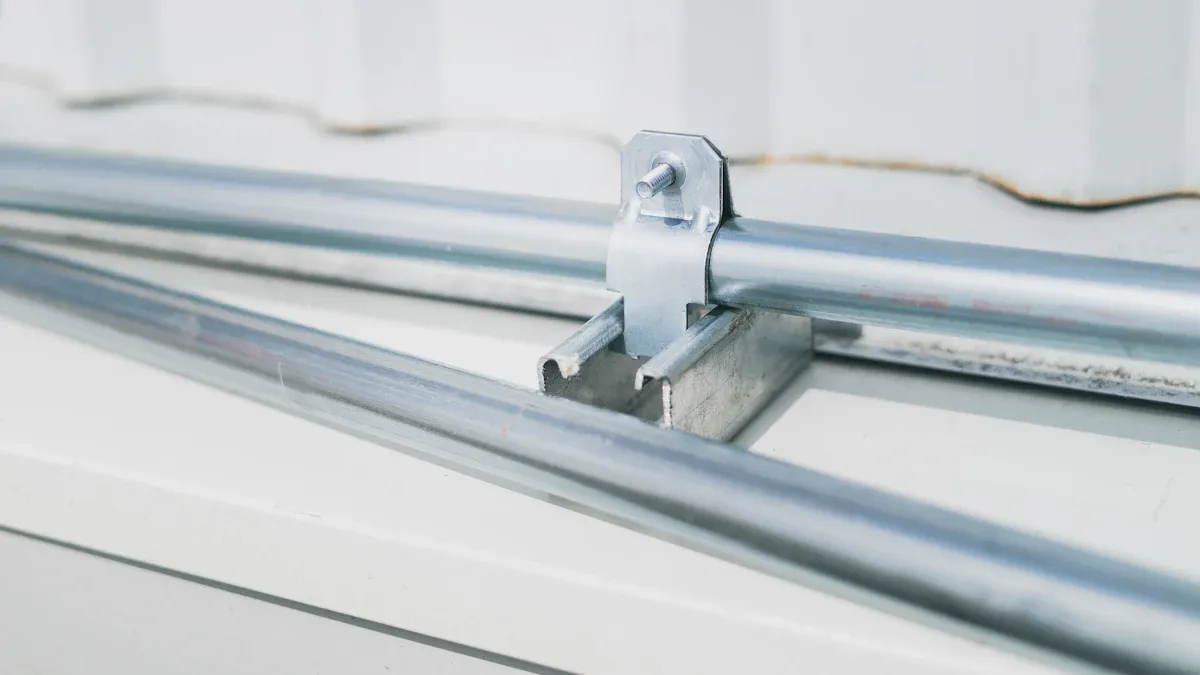
U-bolt clamps play a vital role in plumbing systems. Installers use them to secure water, gas, and waste pipes to walls, ceilings, or structural supports. The clamp’s U-shaped design wraps around the pipe, holding it firmly in place and preventing unwanted movement. This secure attachment helps maintain the alignment of piping systems, reducing the risk of leaks or mechanical failure. In industrial settings, u-bolt clamps support process and utility piping, ensuring safe and efficient operation.
Supporting Conduits
Professionals often rely on u-bolt clamps to support electrical conduits and HVAC ductwork. The clamp’s strength and stability make it suitable for holding refrigerant lines and electrical cables in place. In large buildings, these clamps help organize complex piping systems, keeping conduits neatly arranged and accessible for maintenance. The use of a pipe clamp in these scenarios ensures that both pipes and conduits remain secure, even when exposed to vibration or thermal expansion.
Automotive and Exhaust Systems
Holding Exhaust Pipes
Automotive technicians depend on u-bolt clamps to fasten exhaust pipes to mufflers and other components. These clamps maintain the integrity of the exhaust flow by creating a tight, leak-free connection. U-bolt clamps also secure leaf springs to axles in suspension systems, which is essential for vehicle stability and alignment.
- U-bolt clamps prevent exhaust leaks and reduce noise.
- They withstand high temperatures and corrosive gases.
- Proper installation ensures long-lasting performance.
Note: The quality of the clamp directly affects durability and safety. Rust or improper reuse can lead to failure, causing exhaust leaks or increased noise.
Mounting Components
U-bolt clamps serve as reliable fasteners for mounting various automotive components. Mechanics use them to attach brackets, stabilize suspension parts, and secure undercarriage elements. Adhering to torque specifications is crucial for safety and performance. For example, a 1/2 inch diameter u-bolt requires 90 ft lbs of torque, while a 3/4 inch diameter needs 315 ft lbs. Following these guidelines prevents loosening and ensures the clamp maintains its hold under stress.
Construction and Structural Uses
Fastening Beams and Poles
Construction crews use u-bolt clamps to fasten beams, poles, and other structural elements. The clamp’s robust design provides reinforcement in bridges, tunnels, and building frameworks. In marine and offshore projects, u-bolt clamps withstand vibrations and resist corrosion, making them suitable for harsh environments.
- U-bolt clamps reinforce structural stability.
- They support heavy loads in infrastructure projects.
- Their versatility allows use in both temporary and permanent installations.
Supporting Frameworks
Engineers rely on u-bolt clamps to support frameworks in both commercial and industrial buildings. These clamps hold piping systems, cable trays, and mechanical assemblies in place. By maintaining alignment and absorbing vibration, u-bolt clamps extend the lifespan of structural components and reduce maintenance needs.
Tip: Selecting the right clamp size and material ensures optimal performance in demanding construction environments.
Marine and Outdoor Applications
Withstanding Harsh Environments
U-bolt clamps play a critical role in marine and outdoor environments. Engineers often select these clamps for their ability to resist corrosion and maintain structural integrity in challenging conditions. Stainless steel u-bolt clamps, in particular, provide high corrosion resistance, making them suitable for saltwater exposure. The design of u-bolt clamps allows them to wrap securely around cylindrical objects, which is essential for marine hardware, dock installations, and boat rigging.
U-bolt clamps outperform many traditional fasteners in harsh environments due to several key features:
- Stainless steel construction resists rust and corrosion, even in saltwater.
- The U-shape design delivers a secure grip around pipes, cables, and poles.
- U-bolt clamps maintain stability under constant vibration and movement.
Tip: For marine applications, always choose u-bolt clamps with marine-grade stainless steel to maximize longevity and performance.
Securing Equipment
Outdoor installations often require fasteners that can withstand wind, moisture, and temperature fluctuations. U-bolt clamps provide a reliable solution for securing equipment such as antennas, solar panels, and outdoor lighting fixtures. Their robust construction ensures that mounted objects remain stable, even during storms or heavy use.
In the marine industry, professionals use u-bolt clamps to secure cables, anchor points, and safety rails. The clamps’ ability to maintain a tight hold under dynamic loads makes them indispensable for both recreational and commercial vessels.
- U-bolt clamps secure antennas and masts on boats.
- They anchor safety rails and ladders to docks and piers.
- Outdoor lighting and signage often rely on u-bolt clamps for stable mounting.
Note: U-bolt clamps offer a versatile and durable fastening method for both marine and outdoor equipment, outperforming many alternative fasteners in these demanding settings.
Other Industrial Uses for U-Bolt Clamps
Electrical Installations
U-bolt clamps serve as essential components in electrical installations. Electricians use them to support conduits, secure cable trays, and fasten electrical boxes to structural elements. The clamps’ ability to stabilize cylindrical and rectangular components ensures safe and organized wiring systems.
| Sector | Application |
|---|---|
| Plumbing | Supporting pipes |
| General Industrial | Stabilizing components |
| Agriculture | Machinery distribution |
| Electrical Installations | Supporting electrical components |
U-bolt clamps provide a dependable method for mounting electrical equipment in both indoor and outdoor environments. Their versatility allows them to adapt to various conduit sizes and installation requirements.
Agricultural Machinery
Farmers and agricultural engineers rely on u-bolt clamps to maintain and repair machinery. These clamps stabilize moving parts, secure hydraulic lines, and fasten protective guards. U-bolt clamps distribute mechanical loads evenly, reducing wear and extending the service life of agricultural equipment.
- U-bolt clamps stabilize tractor components and attachments.
- They secure irrigation pipes and hoses in the field.
- Agricultural machinery uses u-bolt clamps to fasten safety shields and covers.
Tip: Regular inspection and maintenance of u-bolt clamps in agricultural machinery help prevent equipment failure and downtime.
Sizing and Selection Tips for U-Bolt Clamps
Selecting the correct u-bolt clamp starts with accurate measurement and a clear understanding of the application’s requirements. Proper sizing ensures a secure fit and reliable performance, while careful selection prevents premature failure or safety hazards.
How to Measure a U-Bolt Clamp
Accurate u-bolt measurements form the foundation for a successful installation. Measuring the actual outer diameter of the object being clamped ensures a proper fit. The three main dimensions to consider include diameter, length, and thread size.
Diameter
The diameter refers to the thickness of the rod used to form the U-bolt. To measure this, technicians often use a vernier caliper for the highest accuracy. The rod diameter must match the strength and load requirements of the application. Measuring the inside width between the legs is also essential, as it must accommodate the pipe or object being secured.
Length
Leg length measures the distance from the end of the thread to the highest point of the U-bolt. This dimension determines how deeply the clamp can secure the object and how much thread remains available for nuts and washers. Installers should ensure the leg length is sufficient for both the object and any mounting surfaces.
Thread Size
Thread size indicates the diameter and pitch of the threads on each leg. This measurement affects the compatibility of nuts and washers and the overall clamping force. Using a bolt template or ruler can help verify thread size during selection.
| Element | Description |
|---|---|
| Leg length | The length from one thread to the highest point of the U bolt |
| Inside width | The width between the two legs |
| Rod diameter | The diameter of the rod |
| Thread Length | The overall length of one thread |
Recommended tools for measurement:
- Vernier caliper (for highest accuracy)
- Bolt template
- Ruler
Tip: Always measure the actual object before selecting a clamp to avoid sizing errors.
Choosing the Right Type
Selecting the right u-bolt clamp involves more than just size. The application, load, and environment all play critical roles in the decision-making process.
Matching to Application
Engineers must ensure the inside diameter of the U-bolt matches the outside diameter of the pipe or object. Pipe size compatibility prevents slippage and ensures a secure hold. Material selection also matters. Stainless steel suits environments exposed to moisture or chemicals, while coated carbon steel works well in less corrosive conditions.
- Pipe size compatibility
- Material and corrosion resistance
- Load and support requirements
Considering Load and Environment
Load requirements and environmental conditions influence the choice of u-bolt clamp. Heavy pipes require heavy-duty U-bolts, while lighter applications may use standard models. The table below summarizes how material type affects corrosion resistance and load suitability:
| Material Type | Corrosion Resistance | Load Suitability |
|---|---|---|
| Stainless Steel | High | Ideal for heavy and corrosive environments |
| Coated Carbon Steel | Moderate | Suitable for less corrosive conditions |
| Galvanized Steel | Moderate | Cost-effective for outdoor plumbing and HVAC systems |
- Heavy pipes require heavy-duty U-bolts.
- Consider the pipe’s weight and operational stresses.
Note: Proper selection of size, material, and type ensures long-term reliability and safety in any installation.
Installation Guidelines for U-Bolt Clamps
Proper installation of u-bolt clamps ensures secure fastening and long-term reliability. Following industry best practices helps prevent common issues such as misalignment, over-tightening, and premature wear.
Basic Installation Steps
Positioning the Clamp
Installers begin by selecting the correct u-bolt clamp for the application. The clamp must match the diameter and shape of the object being secured. Before positioning, they clean the surface of the pipe or conductor to remove debris and ensure a solid connection. Accurate alignment of the clamp prevents stress concentrations and uneven pressure. Installers often mark the mounting location to maintain consistent spacing, especially when supporting long pipe runs.
| Step | Description |
|---|---|
| Tools Needed | Basic hand tools like a wrench or socket set; a drill may be needed for mounting holes. |
| Torque Specifications | Follow manufacturer recommendations to avoid over-compressing the pipe or damaging threads. |
| Proper Spacing | Support spacing varies by pipe material; closer spacing for flexible materials like copper and PVC. |
| Common Mistakes | Avoid over-tightening, misalignment, improper sizing, and neglecting corrosion protection. |
Tip: Proper spacing between clamps supports the pipe evenly and reduces the risk of sagging or vibration.
Tightening Procedures
After positioning, installers insert the u-bolt around the pipe and through the mounting holes. They place washers and nuts on the threaded ends. Using a wrench or socket set, they tighten the nuts gradually and evenly on both sides. Applying torque in small increments helps maintain alignment and prevents distortion. Manufacturers provide torque specifications to guide installers. Adhering to these values avoids over-compressing the pipe or damaging the threads. For critical applications, a torque wrench ensures accuracy.
Safety and Best Practices
Avoiding Over-Tightening
Over-tightening remains a common mistake during installation. Excessive force can deform the pipe, strip threads, or damage the clamp. Installers should always follow the recommended torque values. They must check the connection with a torque wrench to confirm proper tightness. If the clamp feels loose after tightening, they should verify the sizing and alignment before applying more force.
Regular Inspection
Routine inspection and maintenance extend the lifespan of u-bolt clamps. Installers should periodically check for signs of wear, corrosion, or loosening. They must replace damaged clamps immediately to maintain safety. Regular electrical tests and visual checks help identify potential issues before they lead to failure.
- Select the right clamp for the application.
- Prepare the conductor or pipe by cleaning and trimming as needed.
- Position the clamp correctly and fasten securely.
- Verify the connection with a torque wrench.
- Avoid exceeding the clamp’s rated capacity.
- Conduct regular inspections and maintenance.
- Use caution near energized conductors and de-energize circuits when possible.
- Store clamps in a clean, dry environment.
Note: Consistent adherence to safety guidelines and best practices ensures reliable performance and reduces the risk of accidents or equipment failure.
Key Differences Between Types of U-Bolt Clamps
Shape and Fit
Round vs. Square
Shape plays a crucial role in the performance and suitability of u-bolt clamps. Round u-bolt clamps feature a curved profile that fits snugly around pipes, poles, or cylindrical objects. This design distributes pressure evenly and minimizes the risk of slippage. Square u-bolt clamps, on the other hand, have right-angle bends that allow them to grip square or rectangular beams and frames. The flat contact surfaces of square clamps provide greater stability for flat-sided structures and reduce rotational movement. When selecting between round and square shapes, engineers consider the geometry of the object being secured and the need for stability under vibration or shifting loads.
Application Suitability
Standard vs. Specialty
Standard u-bolt clamps serve as versatile fasteners for general applications. They secure pipes, rods, and conduits in plumbing, construction, and automotive systems. Specialty u-bolt clamps address unique challenges in specific industries. For example, exhaust u-bolt clamps include saddles for leak-proof automotive connections, while long-tangent or J-shaped clamps fit non-standard shapes or provide extended reach. Specialty designs often incorporate modifications for vibration absorption, enhanced load capacity, or compatibility with irregular surfaces. Choosing between standard and specialty clamps depends on the complexity of the installation and the performance requirements.
Tip: Specialty u-bolt clamps offer tailored solutions for demanding environments, while standard clamps provide reliable performance for everyday tasks.
Material and Coating Choices
Environmental Considerations
Material and coating selection directly impacts the longevity and safety of u-bolt clamps. Environmental factors such as moisture, chemicals, and temperature extremes influence this decision. The following table summarizes the suitability of common materials and coatings:
| Material/Coating | Environment Suitability |
|---|---|
| Coated U-bolts (PTFE) | Added corrosion resistance, reduced friction |
| Uncoated U-bolts | Suitable for dry, indoor environments |
| Stainless Steel | Ideal for marine or chemical environments |
| Galvanized Steel | Cost-effective for moderately corrosive settings |
| Coated Carbon Steel | Recommended for moisture, chemicals, or saltwater exposure |
In highly corrosive environments, such as chemical plants or coastal areas, engineers often select stainless steel or apply epoxy coatings for maximum protection. Proper drainage and ventilation help control moisture and extend the life of the clamp. In dry, indoor settings, uncoated u-bolts may suffice. However, exposure to acids or salts increases the risk of rust, making additional coatings essential for chemical resistance.
- Use epoxy coatings or paints for highly corrosive environments.
- Ensure proper drainage and ventilation to control moisture.
- Implement climate control measures to maintain stable conditions.
Selecting the right combination of material and coating ensures that the u-bolt clamp maintains its strength and resists corrosion, even in challenging conditions.
U bolt clamps provide reliable support for pipes, rods, and structural components across many industries. Each type serves a specific purpose, from standard and square designs to specialty options for unique challenges. Selecting the correct material and size ensures long-term performance and safety. Engineers who understand these factors can confidently choose the best clamp for any application.
FAQ
What is the main purpose of a u-bolt clamp?
A u-bolt clamp secures pipes, rods, or tubes to a fixed structure. It provides stability and prevents unwanted movement in plumbing, construction, and automotive applications.
How do you select the correct size of a u-bolt clamp?
Measure the diameter of the object to be clamped. Choose a u-bolt with an inside width matching the object and a leg length that allows for secure fastening.
Can u-bolt clamps be used outdoors?
Yes. U-bolt clamps made from stainless steel or galvanized steel resist corrosion and perform well in outdoor or marine environments.
What is the difference between a u-bolt clamp and a saddle clamp?
A u-bolt clamp wraps around the object and secures it with nuts. A saddle clamp uses a shaped saddle piece to distribute pressure more evenly across the surface.
Are u-bolt clamps reusable?
Installers can reuse u-bolt clamps if they remain undamaged and free from corrosion. Always inspect the threads and structure before reinstallation.
Do u-bolt clamps require special tools for installation?
Most u-bolt clamps require only basic hand tools, such as wrenches or socket sets, for installation and tightening.
When should a custom u-bolt clamp be considered?
Custom u-bolt clamps suit applications with unique shapes, sizes, or load requirements. Engineers specify custom designs for specialized industrial or structural needs.