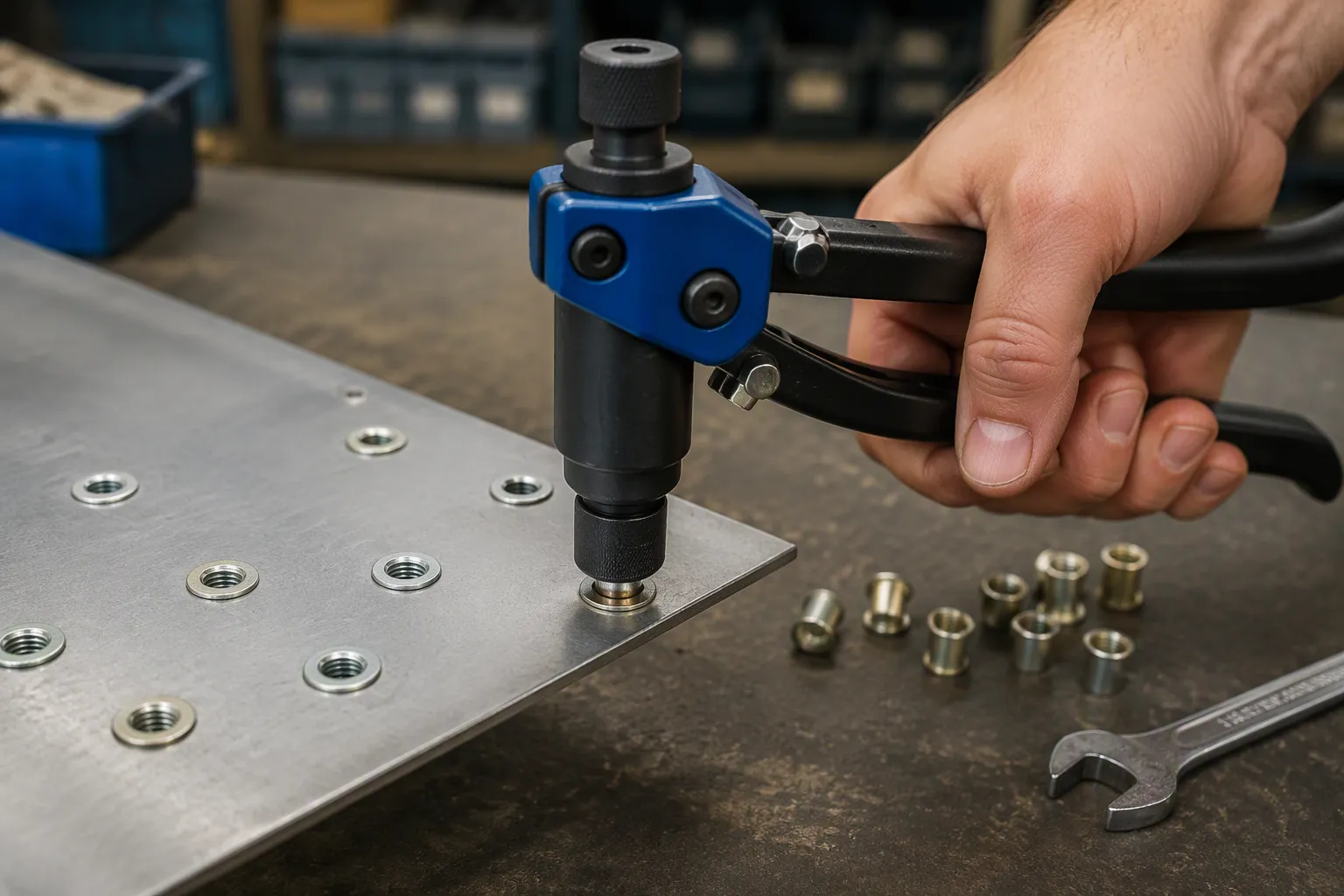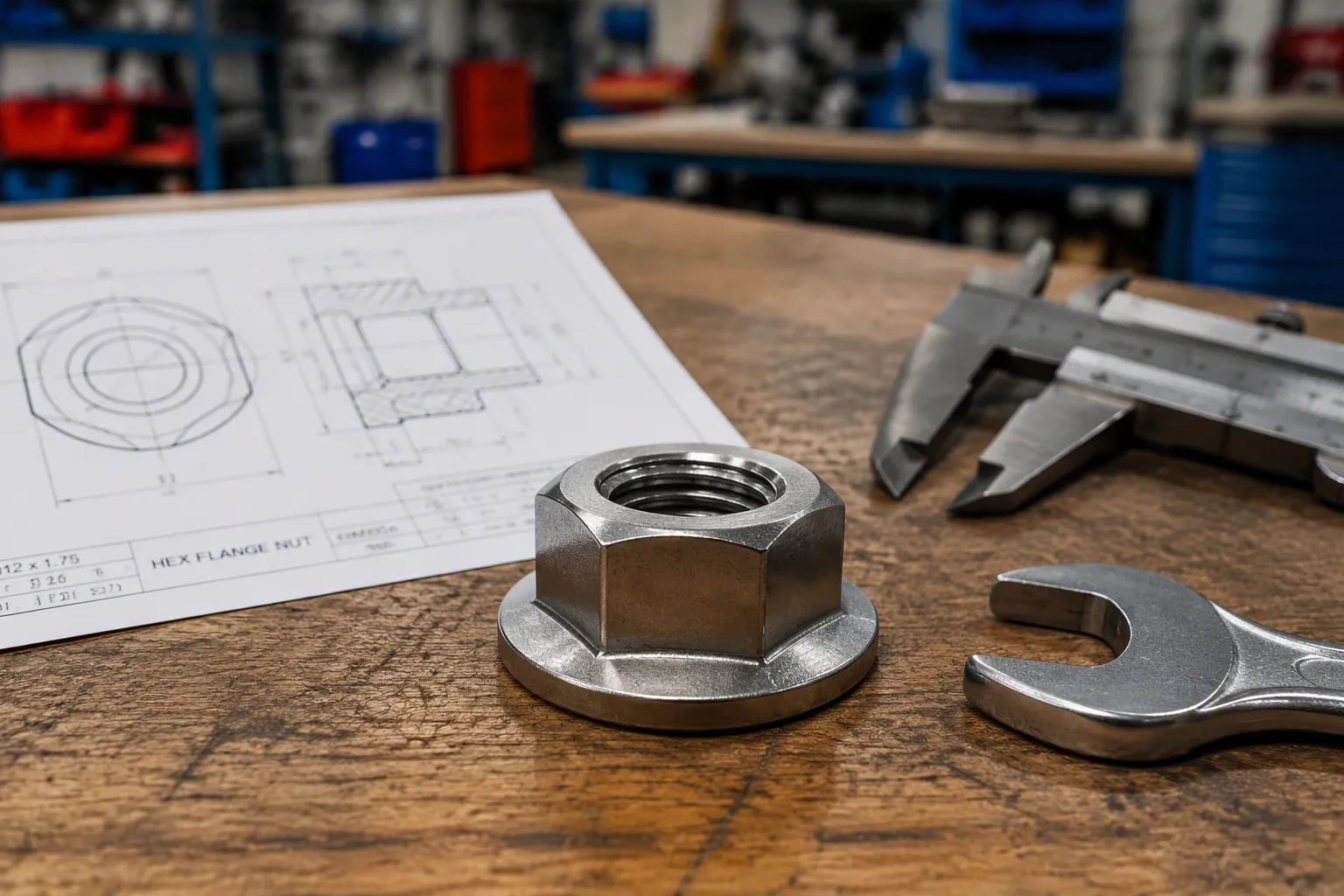

The history and evolution of the fastener begins in ancient Greece with the screw principle. Romans later used basic unthreaded bolts to bar doors, a simple yet effective mechanism. A major leap occurred in the 15th century with the first threaded nut and bolt, which appeared in new technologies like the printing press. This innovation paved the way for the modern hex bolt. Today, the scale of production is immense.
Global annual production of industrial fasteners now exceeds 18.6 million metric tons. A custom fasteners manufacturer might produce custom fasteners using methods like bolt casting, contributing to this vast output of bolts.
The Early History of Bolts and Screws
The fascinating history and evolution of fasteners begins not with a physical bolt, but with a revolutionary idea: the helical screw. This simple machine principle laid the groundwork for all threaded technology to come. The early history of bolts shows a clear distinction between the abstract concept of the screw and the practical application of simple, unthreaded pins.
Ancient Screw Principles
Archimedes and Archytas
The core concept of the screw dates back to ancient Greece. Historians often credit its invention to either Archytas of Tarentum around 400 BC or the renowned mathematician Archimedes of Syracuse. The principle involves converting rotational motion into linear motion along a helical path. This mechanical advantage was a monumental discovery.
Early Use in Lifting Water
The most famous early application was the Archimedes’ screw, a device designed to lift water. This invention was not just a theoretical exercise; it had practical, widespread use.
The screw principle was a cornerstone of ancient engineering. Classical writers documented its use in Egypt for irrigation, and archaeological finds confirm its application in various forms.
Evidence from the Greek and Roman periods shows the screw principle was applied in surprisingly sophisticated ways:
- Bronze screws have been discovered as components in ancient Roman worm gears.
- Large wooden V-form threads were essential parts of Roman wine and olive presses.
- Miniature metal screw threads provided precise motion in advanced Roman surgical tools, such as the vaginal speculum.
The First Unthreaded Bolts
While the screw principle was developing, a much simpler form of the bolt already existed. These early bolts were essentially smooth pins or bars used for barring and fastening, lacking the threads that define their modern counterparts. The history of the bolt as a physical object starts here.
Roman Door Bars (Repagula)
The Romans used unthreaded metal bars called door bars as door locks. These devices would slide into brackets on the door and frame, effectively barring entry. This simple sliding bolt represents one of the earliest forms of a dedicated mechanical fastener used for security.
Pins and Wedges in Construction
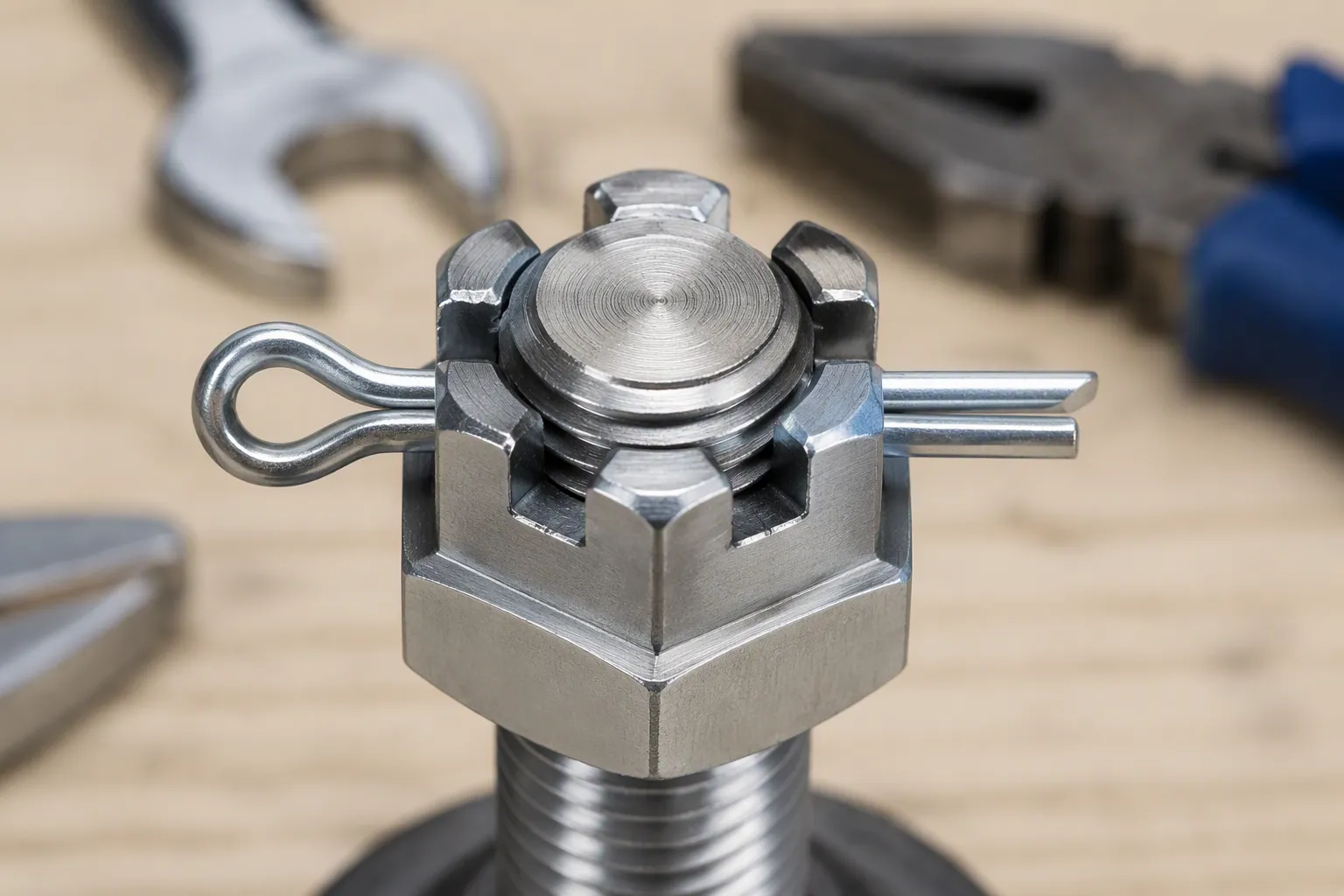
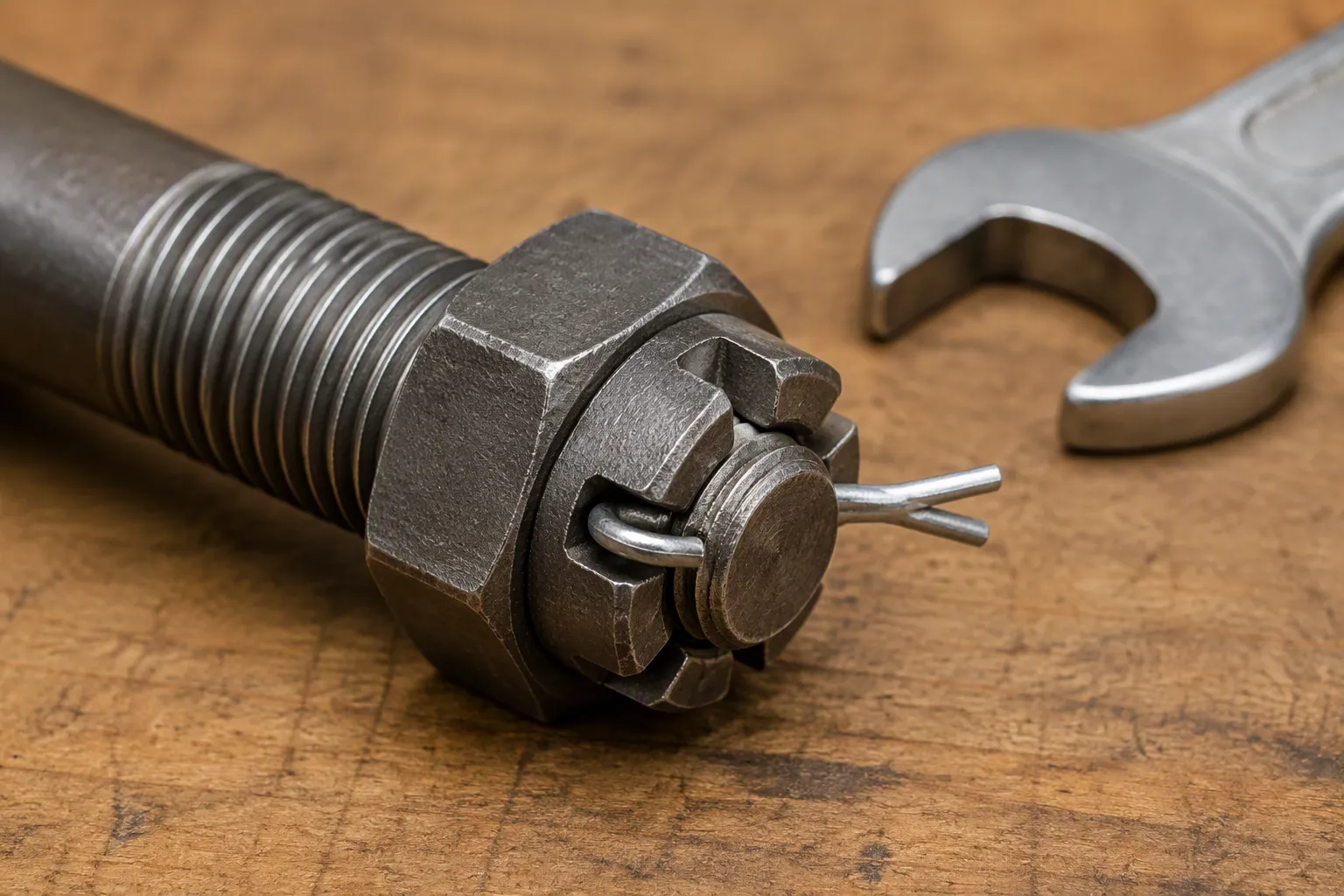
In ancient construction and machinery, builders used unthreaded metal or wooden pins to hold components together. These pins functioned like a basic bolt, preventing parts from shifting. Often, a wedge or a cotter pin was driven through a hole in the pin’s end to lock it in place, a system that secured everything from building frames to chariot wheels.
The Renaissance and the First Threaded Fasteners
The Renaissance marked a critical turning point in fastener history. Engineers transformed the ancient screw principle into a practical, physical fastener. This period saw the development of the nut and bolt as a key component in the era’s most advanced technologies. The innovation moved from a concept for lifting water to a device for holding machines together with precision.
15th Century Innovations
The 15th century introduced the first true threaded fasteners. These devices were not mass-produced. Instead, artisans crafted them for specific, high-value applications where no other joining method would suffice. Their appearance in complex machinery and military hardware signaled a new era of mechanical design.
Fasteners in Printing Presses
Johannes Gutenberg’s printing press required immense, even pressure to create clear impressions on paper. Large wooden screws, similar to those in wine presses, provided the primary force. However, smaller metal threaded bolts offered the precise adjustments needed to level the print block and control the mechanism. This application demonstrated the fastener’s unique ability to provide both clamping force and fine-tuned control.
Bolts in Armor and Weaponry
Armorers also adopted the new technology to solve complex challenges. They used threaded bolts to construct intricate pieces of plate armor. This allowed for:
- Articulation: Creating flexible joints at the elbow and knee that were more secure than simple rivets.
- Modularity: Allowing knights to attach or remove specific plates, adapting their armor for different combat scenarios.
- Repairability: Enabling easier replacement of damaged sections on the battlefield or in the workshop.
Early Manual Production
The first bolt made was not a product of a factory but of a skilled artisan’s hands. Production was slow, expensive, and entirely manual. Each fastener was a unique creation, custom-fitted for its specific purpose. This bespoke approach defined early fastener manufacturing.
The Blacksmith’s Role
The local blacksmith was the primary producer of these early fasteners. Using a forge, hammer, and file, the blacksmith would painstakingly shape a metal rod and then cut threads onto it. Blacksmiths primarily hand-filed wood screws, where precision was not a critical requirement. This experience suggests that achieving consistent accuracy on a metal bolt was a significant challenge.
Hand-Filing Individual Threads
Creating a single nut and bolt was a painstaking craft. The blacksmith would hand-file each thread on the bolt. Then, they would forge a nut and file matching internal threads. This process demanded immense skill and patience.
Because each fastener was handmade, no two were identical. A bolt made by one blacksmith would not fit a nut made by another. This lack of interchangeability was a major limitation of early production.
The Industrial Revolution’s Impact on Production
The Industrial Revolution fundamentally transformed manufacturing, moving production from the artisan’s workshop to the factory floor. This shift ignited the mass industrial production of bolts and other fasteners. However, this rapid progress initially created more chaos than order. Early machines could produce parts faster, but a lack of universal standards meant that the dream of interchangeable components was still far from reality.
The First Bolt-Making Machines
The transition from hand-filing to machine-cutting threads was a gradual process spanning centuries. Inventors developed early concepts for screw-cutting machines long before they became commercially viable. These pioneering devices laid the mechanical groundwork for the automated factories that would later define the industry.
Besson’s Screw-Cutting Lathe (1568)
French inventor Jacques Besson introduced a groundbreaking design for a semi-automatic screw-cutting lathe in 1568. While it was a concept rather than a widely adopted machine, its mechanics were revolutionary for the time. The design proposed a system where:
- The cutting tool was held firmly in a fixed position.
- A lead screw moved the workpiece forward along its axis.
- This controlled axial movement allowed for the precise cutting of a helical thread.
This concept established the core principles that would guide lathe design for the next 200 years.
The Wyatt Brothers’ Patent (1760)
In 1760, English brothers Job and William Wyatt secured a patent that marked a significant step toward automated fastener production. Their patent was for “a certain method of cutting screws of iron commonly called wood screws in a better manner than has heretofore been practiced.” While their innovation focused on wood screws rather than the machine bolt, it was a pivotal development. It is believed their method used two types of advanced, special-purpose lathes to automate the cutting process, demonstrating the commercial potential of specialized machinery for creating threaded fasteners.
The Chaos of Inconsistency
The new machines could produce bolts and screws with unprecedented speed, but this created a new and massive problem: inconsistency. Each factory, and often each machine, produced fasteners with unique dimensions and thread patterns. This lack of standardization became a major obstacle to industrial progress.
Non-Interchangeable Parts
The core issue was a complete lack of interchangeability. A bolt made by one company would not fit a nut from another. Even within the same factory, parts produced on different machines might not be compatible. This meant that every fastener was still, in a sense, a custom part tied to its specific counterpart.
Company-Specific Threads
Manufacturers guarded their own thread designs as trade secrets. This practice resulted in a dizzying array of proprietary thread profiles, pitches, and diameters. A company that built steam engines, for example, would use its own unique bolts, forcing customers to return to them for any replacement parts. This created captive markets but stifled broader industrial efficiency.
Assembly and Repair Nightmares
This lack of standardization created logistical and economic nightmares. Assembling complex machinery required skilled laborers to spend countless hours hand-filing individual parts to get them to fit. Repairs were equally difficult and expensive.
The problem was acutely felt in military applications. In 1811, the British Army had 200,000 muskets sitting useless while awaiting repair. Because their components were not interchangeable, a broken trigger or lock could not be easily swapped out, rendering the entire weapon inoperable until a specialized gunsmith could fix it. This inefficiency highlighted the staggering operational costs of non-standardized parts.
The Quest for Standardization
The industrial chaos caused by non-interchangeable parts could not last. The economic and logistical costs were simply too high. This widespread inefficiency created a powerful demand for a universal system. The solution came not from a government decree, but from the brilliant minds of engineers who saw the need for order and precision. Two figures, one in Britain and one in America, would define the future of the threaded fastener.
Joseph Whitworth’s British Standard (BSW)
British engineer Sir Joseph Whitworth was the first to successfully tackle the problem on a national scale. He meticulously collected screw samples from factories across Britain and identified a desperate need for a uniform system. His work would become the world’s first national screw thread standard.
The 1841 Whitworth System
Whitworth presented his groundbreaking system to the Institution of Civil Engineers in 1841. He proposed a standardized thread profile and a fixed number of threads per inch for specific diameters. This simple but revolutionary idea gained traction rapidly.
The adoption of the British Standard Whitworth (BSW) system transformed British industry. Its implementation followed a clear timeline:
- 1841: Whitworth presents his uniform system.
- 1840s: Railway companies become early adopters for locomotives and infrastructure.
- 1850s: The standard spreads informally through major industries.
- 1855: The Royal Navy uses Whitworth threads for mass-produced gunboats in the Crimean War.
- 1880s-1890s: The British government officially endorses BSW and mandates it for public contracts.
- 1920s-1940s: BSW becomes the backbone of British manufacturing, especially during World War II.
The system’s success was evident in its widespread use. BSW threads became essential in the armaments industry for firearms like the Enfield rifle. In shipbuilding, the related British Standard Pipe (BSP) variant became the norm for hydraulic and steam systems.
A 55-Degree Thread Angle
The technical foundation of the Whitworth standard was its specific thread geometry. Whitworth determined that a 55-degree angle between the flanks of the thread offered a strong and reliable connection. This angle became the defining characteristic of the BSW system.
Rounded Roots and Crests
Another key innovation was the profile of the thread itself. Whitworth specified that the top (crest) and bottom (root) of each thread should be rounded. This design helped to distribute stress more evenly across the fastener, reducing the risk of stress fractures at the sharp corners found on other designs. This rounded profile, combined with the 55-degree angle, created a robust and durable standard.
William Sellers’ American Standard
Across the Atlantic, American industry faced the same problems of incompatibility. While the Whitworth standard was known, it had not been widely adopted. American engineer William Sellers saw an opportunity to create a system better suited to the manufacturing capabilities and priorities of the United States.
The 1864 Sellers System
In 1864, Sellers presented a paper to the Franklin Institute proposing a new American standard. His system was designed with an emphasis on simplicity and ease of production, reflecting the needs of a rapidly growing industrial economy. This system would eventually become the National Coarse (NC) and National Fine (NF) threads.
A 60-Degree Thread Angle
Sellers challenged Whitworth’s design directly. He proposed a 60-degree thread angle. Sellers argued that this angle was mathematically simpler and, more importantly, easier for machinists to cut and measure accurately with common tools. This focus on manufacturability was a key selling point for his system.
Flattened Roots and Crests
The most significant departure from the Whitworth design was the thread profile. Instead of rounded crests and roots, Sellers advocated for a flat profile. He contended that this design offered several advantages:
- Ease of Manufacturing: Creating a flat surface on a cutting tool was far simpler and cheaper than creating a precisely rounded one.
- Strength: Sellers argued his design resulted in a stronger bolt.
- Improved Fit: He believed the flat surfaces provided a more certain and consistent fit between the nut and the bolt, as the rounded Whitworth threads could be difficult to gauge precisely.
This practical approach made the Sellers system highly attractive. Manufacturers could produce strong, reliable bolts with less complex tooling, accelerating the adoption of standardized fasteners across American industry.
The Hexagonal Head: A Design Revolution
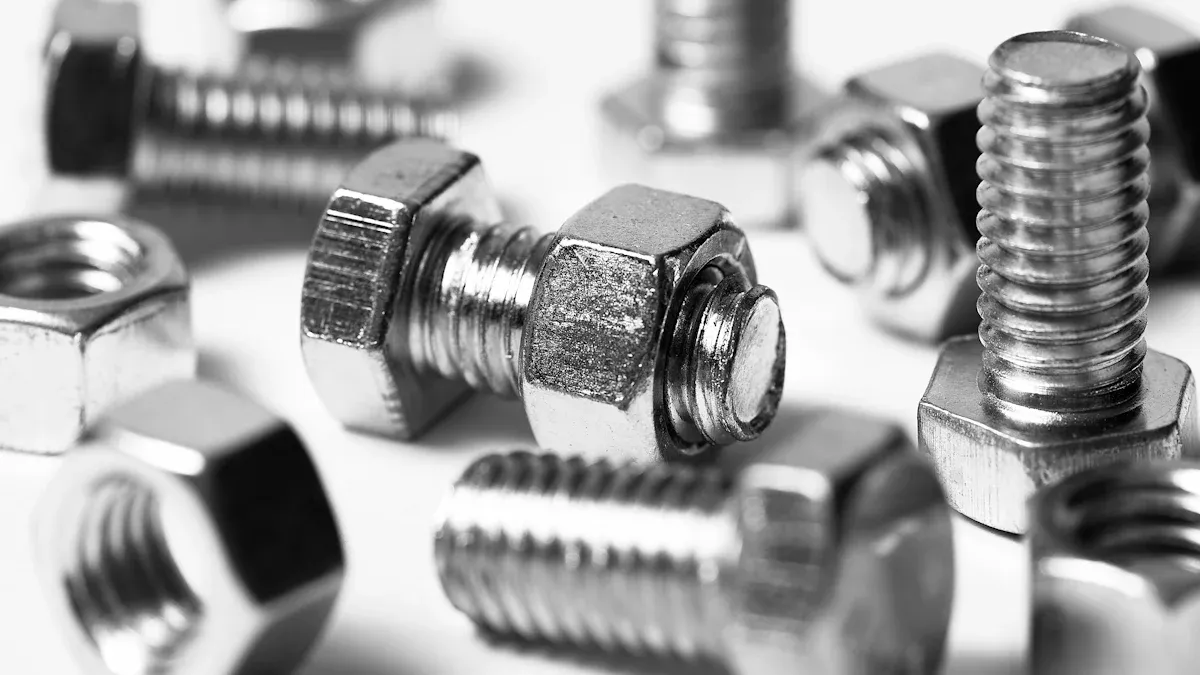
While thread standardization solved one major problem, another design challenge remained: the bolt head itself. For much of the 19th century, the square head was common. It provided a large contact surface for tools and was excellent for anchoring heavy loads in large-scale projects like bridges. However, as machinery became more compact and complex, the square head’s limitations became apparent. A new shape was needed to improve efficiency in tight spaces.
The Shift from Square to Hex
The move from a four-sided to a six-sided head was a pivotal moment in fastener design. This change was not merely aesthetic; it was a direct response to the practical demands of engineers and mechanics working with increasingly intricate equipment. The hexagonal head offered a superior balance of grip and accessibility.
James Nasmyth’s Innovation
Scottish engineer James Nasmyth is often credited with championing the hexagonal head in the mid-19th century. He recognized that a six-sided shape offered the best compromise between a circle, which provides no grip, and a square, which required too much clearance. His advocacy helped popularize the hex head design, paving the way for its widespread adoption. This innovation made assembling and disassembling machinery significantly faster.
Advantages for Wrench Access
The primary advantage of the hexagonal head was its efficiency in confined areas. This benefit becomes clear when comparing it to the square head.
- Square Head: A wrench needs a 90-degree arc to turn and reset on the next set of flats.
- Hexagonal Head: A wrench only needs a 60-degree arc to get a new grip.
This 30-degree difference was a game-changer before the invention of modern ratchet wrenches. In the tight confines of a steam engine or factory machine, a mechanic often could not swing a tool a full 90 degrees. The hexagonal bolt made it possible to tighten or loosen fasteners with much smaller movements, dramatically improving assembly and repair speeds.
Development of Compatible Tools
The new head shape required new tools. The rise of the hexagonal head went hand-in-hand with the evolution of the wrenches designed to turn it. This co-evolution created the efficient fastening systems we use today.
The Rise of the Spanner
The modern spanner, or wrench, was developed specifically to match the six flat sides of the hexagonal head. Early adjustable wrenches appeared in the 1840s, but fixed-size spanners offered a more secure grip that reduced the risk of slipping and damaging the bolt head. Manufacturers began producing sets of spanners matched to standard hex bolts sizes.
Sockets and Modern Wrenches
The hexagonal design proved perfectly suited for further tool innovation. It led directly to the development of the socket wrench. A socket fits completely over the head, providing maximum contact and torque. When paired with a ratchet mechanism, the system allows a user to tighten or loosen bolts with a simple back-and-forth motion, eliminating the need to remove and reset the tool at all.
Global Unification and the History and Evolution of Modern Standards
The creation of national standards by Whitworth and Sellers was a monumental step forward. However, the 20th century’s global conflicts revealed a critical flaw. Separate national systems created massive logistical barriers. This challenge pushed nations toward a truly international standard, marking the next chapter in fastener history.
The Impact of World Wars
Global warfare accelerated the need for universal parts. The battlefield became the ultimate testing ground for industrial efficiency, and incompatible standards failed the test spectacularly.
Incompatible Allied Equipment
During World War II, the Allied forces faced a logistical nightmare. American, British, and Canadian troops used equipment with different screw threads. A British nut would not fit an American bolt. This incompatibility meant that repairing a tank, aircraft, or ship often required a completely separate inventory of spare parts for each nation’s machinery. This inefficiency wasted time, money, and resources at a critical moment in history.
The Drive for Cooperation
The immense cost of incompatibility drove the Allies to seek a solution. Delegations from the UK, USA, and Canada met during the war to establish a unified thread that could be used across all their military equipment. This cooperation was born from urgent necessity, aiming to streamline supply chains and simplify battlefield repairs.
The Unified Thread Standard (UTS)
The wartime collaboration led directly to a landmark postwar agreement. This new standard sought to combine the best elements of the British and American systems into a single, robust design.
The 1949 Agreement
In 1949, the three nations signed the Declaration of Accord, officially creating the Unified Thread Standard (UTS). This standard, which includes familiar threads like UNC (Unified Coarse) and UNF (Unified Fine), became the norm for North America and the United Kingdom for decades.
Merging British and American Designs
UTS represented a carefully engineered compromise between the Whitworth and Sellers systems. It blended features from both to create a superior standard.
- It adopted the 60-degree thread angle from the American Sellers system for its strength and ease of manufacturing.
- It incorporated the rounded root from the British Whitworth design to improve fatigue resistance and reduce stress fractures.
- It used the flat crests of the Sellers standard.
- It established a clear guide for pitches and fits, ensuring every nut and bolt was interchangeable.
The ISO Metric Screw Thread
While UTS solved the immediate problem for the Allies, the rest of the world was increasingly adopting the metric system. This led to the development of an even more universal standard.
The Prevailing Global Standard
The International Organization for Standardization (ISO) developed the metric screw thread system to create a single standard for the entire world. Its logical, base-ten structure made it simple and efficient. The ISO metric thread ensures that a part from Germany is perfectly interchangeable with a part from Japan, simplifying global trade and manufacturing.
Dominance in Modern Manufacturing
The ISO metric system’s technical advantages have made it the dominant standard in modern manufacturing. Its simplified callouts, where ‘M10’ automatically signifies a coarse pitch, reduce errors. The system also offers finer pitch options, which provide greater resistance to stripping and allow for more precise tension adjustments in critical applications. Today, nearly every major industry, from automotive to aerospace, relies on the ISO metric screw thread.
The Complete History of the Bolt: Modern Materials and Technology
The complete history and evolution of the bolt did not end with standardization. Modern engineering has pushed the boundaries of what this simple component can do, focusing on advanced materials and intelligent technologies to meet the demands of high-performance applications.
Advancements in Bolt Materials
The material of a bolt is just as critical as its design. The journey from simple iron to advanced alloys reflects the increasing performance requirements of modern machinery.
From Iron to Carbon Steel
The industrial age relied on iron, but manufacturers quickly shifted to carbon steel. Adding carbon to iron created a much stronger and more reliable fastener, capable of handling the higher loads of steam engines and factory equipment.
High-Strength Steel Alloys
Engineers further enhanced steel by creating alloys. They added elements like chromium, molybdenum, and nickel to produce high-strength steel bolts. These alloys offer superior hardness, tensile strength, and resistance to wear.
Titanium, Aluminum, and Nickel Alloys
For extreme environments, engineers turn to exotic alloys. The selection of these materials depends entirely on the specific application’s needs for weight, strength, and corrosion resistance.
- Titanium bolts are essential in aerospace, automotive, and medical industries for their incredible strength-to-weight ratio. Surgical-grade titanium is even used for orthopedic pins and implants.
- Aluminum bolts see use in aviation and high-performance racing, where reducing weight is a top priority.
- Nickel alloys like Inconel and Monel are critical in harsh conditions. Inconel is used in aerospace, while Monel’s ability to withstand saltwater makes it ideal for marine and offshore structures.
Innovations in Bolt Technology
Beyond materials, the technology of the bolt itself has advanced. Modern innovations focus on ensuring fasteners stay tight, are tensioned correctly, and resist environmental damage.
Advanced Locking Mechanisms
Vibration is a constant threat to bolted joints. To counter this, engineers have developed sophisticated locking mechanisms that prevent a bolt from loosening. Common examples include:
- Prevailing Torque Nuts: Polymer insert nuts (like a Nyloc nut) contain a ring that grips the threads, creating friction.
- Positive Locking Devices: Methods like using cotter pins with crown nuts or wire-locking provide a physical barrier that stops the nut from turning.
- Friction-Based Washers: Serrated or wedge-locking washers bite into the joint material to prevent rotation.
Modern Tension Control Systems
Achieving the correct tension, or preload, is crucial for joint integrity. Traditional torque wrenches can be imprecise. Modern systems offer far greater accuracy.
Ultrasonic extensometers represent a major leap in tension control. They measure the actual stretch of a bolt as it is tightened, which is a direct indicator of its load. This technology improves quality by tracking bolt elongation over time, saving time and operational costs by identifying exactly which fasteners need attention.
Protective Corrosion-Resistant Coatings
Corrosion can cause a fastener to fail. To protect bolts in harsh environments, manufacturers apply specialized coatings. Fluoropolymer coatings (like PTFE or Xylan) and ceramic coatings offer the highest level of protection, especially for submerged or aggressive marine applications. Other common methods include hot-dip galvanizing and zinc-nickel electroplating, which provide a sacrificial layer to protect the steel core.
The history and evolution of the hex bolt mirrors our own industrial progress. Fundamental needs for mechanical advantage, mass production, and global interoperability drove its development from a simple concept to a critical component. Today, this humble bolt stands as a testament to centuries of engineering refinement. It literally holds our modern world together, securing essential infrastructure such as:
- Bridges and highways
- Railways and power transmission towers
- Wind turbines and marine structures
As innovations in smart materials and manufacturing continue, the story of the bolt is far from over, ensuring its place in the future.
FAQ
Who first invented the screw principle?
Historians credit ancient Greek thinkers for the screw principle. Archytas of Tarentum developed the concept around 400 BC. Archimedes later famously applied it to create a device for lifting water. This principle was the foundation for all threaded fasteners.
Why did the hex head replace the square head?
Engineers favored the hexagonal head for its superior accessibility in tight spaces. A wrench only needs a 60-degree turn to get a new grip on a hex head. A square head requires a larger 90-degree turn, making it less efficient for assembling complex machinery.
What was the main difference between the Whitworth and Sellers standards?
The primary differences were in their thread geometry.
- Whitworth (British): Used a 55-degree thread angle with rounded roots and crests.
- Sellers (American): Used a 60-degree thread angle with flattened roots and crests, which was easier to manufacture.
Why was the Unified Thread Standard (UTS) created?
The Allied forces created the Unified Thread Standard after World War II. Their equipment used incompatible British and American threads, causing severe repair and supply chain problems. UTS combined features from both systems to ensure parts were interchangeable between nations.
What materials are modern high-strength bolts made from?
Modern bolts use advanced materials for specific jobs. Carbon steel is common, but high-performance applications require specialized alloys.
Aerospace and medical industries use titanium for its strength-to-weight ratio. Marine applications often use nickel alloys like Monel to resist saltwater corrosion.
How do engineers prevent bolts from loosening?
Engineers use several advanced locking mechanisms. Prevailing torque nuts with polymer inserts create friction to resist vibration. Positive locking devices, like cotter pins or lock wire, provide a physical barrier that stops the nut from turning, ensuring the joint remains secure.