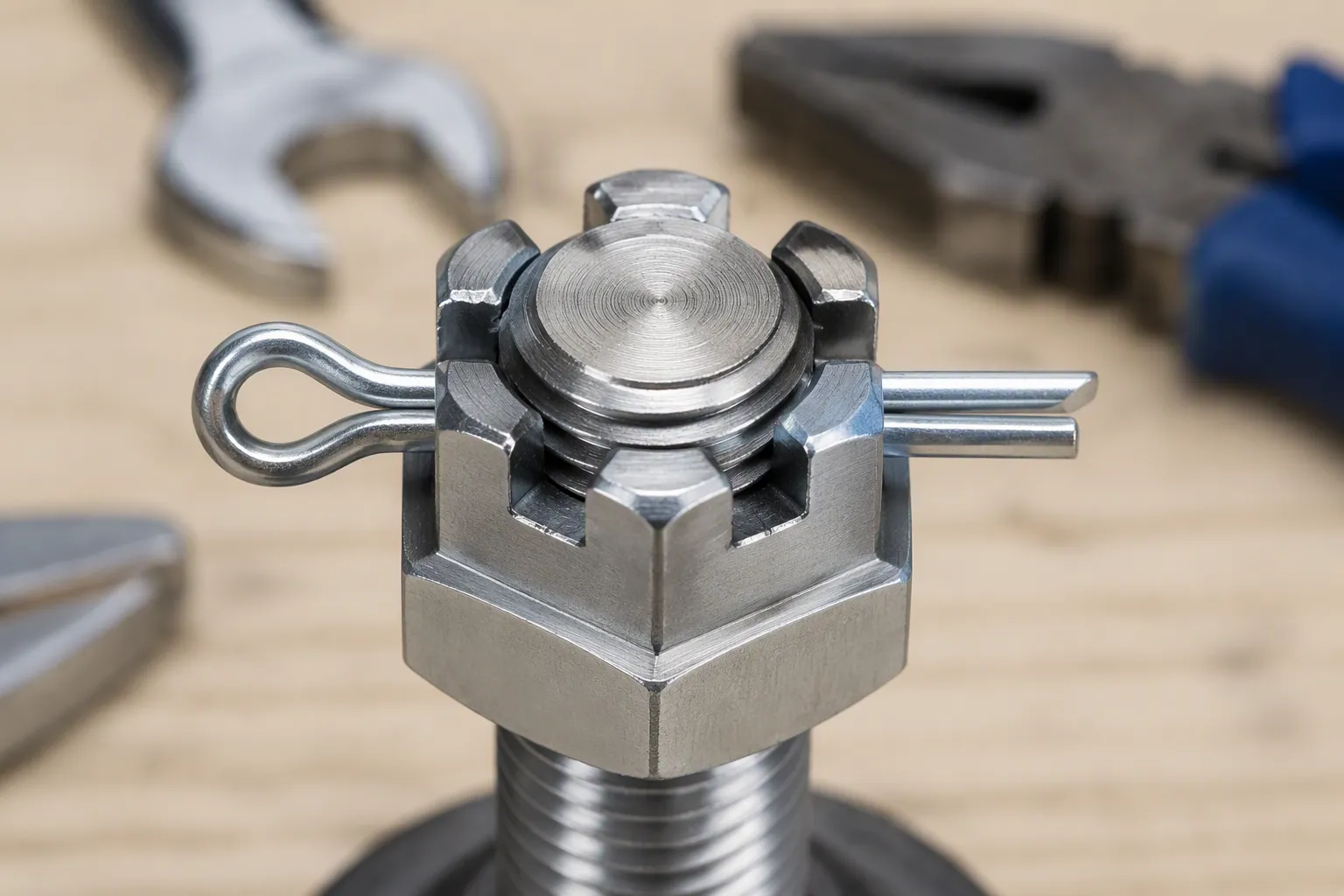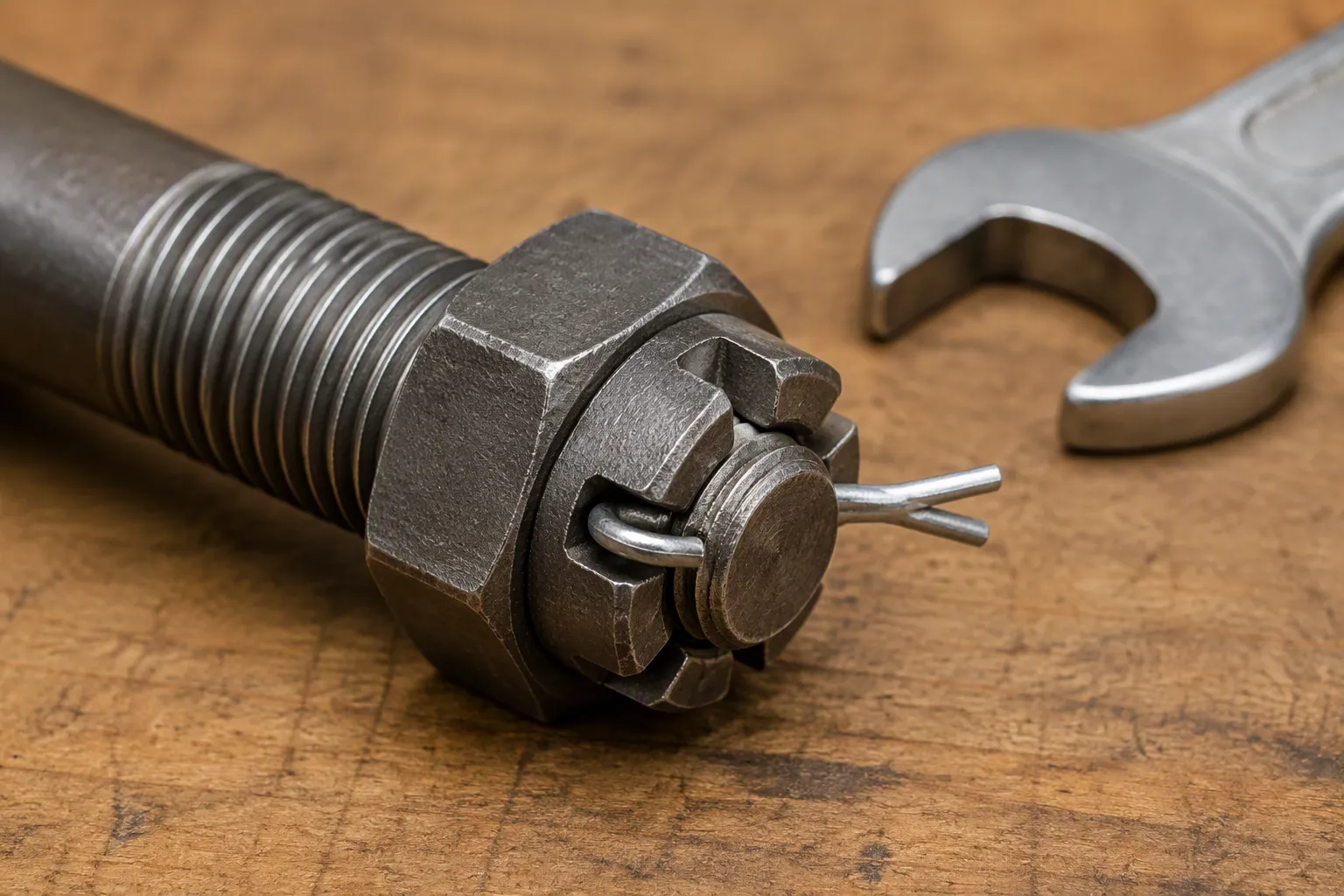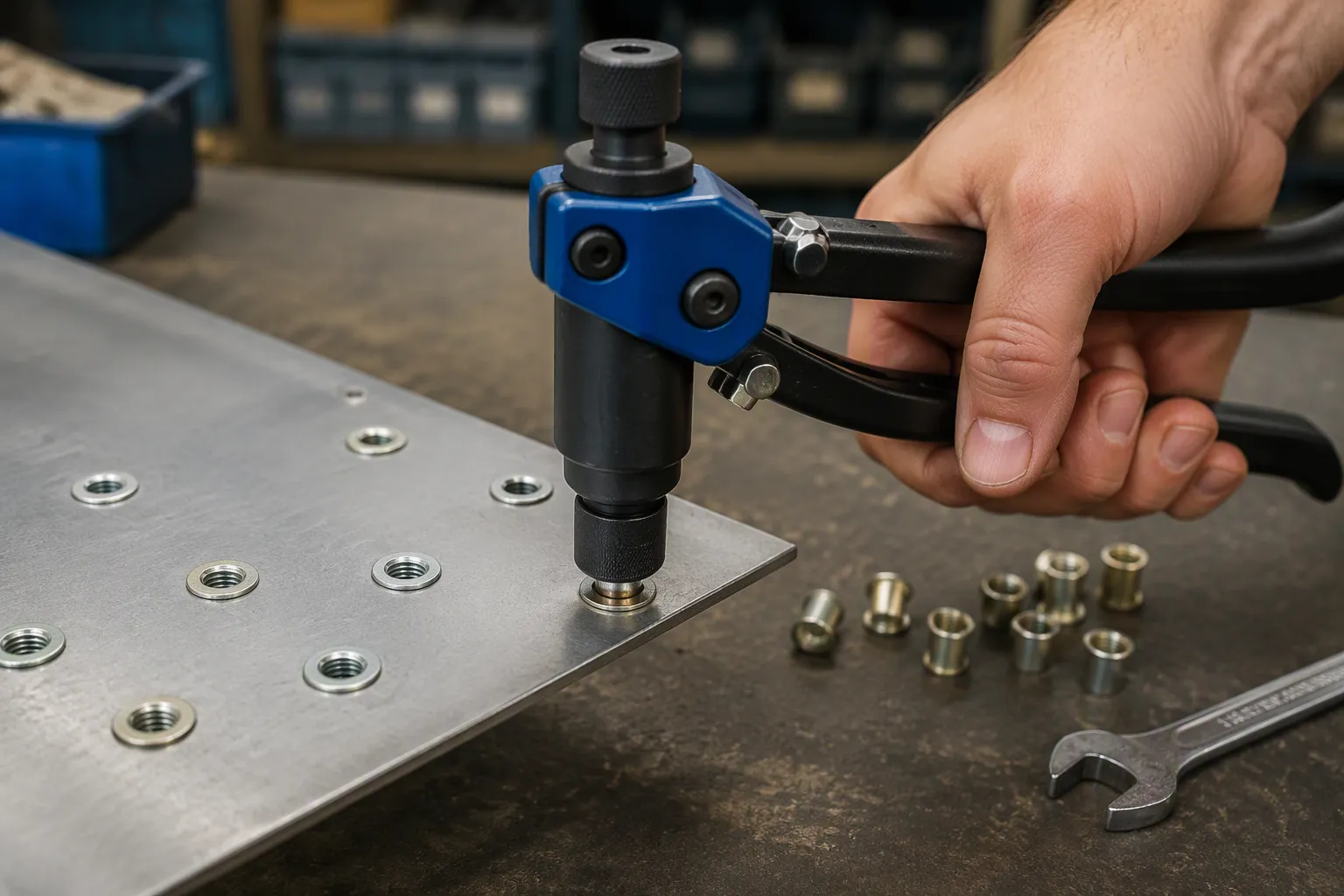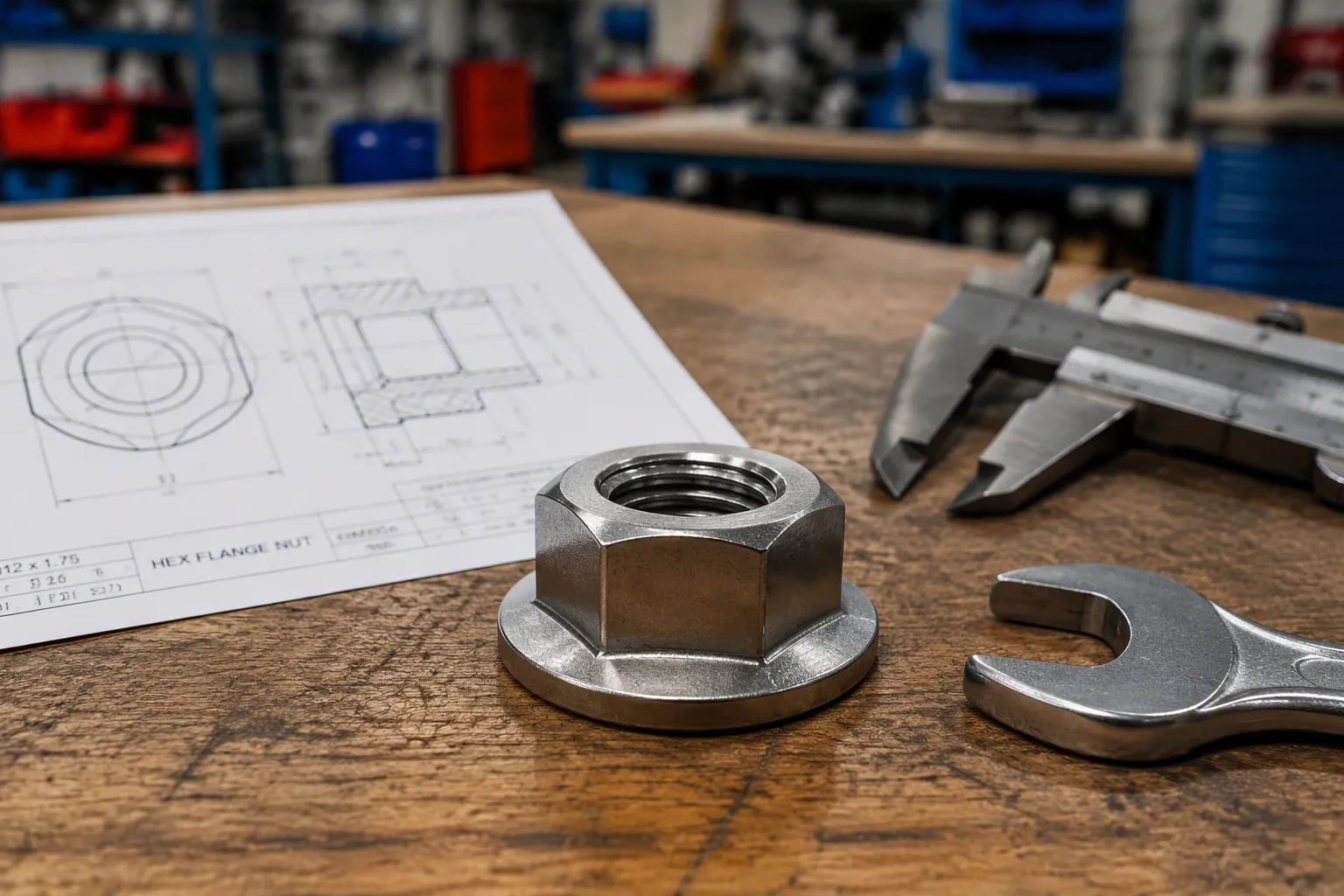
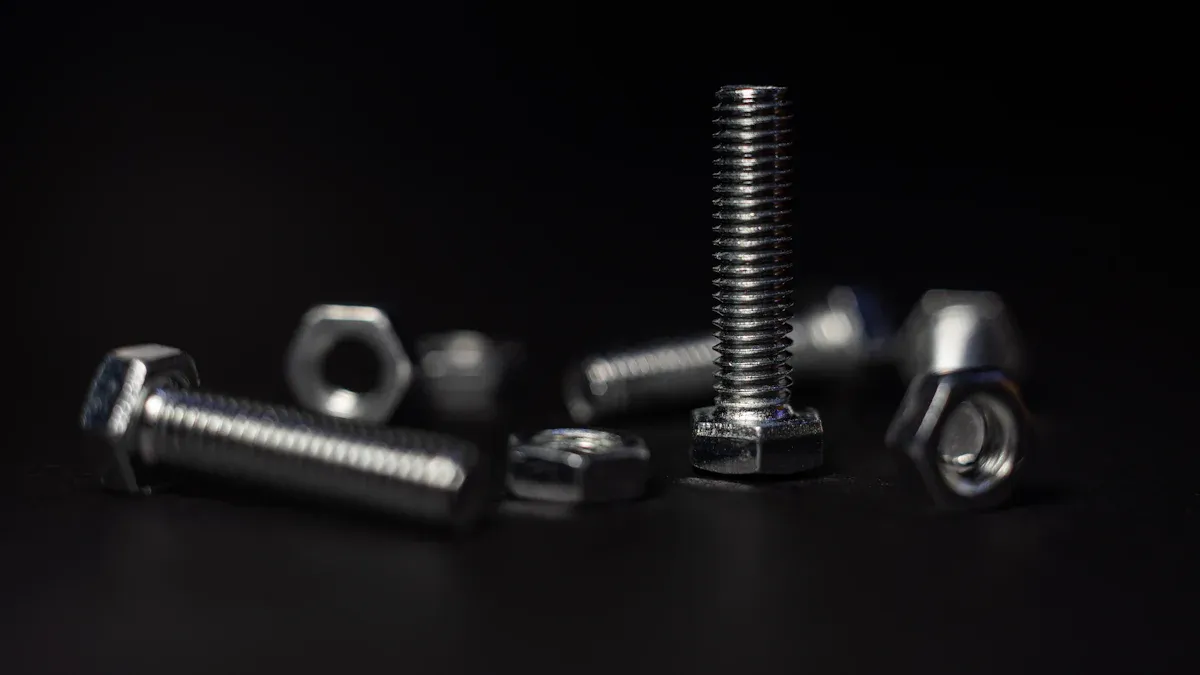
A project’s ultimate durability relies on selecting the suitable hex bolt. A successful bolt choice depends on three critical factors. Understanding these elements ensures a secure and reliable connection for any application.
A builder’s bolt choice must account for three key properties:
- Size: The bolt’s diameter and length.
- Material: The composition, from steel to alloys.
- Strength: The load-bearing capacity or grade.
A professional must choose hex bolt options carefully, sometimes requiring custom fasteners from a custom fasteners manufacturer with specific bolt casting. This final evaluation confirms the correct size, material, and strength, ensuring the selection of the right hex bolt for the job.
Step 1: Determining the Correct Hex Bolt Size
Accurate size selection is the foundational step for a secure bolted connection. The correct hex bolt size ensures proper fit, engagement, and load distribution. This process involves three distinct measurements: diameter, length, and thread pitch. An incorrect size selection can compromise the entire assembly.
Measuring Bolt Diameter
The bolt’s diameter, or shank thickness, is its most critical dimension. It dictates the hole size and the fastener’s inherent strength. Proper measurement of the hex bolt size is essential.
Using a Caliper for Precision
For an accurate measurement, a professional uses a digital or dial caliper. This tool measures the bolt’s nominal diameter, which is the major diameter of the threads.
- Measurement Tools: Calipers offer excellent accuracy for most applications. Micrometers provide even higher precision when project tolerances are extremely tight.
- Nominal Size: This designation is used for general identification and typically refers to the basic major diameter of the screw thread.
Matching an Existing Bolt
When replacing a fastener, the simplest method is to take the existing bolt to a hardware supplier. They can match it to a new one, confirming the diameter, length, and thread pattern. This practical approach eliminates guesswork from the size selection process.
Standard (Imperial) vs. Metric Diameters
Bolts are manufactured under two primary systems: Standard (Imperial) and Metric. They are not interchangeable. A project’s specifications will determine which system to use for the hex bolt size. Key standards organizations like the International Organization for Standardization (ISO) and the American Society of Mechanical Engineers (ASME) govern these specifications.
For example, a metric bolt designated as M8 has a nominal diameter of 8 millimeters. The full notation, such as M8-1.25 x 40, specifies an 8mm diameter, a 1.25mm thread pitch, and a 40mm length. The following table outlines the key differences.
| System | Markings | Characteristics | Sizing Notation Example |
|---|---|---|---|
| Metric | An “M” prefix (e.g., M8); heads have property class numbers (e.g., 8.8). | Dimensions are measured in millimeters (mm). | M8-1.25 x 50 (8mm diameter, 1.25mm pitch, 50mm length) |
| Imperial | Heads have grade marks (radial lines); no “M” prefix. | Dimensions are in inches; threads are in Threads Per Inch (TPI). | 1/2"-13 UNC x 2" (1/2″ diameter, 13 TPI, 2″ length) |
Calculating Bolt Length
The correct bolt length ensures sufficient thread engagement without bottoming out or protruding excessively. The measurement is taken from the underside of the head to the end of the bolt. This part of the size selection is crucial for joint integrity.
The “Grip Length” Rule
Grip length is the distance from the underside of the bolt head to the first thread. Ideally, the unthreaded portion of the bolt (the shank) should span the materials being clamped. This provides maximum shear strength. A good bolt choice considers this rule.
Measuring for Through-Holes vs. Tapped Holes
The required length differs based on the hole type.
- Through-Holes: The bolt passes completely through the materials and is secured with a nut. The bolt must be long enough to accommodate both materials and fully engage the nut.
- Tapped Holes: The bolt threads directly into the material. The length must be sufficient for full thread engagement but short enough to avoid bottoming out in a blind hole.
Accounting for Washers and Nuts
A final length calculation must include any washers and the nut. Add the thickness of all washers and the height of the nut to the total material thickness. This ensures the bolt is long enough for the complete assembly. This final check on the hex bolt size prevents installation issues.
Understanding Thread Pitch
Thread pitch defines the distance between threads. It determines how quickly a bolt tightens and its resistance to loosening. The right bolt choice depends heavily on matching the thread pitch to the application.
Coarse Thread (UNC) vs. Fine Thread (UNF)
Thread pitch is measured differently for each system.
- Coarse Threads (UNC): These have fewer threads per inch (TPI) or a larger distance between threads (metric). They are the default standard for general use.
- Fine Threads (UNF): These have more threads per inch or a smaller distance between threads. They offer greater precision and strength.
Tip: Never mix coarse and fine thread bolts and nuts. Mismatched threads will damage the fasteners and create a weak connection. The correct size selection must include a matching pitch.
When to Use Coarse Threads
Coarse threads are ideal for most standard applications. Their deeper threads are more tolerant of minor damage and less prone to cross-threading during assembly. They are perfect for construction and general repairs where installation speed is a factor. This is often the default hex bolt size.
When to Use Fine Threads
Fine threads provide greater tensile strength and shear resistance. Their primary advantage is an enhanced resistance to loosening from vibration. A finer pitch creates a smaller helix angle, making it more difficult for the bolt to back out under dynamic loads. This effect is like a sled requiring more effort to move down a less steep hill. This makes a fine-threaded hex bolt the superior bolt choice for engines, machinery, and precision instruments. To choose hex bolt options for vibrating environments, fine threads are often the answer.
Using a Thread Pitch Gauge
A thread pitch gauge is an indispensable tool for identifying an unknown thread pattern. This tool has a series of blades, each marked with a specific TPI or metric pitch. A user finds the blade that meshes perfectly with the bolt’s threads to confirm the correct size.
Step 2: How to Choose Hex Bolt Material and Coating
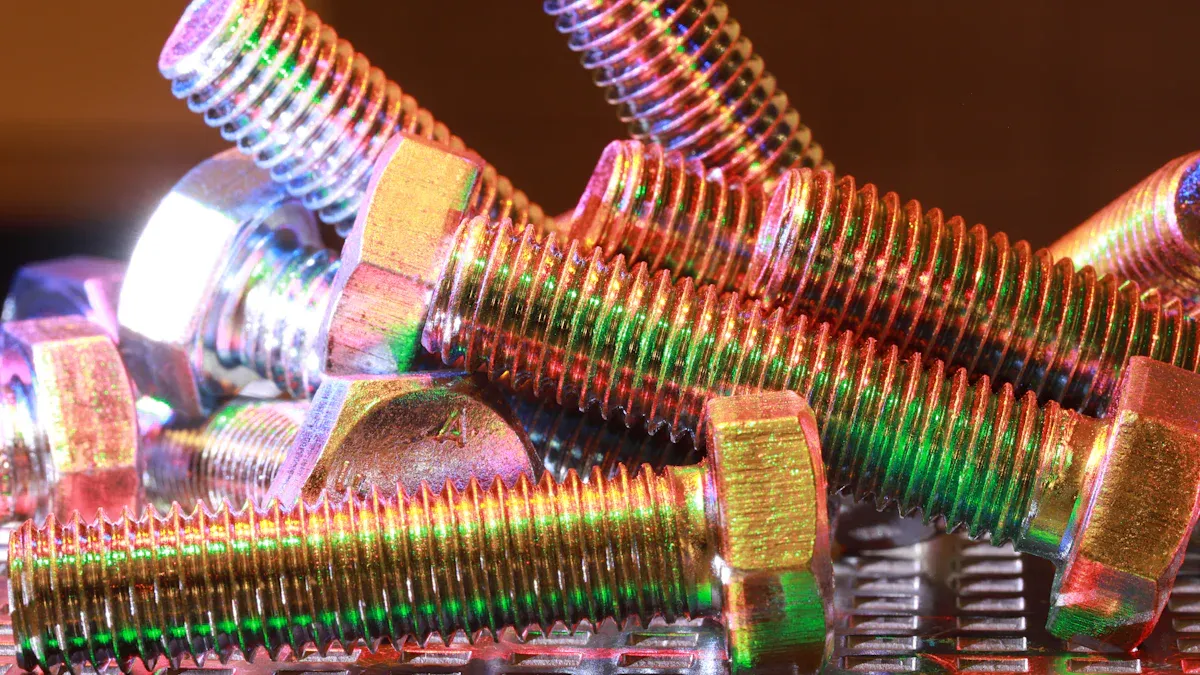
After determining the size, the next critical step is material selection. The bolt’s material and any protective coating dictate its strength, corrosion resistance, and suitability for the operating environment. A correct bolt choice here prevents premature failure from rust or stress.
Common Bolt Materials
The base material of a hex bolt defines its core mechanical properties. The three most common options are carbon steel, stainless steel, and alloy steel.
Carbon Steel
Carbon steel is the most common and affordable bolt material. It offers excellent strength, especially in higher grades, but has poor corrosion resistance without a protective coating. It is the go-to material for general construction and machinery where the application is not exposed to moisture.
Stainless Steel
Stainless steel contains chromium, which provides inherent corrosion resistance. This makes it ideal for outdoor applications and environments with moisture. While typically more expensive than carbon steel, its longevity often justifies the cost.
Alloy Steel
Alloy steel is a type of steel that contains additional alloying elements like manganese, chromium, or molybdenum. These elements are added to enhance specific properties, such as hardness, toughness, and heat resistance, making this material suitable for high-stress and high-temperature applications.
| Feature | Stainless Steel Hex Bolts | Carbon Steel Hex Bolts |
|---|---|---|
| Corrosion Resistance | Excellent (especially 316 grade) | Poor without coating |
| Strength | Good, but lower than high-carbon | High, especially in hardened grades |
| Cost | Higher | Lower |
| Applications | Marine, food, outdoor, medical | Construction, machinery, automotive |
Choosing Based on Environment
The project’s environment is the primary factor when you choose hex bolt material.
For Indoor and Dry Applications
For indoor projects shielded from moisture, a standard, uncoated, or zinc-plated carbon steel bolt is a cost-effective and reliable bolt choice.
For Outdoor and Wet Applications
For outdoor applications, stainless steel is essential. SAE 304 stainless steel offers good general protection. This material is a solid bolt choice for general outdoor use.
For High-Temperature Environments
For an application involving extreme heat, specialized materials are necessary. A286 stainless steel, for example, maintains high strength at temperatures up to 1300°F (700°C), while alloys like Inconel can perform in service temperatures up to 2200°F (982°C).
For Marine or Corrosive Environments
For marine or corrosive environments, SAE 316 stainless steel is the superior option. Its addition of molybdenum provides excellent protection against chlorides and acids, making it the standard for saltwater and chemical processing applications.
Understanding Coatings and Finishes
Coatings add a protective layer to a base material, most often carbon steel, to improve its durability and corrosion resistance.
Professional Tip: 💡 Coatings alter the friction between threads. This change affects the amount of torque needed to achieve the correct tension. Always consult specifications, as a lubricated or coated bolt requires less torque than a dry one to achieve the same clamping force.
Zinc Plating
This is a common, thin coating that provides a basic level of corrosion protection. It is suitable for indoor or mildly damp conditions.
Hot-Dip Galvanized
This process involves dipping the steel bolt in molten zinc, creating a thick, durable, and highly protective layer. Governed by standards like ASTM A153, it is ideal for long-term outdoor and industrial use.
Black Oxide
A black oxide finish is a conversion coating that provides mild corrosion resistance and reduces reflection. It is primarily used for aesthetic purposes or in applications where dimensional changes are not permitted.
Phosphate Coating
A phosphate coating offers minimal corrosion protection on its own but creates an excellent primer for painting. It also has oil-absorbent properties that aid in lubrication.
Step 3: Matching the Right Hex Bolt Strength to Your Needs
Selecting the correct material and size is only part of the process. A professional must also choose hex bolt strength appropriate for the project’s demands. The bolt’s grade, or property class, directly relates to its load-bearing capacity. This final consideration is crucial for ensuring safety and structural integrity. Making the right bolt choice here prevents catastrophic failures under stress.
What Are Bolt Grades?
Bolt grades and property classes are standardized ratings that define a fastener’s mechanical strength. These classifications, governed by organizations like SAE International and the International Organization for Standardization (ISO), tell a user how much stress a bolt can handle before it bends or breaks. The correct bolt choice depends on understanding these ratings.
How Strength is Measured (Tensile Strength)
A bolt’s strength is determined through rigorous testing that measures its response to pulling forces, known as tension. International standards like ISO 898-1 specify the mechanical properties and testing procedures for carbon and alloy steel fasteners. Three key metrics define bolt strength:
- Tensile Strength: This is the maximum pulling load a bolt can withstand before it fractures. It represents the ultimate breaking point.
- Yield Strength: This is the point at which a bolt begins to deform permanently. Before this point, the bolt will return to its original shape once the load is removed.
- Proof Load: This is the maximum tensile load a bolt must endure without any permanent deformation. It defines the fastener’s usable elastic range and confirms its quality.
Why Grade Matters for Safety and Load
The grade of a hex bolt is a direct indicator of its performance capabilities. Using a bolt with a grade too low for the application’s load requirements can lead to joint failure, property damage, or serious injury. The bolt’s load-bearing capacity must exceed the maximum forces it will experience in service. A higher grade provides a greater safety margin, making it a critical factor in any structural or high-stress assembly. This makes understanding bolt strength essential.
SAE Grades for Standard (Imperial) Bolts
The Society of Automotive Engineers (SAE) J429 standard defines grades for imperial bolts. These grades are easily identified by the radial line patterns on the bolt head.
Grade 2: General Purpose
Grade 2 bolts are made from low-carbon steel and represent the most common and inexpensive option. They are suitable for applications with low stress and no critical structural requirements. Professionals often use them for general repairs and basic construction where high strength is not a factor.
Grade 5: Medium Strength
Grade 5 bolts are made from medium-carbon steel that has been quenched and tempered for increased strength. This grade is the most common in automotive applications and machinery. It offers a good balance of strength, durability, and cost, making it a versatile bolt choice for many projects.
Grade 8: High Strength
Grade 8 bolts are made from medium-carbon alloy steel, which is also quenched and tempered to achieve superior hardness and strength. These high-strength bolts are designed for demanding jobs, such as vehicle suspensions, heavy machinery, and industrial equipment where high tensile strength is paramount.
The following chart illustrates how proof load, a key measure of usable strength, increases with both bolt size and grade.

Metric Property Classes
Metric bolts use a numerical property class system defined by standards like ISO 898-1. The numbers on the head indicate the bolt’s strength. The first number represents the nominal tensile strength in megapascals (MPa) divided by 100. The second number indicates the ratio of yield strength to tensile strength.
Example: A Class 8.8 bolt has a nominal tensile strength of 800 MPa. Its yield strength is 80% of its tensile strength (800 MPa * 0.8 = 640 MPa).
Class 8.8: Medium Strength
Class 8.8 is the most common metric property class and is comparable in strength to SAE Grade 5. These bolts are used widely in automotive manufacturing and general industrial assembly. Their reliable performance makes them a standard for medium-stress applications.
Class 10.9: High Strength
Class 10.9 bolts offer high tensile strength and are often used in high-stress applications. They are frequently specified for automotive suspensions, engine components, and structural joints where a greater load capacity is needed. This level of bolt strength is comparable to SAE Grade 8.
Class 12.9: Ultra-High Strength
Class 12.9 bolts are among the strongest standard fasteners available. Made from alloy steel, they are quenched and tempered to achieve maximum strength. Professionals reserve them for the most critical and high-stress scenarios, including heavy equipment, high-torque engine assemblies, and safety-critical components in aerospace and military hardware. Choosing the right hex bolt of this class is vital for performance and safety.
| Property Class | Minimum Tensile Strength (MPa) | Minimum Yield Strength (MPa) |
|---|---|---|
| Class 8.8 | 800 | 640 |
| Class 10.9 | 1000 | 900 |
| Class 12.9 | 1200 | 1080 |
How to Identify Bolt Grade Markings
A quick inspection of the bolt head reveals its strength rating. Manufacturers stamp standardized markings on the head to indicate the grade or property class. These markings differ between the SAE (Imperial) and ISO (Metric) systems, so a professional must know how to read both.
Reading Head Markings on SAE Bolts
The SAE J429 standard uses a system of radial lines on the bolt head to identify the grade. The number of lines corresponds to a specific strength level. A bolt with no lines is a Grade 2, the lowest strength.
Note: The American Society for Testing and Materials (ASTM) also has standards for structural bolts. The common ASTM A325 standard was officially replaced by ASTM F3125/F3125M. This new specification consolidates several fastener standards to better align with global ISO standards.
The most common SAE grade markings are easy to recognize.
| Standard | Marking System | Grade/Strength | Description |
|---|---|---|---|
| SAE | No Lines | Grade 2 | Basic strength for general use |
| SAE | 3 Radial Lines | Grade 5 | Medium strength for automotive work |
| SAE | 6 Radial Lines | Grade 8 | High strength for heavy-duty applications |
A professional will also notice other letters or symbols on the head. These are typically not grade indicators.
- Manufacturer Marks: Many companies stamp their unique logo or initials on the head for traceability. Common examples include ‘F’ for Fastenal or ‘B’ for Brighton-Best.
- Coating Indicators: Some letters may signify a specific finish, such as ‘G’ for galvanized.
- Unknown Symbols: A user might encounter an unfamiliar hex bolt with markings like ‘HFG’ or a circle with a ‘W’. These are almost always proprietary manufacturer stamps and do not define the bolt’s strength grade.
Reading Head Markings on Metric Bolts
Metric bolts follow the ISO 898-1 standard, which uses a numerical “property class” system. Two numbers are stamped on the bolt head, separated by a decimal point. This system provides very specific information about the fastener’s mechanical properties.
The first number represents 1/100th of the bolt’s nominal tensile strength in megapascals (MPa). The second number indicates the yield strength as a percentage of the tensile strength.
Example Breakdown: Class 8.8
- The first number, 8, means the bolt has a nominal tensile strength of 8 x 100 = 800 MPa.
- The second number, 8, means the yield strength is 80% of the tensile strength (800 MPa * 0.80 = 640 MPa).
This clear system allows an engineer or builder to know the exact performance limits of the fastener. The most common property classes are 8.8, 10.9, and 12.9, with strength increasing as the numbers rise. Like their SAE counterparts, metric bolts will also feature manufacturer markings alongside the property class numbers.
Step 4: Completing the Assembly with Nuts and Washers
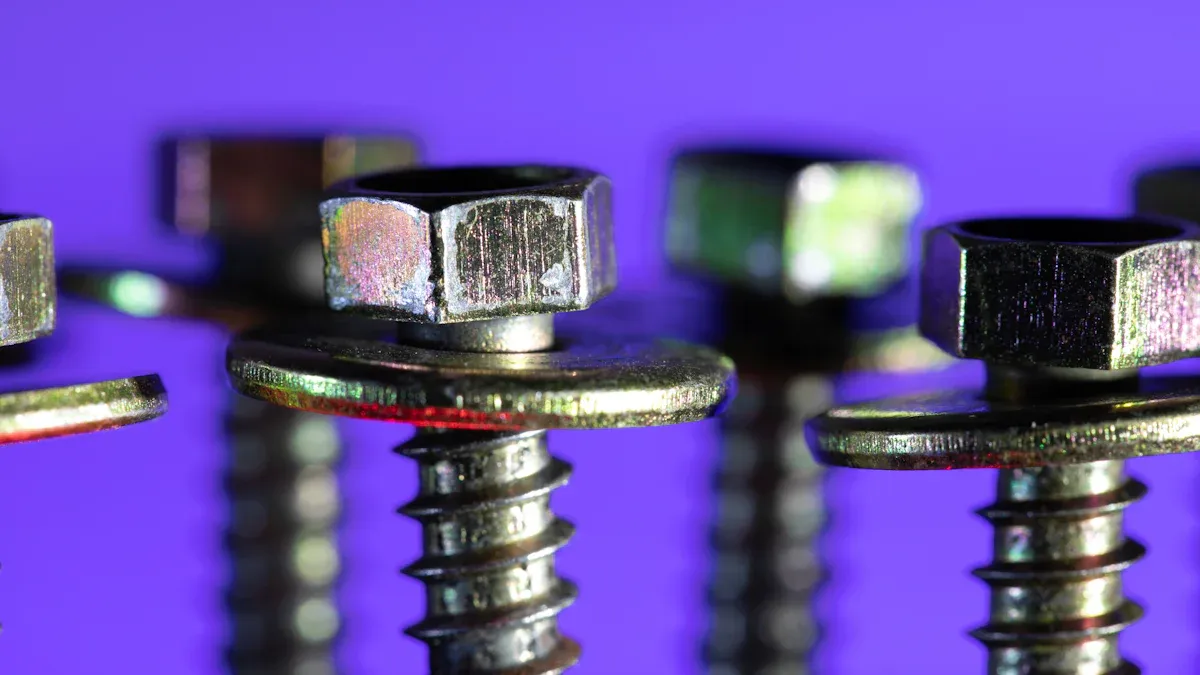
Selecting the right hex bolt is only the first part of creating a secure joint. A professional completes the assembly by choosing the correct nuts and washers. These components work together to maintain clamping force and ensure the connection remains tight over time. This final bolt choice is essential for a reliable and safe outcome.
Pairing the Right Nut for Your Hex Bolt
A nut must be compatible with its corresponding hex bolt in thread, size, and strength. An incorrect pairing can compromise the entire assembly.
Matching Nut Grade to Bolt Grade
A fundamental rule is to match the nut’s strength grade to the bolt’s grade. This practice ensures the components are compatible and can handle the intended load. Using a stronger nut does not increase the capacity of a weaker bolt. Industry guidelines, such as those from ASTM, provide detailed specifications for proper pairing.
General Rules for Nut and Bolt Compatibility:
- Metric System: A nut’s property class should match the first number of the bolt’s class. For example, a Class 10.9 bolt pairs with a Class 10 nut.
- SAE System: A Grade 5 bolt requires a Grade 5 nut, and a Grade 8 bolt needs a Grade 8 nut.
- Never Mix Systems: A professional never uses a metric nut on an imperial bolt, or vice versa, as thread damage and joint failure will occur.
Standard Hex Nuts vs. Nylon Lock Nuts (Nyloc)
The application determines the best type of nut.
- Standard Hex Nuts: These are the most common type, suitable for a wide range of static applications where vibration is not a concern.
- Nylon Lock Nuts (Nyloc): These nuts feature a nylon insert that creates friction against the bolt threads. This design provides excellent resistance to loosening caused by vibration, making them ideal for machinery and automotive use.
Jam Nuts for Counter-Tightening
A jam nut is a thinner hex nut installed and tightened against a standard nut. This counter-tightening action creates a locking force that prevents the primary nut from backing off. Professionals use this method in applications where vibration is a persistent issue.
The Role of Washers in a Bolted Joint
Washers are thin, disc-shaped plates that serve several critical functions in a bolted joint. The correct bolt choice includes selecting the appropriate washer for the job.
Flat Washers for Distributing Load
A flat washer’s primary job is to distribute the pressure of the bolt head and nut over a wider surface area. This prevents damage to the material being fastened, especially softer materials like aluminum or plastic.
Split Lock Washers for Preventing Loosening
A split lock washer is a ring that has been split and bent into a helical shape. When tightened, the washer flattens and its sharp edges dig into the nut and the joint surface. This action creates tension that helps prevent the fastener from loosening under light vibration.
Fender Washers for Soft Materials
A fender washer is a type of flat washer with a significantly larger outer diameter compared to its inner hole. This design provides maximum load distribution. It is the perfect choice for fastening thin sheet metal, wood, or plastic where pulling the bolt head through the material is a risk.
Understanding Different Hex Head Styles
The head style of a fastener dictates the tools required for installation and its suitability for specific environments. While all hexagonal bolts share a six-sided head, variations in design offer unique advantages for different jobs. A professional selects the head style based on accessibility, load distribution needs, and assembly efficiency.
Standard Hex Head Bolts
The standard hex head is the most recognizable and widely used fastener design. Its simple, robust shape makes it a versatile choice for countless projects.
When to Use a Standard Hex Head
A professional uses standard hexagonal bolts for general construction, repair, and assembly projects. They are ideal for applications where there is ample space to accommodate external tools like wrenches or sockets. Their design allows for high torque application, creating strong and secure joints.
Required Tools: Wrenches and Sockets
The external six-sided head is designed for use with common tools, including adjustable wrenches, combination wrenches, and socket sets. This accessibility makes installation and removal straightforward. The dimensions of these bolts are tightly controlled by standards like ASME B18.2.1.
| Nominal Size (Inches) | Width Across Flats (Basic) | Head Height (Basic) |
|---|---|---|
| 1/4″ | 7/16″ | 11/64″ |
| 3/8″ | 9/16″ | 1/4″ |
| 1/2″ | 3/4″ | 11/32″ |
| 3/4″ | 1-1/8″ | 1/2″ |
| 1″ | 1-1/2″ | 43/64″ |
Hex Flange Bolts
A hex flange bolt is a type of hex bolt with a built-in, washer-like flange under the head. This integrated design offers several key benefits.
The Built-in Washer Advantage
The flange distributes the clamping load over a wider surface area, just like a separate washer. This feature eliminates the need for an extra component, streamlining the assembly process. The design is particularly efficient in automated assembly lines, where it improves installation speed and provides excellent vibration resistance.
Applications for Flange Bolts
These hexagonal bolts are common in the automotive industry and heavy equipment manufacturing. Their ability to resist loosening under vibration makes them perfect for securing vehicle frames, engine components, and other high-stress applications.
Hex Socket Cap Screws
Hex socket cap screws, often called Allen bolts, feature a cylindrical head with an internal hexagonal recess. This design provides a different set of advantages.
Benefits of an Internal Hex Drive
The internal drive allows for installation in tight spaces where an external wrench cannot fit. A user only needs vertical clearance for an Allen key. This makes these fasteners ideal for compact machinery and intricate assemblies.
Caution: ⚠️ The internal hex drive is a weak point. A professional must use a torque wrench and adhere to manufacturer specifications to avoid stripping the socket, especially when tightening smaller screws.
Common Uses in Machinery and Tight Spaces
Hex socket cap screws are essential in machine tooling, robotics, and electronics assembly. Their narrow head profile and internal drive mechanism make them the superior choice for applications where space is limited and a clean, finished appearance is desired.
Common Mistakes to Avoid in Your Bolt Choice
A successful project depends on avoiding common pitfalls during fastener selection. A poor bolt choice can compromise safety, durability, and budget. Professionals learn to recognize and prevent these critical errors.
Ignoring Environmental Factors
The surrounding environment directly attacks a fastener. A builder must consider these conditions to ensure long-term joint integrity.
The Risk of Rust and Corrosion
Exposure to moisture and chemicals will cause an unprotected carbon steel bolt to rust and fail. A proper bolt choice involves selecting a material and coating, like stainless steel or hot-dip galvanizing, that can withstand the specific environmental challenges.
Mismatching Metals and Galvanic Corrosion
A professional never pairs certain dissimilar metals in a wet environment. This mistake triggers galvanic corrosion, an electrochemical process that destroys the less noble metal.
Galvanic corrosion requires three key ingredients:
- Two different metals in electrical contact.
- An electrolyte, such as saltwater.
- An electrical path between the metals.
When stainless steel bolts are used with aluminum plates, the aluminum acts as a sacrificial anode and corrodes rapidly. The corrosion rate is heavily influenced by the surface area ratio. A small anode (aluminum rivet) connected to a large cathode (stainless steel plate) will fail extremely quickly.
Underestimating Load Requirements
Every bolted joint must support a specific load. Miscalculating this force is one of the most dangerous mistakes in engineering and construction.
Dangers of Using a Low-Grade Bolt
Selecting a bolt with a grade too low for the application’s load requirements invites catastrophic failure. The bolt can stretch or shear, causing the entire assembly to collapse. Historical disasters, such as the Hartford Civic Center roof collapse, demonstrate the tragic consequences of underestimating the structural load and using inadequate connections.
Why Over-Engineering Can Be Costly
While safety is paramount, choosing a bolt that is excessively strong can be wasteful. A high-strength Grade 8 bolt costs more than a Grade 5. Using it where a lower grade would suffice adds unnecessary expense to a project without providing a functional benefit.
Incorrect Length and Thread Engagement
The bolt’s length is just as important as its diameter and grade. An incorrect length prevents the joint from achieving its designed strength.
The Problem with a Bolt That’s Too Short
A bolt that is too short will not have sufficient thread engagement in a tapped hole. This creates a weak connection that can easily strip or pull out under tension. The minimum required engagement depends on the material.
| Material | Minimum Thread Engagement |
|---|---|
| Steel | 1.0 to 1.5 x Bolt Diameter |
| Aluminum | 2.0 to 2.5 x Bolt Diameter |
This rule makes the final bolt choice critical for joint security.
The Issue with a Bolt That’s Too Long
A bolt that is too long can cause other problems. In a tapped hole, it may “bottom out” before the head is tight, preventing proper clamping force. In a through-hole, the excess threads can create a snag hazard or interfere with other components.
A professional confirms the required size, material, and strength for any project. This three-step verification of the material and size is the key to a secure assembly. A poor choice can lead to failure, as seen in one case study.
- Problem: Harvester bolts were bending repeatedly.
- Cause: Incorrect bolt dimensions placed threads in the shear plane.
- Result: The bolt’s shear strength was compromised.
This example shows why a professional must choose hex bolt options carefully to select the right hex bolt for the job, preventing costly and dangerous failures.
FAQ
What is the difference between a bolt and a screw?
A bolt is designed to pass through unthreaded holes in parts. It is secured with a nut to create clamping force. A screw, in contrast, threads directly into one of the components being joined.
Can a professional reuse high-strength hex bolts?
A professional should not reuse high-strength bolts (e.g., Grade 8 or Class 10.9). The initial tightening process can stretch them permanently, a condition known as yielding. This stretching compromises their load capacity for future use.
Why are some bolts partially threaded?
Partially threaded bolts have a solid, unthreaded shank. This shank provides greater shear strength compared to a threaded section. A professional selects this design for joints where forces act perpendicular to the bolt’s axis.
What does the “M” on a metric bolt head mean?
The “M” prefix on a metric bolt simply stands for “Metric.” The number that follows the “M” indicates the bolt’s nominal diameter in millimeters. For example, an M10 bolt has a 10mm diameter.
How tight should a bolt be?
A bolt’s tightness is defined by a specific torque value. This value ensures the correct clamping force is achieved without damaging the fastener or the joint. A professional always refers to the project’s engineering specifications for this critical information.
Is a Grade 8 bolt always better than a Grade 5?
No. A Grade 8 bolt is stronger, but not universally “better.” The correct bolt choice depends on the application’s load requirements. Using an unnecessarily high-grade bolt adds cost without providing any functional benefit for the project.
What happens if a user mismatches nut and bolt grades?
Mismatched grades create a dangerous weak point. For example, using a Grade 5 nut on a Grade 8 bolt means the nut will fail long before the bolt reaches its full strength. This can cause the joint to strip and fail unexpectedly.