
Hollow wall anchors provide strong, reliable support for hanging items on walls where studs are not available. This small but mighty anchor is essential for many home projects. The market for these fasteners, including Anchor Bolts and custom anchor bolts from any custom fasteners manufacturer, is growing steadily. One report projects the drywall anchor market to grow from USD 120.0 million in 2024 to USD 177.3 million by 2032.
| Metric | Details |
|---|---|
| Market Revenue (2024) | USD 120.0 Million |
| Market Revenue (2032) | USD 177.3 Million |
| CAGR (2025–2032) | 5.0% |
However, every anchor has its advantages and disadvantages. The main drawback of any anchor is the potential for wall damage if it is installed incorrectly or overloaded. Understanding how to use these anchors correctly is key to success.
The Primary Advantages of Using Hollow Wall Anchors
Hollow wall anchors offer significant benefits for both DIY enthusiasts and professional contractors. Their primary advantage is the ability to create a strong, reliable mounting point on surfaces that lack internal framing. This capability transforms empty wall space into functional, decorative areas. The diverse applications of anchor fasteners make them an indispensable component in modern construction and home improvement.
Achieving Strong Support on Hollow Surfaces
Drywall and other hollow materials cannot support weight from a simple screw. The material is too soft and brittle. An anchor solves this problem by distributing the load, providing robust support for various items.
The Science of Weight Distribution
A screw driven directly into drywall concentrates all the force onto a very small area. This pressure easily causes the gypsum core to crumble, leading to failure. An anchor works by transferring this force over a much larger surface area on the back of the wall. This distribution dramatically reduces the stress at any single point, allowing the wall to hold significantly more weight without damage. These fasteners create stable support structures where none existed before.
How Anchors Expand Behind Drywall
Different anchor fasteners achieve weight distribution through clever mechanical designs. The two most common heavy-duty methods involve expanding behind the wall panel.
- Molly Bolts: These metal anchors feature a slitted sleeve. As a user tightens the screw, the sleeve collapses and expands outward. This action clamps the anchor firmly against the rear of the drywall, creating a very secure hold.
- Toggle Bolts: These fasteners use spring-loaded wings. The wings fold to pass through a pre-drilled hole and then spring open inside the wall cavity. Tightening the bolt pulls the wings flush against the interior wall surface, spreading the load effectively.
Securely Mounting Everyday Items
The reliable support from a properly installed anchor allows for securely mounting many common household items. Attaching fixtures becomes a straightforward task. Homeowners can confidently hang objects that enhance a room’s functionality and aesthetic.
Tip: Everyday Items You Can Hang With the right anchor, you can easily mount items such as:
- Large picture frames and artwork
- Heavy mirrors
- Curtain rods and drapery hardware
- Floating shelves for books or decor
Versatility Across Different Wall Materials
While often called drywall anchors, many of these fasteners work effectively in a range of hollow materials. This versatility makes them a go-to solution for numerous projects.
Use in Drywall and Gypsum Board
Drywall is the most common application for these anchors. From simple plastic anchors for small picture frames to heavy-duty toggle bolts for shelving, there is an anchor designed for nearly any need on a standard gypsum wall. The predictable thickness and composition of drywall make it ideal for most anchor types.
Effectiveness in Plaster Walls
Plaster walls, often found in older homes, are harder and more brittle than drywall. This material can crack easily during installation. For plaster, metal anchors are generally superior to plastic anchors.
- Toggle bolts are highly effective because they require a clean hole and do their work behind the wall, minimizing stress on the plaster itself.
- Molly bolts also provide a strong grip once set, creating a permanent and reliable mounting point.
Solutions for Hollow-Core Doors
Hollow-core doors present a unique challenge due to their very thin surface material. Standard anchors may not work correctly. However, specialized anchor fasteners exist for this purpose. For example, certain plastic toggle anchors, like the TOGGLER® TA model, are designed specifically for the 1/8-inch to 1/4-inch thickness of a hollow door skin, enabling the secure installation of hooks, signs, or small racks.
A Wide Variety of Anchor Fasteners for Every Job
The market offers a vast array of anchor fasteners, ensuring a perfect match for any project’s weight requirements and wall type. This variety is a key advantage, allowing users to select the precise level of holding power needed. This is crucial for securing wall-mounted equipment safely.
Light-Duty Plastic Expansion Anchors
For lightweight tasks under 15 pounds, simple plastic anchors are an excellent choice. These inexpensive plastic anchors typically have ribs or wings that expand as a screw is driven into them, gripping the inside of the drilled hole. They are ideal for hanging small clocks, calendars, and lightweight photo frames.
Medium-Duty Self-Drilling Anchors
These anchor fasteners, often made from a strong zinc alloy (Zamac) or durable nylon, offer a balance of strength and convenience. They feature a sharp, threaded body that bores directly into drywall without a pilot hole. This design simplifies installation and provides reliable support for items like towel bars and medium-sized pictures. These plastic anchors are a step up in strength.
Heavy-Duty Molly Bolts
Molly bolts, or sleeve-type anchors, are all-metal fasteners designed for heavy loads. Their expanding sleeve creates an exceptionally strong grip that is perfect for installing shelving, small cabinets, and grab bars. Once set, the screw can be removed and reinserted, a unique feature among many anchors.
Maximum Strength Toggle Bolts
When maximum holding power is required, toggle bolts are the professional’s choice. A classic toggle anchor can support loads from 30 to over 50 pounds. For the most demanding jobs, modern strap-style fasteners like the SNAPTOGGLE® Heavy-Duty Toggle Bolt provide even greater strength and easier installation, making them suitable for hanging heavy mirrors, large televisions (on a mounting bracket), and microwave cabinets.
Exploring the Main Types of Drywall Anchors
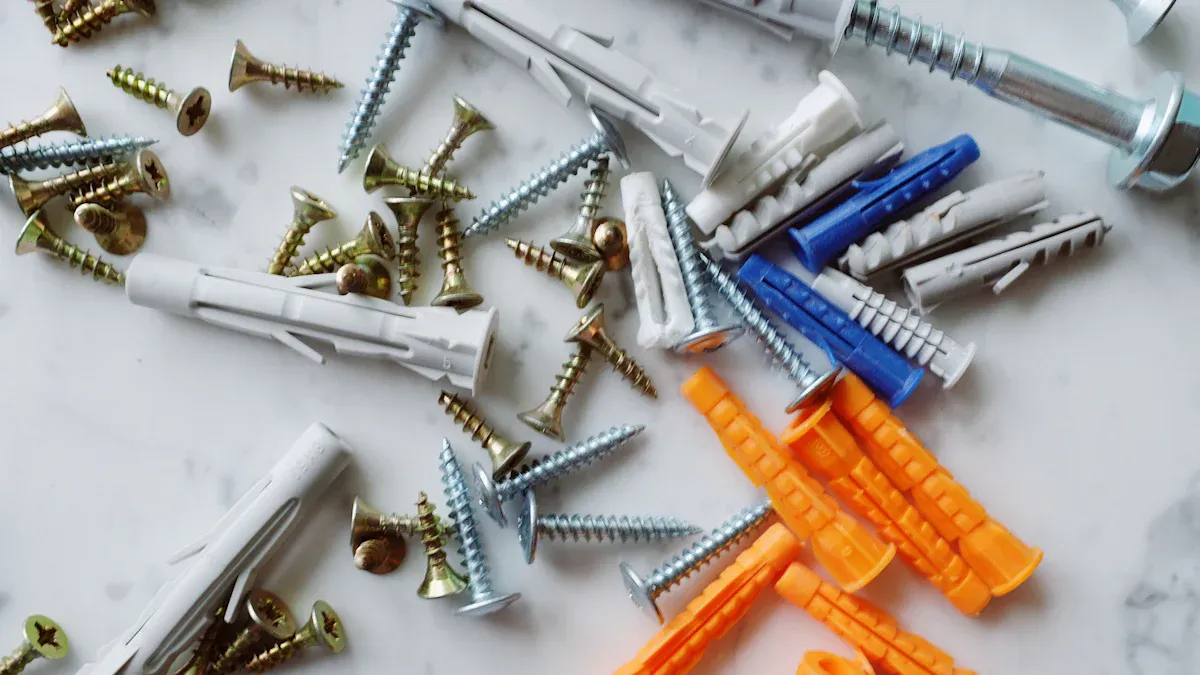
Choosing the correct anchor is critical for a secure installation. The market offers many types of anchor fasteners, each designed for a specific purpose. These generally fall into two main categories: plastic anchors for lighter duties and metal anchors for heavier applications. Understanding the different types of anchor fasteners ensures a user selects the best option for the job.
Plastic and Nylon Anchors for Light Loads
Plastic and nylon anchors are common for simple, lightweight tasks. Manufacturers typically injection-mold these fasteners from a ductile plastic. This material makes them resistant to corrosion from moisture and easy to install. These plastic anchors are designed for use with standard wood or sheet metal screws.
Ribbed Plastic Anchors
These simple plastic anchors are the most common type. A user drills a pilot hole and taps the anchor into place. As a screw enters the anchor, the anchor’s ribbed sides expand, pressing against the inside of the hole to create friction and holding power.
Winged Plastic Anchors
Winged plastic anchors offer a slight upgrade in strength. After insertion into the pilot hole, the wings on this anchor are designed to pop open behind the drywall as the screw is driven in. This action provides a more secure grip than a simple expansion anchor.
Best Uses and Weight Limits
Plastic anchors are strictly for lightweight applications. Their holding power in drywall is limited. A ribbed anchor may only support 10 pounds, making it suitable for small decor. Winged plastic anchors provide slightly more support.
| Anchor Type | Load-Bearing Range | Applicable Scenarios |
|---|---|---|
| Plastic Expansion Anchors (Ribbed) | 10-25 pounds (4.5-11kg) | Small picture frames, light decorations, calendars |
| Winged Plastic Anchors | 15-30 pounds (7-14kg) | Small mirrors, towel racks, heavier frames |
Metal Anchors for Hanging Heavy Objects
For hanging heavy objects and items over 25 pounds, metal anchor fasteners are necessary. These robust fasteners provide the strength and reliability needed for shelves, mirrors, and cabinets.
Self-Drilling Drywall Anchors
These medium-duty fasteners, often made of zinc, screw directly into drywall without a pilot hole. They provide more strength than plastic anchors and are excellent for installing items like curtain rods and shelving.
Molly Bolts (Sleeve Type Anchors)
Molly bolts are strong metal anchor fasteners. When a user tightens the screw, the anchor’s metal sleeve expands and compresses against the back of the drywall. This creates a very secure hold, with a shear load capacity often between 50 and 100 pounds.
Classic Toggle Bolts
A classic toggle bolt provides excellent strength. This anchor features a spring-loaded wing that folds to pass through the wall and then opens inside the cavity. Tightening the bolt pulls the wing tight against the interior wall, distributing the load over a wide area.
Modern Strap Toggles
Strap toggles are an evolution of the classic toggle. These fasteners offer some of the highest load capacities, sometimes exceeding 300 pounds. They are easier to install than classic toggles and provide maximum security for the most demanding jobs.
How to Choose the Right Anchor
Selecting the right anchor involves assessing three key factors: the item’s weight, the wall’s thickness, and the screw size.
Assessing Your Item’s Weight
The anchor package always lists the maximum load capacity. A user should always choose an anchor with a weight rating that is at least double the weight of the item being hung. This provides a crucial safety margin.
Measuring Your Wall’s Thickness
Anchors are designed for specific wall thicknesses, typically from 3/8-inch to 5/8-inch. Using an anchor not matched to the wall thickness will cause it to grip improperly. Considering the wall thickness before purchasing anchors is essential for a secure mount.
Matching the Anchor to the Screw Size
An anchor is only as strong as its complete system. The packaging for the anchor fasteners will specify the correct screw diameter and length. Using the wrong screw can prevent the anchor from expanding correctly, leading to failure.
Step-by-Step Guide to Installing Common Hollow Wall Anchors
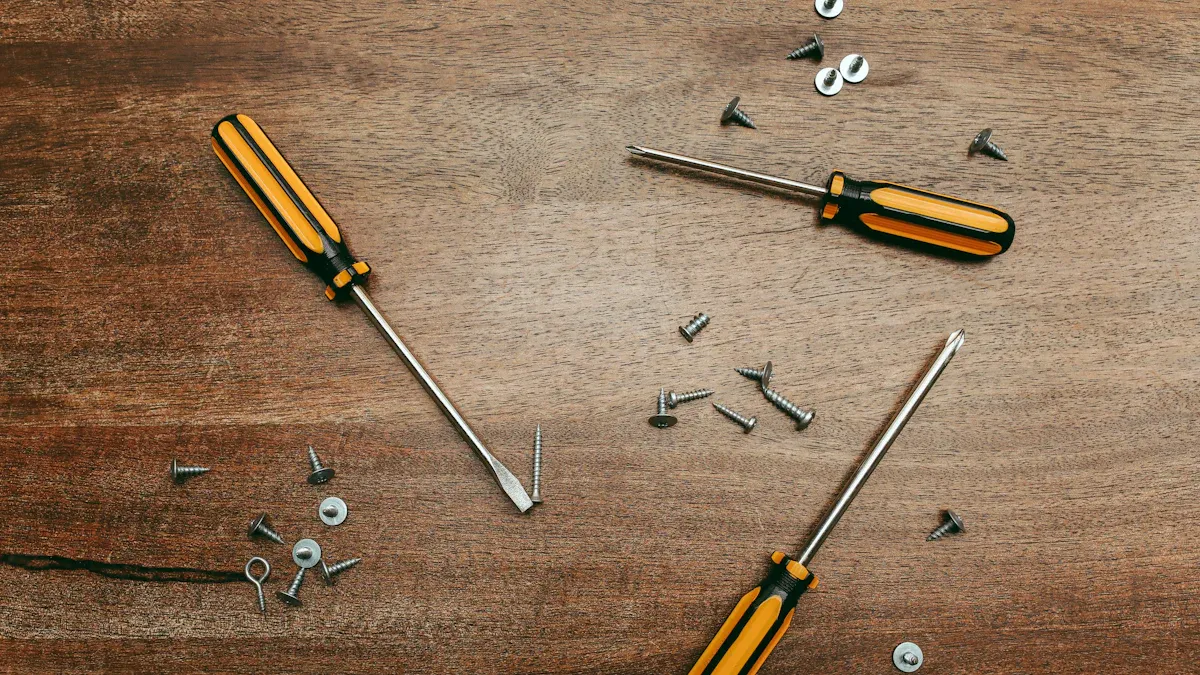
Proper installation is the key to unlocking the full potential of any anchor. Following the correct procedure for each type of anchor ensures a secure hold and prevents damage to the wall surface. Each of these fasteners requires a slightly different technique.
Installing a Plastic Expansion Anchor
These common plastic anchors are for light-duty applications. Their installation is straightforward and requires only basic tools. These plastic anchors are a go-to for simple home decor projects.
Drilling the Correct Pilot Hole
A user first drills a pilot hole into the drywall. The drill bit size must correspond to the body of the plastic anchor, not its collar. This information is typically found on the packaging for the plastic anchors. A hole that is slightly smaller than the anchor is ideal.
Tapping the Anchor Flush
Next, the user gently taps the plastic anchor into the hole with a hammer. The anchor should be inserted until its collar is completely flush with the wall surface. The anchor must not protrude or be recessed into the wall.
Driving the Screw
Finally, the user places the item over the anchor and drives the correct size screw into the opening. As the screw advances, it expands the body of the plastic anchor. This expansion creates the friction needed to hold the lightweight object securely. These plastic anchors are simple fasteners.
Installing a Self-Drilling Anchor
These threaded anchors offer a convenient installation process for medium-duty tasks because they do not require a pilot hole.
Marking Your Location
A user begins by marking the exact installation spot on the wall with a pencil. To prevent the anchor from skipping, a user can create a small starter divot at the mark using the tip of a Phillips screwdriver.
Driving the Anchor into Drywall
A user should install these anchors with a manual screwdriver, not a power drill, to maintain control. The user applies moderate, continuous pressure to twist the anchor clockwise into the drywall. It is crucial to stop turning once the anchor head is flush with the wall to avoid stripping the drywall.
Securing the Screw
With the anchor in place, the user aligns the object’s mounting hole over the anchor. The screw is then driven through the object and into the anchor, securing the item firmly to the wall.
Installing a Molly Bolt
Molly bolts are robust anchor fasteners that provide excellent holding power for heavy items. Their installation is more involved but creates a very reliable mounting point.
Drilling the Pilot Hole
A user must predrill a hole that matches the diameter specified by the manufacturer of the anchor fasteners. The packaging for the anchors will provide the exact drill bit size required for a proper fit.
Inserting and Setting the Molly
The user inserts the Molly bolt into the hole. A hammer is then used to lightly tap the anchor’s head until its small teeth bite into the drywall and the collar sits flush.
Pro Tip: If the anchor spins while tightening, a user can wedge a small flathead screwdriver against the anchor’s collar to hold it in place.
Tightening to Expand the Sleeves
A user tightens the screw with a screwdriver. This action pulls the head of the screw forward, causing the slitted sleeve to collapse and expand behind the drywall. For frequent installations, a specialized setting tool can make this process faster. These anchor fasteners are strong enough for tasks like installing handrails. Once set, the screw can be removed to hang the item, and the anchor remains in the wall.
Installing a Toggle Bolt
Toggle bolts are the heavy-duty champions among anchor fasteners, offering superior strength for the most demanding jobs. Their installation process is unique because the anchor mechanism must pass completely through the wall. Following the correct steps for these powerful fasteners is essential for a secure mount. This type of anchor provides maximum support.
Drilling a Larger Access Hole
Unlike other anchors, a toggle bolt requires a large access hole. A user must drill a hole wide enough for the folded spring-loaded wings (the “toggle”) to pass through. The packaging for the anchor fasteners will specify the exact drill bit size, which is often double the diameter of the bolt itself. For example, a 1/4-inch bolt might require a 1/2-inch hole. This large opening is a defining feature of this anchor.
Safety First ⚠️ Before drilling, a user must verify that no electrical wires or plumbing pipes are behind the installation point. A stud finder with AC detection can help, or a user can drill a small 1/8-inch exploratory hole first to check for obstructions.
Assembling the Bolt and Toggle
Proper assembly is the most critical step to prevent losing parts inside the wall cavity. A user must first pass the machine bolt through the mounting bracket or the item being hung. After the bolt is through the object, the user then threads the spring-loaded toggle wings onto the end of the bolt. The wings should be oriented so they fold back toward the bolt’s head. This assembly ensures the anchor, bolt, and item are one connected unit before installation. This is the correct procedure for these types of fasteners.
Inserting and Tightening the Toggle
With the assembly complete, the user pinches the toggle wings together against the bolt. The user then pushes the entire anchor assembly through the large hole in the wall. A distinct “pop” sound will indicate that the wings have sprung open inside the wall cavity. To tighten the anchor, the user must pull the bolt outward, creating tension. This action holds the wings firmly against the interior wall surface. While maintaining this outward pull, the user tightens the bolt with a screwdriver until the item is snug against the wall. This method prevents the entire anchor from spinning freely. These powerful anchors and fasteners are suitable for the most demanding tasks, including installing handrails. These anchor fasteners provide unparalleled strength when installed correctly.
The Disadvantages and Risks of Hollow Wall Anchors
While hollow wall anchors are incredibly useful, they are not without their drawbacks. Their effectiveness is entirely dependent on correct selection and installation. Misuse can lead to significant wall damage, failed projects, and even safety hazards. Understanding these risks is crucial for any user planning to hang items on a hollow wall.
The Inherent Risk of Wall Damage
The primary disadvantage of using any anchor is the potential for damage to the wall itself. Unlike a stud, which is a solid piece of wood, drywall is a comparatively fragile material composed of gypsum plaster pressed between sheets of paper. An anchor places stress on this material, and mistakes can easily lead to unsightly and frustrating damage.
The Danger of Overloading
Every anchor has a specific weight limit that a user must not exceed. Overloading an anchor is the quickest way to cause a project to fail. Placing too much weight on the fastener will cause the drywall around the anchor to crumble and give way. The consequences of exceeding the specified weight load are severe.
- The anchor will pull out from the wall.
- The failure leaves a large, jagged hole.
- In the worst cases, a section of the wall can break away.
This failure not only damages the wall but also results in the mounted item falling, potentially causing further damage or injury.
Consequences of Improper Installation
Proper installation is not just a recommendation; it is a requirement for an anchor to function correctly. A poorly installed anchor has almost no holding power. Common installation errors include drilling a pilot hole that is too large, not setting the anchor flush with the wall, or over-tightening the screw. These mistakes prevent the anchor from gripping the drywall properly.
A frequent issue is a spinning anchor. One analysis found that about half of the anchors spun in the wall because the installers did not install them properly. This spinning prevents the screw from tightening and renders the anchor useless.
Repairing Anchor Blowouts
An “anchor blowout” occurs when an anchor fails and rips a chunk of drywall out with it. Repairing this damage is more involved than patching a simple nail hole. A user must first remove any loose paper and crumbling gypsum from the hole. The area then needs to be filled with spackling compound or a drywall patch, often in multiple layers. After the compound dries, it requires careful sanding to blend with the surrounding wall before it can be primed and painted.
Understanding the Advantages and Disadvantages of Weight Limits
The weight ratings on anchor packaging are not suggestions; they are critical safety specifications. While these ratings provide a guide, they also highlight the inherent limitations of using anchors compared to mounting directly into a structural element.
Why Studs Are Always Superior
Wall studs are the vertical wood or metal beams that form the frame of a wall. A screw driven into a stud becomes part of the house’s structure, offering superior and reliable support. An anchor, in contrast, only uses the strength of the drywall panel itself. For any truly heavy or valuable item, locating and using a stud is always the safest and most secure method. Studs can support hundreds of pounds, a load capacity no single drywall anchor can match.
Reading Anchor Weight Ratings
Manufacturers determine anchor weight ratings through rigorous testing. Understanding this process helps a user appreciate the numbers on the package.
- Technicians test for both tensile strength (pullout force) and shear strength (downward force).
- Tests are conducted on various wall materials, such as 1/2-inch and 5/8-inch drywall.
- A machine applies hydraulic force to the anchor until it or the wall material fails.
- For safety, the final rated weight is typically just one-quarter (25%) of the ultimate load that caused the failure.
This significant safety margin accounts for variations in wall condition and installation quality.
Items to Never Hang with Anchors
Certain items should never be hung with just drywall anchors due to the type of force they exert or the extreme safety risk they pose. These items require the structural support of a wall stud.
- Pull-up bars: These support dynamic human body weight.
- Heavy punching bags: These create intense, repetitive shock loads.
- TV wall mounts for very large televisions: While some mounts can use anchors, extremely large or articulating mounts should be secured to studs.
- Anything a person might hang or climb on: This includes items like decorative ladders or large plant hangers in high-traffic areas.
Challenges with Removal and Reuse
Another significant disadvantage is that most anchors are designed for permanent, one-time use. Removing them is often difficult and almost always leaves a hole that needs repair.
Why Most Anchors Are Single-Use
The very mechanism that makes an anchor work is what prevents its reuse. Plastic anchors deform as the screw expands them, and self-drilling anchors chew up the drywall to create their threads. Removing them damages both the anchor and the wall, compromising their ability to hold securely if reinstalled. Furthermore, an anchor is rated for a specific wall thickness; reusing it in a different location may alter its holding power.
The Difficulty of Removing Molly Bolts
Molly bolts are semi-permanent anchors. Once the sleeve expands behind the wall, it cannot be pulled back through the original hole. To remove one, a user has two options:
- Tap the anchor head so it falls into the wall cavity.
- Carefully drill the head of the anchor off before pushing the rest into the wall.
Both methods leave the anchor body inside the wall and require patching the remaining hole.
Losing Toggle Bolts Inside the Wall
Toggle bolts present a unique removal challenge. The design features a wing mechanism that is larger than the installation hole. Once a user removes the bolt, the toggle wing is no longer secured and immediately falls down inside the wall cavity. 😥 It is impossible to retrieve without cutting a larger access panel in the wall. This makes these powerful anchors a single-use solution by design.
Patching Holes Left Behind
Regardless of the type, removing an anchor will leave a hole. The size of the hole depends on the anchor used.
| Anchor Type | Hole Size | Repair Difficulty |
|---|---|---|
| Plastic Anchor | Small | Easy |
| Self-Drilling Anchor | Medium | Moderate |
| Molly Bolt | Medium | Moderate |
| Toggle Bolt | Large | Difficult |
Even the smallest plastic anchor leaves a noticeable blemish. A toggle bolt, which requires a large access hole for installation, leaves behind a significant void that requires a more robust patching job to make the wall look smooth again.
The Need for Installation Precision
An anchor’s holding power is not guaranteed. It depends entirely on precise installation. Even the strongest hollow wall anchors will fail if a user does not follow the instructions exactly. Small mistakes during the installation process can compromise the anchor’s integrity, leading to wall damage and project failure. Precision is not just a best practice; it is a fundamental requirement for a secure mount.
Importance of the Pilot Hole Size
The pilot hole is the foundation for a successful anchor installation. Its size and depth are critical for the specific anchor being used. A correctly sized hole ensures the anchor fits snugly, allowing its expansion mechanism to function as designed.
- All PROSOCO anchors, for example, require a pilot hole before installation.
- A user must select a drill bit that is slightly smaller than the anchor’s diameter to create a tight fit.
- Drilling too deeply into drywall can cause unnecessary damage to the back paper layer, weakening the area.
After installing the anchor, a user should test its strength. If the anchor feels loose, it indicates an improper fit, and a larger anchor size may be necessary to correct the issue.
What Happens if the Hole is Too Big
Drilling a pilot hole that is too large is one of the most common and critical installation errors. An oversized hole prevents the anchor from making firm contact with the surrounding drywall. This seemingly small mistake has significant consequences. When the hole is too big, the anchor will spin freely as a user tries to drive the screw. This spinning prevents the anchor’s expansion mechanism from engaging. The anchor cannot grip the wall material, so it provides virtually no holding power. The result is a useless anchor that cannot support any weight. The only solution is to remove the failed anchor and start over with a larger anchor or patch the hole completely.
Problems with an Over-Tightened Screw
It is easy to assume that tighter is always better, but this is not true for an anchor. Over-tightening the screw is just as damaging as using the wrong pilot hole size. The screw’s job is to expand the anchor just enough to create a secure grip. Applying too much force with a screwdriver or power drill can strip the anchor or the drywall.
Warning ⚠️ When a user over-tightens a screw, the anchor can break through the back of the drywall panel. This action destroys the anchor’s grip and can create a large, unstable cavity. For self-drilling anchors, over-tightening will strip the threads they cut into the gypsum, causing the anchor to lose all its holding power.
A user should tighten the screw until it feels snug and the mounted item is secure. Any further turning risks compromising the entire installation. The anchor needs to be firm, not crushed.
Best Practices for Safe and Secure Installation
Achieving a reliable hold with a hollow wall anchor depends entirely on proper technique. Following best practices not only ensures the anchor performs as expected but also prevents frustrating wall damage. These guidelines help users create stable support structures for their projects.
Essential Installation Techniques
Precision during the installation process is non-negotiable. Each step, from drilling the hole to setting the anchor, contributes to the final strength of the mount. A user must follow a methodical approach for a successful outcome.
Selecting the Correct Drill Bit
The foundation of a secure anchor is a correctly sized pilot hole. A user must select a drill bit that matches the diameter specified by the anchor manufacturer. A hole that is too large will cause the anchor to spin, rendering it useless. A hole that is too small will damage the anchor or the drywall during insertion.
Ensuring the Anchor Sits Flush
After drilling the hole, a user should gently tap the anchor into place until its collar is perfectly flush with the wall surface. An anchor that protrudes or is recessed will not provide a stable base for the mounted item. The small teeth on the collar of a Molly bolt anchor, for example, must bite into the drywall to prevent rotation.
Setting the Anchor Before Loading
Many anchors, especially metal ones, must be “set” to expand behind the wall before they can bear weight. This crucial step ensures the anchor is fully engaged.
Pro Tip: Setting an Anchor Correctly
- Insert the anchor and partially thread the screw into it.
- Use a screwdriver or a specialized setting tool to pull the screw forward.
- Continue tightening until firm resistance is felt. This indicates the anchor has fully expanded.
- Remove the screw, place the item over the anchor, and re-drive the screw to secure it.
How to Avoid Common Mistakes
Many installation failures stem from a few common, avoidable errors. Awareness of these pitfalls is the first step toward preventing them. Misalignment and unseen obstructions are frequent issues.
Always Double-Check Weight Ratings
A user must always respect the weight rating printed on the anchor packaging. For safety, it is wise to choose an anchor rated for at least double the weight of the object being hung. This provides a critical buffer against failure.
Using Ceiling-Rated Anchors
Walls and ceilings are not interchangeable. An anchor used on a ceiling is under constant tensile (pullout) force, which is different from the shear (downward) force on a wall. A user must select an anchor specifically designed and rated for ceiling applications to prevent items from falling.
Spacing Multiple Anchors Correctly
When hanging a heavy item like a large shelf, using multiple anchors is necessary. However, a user must space them several inches apart. Placing anchors too close together can weaken the section of drywall between them, compromising the integrity of the entire installation.
Testing the Anchor’s Hold Gently
After installation, a user should give the anchor a gentle tug to confirm it is secure. If the anchor moves, spins, or feels loose, the installation has failed. This often happens when a power drill forces the anchor too deep, damaging the drywall. A loose anchor has no holding power and must be removed.
Hollow wall anchors are an indispensable tool for DIY projects. Their key advantage is providing reliable support on hollow surfaces where studs are unavailable. The main disadvantages stem from the risk of wall damage due to incorrect installation or overloading. Success hinges on choosing the right anchor for the specific weight and wall type.
A user should always select a stronger anchor than needed. The best anchor is a safe anchor, and a secure anchor prevents accidents.
FAQ
Can a user reuse a drywall anchor?
Most anchors are designed for single use. The removal process damages both the anchor and the wall, compromising its holding power. For a secure mount, a user should always install a new anchor in a new location. Reusing an anchor is not a safe practice.
What should a user do if they hit a stud?
Hitting a stud is a positive outcome. A user should abandon the anchor installation at that spot. They can then drive a wood screw directly into the stud for a far superior and more secure hold than any hollow wall anchor can provide.
How can a user find a wall stud?
A user has a few reliable methods for locating studs.
- An electronic stud finder is the most accurate tool.
- Tapping the wall reveals a solid sound over a stud versus a hollow sound between studs.
- Outlets and switches are typically attached to a stud.
Can a user install anchors in a ceiling?
Yes, but a user must select anchors specifically rated for ceiling applications. Ceilings place a direct pullout (tensile) force on the anchor. Using a standard wall anchor on a ceiling is unsafe and can lead to failure. Always check the product’s specifications.
How does a user fix a hole from a removed anchor?
A user can repair small holes with spackling compound. Larger holes, especially from toggle bolts, may require a drywall patch kit for a smooth finish.
After the patch material dries, the user sands the area flush with the wall, then primes and paints it to match the surrounding surface.
Why did my anchor spin in the hole?
An anchor spins when the pilot hole is too large. This common error prevents the anchor from gripping the drywall, rendering it useless. A user must drill the exact hole size specified by the manufacturer to ensure a snug, secure fit.
Is it better to use a metal or plastic anchor?
The choice depends on the item’s weight. | Anchor Type | Best Use | | :— | :— | | Plastic Anchors | Lightweight items under 15 pounds (e.g., small pictures). | | Metal Anchors | Heavy items over 25 pounds (e.g., shelves, mirrors). | Metal anchors like Molly bolts or toggle bolts offer significantly more strength and reliability for demanding jobs.