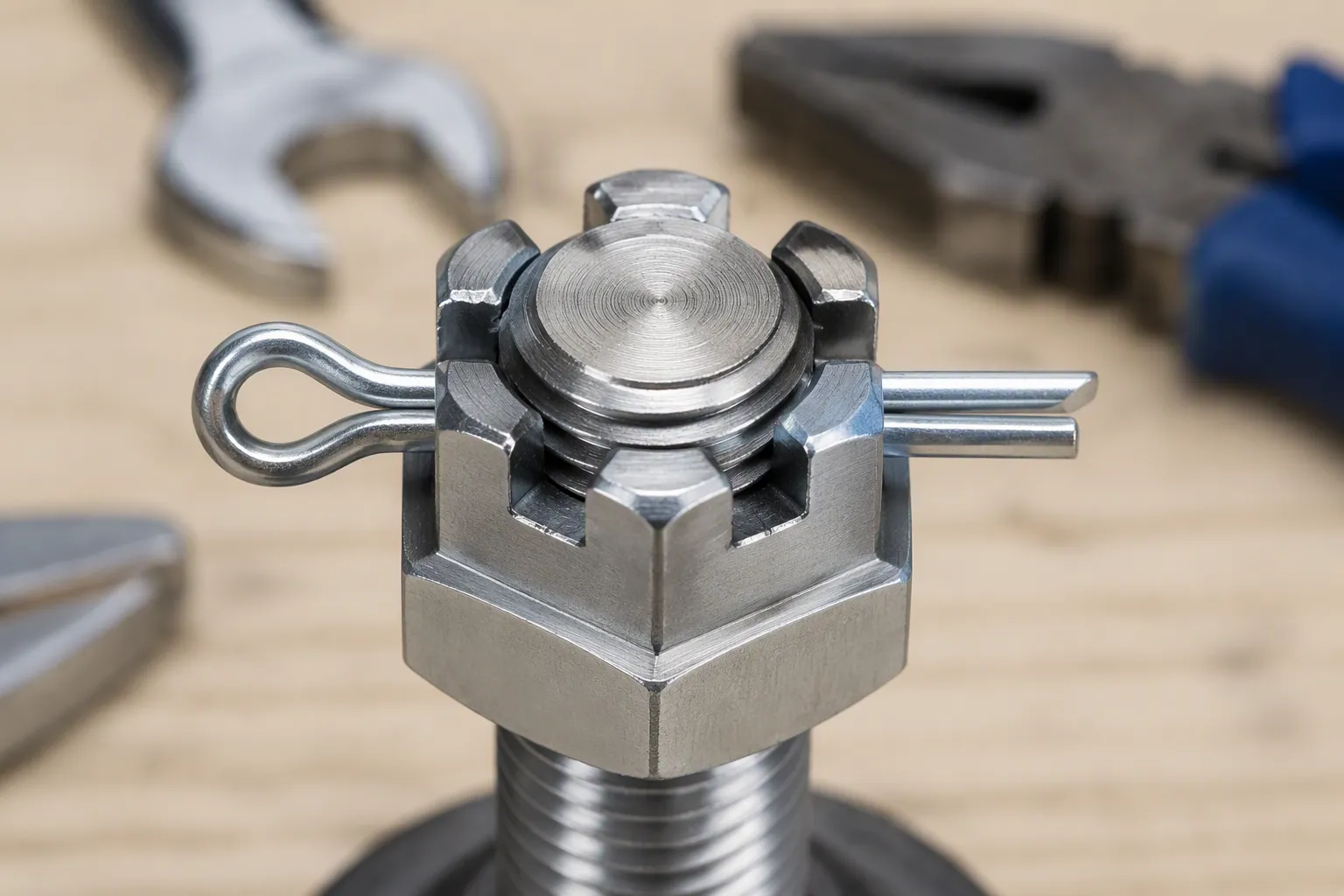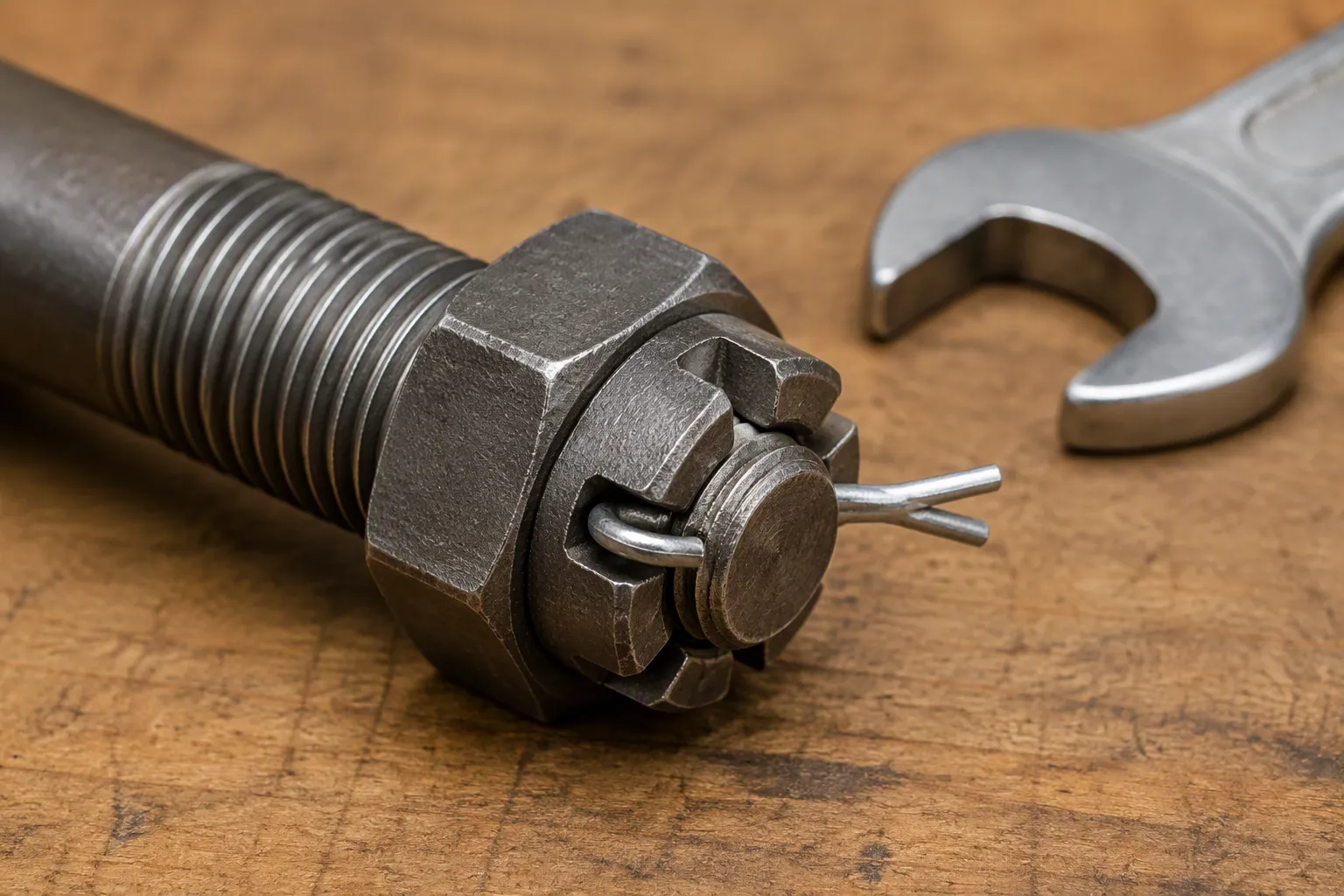

Wedge anchors provide exceptional tensile strength and reliability in solid concrete applications. A custom fasteners manufacturer often produces these anchors, including custom anchor bolts, for demanding jobs. This type of heavy-duty screw anchor, also known as a wedge anchor, is a go-to choice for securing heavy loads. However, these Anchor Bolts are generally unsuitable for brittle or hollow masonry materials like brick or block. The expansion force can easily cause damage to weaker substrates.
What Are Wedge Anchors and How Do They Work?
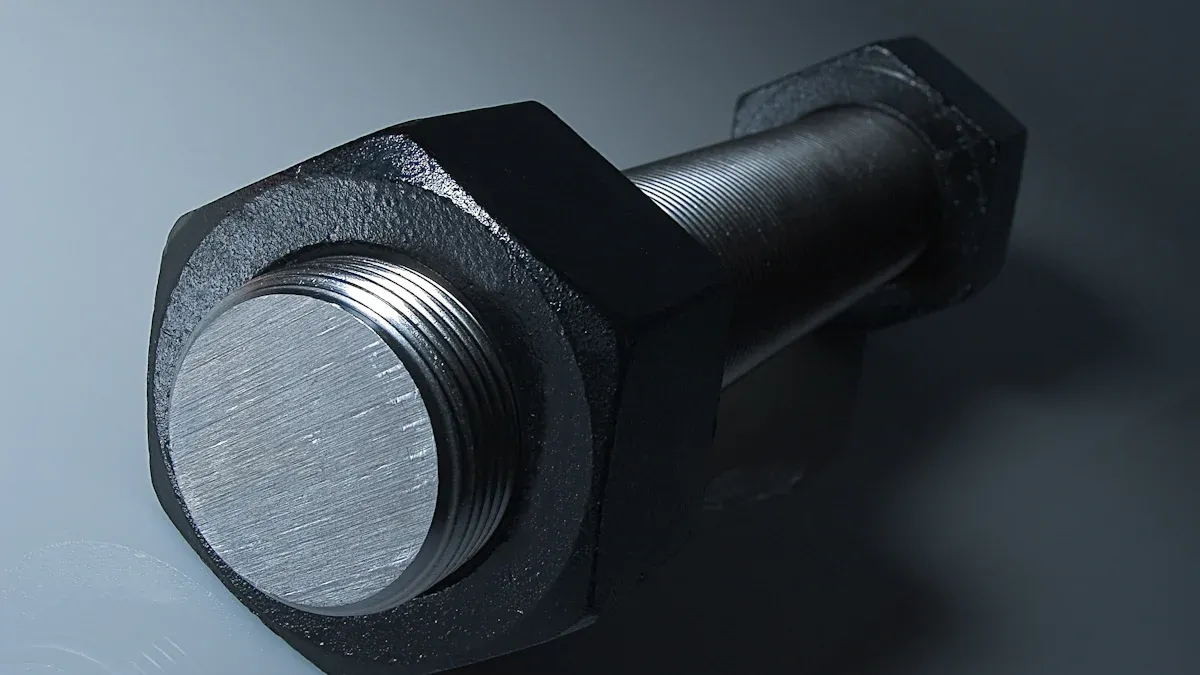
Understanding how wedge anchors function begins with their design. These fasteners achieve immense holding power through a simple yet effective mechanical expansion process. Their reliability in solid concrete stems directly from their unique anatomy and the forces they generate upon installation.
Anatomy of a Wedge Anchor
A wedge anchor consists of three primary components working in unison. Each part plays a critical role in the anchor’s ability to secure heavy loads.
The Threaded Stud Body
The main component is a solid, threaded stud. This body provides the length and strength needed to pass through a fixture and embed into the concrete. Manufacturers typically produce the stud from carbon steel for general use. For environments requiring higher corrosion resistance, stainless steel options are available.
| Component | 304 Stainless Steel Power-Stud | 316 Stainless Steel Power-Stud |
|---|---|---|
| Anchor Body | Type 304 Cu or Type 304 | Type 316 Stainless Steel |
| Nut | 18-8 (300 Series) Stainless Steel | Type 316 Stainless Steel |
| Washer | 18-8 (300 Series) Stainless Steel | Type 316 Stainless Steel |
| Expansion Clip | Type 304 Stainless Steel | Type 316 Stainless Steel |
The Expansion Clip and Sleeve
Wrapped around the bottom of the stud is a critical piece: the expansion clip. This component is a flexible sleeve designed to expand outward. It often features small nubs on its surface. These nubs grip the inside of the drilled hole, preventing the clip from spinning as an installer tightens the nut.
The Tapered Conical End
The very bottom of the anchor stud is shaped into a cone. This tapered end sits inside the expansion clip before installation. The cone’s shape is essential for the “wedging” action that gives these anchors their name and holding power.
The Mechanical Expansion Principle
The holding value of a heavy-duty screw anchor comes from the immense pressure it exerts against the concrete. This process relies on creating and maximizing friction.
Creating Frictional Force
Mechanical anchors generate holding power through controlled expansion. Inserting the anchor into a pre-drilled hole and tightening it increases the volume of material inside the hole. This expansion pushes firmly against the interior wall of the concrete. The resulting friction is the primary mechanism that prevents the anchor from pulling out.
The “Wedge” Action Explained
The expansion process follows a specific sequence of events. Full contact with the hole walls is necessary for the anchor to achieve its maximum holding capacity.
- An installer drills a hole and places the anchor inside.
- They then tighten the nut on the threaded stud.
- This tightening action pulls the entire stud upward.
- The tapered cone at the bottom is pulled up into the expansion clip.
- The clip is forced to expand outward, wedging it tightly between the anchor body and the concrete wall.
Note: This wedging action creates both immense frictional force and bearing pressure, locking the fastener securely in place.
How Torque Translates to Holding Power
Applying torque to the nut with a wrench directly creates the anchor’s holding strength. The rotational force of tightening the nut becomes a linear pulling force on the stud. This upward pull drives the cone into the clip, generating the expansion. Proper torque ensures the clip expands sufficiently to create the friction required to meet the specified load values for the anchors.
The Pros: Key Advantages of Using Wedge Anchors
When used in the correct base material, wedge anchors offer a combination of strength, speed, and value that is difficult to match. Their design provides several key advantages for securing high loads in solid concrete, making them a top choice for contractors and engineers in numerous applications.
Pro 1: Exceptional Holding Power
The primary reason professionals choose this type of heavy-duty screw anchor is its incredible strength. The mechanical expansion principle generates immense frictional and bearing forces, allowing the anchor to resist significant pull-out and shear forces.
High Tensile and Shear Strength
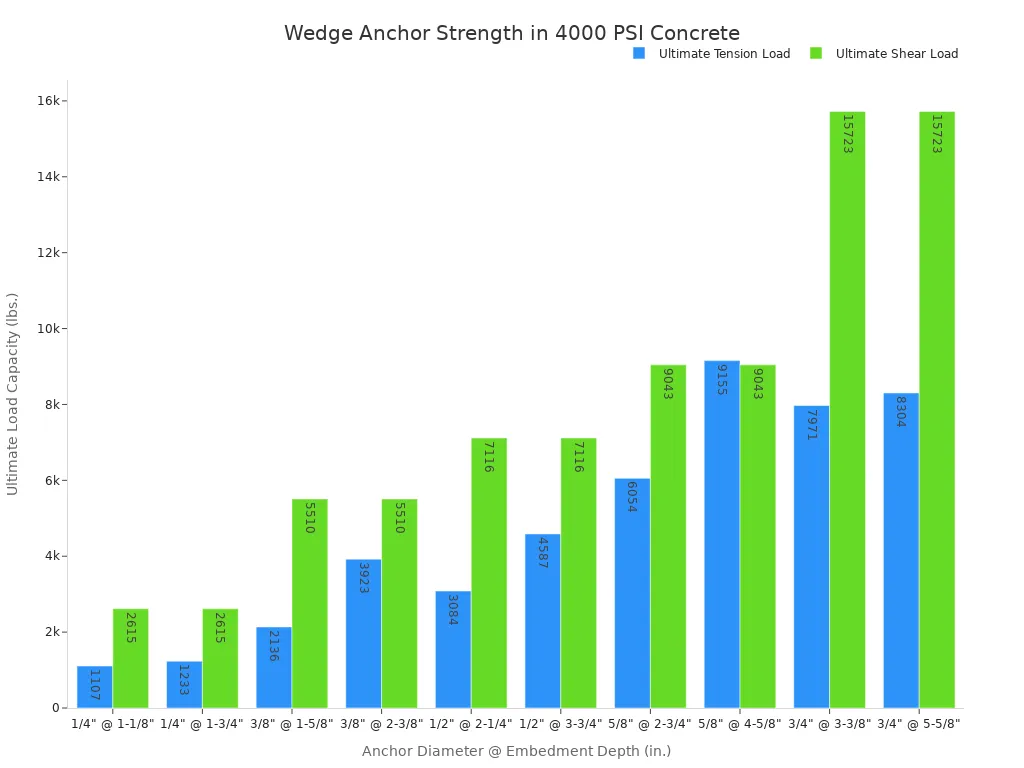
Wedge anchors are engineered to provide impressive performance values. Tensile strength refers to the anchor’s resistance to being pulled straight out of the hole, while shear strength is its ability to resist side-to-side forces. The anchor’s diameter and its embedment depth in the concrete directly influence this capacity. Deeper embedment generally results in higher tensile strength.
The table below illustrates the ultimate load capacities for common carbon steel anchors in 4000 PSI uncracked concrete.
| Nominal Anchor Diameter (in.) | Minimum Embedment Depth (in.) | Ultimate Tension Load Capacity (lbs.) in 4000 psi Concrete | Ultimate Shear Load Capacity (lbs.) in 4000 psi Concrete |
|---|---|---|---|
| 1/4″ | 1-1/8″ | 1,107 | 2,615 |
| 3/8″ | 1-5/8″ | 2,136 | 5,510 |
| 1/2″ | 2-1/4″ | 3,084 | 7,116 |
| 5/8″ | 2-3/4″ | 6,054 | 9,043 |
| 3/4″ | 3-3/8″ | 7,971 | 15,723 |
Ideal for Heavy-Duty Static Loads
The robust design of these anchors makes them perfect for securing heavy static loads. A static load is a force that does not move or change, such as the weight of heavy machinery, industrial pallet racking, or large equipment bolted to a concrete floor. The anchor’s ability to maintain constant, high-pressure contact with the concrete ensures a stable and secure connection over time.
Applications in Structural Fastening
Beyond equipment, these anchors are frequently used for structural connections. This includes fastening steel columns, support beams, and ledger boards to concrete foundations and walls. Their reliability is critical in these applications where the integrity of the structure depends on the fastener’s performance.
Important Safety Considerations It is crucial to apply safety factors to ultimate load values to determine the actual allowable working load.
- Ultimate load capacities must be reduced by a minimum safety factor of 4.0.
- Applications involving life safety or overhead installations may require a safety factor of 10 or higher.
- Published load values are for anchors installed in solid, uncracked concrete.
- The concrete must have reached its specified minimum compressive strength before installation.
- A design professional should always be consulted to determine the appropriate anchor and safety factor for a specific application.
Pro 2: Simple and Fast Installation
In the construction industry, time is money. The straightforward and rapid installation process for wedge anchors is a significant advantage, helping to keep projects on schedule and within budget.
A Step-by-Step Installation Process
The process requires no special certifications and follows a few simple steps:
- Drill: Drill a hole of the correct diameter and depth into the concrete.
- Clean: Thoroughly clean all dust and debris from the hole using compressed air and a wire brush.
- Tap: Place the anchor through the fixture and tap it into the hole until the washer and nut are snug against the fixture.
- Tighten: Use a torque wrench to tighten the nut to the manufacturer’s specified torque value.
Basic Tools for Proper Installation
The installation requires only basic tools that are common on most job sites. An installer needs a hammer drill, a correctly sized carbide drill bit, a method for cleaning the hole (like a wire brush and compressed air), and a torque wrench. The torque wrench is the most critical tool, as it ensures the anchor is tightened correctly to achieve its rated holding power.
Reducing On-Site Labor Costs
The speed of this process directly translates to lower labor costs. A worker can set multiple anchors in the time it might take to prepare for a more complex anchoring system. This efficiency is especially valuable on large-scale projects requiring hundreds or thousands of fastening points, making the heavy-duty screw anchor a highly productive choice.
Pro 3: Cost-Effectiveness for Heavy Loads
For applications demanding high strength in solid concrete, wedge anchors provide an outstanding return on investment. They deliver a high load capacity at a competitive price point.
High Load Capacity for the Price
When comparing fasteners based on their cost per pound of holding force, wedge anchors consistently rank as one of the most economical choices for heavy-duty applications. This value proposition allows engineers to meet demanding structural requirements without inflating the project’s material budget.
Economic Alternative to Chemical Anchors
Chemical (adhesive) anchors can offer superior performance in certain situations, but they come with drawbacks. Chemical anchors demand more preparation time and have a cure time before they can be loaded, even with faster-curing resins. Mechanical anchors like the wedge anchor are simpler and quicker to install. This makes them a more economical choice for many projects where the base material is solid concrete and immediate loading is required.
Long-Term Value and Durability
Made from carbon steel or stainless steel, these fasteners are built to last. When the correct material and coating (like zinc-plated or hot-dip galvanized) are chosen for the environment, the anchor provides a durable, permanent connection. This long-term reliability eliminates the need for future replacements or maintenance, adding to its overall value.
Pro 4: Immediate Load-Bearing Capability
A significant operational advantage of wedge anchors is their ability to support loads immediately after installation. This feature provides a distinct benefit for projects operating on tight schedules, setting them apart from other anchoring systems that require a waiting period.
No Curing Time Needed
Wedge anchors are mechanical fasteners. Their holding power comes from a physical, not chemical, process. The expansion of the clip against the concrete generates friction and bearing pressure instantly. Once an installer tightens the nut to the specified torque value, the anchor achieves its full load-bearing capacity. There is no need to wait for any material to cure, set, or harden. The connection is secure and ready for service the moment the installation is complete.
Accelerating Project Schedules
The absence of a curing period directly accelerates project timelines. Installers can proceed with subsequent construction tasks without delay. This efficiency is invaluable on a busy job site.
- Workers can mount heavy machinery immediately after setting the anchors.
- Pallet racking or structural steel can be erected without pausing the workflow.
- Follow-on trades can begin their work sooner, preventing bottlenecks in the project schedule.
This ability to install and load in a single step makes wedge anchors a highly productive choice for improving on-site efficiency and meeting deadlines.
Contrast with Adhesive Anchor Wait Times
The immediate readiness of wedge anchors stands in sharp contrast to adhesive (chemical) anchoring systems. Adhesive anchors rely on a chemical reaction between a resin and a hardener to bond a threaded rod to the concrete. This process requires a specific amount of time, known as the cure time, before the anchor can be loaded.
Adhesive Anchor Wait Times: Cure times for adhesive systems can range from 30 minutes to 24 hours or more. These times are highly dependent on the specific chemical formula, ambient temperature, and moisture levels. Colder temperatures significantly extend the required cure time, potentially causing major project delays. Wedge anchors eliminate this variable completely, offering predictable performance in any temperature suitable for working with concrete.
The Cons: When to Avoid Using Wedge Anchors
While wedge anchors excel in solid concrete, their powerful expansion mechanism becomes a significant liability in other materials. Understanding these limitations is crucial for ensuring a safe and durable connection. Misapplication can lead to catastrophic failure of the fastener, the base material, or both.
Con 1: Unsuitability for Brittle or Hollow Masonry
The primary drawback of this heavy-duty screw anchor is its complete incompatibility with weak, brittle, or hollow base materials. The anchor’s holding power comes from immense outward pressure. This force can easily overwhelm materials that lack sufficient compressive strength and mass.
High Risk of Cracking Brick
Brick is a brittle material. The concentrated expansion force from a wedge anchor creates immense stress in a small area. This pressure often causes the brick to crack or spall, completely compromising the connection. The anchor may feel tight initially but can fail under a much lower load than expected as the brick breaks apart. For this type of masonry, other anchors are a safer choice.
Failure in Hollow Concrete Block (CMU)
Hollow concrete blocks, or CMUs, are another unsuitable base material. These blocks have relatively thin internal walls (webs) and hollow cells. A wedge anchor’s expansion clip needs a solid, uniform surface to press against. In a CMU, the clip may expand into a hollow void or against a thin web, providing little to no holding power. The installation can also easily blow out the back side of the block’s face shell, destroying the integrity of the block itself.
Dangers in Old or Low-Strength Concrete
Age and poor quality can significantly reduce concrete’s compressive strength. Older concrete may be weathered, cracked, or may have been mixed to lower specifications. The intense expansion force of wedge anchors can crack or destroy this weaker material. Installers must verify the concrete meets minimum strength requirements. Most manufacturers specify a minimum compressive strength, often 2,500 PSI, for even the smallest anchors.
Minimum Concrete Strength for Wedge Anchors The following table shows the typical minimum concrete strength required for safe installation. Using these anchors in concrete below these values is extremely risky.
Nominal Anchor Diameter (in.) Minimum Embedment Depth (in.) Minimum Concrete Compressive Strength (psi) 1/4 1-1/8 2,500 1/4 1-3/4 2,500 3/8 1-5/8 2,500 3/8 2-3/8 2,500 1/2 2-1/4 2,500
Con 2: Risk of Installation Errors
The performance of a wedge anchor is entirely dependent on correct installation. Unlike a simple nail or screw, small deviations from the manufacturer’s specifications can drastically reduce its holding power or damage the concrete.
Over-Torquing and Concrete Spalling
Applying too much torque is a common mistake. An installer might believe “tighter is better,” but over-tightening pulls the conical stud too far into the expansion clip. This creates excessive outward pressure that can crack the concrete or cause “spalling,” where a cone-shaped piece of concrete breaks away from the surface around the anchor. A spalled anchor has lost its integrity and cannot be trusted to hold its rated load.
Under-Torquing and Anchor Slippage
Applying too little torque is equally dangerous. Insufficient torque fails to pull the cone far enough into the clip. The clip does not expand properly to create the necessary frictional force against the hole walls. An under-torqued anchor may feel snug but can slip or pull out completely when a load is applied. This creates an unstable connection and increases the risk of movement or failure over time.
The Critical Need for a Torque Wrench
Guessing the correct tightness by feel is unreliable and dangerous. A calibrated torque wrench is the only tool that ensures the anchor is tightened to the manufacturer’s exact specification.
- Using a torque wrench prevents both over-tightening and under-tightening.
- It guarantees the anchor achieves its published load capacity.
- Failure to use a torque wrench can lead to lower capacities and potential anchor failure when the connection is loaded.
Con 3: Permanent and Difficult to Remove
Once a wedge anchor is set, it is considered a permanent fixture. Its design makes it extremely difficult to remove without damaging the surrounding concrete, making it a poor choice for temporary applications.
Why Wedge Anchors Are Not Reusable
The installation process permanently deforms the expansion clip. The clip expands and bites into the concrete, and it cannot be contracted back to its original shape. Even if an installer manages to extract the anchor, the damaged clip makes it unsafe for reuse. Attempting to reinstall a used anchor will result in unpredictable and unreliable holding power.
Methods for Abandoning Anchors in Place
Complete removal is rarely practical. The standard industry practice is to abandon the anchor body in the concrete. An installer can accomplish this in a few ways:
- Cut it Off: Use an angle grinder or reciprocating saw to cut the anchor stud flush with the concrete surface.
- Pound it In: If the drilled hole is deeper than the anchor’s length, an installer can simply use a hammer to drive the anchor down below the surface.
- Break it Off: A specialized tool called a Boltbreaker can be used to snap the anchor rod off below the surface.
After the protruding portion is gone, the hole can be patched with a concrete repair compound for a clean finish.
Unsuitability for Temporary Installations
Because they are permanent, wedge anchors are not suitable for temporary needs like scaffolding, event staging, or temporary bracing. Removing them requires destructive methods that leave the concrete surface damaged and in need of repair. For temporary fixtures, installers should choose removable anchors designed for that purpose.
Con 4: Strict Hole Diameter and Condition Requirements
The reliability of a wedge anchor is directly tied to the precision of the hole it occupies. Unlike more forgiving fasteners, these anchors have zero tolerance for improperly prepared holes. The mechanical expansion principle requires perfect conditions to function correctly. Any deviation in hole diameter or cleanliness can lead to a drastic reduction in holding power or complete connection failure.
The Failure of an Oversized Hole
An installer must drill the hole using a carbide-tipped drill bit that matches the anchor’s nominal diameter. A hole that is even slightly too large renders the anchor useless. The expansion clip is engineered to expand by a specific amount to make contact with the concrete. In an oversized hole, the clip cannot expand far enough to bridge the gap.
- The clip will fail to create the necessary friction against the hole walls.
- The entire anchor assembly will spin in the hole when an installer attempts to tighten the nut.
- The anchor will have virtually no pull-out resistance and cannot support any load.
Pro Tip: Always use a new or properly sized ANSI-standard carbide drill bit. Worn bits can create undersized holes, while low-quality bits may produce inconsistent or oversized holes. The bit diameter must match the anchor diameter.
The Impossibility of an Undersized Hole
An undersized hole presents a more obvious but equally problematic issue. The wedge anchor simply will not fit. An installer cannot force the anchor into a hole that is too small. Attempting to hammer it in with excessive force will likely damage the anchor’s threads or deform the expansion clip. This not only ruins the anchor but also wastes valuable time on the job site. The only solution is to re-drill the hole to the correct diameter, ensuring the integrity of the installation.
Why Hole Cleaning is Non-Negotiable
Proper hole cleaning is one of the most critical yet frequently overlooked steps in the installation process. After drilling, the hole is filled with concrete dust and debris. This material must be completely removed for the anchor to achieve its specified holding capacity.
Leaving debris in the hole creates several hazards:
- Reduced Friction: The dust acts as a lubricant and a cushion between the expansion clip and the solid concrete. This prevents the clip from properly biting into the base material, severely compromising the frictional force.
- False Torque Reading: As an installer tightens the nut, the anchor may feel tight. However, the resistance might come from the anchor compressing the dust at the bottom of the hole, not from the clip expanding against the concrete. This gives a false sense of security while the connection remains dangerously weak.
- Limited Embedment: Debris at the bottom of the hole can prevent the anchor from reaching its required embedment depth. Reduced embedment directly translates to lower tensile strength.
Installers must use a combination of compressed air and a wire brush to thoroughly clean the hole until it is free of all dust. This non-negotiable step ensures that the holding power of the anchors is not compromised and the connection is safe and reliable.
Material and Coating Variations of Wedge Anchors
Manufacturers produce wedge anchors from different materials and with various coatings. The selection of the correct material is critical for the long-term safety and durability of the connection. Each type offers a specific level of corrosion resistance designed for a particular service environment.
Zinc-Plated Carbon Steel
Zinc-plated carbon steel anchors are the most common and cost-effective option. They provide a basic level of protection suitable for controlled, non-corrosive settings.
Best for Dry, Interior Environments
Installers should use these anchors exclusively in dry, interior applications. They perform well when securing items to concrete floors or walls inside a climate-controlled building. Exposure to moisture or humidity will compromise the thin protective layer over time.
Basic Corrosion Protection
The zinc plating process applies a thin, sacrificial layer of zinc over the carbon steel body. This coating offers minimal defense against rust. It protects the steel from oxidation in the short term but will quickly degrade if exposed to water, chemicals, or high humidity.
Hot-Dip Galvanized (HDG)
Hot-dip galvanized (HDG) anchors offer a significant upgrade in corrosion resistance. This makes them a reliable choice for more demanding conditions where moisture is a factor.
Suited for Damp or Exterior Use
The robust coating on HDG anchors makes them suitable for damp environments like basements or for many exterior applications. They can withstand rain and humidity far better than their zinc-plated counterparts, providing a longer service life outdoors.
Enhanced Corrosion Resistance
Hot-dip galvanizing provides a significantly thicker coating compared to zinc plating. The process involves dipping the anchor into molten zinc, which creates a durable, metallurgically bonded layer. This thicker coating offers superior longevity and corrosion protection, making it a dependable choice for projects exposed to the elements.
Stainless Steel (Type 304 and 316)
Stainless steel offers the highest level of protection against corrosion and chemical attack. It is the premier choice for harsh environments and applications where failure is not an option.
Superior Corrosion and Chemical Resistance
Stainless steel is an alloy containing chromium, which creates a passive, self-repairing film that resists rust. Type 304 stainless steel is excellent for outdoor applications and freshwater environments. Type 316 includes molybdenum, an element that dramatically increases its resistance to chlorides and acids.
Essential for Marine or Industrial Settings
The superior properties of Type 316 stainless steel make it mandatory for the most severe service conditions. Professionals must use these anchors in environments such as:
- Saltwater and marine applications
- Coastal construction projects
- Wastewater treatment plants
- Chemical and processing facilities
- Other highly corrosive or acidic environments
Critical Installation Factors for Wedge Anchors
The successful installation of a heavy-duty screw anchor depends on several critical factors beyond just drilling a hole. Proper selection and placement are essential for the fastener to achieve its full engineered capacity. Ignoring these details can compromise the connection’s integrity and safety.
Selecting the Correct Anchor Size
Choosing the right anchor size involves more than just fitting it through the fixture. An installer must consider the anchor’s diameter and length to ensure a secure and reliable hold.
Diameter and Length Determination
Both the diameter and length of the anchor are critical. The diameter primarily determines the anchor’s load-bearing capacity, while the length ensures it can achieve the necessary embedment depth while passing through the secured object.
Matching Anchor to Fixture Thickness
An installer determines the required length of wedge anchors by adding three values together. The calculation includes the thickness of the material being fastened, the minimum embedment depth for the anchor’s diameter, and the height of the nut and washer. A good rule of thumb is to add the anchor’s diameter to account for the nut and washer.
For example, to fasten a 2-inch thick fixture with a 5/8″ diameter anchor, the calculation is: 2″ (fixture) + 2-3/4″ (min. embedment) + 5/8″ (nut/washer) = 5-3/8″ minimum anchor length.
Understanding Load Requirements
The load requirements of the application dictate the necessary anchor diameter. Heavier loads demand larger diameter anchors to provide adequate tensile and shear strength. Engineers consult manufacturer load charts to match an anchor’s capacity to the project’s specific demands.
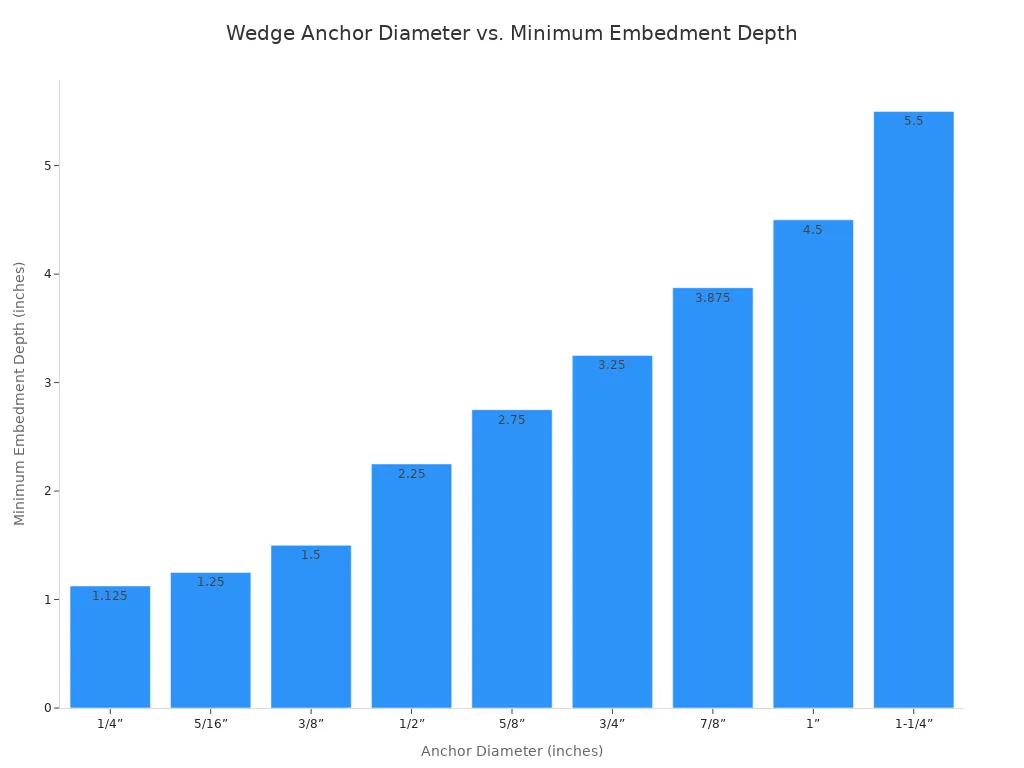
Proper Embedment Depth
Embedment depth is the distance the anchor is installed into the concrete. This single factor has a massive impact on the anchor’s holding power.
Standard vs. Deep Embedment
Most anchors have a specified minimum or standard embedment depth required to achieve their published load values. Some applications may call for a deeper embedment to increase pull-out resistance, especially in lower-strength concrete.
How Depth Affects Tensile Strength
A direct relationship exists between embedment depth and tensile strength. Deeper embedment engages a larger cone of concrete, significantly increasing the anchor’s resistance to pull-out forces. Doubling the embedment can nearly double the holding power.
Following Manufacturer Specifications
Installers must always follow the manufacturer’s guidelines for minimum embedment. These specifications are based on extensive testing and are crucial for a safe connection.
Edge and Spacing Distances
The placement of anchors relative to concrete edges and other anchors is just as important as hole preparation. Improper placement can cause the concrete to fail.
Minimum Distance from Concrete Edges
Placing an anchor too close to an unsupported edge can cause the concrete to crack and break away. According to the American Concrete Institute (ACI), the minimum edge distance should be at least eight times the anchor diameter (8da) when manufacturer data is unavailable.
Minimum Spacing Between Anchors
Installing multiple anchors too close together causes their stress zones in the concrete to overlap. This overlap reduces the capacity of the entire group. ACI guidelines suggest a minimum center-to-center spacing of four times the anchor diameter (4da) to prevent this issue.
How Proximity Impacts Holding Power
When edge or spacing distances are less than the specified minimums, installers must apply reduction factors to the anchor’s allowable load. This adjustment accounts for the reduced concrete strength available to resist pull-out and shear forces.
Common Mistakes and How to Avoid Them
Proper installation is the key to a wedge anchor’s performance. Even a high-quality fastener can fail if an installer makes critical errors during the process. Avoiding these common mistakes ensures a safe, reliable, and long-lasting connection.
Choosing the Wrong Anchor for the Material
The most fundamental error is selecting a wedge anchor for an incompatible base material. This mistake compromises the entire connection from the start.
Misapplication in Brick or Block
An installer must never use wedge anchors in brick or hollow concrete block. The intense expansion force will crack brittle brick or blow out the thin walls of a hollow block. This creates a completely unreliable fastening point that is prone to sudden failure under load.
Ignoring Concrete Strength
Not all concrete is strong enough for wedge anchors. Installers need to verify that the concrete meets the minimum compressive strength (PSI) specified by the anchor manufacturer. Using these anchors in old, weak, or low-quality concrete can cause the base material to crack and fail around the fastener.
Improper Hole Preparation
The condition of the drilled hole is just as important as the anchor itself. A poorly prepared hole guarantees a failed installation.
Using the Wrong Drill Bit Size
Precision is mandatory. A hole drilled with an oversized bit will prevent the expansion clip from gripping the concrete, causing the anchor to spin uselessly. A hole that is too small will prevent the anchor from being inserted. Installers must use a carbide-tipped bit that matches the anchor’s specified diameter.
Failing to Clean Debris from the Hole
Drilling creates a significant amount of dust and debris that must be removed.
Best Practice: The standard procedure is to clean the hole thoroughly with a wire brush and compressed air. This ensures the expansion clip makes direct contact with solid concrete for maximum friction.
Leaving debris in the hole can:
- Prevent the anchor from reaching its required embedment depth.
- Create a “cushion” of dust that reduces holding power.
- Cause a false torque reading, making the anchor feel tight when it is not secure.
While some field experts note that an anchor can perform if it reaches the specified torque despite debris, this is a significant risk. Dust can cause initial slippage and compromise the connection’s ultimate capacity.
Incorrect Tightening Technique
The final step of tightening the nut is where the anchor’s holding power is generated. Incorrect technique can easily lead to failure.
Guessing Torque Without a Wrench
“Tight enough” is not a valid measurement. An installer must use a calibrated torque wrench to tighten the nut to the exact value specified by the manufacturer. Over-torquing can crack the concrete, while under-torquing results in a loose anchor that can slip under load.
Tightening the Nut Before Tapping
The sequence of operations is critical. An installer must first tap the anchor into the hole until the washer and nut are snug against the fixture. Only then should they apply torque. Attempting to pull the anchor into the hole by tightening the nut can prevent it from seating correctly and lead to a failed connection.
Alternative Anchors for Masonry
While wedge anchors are masters of solid concrete, they are not a universal solution. Different masonry materials and application requirements call for different types of fasteners. Understanding the alternatives is key to selecting the safest and most effective anchor for the job.
Wedge Anchors vs. Sleeve Anchors
Sleeve anchors offer a solution for lighter loads in varied masonry. They provide a versatile option when a wedge anchor is unsuitable.
Load Capacity Comparison
Sleeve anchors generally have lower tensile and shear capacities compared to wedge anchors of a similar diameter. They are best suited for light- to medium-duty applications, such as fastening handrails, window frames, or electrical junction boxes.
Suitability for Brick and Block
This is the primary advantage of sleeve anchors. Their expansion mechanism exerts pressure along the entire length of the sleeve. This distributes the load over a larger surface area, making them suitable for use in softer or hollow materials like brick and concrete block without the high risk of cracking.
Installation and Versatility Differences
Sleeve anchors are highly versatile and can be used in a wide range of materials, from solid concrete to brick and block. Their installation is similar to a wedge anchor, but their design makes them more forgiving in less-than-perfect base materials.
Wedge Anchors vs. Drop-In Anchors
Drop-in anchors provide a female-threaded option for applications requiring a flush surface.
Flush Mounting vs. Through-Bolting
A wedge anchor is a “through-bolt” fastener with a permanent, protruding stud. In contrast, a drop-in anchor sits flush with or below the concrete surface. This allows an installer to remove the fixture by simply unthreading the bolt, leaving the anchor body hidden in the concrete.
Setting Tool Requirement
Drop-in anchors require a specific setting tool. After placing the anchor in the hole, an installer uses the tool and a hammer to drive an internal plug downward, expanding the anchor body. This extra tool requirement is a key difference from wedge anchor installation.
Ideal Use Cases for Each
Drop-ins are ideal for overhead applications like suspending pipe hangers or strut channels. Their flush design is also beneficial for machinery that may need to be moved later. The heavy-duty screw anchor is better for permanent, high-shear structural connections like columns and beams.
Wedge Anchors vs. Chemical (Adhesive) Anchors
Chemical anchors use a two-part epoxy or resin to bond a threaded rod to the masonry, offering the highest performance in many situations.
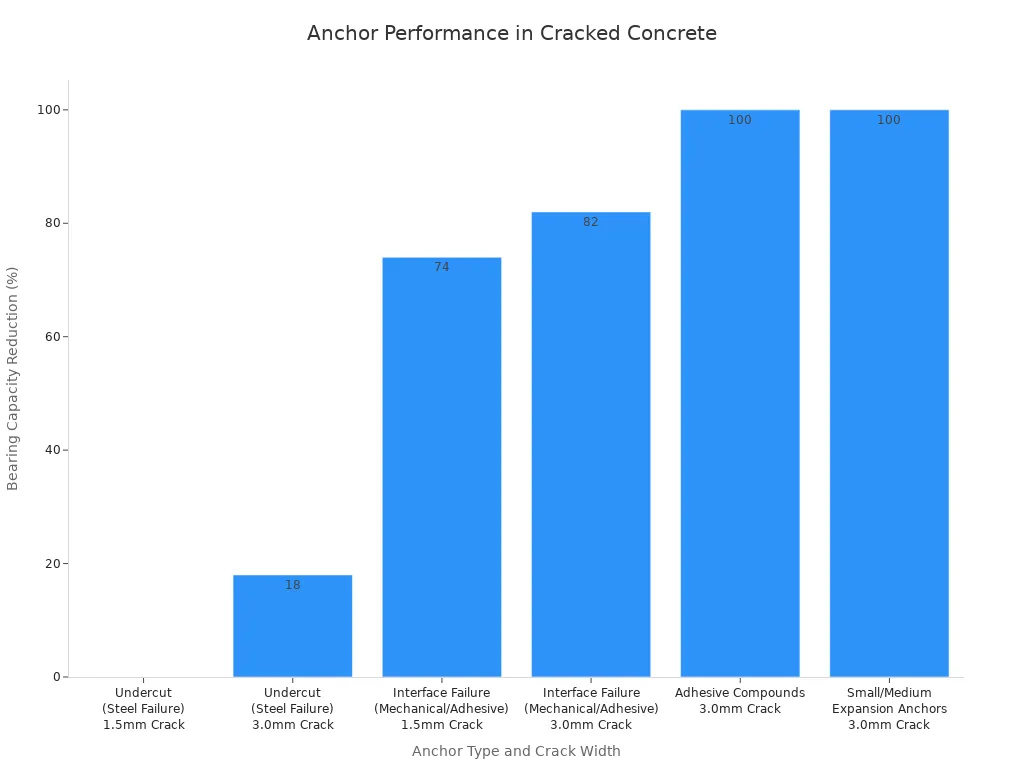
Performance in Weaker or Cracked Masonry
Adhesive anchors excel where mechanical anchors fail. They bond to the substrate without exerting expansion stress, making them the superior choice for cracked concrete, old concrete, or brittle materials. Testing data highlights this difference starkly, showing how expansion-style anchors lose nearly all capacity in a significant crack.
| Anchor Type | Crack Width (mm) | Failure Mechanism | Bearing Capacity Reduction |
|---|---|---|---|
| Undercut (Steel Failure) | 1.5 | Steel Failure | Negligible |
| Undercut (Steel Failure) | 3.0 | Anchor Slippage | Up to 18% |
| Interface Failure (Mechanical/Adhesive) | 1.5 | Anchor Slippage/Debonding | Up to 74% |
| Interface Failure (Mechanical/Adhesive) | 3.0 | Anchor Slippage/Debonding | Up to 82% |
| Adhesive Compounds | 3.0 | Disintegration from Concrete | Failure at minimum loading |
| Small/Medium Expansion Anchors | 3.0 | Anchor Slippage | Effectively zero (not recommended) |
Load Capacity and Cure Time
Chemical anchors can often achieve higher load capacities than mechanical anchors, especially in sub-optimal concrete. However, this strength comes with a trade-off: cure time. The adhesive must fully harden before any load can be applied, a process that can take hours depending on the temperature.
Cost and Installation Complexity
The installation of chemical anchors is more complex and costly. It involves injecting the adhesive, ensuring no air pockets form, and observing cure times. These additional steps and higher material costs make them less economical than mechanical anchors for standard applications in solid concrete.
Wedge anchors are the premier choice for heavy-duty fastening in solid concrete. Professionals prize this heavy-duty screw anchor for its exceptional strength and rapid installation. The anchor’s expansion mechanism, however, makes it fundamentally unsuitable for brittle or hollow materials like brick and block. Installers must always evaluate the base material first. For anything other than solid concrete, other anchors offer safer solutions. Safe performance for these anchors is entirely dependent on correct installation, including precise hole drilling, thorough cleaning, and applying the specified torque.
FAQ
Can an installer reuse a wedge anchor?
No. The installation process permanently deforms the anchor’s expansion clip. Reusing a wedge anchor is extremely unsafe because it will not achieve its specified holding power. Installers must always use a new anchor for each connection.
What happens if an installer does not use a torque wrench?
Failure to use a torque wrench leads to improper installation. Over-tightening can crack the concrete, while under-tightening creates a weak connection that may slip. A torque wrench is the only tool that guarantees the correct clamping force.
Why is a wedge anchor unsuitable for brick?
The anchor generates immense expansion force in a small area. This pressure easily cracks brittle materials like brick or hollow block, compromising the connection. Installers should choose sleeve anchors or adhesive anchors for these materials instead.
How deep should the hole be drilled?
The hole must be deeper than the anchor’s required embedment depth. This extra space allows any remaining fine dust to settle without obstructing the anchor.
Always consult the manufacturer’s instructions for the specific anchor diameter. The minimum hole depth is typically 1/2 inch deeper than the anchor embedment.
What is the best anchor material for outdoor use?
For outdoor projects, installers should use hot-dip galvanized (HDG) or stainless steel anchors. Zinc-plated anchors provide minimal corrosion resistance and are only suitable for dry, interior environments. Stainless steel offers the best protection in harsh or coastal areas.
Is cleaning the hole really necessary?
Yes, it is a critical step. Debris prevents the expansion clip from gripping the concrete, which severely reduces the anchor’s holding power. A clean hole ensures the anchor can achieve its full, rated load capacity safely.