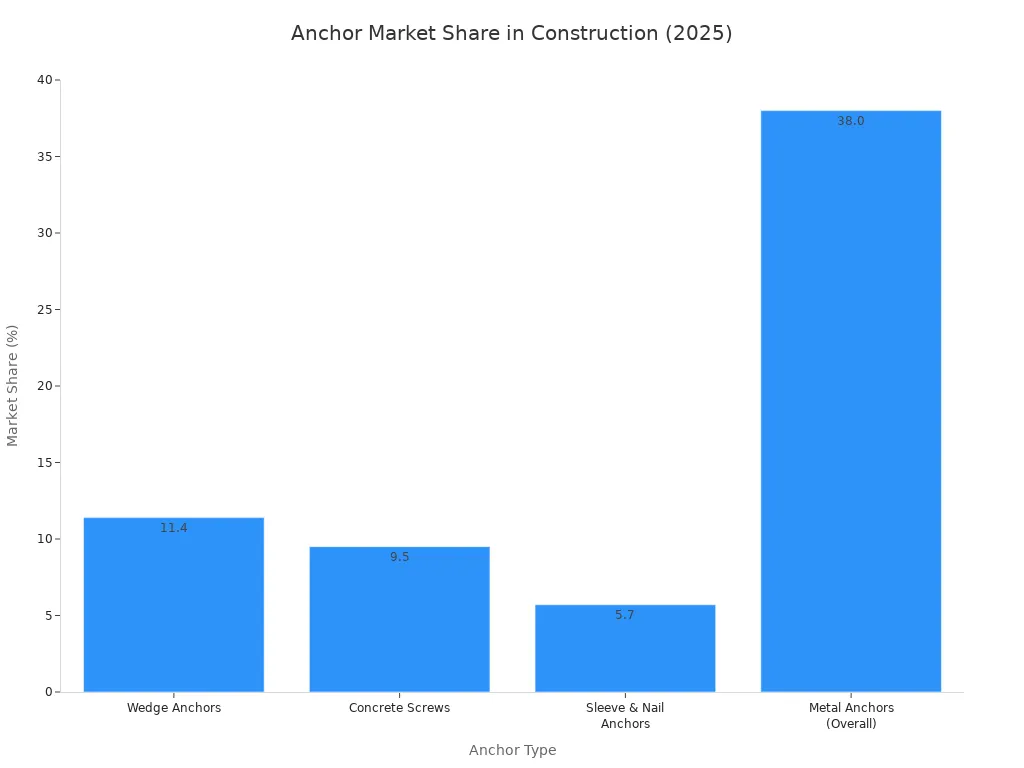
For heavy-duty structural connections in solid concrete, the wedge anchor remains the top choice in 2026. Its superior strength establishes its dominance among various types of concrete anchors. For medium-duty fixtures, a sleeve anchor offers better value, while concrete screws provide the fastest installation for light-duty tasks. The drop-in anchor is the ideal solution for specialized overhead applications. Market data shows the leading position of wedge anchors.
These common Anchor Bolts and even custom anchor bolts from a custom fasteners manufacturer address specific needs, though the convenience of the concrete screw and other concrete screws is undeniable.
The Wedge Anchor: Your Heavy-Duty Champion in 2026
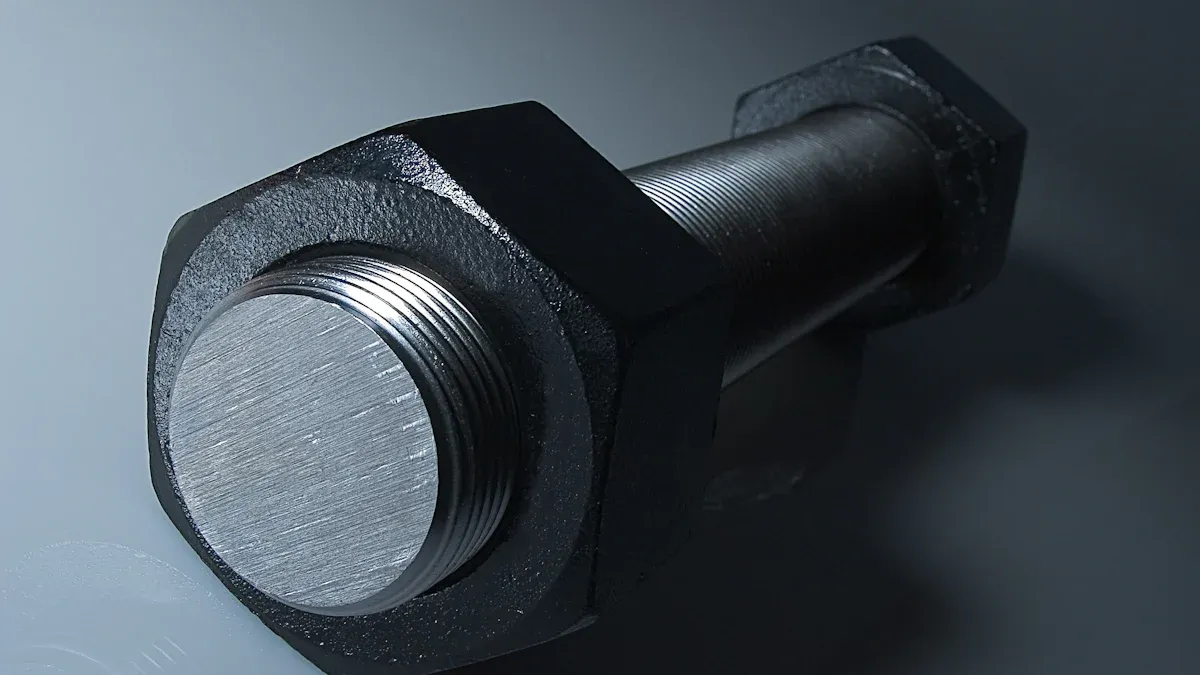
The wedge anchor, often called a through-bolt, excels in applications demanding immense holding power in solid concrete. Its design allows installation through a fixture directly into the concrete, making it a top choice for securing heavy loads permanently.
When to Choose a Wedge Anchor
Professionals select this anchor for safety-critical and structural purposes. These throughbolts are the standard for projects where failure is not an option. Some common applications include:
Structural Steel Connections
Installers use wedge anchors to fasten steel I-beams, support columns, and base plates directly to concrete foundations.
Heavy Machinery and Equipment
Factories and workshops rely on wedge anchors to secure heavy industrial machinery, preventing movement and vibration during operation.
Racking and Shelving Systems
Warehouse pallet racking and heavy-duty shelving systems require a secure footing, which these powerful throughbolts provide.
Guardrails and Safety Barriers
For highway guardrails, stadium railings, and industrial safety barriers, the reliable strength of wedge anchors ensures public and worker safety.
Key Advantages Driving its Dominance
The enduring popularity of the wedge anchor stems from several key performance characteristics that set it apart.
Unmatched Tensile and Shear Strength
Wedge anchors deliver exceptional resistance to both pulling (tensile) and sideways (shear) forces, making them ideal for the most demanding loads.
Permanent and Secure Hold
Once torqued, the anchor’s expansion clip bites firmly into the concrete. This creates a permanent, non-slip connection that provides long-term peace of mind.
Reliability in Cracked and Uncracked Concrete
Many modern wedge anchors are rated for use in both cracked and uncracked concrete, offering versatile and dependable performance across various job site conditions.
Ideal for Leveling and Shimming
The through-bolt design allows for shims to be placed between the fixture and the concrete surface, enabling precise leveling of equipment or base plates before final tightening.
Critical Limitations and Considerations
Despite its strengths, the wedge anchor is not a universal solution. Proper use requires understanding its specific limitations.
Not for Brick or Block
Using wedge anchors in base materials like brick, hollow block, or masonry is a critical mistake. These materials lack the solid mass and strength to handle the anchor’s expansion forces.
Brick is softer than concrete and more susceptible to crumbling. Hollow block contains large internal voids and has thin walls. If the anchor’s expansion clip ends up in a void or against a thin wall, it cannot generate the necessary grip, leading to catastrophic failure.
Precise Hole Depth is Non-Negotiable
The drilled hole must be the correct diameter and depth. An improperly sized hole will prevent the anchor from setting correctly, severely compromising its load capacity.
Installation Torque Requirements
Applying the correct torque with a calibrated torque wrench is essential. Under-torquing prevents proper expansion, while over-torquing can stress the concrete or the anchor itself, leading to failure.
Not Designed for Removability
These anchors create a permanent bond. Removing them is a destructive process that typically involves cutting the anchor flush with the concrete surface, leaving the anchor body embedded.
Exploring Other Types of Concrete Anchors
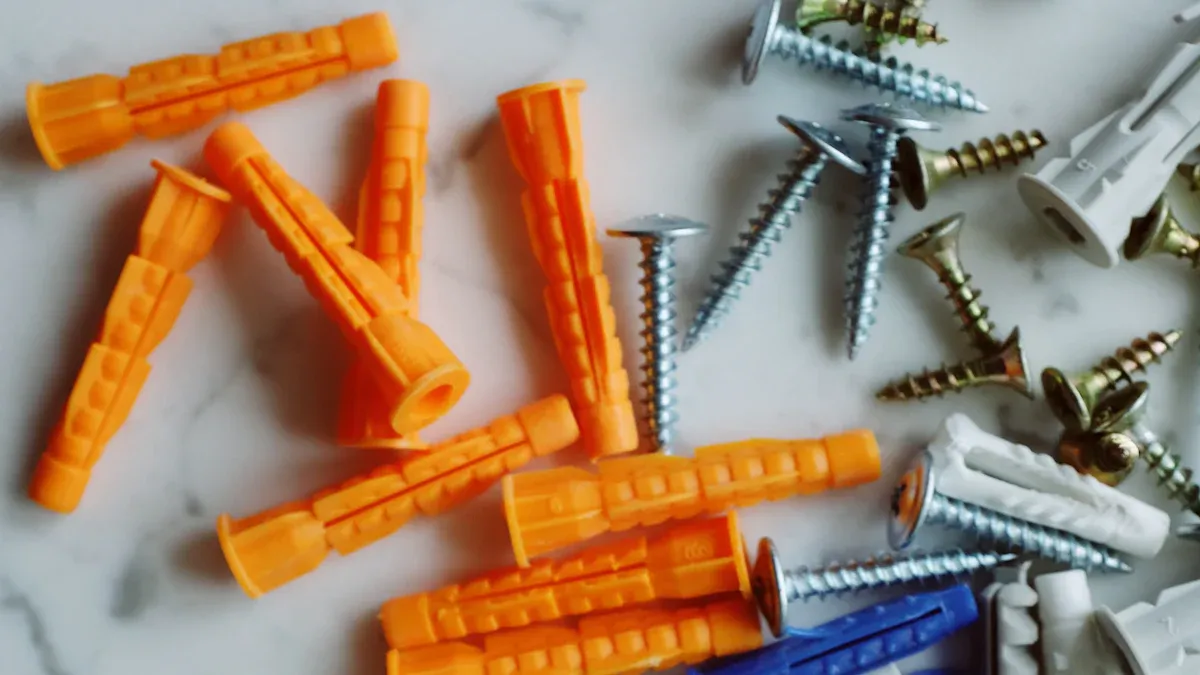
While the wedge anchor reigns supreme for heavy-duty jobs, other types of concrete anchors serve critical roles. Understanding their specific strengths and weaknesses is key to selecting the right fastener. Installers often choose from a wide variety of types of anchors, including the lag shield anchor and the split drive anchor, for specific situations.
The Sleeve Anchor: The Versatile All-Rounder
The sleeve anchor is a medium-duty fastener known for its adaptability. Its expansion mechanism exerts less concentrated force than a wedge anchor, making it suitable for a wider range of base materials.
Best Use Cases
This anchor excels in light to medium-duty applications where material integrity is a concern. Common uses include:
- Securing shelving units and handrails
- Mounting electrical boxes and signage
- Fastening wall cabinets or large flat-screen TVs
- Attaching grab bars in bathrooms
Key Advantages
The primary advantage of the sleeve anchor is its versatility. It performs reliably in solid concrete, but it is also one of the few mechanical anchors suitable for softer or hollow base materials like brick and concrete block. This makes it a go-to choice for many commercial and residential renovation projects.
Understanding its Limitations
The sleeve anchor’s versatility comes at the cost of ultimate strength. It does not possess the high tensile and shear capacity of a wedge anchor. Therefore, professionals avoid using it for structural connections or to support heavy, vibrating machinery.
The Concrete Screw: The Speed and Convenience King
For light-duty fastening, concrete screws are unmatched in installation efficiency. These fasteners, often sold under brand names like Tapcon®, are a favorite for projects where speed is paramount.
Best Use Cases
Installers use concrete screws for non-structural tasks that require a secure but potentially temporary hold. They are ideal for attaching electrical conduit straps, window frames, furring strips, and termite bait stations.
Key Advantages
The main benefit of concrete screws is their simple, fast installation. They feature a self-tapping design that threads directly into a pre-drilled hole using a standard power tool. This single-step process is significantly faster than setting expansion anchors. A single concrete screw is also easily removable, a key advantage for temporary fixtures.
Pro Tip: Unlike expansion anchors, concrete screws can often be installed closer to a concrete edge without the risk of spalling, as they cut threads rather than exert outward pressure.
Where Concrete Screws Fall Short
The trade-off for speed and convenience is load capacity. Concrete screws offer the lowest holding power among these mechanical anchors. They are not suitable for heavy loads, overhead applications, or situations involving significant vibration, which can cause them to loosen over time.
The Drop-In Anchor: The Overhead Specialist
The drop-in anchor is a female anchor designed specifically for overhead applications in solid concrete. It requires a setting tool to expand the anchor within the hole.
Best Use Cases
A drop-in anchor is the preferred choice when suspending items from a concrete ceiling. Its design creates a flush surface, perfect for accepting threaded rods. Common applications include:
- Fire sprinkler systems
- Suspending HVAC ductwork and pipe supports
- Hanging cable trays and electrical conduit
- Overhead lighting fixtures
Key Advantages
The key advantage is its flush-mount design. Once set, the anchor does not protrude from the concrete surface. This allows for a clean, professional installation of threaded rods for suspending utilities and equipment. These types of concrete anchors provide a reliable hold for static overhead loads.
Important Limitations to Know
Installation requires an extra step: using a specific setting tool to expand the anchor. Failure to use the tool correctly results in a failed connection. Furthermore, these anchors are permanent and designed exclusively for solid concrete.
Installation Best Practices for Flawless Performance
Proper anchor installation is the most critical factor in achieving maximum holding power and ensuring safety. The correct installation process guarantees that wedge anchors deliver their specified performance. Following manufacturer guidelines prevents catastrophic failures and ensures a secure, long-lasting connection.
How to Install Wedge Anchors Correctly
A precise, step-by-step approach is non-negotiable for these heavy-duty throughbolts. Each stage plays a vital role in the anchor’s final strength.
Drilling the Hole
Installers must use a hammer drill with an ANSI-standard carbide-tipped bit. The bit’s diameter must match the anchor’s diameter exactly. The hole should be drilled deeper than the anchor’s required embedment to accommodate dust and debris.
Cleaning the Hole
This step is crucial. Professionals use compressed air to blow out the hole, followed by scrubbing with a properly sized wire brush. They repeat this blow-brush-blow sequence until the hole is completely free of concrete dust.
Setting the Anchor
The installer places the fixture over the hole. They then gently tap the anchor with a hammer through the fixture and into the hole until the washer and nut are snug against the surface.
Applying Correct Torque
The final step is tightening the nut. A calibrated torque wrench is essential to apply the manufacturer’s specified torque value. This action pulls the anchor body up, engaging the expansion clip firmly against the concrete walls.
Common Installation Mistakes to Avoid
Even the best throughbolts will fail if installed incorrectly. Avoiding these common errors is just as important as following the correct procedure.
Incorrect Hole Diameter or Depth
A hole that is too wide will prevent the anchor from gripping the concrete. A hole that is too shallow will not allow the throughbolts to reach the required embedment depth, severely reducing their load capacity.
Insufficient Hole Cleaning
Debris left in the hole acts like a cushion, preventing the expansion clip from making full contact with the solid concrete. This oversight dramatically compromises the anchor’s holding power and is a leading cause of connection failure.
Over-Torquing or Under-Torquing
Under-torquing fails to expand the clip sufficiently, resulting in a loose connection. Over-torquing can damage the throughbolts themselves or place excessive stress on the concrete, causing it to crack and fail.
Ignoring Edge and Spacing Distances
Disregarding proper spacing for wedge anchors can result in a significant loss of capacity. When anchors are too close, the stress cones they create in the concrete overlap. This overlap causes the concrete between them to bear excessive tension, which can lead to splitting and a reduction in the capacity of both anchors. Similarly, an anchor installed too near an edge cannot develop its full stress cone, making the edge susceptible to cracking and premature failure.
Head-to-Head Comparison: Which Anchor Wins?
Choosing the correct anchor requires a direct comparison of their performance characteristics. Each fastener excels in a specific role. A head-to-head analysis reveals which anchor is the champion for your particular application.
Wedge Anchor vs. Sleeve Anchor
This comparison pits the heavy-duty specialist against the versatile all-rounder. The choice often comes down to the base material and the required load capacity.
Strength and Permanence
The wedge anchor provides superior holding power for permanent, heavy-duty installations in solid concrete. A sleeve anchor offers reliable strength for medium-duty jobs but does not match the ultimate tensile capacity of its heavy-duty counterpart. The data clearly shows the wedge anchor’s advantage.
| Anchor Type | Diameter (inches) | Tensile Strength (lbs) |
|---|---|---|
| Wedge Anchor | 1/2 | 5,500 |
| Sleeve Anchor | 1/2 | 4,200 |
Base Material Versatility
Versatility is the sleeve anchor’s greatest strength. It functions well in solid concrete, brick, and even hollow block. The wedge anchor, however, is designed exclusively for solid concrete. Its powerful expansion forces can crack or destroy weaker base materials like brick. This makes the sleeve anchor a better choice for projects involving varied or unknown masonry, while other types of concrete anchors like the lag shield anchor also fill specific niches in softer materials.
Shear vs. Tensile Load Performance
Both anchors resist pulling (tensile) and sideways (shear) forces, but wedge anchors perform better under extreme loads.
- Wedge anchors deliver exceptional shear strength due to their expansion mechanism, which creates a secure, non-slip fit.
- They are the dependable option for demanding applications with heavy or dynamic shear loads.
- Sleeve anchors provide good performance for moderate loads but may be more susceptible to slipping under heavy shear forces.
Wedge Anchor vs. Concrete Screw
This matchup is a classic battle of strength versus speed. Professionals must weigh the need for ultimate load capacity against the benefits of rapid installation.
Installation Speed and Reusability
Concrete screws are the undisputed champions of installation speed. Installers drive them directly into a pre-drilled hole with a power tool, a process that saves significant time compared to setting expansion anchors. Heavy-duty concrete screws like the Titen HD® reduce overall installation time. In contrast, wedge anchors require more steps and are harder to install. Furthermore, concrete screws are easily removable, making them ideal for temporary fixtures. These throughbolts are permanent.
Reminder: Concrete screws cut threads into the concrete rather than expanding. This often allows them to be installed closer to an edge without causing the concrete to spall or crack.
Ultimate Load-Bearing Capability
While some concrete screws are rated for heavy duty, they cannot match the raw power of wedge anchors. Wedge anchors offer unparalleled holding power and are the correct choice for supporting substantial structural loads. They possess extremely high pull-out strength, making them the heavy-duty option when safety and load capacity are the top priorities.
Performance Near Concrete Edges
The installation method directly impacts performance near an edge. The expansion force of throughbolts creates a cone of stress in the concrete. Installing them too close to an edge can cause the concrete to break away. Because concrete screws cut threads and do not expand, they exert less outward pressure, giving them an advantage in applications near a concrete edge.
Wedge Anchor vs. Drop-In Anchor
This comparison highlights two specialists designed for different purposes. One builds from the ground up, while the other hangs from the ceiling down.
Application Type (Structural vs. Overhead)
The application dictates the choice here. Wedge anchors are throughbolts used for structural connections, fastening items like steel columns and heavy machinery to a concrete slab. Drop-in anchors are female anchors used for suspending items from a concrete ceiling, such as threaded rods for pipe supports, HVAC ducts, and sprinkler systems.
Installation Process and Tools
The installation process for these anchors differs significantly. A drop-in anchor requires a specific setting tool. An installer inserts this tool into the anchor and strikes it with a hammer to flare the anchor body, securing it in the hole. Wedge anchors do not need a special setting tool; tightening the nut with a torque wrench completes the installation.
Flush Finish vs. Through-Bolt Design
The final appearance is a key differentiator. A drop-in anchor sits flush with or just below the concrete surface, creating a clean look and leaving a threaded opening for a bolt or rod. A wedge anchor has a through-bolt design, meaning the threaded stud and nut remain exposed above the surface of the fixture.
Anchor Selection Guide for 2026: A Summary Table
An installer’s choice of anchor directly impacts the safety and longevity of a project. This guide simplifies the selection process by comparing the most common types of concrete anchors across critical performance factors. Making an informed decision requires a clear understanding of how each anchor type performs under different conditions.
Comparing Key Decision Factors
Each project presents unique challenges, from the weight of the object being fastened to the type of concrete used. The following breakdown examines the key attributes that differentiate the primary anchor types, helping professionals match the right fastener to the job.
Load Capacity (Tensile/Shear)
Load capacity is the most critical factor for structural and safety-related applications. It defines the maximum force an anchor can withstand before failure.
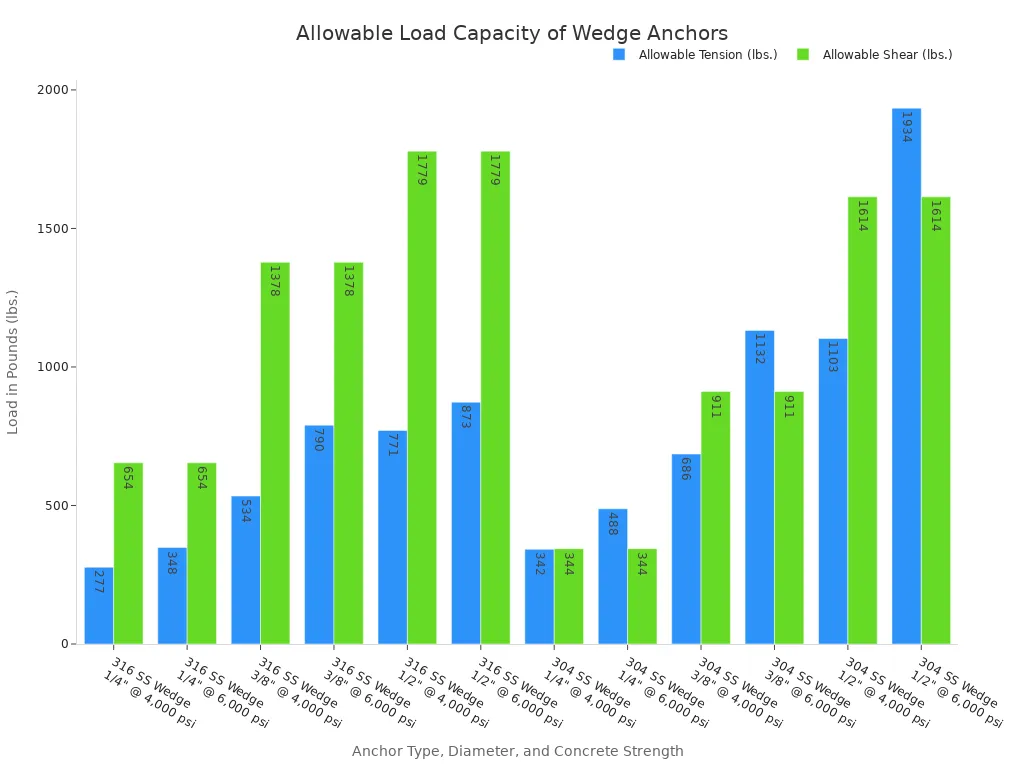
Wedge Anchors: These anchors provide the highest tensile (pull-out) and shear (sideways) strength. They are the undisputed choice for heavy-duty structural loads. The material of the anchor, such as 316 or 304 stainless steel, and the compressive strength of the concrete significantly influence its ultimate capacity. For instance, a 1/2″ 304 SS wedge anchor in 6,000 psi concrete has an allowable tension load of 1,934 lbs, a substantial increase over the 1,103 lbs it can hold in 4,000 psi concrete.

Important Note: Professionals calculate allowable loads by applying a safety factor to the ultimate load capacity. A minimum safety factor of 4.0 is standard, but critical applications like life safety systems may require a factor of 10 or more.
Sleeve Anchors: These offer good, reliable strength for medium-duty applications. Their capacity is lower than that of wedge anchors.
Drop-In Anchors: They provide excellent tensile strength for static overhead loads, like suspending pipes or ductwork. Their shear performance is less critical for their intended use.
Concrete Screws: These fasteners have the lowest load capacity. They are suitable only for light-duty, non-structural applications.
Base Material Suitability
The type of material an anchor is installed into is a decisive factor. Using the wrong anchor for a given base material is a recipe for failure.
- Wedge & Drop-In Anchors: These are specialists designed exclusively for solid, dense concrete. Their powerful expansion mechanisms can easily crack or destroy weaker materials like brick or hollow block. While some are rated for cracked concrete, it is crucial to verify that the chosen anchor has the appropriate approval (ETA) for the specific concrete condition. Drop-in anchors are generally ideal for uncracked concrete.
- Sleeve Anchors: This is the most versatile option. The sleeve distributes expansion pressure more broadly, making it suitable for solid concrete, brick, and even some hollow block applications.
- Concrete Screws: These work well in solid concrete, brick, and block. Because they cut threads instead of expanding, they are often a safer choice in softer or more brittle masonry.
Ease of Installation
Time is money on any job site. The complexity and speed of installation vary significantly among these fasteners.
- Concrete Screw: The clear winner for speed. An installer simply drills a hole and drives the screw with a power tool.
- Sleeve Anchor: Installation is straightforward. An installer drills a hole, taps the anchor in, and tightens the nut or screw.
- Wedge Anchor: This requires more precision. The process involves drilling, thoroughly cleaning the hole, setting the anchor, and tightening to a specific torque value with a calibrated wrench.
- Drop-In Anchor: This anchor has the most involved process. It requires drilling, cleaning, inserting the anchor, and then using a special setting tool to expand it correctly before a bolt or rod can be installed.
Removability
The need for temporary or adjustable fixtures dictates whether a permanent or removable anchor is appropriate.
- Concrete Screws: These are the only truly removable anchors in this group. An installer can simply unscrew them, making them perfect for temporary installations like formwork or seasonal displays.
- Sleeve Anchors: While not designed for reuse, they can often be removed with some effort. The fixture can be taken off by unthreading the bolt, but removing the anchor body itself can be difficult.
- Wedge & Drop-In Anchors: These are considered permanent. Once set, they cannot be removed without destroying the anchor and potentially damaging the surrounding concrete. The standard procedure is to cut the anchor flush with the surface.
Vibration Resistance
Vibrating loads from machinery or dynamic forces can cause some anchors to loosen over time.
- Wedge Anchors: They offer good resistance to vibration once properly torqued, as the expansion clip creates a tight, friction-based hold.
- Sleeve Anchors: Their performance under vibration is moderate. They may not be suitable for heavy, constant vibrations.
- Concrete Screws: Professionals generally do not recommend concrete screws for applications with high levels of vibration, as the threads can potentially loosen.
- Epoxy/Adhesive Anchors (A Note on the Best): For extreme vibration, such as securing large industrial compressors, epoxy anchors are superior. The adhesive creates a monolithic bond with the concrete that is often stronger than the concrete itself.
Proximity to Edge
Installing an anchor too close to the edge of a concrete slab can cause the concrete to crack and spall, a failure known as “breakout.”
- Concrete Screws: These generally perform best near edges. Since they cut threads rather than expanding, they exert minimal outward pressure, reducing the risk of breakout.
- Sleeve Anchors: They exert less concentrated force than wedge anchors, giving them moderate performance near edges.
- Wedge & Drop-In Anchors: These require the most care. Their powerful expansion forces necessitate strict adherence to manufacturer-specified minimum edge and spacing distances to prevent concrete failure.
Cost-Benefit Analysis: Which Anchor Offers the Best Value?
A smart decision on the job site goes beyond the initial price tag. Professionals must evaluate the total cost of an anchor over its entire service life. This analysis includes the anchor’s price, installation labor, and the potential cost of failure.
Upfront Cost vs. Long-Term Reliability
The cheapest option is rarely the best value, especially in construction. A balance between initial spending and long-term performance provides the true measure of an anchor’s worth.
Per-Unit Anchor Cost
The price per anchor varies significantly by type, size, and material. A general cost hierarchy looks like this:
- Concrete Screws: Typically the least expensive option per unit.
- Sleeve Anchors: Occupy a middle ground in terms of cost.
- Drop-In Anchors: Priced similarly to sleeve anchors but require a setting tool.
- Wedge Anchors: Generally the most expensive, with stainless steel versions commanding a premium price.
Labor and Installation Time Costs
Labor is a major project expense. Faster installation directly translates to lower costs. Concrete screws offer the quickest installation, reducing labor time. Sleeve anchors are also relatively fast. Wedge and drop-in anchors require more precise, multi-step processes, increasing the time and skill needed for proper installation.
The Cost of Failure
This is the most important financial consideration. An anchor failure can have devastating consequences.
The cost of a failed connection is never just the price of a new anchor. It includes rework labor, project delays, potential damage to expensive equipment, and, most critically, the immense liability associated with property damage or personal injury. The financial and reputational damage from a structural failure far outweighs any initial savings on a cheaper fastener.
Why a Wedge Anchor is a Smart Investment
For critical applications, the higher upfront cost of a superior anchor is a necessary and wise investment. It provides value that extends far beyond its material price.
Peace of Mind for Critical Loads
Engineers and installers gain confidence when using an anchor designed for heavy loads. The specified high strength of a wedge anchor provides peace of mind. This certainty is invaluable for structural connections where safety is the top priority.
Longevity and Durability
These anchors are built for permanence. High-quality materials, such as zinc-plated or hot-dipped galvanized steel, offer excellent durability. Stainless steel options provide maximum corrosion resistance for a very long service life, eliminating future replacement costs.
Reducing Risk in Structural Applications
Choosing the correct anchor is a fundamental part of risk management. Using a fastener with unmatched strength for a structural application minimizes the risk of catastrophic failure. The added expense is a small price to pay for ensuring the safety and integrity of the entire structure.
The Future of Anchoring: What’s Beyond 2026?
The world of construction fastening does not stand still. While established anchors provide proven reliability, manufacturers continuously push the boundaries of performance and safety. The future points toward smarter materials, enhanced designs, and innovative hybrid solutions that promise greater strength and versatility.
Innovations in Wedge Anchors
Even the reigning heavy-duty champion is evolving. Ongoing research and development focus on making wedge anchors more durable and resilient for increasingly demanding environments.
Advanced Corrosion-Resistant Coatings
Manufacturers are moving beyond traditional zinc plating and hot-dip galvanization. New proprietary coatings are emerging that offer superior protection against rust and chemical attack. These advanced finishes provide longevity comparable to stainless steel at a more competitive price point, making them ideal for infrastructure projects in coastal regions or industrial facilities.
Enhanced Seismic-Rated Designs
Engineers are refining anchor designs to perform better during seismic events. Future wedge anchors will feature improved ductility, allowing them to absorb energy and maintain structural integrity under the cyclic loading of an earthquake. These designs account for performance in cracked concrete, a critical factor for safety in seismically active zones.
Emerging Anchor Technologies
Beyond improving existing designs, the industry is developing entirely new categories of anchoring solutions. These technologies often combine the benefits of different anchor types.
Advancements in Epoxy Anchors
Chemical anchors, particularly epoxies, are rapidly closing the gap with mechanical anchors in terms of convenience. Technological progress in adhesive chemistry is yielding products with significantly faster curing times. Pure epoxy formulations offer the strongest chemical bond and excellent resistance to environmental factors. While they still require a curing period, their superior load capacity makes them a powerful alternative.
| Criteria | Mechanical Anchors | Chemical Anchors |
|---|---|---|
| Immediate Load Use | Yes | No (needs curing) |
| Load Capacity | Light–Medium | Medium–Heavy–Extreme |
These advancements are making chemical anchors more appealing for a wider range of applications, boosting their adoption in the market.
Hybrid Anchor Systems
The most exciting frontier is the development of hybrid systems that merge mechanical and adhesive principles. These anchors deliver performance greater than the sum of their parts.
- Dual Action (keying & bonding): This system uses a screw anchor with an adhesive capsule. As an installer drives the screw, it mixes the resin and hardener. The adhesive fills gaps and bonds with the concrete, while the screw’s threads provide a mechanical interlock.
- Torque Controlled Adhesive Anchor (bonding and expansion): This anchor combines adhesive with a special cone-shaped element. After the adhesive cures, torquing the anchor generates expansion forces. This dual action of bonding and expansion creates exceptionally high tension load capacity.
For heavy-duty structural needs, these throughbolts remain the top choice in 2026. Sleeve anchors provide superior versatility for projects involving brick or medium-duty loads. Installers choose concrete screws for speed and convenience. These concrete screws are also removable. The ease of using concrete screws makes them ideal for light-duty tasks, and professionals prefer concrete screws for temporary fixtures. Ultimately, the best type of concrete anchor depends on the job. Professionals must match the correct fastener from all types of concrete anchors to the load and material, whether using powerful throughbolts or other throughbolts.
FAQ
Can installers reuse wedge anchors or concrete screws?
Concrete screws are removable and often reusable for temporary tasks. Wedge anchors, however, are permanent. Installers must cut them flush with the surface for removal, making them a single-use fastener. Reusing a wedge anchor is unsafe and not recommended under any circumstances.
Why is a torque wrench necessary for wedge anchors?
A torque wrench ensures proper installation. It applies the precise rotational force needed to set the anchor’s expansion clip correctly.
Warning Warning: Under-torquing results in a loose fit. Over-torquing can damage the anchor or crack the concrete, leading to connection failure.
What is the difference between cracked and uncracked concrete?
- Uncracked Concrete: This concrete is only under compression.
- Cracked Concrete: This concrete is under tension, causing hairline cracks.
Specialized anchors with seismic ratings are required for cracked concrete applications to ensure they maintain their hold if a crack widens.
How important is cleaning the hole before installation?
Cleaning the hole is a critical step. Concrete dust and debris prevent the anchor from making full contact with the base material. This oversight dramatically reduces the anchor’s holding power and is a primary cause of failure. A blow-brush-blow sequence is standard practice.
Why can’t a wedge anchor be used in brick?
Wedge anchors exert powerful expansion forces. Brick is a softer, more brittle material than solid concrete. The anchor’s expansion can easily crack or shatter the brick, preventing a secure connection and causing the anchor to fail under a much lower load.
What does a drop-in anchor setting tool do?
A setting tool is a steel punch designed to expand a drop-in anchor. An installer places the tool inside the anchor and strikes it with a hammer. This action flares the internal cone, locking the anchor body securely against the walls of the hole.
When should an installer choose stainless steel over galvanized anchors?
Installers choose an anchor’s material based on the environment.
- Zinc-Plated/Galvanized: Best for dry, indoor applications.
- Stainless Steel: Essential for outdoor, coastal, or corrosive environments like chemical plants. It offers superior, long-term rust protection.