
Selecting the correct wedge anchor is critical for structural integrity in heavy-duty projects. The global concrete anchor market shows significant growth, reflecting the industry’s reliance on these components.
| Metric | Value |
|---|---|
| Market Size 2025 | USD 2,226.6 million |
| Market Size 2035 | USD 3,500.0 million |
| CAGR (2025 – 2035) | 4.6% |
While a custom fasteners manufacturer can produce custom anchor bolts for unique situations, many applications use proven, off-the-shelf wedge anchors. The following Anchor Bolts represent top-tier choices for various demands.
- Power-Stud+ SD1: Best overall for cracked and uncracked concrete.
- Hilti Kwik Bolt TZ2: Top choice for seismic and dynamic loads.
- Simpson Strong-Tie Strong-Bolt 2: Excellent value for high-strength applications.
- Red Head Trubolt+: Reliable performance for general heavy-duty fastening.
- Powers Tapper+ (316 Stainless): Superior option for extreme corrosion resistance.
- ITW Ramset/Red Head Redi-Drive: Ideal for temporary or removable fixtures.
- Concrete Fastening Systems Power Bolt: Great for machinery and equipment installation.
1. Power-Stud+ SD1 Review
The Power-Stud+ SD1 stands out as a premier choice for professionals seeking a reliable and code-compliant wedge anchor. It delivers exceptional performance across a wide range of demanding applications, making it a go-to fastener for new construction and retrofitting projects. Its design balances strength, versatility, and regulatory approval.
Key Specifications
Material Options
The anchor’s construction ensures durability for interior applications. Manufacturers produce the Power-Stud+ SD1 with a fully-threaded, zinc-plated carbon steel body.
- The expansion clip is also made from carbon steel.
- The included nut and washer are zinc-plated carbon steel components.
Diameter and Length Range
This anchor is available in an extensive range of diameters and lengths. This variety allows engineers and contractors to select the precise size needed for specific load requirements and embedment depths, accommodating everything from standard fixtures to major structural elements.
Certifications and Approvals
The Power-Stud+ SD1 holds critical industry certifications that verify its performance. It is listed under ICC-ES ESR 2818 for Category 1 applications. This approval covers its use in both cracked and uncracked concrete, providing confidence that it meets stringent building code standards.
Best For
Cracked and Uncracked Concrete
This anchor is specifically engineered for consistent holding power where concrete may be subject to tensile stresses. It is an excellent upgrade over older anchor designs that are not rated for cracked concrete, ensuring safety in modern structural designs.
Structural Steel Connections
The high strength of the Power-Stud+ SD1 makes it ideal for securing structural steel. Common uses include fastening steel columns, beams, and support ledgers to concrete foundations and walls.
Racking and Shelving
Its robust load capacity is perfect for anchoring heavy-duty pallet racking, industrial shelving, and warehouse storage systems. The anchor provides the stability needed to support substantial weight and resist operational forces.
Pros
High Load Performance
The Power-Stud+ SD1 demonstrates impressive strength in standard concrete. For example, a 3/4-inch diameter anchor achieves an ultimate tensile strength of 7,860 lb in 3,000 PSI concrete. A 5/8-inch model has an allowable tensile strength of 1,360 lb under similar conditions, showcasing its reliable capacity for heavy loads.
ICC-ESR Approved
Its ICC-ESR approval is a significant advantage. This certification simplifies the inspection process and assures project stakeholders that the fastener complies with the International Building Code (IBC).
Versatile Applications
This anchor adapts to numerous job site conditions. It performs reliably in normal-weight concrete, structural sand-lightweight concrete, and even concrete poured over a metal deck.
Pro Tip: The Power-Stud+ SD1’s rating for cracked concrete makes it a superior and safer choice for any application where tensile forces or future cracking is a possibility.
Cons
While the Power-Stud+ SD1 is a top-tier anchor, project managers must consider its specific drawbacks. These factors relate primarily to cost and installation requirements, which can influence project budgets and timelines. Acknowledging these limitations helps ensure the anchor is the right choice for a given application.
Higher Price Point
This anchor’s advanced engineering and extensive certifications contribute to a higher cost. The Power-Stud+ SD1 is a premium product, and its price reflects its superior capabilities. When compared to standard wedge anchors that lack cracked concrete or seismic ratings, the SD1 represents a more significant investment per fastening point.
Several factors drive this higher price:
- Research and Development: Significant engineering effort goes into designing an anchor that performs reliably in cracked concrete.
- Certification Costs: Obtaining and maintaining an ICC-ESR listing involves rigorous, expensive third-party testing.
- Quality Control: Manufacturing processes for high-performance anchors require stricter tolerances and material verification.
For projects with tight budgets and applications in uncracked concrete with static loads, a less expensive, non-rated anchor might seem appealing. However, the added cost of the SD1 buys verified performance and a crucial margin of safety, especially in structural connections where failure is not an option.
Requires Precise Hole Depth
Proper installation of the Power-Stud+ SD1 demands careful attention to detail. The anchor’s performance is directly tied to achieving the correct embedment depth. Installers must drill the hole to the precise depth specified in the manufacturer’s technical data. An improperly drilled hole can severely compromise the anchor’s holding power.
If the hole is too shallow, the anchor cannot be installed deep enough to engage the concrete effectively. This failure to reach the minimum embedment depth will result in a significantly lower load capacity. Conversely, a hole drilled too deep can cause the anchor to slide too far into the concrete during installation. This can leave insufficient thread length exposed, making it impossible to properly secure the fixture.
Installation Best Practice: To ensure accuracy, installers should always use a rotary hammer with an adjustable depth gauge. An alternative method involves wrapping a piece of tape around the drill bit to mark the correct depth, providing a clear visual stop. This simple step prevents installation errors and guarantees the anchor performs as designed.
2. Hilti Kwik Bolt TZ2 Review
When a project demands the highest level of safety and performance, especially in seismic zones, engineers often specify the Hilti Kwik Bolt TZ2. This anchor is the gold standard for critical connections subject to extreme forces. Its advanced design provides unparalleled reliability in cracked concrete and under dynamic loading conditions, making it a top choice for life-safety applications.
Key Specifications
Material Composition
Hilti engineers the Kwik Bolt TZ2 for strength and durability in demanding interior environments. The anchor body and expansion mechanism are made from high-quality carbon steel with robust corrosion protection.
| Component | Material | Corrosion Protection |
|---|---|---|
| Kwik Bolt TZ2 Anchor | Carbon steel | Zinc plated (min. 5 microns) |
Available Dimensions
The TZ2 is available in a wide array of diameters and lengths. This extensive range gives engineers the flexibility to match the anchor precisely to the calculated load requirements and base material thickness for any given structural connection.
Seismic Certifications
This anchor carries the highest level of certification for seismic performance. It holds an ICC-ESR approval for use in cracked and uncracked concrete under Seismic Design Categories A through F. This certification confirms its ability to maintain load-bearing capacity during an earthquake.
Best For
Seismic and Wind Loading
The TZ2’s primary strength is its performance under intense seismic and wind forces. Its unique geometry allows it to function reliably even as cracks in the concrete open and close, a critical feature for buildings in earthquake-prone regions.
Dynamic Load Applications
The anchor excels in securing equipment and structures that produce vibrations or are subject to movement. It is specifically engineered for these challenging conditions.
- Designed for dynamic loads.
- Suitable for applications subject to vibrations.
- Can withstand some level of impact.
This makes it ideal for fastening heavy machinery, industrial robotics, and structural elements on bridges or in high-traffic areas.
Critical Structural Fastening
Engineers specify the Kwik Bolt TZ2 for connections where failure could have catastrophic consequences. This includes securing primary steel beams, columns, and safety barriers. Its proven performance provides the ultimate peace of mind for the most important structural joints.
Pros
Unmatched Seismic Performance
The TZ2’s innovative expansion clip and cone geometry deliver superior follow-up expansion. This feature ensures the anchor maintains its grip and load capacity within concrete cracks that widen during a seismic event, a capability that sets it apart from standard wedge anchors.
Highest Reliability
Hilti is renowned for its rigorous quality control and testing protocols. Each Kwik Bolt TZ2 is manufactured to exacting standards, ensuring consistent and predictable performance from one anchor to the next. This reliability is essential for critical applications.
Extensive Technical Data
Hilti provides comprehensive technical documentation and design software for the TZ2. This support empowers engineers to perform precise calculations and verify that the anchor meets all project-specific load demands and code requirements.
Engineer’s Note: 📝 The availability of detailed performance data in Hilti’s PROFIS Engineering software simplifies complex designs involving seismic forces, saving time and increasing design accuracy.
Cons
The Hilti Kwik Bolt TZ2’s exceptional performance comes with specific trade-offs. Project managers and engineers must weigh these disadvantages against the anchor’s benefits. The primary considerations involve its high cost and specialized design, which may not be suitable for every heavy-duty application. Understanding these limitations ensures the selection of the most appropriate and cost-effective fastening solution.
Premium Cost
The Kwik Bolt TZ2 sits at the highest end of the price spectrum for wedge anchors. Its status as a premium, high-performance product directly influences its cost. This price reflects the significant investment Hilti makes in research, development, and certification. For projects where budgets are a primary constraint, the cost per anchor can be a significant factor.
Several elements contribute to its premium price tag:
- Advanced Engineering: The unique geometry for follow-up expansion is a result of extensive engineering and testing.
- Rigorous Seismic Testing: Achieving the highest seismic certifications (SDC A-F) requires expensive and complex third-party verification.
- Superior Quality Control: Hilti maintains exceptionally strict manufacturing tolerances and material standards to guarantee reliability.
While the cost is high, it is justified for life-safety and critical structural connections. The price buys an unparalleled level of tested performance and reliability. However, for less demanding applications, the expense is difficult to justify when more economical, code-compliant alternatives exist.
May Be Overkill for Static Loads
The specialized features of the Kwik Bolt TZ2 make it an inefficient choice for many common heavy-duty tasks. Its design specifically targets dynamic, seismic, and cracked concrete conditions. Using this anchor for simple, static load applications in uncracked concrete is often unnecessary. In these situations, the anchor’s advanced capabilities provide no additional benefit.
For example, securing a stationary piece of equipment or non-structural shelving in a non-seismic area does not require the TZ2’s sophisticated follow-up expansion. A standard wedge anchor, like the Simpson Strong-Bolt 2 or Red Head Trubolt+, would provide more than adequate holding power at a fraction of the cost. Selecting the TZ2 for such a task leads to over-engineering and wasted project funds.
Application Tip: 💡 Always match the anchor’s capabilities to the application’s demands. Reserve the Kwik Bolt TZ2 for projects with specified seismic requirements, dynamic loads, or critical connections in cracked concrete. For standard static loads, a less specialized anchor offers better value.
3. Simpson Strong-Tie Strong-Bolt 2 Review
The Simpson Strong-Tie Strong-Bolt 2 anchor strikes an ideal balance between performance and cost. It provides engineers and contractors with a code-approved, high-strength fastening solution without the premium price of highly specialized anchors. This makes it a popular and practical choice for a vast range of structural and non-structural applications where reliability and value are top priorities.
Key Specifications
Material and Coating
Simpson Strong-Tie manufactures the Strong-Bolt 2 to meet various environmental demands. The standard version features a carbon steel body with zinc plating for interior, dry conditions. For enhanced corrosion protection in exterior or damp environments, the company also offers:
- Hot-dip galvanized (HDG) versions
- Type 316 stainless steel versions
Diameter and Length Options
This anchor is available in a comprehensive selection of diameters, from 1/4 inch to 1-1/4 inches. The wide array of corresponding lengths ensures that professionals can find the correct size to meet specific embedment depths and fixture thicknesses, making it a versatile fastener for many job site requirements.
Code Listings
The Strong-Bolt 2 holds important industry approvals that verify its performance. It is listed under ICC-ES ESR-3037 for use in both cracked and uncracked concrete. This certification confirms its compliance with the International Building Code (IBC), simplifying the approval and inspection process for structural work.
Best For
Budget-Conscious Projects
The Strong-Bolt 2 delivers certified performance at an accessible price point. It is an excellent choice for large-scale projects where the total cost of fasteners is a significant budget item. It allows for code-compliant installation without specifying a more expensive, over-engineered anchor.
Securing Sill Plates
This anchor is perfectly suited for fastening wood sill plates to concrete foundations. Its strength and reliability provide a secure connection between a building’s frame and its base, a fundamental task in both residential and light commercial construction.
General Structural Use
For many common structural connections, the Strong-Bolt 2 is a dependable workhorse. It is ideal for anchoring steel ledgers, support columns, and bracing in applications that do not involve extreme seismic or dynamic loads. Its certified performance provides confidence for everyday structural fastening.
Pros
Excellent Strength-to-Cost Ratio
The primary advantage of the Strong-Bolt 2 is its outstanding value. It offers impressive load capacities and critical code approvals at a fraction of the cost of premium seismic anchors. This allows projects to meet safety and engineering standards while staying within budget.
Widely Available
Contractors can easily source the Strong-Bolt 2 from a vast network of construction supply distributors and even major home improvement retailers. This widespread availability prevents project delays and makes it a convenient option for jobs of any size.
Tri-Segmented Clip for Reliability
The anchor’s design includes an innovative expansion clip that enhances its performance and installation consistency.
Design Feature: The Strong-Bolt 2 uses a tri-segmented expansion clip. Each segment expands independently, allowing the clip to conform more effectively to irregularities in the drilled hole. This feature ensures a more reliable and secure grip in the concrete.
Cons
While the Strong-Bolt 2 offers excellent value, professionals must recognize its limitations. These drawbacks relate primarily to material availability and its suitability for specialized, high-demand environments. Understanding these constraints ensures the anchor is used appropriately, maximizing both safety and project efficiency.
Fewer Stainless Steel Options
Simpson Strong-Tie provides a solid range of material choices, but its stainless steel offerings are not as extensive as some competitors. The primary stainless option is Type 316. This material provides excellent corrosion resistance for most exterior and chemical exposure applications. However, projects in extremely harsh or specific corrosive environments might require different stainless steel grades that are not readily available in the Strong-Bolt 2 product line.
This limitation can affect projects such as:
- Wastewater treatment plants with unique chemical compositions.
- Coastal structures exposed to high chloride concentrations.
- Industrial facilities with specialized acidic atmospheres.
In these cases, engineers may need to specify a different anchor, like the Powers Tapper+ in 316 Stainless, or source a custom-fabricated solution. While Type 316 is a robust and capable material, the lack of broader stainless options means the Strong-Bolt 2 may not be a one-size-fits-all solution for every corrosive challenge.
Not for Extreme Dynamic Loads
The Strong-Bolt 2 is a powerful and reliable anchor for static and moderate-load applications. It performs exceptionally well when securing stationary objects or structures under predictable forces. However, its design is not optimized for extreme dynamic or shock loading conditions. These conditions involve intense, repetitive vibrations, or sudden impacts.
Important Consideration: ⚠️ Extreme dynamic loads are common in applications involving heavy industrial machinery, bridge components, amusement park rides, and structures in high-category seismic zones. The forces are unpredictable and can fatigue standard anchors over time.
The anchor lacks the specialized follow-up expansion features found in premium seismic anchors like the Hilti Kwik Bolt TZ2. Those anchors are engineered to maintain clamping force even as concrete cracks widen and shift during a seismic event. The Strong-Bolt 2, while approved for cracked concrete, is not intended to handle this level of intense, cyclical movement. Using it in such an application would be a misapplication of the product and could compromise the long-term safety of the connection. For true dynamic and seismic performance, a more specialized anchor is the correct and necessary choice.
4. Red Head Trubolt+ Review
The Red Head Trubolt+ is a classic workhorse in the world of heavy-duty fastening. It has earned a long-standing reputation for reliability and straightforward performance. Contractors often choose this anchor for general-purpose applications where consistent holding power and ease of use are paramount. It provides a dependable solution for a wide variety of anchoring tasks in concrete.
Key Specifications
Material Types
Red Head constructs the Trubolt+ for durability and code compliance. The anchor features a robust material composition designed for performance in standard interior conditions.
- The anchor body is made from USA steel.
- A zinc-plated finish provides corrosion protection.
- The expansion clip on zinc-plated anchors is made from carbon steel.
Size Availability
The Trubolt+ line comes in a broad range of diameters and lengths. This extensive selection allows professionals to match the anchor to specific load requirements and base material thicknesses. The variety ensures a suitable option is available for most common heavy-duty fastening jobs.
Relevant Certifications
This anchor carries numerous industry approvals, verifying its performance for structural use. It is code compliant with the 2015 IBC and IRC. Key certifications include:
- International Code Council, ICC-ESR-3772 for cracked and uncracked concrete.
- FM Approval #0003053725.
- UL Certified #20140925-EX971.
- City of Los Angeles Approval #26086.
Best For
General Purpose Heavy Fastening
The Trubolt+ excels in common heavy-duty applications. It is an ideal choice for securing materials and fixtures where extreme seismic or dynamic loads are not a factor. Its reliability makes it a go-to for everyday construction needs.
Machinery and Equipment
This anchor provides the strength needed to securely fasten stationary machinery and heavy equipment to concrete floors. Its solid performance ensures that industrial equipment, conveyor belt stands, and other heavy items remain firmly in place during operation.
Non-Critical Structural Elements
For structural components like support ledgers, bracing, and racking that are not part of the primary lateral force-resisting system, the Trubolt+ is a cost-effective and reliable choice. It delivers the necessary capacity for many standard structural connections.
Pros
Dependable and Consistent
The Trubolt+ offers predictable and proven holding power. Its performance in uncracked concrete is well-documented, giving installers confidence in its capacity. For example, a standard 1/2″ anchor demonstrates significant strength.
| Concrete PSI | Pull-Out (lbs.) | Shear (lbs.) |
|---|---|---|
| 2000 | 2925 | 2855 |
Note: These are ultimate load values. A safety factor of 4:1 is typically applied to determine the safe working load.
Its ICC-ES approval for uncracked concrete (ICC-ES ESR-2251) further solidifies its status as a trustworthy fastener.
Easy Installation
One of the anchor’s key benefits is its simple installation process. A contractor drills a hole to the correct diameter and depth, cleans it of debris, hammers the anchor into place, and tightens the nut. This straightforward procedure saves time on the job site.
Good Value
The Trubolt+ provides certified performance at a competitive price. It offers a great balance of strength, reliability, and cost, making it an economical choice for projects that require a code-approved anchor without the expense of a highly specialized seismic model.
Cons
The Red Head Trubolt+ is a highly respected anchor, but it has limitations compared to more specialized, premium models. Professionals should consider these drawbacks to ensure they select the right fastener for the specific demands of their project. The main disadvantages relate to its performance data in cracked concrete and its overall load capacity.
Limited Cracked Concrete Data
The Trubolt+ holds an ICC-ESR approval for cracked concrete, which is a significant advantage over non-rated anchors. However, the available performance data for these conditions is not as extensive as that provided for premium anchors like the Hilti Kwik Bolt TZ2. Engineers designing critical connections in cracked concrete often require a deeper well of technical information, including detailed performance metrics under various crack widths and load combinations.
The documentation for top-tier anchors typically includes more exhaustive testing results. This gives designers greater confidence when performing complex calculations for structures where concrete cracking is a primary concern. The Trubolt+ is certainly capable, but for life-safety applications or connections under intense tensile stress, an anchor with more comprehensive cracked concrete data may be the preferred specification. This ensures the highest margin of safety in challenging conditions.
Lower Load Ratings than Premium Models
The Trubolt+ offers substantial strength for a wide range of heavy-duty tasks. Its load ratings, however, are generally lower than those of premium-priced competitors. This difference is a direct result of its design focus on providing excellent value for general-purpose applications rather than pushing the absolute limits of performance. For example, its ultimate tensile and shear values in a given concrete strength will typically be less than what a Simpson Strong-Bolt 2 or Power-Stud+ SD1 of the same diameter can achieve.
Value Engineering Tip: 💡 This trade-off is not necessarily a negative. The Trubolt+ provides more than enough strength for thousands of common applications. Its lower load rating only becomes a limitation when a design requires the absolute maximum capacity from the smallest possible anchor diameter. In those specific cases, a higher-rated, more expensive anchor is the correct choice. For most other jobs, the Trubolt+ delivers the required performance without the premium cost.
5. Powers Tapper+ (316 Stainless) Review
When a project demands uncompromising performance in corrosive environments, the Powers Tapper+ anchor made from Type 316 stainless steel is the definitive solution. This anchor prioritizes long-term durability over raw strength, offering unparalleled protection against rust and chemical degradation. It is the premier choice for applications where environmental exposure is the primary challenge.
Key Specifications
Material: 316 Stainless Steel
The anchor’s entire construction utilizes Type 316 stainless steel. This premium material contains molybdenum, an element that significantly enhances its resistance to chlorides and other harsh chemicals. This composition makes it far superior to standard zinc-plated or even Type 304 stainless steel anchors in corrosive settings.
Diameter and Length Range
Powers offers the Tapper+ in a versatile range of diameters and lengths. This selection allows engineers to specify the correct anchor size for various fixture thicknesses and load requirements, ensuring its specialized material can be applied to a wide array of fastening jobs.
Corrosion Resistance Ratings
The Tapper+ in 316 stainless steel carries the highest corrosion resistance ratings for a mechanical anchor. It is specifically designed to withstand:
- Saltwater spray and high humidity
- De-icing salts
- Aggressive industrial chemicals and acids
Its performance in these conditions ensures the connection’s integrity for the life of the structure.
Best For
Marine or Coastal Environments
This anchor is the ideal choice for projects near the ocean. Its resistance to chloride-induced corrosion makes it perfect for securing railings, docks, and structural elements on buildings exposed to salt air and water.
Chemical Plants
The Tapper+ excels in industrial facilities with chemical exposure. It reliably fastens equipment, pipe racks, and support structures in environments like wastewater treatment plants, paper mills, and refineries where standard anchors would quickly fail.
Exterior Structural Applications
For any outdoor structural connection where longevity is critical, this anchor provides ultimate peace of mind. It is perfect for attaching building facades, canopies, and signage. The anchor will not produce rust stains, preserving the building’s aesthetic appearance over time.
Pros
Maximum Corrosion Resistance
The key advantage of this anchor is its material. The inclusion of molybdenum in 316 stainless steel provides a powerful defense against pitting and crevice corrosion, which are common failure modes for lesser materials in coastal or chemical environments.
Material Science Fact: 🔬 Molybdenum stabilizes the steel’s passive protective layer, making it exceptionally robust against chloride ions found in saltwater and many industrial chemicals.
Long-Term Durability
By resisting corrosion, the Tapper+ maintains its structural capacity over decades. This long-term performance reduces maintenance costs and eliminates the need for future anchor replacement, providing excellent life-cycle value for critical infrastructure.
Maintains Integrity in Harsh Conditions
The anchor ensures a secure connection in environments that would compromise carbon steel. Its ability to resist degradation means the fastening point remains strong and reliable, preventing potential failures caused by material loss from rust.
Cons
The exceptional corrosion resistance of the Powers Tapper+ in 316 stainless steel comes with important trade-offs. Project managers and engineers must evaluate these disadvantages, which primarily involve cost and mechanical properties, to confirm it is the most suitable choice for their specific application.
Significantly Higher Cost
The most significant drawback of the 316 stainless steel Tapper+ is its price. This anchor represents a substantial investment compared to its carbon steel counterparts. The premium cost is not arbitrary; it stems directly from the material’s composition and manufacturing requirements.
Several factors contribute to the higher price point:
- Raw Material Costs: Type 316 stainless steel contains expensive alloying elements, including nickel and molybdenum, which are not present in carbon steel. The market price of these commodities directly impacts the anchor’s cost.
- Manufacturing Processes: Working with stainless steel is more challenging and requires specialized equipment and techniques. This complexity increases production costs.
- Market Demand: Carbon steel anchors are produced in much higher volumes, creating economies of scale. The specialized nature of 316 stainless steel anchors means lower production runs, which adds to the per-unit cost.
This expense makes the anchor impractical for projects without a clear need for extreme corrosion resistance. The cost must be justified by the long-term value of preventing corrosion-related failure and replacement.
Lower Shear Strength than Carbon Steel
Engineers must account for a critical metallurgical trade-off when specifying stainless steel anchors. While unmatched in corrosion resistance, Type 316 stainless steel has a lower shear strength than equivalent-sized, heat-treated carbon steel anchors. Shear strength is the anchor’s ability to resist forces applied parallel to the concrete surface.
The alloying elements that give stainless steel its anti-corrosion properties also make the material inherently softer and less brittle than high-strength carbon steel. This difference in hardness directly affects its ultimate load capacity. A design that is safe with a carbon steel anchor might not have the same safety factor if a stainless steel anchor of the same diameter is substituted without recalculating the loads.
Engineering Consideration: ⚠️ Designers must always use the specific load tables provided by the manufacturer for the 316 stainless steel version of the anchor. They may need to specify a larger diameter anchor to achieve the required shear capacity, which can further increase costs. This step is crucial for ensuring the connection is safe and code-compliant.
6. ITW Ramset/Red Head Redi-Drive Review
The ITW Ramset/Red Head Redi-Drive anchor occupies a unique niche in the heavy-duty fastening market. Unlike permanent wedge anchors, this fastener provides a strong, reliable hold that is also fully removable. Its design prioritizes speed, convenience, and reusability, making it an indispensable tool for temporary construction applications where fixtures must be installed and later taken down without damaging the concrete.
Key Specifications
Anchor Design
The Redi-Drive features a simple yet effective two-piece design. It consists of an anchor body and a separate expander drive pin. Installation involves hammering the pin into the body, which forces the anchor to expand and grip the sides of the pre-drilled hole. This hammer-set mechanism makes installation incredibly fast.
Material and Finish
Manufacturers construct the Redi-Drive for temporary interior or dry applications. The material composition ensures reliable performance for its intended use.
- The expansion body is made from a durable zinc die cast.
- The expander drive pin is a zinc-plated steel component for added strength.
Available Sizes
The Redi-Drive is available in common diameters and lengths suitable for temporary construction tasks. The sizes are optimized for securing dimensional lumber, scaffolding brackets, and other job site fixtures to concrete surfaces.
Best For
Temporary Bracing
This anchor is an excellent choice for securing temporary supports. Contractors use it to brace walls, columns, and other structural elements during the construction process, then easily remove the anchors once the structure is self-supporting.
Removable Fixtures
The Redi-Drive is perfect for installing fixtures that are not permanent. Common applications include temporary safety railings, event signage, and protective barriers that need to be removed after a project or event is complete.
Formwork and Scaffolding
Its speed and removability make it ideal for concrete formwork. Crews can quickly anchor forms in place, and after the concrete cures, they can remove the anchors to strip the forms. It is also widely used for securing scaffolding bases to concrete slabs.
Pros
Fully Removable
The standout feature of the Redi-Drive is its removability. To remove it, an installer simply backs out the expander pin with the claw of a hammer or a pry bar. This action allows the anchor body to contract, enabling easy extraction from the hole.
Simple Hammer-Set Installation
Installation requires no special tools beyond a drill and a hammer. This simplicity saves significant time and labor on the job site, especially when installing a large number of anchors for applications like formwork.
Reusable in Some Cases
Depending on the condition of the anchor after removal, the Redi-Drive can sometimes be reused. This potential for reuse can offer additional cost savings on large projects with repetitive forming or bracing tasks.
Installation Tip: 💡 For successful removal, ensure the anchor head is not driven flush with the concrete surface. Leaving a small gap allows a pry bar to get under the pin’s head for easy extraction.
Cons
The Redi-Drive’s unique design for temporary applications is also the source of its primary limitations. While it excels at its intended job, professionals must understand its specific drawbacks to prevent misapplication. These disadvantages relate directly to its load-bearing capabilities and its suitability for long-term installations.
Lower Load Capacity
The Redi-Drive anchor offers a significantly lower load capacity compared to permanent wedge anchors. Its design prioritizes speed and removability over raw strength. The anchor body, made from a zinc die-cast material, does not possess the same tensile and shear strength as the solid, heat-treated carbon steel used in anchors like the Power-Stud+ or Strong-Bolt 2. The hammer-set expansion mechanism provides a secure friction fit, but it cannot generate the same powerful clamping force as a torqued wedge anchor.
This lower capacity makes it unsuitable for supporting truly heavy, permanent loads. For example, while it can easily brace a wall form, it lacks the strength to permanently anchor a heavy piece of industrial machinery or a primary structural steel column. Its load ratings are sufficient for temporary tasks but fall far short of what is required for most permanent heavy-duty applications. Installers must always consult the manufacturer’s load charts and recognize that this anchor is in a different performance class from permanent structural fasteners.
Not for Permanent Structural Use
The most critical limitation of the Redi-Drive is that it is not designed for permanent structural applications. Its removability is a feature for temporary work, but it becomes a liability in a permanent connection. The anchor does not have the long-term reliability required for elements that are part of a building’s load-bearing system.
Important Safety Warning: ⚠️ Never use the Redi-Drive anchor for permanent structural connections, such as securing beams, columns, ledgers, or any life-safety systems like permanent guardrails. Misusing this anchor in a permanent structural role could lead to connection failure and catastrophic results.
Permanent structural anchors are engineered to resist long-term stresses, including load fluctuations, vibrations, and potential concrete creep over time. The Redi-Drive’s design does not account for these factors. The simple drive-pin mechanism is not intended to maintain a constant, verifiable clamping force for years or decades. For any permanent structural work, engineers must specify a non-removable, torque-controlled wedge anchor that carries the appropriate ICC-ES approvals for permanent use in cracked or uncracked concrete. The Redi-Drive is a tool for building the structure, not for being a permanent part of it.
7. Concrete Fastening Systems Power Bolt Review
The Concrete Fastening Systems Power Bolt is a heavy-duty anchor engineered specifically for the demands of industrial environments. It provides a strong and reliable solution for fastening equipment and machinery to concrete floors. Its design focuses on delivering high strength for interior applications where vibration and heavy static loads are the primary concerns.
Key Specifications
Material: Zinc-Plated Carbon Steel
Manufacturers construct the Power Bolt from high-grade carbon steel. A zinc-plated finish provides a protective layer against corrosion. This material composition makes the anchor an excellent choice for dry, indoor environments like warehouses, factories, and workshops.
Diameter and Length
This anchor is available in a range of common diameters and lengths. The selection provides options to match the thickness of a machine’s base plate and meet the specific embedment depth required to achieve the necessary holding power.
Included Hardware
Each Power Bolt comes as a pre-assembled unit. The anchor includes the required nut and washer, simplifying the procurement and installation process. This all-in-one configuration ensures installers have the correct, compatible hardware on hand.
Best For
Securing Heavy Machinery
The Power Bolt excels at anchoring heavy, stationary equipment. Industrial machinery often generates significant vibration during operation. Heavy-duty anchors are essential for fastening these substantial loads and securing fixtures that are subject to these dynamic forces, ensuring they remain stable and safe.
Conveyor Systems
This anchor is well-suited for installing conveyor systems and related equipment. The constant movement and vibration from conveyors require a fastener that can maintain its grip over time. The Power Bolt provides the necessary stability for these demanding applications.
Interior Industrial Applications
Its zinc-plated carbon steel construction makes it ideal for a wide variety of indoor industrial uses. It is a reliable choice for anchoring workbenches, machine guards, and other heavy fixtures inside manufacturing plants and distribution centers.
Pros
Optimized for Vibration Resistance
The Power Bolt’s design helps it resist loosening caused by operational vibrations. Its expansion mechanism creates a powerful, consistent clamping force that holds firm under the dynamic loads produced by heavy equipment.
Application Insight: ⚙️ The ability to maintain clamping force under vibration is critical for machinery. It prevents the anchor from backing out over time, which is a key safety consideration in an industrial setting.
High Tensile and Shear Strength
The solid carbon steel body gives the Power Bolt impressive tensile and shear strength. It can safely support the immense weight of industrial machines and resist the horizontal forces generated during their operation, providing a secure and durable connection.
Cost-Effective for Equipment
This anchor offers a great balance of performance and price for equipment installation. It delivers the high strength needed for heavy machinery without the added cost of seismic or cracked concrete certifications, making it a budget-friendly choice for applications where those features are not required.
Cons
The Power Bolt is a strong performer for its intended industrial role, but project managers must understand its specific limitations. These drawbacks are related to its material composition and its lack of broad industry certifications, which define where it can and cannot be safely used.
Indoor Use Only (Zinc-Plated)
The primary limitation of the Power Bolt is its zinc-plated carbon steel construction. Zinc plating offers a minimal layer of protection against rust in dry, controlled indoor environments. It is not sufficient for outdoor, damp, or corrosive conditions. Exposure to moisture, rain, or humidity will cause the zinc coating to break down over time. This process allows the underlying carbon steel to rust.
Rusting does more than create unsightly stains. It compromises the anchor’s structural integrity. As the steel corrodes, it loses mass and strength, which can lead to a dangerous reduction in its load-bearing capacity.
Important Warning: ⚠️ Never use a standard zinc-plated Power Bolt for exterior applications. This includes securing railings, signage, or any fixtures exposed to weather. The risk of corrosion-related failure is too high. For outdoor use, professionals must specify an anchor made from hot-dip galvanized or stainless steel.
Limited Certifications
The Power Bolt is engineered for strength in specific applications, but it does not carry the extensive certifications found on premium anchors. It generally lacks an International Code Council Evaluation Service Report (ICC-ESR) for use in cracked concrete or for seismic applications. These certifications involve rigorous third-party testing to verify an anchor’s performance under the most demanding conditions.
This lack of certification makes the Power Bolt unsuitable for many modern structural projects. Building codes often mandate the use of anchors with specific ICC-ES approvals for life-safety connections, structural steel framing, and any work in seismic design categories. Using a non-certified anchor in these situations would fail inspection and could create a significant safety hazard. While perfect for bolting down a machine in a factory, it is not the correct choice for a primary structural column.
Key Factors for Choosing Heavy-Duty Wedge Anchors
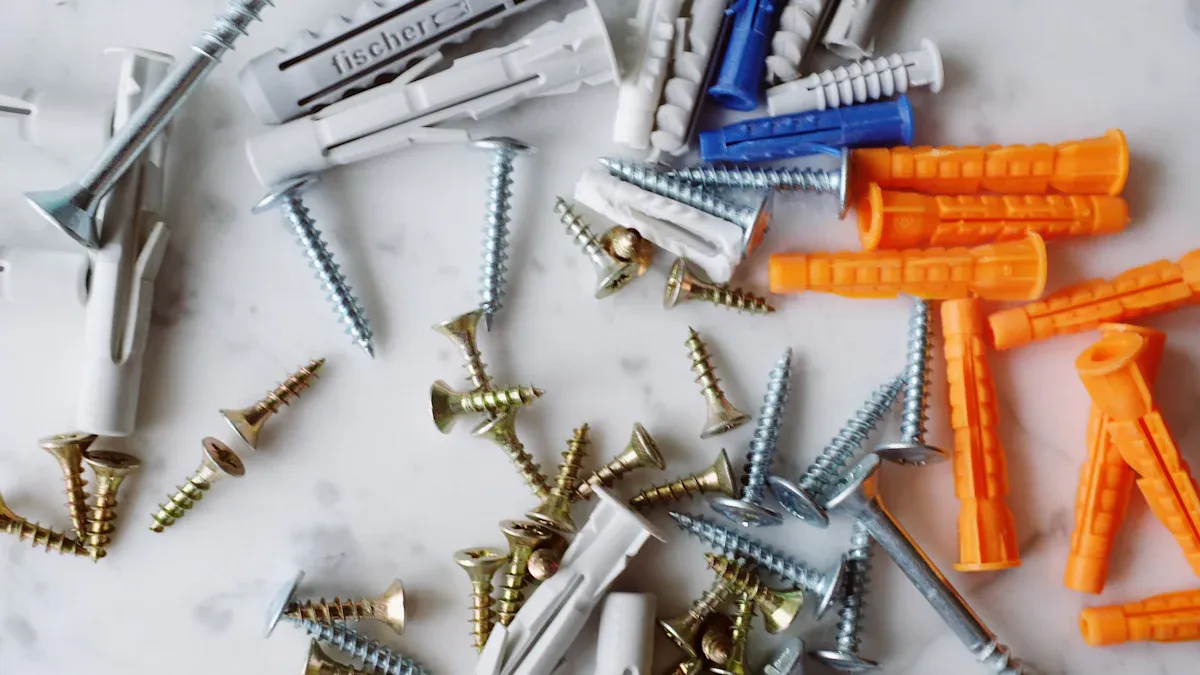
Selecting the right fastener involves more than just picking one from a list. Professionals must evaluate several critical factors to ensure a safe and durable connection. A thorough analysis of load requirements, environmental conditions, and the concrete base material guides the selection of the proper wedge anchors for any application.
Load Capacity Requirements
The forces acting on an anchor are the most important consideration. Engineers must quantify the precise weight and nature of the item being mounted to determine the necessary strength and quantity of anchor points.
Tensile vs. Shear Loads
Anchors must resist two primary types of forces. Tensile loads are pull-out forces that try to pull the anchor straight out of the concrete. Shear loads are side-to-side forces that act parallel to the concrete surface. Engineers calculate the required capacity by considering several variables:
- Bolt material and diameter determine the anchor’s inherent strength.
- Embedment depth is crucial; deeper embedment significantly improves resistance to pullout forces.
- Spacing between bolts and the distance to a concrete edge also affect load capacity.
Static vs. Dynamic Loads
The nature of the load is also critical. Static loads are constant and stationary, like a mounted shelf. Dynamic loads involve vibration or movement, such as from heavy machinery. Resistance to vibration is essential for dynamic applications, as continuous micro-movements can loosen an anchor’s grip. Industry best practices recommend applying a substantial safety factor, choosing an anchor with a capacity that far exceeds the anticipated load.
Environmental Conditions
The anchor’s surroundings dictate the material and coating needed for long-term performance.
Interior vs. Exterior Use
Interior applications in dry, controlled environments have minimal corrosion risk. Exterior applications, however, expose fasteners to moisture, temperature swings, and other elements that can cause rust and degradation over time.
Corrosion Resistance Levels
For protection, wedge anchors come with different coatings. The level of corrosion resistance directly impacts the anchor’s service life.
| Coating Type | Corrosion Resistance | Recommended Use |
|---|---|---|
| Zinc Plating | Good | Small fasteners for indoor or minimally intensive outdoor applications |
| Hot-Dip Galvanizing | Reliable | Fasteners for outdoor use, especially in coastal areas with salt exposure |
Concrete Condition
The base material itself plays a huge role in an anchor’s performance. The weakest link in a fastening system is often the concrete, not the anchor.
Cracked vs. Uncracked Concrete
Uncracked concrete is a solid, uniform base. Cracked concrete, which can result from tensile stresses in the structure, presents a challenge. Cracks or voids can weaken an anchor’s grip. When a crack propagates to an anchor, it effectively increases the drilled hole size. This requires an anchor with “follow-up expansion” capability to maintain its clamping force.
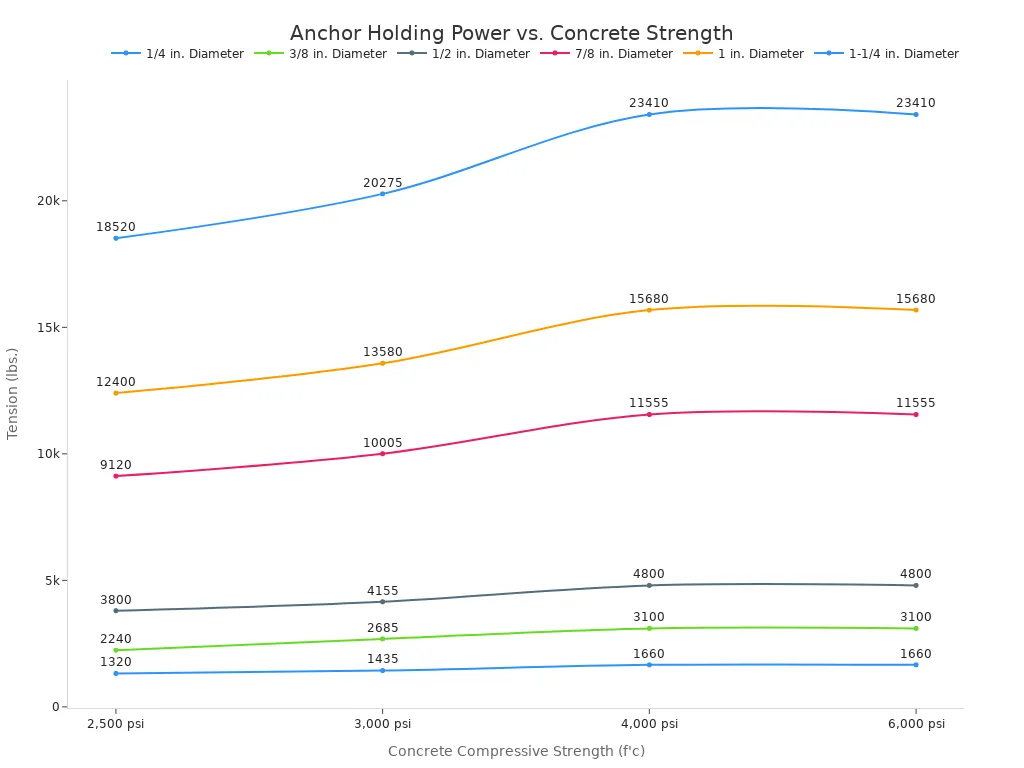
Concrete Compressive Strength
Concrete strength, measured in pounds per square inch (PSI), directly affects an anchor’s holding power. Harder concrete provides a stronger base for the anchor to grip. As the chart below shows, an anchor’s tension capacity increases significantly in higher-strength concrete.
Certifications and Building Codes
Navigating certifications and building codes is a non-negotiable step in any structural project. These standards provide third-party verification that a fastener will perform as expected, ensuring the safety and legal compliance of an installation. A lack of proper certification can lead to failed inspections, costly rework, and significant safety risks.
Understanding ICC-ESR Reports
An International Code Council Evaluation Service Report (ICC-ESR) is one of the most important documents for a structural anchor. This report proves that an independent agency has tested and approved the product for specific applications. It confirms that the anchor meets stringent building code requirements.
Professional Insight: 📝 Code-listed wedge anchors undergo rigorous testing to standards like AC193 and ACI355.2, which are guided by the American Concrete Institute (ACI). An ICC-ESR number on a product’s technical data sheet is a clear sign of its verified performance and safety.
Engineers and inspectors rely on these reports to confirm that a product is suitable for use in critical connections, especially in cracked concrete. Choosing an anchor with a current ICC-ESR simplifies the approval process and provides confidence in the fastener’s reliability.
Seismic and Local Code Compliance
National certifications are a starting point, but compliance ultimately comes down to local regulations. Jurisdictions, particularly those in high-risk seismic zones, often have specific requirements that go beyond general standards. Professionals must perform due diligence to ensure every anchor meets local mandates.
To guarantee safety and legal adherence, project managers should follow a clear process:
- Review local building codes and regulations to identify specific anchor types or seismic certifications required for the project’s location.
- Confirm that the chosen anchors meet these established standards before purchase and installation.
For projects with unique application needs or when navigating complex regulations, expert advice is invaluable. It is always advisable to consult with structural engineers or industry experts. These professionals can offer critical insights and guidance. Their expertise helps in selecting the appropriate fasteners and ensures full compliance with all necessary certifications.
Choosing the correct fastener is critical for structural integrity. This summary table compares the key attributes of the top wedge anchors.
| Anchor | Material (Standard) | Best Use Case | Standout Feature |
|---|---|---|---|
| Power-Stud+ SD1 | Zinc-Plated Steel | Cracked Concrete | Best Overall Performance |
| Hilti Kwik Bolt TZ2 | Zinc-Plated Steel | Seismic/Dynamic Loads | Highest Seismic Rating |
| Strong-Bolt 2 | Zinc-Plated Steel | General Structural | Excellent Strength-to-Cost |
| Red Head Trubolt+ | Zinc-Plated Steel | General Heavy Duty | Dependable & Easy Install |
| Powers Tapper+ | 316 Stainless Steel | Corrosive Environments | Maximum Corrosion Resistance |
| Redi-Drive | Zinc Die Cast | Temporary Fixtures | Fully Removable Design |
| Power Bolt | Zinc-Plated Steel | Heavy Machinery | Optimized for Vibration |
Final Takeaway: Professionals must match an anchor’s load capacity and material to the project’s engineering requirements. This step guarantees both safety and long-term performance.
FAQ
What is a wedge anchor?
A wedge anchor is a mechanical fastener for solid concrete. Tightening the nut pulls the anchor body upward. This action forces an expansion clip outward, creating a strong friction hold inside the drilled hole. This mechanism provides excellent load-bearing capacity for heavy-duty applications.
Why is cleaning the hole so important?
A clean hole ensures proper anchor performance. Concrete dust prevents the expansion clip from fully gripping the base material. This oversight significantly reduces the anchor’s holding power. Installers must use compressed air and a wire brush to remove all debris before installation.
Can wedge anchors be reused?
Most wedge anchors are permanent fasteners and are not reusable. Removing them damages the anchor and the concrete. Only specific models, like the Redi-Drive, are designed for reuse in temporary jobs. For safety, permanent structural anchors should never be reused.
What does ICC-ESR mean?
ICC-ESR stands for International Code Council Evaluation Service Report. This document proves a product meets building code standards through independent testing. An ICC-ESR approval gives engineers confidence in an anchor’s performance and safety for structural use.
When should someone choose stainless steel over zinc-plated anchors?
Professionals choose stainless steel for corrosive environments. It is ideal for outdoor, coastal, or chemical plant applications. Zinc-plated anchors are cost-effective but only suitable for dry, interior conditions. The project’s environment dictates the correct material choice for long-term durability.
What is embedment depth?
Embedment depth is the distance the anchor is installed into the concrete. Deeper embedment provides greater resistance to pull-out forces. Manufacturers specify a minimum embedment depth for each anchor. Achieving this depth is critical for the anchor to reach its rated load capacity.