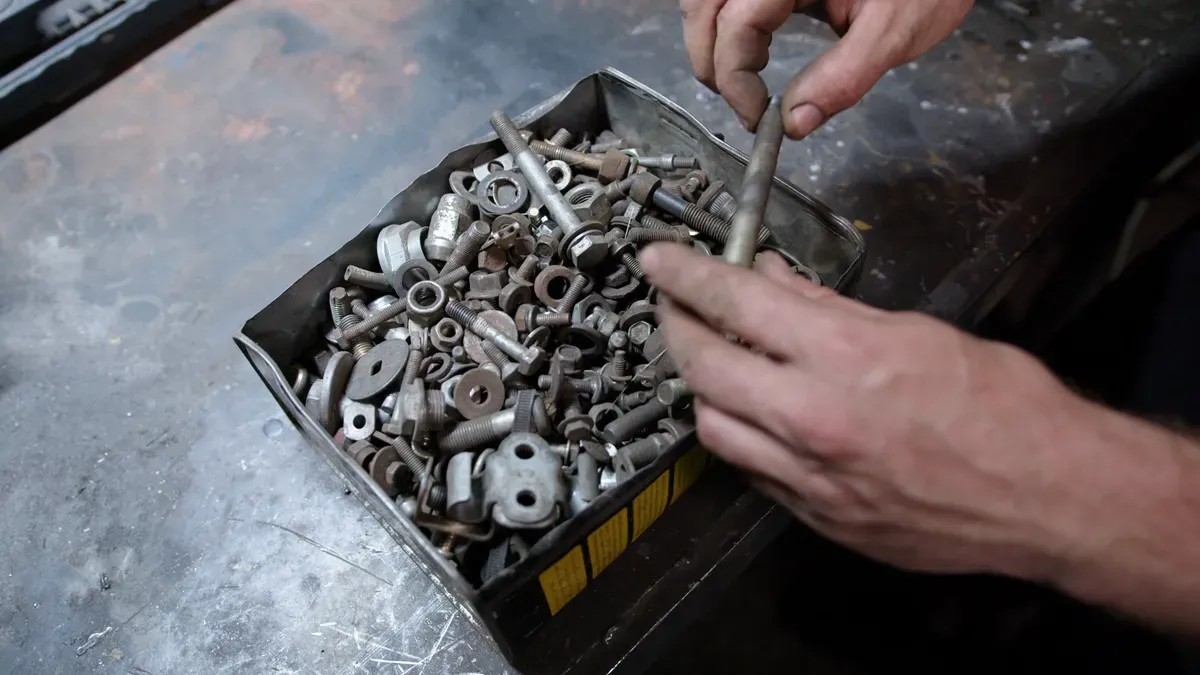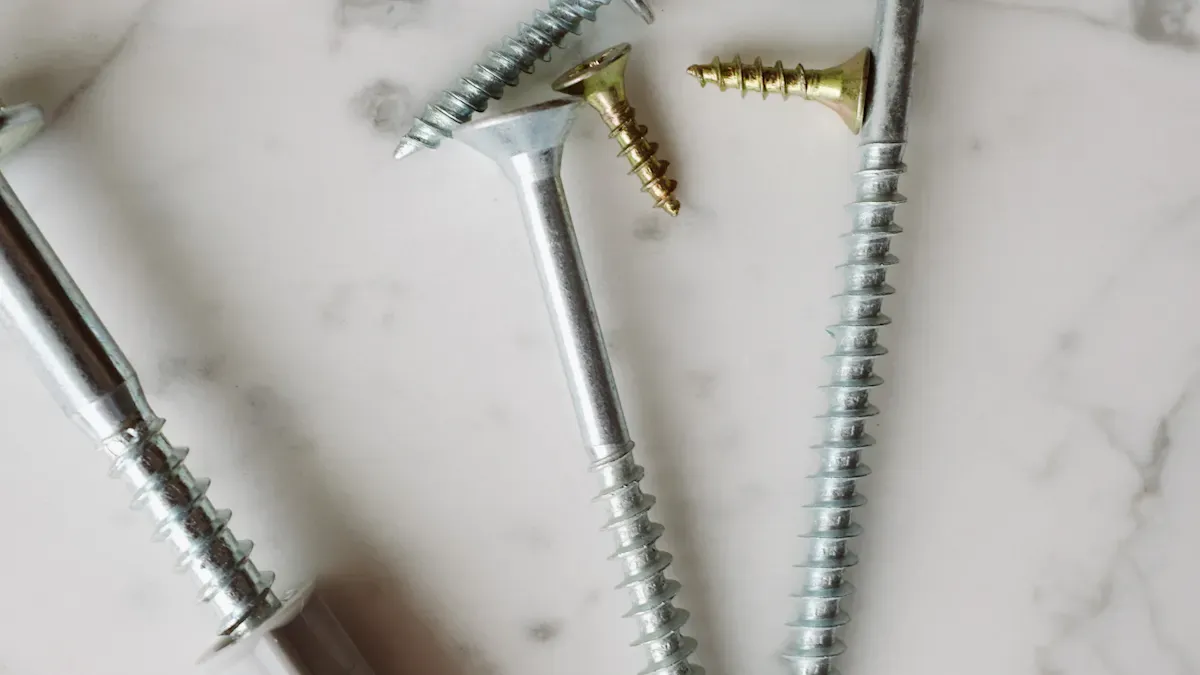
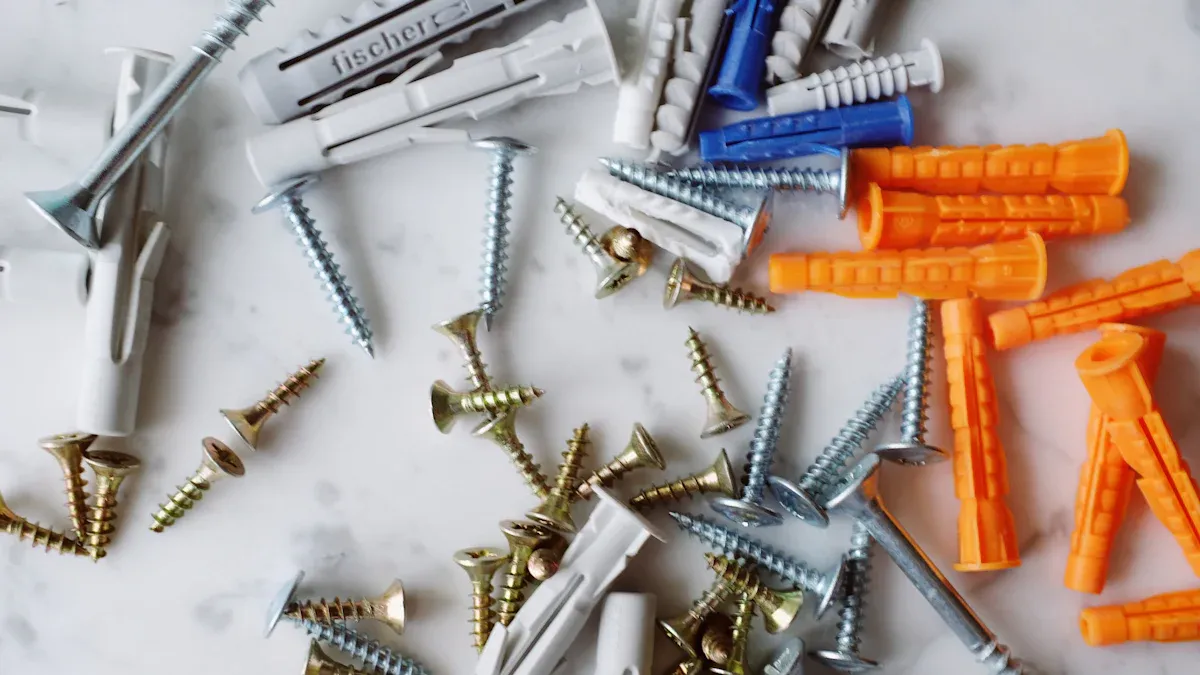
Professionals install anchor bolts using four essential steps to guarantee safety and holding power. The procedure ensures all anchors perform as designed. These fundamental actions are:
- Drill the hole
- Clean the hole
- Insert the anchor
- Secure it
Following this process for all concrete anchor bolts, including standard Anchor Bolts and specialized custom anchor bolts, is critical. A custom fasteners manufacturer designs strong custom fasteners, but poor installation negates their strength.
The American Concrete Institute reports that 30% of all construction-related incidents are due to improper installation of anchors.
Essential Tools and Materials for Installation
Proper installation of concrete anchor bolts requires specific tools and a clear understanding of the anchor types available. Using the correct equipment ensures efficiency, accuracy, and safety. The right tools prevent damage to the base material and the fastener.
Tools You Will Need
Gathering the necessary tools before starting work streamlines the installation process. Each tool serves a critical function in achieving a secure and reliable connection in concrete.
Hammer Drill
A hammer drill is essential for drilling into hard materials like concrete. It combines rotation with a rapid hammering action. This dual action pulverizes the material, allowing the drill bit to advance quickly and create a clean hole.
Important Safety Note When using hammer drills, it is essential to follow the manufacturer’s safety precautions.
- Users should wear safety goggles and earplugs during drilling.
- Always maintain a firm grip on the tool to control its power.
Carbide-Tipped Masonry Drill Bits
Standard drill bits will not work on concrete. Installers must use carbide-tipped masonry drill bits designed for abrasive materials. These bits must meet ANSI standards to ensure they create the correct hole diameter for the specified anchors.
Hole Cleaning Brush and Compressed Air
A clean hole is non-negotiable for maximum holding power. A wire or nylon brush scrubs the interior walls of the drilled hole. A blast of compressed air then removes all the loosened dust and debris. This step is vital for all types of concrete anchors.
Torque Wrench
A torque wrench is the only tool that can apply a precise amount of rotational force. It is critical for setting mechanical anchors to the manufacturer’s specified torque value. This precision prevents under-tightening or over-tightening, both of which compromise the connection.
Hammer or Mallet
A simple hammer or mallet is necessary for tapping certain anchors into the drilled hole. It helps seat the anchor properly without damaging the threads. This is common for wedge anchors and drop-in anchors.
Safety Glasses and Gloves
Personal protective equipment is mandatory. Drilling creates flying dust and debris. Users must wear safety glasses to protect their eyes. Gloves protect hands from abrasion and potential injury.
Understanding Types of Concrete Anchor Bolts
Choosing the correct fastener is as important as the installation method. There are several types of concrete anchors, each with a unique holding mechanism.
Mechanical Expansion Anchors
Mechanical anchors are a popular choice for many applications. They work by expanding against the sides of the drilled hole. This expansion creates a strong frictional or keyed grip within the concrete.
Adhesive (Epoxy) Anchors
Adhesive anchors, also known as epoxy anchor bolts, provide the highest holding strength. These systems use a two-part chemical adhesive to bond a threaded rod or rebar to the base material. The result is a stress-free connection ideal for critical loads. Installers often prefer epoxy anchor bolts for seismic retrofits and heavy machinery.
| Anchor Type | Application | Holding Mechanism |
|---|---|---|
| Mechanical Anchors | Used in various applications, including structural steel connections, handrails, and equipment anchorage. | Rely on friction, keying, or wedging action against the base material. |
| Adhesive Anchors | Often preferred for critical applications, such as seismic retrofits, rebar connections, and heavy machinery installations. | Create a bond between the anchor and the base material through a chemical adhesive. |
Screw-In Anchors
Screw-in anchors feature specialized threads that cut into the base material. They are fast to install and are often removable. These anchors are suitable for a wide range of light to heavy-duty applications, depending on their diameter and length.
Choosing the Right Concrete Anchor for Your Project
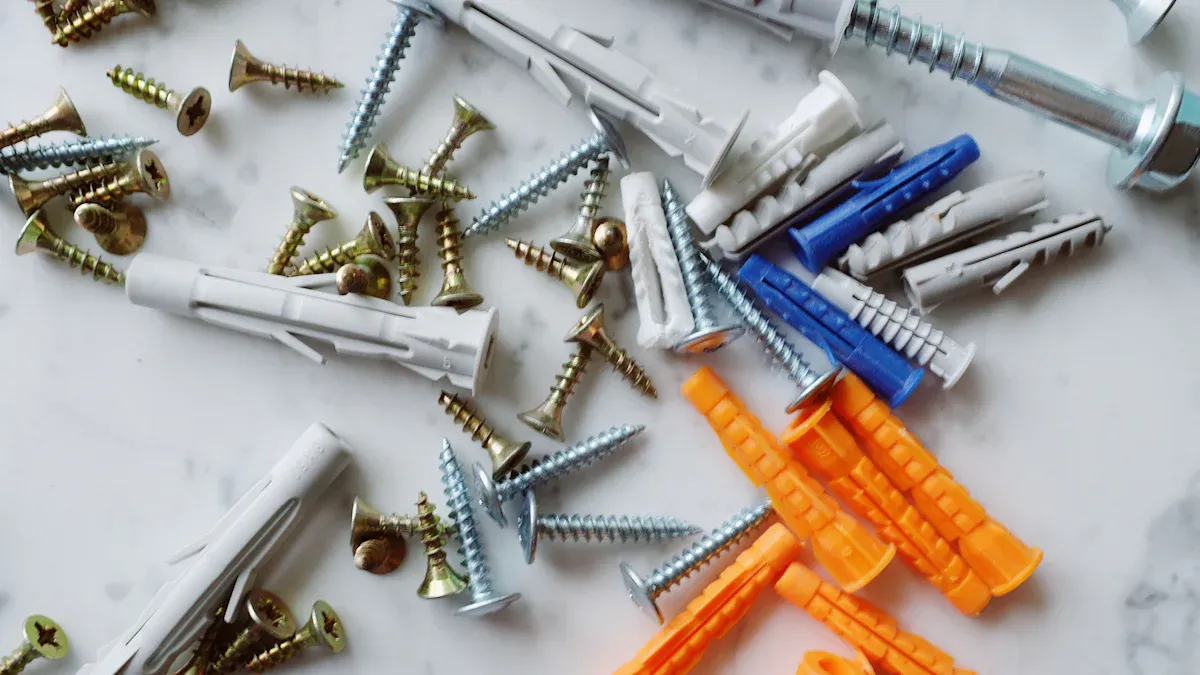
Selecting the appropriate anchor is fundamental to a successful installation. The project’s load requirements and the base material—whether solid concrete or hollow block—dictate the best choice. Matching the anchor to the application ensures safety and reliability.
Heavy-Duty Applications
Heavy-duty applications involve significant structural loads. These require anchors with the highest possible holding strength in solid concrete.
Wedge Anchors
Installers use wedge anchor bolts for securing heavy equipment, structural steel, and racking. These mechanical anchors expand to create a powerful frictional grip inside the hole. The design of wedge anchor bolts makes them a reliable choice for high-shear and high-tension forces in solid base materials.
Adhesive Anchors
Adhesive systems, or epoxy anchor bolts, offer the ultimate bonding strength. Installers use epoxy anchor bolts to create a stress-free connection, which is ideal for anchoring near edges or in applications subject to vibration. Professionals often specify epoxy anchor bolts for critical connections like seismic retrofitting and rebar doweling.
Medium-Duty Applications
Medium-duty projects include fastening handrails, shelving, and machinery that exert moderate loads. These applications need a balance of strength and installation simplicity.
Sleeve Anchors
Sleeve anchors are versatile fasteners suitable for light to medium loads. They work well in concrete, brick, and block. The sleeve expands along its entire length, distributing the load over a larger area. For example, a medium-duty 3/8-inch sleeve anchor can have a shear strength of 3,040 lbs and a tensile strength of 3,100 lbs in optimal conditions.
Large Diameter Concrete Screws
Large diameter screw-in anchors provide substantial holding power and are relatively easy to install. They cut their own threads into the base material, creating a strong mechanical interlock. Their removability makes them a practical option for temporary fixtures or equipment mounting.
Light-Duty or Hollow Block Applications
Light-duty tasks involve fastening lightweight items like signs, conduits, and electrical boxes. Hollow block walls present a unique challenge because many anchors are unsuitable for them.
Pro Tip: Many heavy-duty anchors, like wedge and strike anchors, are not recommended for hollow block. Their expansion force can crack the thin walls of the block.
Plastic Plug Anchors
Plastic plug anchors are a common solution for very light loads. An installer taps the plastic plug into a pre-drilled hole. A screw is then driven into the plug, causing it to expand and grip the sides of the hole. Their holding values are significantly reduced in hollow materials compared to solid masonry.
Small Diameter Concrete Screws
Small diameter screw-in anchors offer a quick and secure method for light-duty fastening. When using them in hollow block, it is important to understand that their holding power is lower than in solid materials. For more robust fastening in hollow walls, installers should consider anchors specifically designed for hollow applications.
| Anchor Type | Suitability for Hollow Block |
|---|---|
| Wedge & Strike Anchors | ❌ Not Recommended |
| Plastic & Screw Anchors | ✅ Usable with reduced capacity |
| Toggle & Molly Bolts | ⭐ Excellent Choice |
Flush or Removable Installations
Certain projects demand a clean, unobtrusive finish or the option for future removal. In these cases, installers turn to specialized anchors designed for flush mounting or reversibility. These fasteners provide secure connections while maintaining the aesthetic of the surface or allowing for temporary installations.
Drop-In Anchors
Drop-in anchors are the ideal solution when a flush surface is non-negotiable. An installer sets these anchors entirely within the drilled hole, leaving the top flush with the concrete. This design is perfect for overhead applications or any situation where a protruding bolt or stud is undesirable.
- They create a clean, professional appearance by sitting flush with the surface.
- Their internal threads accept a machine-threaded bolt or rod.
- This makes them suitable for mounting fixtures where a smooth finish is critical.
Once set, drop-in anchor bolts are permanent. The anchor body remains in the concrete, but the bolt can be removed. This allows for fixture changes without disturbing the anchor itself.
Concrete Screws
Concrete screws offer exceptional versatility, combining strong holding power with the significant advantage of removability. Unlike expansion anchors, these fasteners cut their own threads into the base material. This threading action creates a secure mechanical interlock.
Key Advantage: The installation process for concrete screws is reversible. An installer can simply unscrew the fastener, making it perfect for temporary bracing, formwork, or fixtures that may need repositioning.
These anchors are also designed for a flush finish. Many have countersunk heads that allow them to sit level with or below the concrete surface, which helps eliminate potential trip hazards. Their surface-hardened design often allows for reuse, providing a cost-effective and adaptable fastening solution.
How to Use Wedge Concrete Anchors: A Step-by-Step Guide
The proper method for how to use wedge concrete anchors is a precise process. Following these steps ensures that the fastener achieves its maximum rated holding capacity and provides a secure, reliable connection. This guide details the critical actions an installer must take for a successful installation.
Step 1: Drill the Hole to Spec
The first step is creating a precise hole in the concrete. The hole’s diameter and depth are critical specifications that directly impact the performance of wedge anchor bolts.
- Match the Diameter: An installer must use a carbide-tipped masonry drill bit that meets ANSI standards. The hole diameter must exactly match the diameter of the anchor. For example, a 1/2-inch wedge anchor requires a 1/2-inch hole. A hole that is too large will prevent the anchor from expanding correctly, leading to connection failure.
- Ensure Proper Depth: The hole must be drilled deeper than the anchor’s intended embedment. A good rule of thumb is to drill the hole at least 1/2 inch deeper than the anchor’s length. This extra space, or sump, allows dust and debris to settle at the bottom, preventing it from obstructing the anchor.
Professional Tip: Drilling a hole deeper than the minimum requirement is a standard practice. It provides a reservoir for concrete dust, which is a practical alternative to perfect cleaning. However, drilling excessively deep can increase the risk of splitting the concrete when setting the anchor.
Step 2: Clean the Hole Thoroughly
A clean pre-drilled hole is non-negotiable for a strong connection. Concrete dust left inside the hole acts like a lubricant and a barrier, severely reducing the friction the anchor needs to grip the base material.
The industry-standard cleaning procedure is the “brush-and-blow” method.
- Brush: An installer inserts a stiff wire or nylon brush into the hole. The brush should match the hole’s diameter. They scrub the interior walls vigorously to dislodge all fine dust particles.
- Blow: Immediately after brushing, the installer uses compressed air to blow all the loosened debris out of the hole. This step should be repeated at least twice (brush, blow, brush, blow) to ensure the hole is completely clean.
Removing this debris is essential for all anchors, as it allows the expansion clip to make direct contact with the solid concrete.
Step 3: Install the Anchor
With a clean pre-drilled hole, the installer can now install anchor bolts. The technique for inserting wedge anchor bolts is designed to protect the fastener from damage.
- Assemble the anchor with the nut and washer.
- Thread the nut onto the anchor until the top of the nut is flush with the top of the anchor body. This position protects the threads from being damaged by the hammer.
- Place the anchor through the fixture and into the hole.
- Gently tap the top of the nut with a hammer or mallet. The installer drives the anchor into the hole until the washer and nut are snug against the fixture.
Important Note: Even if some anchors have a bullnose tip designed for hammering, threading the nut flush is the recommended professional practice. It guarantees the threads remain intact for final tightening.
Step 4: Set the Anchor with a Torque Wrench
The final step activates the anchor’s holding power. An installer must use a calibrated torque wrench for this procedure. Using an impact wrench or a standard wrench will not provide the necessary precision and can easily damage the connection. This step transforms the loosely placed fastener into a secure, load-bearing component.
Tightening the nut performs a critical mechanical function. It pulls the anchor’s threaded stud upward. This action forces the expansion clip at the bottom down and outward into the walls of the hole. The friction and mechanical interlock created by this expansion are what give wedge anchors their strength in concrete.
Adhering to the manufacturer’s recommended torque values is crucial for ensuring the reliable performance and optimal holding capacity of wedge anchors. Proper installation techniques, including correct torque application, are essential for the anchor to be set correctly.
An installer sets the anchor by following these precise actions:
- Hand-Tighten the Nut: First, they tighten the nut by hand until it is snug against the fixture. This ensures the assembly is properly seated before applying mechanical force.
- Set the Torque Wrench: The installer sets the torque wrench to the value specified by the anchor manufacturer. This value depends on the anchor’s diameter, material, and the strength of the base material. For example, a 5/8-inch diameter steel wedge anchor in 4000 PSI concrete often requires an installation torque of 90 ft-lbs.
- Apply Torque: They apply smooth, steady pressure to the wrench until it clicks, indicating the specified torque has been reached. The installer should not continue tightening after the click.
Applying the wrong amount of torque can lead to catastrophic failure. Over-torquing the nut can cause the concrete within the drilled hole to break apart where the expansion clip is designed to expand. This significantly reduces the anchor’s holding capacity and can cause visible cracking or splitting around the fastener. Under-torquing is also dangerous, as it means the clip has not fully engaged, leaving the connection loose and unable to support its rated load. While over-torquing is difficult to confirm after the fact, an installer can identify an under-torqued anchor by checking it with a calibrated torque wrench.
How to Install Concrete Anchors: Sleeve and Drop-In Types
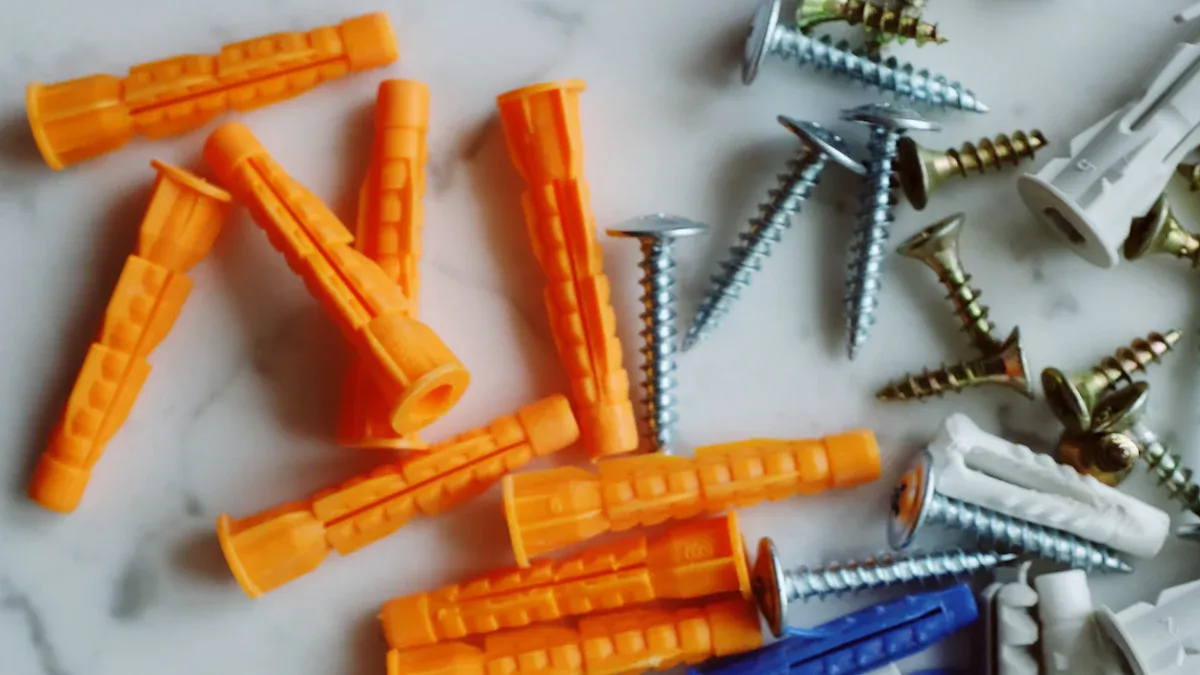
Sleeve and drop-in anchors offer unique solutions for medium-duty and flush-mount applications. The methods to install concrete anchors of these types differ from wedge anchors but rely on the same principles of precision and cleanliness. Following the correct procedure is essential for achieving a secure hold.
Installing Sleeve Anchors
The process for how to use sleeve anchors is straightforward. These versatile fasteners are suitable for concrete, brick, and block. Their expanding sleeve distributes pressure over a wide area, creating a reliable connection for fixtures like handrails and shelving.
Step 1: Drill the Hole
An installer begins by drilling a hole into the base material. The diameter of the carbide-tipped masonry bit must match the diameter of the sleeve anchor. The hole’s depth should be at least the length of the anchor’s sleeve. Drilling slightly deeper ensures the anchor will not bottom out on debris.
Step 2: Clean Out Debris
A clean hole is critical for all anchors. The installer uses a wire brush and compressed air to remove all dust and debris from the pre-drilled hole. This action allows the sleeve to make direct contact with the solid concrete, maximizing its frictional grip.
Step 3: Insert the Anchor
The installer assembles the anchor with its nut and washer. They lightly thread the nut onto the bolt. Next, they place the anchor through the hole in the fixture and into the pre-drilled hole in the wall. A hammer is used to gently tap the anchor until the washer rests snugly against the fixture.
Step 4: Tighten to Expand the Sleeve
The final step activates the anchor. An installer uses a torque wrench to tighten the nut. This action pulls the conical bolt up through the sleeve, forcing the sleeve to expand and press firmly against the walls of the hole. Applying the correct torque is vital. Over-tightening can damage the concrete, while under-tightening results in a loose connection.
Torque Specifications: Installers must follow manufacturer guidelines. The required torque varies significantly based on anchor size.
| Sleeve Anchor Size | Recommended Torque |
|---|---|
| 3/8″ x 1-7/8″ | 15 – 18 ft./lbs. |
| 5/8″ x 3″ | 30 – 40 ft./lbs. |
| 3/4″ x 4-1/4″ | 60 – 90 ft./lbs. |
How to Use Drop-in Concrete Anchors
The procedure for how to use drop-in concrete anchors is designed to create a permanent, flush-mount threaded socket in concrete. This makes them ideal for overhead applications or situations requiring a removable bolt.
Step 1: Drill to the Correct Depth
Precision is key when drilling for drop-in anchor bolts. The installer must use a carbide bit that matches the anchor’s outside diameter. The hole must be drilled to the exact depth specified by the manufacturer. This ensures the top of the anchor will sit flush with or just below the concrete surface after installation.
Step 2: Clean the Drilled Hole
As with all fastener installations, the installer must thoroughly clean the hole. They use the brush-and-blow method to remove all concrete dust. A clean environment allows the anchor to set properly and achieve its full holding capacity.
Step 3: Insert and Set the Anchor
The installer drops the anchor into the hole, open-end up. They then use a dedicated drop-in anchor setting tool to expand it. This tool is essential for a reliable installation.
- The primary function of a drop-in anchor setting tool is to facilitate the fast and reliable installation of drop-in anchors.
- It is essential because drop-in anchors cannot be tightened using a standard screw or bolt.
- Using improvised tools instead of a professional setting tool can lead to thread damage, causing significant installation problems.
The installer inserts the setting tool into the anchor and strikes it firmly with a hammer. This drives an internal plug downward, expanding the anchor body and locking it into the concrete.
Step 4: Fasten Your Fixture
Before placing the fixture, the installer must verify the anchor is set correctly. A properly set anchor will be immovable.
To verify a drop-in anchor is correctly set before fastening a fixture, one should ‘Inspect the Anchor: Confirm that the anchor is secure and flush with the concrete surface. The anchor should not move when force is applied.’
Once confirmed, the installer can position the fixture over the hole. They then insert a machine-threaded bolt through the fixture and into the set anchor, tightening it to secure the item. This final step completes the process to install anchor bolts of the drop-in type.
Critical Tips for a Secure Installation
The success of any concrete anchor installation hinges on precision. An installer’s attention to detail during the preparation phase directly impacts the fastener’s ability to achieve a secure hold. Following best practices for drilling, cleaning, and placement is not optional; it is essential for safety and performance.
Drill the Hole Correctly
The creation of the pre-drilled hole is the foundation of the entire installation. Incorrect dimensions can compromise the anchor’s integrity from the start.
Match Bit Diameter to Anchor Size
A snug fit between the anchor and the concrete is crucial for optimal performance. An installer must use an ANSI-standard carbide bit that matches the anchor’s specified diameter. A proper fit ensures maximum contact and holding power.
- A snug fit is essential for the anchor to function as designed.
- Installers should conduct a test fit of the anchor in the pre-drilled hole before final installation.
- Any movement or wobbling during the test fit indicates the hole is too large, and adjustments are necessary.
- This confirmation of a tight connection is vital for long-term stability.
Ensure Proper Hole Depth
The depth of the pre-drilled hole is just as important as its diameter. An installer must drill the hole deeper than the anchor’s minimum embedment depth. This extra space, known as a sump, creates a reservoir at the bottom of the hole. It allows any remaining fine dust to settle without obstructing the anchor, ensuring it can be installed to the correct depth.
The Importance of a Clean Hole
A clean hole is a non-negotiable requirement for all types of anchors. Debris left inside the hole can cause a catastrophic failure under load.
Why Debris Reduces Holding Power
Concrete dust and debris significantly diminish a mechanical anchor’s holding capacity. The fine particles act as a lubricant, interfering with the anchor’s ability to properly grip the concrete surface. This interference drastically reduces the frictional holding power necessary for a strong connection. Effective cleaning can improve anchor performance by up to 25% and prevent premature failure, as it allows for direct, optimal frictional engagement.
The Brush-and-Blow Cleaning Method
The industry-standard procedure involves a wire brush and compressed air. An installer scrubs the inside of the hole with a properly sized brush to dislodge all dust. Immediately after, they use compressed air to blow all loose particles out of the hole. This brush-and-blow cycle should be repeated at least twice to guarantee a clean surface.
Respect Edge and Spacing Distances
Installers must place anchors at a safe distance from edges and from each other. Placing anchors too close to an edge or to another fastener can cause the concrete to crack and fail.
Understanding Manufacturer Guidelines
Every anchor manufacturer provides specific guidelines for minimum edge and spacing distances. These values are based on the anchor’s diameter and are designed to prevent concrete breakout. For example, a common 1/2-inch wedge anchor has specific placement requirements.
| Requirement | General Guideline (Anchor Diameters) | Specific Minimum (Inches) |
|---|---|---|
| Edge Distance | 5 anchor diameters | 1-7/8″ |
| Anchor Spacing | 10 anchor diameters | 3-3/4″ |
How to Prevent Concrete Cracking
Adhering to these minimum distances is the primary way to prevent cracking. When an anchor is tightened, it exerts immense pressure, creating a cone-shaped stress zone in the concrete. Placing anchors too close together causes these stress cones to overlap, weakening the base material. Respecting the specified distances ensures each anchor has enough solid material around it to support its intended load without causing a blowout.
Apply the Correct Torque
Applying the correct torque is the final, critical action that activates a mechanical anchor’s holding power. This step is not about making the fastener feel tight; it is a precise engineering procedure. An installer must apply a specific rotational force to ensure the anchor expands correctly within the concrete, creating a secure and reliable connection capable of handling its designed load.
Why You Must Use a Torque Wrench
An installer must use a calibrated torque wrench to set mechanical anchors. Standard wrenches and impact drivers do not provide the necessary precision and often lead to failure. A torque wrench is the only tool that measures and applies a specific rotational force, ensuring the anchor is set according to the manufacturer’s specifications. Using an uncalibrated tool is a significant risk. According to NIST, uncalibrated torque wrenches contribute to 63% of fastener-related equipment malfunctions. This statistic highlights the importance of using a properly maintained and calibrated tool for every installation. A torque wrench guarantees that the clamping force is both correct and repeatable, which is essential for safety and performance.
The Dangers of Over-Tightening
Applying the wrong amount of torque can lead to catastrophic failure. Both over-tightening and under-tightening create hazardous conditions. An installer must understand these risks to appreciate the importance of precision. Over-torquing can cause the anchor’s steel to fail or, more commonly, fracture the surrounding concrete. This action creates a breakout cone, destroying the anchor’s holding capacity.
Consequences of Improper Torque
- Under-torquing results in insufficient expansion. The anchor will have a weak grip and can pull out or shift under load.
- Over-torquing can cause the concrete base material to fail, the anchor’s steel components to break, or the anchor to pull out.
- Unequal torquing in an anchor group causes uneven load distribution. Some anchors carry more load than others, making the entire connection unsafe.
Under-tightening is equally dangerous. It leaves the anchor’s expansion mechanism only partially engaged. The connection will be loose and unable to support its rated load, leading to gradual loosening and potential joint separation. A correctly torqued anchor provides a secure, dependable connection that performs as the engineer intended.
Troubleshooting Common Installation Mistakes
Even with the right tools, installation errors can compromise the safety and integrity of a connection. An installer can avoid common pitfalls by understanding what goes wrong and how to correct it. Recognizing these mistakes is the first step toward a flawless installation.
Using the Wrong Anchor for the Job
Selecting the correct fastener is a critical decision. A mismatch between the anchor, the base material, and the load requirements is a frequent source of failure.
Mismatching Anchor to Base Material
An installer must match the anchor to the specific base material. A clear sign of a mismatched anchor is using a wedge anchor in brick or block, as these are designed only for solid concrete. The porous nature of brick prevents the anchor’s expansion clip from gripping properly, resulting in questionable holding values. In hollow block, the expansion force can cause the material to break apart or spall. If the clip expands within a hollow section, it cannot achieve a secure hold.
Underestimating Load Requirements
Every anchor is rated for specific tension (pull-out) and shear (side-to-side) forces. An installer must calculate the total load the fixture will exert and choose an anchor that exceeds those requirements. Underestimating the load can lead to catastrophic failure. For example, if a fixture imposes the following loads, the selected anchors must have higher rated capacities.
| Load Type | Requirement per Anchor |
|---|---|
| Tension Load | 5,000 lbs |
| Shear Load | 4,000 lbs |
Improper Hole Preparation
The quality of the drilled hole directly impacts the anchor’s performance. Errors in depth and cleanliness are common but easily avoidable.
Hole is Too Shallow or Too Deep
A hole drilled too shallow is a major problem. It prevents the anchor from reaching its required embedment depth. This issue can cause the anchor to bottom out prematurely, preventing proper expansion and creating a weak connection. A hole that is too deep can also be problematic, potentially leading to wasted material or anchor misalignment. For a wedge anchor, the hole must be deep enough to ensure at least 3 to 5 threads are below the concrete surface.
Inadequate Cleaning
A dirty hole is a hidden danger. Concrete dust acts as a lubricant, severely reducing the friction an anchor needs to grip the hole walls. This lack of friction can reduce holding power by up to 25%. An installer must use the brush-and-blow method to remove all debris, ensuring direct contact between the anchor and the solid base material.
Hitting Rebar While Drilling
Reinforcing steel, or rebar, is a common obstruction inside concrete. Hitting it during drilling requires a specific response to avoid damaging the structure or the tools.
What to Do When You Hit Steel
When the drill stops advancing and produces metallic sounds, the installer has likely hit rebar. They must stop drilling immediately. Continuing to drill can damage the carbide bit and potentially compromise the structural integrity of the rebar. The best initial response is to abandon the hole.
Using a Rebar Cutter Bit or Relocating
An installer has two primary options after hitting rebar:
- Relocate the Hole: The simplest solution is to move the anchor location by at least a few inches and drill a new hole.
- Use a Rebar Cutter: In situations where relocating is not possible, a specialized rebar-cutting drill bit can be used to drill through the steel. An installer should only use this option after consulting project plans to ensure cutting the rebar is permissible.
Anchor Spins in the Hole
A spinning anchor is a clear sign of a failed installation. When an installer attempts to tighten the nut, the entire anchor assembly rotates freely within the hole instead of expanding and locking into place. This issue completely negates the fastener’s holding power and must be addressed immediately.
Diagnosing a Spinning Anchor
An installer can diagnose a spinning anchor by identifying its root cause. The problem almost always originates from improper hole preparation or incorrect installation technique. Several factors can lead to this failure.
- Improper Drilling Technique: Using a standard rotation drill instead of a hammer drill creates an out-of-spec hole. A non-ANSI standard bit can also produce an oversized hole, preventing the anchor from making sufficient contact.
- Over-torquing the Nut: Applying excessive force can fracture the concrete where the expansion clip needs to grip. This creates a void and allows the fastener to spin.
- Aggregate Breaking Loose: A piece of aggregate can dislodge during drilling. If this occurs at the anchor’s setting depth, it prevents the clip from engaging the solid base material.
- Uncured Concrete: Installing a fastener in concrete less than 28 days old is a common mistake. The soft material cannot withstand the expansion forces, leading to failure.
Damaged threads are another frequent cause. An installer might damage the threads by striking the nut and stud simultaneously during installation. Compromised threads prevent the nut from pulling the stud upward, causing the entire assembly to spin when torque is applied.
Solutions for a Failed Set
When an anchor fails to set, an installer has several options to remedy the situation. The best course of action depends on the specific circumstances and available tools. The primary goal is to either secure the existing fastener or replace it with a new, reliable connection.
Professional Tip: The most reliable solution for a critical connection is to abandon the failed anchor and install a new one correctly. Repair methods are often best suited for non-structural applications.
If removal is not an option, an installer can try several techniques to achieve a set.
- Use vice grips to firmly hold the anchor’s stud or head while tightening the nut with a wrench.
- Apply a high-strength epoxy into the hole around the fastener, tap it into place, and allow the adhesive to cure fully.
- For a permanent fix, drill out the failed fastener and replace it with a slightly larger diameter anchor or an adhesive anchor system.
These solutions can salvage a failed installation, but preventing the issue is always preferable. Proper diagnosis helps an installer avoid repeating the same mistake. Following correct procedures for drilling, cleaning, and torquing ensures all anchors perform safely and reliably.
The performance of concrete anchor bolts depends entirely on proper installation. An installer guarantees safety and reliability when they follow a precise procedure. They must always remember the core principles to correctly install anchor bolts:
- Choose the right anchor for the job.
- Prepare the concrete hole meticulously.
- Set the fastener to the manufacturer’s specifications.
Following these steps to install anchor bolts ensures a secure connection in concrete. A correctly installed fastener creates a dependable hold for any project involving concrete anchor bolts.
FAQ
How long must concrete cure before installing anchors?
An installer should wait for the concrete to reach its full design strength. This typically takes a minimum of 28 days. Installing anchors in uncured concrete can cause the base material to fail under the anchor’s expansion force, resulting in a weak connection.
Can an installer reuse concrete anchors?
Most mechanical expansion anchors are single-use items. The expansion process permanently deforms them. Concrete screws are an exception and are often designed for removal and reuse. An installer must always check the manufacturer’s specifications to confirm if an anchor is reusable.
What happens if the masonry drill bit is worn?
A worn carbide-tipped bit drills an undersized hole. This makes it difficult or impossible to insert the anchor. Forcing an anchor into a tight hole can damage the fastener’s threads or prevent it from reaching the proper embedment depth, leading to a failed installation.
Why can’t an installer use an impact wrench to tighten anchors?
Impact wrenches deliver uncontrolled, high-torque impacts. They cannot apply a precise clamping force. An installer must use a calibrated torque wrench to avoid over-tightening, which can crack the concrete, or under-tightening, which leaves the connection loose and unsafe.
What are the most common reasons for anchor failure?
The primary causes of failure are improper hole preparation and incorrect torque application.
A dirty hole reduces friction, while an oversized hole prevents proper expansion. Over-torquing can fracture the concrete. These mistakes severely compromise the anchor’s holding capacity.
Can anchors be installed in wet concrete?
Most mechanical anchors perform poorly in wet conditions. An installer should use anchors specifically rated for wet environments, such as certain adhesive anchor systems. Water in the hole can interfere with the setting process and reduce the holding power of standard mechanical fasteners.
How much of a wedge anchor should stick out after installation?
The anchor must be embedded deep enough to ensure its expansion clip engages solid concrete. After tightening, an installer should see at least three to five threads showing above the nut. This confirms the anchor has achieved the necessary embedment for a secure hold.