Selecting the correct heavy-duty рым-болт anchors is critical for industrial safety and operational performance. The industrial fastener market is projected to reach USD 131,590.0 million by 2030, highlighting the growing demand for reliable components. Neglecting equipment inspection and misunderstanding load limits are primary causes of lifting accidents. Therefore, choosing a high-performance anchor is essential. For 2026, the Crosby G-279 Forged Machinery Eye Bolt stands out. Its superior material strength and compliance with ASME B30.26 standards deliver unmatched performance. A quality производитель крепежных изделий на заказ ensures every anchor, from литье болтов to final product, meets rigorous safety demands. This heavy-duty anchor provides confidence in critical applications.
Key Selection Criteria for Heavy-Duty Eye Bolt Anchors
Choosing the right heavy-duty eye bolt anchors requires a professional evaluation of several key factors. An anchor’s material composition, load capacity, and design directly influence its safety and performance. A thorough understanding of these criteria ensures the selection of a component that meets the specific demands of an industrial application.
Material and Corrosion Resistance
The operational environment dictates the best material for an anchor. Material choice affects both strength and lifespan.
Forged Carbon Steel
Forged carbon steel is the industry standard for heavy-duty lifting due to its exceptional strength and durability. This material provides excellent performance for general indoor applications where corrosion is not a primary concern. Its manufacturing process creates a grain structure that can handle significant load demands.
304 vs. 316 Stainless Steel
Stainless steel bolts offer superior corrosion resistance. Type 304 is a common, cost-effective choice for general-purpose use. However, for more demanding environments, Type 316 stainless steel is the superior option. The addition of molybdenum gives Type 316 enhanced resistance to chlorides, making it the preferred “marine grade” anchor. This quality makes it ideal for saltwater, chemical, and food processing environments where ordinary steel bolts would quickly fail. The high tensile strength of a 316 stainless steel anchor ensures reliable performance over long periods.
Hot-Dip Galvanized Finishes
A hot-dip galvanized finish provides a protective zinc coating over carbon steel bolts. This process offers good corrosion resistance for outdoor and humid environments. It is a cost-effective alternative to stainless steel, though its performance is not as robust as Type 316 in highly corrosive settings.
Load Capacity and Working Load Limit (WLL)
Understanding an anchor’s load capacity is non-negotiable for safety. This involves more than just reading a number on a spec sheet.
Understanding WLL vs. Ultimate Strength
The Working Load Limit (WLL) is the maximum load an anchor should ever support in service. It is determined by the manufacturer and includes a safety factor. Ultimate strength, in contrast, is the point at which the anchor will fail or break. Never exceed the WLL, as this erodes the built-in safety factor and risks catastrophic failure. The quality of the anchor directly impacts its reliable load capacity.
The Critical Impact of Angular Loading
Applying a load to an anchor at an angle drastically reduces its effective load capacity. A shoulder pattern anchor must be used for any angular lift.
Предупреждение: Angular lifts must never exceed a 45-degree pull from the bolt shank’s centerline. Loads should always be applied in the plane of the eye.
The reduction in load capacity is significant:
| Направление тяги | Adjusted Work Load |
|---|---|
| 45 градусов | 30% от РПН |
| 90 degrees (parallel to surface) | 25% от РПН |
Anchor Type and Design
The physical design of an anchor determines its appropriate application and overall strength.
Forged vs. Bent Wire Eye Bolts
Forged eye bolts and bent wire eye bolts serve very different purposes.
- Forged Eye Bolts: The forging process creates a continuous grain structure, resulting in superior strength. This design is essential for heavy-duty overhead lifting and handling heavy loads.
- Bent Wire Eye Bolts: These are made from a rod bent into shape. This anchor type lacks the structural strength for heavy loads and is only suitable for light-duty tasks like tie-downs or guiding wires.
Shoulder Pattern vs. Plain Pattern
Shoulder pattern bolts have a shoulder, or collar, between the eye and the threads. This shoulder braces the anchor against the mounting surface, making it the only choice for angular loads. A plain pattern anchor lacks this shoulder and is only rated for vertical, in-line lifts.
Swivel Hoist Rings for Dynamic Lifts
For dynamic lifts where the load may shift or rotate, a swivel hoist ring is the safest option. This advanced anchor can pivot 360 degrees and swivel 180 degrees, ensuring the load is always aligned correctly and maintaining full load capacity, which maximizes performance.
Compliance and Industry Standards
Adherence to industry standards is not optional; it is a fundamental requirement for safety and liability. Reputable manufacturers of heavy-duty eye bolt anchors design and test their products to meet specific regulations. This ensures predictable performance and robust code compliance. Verifying an anchor’s certification provides a baseline guarantee of its quality and suitability for heavy-duty applications. Strong code compliance is essential for operational safety.
ASME B30.26 (Такелажное оборудование)
The American Society of Mechanical Engineers (ASME) B30.26 code is the primary standard governing rigging hardware. This code dictates requirements for manufacturing, marking, and testing. An anchor that meets this code has undergone rigorous evaluation for material strength and design integrity. Following this code ensures top-tier performance. This code is a benchmark for quality, and code compliance is a must. The code also impacts seismic performance.
ASTM A489 (Подъемные рымы из углеродистой стали)
The American Society for Testing and Materials (ASTM) A489 standard specifically covers the chemical and mechanical properties of carbon steel lifting eyes. This code ensures the steel used in an anchor can handle specified loads without deformation or failure. Compliance with this code is a critical indicator of an anchor’s reliability and performance. This code compliance ensures the anchor’s seismic performance. This code is vital for heavy-duty work.
Installation Environment and Substrate
The substrate, or mounting surface, is as critical as the anchor itself. The anchor’s performance depends entirely on a correct and secure installation into a suitable base material. The installation method varies significantly between different substrates like concrete and steel. A proper anchor installation is key to safety.
Anchoring in Concrete
A successful anchor installation in concrete requires careful preparation and execution. The process involves more than just drilling a hole. A poor installation compromises the anchor’s performance.
Installation Best Practices: Technicians must select a drill bit matching the anchor size, drill a clean hole free of dust, and use the correct anchor type. For heavy-duty loads, a chemical or mechanical expansion anchor is necessary. The expansion mechanism provides the holding power. This expansion is critical for seismic performance.
The anchor installation process relies on the expansion of the anchor. This expansion creates the friction needed for a secure hold. For seismic zones, the anchor’s expansion and the overall code compliance are paramount. The anchor installation must follow a strict code. The Распорный анкер‘s performance is tied to this code. A proper expansion anchor installation ensures seismic safety. This expansion provides superior performance. The expansion anchor’s seismic performance is a key metric.
Mounting to Steel Structures
Mounting an anchor to a steel structure typically involves a tapped hole or a through-hole with a nut and washer. The anchor installation must ensure the threads are clean and correctly sized. Unlike a concrete expansion anchor, the strength comes from the thread engagement. This type of anchor installation requires precise torque application to achieve the desired clamping force and performance. This installation method offers excellent seismic performance when done to code.
Thread Type and Engagement Length
The length of thread engagement is critical for a secure anchor installation. A shallow engagement can lead to thread stripping and catastrophic failure well below the anchor’s rated capacity. Manufacturers specify the minimum required engagement to achieve full performance. This detail is a crucial part of any anchor installation plan. Ensuring proper thread engagement is a key part of code compliance and guarantees the anchor’s seismic performance.
Key Applications of Heavy-Duty Eye Bolt Anchors
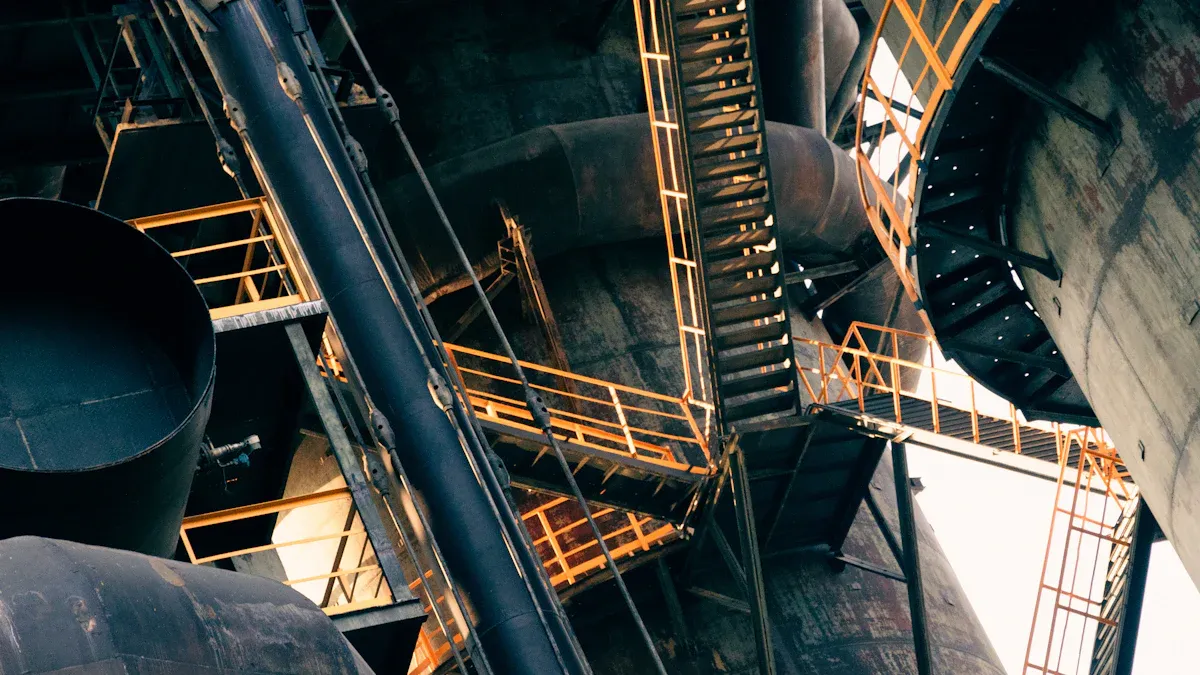
Heavy-duty eye bolt anchors are versatile components essential for numerous industrial operations. Their primary function is to provide secure, rated connection points for lifting and securing heavy loads. The specific design of an anchor dictates its suitability for different tasks. Understanding these core applications ensures maximum safety and operational performance. These are ideal project applications where a specific anchor excels. The performance of any anchor depends on its correct use in these applications.
Overhead Lifting and Rigging
Overhead lifting is one of the most critical applications for a heavy-duty anchor. In manufacturing plants and construction sites, these components serve as the primary connection points for cranes and hoists moving heavy machinery and materials. The performance of the anchor is paramount. A failure during a lift can have catastrophic consequences. For these applications, operators must use forged shoulder eye bolts that comply with ASME B30.26. This standard requires the manufacturer to mark the anchor with its size and rated load, ensuring clear identification of its capacity. The load capacity of an anchor is not constant; it changes based on the angle of the pull.
Примечание: A straight vertical lift allows the anchor to support its full rated load. However, angular lifting significantly reduces this capacity and demands careful calculation to maintain performance.
Securing and Lashing Heavy Loads
Transporting heavy equipment on flatbed trucks or securing machinery to a factory floor requires robust anchoring points. These applications often involve static loads, but the anchor must withstand vibrations and shifting forces. The installation process is critical for performance.
- First, an operator selects the correct anchor, verifying its load rating and material.
- Next, they inspect the mounting surface to ensure it can support the load.
- Finally, they install the anchor correctly, ensuring a shoulder bolt sits flush against the surface.
OSHA regulations mandate that personnel inspect rigging equipment before each use. Any anchor showing signs of wear, corrosion, or thread damage must be removed from service immediately. This ensures the anchor provides reliable performance for securing valuable loads. These are ideal project applications for a durable anchor.
Towing and Recovery Operations
Towing and recovery applications introduce dynamic and often unpredictable forces. A heavy-duty anchor used in these scenarios must offer superior strength and resilience. Swivel hoist rings are often preferred for these applications because they can pivot and align with the direction of the load, maintaining full performance. When using a standard shoulder eye anchor, the pull must remain in the plane of the eye to prevent bending the anchor. The anchor’s Working Load Limit (WLL) must never be exceeded, as the shock load from recovery operations can be immense. Choosing reliable anchoring solutions is essential for the safety and success of these demanding applications. The performance of the anchor under a sudden load is a key consideration.
Structural Anchoring Points
Structural anchoring points are permanent or semi-permanent fixtures integrated into buildings, bridges, and other infrastructure. These heavy-duty applications demand the highest level of safety and engineering oversight. Unlike temporary lifting applications, a structural anchor must provide long-term performance under sustained loads. These applications often involve fall arrest systems, tension members for canopies, or guy wires for communication towers. The performance of each anchor is critical to the integrity of the entire system. Engineers select a specific anchor based on detailed calculations for these demanding applications.
The selection process for these applications is rigorous. A structural engineer must evaluate the base material, environmental conditions, and load types. The performance of an anchor in these applications depends on this expert analysis.
- Tension Loads: The anchor resists a direct pull-out force.
- Shear Loads: The anchor resists a force applied parallel to the surface.
Many structural applications subject an anchor to a combination of these forces, which affects its overall performance. The engineer must specify an anchor with the correct material and capacity to handle these complex loads. The long-term performance of the anchor is the primary goal. These are ideal project applications where a robust anchor demonstrates its value.
Важно: A qualified structural engineer must design and approve all structural anchoring systems. The performance of the anchor is directly tied to the correctness of the initial design for these critical applications.
For outdoor structures, a stainless steel anchor is often the best choice to ensure reliable performance against corrosion. The choice of anchor directly impacts safety and longevity in these applications. Using heavy-duty eye bolt anchors provides reliable anchoring solutions for these permanent installations. The performance of the anchor in these applications is non-negotiable. The heavy-duty anchor must meet stringent building codes and standards. These are ideal project applications that require a top-tier anchor. The final anchor selection guarantees system performance for decades in these static applications.
Top 10 Heavy-Duty Eye Bolt Anchors for 2026
The market offers a wide array of anchoring solutions. However, only a select few provide the certified performance and reliability required for demanding industrial environments. The following products represent the top tier for 2026, each excelling in a specific application. Leading heavy-duty eye bolt anchor companies engineer these components for maximum safety and operational efficiency.
1. Crosby G-279 Forged Machinery Eye Bolt
The Crosby G-279 is the industry benchmark for safety in critical lifting. Its reputation is built on uncompromising material quality and adherence to the strictest manufacturing standards. This anchor provides confidence when handling high-value or hazardous loads.
Ключевые характеристики
Crosby subjects these bolts to rigorous testing to guarantee their integrity and strength. The specifications reflect a commitment to superior engineering.
- Material Composition: Forged Steel, Quenched and Tempered for maximum strength.
- Fatigue Testing: Fatigue rated for 20,000 cycles at 1.5 times the Working Load Limit (WLL).
- Compliance: Meets or exceeds all requirements of ASME B30.26.
- Markings: Each anchor is clearly marked with its size, WLL, and the Crosby name for traceability.
Best For: Critical Overhead Lifting
This anchor is the premier choice for any overhead lift where safety is the absolute priority. Its documented fatigue strength ensures long-term performance under repetitive load cycles, making it ideal for manufacturing, power generation, and major construction projects.
Преимущества
- Exceptional Strength: The quenched and tempered forged steel provides one of the highest strength-to-weight ratios available.
- Proven Fatigue Resistance: The 20,000-cycle fatigue rating offers a quantifiable measure of durability that few other bolts can match.
- Full Traceability: Clear markings ensure users can easily verify the anchor’s capacity and origin.
Недостатки
- Limited to In-Plane Loading: As a fixed shoulder eye bolt, it is not designed for out-of-plane angular lifts or dynamic swiveling.
- Higher Initial Cost: Its premium materials and testing result in a higher price point compared to generic bolts.
2. RUD STARPOINT VRS-F Swivel Hoist Ring
The RUD STARPOINT VRS-F represents the pinnacle of engineering for complex lifting scenarios. Unlike a traditional eye bolt, this hoist ring can pivot and swivel, ensuring the load is always aligned correctly. This design eliminates the dangerous practice of side-loading an anchor.
Ключевые характеристики
The RUD STARPOINT is packed with innovative features. For example, the M20 model has a Working Load Limit of 2.3 tons. Its design prioritizes safety and performance in any direction.
| Спецификация | Деталь |
|---|---|
| Коэффициент запаса прочности | 4:1 in any direction |
| Материал | Forged alloy (1.6541), quenched and tempered |
| Temperature Indicator | Fluorescent pink powder-coating changes to deep black above 200°C |
| Testing | 100% electromagnetic crack tested per EN 1677 |
| Rotation | Pivots 180° and rotates 360° |
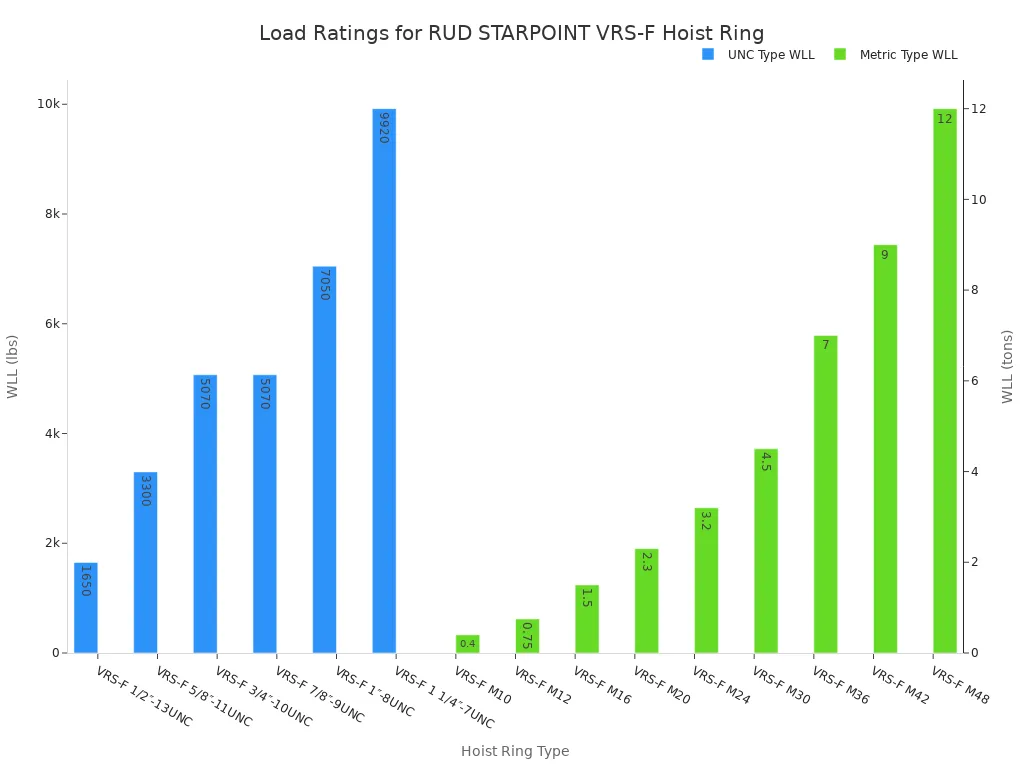
Best For: Dynamic and Angular Lifts
This anchor excels in applications where the load may shift, rotate, or be pulled from an angle. It is perfect for lifting complex machinery, turning dies, and rigging in tight spaces where a straight vertical lift is impossible. Its ability to maintain full strength at any angle provides unmatched performance.
Преимущества
- Maintains Full WLL: The swivel design eliminates the need to derate the anchor for angular loads, maximizing its capacity.
- Visual Safety Indicator: The temperature-sensitive paint provides a clear, non-destructive warning if the anchor has been exposed to excessive heat.
- Superior Alloy Strength: The high-strength alloy steel offers excellent durability and resistance to wear.
Недостатки
- Значительная стоимость: This is a premium product with a price that reflects its advanced engineering.
- Complex Design: The moving parts require diligent inspection to ensure they are clean and functioning correctly before each lift.
3. Hilti HUS3-A Eye Screw Anchor
Hilti brings its expertise in concrete fastening to the heavy-duty anchor world with the HUS3-A Eye Screw. This product simplifies the process of creating a reliable anchor point in concrete and masonry, reducing installation time without compromising safety.
Ключевые характеристики
The HUS3-A is a high-performance screw anchor designed for ease of use and dependable holding power. Its performance is directly tied to a correct installation procedure.
- Тип анкера: Mechanical screw anchor with an integrated eye.
- Материал: Carbon steel with a zinc-plated finish for corrosion protection.
- Одобрения: Holds multiple approvals, including ICC-ES for cracked and uncracked concrete.
- Монтаж: Requires a pre-drilled hole; the anchor cuts its own threads into the concrete.
Best For: Heavy-Duty Concrete Installation
This anchor is the top choice for creating semi-permanent or temporary anchor points in concrete slabs, walls, and ceilings. It is ideal for bracing, scaffolding tie-downs, and suspending services like pipes and cable trays. The simple installation makes it highly efficient for large projects.
Совет: A proper installation is key to this anchor’s performance. Always use a rotary hammer to drill a clean hole to the specified depth and clear all dust before driving the anchor.
Преимущества
- Быстрый и простой монтаж: The screw-in design is significantly faster than traditional wedge or adhesive bolts.
- Съемный и многоразовый: The anchor can be removed, making it ideal for temporary applications.
- Reliable Performance: It provides excellent load values in both cracked and uncracked concrete.
Недостатки
- Substrate Dependent: The anchor’s ultimate strength is entirely dependent on the quality and compressive strength of the base concrete.
- Not for Dynamic Lifting: This anchor is designed for static loads and is not suitable for the dynamic forces of overhead lifting and rigging.
4. Yoke 8-211 Metric Lifting Point
The Yoke 8-211 Lifting Point is a top-tier solution for modernizing and safely lifting international equipment. This anchor is engineered specifically to integrate with machinery and components that use metric threading, a common standard for European and Asian manufacturers. Its design combines high strength with versatile performance.
Ключевые характеристики
Yoke builds this anchor for demanding applications. The specifications reflect a focus on safety and global compatibility.
- Материал: Grade 80 Alloy Steel, quenched and tempered for superior strength.
- Конструкция: Pivots 180° and rotates 360°, allowing it to align perfectly with the load direction.
- Коэффициент Безопасности: Designed with a 4:1 safety factor.
- Load Capacity: Available in a wide range of metric sizes to handle various loads.
| Metric Thread Size | Load Capacity (WLL) |
|---|---|
| M30 | 5 tons (11,000 lbs) |
Best For: International and OEM Equipment
This lifting point is the ideal choice for facilities that service or operate original equipment manufacturer (OEM) machinery from outside North America. Its metric threads eliminate the need for re-tapping holes or using risky thread adapters. It excels in machine shops, manufacturing plants, and port facilities handling global cargo.
Преимущества
- Metric Compatibility: Directly fits a wide range of international equipment without modification.
- Full Strength at Angles: The swivel design maintains its full working load limit even during angular lifts, enhancing safety and performance.
- High-Contrast Finish: The yellow powder coating makes the anchor highly visible for easy inspection.
Недостатки
- Higher Cost: The advanced swivel design and alloy steel construction make these bolts more expensive than standard eye bolts.
- Requires Torque Wrench: A proper installation requires a calibrated torque wrench to achieve the correct preload.
5. Ken Forging K2001-SS Stainless Steel Eye Bolt
Ken Forging produces the K2001-SS for applications where corrosion is the primary enemy. This heavy-duty anchor provides exceptional longevity in harsh environments where standard carbon steel bolts would quickly degrade, compromising safety and operational continuity. Reputable heavy-duty eye bolt anchor companies like Ken Forging provide certified material traceability.
Ключевые характеристики
The material science behind this anchor is its greatest asset. It is built to withstand chemical and environmental exposure.
- Материал: Forged from Type 316 Stainless Steel for maximum corrosion resistance.
- Конструкция: Shoulder pattern design allows for rated angular loading.
- Manufacturing: Made in the USA and fully traceable with manufacturer markings.
- Finish: Self-colored with a passivated finish to enhance its anti-corrosion properties.
Best For: Marine and Corrosive Environments
This is the premier anchor for any application exposed to saltwater, chemicals, or frequent wash-downs. It is essential for:
- Marine and offshore rigging
- Очистные сооружения сточных вод
- Food processing and pharmaceutical facilities
- Chemical manufacturing
Примечание: The inherent strength of stainless steel is lower than quenched and tempered alloy steel. Always verify the WLL for the specific size you are using.
Преимущества
- Превосходная коррозионная стойкость: Type 316 stainless steel offers the best protection against chlorides and acids.
- Long Service Life: The material’s durability reduces the frequency of replacement, lowering long-term costs.
- Forged Strength: The forging process provides greater strength and reliability compared to cast or bent wire stainless steel bolts.
Недостатки
- Lower WLL than Alloy Steel: For a given size, this anchor will have a lower load rating than its alloy steel counterpart.
- Higher Material Cost: Stainless steel is a premium material, making these bolts a significant initial investment.
6. Simpson Strong-Tie Titen HD® Heavy-Duty Screw Anchor with Eye
The Simpson Strong-Tie Titen HD® with Eye brings efficiency and reliability to concrete anchoring. This product is engineered for fast, simple installation, making it a favorite among contractors and maintenance teams who need to establish secure anchor points in concrete or masonry without the complexity of epoxy or expansion bolts.
Ключевые характеристики
This anchor combines a high-strength screw design with the utility of an integrated eye. The Titen HD® Heavy-Duty Screw Anchor is a high-strength screw anchor designed for use in both cracked and uncracked concrete, as well as uncracked masonry. Its performance depends on a correct installation.
- Тип анкера: Heavy-duty mechanical screw anchor.
- Материал: Carbon steel with a zinc-plated finish.
- Одобрения: Carries an ICC-ES report for cracked and uncracked concrete.
- Монтаж: Self-threading design for use in a pre-drilled hole.
The anchor’s holding power is impressive, providing excellent performance when installed correctly.
| Размер анкера | Concrete Type | Прочность на вырыв (фунт-сила) |
|---|---|---|
| 1/2″ x 6″ Simpson Strong-Tie Titen HD® Screw Anchor Zinc Plated | 2000 PSI Concrete | 3580 |
Best For: Best Value for Concrete and Masonry
This anchor provides the best balance of cost, performance, and ease of use for static load applications in concrete. It is perfect for bracing, temporary structures, suspending utilities, and creating tie-down points on shop floors.
Преимущества
- Быстрый монтаж: The screw-in process is significantly faster than installing adhesive or wedge anchors.
- Съемный: The anchor can be removed, offering flexibility for temporary setups.
- No Special Tools: A standard socket or impact wrench is all that is needed for installation.
Недостатки
- Static Loads Only: This anchor is not designed for dynamic overhead lifting or shock loads.
- Substrate Dependent: The final strength is entirely reliant on the quality of the base concrete or masonry.
- Limited Corrosion Resistance: The zinc plating is only suitable for dry, interior environments.
7. Chicago Hardware 277-S Shoulder Eye Bolt
Стандарт DIN 933: объяснение Chicago Hardware 277-S is a foundational component for general rigging tasks. This heavy-duty anchor represents a classic, reliable design that has been a staple in industrial settings for decades. Its straightforward construction and proven strength make it a go-to choice for applications that do not require dynamic movement.
Ключевые характеристики
Chicago Hardware manufactures these bolts in the USA, adhering to strict quality control standards. The focus is on creating a durable and dependable anchor.
- Материал: The anchor is made from drop forged steel.
- Heat Treatment: Each anchor undergoes heat treatment to optimize its strength and ductility.
- Finish Options: It is available in multiple finishes, including self-colored, zinc plated, or hot-dip galvanized for enhanced corrosion resistance.
- Конструкция: It features a shoulder pattern, making it suitable for rated angular loads.
Best For: General Rigging and Static Loads
This anchor is the workhorse for static applications. It excels at securing equipment, providing tie-down points, and handling straight-line lifts where the load direction is predictable. Its simple design and robust strength offer excellent performance for everyday industrial needs. A proper installation ensures this anchor meets its specified capacity.
Преимущества
- Экономическая эффективность: This anchor provides excellent strength and reliability at an accessible price point.
- Проверенная надежность: The drop-forged design has a long track record of safe performance in the field.
- Versatile Finishes: The availability of different coatings allows users to match the anchor to the environmental conditions.
Недостатки
- Limited to In-Plane Loading: The fixed eye cannot swivel, so operators must ensure all angular loads remain within the plane of the eye.
- Requires Derating: Its capacity decreases significantly with angular loads, requiring careful planning.
8. Actek 23010 SS Swivel Hoist Ring
The Actek 23010 SS Swivel Hoist Ring is a specialized anchor engineered for sterile and corrosive environments. Its stainless steel construction and advanced swivel design provide a safe and hygienic solution for lifting in sensitive industries. This anchor prevents contamination while offering superior lifting flexibility.
Ключевые характеристики
Actek designed this anchor with both strength and cleanliness in mind. The specifications reflect its suitability for specialized applications.
- Материал: The anchor is constructed from Type 316 stainless steel for maximum corrosion resistance.
- Коэффициент Безопасности: It is designed with a 5:1 safety factor, exceeding many industry standards.
- Rotation: The anchor pivots 180 degrees and swivels a full 360 degrees.
- Finish: It features a passivated finish, which enhances its hygienic properties and resistance to chemicals.
Best For: Food Processing and Cleanroom Lifting
This is the premier anchor for any application with strict sanitation requirements. Its stainless steel material resists rust and is easy to clean, making it ideal for food and beverage plants, pharmaceutical manufacturing, and cleanroom environments. The swivel action protects sensitive equipment by ensuring a smooth, aligned lift. The performance of this anchor is unmatched in these settings.
Важно: The smooth, crevice-free design of this anchor minimizes areas where bacteria can accumulate, a critical feature for sanitary applications.
Преимущества
- Исключительная коррозионная стойкость: Type 316 stainless steel provides top-tier protection against rust and chemical agents.
- Full Strength at Any Angle: The swivel design maintains its full working load limit regardless of the pull direction, enhancing safety and performance.
- Hygienic Design: The smooth surface is easy to sterilize, making it perfect for clean environments.
Недостатки
- High Cost: The combination of stainless steel and a swivel mechanism makes these bolts a significant investment.
- Lower Strength than Alloy: Stainless steel has a lower tensile strength than comparable alloy steel bolts, resulting in a lower capacity for the same size.
9. CM 6002A Forged Shoulder Eye Bolt
The CM (Columbus McKinnon) 6002A is a robust anchor designed for the repetitive and demanding nature of modern manufacturing. This anchor provides the durability and consistent performance needed to maintain productivity on assembly lines and in production cells. Its strength comes from high-quality materials and a proven manufacturing process.
Ключевые характеристики
CM builds these bolts for longevity and safety in high-cycle environments. The specifications ensure reliable performance over thousands of lifts.
- Материал: Forged from C-1035 carbon steel, then quenched and tempered for optimal strength.
- Compliance: Meets the technical requirements of ASTM A489.
- Testing: Each anchor is 100% magnetic particle inspected to ensure it is free of defects.
- Load Rating: The anchor is rated for a wide range of loads, with clear markings for easy identification.
Best For: Manufacturing and Assembly Lines
This anchor is the ideal choice for permanent and semi-permanent lifting points in a manufacturing facility. It is perfect for lifting jigs, fixtures, and components as they move through the production process. The simple, rugged design withstands the rigors of daily use. A correct installation of this anchor is vital for long-term safety and performance.
Преимущества
- Высокая долговечность: The quenched and tempered steel offers excellent resistance to wear and fatigue.
- Quality Assurance: 100% magnetic particle inspection provides a high degree of confidence in the anchor’s structural integrity.
- Clear Identification: The anchor is clearly stamped with its size and manufacturer for traceability.
Недостатки
- Basic Design: It is a standard shoulder eye bolt, so it is not suitable for out-of-plane or dynamic swiveling lifts.
- Requires Careful Planning for Angles: Like all shoulder bolts, its capacity must be derated for angular lifting.
10. Fastenal-Supplied Grade 5 Shoulder Eye Bolt
The Fastenal-Supplied Grade 5 Shoulder Eye Bolt is a ubiquitous and essential component in countless industrial settings. This anchor provides a reliable and cost-effective solution for general-purpose applications. Its wide availability through Fastenal’s extensive distribution network makes this anchor a convenient choice for MRO teams and construction crews needing a dependable part without delay. The anchor delivers consistent performance for everyday tasks.
Ключевые характеристики
This heavy-duty anchor is manufactured to meet established industry standards for strength and reliability. The specifications ensure a baseline of quality for non-critical applications. A proper installation is key to achieving the anchor’s rated strength.
- Материал: Medium Carbon Steel, Quenched and Tempered.
- Класс прочности: Meets Grade 5 strength requirements, offering good tensile strength.
- Конструкция: Shoulder pattern for rated angular loading.
- Availability: Offered in a wide range of UNC thread sizes and lengths.
The strength of this anchor makes it a solid choice for many jobs. The performance of the anchor depends on a correct installation.
Best For: General Industrial MRO and Construction
This anchor is the quintessential workhorse for Maintenance, Repair, and Operations (MRO) and general construction. It excels in situations requiring a strong, static connection point.
Common Uses:
- Securing machinery to shop floors.
- Providing tie-down points on work vehicles.
- Lifting and positioning components during assembly.
- Temporary bracing on construction sites.
Its balance of strength, cost, and accessibility makes this anchor a go-to for facility maintenance teams. The anchor’s performance is reliable for these intended uses.
Преимущества
- Excellent Availability: Users can easily source this anchor from Fastenal locations nationwide, minimizing project downtime.
- Cost-Effective Strength: The Grade 5 specification provides reliable strength at a budget-friendly price point, offering great value.
- Универсальность: The simple, robust design of the anchor makes it suitable for a wide variety of static load applications.
Недостатки
- Limited Traceability: Unlike premium brands, this anchor may lack individual traceability or extensive fatigue testing documentation.
- Стандартная коррозионная стойкость: The standard zinc-plated finish offers only basic protection, making the anchor unsuitable for outdoor or corrosive environments.
- Not for Critical Lifts: The anchor’s performance is not certified for critical overhead lifts where failure could result in significant danger or loss. A poor installation will compromise its strength.
Comparative Analysis Table
Selecting the right anchor requires a clear comparison of its features against the application’s demands. This section provides a direct comparison of the top 10 anchors for 2026, helping professionals make an informed decision.
At-a-Glance: Top 10 Anchor Comparison
To simplify the selection process, this table summarizes the key attributes of each heavy-duty anchor. It covers the product name, maximum load capacity, material composition, relative price, and its most suitable application.
Наименование продукта
Each anchor offers unique benefits for specific industrial tasks.
Max WLL (tons)
The load capacity of an anchor is not a single value; it directly corresponds to the anchor’s diameter and design. A larger anchor provides a higher Working Load Limit (WLL). The following chart illustrates how the WLL increases with the diameter of a standard forged anchor.
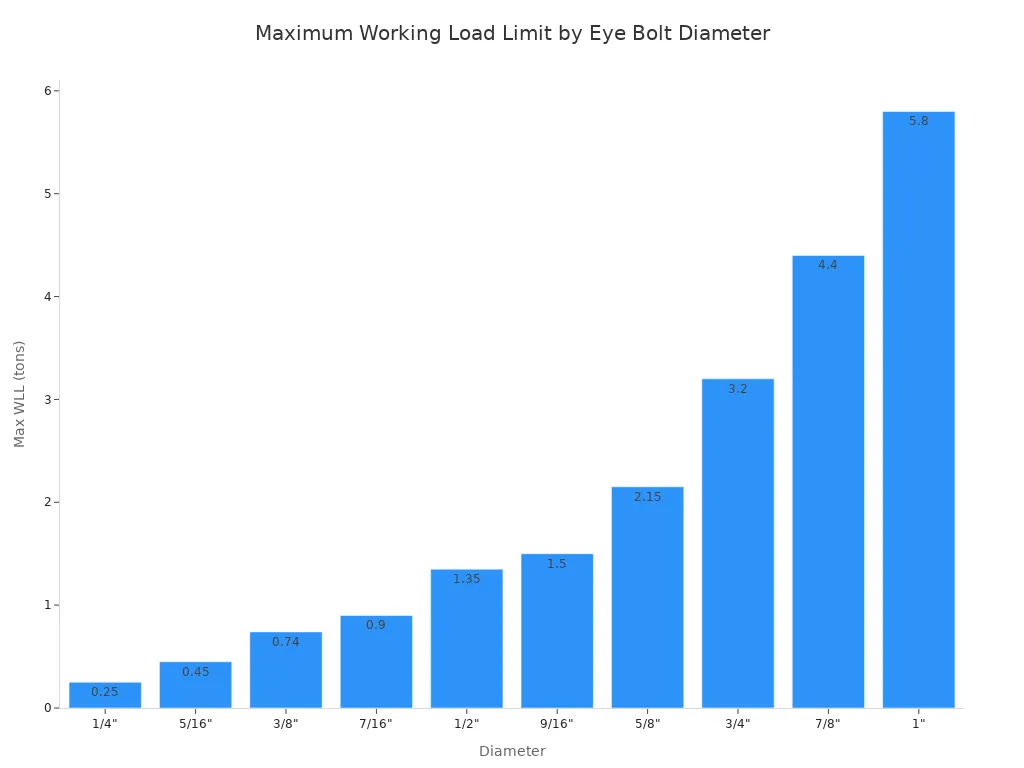
Example WLL by Diameter: | Diameter | Max WLL (tons) | |—|—| | 1/2″ | 1.35 | | 3/4″ | 3.2 | | 1″ | 5.8 |
Материал
The anchor material dictates its strength and resistance to environmental factors.
Диапазон цен
Price often reflects the material, engineering complexity, and certifications of an anchor. The scale is relative:
- $: Budget-Friendly
- $$: Standard Industrial
- $$$: Premium
- $$$$: Specialized/High-End
Primary Use Case
Every anchor is engineered for a primary purpose, from general rigging to specialized dynamic lifts.
| Наименование продукта | Max WLL (tons) | Материал | Диапазон цен | Primary Use Case |
|---|---|---|---|---|
| Crosby G-279 | Up to 5.8+ | Forged Alloy Steel | $$$ | Критический подъем над головой |
| RUD STARPOINT VRS-F | Up to 2.3 (M20) | Grade 120 Alloy Steel | $$$$ | Dynamic and Angular Lifts |
| Hilti HUS3-A Eye | Substrate Dependent | Carbon Steel, Zinc | $$ | Heavy-Duty Concrete Installation |
| Yoke 8-211 Metric | Up to 5.0 (M30) | Grade 80 Alloy Steel | $$$ | International & OEM Equipment |
| Ken Forging K2001-SS | Up to 3.2 | Нержавеющая сталь 316 | $$$ | Marine & Corrosive Environments |
| Simpson Titen HD® Eye | Substrate Dependent | Carbon Steel, Zinc | $ | Best Value for Concrete/Masonry |
| Chicago Hardware 277-S | Up to 5.8+ | Drop Forged Steel | $$ | General Rigging & Static Loads |
| Actek 23010 SS Swivel | Up to 2.0 | Нержавеющая сталь 316 | $$$$ | Food Processing & Cleanrooms |
| CM 6002A Forged | Up to 5.8+ | C-1035 Carbon Steel | $$ | Manufacturing & Assembly Lines |
| Fastenal Grade 5 | Up to 5.8+ | Grade 5 Carbon Steel | $ | General MRO & Construction |
Safe Installation of Heavy-Duty Eye Bolt Anchors
An exceptional heavy-duty anchor provides no safety if the installation is flawed. A correct anchor installation is the foundation of a secure anchoring system, ensuring the component can handle its rated load. Following a strict, professional procedure for installation, inspection, and maintenance is non-negotiable for operational safety and quality. This process protects personnel and equipment from catastrophic failure.
Проверки перед установкой
Before any installation begins, a series of checks guarantees that the anchor and the substrate are ready. This initial step prevents common installation errors that compromise safety. A proper anchor installation starts with thorough preparation.
Verifying Substrate Integrity
The mounting surface, or substrate, is half of the anchoring equation. Its condition directly impacts the anchor’s performance. Technicians must perform a detailed inspection before drilling.
- Inspect the mounting material for any cracks, decay, or other weaknesses.
- Ensure the surface is flat and clean for a secure fit, especially for shoulder eye bolts.
A compromised substrate cannot support the intended load, regardless of the anchor’s quality. This check is a critical part of the code for seismic safety.
Matching Bolt to Hole Specifications
Selecting the correct components is essential for a successful anchor installation. Mismatched parts will lead to a weak connection and potential failure. A precise match ensures the anchor performs to its certified capacity and meets seismic code requirements.
- Verify the anchor type, material, size, and length match the project specifications.
- Confirm the drilling method, drill bit type, and size are correct for the chosen anchor.
- Check that the hole cleaning procedures follow the manufacturer’s anchor installation instructions.
- For adhesive anchors, verify the adhesive’s expiration date and storage conditions.
This meticulous verification process ensures every part of the installation contributes to overall safety and quality. The seismic performance of the anchor depends on this attention to detail.
Correct Anchor Installation Procedures
The installation process itself requires precision and adherence to established protocols. Each step, from applying torque to seating the anchor, is critical for achieving the full load capacity and ensuring long-term safety. Following the code is paramount for a successful anchor installation.
Proper Torque Wrench Application
Applying the correct torque is vital. Over-tightening can damage the anchor’s threads, while under-tightening creates a risk of the anchor loosening under load. Technicians should only lubricate threads if the manufacturer recommends it, as this affects the torque reading. Using a calibrated torque wrench ensures the anchor achieves the proper clamping force without being compromised. This step is crucial for seismic safety and code compliance.
Seating Shoulder Bolts Correctly
For a shoulder eye bolt to handle an angular load, its shoulder must be seated correctly.
- Ensure the hole diameter and thread pitch match the eye bolt for full engagement.
- Thread the anchor fully until the shoulder rests firmly against the mounting surface.
- Confirm there are no gaps between the shoulder and the surface.
This flush contact allows the shoulder to brace the anchor against side forces, preventing bending and distributing the load properly. A proper anchor installation is key to seismic performance.
Angular Loading Deration Rules
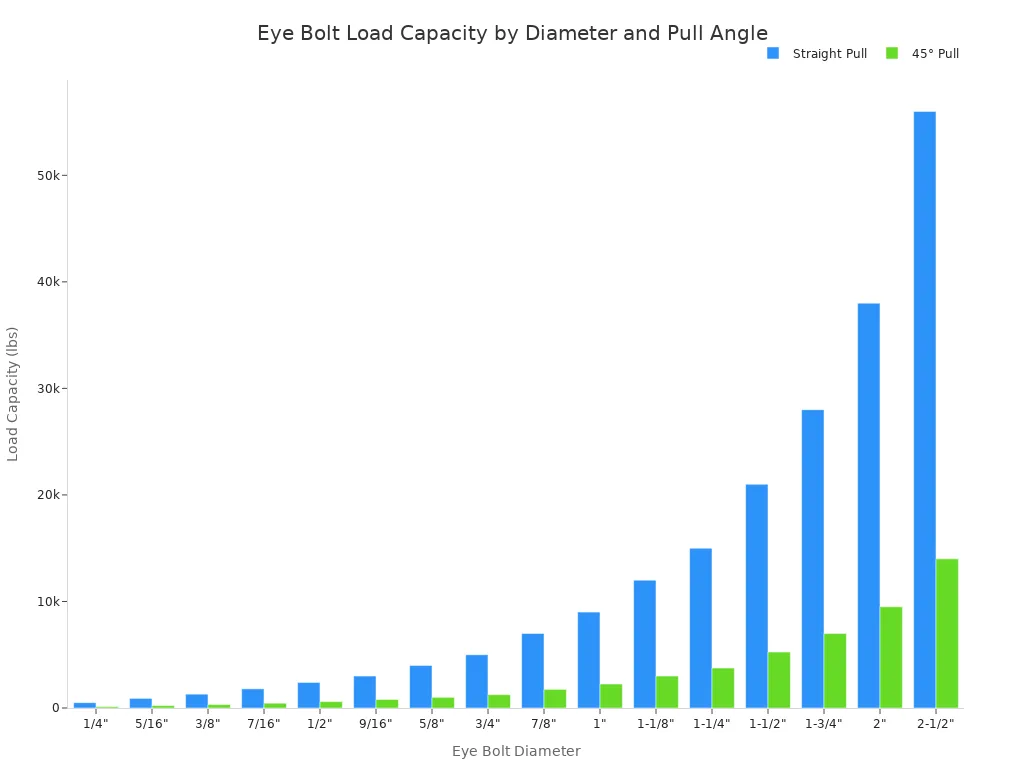
Applying a load at an angle drastically reduces an anchor’s capacity. A properly seated shoulder anchor must be used for any angular lift, and the load must always be applied in the plane of the eye. The safety factor is significantly reduced otherwise.
Предупреждение: Angular lifts must never exceed a 45-degree pull. Exceeding this angle violates safety code and risks immediate failure.
The reduction in load capacity is severe, as shown below. This data highlights why angular load calculations are a critical part of installation safety. The seismic performance of an anchor under angular load is a major concern.
| Диаметр | Straight Pull (lbs) | 45° Pull (Shoulder Only) (lbs) |
|---|---|---|
| 1/2″ | 2,400 | 600 |
| 3/4″ | 5,000 | 1,250 |
| 1″ | 9,000 | 2,250 |
| 1-1/2″ | 21,000 | 5,250 |
Inspection and Maintenance Protocols
An anchor installation is not a one-time event. Regular inspection and maintenance are required to ensure ongoing safety and quality. This proactive approach helps identify potential issues before they become critical hazards.
Establishing a Regular Inspection Schedule
Facilities should implement a documented inspection schedule based on the anchor’s application and environment. High-cycle or corrosive environments require more frequent checks. This schedule should be part of the site’s overall safety and quality program and adhere to relevant code.
Identifying Signs of Wear, Corrosion, and Fatigue
Inspectors must look for specific signs of degradation. These include visible cracks, bending, thread damage, or significant corrosion. Any anchor showing these signs has a compromised load capacity and must be evaluated for retirement. This is a key seismic safety check.
Criteria for Anchor Retirement
An anchor must be permanently removed from service if it shows any signs of damage or has been subjected to a load beyond its WLL. There is no safe way to repair a compromised heavy-duty anchor. Adhering to a strict retirement code is the only way to guarantee safety. The seismic integrity of the system depends on removing faulty components.
The Crosby G-279 anchor provides maximum safety for critical applications. For versatile, angular load applications, the RUD anchor offers superior performance. The Ken Forging anchor is the quality choice for corrosive applications.
The most critical factor is matching an anchor’s certified load to specific applications. This anchor selection process guarantees safety and performance. An engineer’s approval for the anchor in demanding applications demonstrates a commitment to quality and safety. This final anchor review ensures the anchor provides the right performance for all applications. This anchor choice ensures safety.
Частые вопросы
What is the difference between a shoulder and plain pattern anchor?
A shoulder anchor has a collar that braces it against the mounting surface, allowing it to handle rated angular loads. A plain pattern anchor lacks this shoulder. It is suitable only for straight, vertical lifts.
Can I reuse a heavy-duty anchor?
Technicians can sometimes reuse a screw anchor, like the Hilti HUS3-A, in a new hole. However, they must inspect the anchor for any thread wear or damage before each installation. Forged lifting hardware should never be reused after a shock load.
Why is the WLL of an anchor so important?
The Working Load Limit (WLL) is the maximum safe load for an anchor. Exceeding this limit erodes the built-in safety factor. This action risks catastrophic failure of the anchor and endangers personnel and equipment.
How does an angular lift affect an anchor?
An angular lift significantly reduces the load capacity of a fixed anchor. Operators must derate the anchor’s WLL according to the manufacturer’s specifications.
Предупреждение: Never apply a load to a standard anchor at an angle greater than 45 degrees.
What is the best anchor for a corrosive environment?
A Type 316 stainless steel anchor provides the best protection against corrosion. The Ken Forging K2001-SS is an excellent anchor for marine, chemical, or food processing applications where rust is a primary concern.
When should I use a swivel hoist ring instead of a standard anchor?
Use a swivel hoist ring for dynamic or angular lifts. This advanced anchor pivots 180° and rotates 360° to align with the load. This design maintains its full WLL, which a standard anchor cannot do.
How do I know if an anchor is damaged?
Inspectors should look for any signs of damage. Common issues include:
- Visible cracks or nicks
- Bending or elongation
- Significant corrosion
- Поврежденная или сорванная резьба
A damaged anchor must be retired from service immediately.