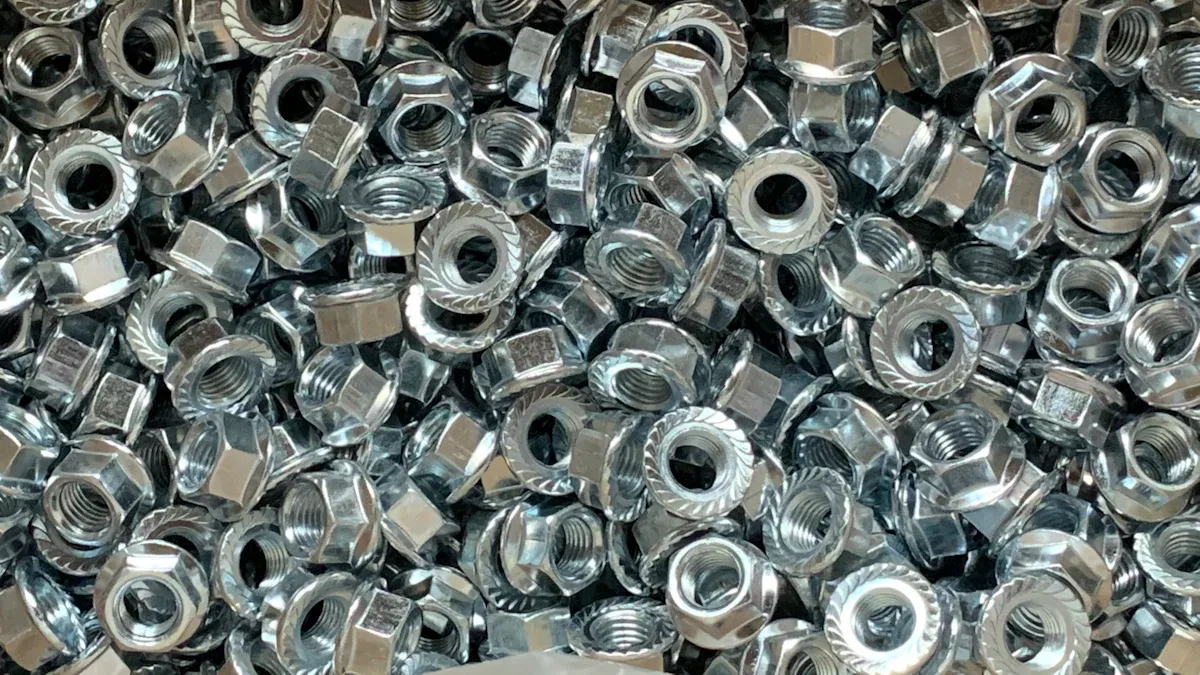
Engineers and builders rely on the top 5 uses for flange nuts in 2026: automotive and electric vehicles, renewable energy, smart home devices, industrial automation, and modular construction. These applications drive demand for flange nuts due to their enhanced load distribution, vibration resistance, and rapid installation. The global фланцевая гайка market, valued at US$ 2.1 Billion in 2026, highlights their essential role in modern projects. Many industries now prefer нестандартные крепежные элементы from a trusted производитель крепежных изделий на заказ to meet evolving needs for гаек и болтов.
Automotive and Electric Vehicle Uses for Flange Nuts
Securing Battery Packs with Flange Nuts
Enhanced Vibration Resistance
Automotive engineers select flange nuts for battery pack assembly in electric vehicles because these fasteners deliver exceptional vibration resistance. The nuts create a secure seal between the upper cover and lower bottom of the battery box. By using screws and pre-tightened gaskets, they prevent gaps and leakage, which ensures optimal safety and performance. Serrated flange nuts further enhance reliability by gripping surfaces tightly, reducing the risk of loosening during operation. This feature proves critical in electric vehicles, where battery packs experience frequent vibration and movement.
Tip: Serrated flange nuts provide extra holding power in high-vibration environments, making them ideal for electric vehicle battery packs.
Quick Installation Tips
Technicians streamline battery pack installation by using flange nuts with integrated washers. This design eliminates the need for separate washers, saving time and reducing assembly errors. For best results, they pre-tighten gaskets before final torque application. Serrated flange nuts also allow for faster installation because their serrations grip the surface, minimizing slippage. These practices help maintain a tight seal and improve overall efficiency in electric vehicle manufacturing.
Lightweight Frame Construction Using Flange Nuts
Improved Load Distribution
Automotive manufacturers rely on flange nuts for lightweight frame construction due to their ability to distribute load evenly. The built-in washer spreads force across a larger area, which prevents damage to mating surfaces and reduces nut loosening by up to 50%. This advantage supports the structural integrity of chassis and suspension systems. The table below summarizes the main advantages of flange nuts in automotive applications:
| Преимущество | Область применения |
|---|---|
| Load distribution | Chassis and suspension systems |
| Prevention of damage to mating surfaces | High-stress automotive applications |
| Enhanced reliability and robustness | Modern automotive engineering |
Corrosion Protection in EV Environments
Manufacturers often choose aluminium flange nuts for electric vehicle frames. Aluminium offers lightweight properties and resistance to corrosion, which is essential for long-term durability. The malleability of aluminium allows easy shaping into various forms, supporting innovative designs. Serrated flange nuts also help prevent damage to materials by spreading force, which protects sensitive surfaces from wear. These features make flange nuts a preferred choice for applications where weight reduction and corrosion protection are priorities.
- Flange nuts have a built-in washer that distributes load over a larger surface area.
- This design minimizes nut loosening by up to 50%, which is crucial in high-vibration environments.
- The flange helps prevent damage to the material by spreading the force across a larger area.
- Aluminium is lightweight and resistant to corrosion.
- It is malleable, allowing for easy shaping into various forms.
- Ideal for applications where weight reduction is essential, such as in automotive manufacturing.
The projected growth rate for flange nut usage in automotive and electric vehicle manufacturing stands at a CAGR of 4.1% from 2026 to 2033. The demand for fasteners, including flange nuts, continues to rise as electric vehicles and advanced manufacturing technologies become more prevalent.
Renewable Energy Applications for Flange Nuts
Wind Turbine Component Fastening with Flange Nuts
Withstanding High-Stress Conditions
Wind turbines operate under extreme conditions. Their components face constant stress from wind, rotation, and environmental factors. Engineers select flange nuts for these assemblies because they meet strict safety and reliability standards, such as ISO 898.1. These fasteners withstand maximum equivalent stresses that can reach 778.65 MPa during operation. Stress concentrations often occur at bolt connection points, so flange nuts help distribute these forces more evenly. This design reduces the risk of failure and extends the lifespan of critical connections.
- Стандарт DIN 933: объяснение flange hex nut market continues to grow in renewable energy sectors.
- Technological innovations and the demand for high-quality fastening solutions drive this trend.
- Wind turbines require reliable fasteners to maintain structural integrity under alternating loads.
Maintenance Efficiency
Wind turbine maintenance teams value flange nuts for their ability to resist loosening. High-strength bolts in turbines often loosen due to alternating loads, which can reduce the fatigue life of connections. Flange nuts, especially when paired with real-time monitoring systems, help detect and prevent loosening. These systems monitor flange gaps and alert technicians to potential issues before they become critical. This proactive approach reduces downtime and improves overall maintenance efficiency.
Tip: Regularly inspect flange nuts and use monitoring systems to ensure long-term reliability in wind turbine applications.
Solar Panel Mounting Systems Using Flange Nuts
Simplified Assembly
Solar panel installations require fast assembly and secure mounting. Flange nuts simplify this process by combining a nut and washer into one piece. Installers save time and reduce the risk of assembly errors. The self-locking design of these nuts enhances wind and load resistance, making them ideal for photovoltaic (PV) module mounting. This feature provides stability and ensures that panels remain secure even in harsh weather.
| Характеристика | Преимущество |
|---|---|
| Self-locking design | Enhances wind and load resistance |
| Ideal for PV module mounting | Provides stability in installations |
Weatherproofing Advantages
Solar farms and rooftop installations face constant exposure to rain, sun, and temperature changes. Flange nuts offer excellent weatherproofing advantages. Their design helps prevent water ingress and corrosion at connection points. This protection extends the service life of solar panel systems and reduces maintenance costs. Installers and engineers choose flange nuts for their proven durability in outdoor environments.
The uses for flange nuts in renewable energy continue to expand as the industry seeks reliable, efficient, and long-lasting solutions. These applications demonstrate the importance of selecting the right fasteners for demanding environments.
Smart Home and IoT Device Mounting with Flange Nuts
Appliance Integration Using Flange Nuts
Secure, Low-Profile Fastening
Smart home appliances continue to shrink in size while increasing in complexity. Designers select flange nuts for appliance integration because these fasteners provide a secure, low-profile fastening solution. The integrated flange distributes pressure evenly, which prevents damage to delicate plastic or composite housings. This feature proves essential for mounting control panels, smart thermostats, and compact kitchen devices. The low-profile design allows appliances to maintain a sleek appearance without protruding hardware.
Note: Flange nuts help maintain the aesthetic appeal of modern appliances by minimizing visible hardware.
Reducing Installation Time
Manufacturers and installers value flange nuts for their ability to reduce installation time. The built-in washer eliminates the need for separate components, which streamlines assembly. Technicians can quickly align and secure parts, resulting in fewer errors and faster production cycles. This efficiency becomes especially important in high-volume manufacturing environments where every second counts. The simplified process also benefits field technicians who install or service smart home devices in residential settings.
- Flange nuts combine two functions in one part, reducing the number of steps in assembly.
- Installers experience fewer dropped or lost washers, which improves workflow.
Sensor and Hub Mounting with Flange Nuts
Reliable Connections for Sensitive Electronics
IoT sensors and hubs require stable, reliable connections to function correctly. Engineers choose flange nuts for these applications because they minimize the risk of loosening due to vibration or movement. The flange increases surface contact, which helps protect sensitive circuit boards and connectors from stress. This reliability ensures that smart home systems remain operational, even in environments with frequent movement or temperature changes.
| Область применения | Benefit Provided by Flange Nuts |
|---|---|
| Sensor mounting | Prevents loosening and signal loss |
| Hub installation | Protects electronics from vibration |
Space-Saving Benefits
Modern smart home devices often have limited internal space. Flange nuts offer a compact fastening solution that fits within tight enclosures. Their integrated design reduces the need for extra hardware, which frees up valuable space for additional sensors or features. Product designers can create slimmer, more efficient devices without sacrificing structural integrity.
Tip: Use flange nuts in IoT device enclosures to maximize available space and simplify assembly.
The uses for flange nuts in smart home and IoT device mounting continue to expand as technology advances. These fasteners support reliable, efficient, and space-saving solutions for a wide range of applications.
Industrial Automation and Robotics Uses for Flange Nuts
Machine Frame Assembly with Flange Nuts
High-Torque Applications
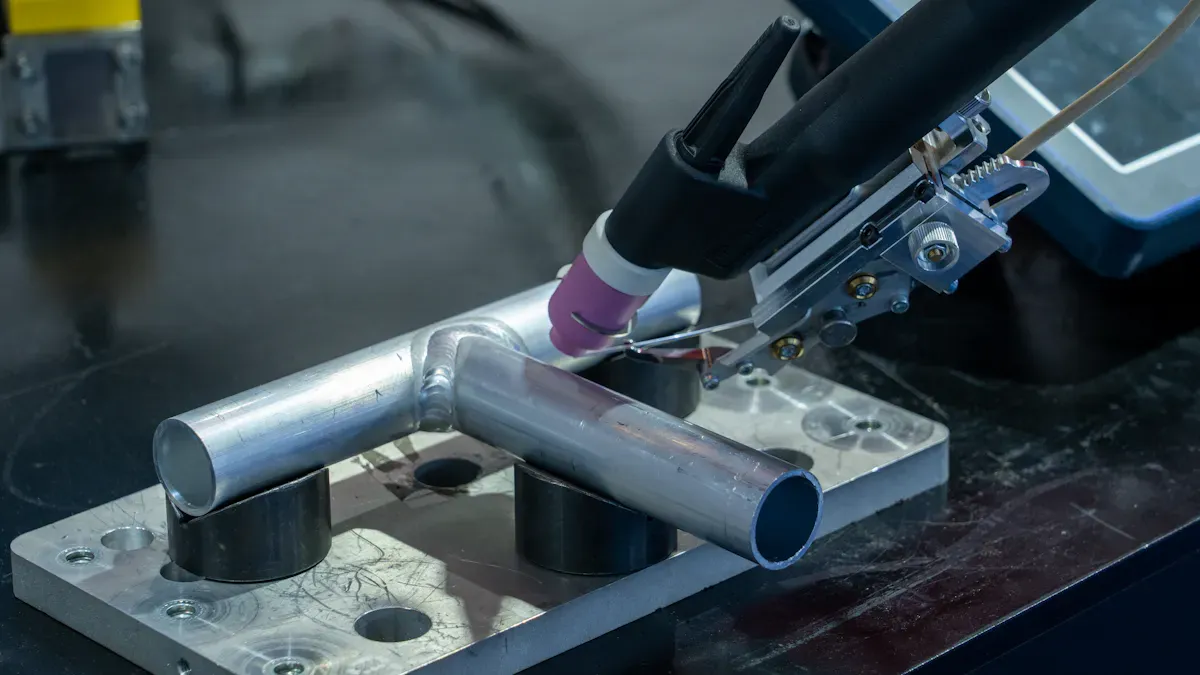
Manufacturers in the industrial sector rely on flange nuts for machine frame assembly. These components must withstand high-torque forces during operation. The wide flange design increases the bearing surface area, which enhances load distribution and structural stability. This feature reduces the need for additional washers and simplifies the assembly process. Precision manufacturing ensures that these nuts meet international standards, providing durability under extreme mechanical stresses.
The following table shows typical torque specifications for machine frame assemblies using flange nuts:
| Условный диаметр трубы (дюймы) | Размер болтов (дюймы) | Минимальный крутящий момент (фунт-сила-фут) | Рекомендуемый момент затяжки (фут-фунты) |
|---|---|---|---|
| 26 | 1.25 | 238 | 318 |
| 32 | 1.50 | 309 | 412 |
| 40 | 1.50 | 328 | 438 |
| 50 | 1.75 | 470 | 626 |
| 60 | 1.75 | 530 | 707 |
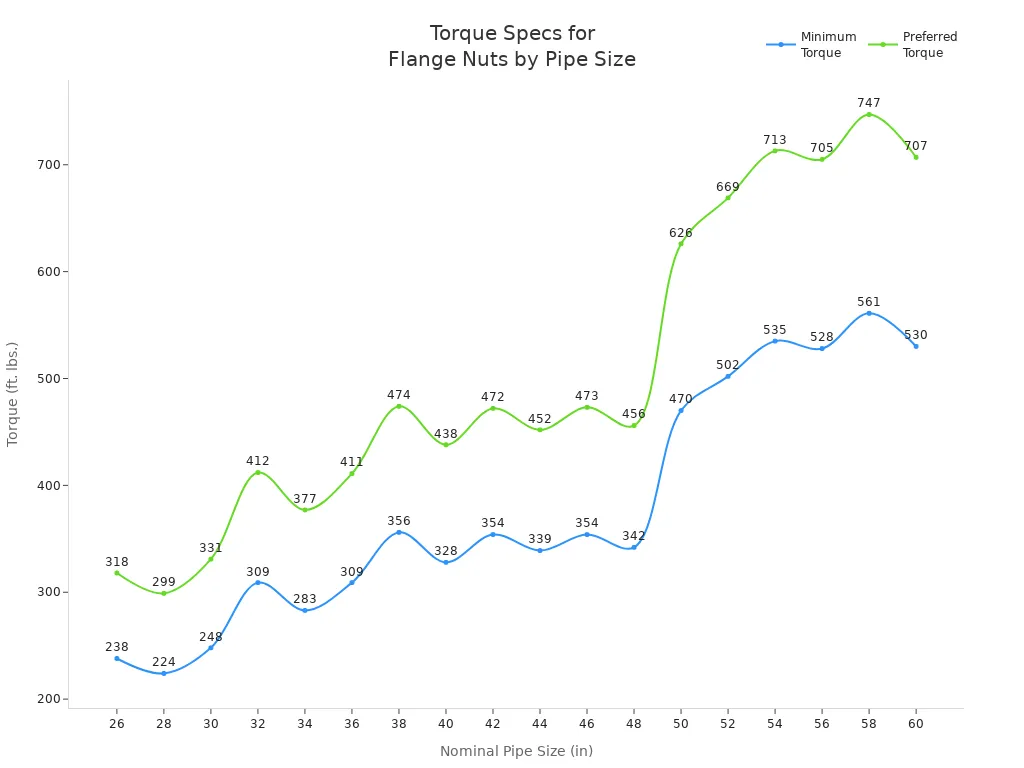
Surface treatments such as Yellow Zinc Plating and Hot-Dip Galvanization provide long-term protection against corrosion. These innovations support the growing demand for precision-grade fasteners in commercial and industrial applications.
Minimizing Component Loosening
Industrial automation systems operate continuously, which can cause vibration and stress at connection points. Flange nuts minimize component loosening by distributing force evenly across the assembly. This design helps maintain alignment and reduces the risk of downtime due to mechanical failure. Engineers select flange nuts for their reliability in CNC machining centers, packaging machinery, and robotics. The market for these fasteners is projected to grow at a CAGR of over 6% from 2026 to 2033, driven by advancements in technology and increased automation.
Conveyor and Track Systems Using Flange Nuts
Fast, Repeatable Assembly
Conveyor and track systems require fast, repeatable assembly to meet production demands. Flange nuts streamline installation by combining the functions of a nut and washer. This integration reduces the number of parts and simplifies the workflow for technicians. The use of corrosion-resistant alloys and eco-friendly coatings ensures long-term performance in harsh environments.
- Global capital expenditure on industrial machinery is expected to exceed $800 billion annually by 2027.
- This investment includes significant spending on fasteners for conveyor systems and robotics.
Reducing Downtime
Downtime in industrial environments leads to lost productivity and increased costs. Flange nuts help reduce downtime by providing secure, maintenance-friendly connections. Their design allows for quick inspection and replacement, which supports efficient maintenance routines. R&D efforts focus on smart fasteners with embedded sensors, enabling real-time monitoring and predictive maintenance. The convergence with Industry 4.0 technologies creates new opportunities for product customization and system optimization.
Tip: Choose flange nuts with advanced coatings and smart features to maximize uptime in automated facilities.
Construction and Modular Building Systems with Flange Nuts
Prefabricated Structure Assembly Using Flange Nuts
Speeding Up On-Site Installation
Construction professionals increasingly turn to flange nuts for assembling prefabricated structures. These fasteners simplify the connection process, allowing crews to complete installations quickly and efficiently. The integrated flange eliminates the need for separate washers, which reduces the number of parts and streamlines workflow. Workers can secure beams, panels, and modular units with fewer steps, minimizing the risk of assembly errors. This approach proves especially valuable in projects with tight deadlines or limited labor resources.
- Flange nuts are widely used in construction and civil engineering for strong connections.
- They are particularly effective in prefabricated structures due to their simple locking mechanism and safe anchoring without the need for additional washers.
- The design of flange nuts helps distribute loading pressure, which reduces deformation and increases joint stability.
Prefabricated building systems benefit from this efficiency. Teams can assemble large sections off-site and transport them for rapid installation. This method reduces on-site construction time and limits disruption to surrounding areas.
Ensuring Structural Integrity
Flange nuts play a critical role in maintaining the structural integrity of modular buildings. The flange distributes pressure over a larger surface, which helps prevent deformation at connection points. This feature supports stable joints and extends the lifespan of the structure. Engineers rely on these fasteners for applications such as structural steelwork, façades, curtain walls, and seismic bracing.
| Год | Market Размер (US$ million) | CAGR (совокупный годовой темп роста) |
|---|---|---|
| 2025 | 1343 | Н/Д |
| 2032 | 1665 | 3.0 |
The growing market for construction fasteners reflects the demand for reliable solutions in modular building systems. Flange nuts help ensure that prefabricated structures meet safety and performance standards.
Heavy-Duty Anchoring with Flange Nuts
Enhanced Grip on Varied Surfaces
Heavy-duty anchoring requires fasteners that can handle diverse materials and high loads. Flange nuts provide enhanced grip on steel, concrete, and composite surfaces. Their wide flange increases contact area, which reduces the risk of material damage and improves load distribution. This makes them suitable for mechanical equipment anchoring and major structural connections.
| Размер | Тип применения |
|---|---|
| M6 | Light applications |
| M8 | Standard applications |
| M10 | Medium applications |
| M12 | Heavy applications |
| M16 | Heavy industrial |
| M20 | Major structural |
| M24 | Specialized heavy-duty |
Стандарт DIN 933: объяснение коррозионной стойкости of stainless steel combined with the load distribution benefits of flange design makes these nuts ideal for critical applications where reliability cannot be compromised. They are particularly effective in marine environments and chemical processing facilities.
Safety Compliance Tips
Construction teams must follow safety standards when using flange nuts for anchoring. Proper torque application ensures secure connections and prevents loosening under vibration or stress. Regular inspections help identify signs of wear or corrosion. Using the correct nut size for each application supports compliance with building codes and industry regulations.
Tip: Always verify torque specifications and inspect fasteners before finalizing structural connections. This practice helps maintain safety and performance in all construction projects.
The top uses for flange nuts in 2026 include automotive, renewable energy, smart home, industrial automation, and modular construction applications. These fasteners deliver time-saving installation, improved alignment, and enhanced safety across diverse projects. The table below highlights the main benefits:
| Преимущество | Объяснение |
|---|---|
| No separate washer | Reduces parts and speeds up installation |
| Improved alignment | Eases installation in tight spaces |
| Enhanced safety | Meets safety standards for critical applications |
| Better weight distribution | Prevents damage by spreading weight evenly |
| Increased grip under vibration | Maintains tightness in high-vibration environments |
Project teams can apply these insights to select the right fasteners for reliable, efficient, and safe assemblies in future builds.
- Review the main uses for flange nuts before starting new projects.
- Choose flange nuts for environments that demand durability and quick installation.
Частые вопросы
What is a flange nut?
A flange nut is a hex nut with a wide, flat flange at one end. The flange acts as an integrated washer, distributing pressure and providing a secure grip on surfaces.
Why do engineers prefer flange nuts for high-vibration environments?
Engineers choose flange nuts for high-vibration settings because the flange increases surface contact. This design reduces the risk of loosening and maintains joint integrity under stress.
Can flange nuts be reused after disassembly?
Manufacturers recommend replacing flange nuts after disassembly, especially in critical applications. Reuse may compromise grip strength and safety.
Which materials are most common for flange nuts?
Steel, stainless steel, and aluminum are the most common materials. Each offers unique benefits for strength, corrosion resistance, or weight reduction.
How do flange nuts improve installation speed?
Flange nuts combine the functions of a nut and washer. This integration reduces the number of parts and speeds up assembly, saving time for installers.
Are flange nuts suitable for outdoor use?
Yes. Stainless steel and coated flange nuts resist corrosion, making them ideal for outdoor and harsh environments.
What sizes do flange nuts come in?
Flange nuts are available in metric and imperial sizes. Common sizes range from M6 to M24 for metric and 1/4″ to 1″ for imperial.
Do flange nuts require special tools for installation?
No special tools are needed. Standard wrenches or sockets fit most flange nuts, simplifying installation and maintenance.