Selecting the right tool for fastening tasks impacts both project durability and efficiency. A заклёпочная гайка gun installs a rivet nut, creating strong, reusable threads in thin materials where traditional гаек и болтов cannot fit. In contrast, a rivet gun permanently joins materials with standard rivets. Many industries rely on нестандартные крепежные элементы and often consult a производитель крепежных изделий на заказ to meet unique requirements. Understanding these differences ensures the correct tool supports the project’s specific needs.
What are rivets and how does a rivet gun work?
Rivet gun definition and main function
A rivet gun is a specialized tool designed to install rivets, which are mechanical fasteners used to join two or more materials together. When considering what are rivets, they are cylindrical metal pins with a head on one end. The main function of a rivet gun is to deform the tail end of the rivet, creating a permanent and secure connection. This process ensures that the joined materials remain fixed and cannot be separated without destroying the rivet itself. Rivet guns come in several types, including manual, pneumatic, cordless, and hydraulic models. Each type uses a different mechanism to deliver the force required for installation.
Rivet gun operation method
The operation of a rivet gun follows a straightforward process. The user first drills a hole through the materials that need to be joined. After preparing the surfaces by cleaning away contaminants such as oil, dirt, or rust, the user inserts a blind rivet into the pre-drilled hole. The rivet gun grips the mandrel, then pulls it, causing the tail end of the rivet to deform and form a secondary head. This action clamps the materials tightly together. Proper preparation is essential for reliable fastening. Removing paint, coatings, and debris ensures that the rivet compresses the materials fully, preventing gaps and weak joints. This method answers the question of how do rivets work by demonstrating the mechanical deformation that creates a strong bond.
Совет: Always inspect the surfaces before riveting. Clean, rust-free metal ensures the best joint integrity.
Typical uses for rivet guns
Rivet guns serve a wide range of industries and applications. They are commonly used to join metals, plastics, and woods. In the automotive industry, technicians use rivet guns to attach body panels, secure interior components, and assemble exhaust systems. Aerospace engineers rely on rivet guns for constructing aircraft frames, with millions of rivets used in large structures such as commercial airplanes. Metal fabrication shops use these tools for joining sheet metal, manufacturing appliances, and fabricating HVAC ducts. Construction professionals apply rivet guns in steel framework, renovation projects, and facade installations. The quick and easy installation of pop rivets provides strong and reliable fastenings, making rivet guns indispensable in both small-scale and large-scale projects.
- Common applications for rivet guns include:
- Automotive assembly and repair
- Aircraft manufacturing
- Sheet metal fabrication
- Appliance production
- Building construction and renovation
Understanding what are rivets and the operation of rivet guns helps professionals select the right fastening method for each project.
What is a rivet nut gun and how does it work?
Rivet nut gun definition and main function
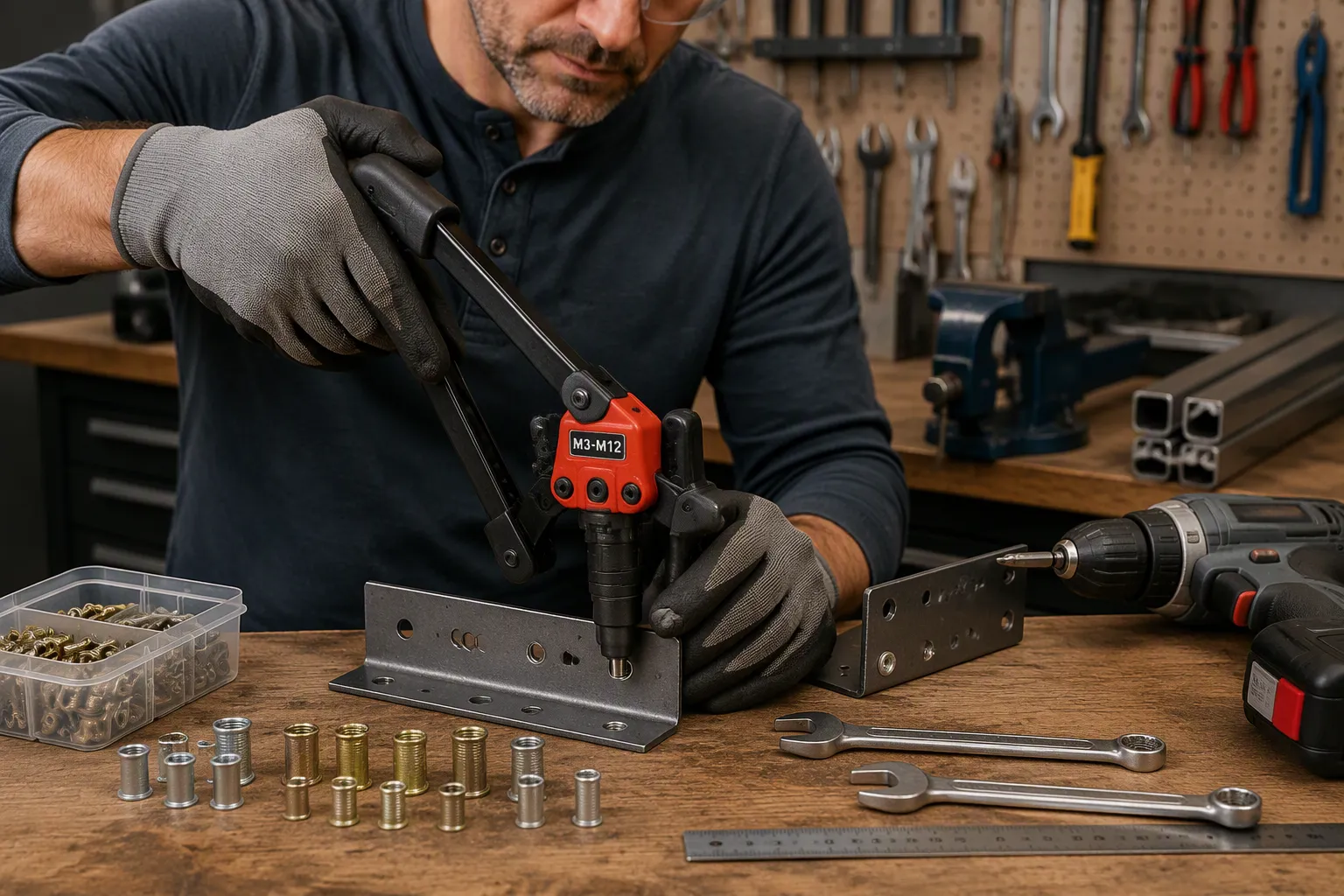
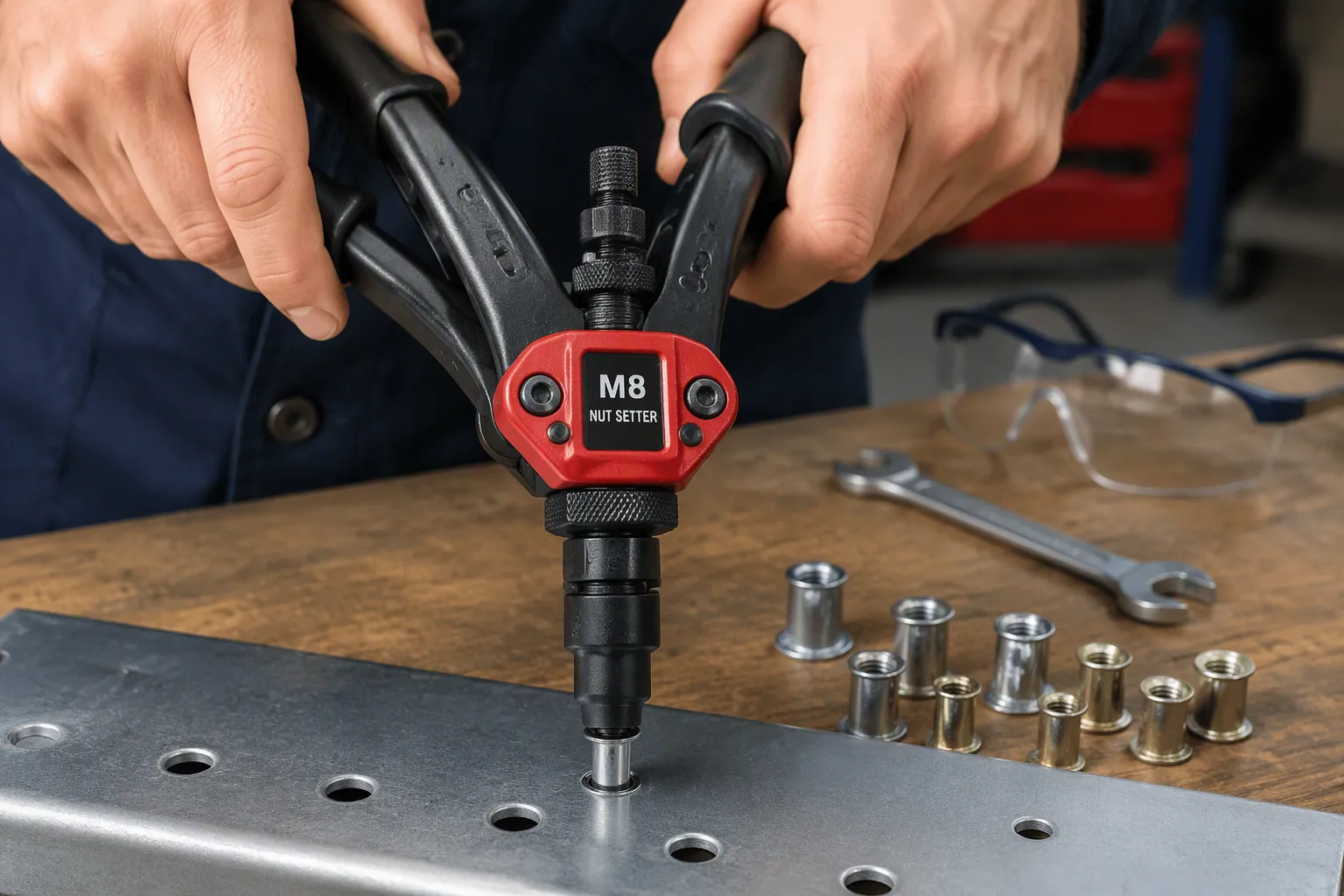
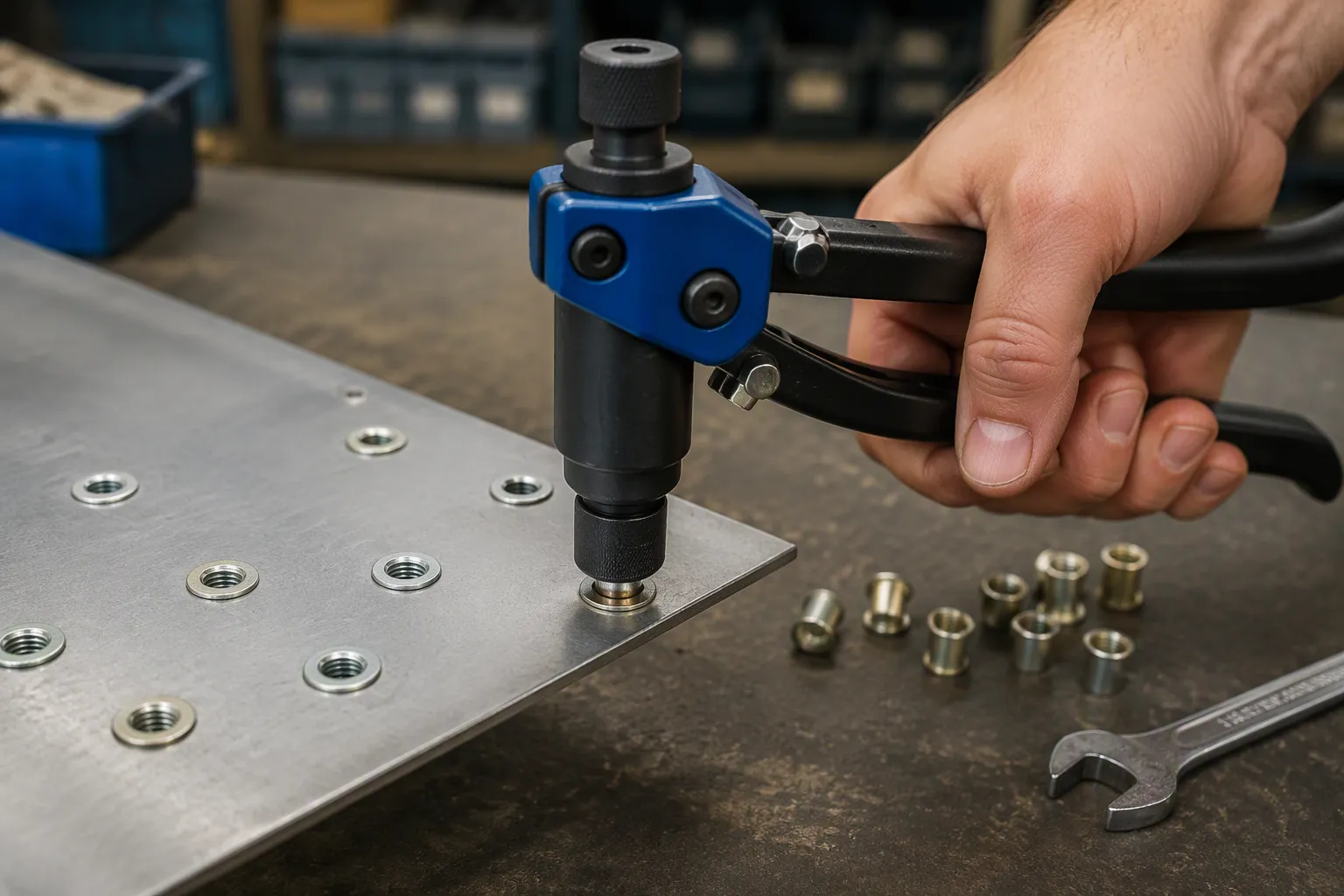
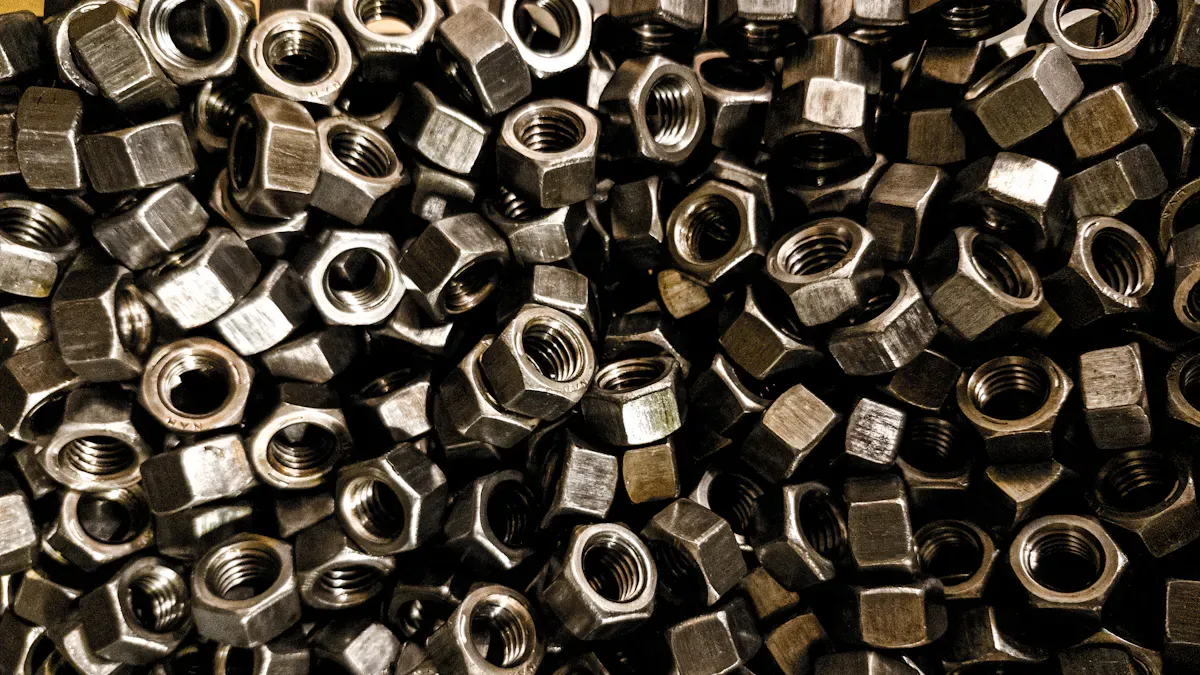
A rivet nut gun serves as a specialized tool for installing rivet nuts, also known as threaded inserts, into thin or soft materials. This tool creates strong, reusable threads where traditional fasteners cannot hold. Unlike a standard rivet gun, a rivet nut gun does not create a permanent joint. Instead, it allows users to attach and detach components multiple times without damaging the base material. Manufacturers design rivet nut guns for efficiency and precision in both industrial and DIY settings. The main function centers on expanding the rivet nut inside the material, forming a secure anchor point for bolts or screws.
Rivet nut gun operation method
Стандарт DIN 933: объяснение operation of a rivet nut gun involves several clear steps. First, the user drills a hole in the workpiece, matching the diameter of the chosen rivet nut. Next, the user threads the rivet nut onto the mandrel of the rivet nut gun. By squeezing the handles or activating the trigger, the tool pulls the mandrel, causing the body of the rivet nut to expand and grip the material from the inside. This process creates a strong, threaded insert that can accept machine screws or bolts. After installation, the user removes the tool, leaving the rivet nut flush with the surface. This method works well for thin metals, plastics, and composite panels.
Совет: Always select the correct grip range for the material thickness. Using the wrong size can lead to weak threads or improper installation.
Typical uses for rivet nut guns
Rivet nut guns find applications in many industries. Automotive technicians use them to install threaded inserts in sheet metal, allowing for secure mounting of accessories and components. Furniture makers rely on rivet nut guns to create strong joints in thin panels, supporting repeated assembly and disassembly. Electronics manufacturers use these tools to add threads to lightweight enclosures. Marine and industrial sectors benefit from the corrosion resistance of stainless steel rivet nuts, especially in harsh environments.
В следующей таблице представлены common materials and their advantages for rivet nut gun installation:
| Материал | Преимущества | Применение |
|---|---|---|
| Алюминий | Легкие, коррозионностойкие | Aerospace, electronics |
| Сталь | High strength, durable | Automotive, construction |
| Нержавеющая сталь | Превосходная коррозионная стойкость | Marine, industrial settings |
Rivet nut guns perform best with materials in the 1.5-3.0mm thickness range. This grip range ensures a secure fit and reliable threads. Thicker materials may require different fasteners or installation methods.
- Common applications for rivet nut guns include:
- Automotive bodywork and repairs
- Furniture assembly and cabinetry
- Electronics enclosures
- Marine equipment installation
- Industrial machinery maintenance
A rivet nut gun provides a versatile solution for projects that demand strong, reusable threads in thin materials.
Key differences between rivet nut gun and rivet gun
Function and purpose
Permanent joint vs. threaded insert
Rivet guns and rivet nut guns serve distinct roles in mechanical design. Rivet guns create permanent joints by deforming the shaft of a rivet, locking materials together so they cannot be separated without destroying the fastener. This method works well for applications that require strength and resistance to vibration. In contrast, rivet nut guns install threaded inserts, also known as rivet nuts, which provide reusable threads in thin or soft materials. These inserts allow for repeated assembly and disassembly without damaging the base material.
The table below compares the advantages of permanent joints and threaded inserts:
| Метод | Преимущества | Применение |
|---|---|---|
| Permanent Joint | High shear and tensile strength, vibration resistance, tamper-proof | Automotive panels, aircraft skins, structural frames |
| Threaded Insert | Reusable threads, easy disassembly, strong anchoring in thin materials | Electronics enclosures, furniture, machinery repair |
When to use each tool
Selecting between a rivet gun and a rivet nut gun depends on the project’s requirements. Use a rivet gun when the goal is to create a permanent, tamper-resistant joint that will not require future disassembly. This approach suits structural applications, such as joining metal panels or assembling frames. Choose a rivet nut gun when the project demands strong, reusable threads in thin materials. This tool excels in situations where components need to be removed and replaced, such as mounting accessories or servicing equipment.
Совет: Evaluate whether the joint will need future maintenance. If so, a rivet nut gun offers greater flexibility.
Types of fasteners used
What are rivets
Rivets are mechanical fasteners that consist of a head and a shaft. The shaft is slightly longer than the combined thickness of the materials being joined. During installation, the shaft passes through pre-drilled holes, and the rivet gun deforms the end to create a second head, locking the materials together. Rivets excel in shear loading and possess good tensile strength properties. They resist loosening from vibration, making them ideal for demanding environments.
- Common types of rivets include:
- Solid rivets
- Blind rivets (pop rivets)
- Drive rivets
- Semi-tubular rivets
Each of these types of rivets offers unique mechanical properties and suits different applications. For example, blind rivets allow for installation from one side, while solid rivets provide maximum strength.
Rivet nuts (threaded inserts)
Rivet nuts, also called threaded inserts, are tubular fasteners with internal threads. They create a permanent anchor point in materials too thin to tap threads directly. Rivet nut guns install these inserts from one side, making them suitable for enclosed or hard-to-reach spaces. Rivet nuts allow for repeated assembly and disassembly, supporting applications that require ongoing maintenance or upgrades.
- Key features of rivet nuts:
- Provide strong, reusable threads
- Suitable for thin metals, plastics, and composites
- Enable secure fastening without access to the back side
Furniture makers, electronics manufacturers, and automotive technicians often rely on rivet nuts for their versatility and ease of use.
Installation process
Rivet gun operation steps
The installation process for a rivet gun involves several straightforward steps:
- Prepare the materials by selecting the correct location and ensuring the area is clean.
- Drill a hole that matches the diameter of the chosen rivet.
- Insert the rivet through the aligned holes in the materials.
- Use the rivet gun to grip the mandrel and pull it, deforming the shaft and forming a secondary head.
- Inspect the finished joint to confirm a secure and flush fit.
This process works efficiently with many types of rivets, including solid and blind rivets. The simplicity and speed of installation make rivet guns popular in mass production and repair settings.
Rivet nut gun operation steps
The installation of a rivet nut follows a similar but slightly more involved process:
- Prepare the material and select the correct location, ensuring cleanliness.
- Drill a hole that matches the outer diameter of the rivet nut.
- Insert the rivet nut so it sits flush with the surface.
- Attach the rivet nut to the tool’s mandrel.
- Squeeze the handles or activate the trigger to expand the rivet nut, anchoring it inside the material.
- Remove the tool and inspect the insert for secure locking.
- Test the threads by inserting a bolt, ensuring proper fit and alignment.
This installation method allows for consistent placement of threaded inserts, even in thin or delicate materials. The process supports a wide range of types of rivets and threaded inserts, making it adaptable for various project needs.
Примечание: Always match the tool and fastener to the material thickness for optimal performance.
Типичные области применения
Automotive and metal fabrication
Automotive manufacturers rely on rivet nut guns for installing strong threads in thin sheet metal. These tools allow technicians to mount accessories, attach panels, and secure components without damaging the base material. Rivet guns play a crucial role in joining body panels, assembling exhaust systems, and constructing frames. Metal fabrication shops use both tools to create durable joints and threaded inserts in custom assemblies. Battery-powered rivet nut guns improve safety and ergonomics during tractor assembly, enabling workers to operate efficiently on moving production lines. Cordless tools minimize trip-and-fall incidents, supporting safer work environments in agriculture and general manufacturing.
- Automotive and metal fabrication applications:
- Mounting brackets and accessories in vehicles
- Joining sheet metal panels for car bodies
- Installing threaded inserts in agricultural equipment
- Fabricating HVAC ducts and appliance housings
Furniture and DIY projects
Furniture makers use rivet nut guns to create reusable threads in thin panels. This approach supports repeated assembly and disassembly, which is essential for modular furniture and cabinetry. DIY enthusiasts benefit from the versatility of rivet nut guns when building custom shelving, assembling storage units, or repairing household items. Rivet guns provide permanent joints for wooden frames, metal supports, and decorative elements. Both tools offer reliable solutions for home improvement projects that demand strength and flexibility.
- Furniture and DIY applications:
- Assembling modular furniture
- Installing threaded inserts in cabinetry
- Repairing household fixtures
- Building custom shelving and storage units
Industrial and commercial uses
Industrial sectors depend on rivet nut guns for efficient installation of threaded inserts in machinery, electronics enclosures, and marine equipment. Aerospace engineers utilize these tools to add strong threads to lightweight panels, ensuring secure fastening in critical assemblies. Rivet guns deliver permanent joints in structural frames, construction projects, and appliance manufacturing. General manufacturing benefits from the speed and reliability of both tools, supporting high-volume production and maintenance tasks.
- Industrial and commercial applications:
- Installing threaded inserts in machinery and electronics
- Securing panels in aerospace and marine equipment
- Joining structural frames in construction
- Manufacturing appliances and industrial components
Note: Selecting the right tool for each application ensures optimal performance and safety in demanding environments.
Pros and cons
Rivet gun advantages and limitations
| Model Type | Преимущества | Недостатки |
|---|---|---|
| Manual Pull-Trigger Models | Lower cost, simple operation, easy maintenance | Slower cycle times, inconsistent results |
| Auto-Feed Rivet Guns | Faster installation, improved productivity | Heavier, higher initial cost |
| Brushless Motor vs. Brushed | Longer runtime, cooler operation | Более высокая цена |
| Single-Size vs. Multi-Size | Flexibility in size compatibility | Increased setup time between changes |
Rivet guns offer portability and unrestricted movement. Operators do not need an air compressor or electrical outlet, which makes these tools suitable for remote or outdoor work environments. Auto-feed models install rivets faster than manual tools, increasing productivity in mass production. Lower noise levels compared to pneumatic counterparts improve workplace comfort. However, rivet guns require regular maintenance to prevent issues such as weak pull force, air leaks, or tool cycling failures. Manual models may deliver inconsistent results and slower cycle times. Battery-powered tools depend on charged batteries, which can cause downtime if not managed properly.
- Common maintenance tasks:
- Daily inspection of nosepiece, mandrel, and tool body
- Weekly cleaning and verification of pull force
- Monthly inspection for stripped threads and seals
- Full strip-down and calibration every 6–12 months
Rivet nut gun advantages and limitations
| Model Type | Преимущества | Недостатки |
|---|---|---|
| Manual Pull-Trigger Models | Lower cost, simple operation, easy maintenance | Slower cycle times, inconsistent results |
| Auto-Feed Rivet Nut Guns | Faster installation, improved productivity | Heavier, higher initial cost |
| Brushless Motor vs. Brushed | Longer runtime, cooler operation | Более высокая цена |
| Single-Size vs. Multi-Size | Flexibility in size compatibility | Increased setup time between changes |
Rivet nut guns provide strong, reusable threads in thin materials. They support applications that require repeated assembly and disassembly, such as electronics enclosures and modular furniture. Portability and unrestricted movement make these tools ideal for remote or outdoor work. Auto-feed models deliver faster installation, improving productivity in manufacturing and maintenance. Operators benefit from lower noise levels and enhanced safety, especially with cordless tools. Limitations include higher upfront costs, battery dependency, and limited maximum pull force compared to hydraulic units. Compatibility issues may arise with proprietary battery systems. Maintenance tasks include daily inspection, cleaning, and lubrication to prevent mandrel breakage, weak pull force, or tool cycling failures.
- Typical maintenance issues:
- Mandrel breaking or stripping due to overtightened inserts or misalignment
- Rivet nut not pulling properly from worn threads or low pull force
- Air leaks in pneumatic models caused by worn seals or cracked hoses
- Hydraulic oil leaks from damaged piston seals or cracked housing
- Battery tools cutting out due to overheated motors or worn brushes
Tip: Regular maintenance and proper tool selection reduce downtime and improve reliability in all applications.
How to choose between a rivet nut gun and a rivet gun
Assessing your project requirements
Project requirements determine the best tool for the job. Users must consider the type of joint needed, the material thickness, and the expected frequency of use. For permanent joints, a rivet gun provides a secure solution. When a project requires removable or serviceable connections, a rivet nut gun creates strong, reusable threads. Material thickness also plays a role. Thin metals and plastics often benefit from threaded inserts, while thicker materials may support traditional rivets.
The following table summarizes key factors to consider:
| Фактор | Фактор |
|---|---|
| Volume of rivet nuts | Для fewer than 100 rivet nuts, a manual tool may suffice; for hundreds, a power tool is recommended. |
| Type of tool | Choose between manual and power based on project needs and frequency of use. |
| Working environment | If no access to compressed air, a battery-operated tool is ideal; otherwise, an air rivet nut gun is faster for high-volume tasks. |
A comprehensive rivet buying guide will help users match the tool to their specific requirements, ensuring efficiency and safety.
Decision guide: rivet gun or rivet nut gun
Selecting between these tools involves more than just the type of joint. Users should evaluate the following:
- For less than 100 rivet nuts, a hand tool offers simplicity and cost savings.
- Daily use or high-volume production calls for a power tool to reduce fatigue and improve speed.
- Job sites without compressed air benefit from battery-operated tools, while factories with air supply can use pneumatic models for faster installation.
- Quality cordless tools handle large setting capacities, with some models installing up to M12 in stainless steel.
A rivet buying guide often recommends considering both the working environment and the expected workload. This approach ensures the chosen tool meets both performance and safety standards.
Tips for first-time users
First-time users often make avoidable mistakes. The following tips help ensure successful and safe operation:
- Select the correct size. Always check material thickness and load requirements before choosing a rivet nut or rivet.
- Match the fastener material to the application. Different materials respond differently under pressure.
- Use the proper installation technique. Ensure the hole size, angle, and force are correct for consistent results.
- Follow manufacturer torque specifications. This prevents stripped threads and weak joints.
- Inspect and maintain tools regularly. Routine checks prevent failures and extend tool life.
Safety Note: Always wear safety glasses and gloves. Familiarize yourself with the tool’s operation before starting. Use each tool only for its intended purpose and follow all maintenance guidelines.
A careful approach, supported by a reliable rivet buying guide, helps users avoid common pitfalls and achieve professional results.
Rivet nut guns and rivet guns serve distinct purposes. Rivet guns create permanent joints, while rivet nut guns install strong, reusable threads for projects that require frequent assembly and disassembly. Selecting the right tool ensures efficiency and durability. Many industries, such as automotive and electronics, prefer rivet nut guns for their versatility and ergonomic features.
| Характеристика | Преимущество |
|---|---|
| Self-locking gun head | Quick, tool-free mandrel changes |
| Lightweight design | Reduces user fatigue |
| Ergonomic handle | Enhances grip and comfort |
Regular cleaning, lubrication, and proper storage extend tool lifespan and maintain optimal performance.
Takeaway: Use a rivet gun for permanent joints. Choose a rivet nut gun when strong, reusable threads are needed.
Частые вопросы
What is the main difference between a rivet gun and a rivet nut gun?
A rivet gun creates a permanent joint by deforming a rivet. A rivet nut gun installs a threaded insert, allowing for removable connections. Each tool serves a unique purpose in fastening.
Can a rivet nut gun install regular rivets?
A rivet nut gun cannot install regular rivets. It only works with rivet nuts or threaded inserts. Users must select the correct tool for each fastener type.
Where are rivets used most often?
Rivets appear in automotive, aerospace, construction, and appliance manufacturing. They join sheet metal, panels, and structural components. These fasteners provide strength and reliability in demanding environments.
What are the different types of rivets?
Manufacturers produce solid, blind, drive, and semi-tubular rivets. Each type suits specific applications. For example, blind rivets allow installation from one side, while solid rivets offer maximum strength.
How does someone choose the right tool for their project?
They should consider the need for a permanent joint or reusable threads. Material thickness and frequency of assembly also influence the decision. Reviewing project requirements ensures the best tool selection.
Are rivet nut guns suitable for all materials?
Rivet nut guns work best with thin metals, plastics, and composites. They may not perform well with very thick or brittle materials. Users should check material compatibility before installation.
What maintenance do these tools require?
Routine cleaning, inspection, and lubrication keep both tools in good condition. Checking for worn parts and following manufacturer guidelines helps prevent failures and extends tool life.
Tip: Always wear safety gear and follow instructions for safe operation.