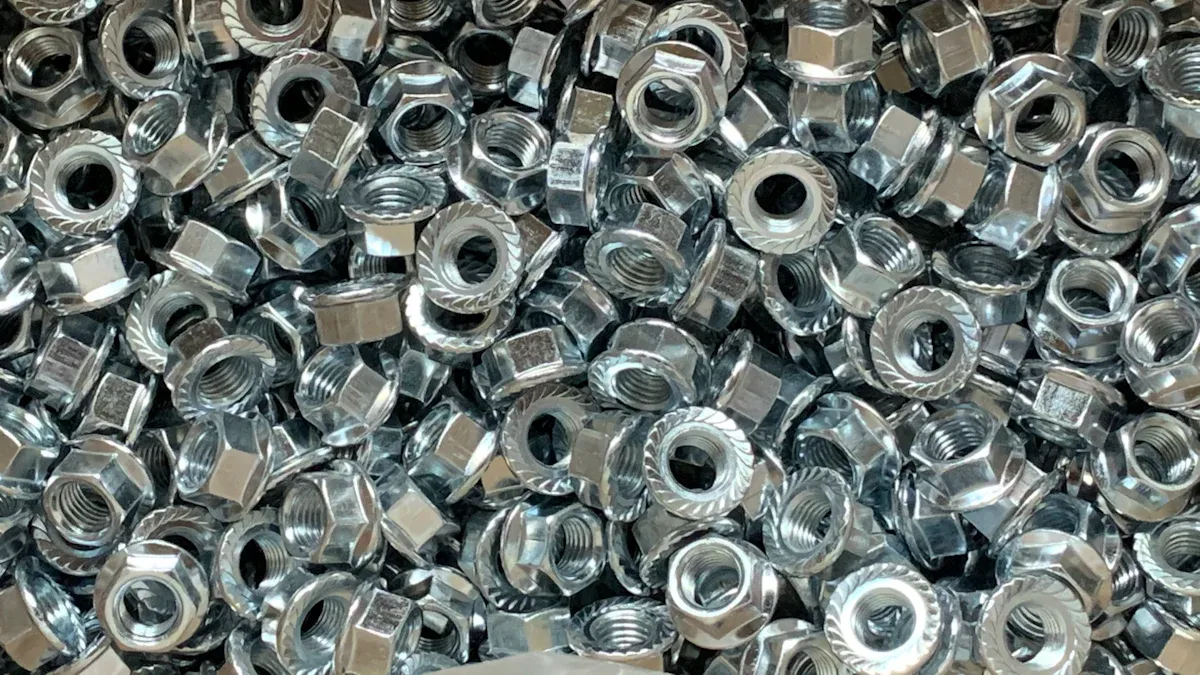
Выбор правильных фланцевая гайка is crucial for ensuring reliable performance in any engineering or construction project. Professionals often encounter both flat and serrated flange types, each designed for specific demands in the rapidly growing market for нестандартные крепежные элементы. Key factors such as application, material compatibility, size, thread type, and environment influence the decision. The following table highlights essential considerations when you choose the right flange nut:
| Фактор | Описание |
|---|---|
| Load type and size | Clarify the load type and size required for the connection. |
| Условия окружающей среды | Consider temperature, humidity, and corrosiveness of the working environment. |
| Material and surface condition | Assess the material and surface condition of the connector to ensure compatibility. |
| Size and thread specifications | Ensure the flange nut matches the size and thread specifications of the bolt. |
| Контроль момента затяжки | Tighten according to specified torque to avoid damage or failure of the connection. |
A производитель крепежных изделий на заказ can provide the best гаек и болтов for unique requirements, ensuring every flange application meets safety and durability standards.
Flange Nut Basics and Fasteners Overview
What Is a Flange Nut?
A flange nut belongs to the family of fasteners and features a hexagonal shape with a wide circular flange at its base. This flange acts as a built-in washer, distributing load pressure evenly across a larger surface area. The design enhances stability and performance, especially in environments where vibration is present. Unlike standard nuts, a flange nut eliminates the need for a separate washer, which simplifies assembly and improves resistance to loosening. The integrated flange ensures that the nut maintains clamp force and prevents deformation, even under high compressive stress.
Main Features of Flange Nuts
Flange nuts stand out due to several key features that distinguish them from standard nuts and washers:
- The integrated flange provides a larger bearing surface, which helps distribute load more effectively.
- The flange acts as a built-in washer, reducing the risk of the nut loosening due to vibration or movement.
- Flange nuts offer enhanced stability and maintain tightness in dynamic applications.
- Standard washers, often softer than nuts and bolts, can deform under pressure. The flange on a flange nut prevents this issue by maintaining clamp force and resisting deformation.
These features make flange nuts ideal for applications that require both tightness and stability. The design also streamlines installation, as users do not need to handle separate washers.
Common Applications for Flange Nuts
Flange nuts see frequent use in a wide range of industries and applications. Their ability to distribute pressure and resist loosening makes them a preferred choice in situations where reliability is critical. The table below highlights some common uses:
| Распространенные применения латунных квадратных гаек | Specific Examples |
|---|---|
| Construction Industry | Securing structural steel components, installing HVAC units, plumbing fixtures |
| Civil Engineering Projects | Bridge construction, road construction, securing traffic signs and guardrails |
| Machinery and Equipment Manufacturing | Assembling gears, bearings, motors, and generators |
| Agricultural Equipment Manufacturing | Securing parts in tractors, combines, and harvesters |
| Transportation Equipment Manufacturing | Airplanes, trains, ships—engines and landing gear |
| Furniture Manufacturing | Assembling frames of chairs and tables |
| Marine Industry | Securing boat components, designed for saltwater conditions |
| Аэрокосмическая промышленность | Assembly of aircraft components, meeting strict safety requirements |
In industrial and civil applications, hex nuts, nylon lock nuts, and flange nuts are the three most commonly used types. Hex nuts serve general connections, lock nuts counteract vibration, and flange nuts replace washers for pressure distribution. The flange nut’s unique design, with its built-in flange, makes it especially effective in plumbing, construction, and automotive sectors. When paired with a flange bolt, the connection achieves even greater stability and load distribution.
Why Choose the Right Flange Nut for Your Project?
Advantages of Flange Nuts Over Other Fasteners
Selecting the right flange nut offers significant benefits for both assembly and long-term performance. Many engineers and technicians prefer this component because the flange acts as a built-in washer. This feature eliminates the need for separate washers, which streamlines the installation process and reduces the risk of missing parts during assembly. The flange also distributes the clamping load evenly, which minimizes surface deformation and enhances the strength of the joint. These advantages make flange nuts a reliable choice for projects that demand efficiency and durability.
The following table summarizes the main advantages of flange nuts compared to other fasteners:
| Преимущество | Описание |
|---|---|
| Built-In Washer Function | The flange serves as a permanent washer, simplifying installation and reducing the risk of forgetting separate washers. |
| Superior Load Distribution | The flange evenly spreads the clamping load, minimizing surface deformation and enhancing joint strength. |
| Efficiency in Assembly | Fewer parts and quicker tightening streamline production, reducing labor time and improving overall efficiency. |
When teams use flange nuts, they often notice faster assembly times and fewer installation errors. These benefits translate into cost savings and improved reliability for a wide range of applications.
When Flange Nuts Are the Best Choice
Flange nuts excel in situations where load distribution, vibration resistance, and installation speed are critical. They perform well in both flush and non-flush installations, depending on the flange type. For example, a standard large flange provides high strength but may require additional processing, while a small flange works best for flush installations without extra steps. The table below outlines the optimal conditions for different flange types:
| Тип фланца | Прочность | Installation Type | Additional Processing Needed |
|---|---|---|---|
| Standard Large Flange | Высокая | Non-flush | Да |
| Small Flange | Умеренная | Flush | Нет |
| Countersunk-head | Высокая | Flush | Да |
| Wedged Head | Низкая | Non-flush | Нет |
| Keyway | Умеренная | Non-flush | Да |
Choosing the wrong flange nut can lead to serious risks. Improper selection may cause flange damage, leakage, or even failure of the connection. The table below highlights these potential consequences:
| Risk/Consequence | Описание |
|---|---|
| Flange Damage | Human error, such as gasket reuse and failure to follow torque guidelines, can lead to damage. |
| Leakage | Incorrect material selection can result in leaks due to incompatibility with operating conditions. |
| Failure | Improper assembly practices can cause failures, including insufficient bolt load or excessive loads. |
Tip: Always match the flange nut to the specific requirements of the project. This practice helps prevent costly repairs and ensures the safety and longevity of the assembly.
By understanding the unique advantages and ideal use cases for flange nuts, project managers and engineers can make informed decisions that enhance both performance and safety in their fasteners selection.
Step-by-Step Guide to Choose the Right Flange Nut
Выбор правильных фланцевая гайка involves a systematic approach. Each project presents unique requirements, so engineers must evaluate several factors before making a selection. This guide outlines the essential steps for optimal performance and safety.
Identify Your Application Needs
Load and Stress Requirements
Every application places different demands on fasteners. Engineers must first determine the type and magnitude of load the connection will experience. For example, bridge construction often involves high static and dynamic loads, while machinery may require fasteners that withstand repetitive stress. The material of the connected parts and the force conditions play a significant role in this assessment. By understanding these requirements, teams can select a flange nut that provides adequate strength and durability.
Vibration and Movement Considerations
Vibration and movement can cause fasteners to loosen over time. In automotive, heavy machinery, or equipment subject to constant motion, vibration resistance becomes critical. Serrated flange nuts offer a solution in these scenarios. The serrations grip the surface, preventing the nut from backing off during operation. When vibration is a concern, engineers should prioritize flange lock nuts or serrated designs to maintain joint integrity.
Tip: For applications exposed to frequent vibration, such as engines or industrial machines, always consider serrated flange nuts to enhance security.
Match Flange Nut Material to Project Requirements
Steel, Stainless Steel, and Other Materials
Material selection directly impacts the performance and longevity of a flange nut. The table below summarizes common materials, their properties, and typical applications:
| Материал | Свойства | Применение |
|---|---|---|
| Сталь | Strong, affordable, reliable for general use | Construction, machinery, general fastening |
| Нержавеющая сталь | Отличная коррозионной стойкости, maintains appearance and strength | Outdoor, marine, chemical, high-humidity |
| Легированная сталь | Enhanced strength, heat-treated for durability | Высоконагруженные, тяжелые приложения |
| Титан | High strength-to-weight ratio, superior corrosion resistance | Aerospace, lightweight structures |
| Латунь | Moderate strength, good electrical conductivity | Electrical and electronic equipment |
Steel flange nuts suit most general-purpose connections. Stainless steel, especially grades 304 and 316, excels in environments with moisture or chemicals. Alloy steel and titanium provide solutions for high-stress or specialized applications.
Коррозионная стойкость и факторы окружающей среды
Environmental exposure can significantly affect the lifespan of a flange nut. Outdoor, marine, or chemical environments demand materials with high corrosion resistance. Stainless steel nuts, particularly grades 304 and 316, resist rust and degradation in humid or salty conditions. Duplex stainless steel, nickel alloys, and titanium offer even greater protection in extreme settings, such as offshore platforms or chemical processing plants.
Selecting the right flange material ensures reliability and reduces maintenance costs. For example, marine engineering projects benefit from stainless steel or Dacromet-coated nuts, which withstand harsh saltwater exposure. Construction projects that alternate between indoor and outdoor settings often require stainless steel for consistent performance.
Note: The choice of flange nut material should always reflect the environmental conditions and expected service life of the assembly.
Choose the Right Flange Nut Size and Thread
Diameter, Pitch, and Tolerance Grades
Size compatibility is essential for a secure connection. The flange nut must match the diameter and pitch of the bolt. Engineers should also consider the height and thickness of the flange to ensure proper load distribution. Tolerance grades affect how tightly the nut fits on the bolt, influencing both ease of installation and long-term reliability.
When selecting a flange nut, follow these steps:
- Assess the connection requirements, including material compatibility and force conditions.
- Match the size specifications, ensuring the nut fits the bolt in diameter, pitch, and flange dimensions.
- Verify that the nut meets relevant standards and quality certifications.
Metric vs. Imperial Threads
Thread compatibility can impact both installation and maintenance. Metric flange nuts use millimeter-based pitch measurements, while imperial nuts are measured in threads per inch. Mixing these systems can cause stripping or cross-threading, leading to joint failure. Tooling requirements also differ, so using the wrong tools increases the risk of damage.
Maintaining both metric and imperial fasteners complicates inventory and sourcing. Standardizing on one system simplifies supply chain management and reduces costs. Engineers should always confirm the thread type before installation to avoid compatibility issues.
⚠️ Always check thread standards before assembly. Mismatched threads can compromise safety and lead to costly repairs.
By following these steps, engineers and project managers can choose the right flange nut for any application, ensuring safety, durability, and efficient assembly. The correct selection of flange, material, and thread type will optimize performance and reduce the risk of failure.
Select Between Serrated and Non-Serrated Flange Nuts
Choosing between serrated and non-serrated flange nuts requires careful evaluation of the project’s demands. Serrated flange nuts feature ridges on the underside of the flange. These ridges grip the mating surface, increasing resistance to loosening. Non-serrated flange nuts have a smooth flange surface. They distribute load without damaging the connected material.
When to Use Serrated Flange Nuts
Serrated flange nuts perform best in environments with frequent vibration or movement. The serrations bite into the surface, preventing the nut from backing off. Engineers often select serrated flange nuts for automotive assemblies, heavy machinery, and equipment exposed to dynamic loads. The flange provides a stable base, while the serrations enhance security.
| Application Scenario | Reason for Selection |
|---|---|
| Automotive engine mounts | High vibration, need for secure fastening |
| Промышленное оборудование | Constant movement, risk of loosening |
| Flange bolt connections | Enhanced grip, improved joint stability |
Note: Serrated flange nuts should not be used on soft or finished surfaces. The serrations may cause scratches or permanent marks.
When to Use Non-Serrated Flange Nuts
Non-serrated flange nuts suit projects where surface protection matters. The smooth flange distributes pressure evenly, reducing the risk of damage. Furniture manufacturing, plumbing installations, and electrical assemblies often require non-serrated flange nuts. These nuts maintain the integrity of painted, coated, or delicate surfaces.
- Engineers choose non-serrated flange nuts for flush installations.
- The flange ensures even load distribution without marring the material.
- Non-serrated designs work well with washers, further protecting the surface.
Tip: When working with decorative finishes or soft materials, select non-serrated flange nuts to preserve appearance and function.
Ensure Proper Installation and Fit
Proper installation of a flange nut ensures long-term reliability and prevents loosening or failure. Engineers follow a series of best practices to achieve a secure fit.
Visible Threads and Secure Grip
A correctly installed flange nut should leave at least two threads visible beyond the nut. This practice confirms full engagement with the bolt. The flange must sit flush against the mating surface, providing maximum load distribution. Engineers inspect the joint to verify that the flange covers the entire area and that the nut grips the bolt securely.
- The flange nut must align with the bolt axis.
- The flange should not tilt or leave gaps.
- Visible threads indicate proper tightening and engagement.
Callout: Always check for visible threads after installation. This step helps prevent accidental loosening and ensures the flange nut holds the connection firmly.
Избегание перетяжки
Over-tightening a flange nut can damage the flange or the connected material. Engineers use torque wrenches to apply the recommended torque. This tool ensures even tightening and prevents excessive force. The flange distributes the load, but too much torque may deform the flange or strip the threads.
Engineers follow these practices to prevent over-tightening:
- Use locking nuts when vibration resistance is needed.
- Apply thread locking compounds according to manufacturer guidelines.
- Install washers to reduce friction and protect surfaces.
- Tighten the flange nut with a torque wrench, following specified values.
- Inspect the fastening system regularly for signs of loosening or wear.
| Практика | Преимущество |
|---|---|
| Use locking nuts | Prevents loosening under vibration |
| Apply thread locking compounds | Enhances joint security |
| Use washers | Reduces friction, protects surfaces |
| Tighten with torque wrench | Ensures correct torque, prevents damage |
| Регулярная проверка | Identifies loose or worn components |
⚠️ Over-tightening can lead to flange deformation and bolt failure. Always follow torque specifications and inspect the assembly periodically.
Engineers who follow these guidelines achieve secure, durable connections. The flange nut, when installed correctly, provides stability and maintains joint integrity throughout the service life.
Flange Nut vs. Other Fasteners: Making the Right Choice
Flange Nut vs. Standard Nut and Washer
Engineers often compare flange nuts with standard nuts and washers when selecting fasteners for a project. Flange nuts feature a built-in washer-like flange, which streamlines installation and improves performance. Standard nuts require a separate washer to distribute load and prevent surface damage. The flange on a flange nut saves time and reduces the risk of missing parts during assembly.
The following table highlights key differences in installation time, cost, and performance:
| Аспект | Гайки фланцевые | Standard Nuts and Washers |
|---|---|---|
| Время установки | Faster due to built-in washer-like flange | Slower, requires separate washers |
| Стоимость | Higher upfront cost, but potential savings in labor | Lower upfront cost, but may incur additional labor costs |
| Performance | Vibration-resistant, suitable for various applications | Requires separate washers for load distribution |
Flange nuts provide vibration resistance and suit a wide range of applications. Standard nuts and washers may offer lower initial costs, but they often require more labor and can increase the risk of assembly errors.
Flange Nut vs. Lock Nut
Lock nuts serve a specific purpose in fasteners selection. They resist loosening caused by vibration or movement. Flange nuts also offer виброустойчивость, especially when paired with serrated designs. However, lock nuts use mechanisms such as nylon inserts or deformed threads to secure the connection.
Flange nuts excel in applications where load distribution and quick installation matter. Lock nuts perform best in environments with extreme vibration or where safety is critical. Engineers must assess the project’s requirements before choosing between these options.
Tip: Use lock nuts for assemblies exposed to persistent vibration, such as automotive or heavy machinery. Choose flange nuts when installation speed and load distribution are priorities.
When to Use Each Type of Fastener
Selecting the right fastener depends on several criteria. Engineers evaluate thread type and size, material compatibility, strength grade, coating, temperature resistance, load, installation accessibility, and compliance with standards.
The table below summarizes these criteria:
| Критерий: Сертификаты | Описание |
|---|---|
| Thread Type & Size | Must match thread pitch, diameter, and tolerance class of the bolt/stud. |
| Совместимость материалов | Nut material must be equal or higher strength than the bolt to avoid galvanic corrosion. |
| Strength Grade / Property Class | Must match or exceed bolt grade to prevent failure under load. |
| Coating & Surface Finish | Selected based on environment for rust and corrosion resistance. |
| Temperature Resistance | High-temp alloys for extreme conditions to prevent brittleness or creep. |
| Load & Application | Standard hex nuts for general use; lock nuts to resist loosening under vibration. |
| Installation & Accessibility | Nut type depends on tool access and torque requirements. |
| Standards & Specifications | Must follow recognized standards for quality and safety. |
Engineers select flange nuts for projects requiring fast installation, reliable load distribution, and vibration resistance. Standard nuts and washers suit general connections with minimal vibration. Lock nuts provide extra security in high-vibration environments. Each fastener type offers unique benefits, so matching the fastener to the project’s demands ensures safety and performance.
Note: Always review the application’s requirements and environmental conditions before selecting fasteners. Proper selection prevents failures and extends the service life of the assembly.
Common Mistakes When You Choose the Right Flange Nut
Selecting the correct flange nut is essential for the safety and longevity of any mechanical assembly. However, even experienced professionals sometimes make avoidable errors during the selection process. Understanding these common mistakes can help prevent costly failures and ensure reliable performance.
Overlooking Material Compatibility
Совместимость материалов plays a critical role in the performance of flange connections. When engineers use incompatible materials, several issues can arise. Corrosion often develops between dissimilar metals, especially in harsh environments. Pitting may occur, weakening the assembly and reducing its lifespan. In severe cases, structural failure can result, particularly in critical applications where joint integrity is paramount. The following table outlines the main risks associated with poor material selection:
| Issue Type | Описание |
|---|---|
| Коррозия | Can occur when incompatible materials are used, leading to degradation. |
| Pitting | Localized corrosion that can weaken the assembly. |
| Разрушение конструкции | Compromised integrity can lead to catastrophic failure in critical applications. |
| Joint Integrity | Improper torque application can cause loosening or damage to the assembly. |
Tip: Always match the flange nut material to the connected components and the operating environment to avoid premature degradation.
Selecting the Wrong Size or Thread
Choosing the correct size and thread for a flange nut ensures a secure and stable connection. Mistakes in this area can compromise the entire structure. If the nut is too small for the bolt, the connection becomes loose and unstable. This instability can jeopardize the integrity of the assembly. Additionally, using the wrong thread type may cause cross-threading or stripping, which leads to mechanical failure. The following list highlights the main risks:
- A nut that is too small for the bolt creates a loose connection and threatens structural stability.
- Inappropriate material selection for screws can result in rust and corrosion, especially in unsuitable environments, causing early failure.
Callout: Double-check all size and thread specifications before installation to ensure a proper fit and long-term reliability.
Ignoring Environmental and Load Conditions
Environmental and load conditions have a significant impact on the performance of flange assemblies. Neglecting these factors often leads to premature failure. For example, installations near the ocean or chemical plants expose flange nuts to corrosive agents. High temperatures can accelerate galling and corrosion, further reducing the lifespan of the connection. Proper material selection remains crucial to prevent leaks and maintain the integrity of the flange joint. Key risks include:
- Environmental factors such as saltwater or chemicals can degrade flange materials quickly.
- High temperatures increase the risk of galling and corrosion, leading to early failure.
- Failing to consider load requirements may result in leaks or compromised connections.
Note: Always assess the installation environment and expected loads before selecting a flange nut to ensure optimal performance.
By avoiding these common mistakes, engineers can enhance the durability and safety of their flange assemblies. Careful attention to material compatibility, correct sizing, and environmental factors will help prevent unexpected failures and costly repairs.
Troubleshooting and Tips for Flange Nut Installation
What to Do If the Flange Nut Doesn’t Fit
Installers sometimes encounter situations where a flange nut does not fit as expected. Several practical steps can resolve this issue:
- Check the alignment of the flange and connected components. Misalignment can cause uneven stress and potential leaks. Realign the flanges using proper tools to ensure a secure fit.
- Review the dimensions of both the flange nut and the bolt. Mismatched sizes often lead to fitting problems. Keep spare parts with accurate dimensions on hand to address unexpected discrepancies.
- Inspect the threads for damage or debris. Clean or replace any components that show signs of wear.
- Confirm that the flange surface is free from warping or deformation. A flat, even surface ensures proper seating and load distribution.
Tip: Careful preparation and double-checking dimensions before installation can prevent most fitting issues.
Предотвращение ослабления и отказов
Flange assemblies often operate in environments with vibration or heavy loads. Engineers use several methods to prevent loosening and failure. The table below summarizes effective solutions for different scenarios:
| Method/Technology | Application Scenario | Примечания |
|---|---|---|
| Shibli nuts | High-frequency vibration (automobile, aerospace) | 30° wedge design increases reliability. |
| Double nut structures | High-frequency vibration | Extra friction prevents loosening. |
| Nylon insert locking nuts | Medium vibration | Reusable and effective for moderate loads. |
| Flanged nuts | Heavy-duty machinery | Large contact area resists vibration. |
| Spring washers | Light load or precision instruments | Cost-effective but limited in heavy-duty use. |
| Thread locking adhesive | Varies by disassembly needs | Use correct adhesive strength for best results. |
| Cotter pins + slotted nuts | Permanent connections | High reliability; requires destruction for removal. |
| Wire rope | Bolt group anti-loosening | Needs pre-drilled installation holes. |
| Nylon anti-loosening nuts | Light to medium load | Embedded nylon rings add friction. |
| Special structural nuts | Applications needing precise deformation control | Ensure proper processing to avoid uneven stress. |
Note: Select the anti-loosening method that matches the vibration level and load conditions of the flange assembly.
Maintenance and Inspection Tips
Regular maintenance and inspection keep flange assemblies reliable and safe. Technicians should follow these best practices:
- Inspect flanges, gaskets, and fasteners regularly to spot cracks, corrosion, or other defects.
- Use torque wrenches to check that each flange nut maintains the correct tightness.
- Apply ultrasonic or nondestructive testing methods to evaluate the integrity of welded flanges.
- Schedule visual inspections to identify early signs of wear or leaks.
The table below outlines key inspection methods and their purposes:
| Inspection Method | Назначение |
|---|---|
| Визуальный осмотр | Detect cracks, corrosion, and surface defects. |
| Torque Checks | Confirm proper torque to prevent loosening. |
| Nondestructive Testing | Find hidden flaws without damaging the flange assembly. |
Callout: Consistent inspection and maintenance routines help prevent leaks, inefficiencies, and unexpected failures in flange connections.
Engineers who choose the right flange nut follow a systematic approach. They assess the requirements for each flange, including loading conditions and safety factors. Good design practices and proper preload validation ensure joint performance. The table below shows how this process contributes to safety and success:
| Шаг | Contribution to Safety and Success |
|---|---|
| 1 | Ensures leak prevention |
| 2 | Maintains joint integrity |
| 3 | Minimizes risks of flange failures |
| 4 | Emphasizes quality control |
Final tips for confident selection include considering thread precision, using alignment tools, and conducting regular maintenance. Engineers select materials that resist corrosion and wear, ensuring the flange and bolt remain reliable.
Частые вопросы
What is the main difference between serrated and non-serrated flange nuts?
Serrated flange nuts have ridges that grip the surface, preventing loosening from vibration. Non-serrated flange nuts feature a smooth flange, which protects delicate surfaces and distributes load without causing damage.
How does a flange nut improve joint stability?
The flange on a flange nut spreads the load across a larger area. This design reduces surface deformation and maintains clamp force, which increases joint stability in demanding applications.
Which material should engineers choose for flange nuts in corrosive environments?
Engineers select stainless steel or coated alloy flange nuts for corrosive environments. These materials resist rust and chemical damage, ensuring long-term reliability in marine, chemical, or outdoor applications.
Can a flange nut replace a washer in all situations?
A flange nut often replaces a washer, but not always. In cases where surface protection is critical or the load exceeds the flange’s capacity, engineers may still use a washer for added safety.
How do engineers determine the correct flange nut size?
Engineers match the flange nut’s diameter, pitch, and thread type to the bolt. They check standards and specifications to ensure compatibility and secure fit.
What is the recommended method for tightening flange nuts?
Engineers use torque wrenches to apply the specified torque. This method prevents over-tightening, which can damage the flange or threads and ensures a secure connection.
Are flange nuts suitable for high-vibration applications?
Flange nuts, especially serrated types, perform well in high-vibration environments. They resist loosening and maintain joint integrity in automotive, machinery, and equipment assemblies.
What should technicians do if a flange nut does not fit?
Technicians check alignment, dimensions, and thread condition. They clean or replace damaged parts and ensure the flange surface remains flat for proper seating.