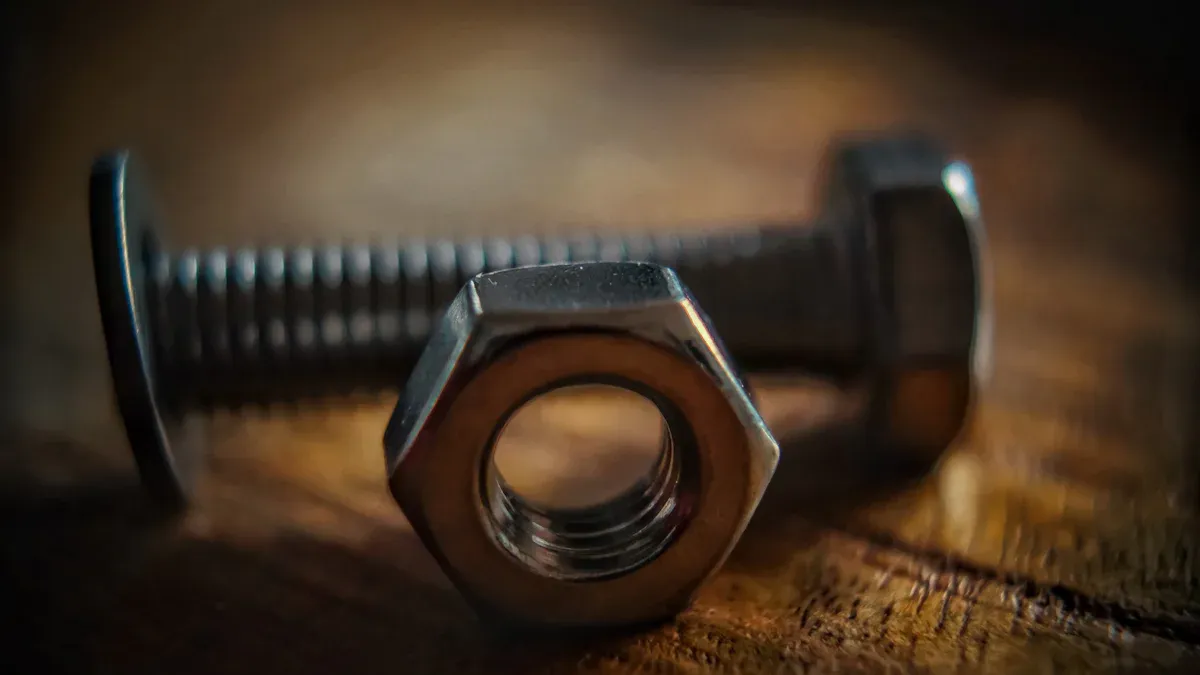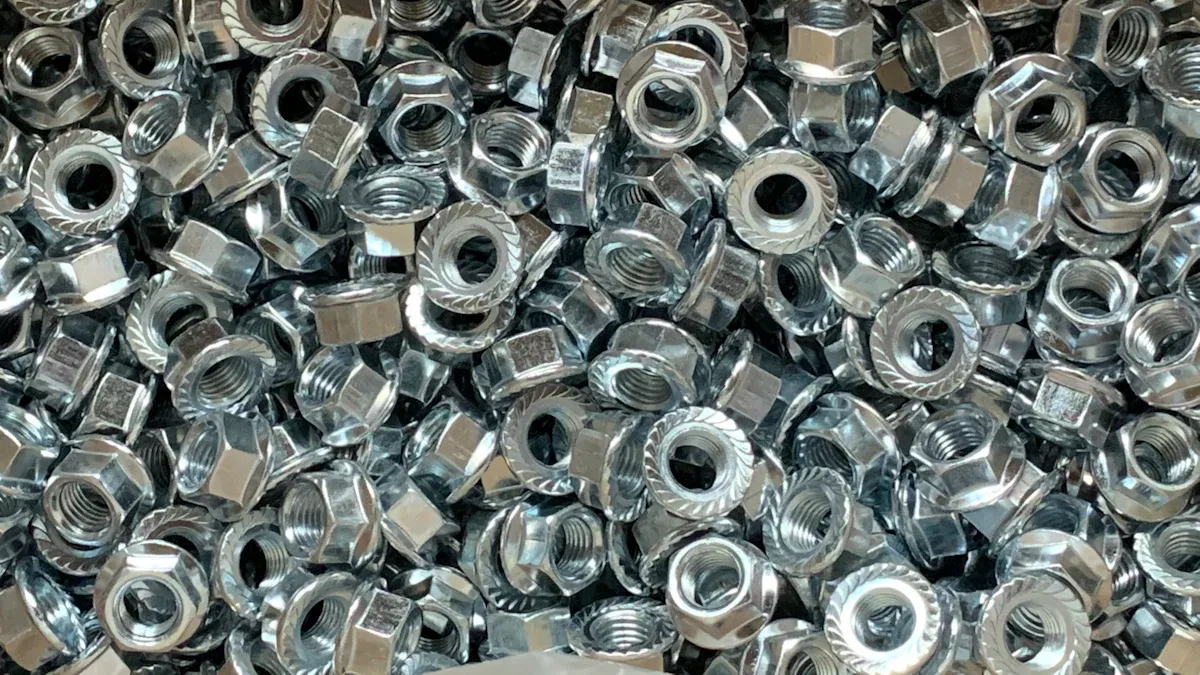
The history of flange nuts traces back to the industrialization era, when engineers demanded stronger and more reliable connections than traditional гаек и болтов could provide. A фланцевая гайка features an integrated flange that spreads the load over a wider area, preventing damage to surfaces and reducing the risk of loosening. This design sets it apart from standard fastener options. Many industries, including производитель крепежных изделий на заказ operations, rely on flange nuts for stability, especially when producing нестандартные крепежные элементы for specialized applications.
Defining the Flange Nut in Engineering
What Is a Flange Nut?
Basic Structure and Function
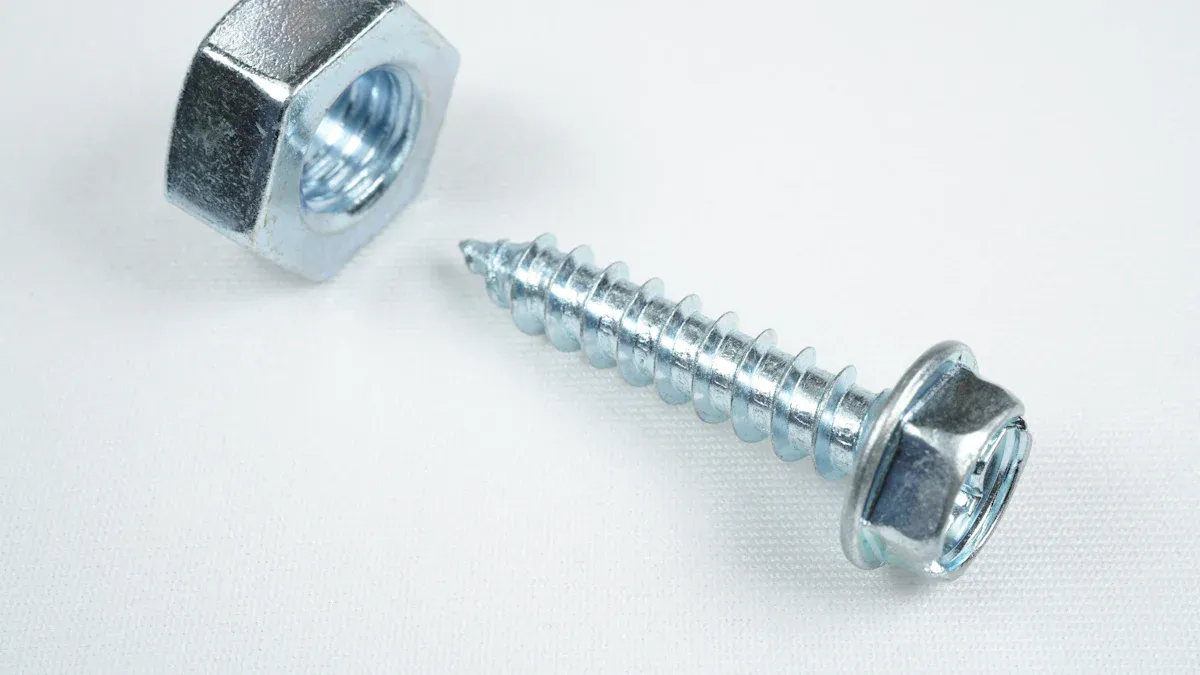
A flange nut is a specialized fastener that features a wide, integrated flange at one end. This flange acts as a built-in washer, distributing the clamping force over a larger surface area. The main function of a flange nut is to secure components together while minimizing the risk of surface damage and loosening. Engineers often select this fastener for applications where stability and reliability are critical.
Unique Features Compared to Standard Nuts
Unlike standard nuts, a flange nut provides several unique advantages. The flange increases the contact area, which helps prevent the nut from embedding into softer materials. Many flange nuts also include serrations on the flange surface, which grip the mating material and resist loosening caused by vibration. The table below highlights ключевые различия:
| Характеристика | Гайки фланцевые | Standard Nuts |
|---|---|---|
| Распределение нагрузки | Wide flange distributes load over a larger area | Standard design may concentrate load |
| Stability | Prevents loosening, ensuring structural stability | May loosen under vibration |
| Применение | Применение automotive, construction, and manufacturing | Общее использование |
| Устойчивость к вибрации | Serrated types grip surfaces, ideal for high-vibration environments | Not specifically designed for vibration resistance |
Common Applications of Flange Nuts
Automotive Engineering Uses
Automotive engineers rely on flange nuts for critical connections. These fasteners secure wheel hubs, engine mounts, and suspension systems. The integrated flange maintains grip under high vibration, which is essential for vehicle safety and performance. Serrated flange nuts, in particular, provide reliable locking at high speeds.
Промышленное оборудование и машины
In industrial machinery, flange nuts play a vital role in maintaining alignment and stability. They fasten components in heavy equipment, robotic arms, and automated assembly lines. The flange helps correct minor misalignments and ensures consistent clamping force, even in dynamic environments.
Applications in Wood and Plastic
Flange nuts also serve in wood and plastic assemblies. The wide flange prevents the fastener from pulling through softer materials, protecting surfaces from deformation. This makes them ideal for furniture, cabinetry, and lightweight structural applications.
Совет: Flange nuts are especially effective in outdoor and high-vibration environments, such as wind turbines and power transmission towers, due to their resistance to loosening and corrosion.
Advantages of Flange Nuts
Improved Load Distribution
The flange nut excels at distributing pressure evenly across the mating surface. This reduces the risk of surface damage and enhances the stability of the connection. Studies show that flange nuts create about 37% less surface deformation compared to regular nuts, which demonstrates their superior load distribution.
Enhanced Vibration Resistance
Flange nuts offer enhanced vibration resistance, especially when equipped with serrated flanges. The serrations grip the surface, acting as a locking mechanism that prevents loosening in high-vibration environments. This feature proves essential in automotive, construction, and energy sectors, where fasteners must withstand constant movement and stress.
The History and Evolution of Nuts and Bolts
Early Fasteners and Threaded Connections
Ancient Fasteners and Materials
The evolution of fasteners began long before the modern era. Early civilizations used wooden pegs, leather straps, and metal pins to join materials. These primitive devices marked the prehistoric origins of nuts and bolts. Over time, blacksmiths and craftsmen experimented with bronze and iron, creating stronger and more durable fasteners for construction and tools.
Early Threaded Devices
The rise of threaded connections transformed engineering. Ancient inventors recognized the value of spiral threads for holding objects together. Archaeological and historical records reveal several milestones in the history and evolution of nuts and bolts:
- Archimedes invented the screw as a tool around 287 B.C.
- Archaeologists discovered threaded screws in Pompeii, used for wine and oil production.
- Romans applied threaded screws in medicinal presses and odometers.
These innovations set the stage for the evolution of fasteners, allowing engineers to create more reliable and reusable connections.
Development of Nut and Bolt Systems
Impact of the Industrial Revolution
The Industrial Revolution marked a turning point in the evolution of fasteners. Factories needed efficient assembly methods and interchangeable parts. Engineers responded by developing machines that could produce nuts and bolts in large quantities. The following table highlights key advancements during this period:
| Advancement | Описание |
|---|---|
| Screw-cutting lathe invention | Henry Maudslay’s invention in the early 1800s revolutionized production, enabling mass production of standardized screws and nuts. |
| Стандартизация | Allowed for interchangeability, making nuts and bolts essential in various industries. |
| Increased production | The Industrial Revolution accelerated the development and use of nuts and bolts in engineering and construction. |
These changes fueled the history and evolution of nuts and bolts, making them indispensable in modern engineering.
Standardization of Threads
Standardization played a crucial role in the industrial revolution and standardization of fasteners. Engineers and manufacturers recognized the need for uniform threads to ensure compatibility. The evolution of fasteners continued with several key milestones:
- Joseph Whitworth introduced the Whitworth thread system in the mid-19th century, simplifying the thread angle and leading to the British Standard Whitworth (BSW) system in 1841.
- The American Standards Association (ASA) established the Unified National Thread Standard in the 1920s, following efforts by the American British Canadian (ABC) Council during World War I.
- The late 1950s saw the differentiation into Unified National Coarse (UNC) and Unified National Fine (UNF) threads, prompted by industrial advancements after the launch of Sputnik.
These developments ensured that nuts and bolts could be produced and used worldwide, supporting the ongoing evolution of fasteners in every industry.
Note: The history and evolution of nuts and bolts demonstrates how innovation, standardization, and industrial progress shaped modern engineering.
The History of Flange Nuts: Origins and Invention
First Appearance of Flange Nuts
Timeline of Introduction in Engineering
The history of flange nuts began during the late nineteenth century. Engineers faced new challenges as machinery and vehicles became more complex. They needed fasteners that could withstand vibration and distribute load more effectively. The flange nut emerged as a solution, offering an integrated flange that improved stability. By the early twentieth century, manufacturers started to produce flange nuts for automotive and industrial applications. The timeline below highlights key moments in the history of flange nuts:
| Год | Event |
|---|---|
| Late 1800s | Engineers experiment with integrated flanges on nuts |
| Early 1900s | Flange nuts appear in automotive engineering |
| 1920s | Mass production of flange nuts begins |
| 1950s | Flange nuts become standard in heavy machinery |
The history of flange nuts shows a gradual adoption as industries recognized their benefits. Engineers valued the flange nut for its ability to prevent loosening and protect surfaces.
Initial Engineering Challenges Addressed by Flange Nuts
Engineers encountered several problems with traditional fasteners. Machinery often vibrated, causing nuts to loosen and connections to fail. Surfaces suffered damage when nuts concentrated force on small areas. The flange nut addressed these issues by spreading the load and resisting vibration. Fasteners with integrated flanges reduced maintenance needs and improved safety. Automotive engineers relied on flange nuts to secure wheel hubs and suspension systems. Industrial designers used flange nuts to maintain alignment in heavy equipment. The history of flange nuts reflects a response to these engineering challenges.
Note: The flange nut’s design helped solve problems in both automotive and industrial sectors, making it a preferred choice for engineers seeking reliable fasteners.
Key Contributors to Flange Nut Development
Notable Engineers and Patents
The history of flange nuts does not identify a single inventor. Instead, engineers and inventors collaborated during the Industrial Revolution to develop the flange nut. Patent records do not attribute the invention to one individual. The evolution of flange nuts resulted from collective innovation. Engineers experimented with different designs, improving the performance of fasteners. Companies played a crucial role in refining and popularizing the flange nut.
- Engineers in the late nineteenth century tested various flange shapes.
- Inventors improved fasteners by adding serrations to the flange for better grip.
- Patent offices recorded incremental improvements, but no single patent defines the flange nut.
Early Manufacturing Companies
Several companies contributed to the history of flange nuts. SPS Technologies and Fastenal became leaders in manufacturing and distributing flange nuts. These companies invested in research and development, creating fasteners that met industry standards. SPS Technologies focused on aerospace and automotive applications, while Fastenal supplied flange nuts to construction and manufacturing sectors. Their efforts ensured that flange nuts became widely available and reliable.
- SPS Technologies developed high-strength flange nuts for critical applications.
- Fastenal expanded the range of flange nuts, offering options for wood, plastic, and metal assemblies.
- Both companies promoted the use of flange nuts by educating engineers about their advantages.
Стандарт DIN 933: объяснение history of flange nuts demonstrates how industry collaboration and innovation shaped modern fasteners. Engineers, inventors, and manufacturers worked together to solve problems and improve reliability.
Flange Nut Adoption During Industrialization
Growth in the 19th and 20th Centuries
Expansion in Automotive Engineering
Automotive engineering experienced rapid growth during the late nineteenth and early twentieth centuries. Engineers sought reliable fasteners for vehicles that could withstand high vibration and stress. The flange nut became a preferred choice for securing critical components such as chassis and suspension systems. Manufacturers recognized its ability to maintain tight connections even under extreme conditions. Vehicle production increased, and technology advancements drove the widespread use of flange nuts in automotive applications. The flange nut provided consistent performance, supporting safety and durability in modern vehicles.
Adoption in Heavy Machinery and Industry
Heavy machinery and industrial equipment required robust fastening solutions. Engineers selected flange nuts for their ability to distribute load and resist loosening. Factories and construction sites depended on these fasteners to secure large assemblies and maintain alignment. The flange nut proved essential in high-stress environments, where machinery operated continuously and faced constant vibration. Industrial designers valued its integrated flange, which protected surfaces and reduced maintenance needs. The table below highlights the role of automotive and heavy machinery industries in the adoption of flange nuts:
| Источник | Evidence |
|---|---|
| Flange Fasteners Market | Flange nuts are essential in automotive and heavy machinery for secure connections in high-stress environments. |
| Automotive Screw Nut Market | The automotive industry relies on flange fasteners for critical components, driven by vehicle production and technology advancements. |
| Flange Nuts & Bolts Market | Flange nuts are designed to withstand high vibrations and stresses, making them ideal for chassis and suspension systems. |
Note: The widespread use of flange nuts in these industries established their reputation as reliable fasteners for demanding applications.
Standardization and Mass Production of Flange Nuts
Role of International Standards Organizations
International standards organizations played a pivotal role in the mass production of standardized screws and flange nuts. Groups such as ISO and ANSI developed guidelines that ensured compatibility and quality across manufacturers. Engineers benefited from uniform specifications, which simplified assembly and maintenance. Standardization allowed companies to produce flange nuts in large quantities, meeting the needs of global industries. These organizations promoted safety and reliability by setting strict requirements for materials, dimensions, and performance.
Advances in Manufacturing Techniques
Manufacturing techniques evolved rapidly during industrialization. Factories adopted new methods for producing flange nuts efficiently and consistently. Automated machinery enabled high-volume output, reducing costs and improving quality. Innovations in forging, machining, and surface treatments enhanced the durability and corrosion resistance of flange nuts. Manufacturers invested in research to develop fasteners that met industry standards and performed reliably in harsh environments. The combination of standardization and advanced manufacturing fueled the mass production of flange nuts, making them accessible to a wide range of engineering fields.
Tip: Engineers can select flange nuts with specialized coatings or materials to address specific challenges, such as corrosion or extreme temperatures.
Innovations in Flange Nut Design and Materials
Material Improvements in Flange Nuts
Stainless Steel and Alloy Flange Nuts
Engineers have seen significant progress in the advancement of materials and technologies for flange nuts. Stainless steel and alloy flange nuts now dominate many industries due to their strength and resistance to harsh conditions. Stainless steel nuts resist corrosion and maintain durability in environments with moisture or chemicals. Alloy flange nuts offer enhanced mechanical properties, making them suitable for high-stress applications. The table below highlights how material innovations have improved performance and durability across different types of flange nuts:
| Type of Flange Nut | Material Innovation Description |
|---|---|
| Фланцевые гайки с зубцами | Engineered for exceptional grip and security, with a serrated design that enhances locking capability against vibration. |
| Locked Flange Nuts | Features a locking mechanism to prevent self-loosening, ensuring stable connections. Available in various locking types. |
| Stainless Steel Nuts | Known for corrosion resistance and durability, ideal for challenging environments with moisture and corrosive elements. |
Corrosion Resistance Technologies
Corrosion resistance remains a top priority for engineers working with flange nuts in demanding environments. Stainless steel flanges prevent rust and extend the lifespan of fasteners. Some metals perform better in specific chemical settings, so engineers select materials based on the application. Flange sealing methods add another layer of protection when base materials alone do not suffice. Modern flange materials, combined with advanced surface treatments, withstand conditions that would quickly degrade carbon steel. Nanocoatings have emerged as a promising solution, providing a thin yet highly effective protective layer. These technologies help flange nuts endure in industries such as marine, chemical processing, and energy.
Design Enhancements in Flange Nuts
Locking Mechanisms and Serrated Flange Nuts
Design enhancements have transformed flange nuts into reliable solutions for vibration-prone environments. Serrated flange nuts feature a unique design that grips the mating surface, reducing the risk of loosening under dynamic loads. Locked flange nuts incorporate mechanisms that prevent self-loosening, ensuring stable connections in critical assemblies. Engineering literature, including standards like the ASME Boiler and Pressure Vessel Code and EN 1591-4, documents these improvements. Studies by Murali et al. and Walczak et al. have analyzed the sealing performance and material aspects of bolted flange joints, confirming the effectiveness of these innovations.
Specialized Flange Nut Types for Industry Needs
Industries often require specialized flange nuts to address unique challenges. For example, commercial solar tracker systems faced issues with standard serrated flange nuts that could not grip hardened steel brackets. Engineers developed a customized serrated flange nut with deeper, angled teeth to resist reverse-rotational forces. This innovation eliminated loosening and allowed the manufacturer to extend their structural warranty from 10 to 15 years. Such examples show how different types of flange nuts continue to evolve to meet industry-specific requirements.
Leading Companies and Industry Impact
Major Flange Nut Manufacturers
Several companies lead the global flange nut market. STANLEY Engineered Fastening, FULLER, Locknut Technology, Ramco Specialties, Wilhelm Böllhoff GmbH und Co. KG, Jergens Inc., and Jeng Bright International Corporation have established strong reputations. Other notable manufacturers include TE-CO, K.M Steel, Jignesh Steel, Youbang, SHANGHAI QIANGYI FASTENER, Dongrenying, Shenzhen Huayuan Precision Products, Kamax, and Ruian Weifu Standard Parts. These companies drive innovation and set industry standards.
Engineering Milestones in Flange Nut Development
Engineering milestones in flange nut development reflect ongoing progress in design and manufacturing. International guidelines, such as the ESA-FSA Guidelines and EN 1591-4, have improved safety and reliability in critical applications. Research continues to focus on sealing performance, material selection, and assembly practices. The advancement of materials and technologies ensures that flange nuts remain essential components in modern engineering.
The Importance of Flange Nuts in Modern Engineering
Role of Flange Nuts in Contemporary Engineering
Safety and Reliability in Fastening
Engineers prioritize safety and reliability when selecting fasteners for critical assemblies. The flange nut delivers consistent performance by distributing force across a wider area. This design reduces the risk of surface damage and prevents loosening caused by vibration. Automotive and construction industries rely on flange nuts to secure components that must withstand dynamic loads and harsh environments. The integrated flange acts as a safeguard, maintaining structural integrity and minimizing the chance of unexpected failures. Manufacturers trust these fasteners to meet rigorous safety standards, ensuring that machinery and vehicles operate without interruption.
Efficiency in Assembly and Maintenance
Modern engineering demands efficient assembly and streamlined maintenance. The flange nut simplifies installation by eliminating the need for a separate washer. Workers handle fewer components, which reduces assembly complexity and speeds up production. Automated systems benefit from the consistent shape and size of flange nuts, allowing for quicker and more accurate placement. Maintenance teams appreciate the enhanced reliability, as the design minimizes the frequency of checks and repairs. The table below illustrates how flange nuts contribute to efficiency in assembly and maintenance:
| Преимущество | Объяснение |
|---|---|
| Упрощенный монтаж | Eliminates the need for a separate washer, reducing the number of components and assembly complexity. |
| Enhanced Reliability | The design provides resistance to loosening, minimizing maintenance checks and unexpected breakdowns. |
| Improved Compatibility | Works well with modern manufacturing methods, supporting high-volume production efficiency. |
| 5000 тонн/месяц | Reduces lifecycle costs through fewer components and decreased maintenance needs. |
| Easier Handling in Automation | The consistent shape and size facilitate quicker assembly in automated processes. |
Tip: Engineers can optimize production lines by selecting flange nuts that support automated assembly and reduce maintenance downtime.
Future Trends and Challenges for Flange Nuts
Sustainability and Eco-Friendly Materials
Industry leaders recognize the importance of sustainability in fastener production. The flange nut market is shifting toward eco-friendly materials and manufacturing practices. Companies seek to reduce environmental impact by adopting recycled metals and advanced coatings. However, manufacturers face several challenges in this transition:
- Land disturbance from mining raw materials causes deforestation, soil erosion, and loss of biodiversity.
- Air pollution results from production processes, affecting human health and contributing to climate change.
- Water pollution occurs when mining contaminates nearby water sources, posing risks to communities and ecosystems.
Engineers must balance performance requirements with environmental responsibility. The adoption of sustainable materials in flange nut production will require innovation and collaboration across the industry.
Emerging Technologies in Fastener Design
Advancements in manufacturing technologies are transforming the design and production of fasteners. The flange nut benefits from new methods such as robotic welding and additive manufacturing. 3D printing offers cost-effectiveness, design flexibility, and high material utilization. Aerospace companies use 3D printed flanges to reduce weight and enhance performance, especially for complex shapes in wing connection parts. The table below highlights the impact of emerging technologies:
| Аспект | Детали |
|---|---|
| Преимущества | 3D printing offers cost-effectiveness, design flexibility, high material utilization, and reduced waste, making it ideal for customization in flange production. |
| Future Development Potential | The technology is expected to advance in personalized customization and rapid prototyping, with improvements in precision and efficiency, particularly in high-end manufacturing sectors like aerospace. |
| Practical Application Case | Aerospace companies are utilizing 3D printed flanges to reduce weight and enhance performance, especially for complex shapes needed in components like wing connection parts. |
Industry forecasts indicate several trends for the next decade:
- Increased adoption of advanced manufacturing technologies.
- Focus on sustainability and eco-friendly materials.
- Compliance with international standards for product reliability.
Note: Engineers who embrace emerging technologies and sustainable practices will drive innovation in flange nut design and production.
Flange nuts have transformed from basic fasteners into essential components in engineering. Their unique design supports stability and reliability across automotive, electronics, and construction industries. Continuous innovation in materials, such as stainless steel and hot-dip galvanized finishes, enhances performance in harsh environments.
- Pressure washers in Hex Flange Nuts improve load distribution and protect soft substrates.
- Stainless steel nuts resist corrosion, extending service life in challenging conditions.
| Principle | Описание |
|---|---|
| Compressive Sealing | Torqued bolts deform gaskets, creating barriers against fluid leakage under high pressure. |
| Frictional Restraint | Compressed gaskets generate friction, preventing pipes from dislodging during movement. |
Standardization and ongoing advancements ensure flange nuts remain vital in addressing modern engineering challenges.
Частые вопросы
What distinguishes a flange nut from a standard nut?
A flange nut features an integrated flange that distributes load and resists loosening. Standard nuts lack this flange, which makes them less effective in high-vibration environments.
Where do engineers commonly use flange nuts?
Engineers use flange nuts in automotive, heavy machinery, and construction. These fasteners secure components that require stability and vibration resistance.
How does a serrated flange nut prevent loosening?
Serrated flange nuts grip the mating surface with their serrations. This design increases friction and prevents the nut from loosening during vibration or movement.
Подходят ли фланцевые гайки для наружного применения?
Flange nuts made from stainless steel or treated with corrosion-resistant coatings perform well outdoors. They resist rust and maintain strength in harsh weather conditions.
Can flange nuts be used with wood or plastic materials?
Engineers select flange nuts for wood and plastic assemblies. The wide flange prevents the nut from pulling through softer materials and protects surfaces from damage.
What are the main advantages of using flange nuts?
Flange nuts offer improved load distribution, enhanced vibration resistance, and simplified installation. These benefits increase reliability and reduce maintenance needs.
How do manufacturers ensure flange nut quality?
Manufacturers follow international standards like ISO and ANSI. They use advanced materials and precise manufacturing techniques to produce reliable flange nuts.
Are eco-friendly flange nuts available?
Some manufacturers produce flange nuts using recycled metals and sustainable coatings. These options help reduce environmental impact and support green engineering practices.