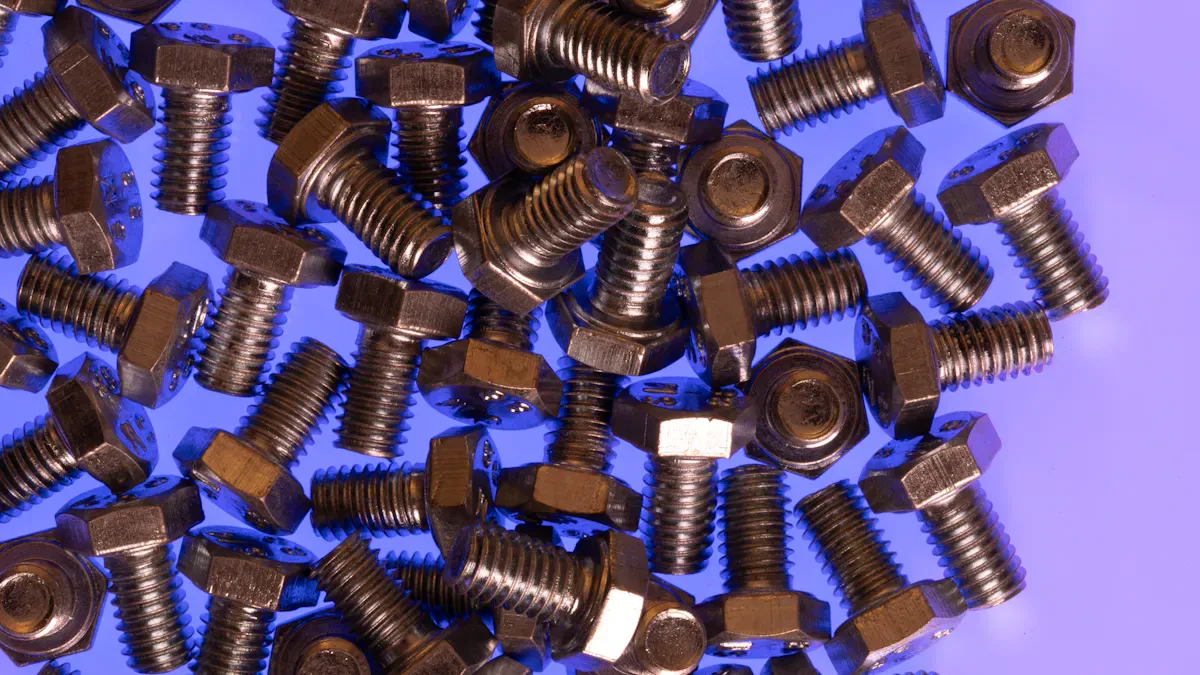
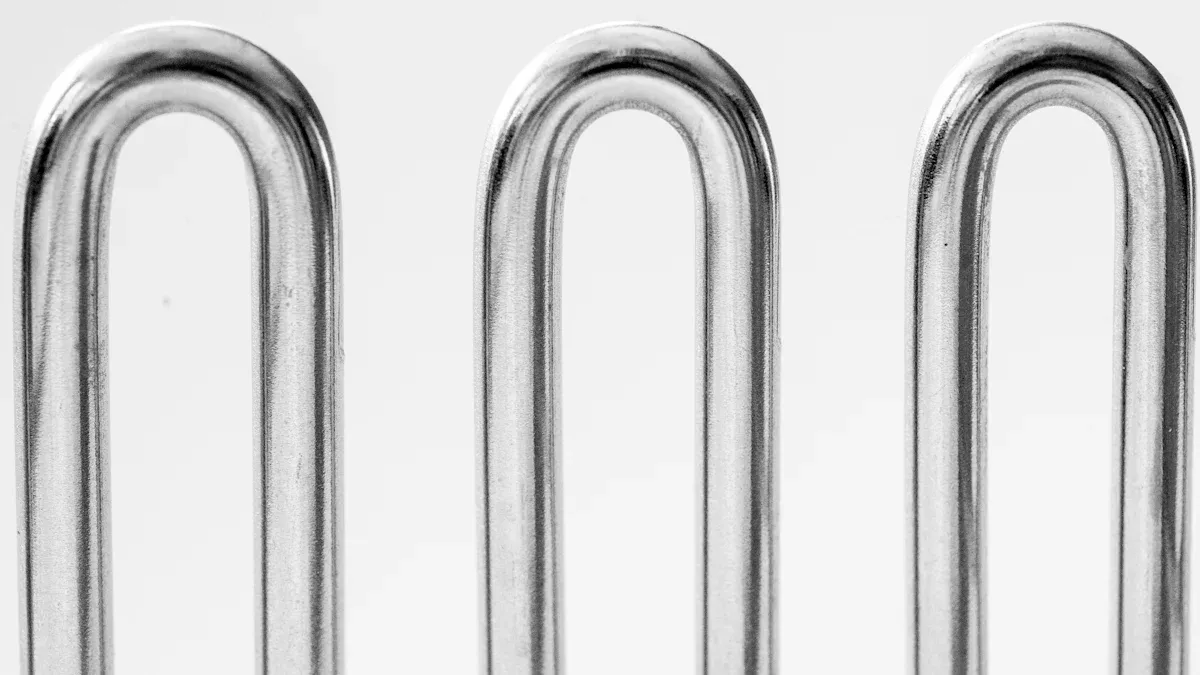
Choosing the appropriate U-bolt materials is crucial for ensuring reliable performance in demanding environments. Stainless steel U-образный болт options, particularly those made from 316 grade, are ideal for marine, food processing, and chemical applications because of their superior corrosion resistance. Galvanized u-bolts are commonly used to secure deck hardware exposed to saltwater, offering enhanced durability where corrosion can compromise standard литье болтов. For indoor or light-duty installations, zinc plated u-bolts are a suitable choice. A reputable производитель крепежных изделий на заказ will advise selecting нестандартные крепежные элементы that are tailored to the specific environmental conditions and stress requirements to achieve the best results.
Understanding U-bolt Materials
Нержавеющая сталь
Метод покрытия
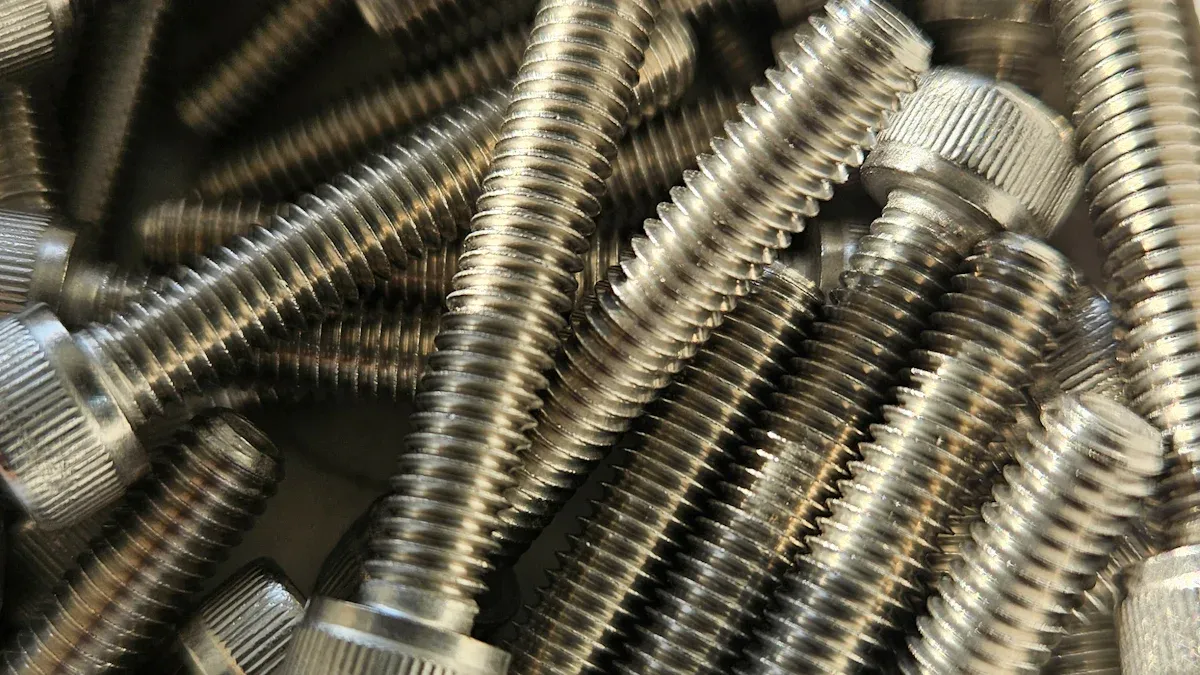
Stainless steel stands out among u-bolt materials for its exceptional resistance to corrosion. The alloy contains iron, chromium, and nickel, which combine to form a protective layer on the surface. This layer prevents rust and degradation, even in harsh environments. Stainless u-bolts maintain their strength and integrity when exposed to moisture, chemicals, or saltwater. The manufacturing process ensures that stainless steel u-bolts deliver consistent performance. Chromium content forms a shield that protects the metal from oxidation. Stainless steel offers high tensile strength, making it suitable for heavy-duty applications.
Stainless steel u-bolts provide reliable performance in marine, outdoor, and industrial settings. They resist pitting and staining, which extends their service life.
Common Grades
Manufacturers produce stainless steel u-bolts in several grades. The most common grades include 304 and 316. Grade 304 contains 18% chromium and 8% nickel, offering general corrosion resistance. Grade 316 adds molybdenum, which improves resistance to chlorides and saltwater. Stainless steel grades determine the suitability for specific environments. Grade 316 is preferred for marine and coastal installations, while grade 304 works well in less aggressive conditions.
| Type of Steel | Химический состав | Corrosion Resistance Level | Горячее цинкование наносит гораздо более толстый и защитный слой цинка по сравнению со стандартным покрытием. Этот процесс обеспечивает хорошую защиту от коррозии для наружных применений, таких как настилы и ограждения. Разные марки цинкования предлагают разный уровень защиты. |
|---|---|---|---|
| Нержавеющая сталь | Iron, Chromium (18% Cr, 8% Ni for 304) | Отличная | Н/Д |
| Оцинкованная сталь | Regular Steel + Thick Zinc Coating | Умеренная | Горячее цинкование. |
| Сталь с гальваническим цинкованием | Regular Steel + Thin Zinc Coating | Baseline | Electroplating |
Оцинкованная сталь
Метод покрытия
Galvanized steel u-bolts feature a thick zinc coating applied to regular steel. This coating acts as a sacrificial barrier, protecting the steel from rust. Galvanized steel offers moderate corrosion resistance, making it suitable for outdoor and construction applications. The zinc layer prevents moisture and oxygen from reaching the steel surface. Galvanized u-bolts withstand exposure to weather and environmental stress.
- Galvanized steel u-bolts are commonly used in construction, automotive, and agricultural industries.
- The zinc coating extends the lifespan of the u-bolt materials in challenging conditions.
Types of Galvanizing
Manufacturers use hot-dip galvanization to apply the zinc coating. This process involves immersing steel in molten zinc, which forms a durable layer. Hot-dip galvanizing produces a thicker coating than other methods. Galvanized steel u-bolts benefit from this process, as the zinc layer provides long-lasting protection.
| Тип U-образного болта | Performance Characteristics |
|---|---|
| Stainless Steel U-Bolts | High corrosion resistance due to chromium content forming a protective layer, ideal for outdoor/marine use. |
| Galvanized U-Bolts | Coated with zinc, providing sacrificial protection against rust, commonly used in construction and automotive. |
| Coated or Painted U-Bolts | Additional protective layer against rust, preventing moisture and oxygen from reaching the steel. |
Сталь с гальваническим цинкованием
Метод покрытия
Zinc plated steel u-bolts use a thin zinc coating applied through electroplating. This process provides baseline corrosion resistance. Zinc plated u-bolts are best suited for indoor or light-duty applications. The coating protects against minor moisture exposure but does not withstand harsh environments. Zinc plated steel offers affordability and ease of installation.
Plating Process
Electroplating applies the zinc layer to the steel surface. The process creates a uniform, thin coating. Zinc plated u-bolts are ideal for temporary or low-risk installations. The plating process ensures a smooth finish, but the protection is limited compared to galvanized steel or stainless steel.
Corrosion Resistance of U-bolt Materials

Stainless Steel Performance
Marine and Outdoor Environments
Stainless steel delivers exceptional resistance in marine and outdoor environments. The alloy’s unique composition, which includes chromium and nickel, forms a passive layer that shields the metal from moisture and salt. This layer prevents rust and pitting, even when exposed to high-moisture environments. Stainless u-bolt materials maintain their integrity in coastal regions, docks, and ships. The performance of stainless steel in salt spray tests demonstrates its superiority. Stainless can withstand up to 2000 hours of neutral salt spray exposure without significant degradation. Marine installations rely on stainless steel for its long-term resistance to corrosion, especially in areas with constant moisture and saltwater contact. Outdoor environments with frequent rainfall or humidity also benefit from the durability of stainless steel u-bolts.
- Stainless steel u-bolts resist corrosion in marine, coastal, and outdoor environments.
- The alloy’s passive layer protects against moisture, salt, and other corrosive agents.
- Extended salt spray testing confirms the high resistance of stainless steel.
Ограничения и соображения
Despite its outstanding resistance, stainless steel has limitations. The alloy can suffer from crevice corrosion in stagnant water or when exposed to certain chemicals. Stainless steel grades vary in their resistance levels. Grade 316 offers enhanced protection in marine settings, while grade 304 may not perform as well in high-moisture environments. Stainless u-bolts cost more than other materials, which may impact project budgets. The selection of stainless steel must consider the specific environment and exposure to moisture. Stainless steel remains the top choice for applications demanding maximum resistance, but users should evaluate grade and cost before making a decision.
Galvanized Steel Performance
Пригодность для улицы
Galvanized steel u-bolts provide reliable resistance in outdoor environments. The zinc coating acts as a sacrificial barrier, shielding the steel from moisture and oxygen. Galvanized u-bolts perform well in construction, agriculture, and automotive applications where exposure to rain and humidity is common. The zinc layer slows the onset of rust, extending the service life of the u-bolt materials. Galvanized steel shows moderate resistance in salt spray tests, with 5% red rust appearing after about 1000 hours of exposure. The anticipated service life of hot-dip galvanized steel in outdoor applications often falls short of the installation’s lifespan, especially in marine environments.
- Galvanized u-bolts resist corrosion in outdoor environments due to their protective zinc coating.
- The zinc layer provides a barrier against moisture, reducing rust formation.
- Salt spray testing reveals moderate resistance compared to stainless steel.
Maintenance Needs
Galvanized steel requires regular inspection and maintenance to preserve its resistance. The zinc coating can develop cracks under preload and corrosive conditions, which reduces fatigue strength. Berchem’s research highlights that the number of cracks in the zinc coating increases in humid environments, leading to diminished resistance over time.
The presence of a corrosive environment significantly complicates the fatigue life of galvanized steel, as indicated by Berchem, who found that the number of cracks in the zinc coating increases under preload and corrosive conditions, leading to reduced fatigue strength.
Galvanized u-bolts need periodic cleaning and monitoring, especially in high-moisture environments. Maintenance ensures the zinc layer remains intact and continues to provide resistance. Users must consider the maintenance requirements when selecting galvanized steel for outdoor or marine applications.
Zinc Plated Steel Performance
Indoor vs Outdoor Use
Zinc plated steel u-bolts offer baseline resistance, suitable for indoor and light-duty applications. The thin zinc coating, applied through electroplating, protects against minor moisture exposure. Zinc plated u-bolts perform best in environments with limited humidity and no direct contact with corrosive agents. Indoor installations, such as HVAC systems or furniture, benefit from the affordability and ease of installation. Zinc plated steel does not withstand prolonged exposure to moisture or outdoor environments. The resistance level drops quickly when the coating wears away or cracks.
- Zinc plated u-bolts provide basic resistance in indoor settings.
- The thin zinc layer shields against occasional moisture but lacks durability in outdoor environments.
- Indoor applications benefit from the cost-effectiveness of zinc plated steel.
Weaknesses in Harsh Conditions
Zinc plated steel struggles in harsh conditions. The coating offers minimal resistance to corrosion, especially in marine or outdoor environments with high moisture. The plating process creates a smooth finish but does not provide long-term protection. Zinc plated u-bolts fail quickly when exposed to saltwater, humidity, or rain. Users should avoid zinc plated steel in high-moisture environments or areas with frequent exposure to corrosive agents.
- Zinc plated steel lacks resistance in marine and outdoor environments.
- The coating deteriorates rapidly under moisture and salt exposure.
- Temporary or low-risk installations may use zinc plated steel, but harsh conditions demand more robust u-bolt materials.
Strength and Durability Comparison
Tensile Strength of U-bolt Materials
Нержавеющая сталь
Stainless steel u-bolts deliver impressive strength in demanding applications. Engineers often select stainless steel for its high tensile strength, which measures the maximum load a material can withstand before breaking. Grade 304 stainless steel typically achieves a tensile strength of around 70,000 psi, while grade 316 stainless steel can reach similar or slightly higher values. This strength allows stainless steel u-bolts to secure heavy loads in marine, industrial, and structural environments. Stainless steel maintains its strength even after prolonged exposure to moisture or chemicals. The alloy’s composition, which includes chromium and nickel, ensures that the материалы для П-образных болтов resist deformation under stress. Stainless steel u-bolts also retain their mechanical properties at both high and low temperatures.
Stainless steel u-bolts provide a reliable solution when projects demand both strength and corrosion resistance.
Оцинкованная сталь
Galvanized u-bolts use carbon steel as a base, which offers solid tensile strength. The hot-dip galvanizing process adds a protective zinc layer but does not significantly alter the underlying steel’s strength. Most galvanized u-bolts exhibit tensile strengths ranging from 60,000 to 80,000 psi, depending on the steel grade used. Galvanized u-bolts perform well in construction and agricultural settings where moderate strength and corrosion protection are necessary. The zinc coating can sometimes reduce the effective thread engagement, but the core steel maintains its load-bearing capacity. Galvanized u-bolts offer a balance between strength and cost, making them a popular choice for outdoor installations.
Сталь с гальваническим цинкованием
Zinc plated u-bolts start with standard carbon steel, which provides moderate tensile strength. The electroplated zinc layer serves primarily as a corrosion barrier and does not enhance the steel’s mechanical properties. Zinc plated u-bolts generally achieve tensile strengths similar to their galvanized counterparts, often in the 50,000 to 70,000 psi range. These u-bolts work best in light-duty or indoor applications where high strength is not the primary concern. The thin zinc coating may wear away quickly, especially if the u-bolt experiences frequent loading or movement.
| U-bolt Material | Typical Tensile Strength (psi) | Коррозионная стойкость | Наилучший случай применения |
|---|---|---|---|
| Нержавеющая сталь | 70,000+ | Отличная | Marine, chemical, structural |
| Оцинкованная сталь | 60,000–80,000 | Умеренная | Construction, agriculture |
| Сталь с гальваническим цинкованием | 50,000–70,000 | Basic | Indoor, light-duty |
Long-term Durability
Fatigue Resistance
Long-term durability depends on how well u-bolt materials withstand repeated loading and unloading cycles. Stainless steel excels in fatigue resistance due to its alloy structure. The material resists crack formation and propagation, even when subjected to vibration or fluctuating loads. Stainless steel u-bolts maintain their integrity over years of service, making them ideal for critical applications.
Galvanized u-bolts offer good fatigue resistance, but the zinc coating can develop micro-cracks under stress. These cracks may expose the underlying steel to corrosion, which can reduce the u-bolt’s lifespan. Regular inspection and maintenance help preserve the fatigue resistance of galvanized u-bolts.
Zinc plated u-bolts show limited fatigue resistance. The thin zinc layer may flake or wear off quickly, especially in environments with movement or vibration. Once the coating fails, the steel core becomes vulnerable to corrosion and fatigue damage.
Wear Over Time
Stainless steel u-bolts demonstrate outstanding wear resistance. The passive oxide layer formed by chromium protects the surface from abrasion and chemical attack. Stainless u-bolts retain their appearance and mechanical properties even after years of exposure to harsh conditions. This wear resistance contributes to the long-term durability of stainless steel fasteners.
Galvanized u-bolts rely on the zinc coating to absorb wear. Over time, the coating may erode, especially in abrasive or high-contact environments. Once the zinc layer wears away, the exposed steel can corrode rapidly. Galvanized u-bolts require periodic monitoring to ensure continued protection.
Zinc plated u-bolts offer minimal wear resistance. The electroplated zinc layer is thin and susceptible to scratching or chipping. In high-wear situations, zinc plated u-bolts may lose their protective coating quickly, leading to premature failure.
Tip: For applications where strength and durability are critical, stainless steel u-bolts provide the best long-term performance. Galvanized options suit moderate outdoor use, while zinc plated u-bolts fit temporary or low-risk installations.
Cost Analysis of U-bolt Materials
Price Comparison
Stainless Steel Cost Factors
Stainless steel u-bolts command higher prices due to their superior corrosion resistance and durability. Manufacturers often select premium grades such as 304 or 316 for demanding environments. The cost reflects the alloy composition and the manufacturing process. Stainless steel u-bolt materials offer long-term value, especially in marine or chemical applications. Buyers pay more upfront but benefit from reduced maintenance and replacement costs.
| Тип U-образного болта | Диапазон цен |
|---|---|
| Stainless Steel (3/8″ Wide) | $18.10 |
| Stainless Steel (1/2″ Wide) | $15.68 – $18.55 |
| Stainless Steel (1/2″ Wide) | $8.51 – $11.08 |
| Stainless Steel (1/2″ Wide) | $7.00 – $8.20 |
| Zinc-Plated Steel (1/2″ Wide) | $5.15 – $13.67 |
The table above shows that stainless steel u-bolts cost more than zinc-plated options. The price difference becomes significant for larger sizes or specialized grades.
Galvanized Steel Pricing
Galvanized u-bolts provide a balance between performance and affordability. The hot-dip process adds a protective zinc layer, which increases the price compared to plain steel but keeps it lower than stainless steel. Galvanized nuts and bolts are widely used in construction and agriculture because they resist corrosion and offer moderate strength. The price depends on the thickness of the zinc coating and the size of the fastener. Galvanized nuts often accompany galvanized u-bolts to ensure consistent protection.
- Galvanized u-bolts cost less than stainless steel but more than zinc-plated steel.
- Galvanized nuts add value by extending the lifespan of the connection.
Zinc Plated Steel Affordability
Zinc plated u-bolts represent the most affordable option for light-duty and indoor applications. The electroplating process creates a thin zinc layer, which keeps production costs low. Zinc plated steel suits projects with limited budgets or temporary installations. Zinc plated nuts and bolts offer basic protection and easy installation. Buyers often choose zinc plated fasteners for furniture, HVAC, or non-critical assemblies.
Zinc plated u-bolts and zinc plated nuts deliver cost savings for projects where corrosion resistance is not a primary concern.
Соотношение цены и качества
Cost vs Performance
Selecting u-bolt materials involves weighing cost against performance. Stainless steel delivers unmatched durability and corrosion resistance, justifying its higher price in harsh environments. Galvanized u-bolts and galvanized nuts offer moderate protection at a reasonable cost, making them suitable for outdoor structures and vehicles. Zinc plated steel provides basic performance for the lowest price, but it lacks longevity in demanding conditions.
| Материал | Первоначальная стоимость | Техническому обслуживанию | Lifespan | Наилучший случай применения |
|---|---|---|---|---|
| Нержавеющая сталь | Высокая | Низкая | Long | Marine, medical, food |
| Оцинкованная сталь | Умеренная | Умеренная | Средний | Construction, agriculture |
| Сталь с гальваническим цинкованием | Низкая | Высокая | Short | Indoor, temporary |
When to Invest in Higher Quality
Investing in higher quality u-bolt materials pays off when the environment exposes fasteners to moisture, chemicals, or heavy loads. Stainless steel and galvanized nuts perform well in marine, industrial, and outdoor settings. Galvanized nuts and bolts should be used together to maximize corrosion resistance. Zinc plated options suit low-risk, indoor, or temporary projects. Decision-makers must consider the total cost of ownership, including maintenance and replacement, before choosing the right material.
Tip: For critical applications, prioritize stainless steel or galvanized fasteners. Zinc plated steel works best for short-term or non-essential installations.
Ideal Applications for U-bolt Materials
Stainless Steel Uses
Marine and Coastal Applications
Stainless steel u-bolt materials perform exceptionally well in marine applications. Engineers rely on stainless for securing hardware on docks, boats, and coastal structures. The alloy resists corrosion from saltwater and humidity, which makes it the preferred choice for environments where moisture is constant. Stainless maintains its integrity even after prolonged exposure to harsh marine conditions. Designers select stainless steel u-bolts for anchoring railings, ladders, and other fixtures that require both strength and durability.
Stainless steel u-bolts ensure long-term reliability in marine applications, providing resistance against rust and pitting that can compromise safety.
Food and Medical Industries
Manufacturers in the food processing and medical equipment sectors choose stainless steel for its hygienic properties. Stainless steel u-bolts meet food safety standards, making them suitable for processing and packaging equipment where cleanliness is critical. Grade 304 stainless steel offers exceptional corrosion resistance, durability, and strength. These features help maintain hygiene and safety standards in environments that demand strict cleanliness.
- Hygienic-grade stainless fasteners comply with food safety regulations.
- Stainless steel u-bolts support processing and packaging machinery.
Stainless bolts also play a vital role in medical devices, where contamination must be avoided. The alloy’s resistance to chemicals and ease of cleaning make it ideal for hospital and laboratory equipment.
Galvanized Steel Uses
Construction and Outdoor Structures
Galvanized steel u-bolt materials serve as a backbone in construction projects. Contractors use galvanized u-bolts to fasten pipes and conduits, providing structural strength in buildings and infrastructure. The zinc coating protects against weather, making these fasteners ideal for outdoor structures such as bridges, fences, and utility poles. Galvanized steel supports marine applications by securing docks and boats, thanks to its moderate corrosion resistance.
- Used to fasten pipes and conduits for structural integrity.
- Essential for securing docks, boats, and outdoor fixtures.
- Widely applied in agriculture for stabilizing farm structures and fences.
Galvanized steel u-bolts offer versatility in construction, balancing cost and performance for projects exposed to the elements.
Automotive and Agricultural Uses
Galvanized steel finds extensive use in automotive and agricultural settings. Mechanics install galvanized u-bolts to secure leaf springs and suspend exhaust systems in vehicles. Farmers depend on these fasteners to stabilize fences, gates, and animal enclosures.
| Область применения | Конкретные случаи использования |
|---|---|
| Автомобилестроение | Securing leaf springs, suspending exhaust systems |
| Agricultural | Securing fences, gates, and animal enclosures |
Galvanized steel u-bolts withstand vibration and environmental stress, making them indispensable in construction, automotive, and agricultural industries.
Zinc Plated Steel Uses
Indoor and Light-duty Applications
Zinc plated steel u-bolt materials excel in indoor environments. Facility managers use zinc plated u-bolts to secure pipes, guide movement, and control vibrations without causing corrosion. These fasteners hang pipes to limit vibrations and support elevated structures in HVAC systems and furniture assembly.
- Securing pipes to prevent movement and wear
- Guiding movement to control vibrations
- Hanging pipes for elevated support
Zinc plated steel offers affordability and ease of installation for light-duty applications where exposure to moisture is minimal.
Temporary or Low-risk Installations
Zinc plated u-bolts suit temporary or low-risk installations. Event organizers and contractors select these fasteners for projects that require quick assembly and removal. The thin zinc coating provides basic protection, making zinc plated steel ideal for short-term construction tasks, displays, and fixtures that do not face harsh conditions.
Zinc plated steel u-bolts deliver cost-effective solutions for indoor and temporary projects, but they lack durability in demanding environments.
Choosing the Right U-bolt Material
Факторы для рассмотрения
Environment and Exposure
Selecting u-bolt materials begins with evaluating environmental conditions. Engineers assess factors such as коррозионной стойкости, chemical exposure, and temperature fluctuations. Weather, humidity, and UV radiation accelerate corrosion if the wrong material is used. Industrial settings often expose fasteners to oils, dust, or chemicals that degrade weaker coatings. High temperatures weaken standard metals, while cold can make some materials brittle. Surface preparation and material compatibility also play a role. Clean, corrosion-free mounting surfaces prevent galvanic reactions, and isolating washers or coatings may be necessary when combining dissimilar metals.
| Экологический фактор | Описание |
|---|---|
| Коррозионная стойкость | Weather, humidity, and UV radiation can accelerate corrosion if improper materials are used. |
| Воздействие химических веществ | Chemicals, oils, or dust may degrade weaker coatings or untreated metals. |
| Temperature Fluctuations | High temperatures weaken materials; cold can cause brittleness. |
| Surface Preparation | Clean surfaces prevent galvanic reactions. |
| Совместимость материалов | Isolating washers or coatings may be needed with dissimilar metals. |
Load and Stress Requirements
The load and stress requirements determine the grade and type of u-bolt. Heavy loads demand higher-grade fasteners to ensure safety and prevent failures. Engineers consider tensile strength, yield strength, and hardness. Environmental conditions and vibration also influence material selection, especially in high-stress environments.
| U-Bolt Grade | Предел прочности на растяжение | Предел текучести | Твердость | Применение |
|---|---|---|---|---|
| Класс 2 | Низкая | Низкая | Низкая | General applications, light loads |
| Класс 5 | Умеренная | Умеренная | Умеренная | Automotive, agriculture, construction |
| Класс 8 | Высокая | Высокая | Высокая | Heavy-duty, safety-critical uses |
- The load a U-bolt will bear is crucial in selecting the appropriate grade.
- Heavy loads necessitate higher-grade U-bolts to ensure safety and prevent failures.
- Environmental conditions and vibration also play significant roles in material selection.
Budget Constraints
Budget constraints affect material choice и объем проекта. Нержавеющая сталь обеспечивает превосходные характеристики, но имеет более высокую стоимость материала. Оцинкованная сталь предлагает баланс между ценой и долговечностью. Сталь с цинковым покрытием остается наиболее доступным вариантом для легких условий эксплуатации. Минимальные объемы заказа, совокупная стоимость владения и требования к обеспечению качества влияют на долгосрочные бюджетные решения.
| Бюджетное ограничение | Описание |
|---|---|
| Стоимость материалов | Начальная цена U-образных болтов из нержавеющей, оцинкованной стали и стали с цинковым покрытием. |
| Минимальный объем заказа (MOQ) | Наименьшее количество, которое можно заказать, влияющее на общие затраты. |
| Совокупная стоимость владения | Включает цену за единицу, импортные пошлины и стоимость упаковки. |
| Требования к обеспечению качества | Материалы более высокого качества могут иметь более высокие первоначальные затраты, но более низкую частоту замены. |
Совет: Инвестиции в материалы более высокого качества со временем снижают затраты на техническое обслуживание и замену.
Контрольный список для принятия решений
- Определите объект, который необходимо закрепить, и точно измерьте его внешний диаметр.
- Определите требования к нагрузке, оценив вес и динамические силы.
- Выберите материал в зависимости от среды: нержавеющая сталь для прибрежных зон или химических заводов, оцинкованная сталь для общего наружного применения.
- Подберите размер резьбы и длину ножек, чтобы обеспечить правильное зацепление и зазор для шайб.
- Проверьте совместимость с монтажным оборудованием, таким как седловые пластины или хомуты.
- Избегайте использования болтов малого размера для тяжелых нагрузок и не игнорируйте риски коррозии.
Инженеры, следующие этому контрольному списку, обеспечивают оптимальную производительность и безопасность для каждой установки.
Выбор правильных материалов для U-образных болтов зависит от понимания их уникальных свойств.
- Нержавеющая сталь обеспечивает высокую коррозионную стойкость, даже при наличии царапин, что делает ее идеальной для морских и химических сред.
- Оцинкованная сталь использует более толстое цинковое покрытие, обеспечивая долговечность в суровых наружных условиях.
- Сталь с цинковым покрытием имеет тонкий слой цинка и подходит для внутренних или легких условий эксплуатации.
| Тип материала | Пригодность для среды | Учет стоимости |
|---|---|---|
| U-образные болты из нержавеющей стали | Морская среда, воздействие химикатов | Более высокая начальная стоимость, долговечность |
| U-образные болты из оцинкованной стали | Умеренно коррозионная среда, наружный трубопровод | Экономически эффективны для наружного применения |
| Покрытые U-образные болты | Коррозионные среды | Как правило, выше из-за покрытий |
| Непокрытые U-образные болты | Сухие, внутренние среды | Более экономически эффективны |
Перед выбором пользователям следует:
- Определить размер и форму объекта для крепления.
- Учесть материал в зависимости от среды.
- Оценить требования к нагрузке.
- Оценить условия окружающей среды.
Частые ошибки включают использование болтов с покрытием в условиях высокой вибрации или игнорирование температурного диапазона. Тщательная оценка обеспечивает оптимальную производительность и безопасность.
Частые вопросы
В чем основное различие между оцинкованными U-образными болтами и болтами с цинковым покрытием?
Оцинкованные U-образные болты имеют более толстое цинковое покрытие, нанесенное методом горячего цинкования. U-образные болты с цинковым покрытием используют более тонкий гальванический слой. Оцинкованные варианты служат дольше на открытом воздухе. U-образные болты с цинковым покрытием подходят для внутреннего или легкого применения.
Могут ли ржаветь U-образные болты из нержавеющей стали?
U-образные болты из нержавеющей стали устойчивы к ржавчине благодаря содержанию хрома. Однако воздействие агрессивных химикатов или застойной воды может вызвать локальную коррозию. Нержавеющая сталь марки 316 обеспечивает наилучшую защиту в морской среде.
Безопасны ли оцинкованные U-образные болты для использования в морской среде?
Оцинкованные U-образные болты обеспечивают умеренную коррозионную стойкость в морской среде. Они хорошо работают для краткосрочных или некритичных применений. Для длительного воздействия соленой воды предпочтительным выбором остаются U-образные болты из нержавеющей стали.
Когда следует выбирать U-образные болты с цинковым покрытием?
U-образные болты с цинковым покрытием лучше всего подходят для внутренних или сухих сред. Они подходят для временных установок, сборки мебели или систем HVAC. Эти U-образные болты не следует использовать там, где присутствует влага или химикаты.
Как сравнивается стоимость этих материалов для U-образных болтов?
U-образные болты из нержавеющей стали стоят дороже всего из-за их долговечности и коррозионной стойкости.
Оцинкованные U-образные болты предлагают баланс между ценой и производительностью.
U-образные болты с цинковым покрытием остаются наиболее доступными, но имеют самый короткий срок службы.
Влияют ли покрытия U-образных болтов на прочность?
Покрытия, такие как цинк или оцинковка, защищают от коррозии, но не меняют значительно прочность базовой стали. Марка лежащей в основе стали определяет предел прочности на разрыв. U-образные болты из нержавеющей стали сочетают высокую прочность с коррозионной стойкостью.
Можно ли сочетать материалы U-образных болтов с разными гайками и шайбами?
Сочетание разных материалов может вызвать гальваническую коррозию, особенно во влажной среде. Для наилучших результатов используйте гайки и шайбы, изготовленные из того же материала, что и U-образный болт. Эта практика обеспечивает согласованную коррозионную стойкость и механические характеристики.
Какого обслуживания требуют U-образные болты?
Регулярно проверяйте U-образные болты на наличие признаков коррозии, износа или ослабления. Очищайте нержавеющую сталь мягким моющим средством. Проверяйте оцинкованные и гальванизированные U-образные болты на повреждения покрытия. Заменяйте любые крепежные элементы с признаками значительной ржавчины или усталости.