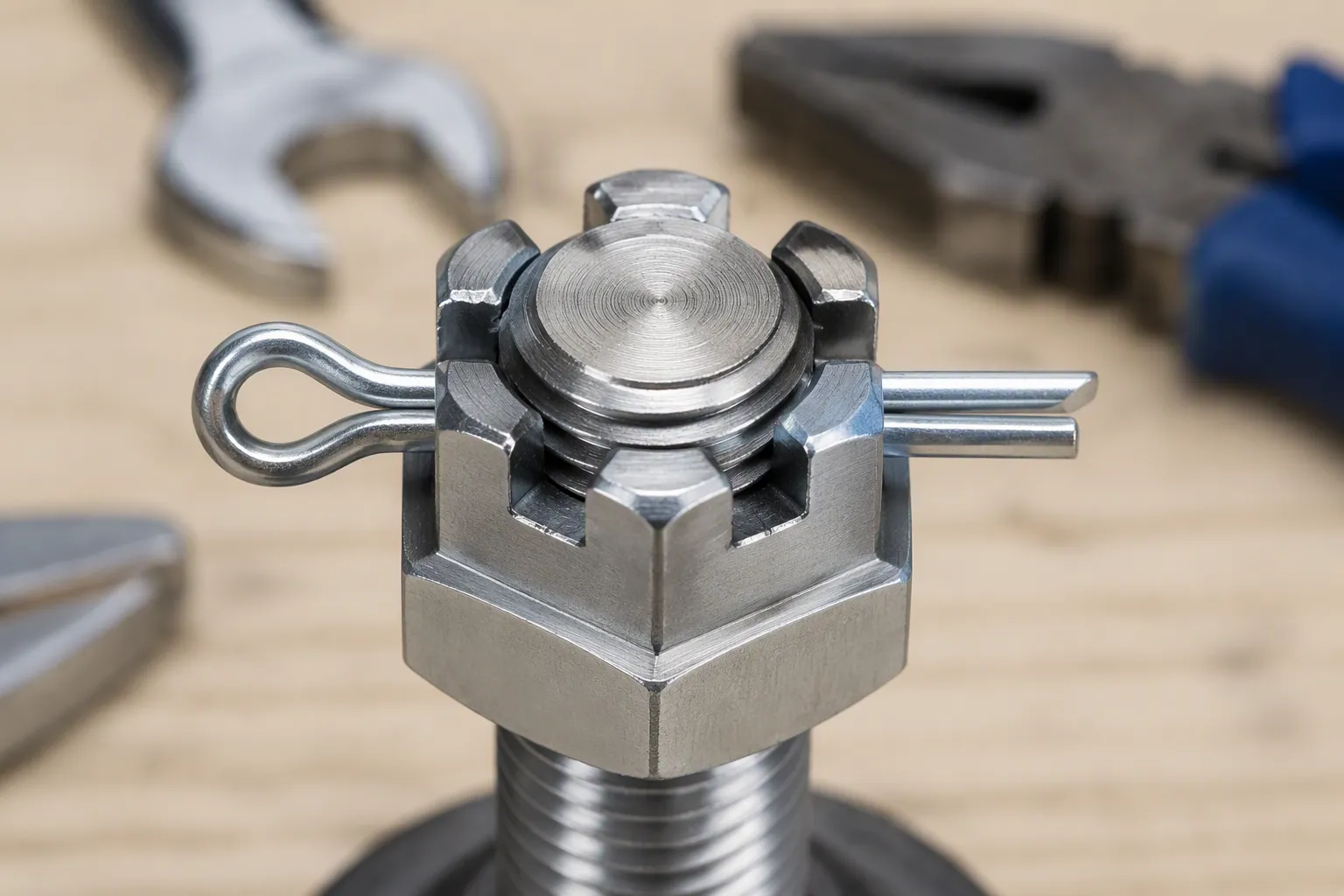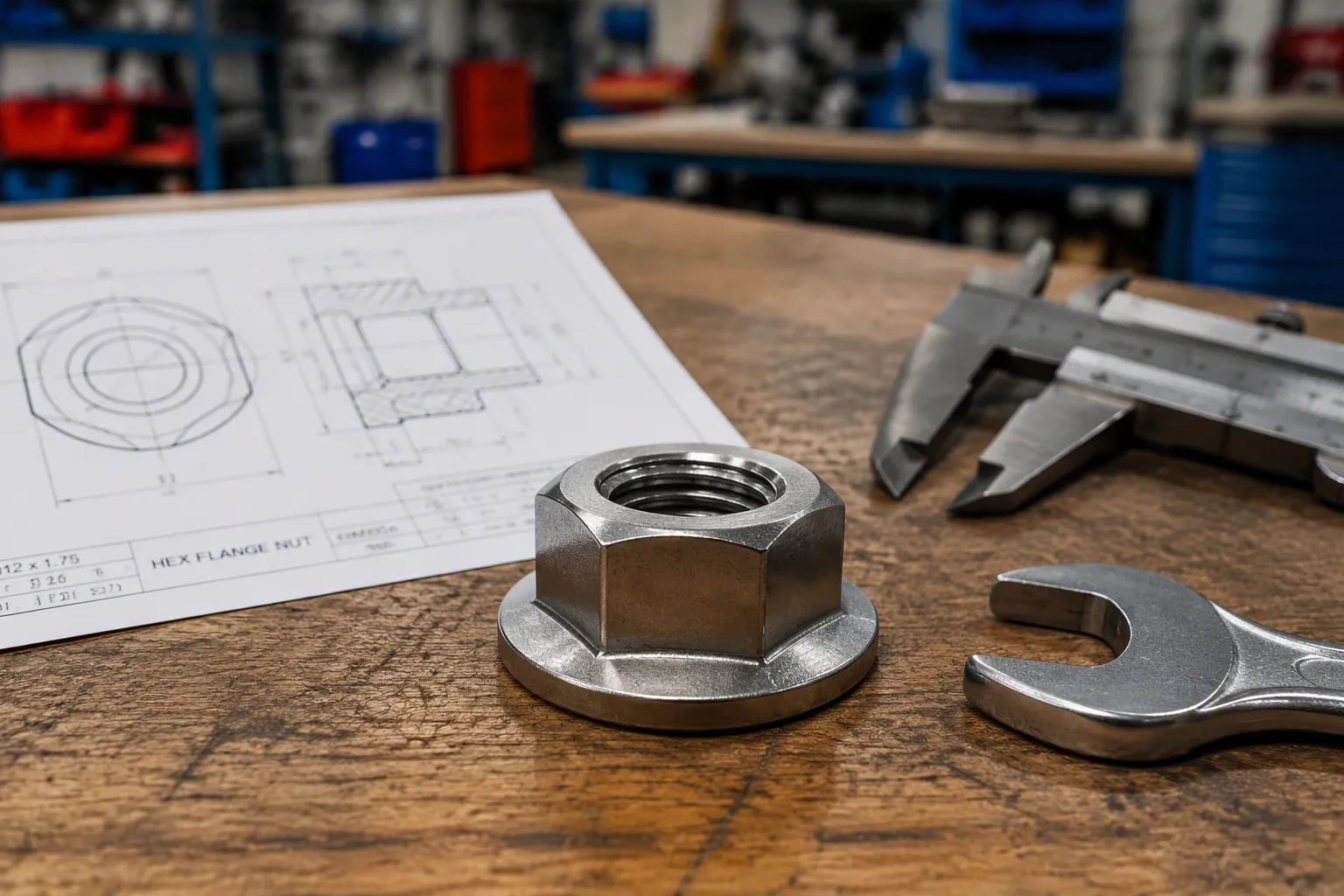
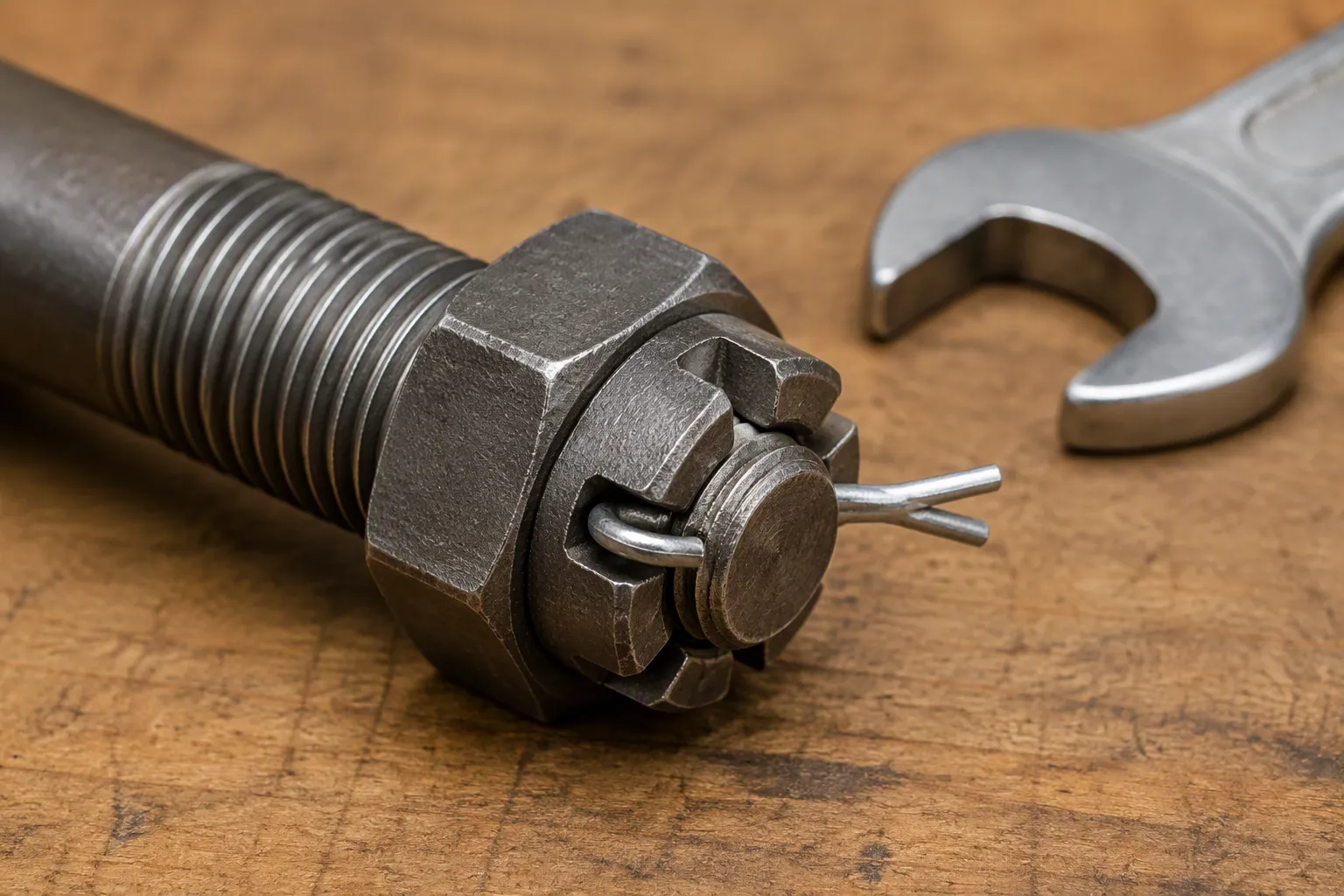
Engineers often ask what is a Замковая гайка. It is a specialized hex nut with a raised, slotted crown shaped like castle battlements. This design provides a positive mechanical lock when a cotter pin passes through the nut’s slots and a drilled bolt hole. The pin physically blocks rotation. The nut cannot turn until removed first. This reliable locking method secures critical гаек и болтов. Many engineers rely on a производитель крепежных изделий на заказ to produce these parts.
What Is a Castle Nut?
A castle nut is a specialized threaded fastener that engineers use to secure critical joints. The name comes from its distinctive top section, which resembles the battlements of a medieval castle. This raised crown features deep notches that allow a cotter pin or safety wire to pass through. The pin then locks the nut in place on a drilled bolt. Anyone who asks what is a castle nut should understand one key point: this fastener provides a positive mechanical lock, not just friction. That difference makes it far more reliable in high-vibration environments.
Design of the Castle Nut
The design of a castle nut separates it from ordinary hex nuts. Every feature serves a specific purpose. The crown, the slots, and the threaded body all work together to create a secure locking system.
Castellated Crown and Slots
The top of the nut features a cylindrical crown with deep notches cut into it. These notches are called radial slots. They run from the top edge down to a certain depth, creating a series of prongs. A cotter pin slides through any pair of opposing slots. The pin then passes through a hole drilled in the bolt or shaft. This arrangement creates a physical barrier that prevents the nut from turning. The castellated profile is the defining visual characteristic of this fastener. Engineers sometimes refer to these parts as castellated nuts because of this crown shape.
Hex Body and Threads
Below the crown, the nut has a standard hexagonal body. This hex shape allows a wrench or socket to grip the nut for tightening. The internal threads run through the entire length of the nut. These threads match the bolt or shaft they will secure. Thread classes and tolerances follow strict standards. For metric castle nuts, the thread tolerance is typically 7H. International standards such as ISO 724 and ISO 965-1 define the thread dimensions.
Thread Tolerance: 7H International Standards: ISO 724, ISO 965-1
Castle nuts come in several thread types. Common options include UNC (Unified National Coarse), UNF (Unified National Fine), ISO metric, BSW (British Standard Whitworth), and ACME. Each type suits different applications and regional preferences.
- UNC (Unified National Coarse)
- UNF (Унифицированная национальная мелкая)
- ISO (ISO metric thread profile)
- BSW (Британский стандарт Витворта)
- ACME
Dimensional standards vary by region and application. The table below shows the size ranges covered by major standards.
| Стандартный | Диапазон размеров |
|---|---|
| ASME B18.2.1 | 3/8 inch to 3 inch |
| ASME B18.2.3.6M | M12 to M36 |
| ASME B18.2.3.7M | M16 to M36 |
| ISO 7412 | M12 to M36 |
| BS 1769 | ½ inch to 2 inch |
| DIN 6914 | M12 to M36 |
| UNI 5712 | M12 to M36 |
| DIN-EN 14399-4 | M12 to M36 |
Материалы и покрытия
Manufacturers produce castle nuts from several materials. The choice of material depends on the application, the environment, and the required strength. Finishes add another layer of protection against wear and corrosion.
Steel, Stainless Steel, and Brass
Carbon steel is the most common material for castle nuts. It offers high strength at a low cost. Engineers use carbon steel nuts in automotive, industrial, and structural applications. Stainless steel provides excellent corrosion resistance. It suits marine environments, chemical plants, and outdoor equipment. Brass castle nuts offer good conductivity and resistance to saltwater. They work well in electrical applications and decorative fittings. Each material has trade-offs between strength, cost, and environmental resistance.
Plating and Corrosion Resistance
Plating extends the life of steel castle nuts. Zinc plating is the most common finish. It provides a sacrificial layer that protects the underlying steel from rust. Hot-dip galvanizing offers thicker protection for outdoor and high-moisture applications. Cadmium plating, though less common today due to environmental regulations, still appears in aerospace applications. Stainless steel nuts often need no plating at all. The chromium content in stainless steel forms a passive oxide layer that resists corrosion naturally. The right finish depends on the exposure conditions and the expected service life of the assembly.
How a Castle Nut Works
A castle nut operates on a simple principle: physical interference stops rotation. The fastener does not depend on friction or thread deformation to stay tight. Instead, a pin passes through the nut and the bolt, creating a solid barrier. This barrier prevents any relative movement between the two parts. Understanding this principle helps engineers appreciate why castle nuts perform so well in demanding applications.
The Cotter Pin as a Locking Device
The cotter pin serves as the critical locking element in the castle nut system. This small piece of wire transforms an ordinary threaded fastener into a reliable positive mechanical locking device. The pin works together with the nut and bolt to create a secure assembly that resists vibration and shock.
Passing Through the Nut and Bolt
Стандарт DIN 933: объяснение процессу установки. follows a precise sequence. Each step ensures the locking mechanism functions correctly.
- A radial hole is pre-drilled through the bolt shank, and the castle nut is torqued onto the bolt until one of its castellated slots aligns with this hole.
- A cotter pin is inserted through the aligned slot, passing through the bolt’s transverse hole, and exiting the opposite side.
- The prongs of the cotter pin are bent around the nut, physically trapping the nut in position.
- This arrangement creates a positive mechanical interference — the pin acts as a solid physical barrier that blocks any relative rotation between the nut and the bolt, rather than relying on friction to hold the assembly together.
The cotter pin hole must align perfectly with one of the nut slots. This alignment allows the pin to pass through both components. The pin then exits the opposite side of the bolt. The installer bends the prongs around the nut to secure everything in place.
Positive Mechanical Interference
The mechanics of the lock rely on physical blocking rather than friction. A castle nut functions as part of a three-component system: the nut with radial slots, a bolt or stud with pre-drilled radial holes, and a pin such as a split cotter pin, safety wire, or R-clip. During installation, the nut is torqued to specification, a slot is aligned with the bolt hole, and the pin is inserted through both and secured. The pin does not carry the clamping load; the bolt tension does. Instead, the pin acts as a physical barrier: if vibration or shock attempts to rotate the nut, the slot wall contacts the pin and stops rotation. As long as the pin remains in place, the nut physically cannot back off.
The shear resistance of the locking assembly is governed by the shear strength of the cotter pin. The shear stress (τ) on the pin is calculated as:
τ = F_rotational / (2 × A_pin)
where F_rotational is the rotational force attempting to loosen the nut and A_pin is the pin’s cross-sectional area. Because the pin passes completely through the bolt, it operates in double shear, effectively doubling its resistance to rotational failure.
This double shear configuration gives the cotter pin remarkable strength. The pin must fail before the nut can rotate. Engineers calculate the required pin diameter based on the expected rotational forces. This calculation ensures the locking system can handle the application’s demands.
Why Castle Nuts Resist Vibration
Vibration causes most threaded fasteners to loosen over time. Ordinary nuts gradually back off when subjected to repeated shaking or shock. Castle nuts solve this problem through their unique design. The locking system provides reliable performance even in the most demanding environments.
Preventing Rotation with a Pin
The pin creates an impassable barrier that stops nut rotation. Several key characteristics define this locking approach.
- The castle nut system relies on physical interference, not friction or spring tension, to prevent loosening.
- It is described as a “positive lock” that cannot fail unless the shear strength of the cotter pin itself is exceeded.
- Unlike split lock washers — which SAE research has shown to be largely ineffective once high preloads are reached — the castellated system provides a true physical stop.
- Because it is entirely metallic, the locking capability is maintained up to the temperature limit of the base metal.
These characteristics explain why castle nuts outperform many alternative locking methods. The table below compares friction-based and mechanical locking approaches.
| Locking method | Working principle | How it resists loosening | Common examples |
|---|---|---|---|
| Friction | Increases resistance between contact surfaces | Prevents surfaces from sliding against each other by raising friction between male and female threads or between fastener and contact surface | Split ring washers, serrated washers, tooth lock washers, nylon insert nuts, double nuts |
| Механические | Uses a physical barrier to block rotation | Prevents the fastener from rotating by means of a physical stop or interlock | Tab washers, locking wire, castle nuts with cotter pins |
Friction locking uses a nylon ring or slightly deformed threads to create friction against the bolt threads, helping to overcome dynamic vibration. Mechanical locking uses a cotter pin in a castle nut as a physical barrier to prevent rotation of the nut during dynamic vibration or torque. The mechanical approach offers superior reliability because it does not degrade over time.
Vibration testing standards confirm the effectiveness of mechanical locking. The table below summarizes relevant test data.
| Standard/Test | Object compared | Result/Value | Relevance to query |
|---|---|---|---|
| ISO 16130 vibration-resistance methodology | Nylock vs mechanical lock nuts (incl. castle nuts) | Nylock retained 80-85% of initial preload after 1 million cycles at 25 Hz and 1.0g; performance matched mechanical lock nuts | Identifies a vibration test standard, though not a direct all-three comparison |
| Prevailing torque test (resistance when unthreading) | New Nylock nuts | Prevailing torque = 30-50% of final tightening torque; M10 dry example = 8-12 N·m | Provides torque-retention data for nylon-insert lock nuts |
| Reusability/degradation analysis | Nylock vs mechanical lock nuts (castle/all-metal) | Nylon insert loses 20-30% cross-sectional profile after first tightening; friction drops to ~70-75% on reuse; castle nuts remain reusable | Shows comparative mechanical lock behavior relevant to torque retention |
The data shows that castle nuts maintain their locking ability through repeated use. Nylon insert nuts lose effectiveness over time. This difference makes castle nuts the preferred choice for critical applications.
Castellation Alignment with the Drilled Hole
Proper alignment between the nut slots and the drilled hole is essential. The cotter pin must pass through both openings to function correctly. Manufacturers drill the bolt hole at a specific location along the shank. The castle nut’s slots are spaced evenly around the crown. When the nut reaches the correct torque, at least one slot should align with the hole.
Alignment requires careful attention during installation. The nut must be tightened to the specified torque first. If no slot aligns with the hole at that torque, the installer must tighten the nut further until alignment occurs. Loosening the nut to achieve alignment is never acceptable. This practice reduces the clamping force and compromises the joint’s integrity.
Cotter pins come in various sizes to match different applications. The table below shows standard specifications.
| Атрибут | Спецификация |
|---|---|
| Diameter range | 1/32″ to 3/4″ |
| Length range | 1/2″ to 6″ |
| Материалы | Steel, stainless steel, brass, aluminum |
| Common standards | ASME, ANSI, BS, Mil-Spec, DIN |
| Commercial standard | ASME B18.8.1 |
| Mil-Spec standard | MS9245 |
For split pins used to lock castle nuts, clevis pins, and similar parts, the key selection factors are diameter, length, and material. Material options include carbon steel or stainless steel, with finishes/coatings as required. Diameter and length are chosen based on hole size, and standards follow DIN/ISO. Common applications include castle nut locking, shaft retention, clevis joints, and general locking retention.
Standard cotter pins are available in stainless steel, brass, aluminum, carbon steel, and Monel. Hammerlock cotter pins (also called castle keys or castle nut cotters) are often used to secure castle nuts in high-vibration applications, such as holding wheel bearings in place in the automotive industry. Cotter pins are commonly used to hold castle nuts (slotted hex nuts) in place, providing additional security.
The split pin must fit snugly in both the nut slots and the bolt hole. A loose fit allows movement that can damage the pin or enlarge the holes. A pin that is too large will not pass through the openings. Selecting the correct pin size ensures reliable locking performance.
Common Uses of Castle Nuts
Castle nuts appear in many assemblies where vibration or safety demands a reliable lock. Engineers choose them for joints that must not loosen under shock, movement, or repeated loading.
Automotive and Aerospace Applications
Vehicles and aircraft rely on castle nuts for critical retention points. These fasteners keep essential components secure during operation.
Wheel Bearings and Axle Nuts
Wheel bearings and axle assemblies represent one of the most общие области применения. Castle nuts lock these parts with cotter pins to prevent loosening under vibration. Safety-critical wheel-bearing work requires new, correctly sized pins every time. Automotive steering and suspension systems also depend on these fasteners. Tie rods, ball joints, and steering linkages use castle nuts to hold alignment and control. Transmission linkages and brake systems follow the same practice. These parts secure critical connections that ensure safe and reliable vehicle operation.
Flight Control Linkages
Aircraft flight control linkages demand the highest reliability. Castle nuts secure rod ends, clevis fittings, and pivot points in these systems. The positive lock prevents any chance of in-flight loosening. Aerospace engineers specify castle nuts because the locking action does not depend on friction or temperature-sensitive materials.
Other Ideal Uses for Castle Nuts
Beyond vehicles and aircraft, many industrial and recreational assemblies benefit from this locking design.
AR-15 Buffer Tubes
Firearms use castle nuts on buffer tube assemblies. The standard torque specification for an AR-15 buffer tube castle nut is 38–42 ft/lbs. Installers apply this value with an armorer’s wrench and a torque wrench. They keep the wrench square to avoid marring the surface. The same torque range and staking procedure also apply to AR-10 castle nuts.
Heavy Equipment and Machinery
Agricultural and industrial equipment relies on castle nuts for rugged connections. В таблице ниже summarizes common assemblies and their safety details.
| Category | Assemblies | Safety-relevant detail |
|---|---|---|
| Автомобилестроение | Wheel bearings, tie rods, axle assemblies | Castle nuts are locked with cotter pins to prevent loosening under vibration; new, correctly sized pins are required for safety-critical wheel-bearing use. |
| Agricultural/industrial | Implement pins, clevis/yoke connections, shaft retention, linkages and pivot connections | Cotter pins are genuinely self-locking because the splayed prongs must be manually straightened for removal, preventing disconnection under operational movement. |
| Rigging/industrial hardware | Rigging hardware, clevis pins, yokes, general machinery safety-retention points | Cotter pins act as a low-cost safety-locking solution; an undersized or improvised pin must never be used for safety-critical connections. |
Plows, harrows, and cultivators use these fasteners on joint connections. Tractor steering, transmission, and hydraulic components also rely on them. The split-prong design prevents loosening from constant vibration and movement.
Castle Nuts vs. Slotted Nuts: Key Differences
Engineers often confuse castle nuts vs. slotted nuts because both designs use a cotter pin for locking. The two fasteners look similar at a glance. Their slot placement, however, creates real differences in wrench grip, torque application, and structural integrity.
Slotted Nuts Defined
A slotted nut is a hex nut with notches cut directly into its flats. These notches accept a cotter pin or safety wire, just like a castle nut does. The cut location changes how the nut behaves under load.
Slots Cut Across the Hex Flats
The slots on a slotted nut run straight through the hexagonal flats of the nut body. This cut reduces the effective hex flat height and the wrench grip area. A wrench has less surface to grab, so the corners are more likely to round off under high torque. ASME B18.2.2 governs slotted and castle nut dimensions in North America, while DIN 935 or ISO 7035 apply in Europe and international markets.
How They Also Use a Cotter Pin
A slotted nut locks with the same method as a castle nut. The installer aligns a slot with a drilled hole in the bolt, inserts a cotter pin, and bends the prongs. The pin blocks rotation through physical interference. The locking principle is identical, even though the slot geometry differs.
Choosing Between Castle Nuts and Slotted Nuts
The choice between these two fasteners depends on wrench engagement, torque requirements, and the consequences of joint failure. Several visual and dimensional factors guide the decision.
Visual Differences
The two designs differ in where the slots sit relative to the hex body.
- Castle nut geometry: the slots are machined into a raised cylindrical collar whose diameter is smaller than the hex flat-to-flat width, so the wrench bears on the full hex flats.
- Slotted nut geometry: the slots are cut directly into the hexagonal flats, reducing the wrench grip area and increasing the risk of rounding corners under high torque.
- Visually, a slotted nut has slots cut into one end of the nut from the base, and the cut includes the corners of the hex; a castle nut has raised triangular castellations that protrude above the hex but do not include the hex corners.
Interchangeability and Selection
Despite the visual difference, the overall dimensions are nearly identical, so castle nuts and slotted nuts are often interchangeable in use. Standard designations include DIN 935, DIN 937, JIS B1170, ANSI/ASME B18.2.2, ANSI/ASME B18.2.4.3M, and BS 3692. Published dimensions confirm the similarity: a 1/4 inch castle nut has a width across flats of 0.438 inches, a total height of 0.281 inches, and a slot width of 0.078 inches; an M12 castle nut has a width across flats of 19 mm, a height of 15 mm, and a slot width of 3.5 mm.
| Selection Factor | Корончатая гайка | Slotted Nut |
|---|---|---|
| Slot location | Raised cylindrical collar | Hexagonal flats |
| Wrench engagement | Full hex flats | Reduced grip area |
| Positive locking | Cotter pin, mechanical stop | Cotter pin, mechanical stop |
| High-vibration use | Preferred | Less preferred |
| Типичные области применения | Wheel bearings, compressor rods, valve actuators | General locking, safety wire |
Select a castle nut when the joint requires positive locking in high-vibration or high-temperature environments. The all-metal castellated design maintains its locking ability up to the temperature limit of the base metal. Select a castle nut instead of a slotted nut when full wrench engagement and reduced risk of rounding the hex corners matter for proper torque application. Slotted nuts work well in lower-torque applications where wrench grip is less critical.
How to Install a Castle Nut Correctly
Proper castle nut installation demands the right tools, careful torque application, and correct pin placement. A successful assembly locks the nut securely without damaging threads or compromising joint integrity.
Tools and Parts Needed
Gather all components before starting. The assembly requires a castle nut, a new cotter pin, and a bolt with a pre-drilled hole. The pin must match the hole diameter and slot width.
Castle Nut, Cotter Pin, and Drilled Bolt
The bolt must have a cross-drilled hole positioned to align with the nut slots. Inspect the hole for burrs or deformation. A damaged hole prevents the pin from sliding through smoothly.
Wrenches, Torque Wrench, and Pliers
A calibrated torque wrench ensures accurate tightening. The table below lists essential tools for this task.
| Tool Category | Specific Tools/Details |
|---|---|
| Динамометрический ключ | Calibrated torque wrench; torque multipliers for high-torque applications up to 1000 ft-lb |
| Socket | Correct size socket for the nut; 1-1/2″ drive set for large fasteners |
| Cotter Pin Installation | Pliers for bending prongs; shims to adjust alignment if needed |
Step-by-Step Installation Procedure
Follow this sequence to achieve a secure, reliable lock.
Clean and Inspect the Threads
Резьба the castle nut onto the bolt by hand first. This step detects thread damage or specification mismatch. Clean threads ensure smooth engagement.
Set the Torque on the Nut
Tighten the nut with a wrench to the recommended torque. Apply the minimum specified value using a calibrated torque wrench. Do not lubricate threads unless the design data sheet specifies it.
Align a Slot with the Drilled Hole
Check whether a slot aligns with the bolt hole. If not, tighten the nut slightly further within the maximum allowable torque limit. The castle nut must be in a certain orientation for the pin to pass through both openings.
Insert and Bend the Cotter Pin
Insert a brand-new cotter pin through the aligned slot and hole. Bend the prongs firmly with pliers. One prong wraps over the bolt shank; the other wraps against the nut flat. Trim excess length to prevent snagging.
Torque and Alignment Tips
Correct technique prevents common errors. These guidelines ensure reliable locking.
Tighten to the Next Slot, Never Loosen
Never loosen the nut to achieve cotter pin alignment. Backing off reduces design preload and compromises joint integrity. Instead, advance the nut to the next slot. A slight overtorque is normal and expected.
Use a Thinner Washer or Different Pin Size if Needed
If alignment remains impossible within the torque range, use a thin shim washer under the nut. Alternatively, try a different nut to change the clocking. Always select the correct pin diameter for the hole size. Never reuse old cotter pins because work hardening creates micro-cracks that may cause premature shear failure.
Castle Nut Mistakes to Avoid
Proper installation prevents most castle nut failures. However, technicians sometimes make critical errors that compromise joint integrity. Understanding these common mistakes helps avoid costly failures and safety hazards.
Loosening the Nut to Align the Slots
The most dangerous mistake involves backing off the nut to align a slot with the drilled hole. This practice reduces the clamping force that holds the joint together. A loose joint allows movement, which leads to wear, fatigue, and eventual failure. Technicians must always tighten the nut further until a slot aligns with the hole. A slight overtorque remains acceptable within the maximum torque limit. Loosening the nut is never acceptable.
Several other installation errors also cause castle nut joints to fail in service:
- Failing to confirm that the stud has a secure fit in its receiving hole before tightening, because looseness can indicate damage and may lead to stud breakage.
- Using an impact gun instead of a torque wrench, rather than tightening the castle nut to the manufacturer’s recommended torque specification.
- Failing to install a provided washer under the nut, which can leave the cotter pin hole positioned below the castle nut.
- Not aligning the cotter pin hole with the castle nut slots; the nut may be tightened slightly to achieve alignment, but it must never be backed off.
- Failing to insert the cotter pin completely or not bending its legs back, which can allow the pin to slip out and reduce retention of the nut in service.
Using the Wrong Size Cotter Pin
The pin must match both the hole diameter and the slot width. An undersized pin fits loosely and allows movement that damages the nut and bolt. An oversized pin will not pass through the openings at all. Both situations create unsafe assemblies. Technicians should select the correct pin type and diameter for each application. A proper fit ensures the pin stays seated under vibration and shock loads.
Reusing a Bent or Damaged Cotter Pin
Reusing a cotter pin with a castle nut is not acceptable because repeated bending and unbending of the metal prongs causes work hardening. This makes the metal brittle and much more vulnerable to fatigue and shear failure when subjected to dynamic loads. Therefore, a new pin should always be installed instead of reusing an old one.
Follow these practices for reliable locking performance:
- Use the correct pin type and diameter.
- Never reuse a bent or fatigued split pin.
- Ensure proper spread and retention after installation.
- Inspect regularly, especially in high-vibration areas.
A fresh cotter pin costs very little. The cost of a failed joint can be enormous.
Installing on a Bolt Without a Drilled Hole
A castle nut requires a bolt with a cross-drilled hole. The cotter pin passes through this hole to block rotation. A standard bolt lacks this feature. Installing a castle nut on a standard bolt defeats the entire locking mechanism. The nut will thread onto the bolt and reach the correct torque. Nothing, however, prevents it from backing off under vibration. The assembly looks secure at first glance. It offers no more security than an ordinary hex nut.
Technicians must verify the bolt specification before assembly. The bolt needs a radial hole positioned to align with the nut slots. If the existing bolt lacks this hole, the technician should replace it with a properly drilled bolt. Drilling a hole in a hardened bolt at the job site is not recommended. This process can damage the bolt’s heat treatment and weaken its structure. A qualified machinist can drill a bolt in some cases. The safer approach involves ordering the correct drilled bolt for the application.
Confusing Castle Nuts with Ordinary Lock Nuts
Castle nuts and ordinary lock nuts serve different purposes. Both prevent loosening, but their methods differ significantly. A castle nut uses a cotter pin for mechanical interlocking. A nylon insert lock nut relies on a polyamide ring inside the crown. The bolt threads cut into this ring and create friction. A prevailing torque lock nut uses a distorted conical top. This distortion creates continuous thread interference during assembly and disassembly.
| Nut type | Locking mechanism | How it locks/prevents loosening | Practical notes |
|---|---|---|---|
| Castle nut + cotter pin | Mechanical interlocking: slots in the nut align with a radial hole in the bolt; a cotter pin is inserted and bent. | The bent pin physically blocks rotation and removal. | Used in low-torque applications such as axle/wheel bearings; once pinned, the nut is positively locked. |
| Nylon insert lock nut | Non-metallic polyamide (nylon) ring crimped inside the crown. | The bolt threads cut into the nylon, creating friction and thread pressure that resists vibration and backing off. | Temperature/chemical sensitive; requires a wrench or power tool rather than hand tightening. |
| Prevailing-torque lock nut | One-piece all-metal design with a distorted conical top that creates thread interference. | Thread friction is produced continuously during assembly and disassembly, giving a ‘prevailing’ resistance to rotation. | Can be adjusted or removed; not permanently locked; often used where shock is the loosening force. |
These differences matter for selection. A nylon insert nut loses effectiveness at high temperatures. A prevailing torque nut allows adjustment after installation. A castle nut provides a positive lock that remains secure until someone removes the pin. Technicians should never substitute one type for another without evaluating the application requirements.
Overtightening or Undertightening the Nut
Torque accuracy determines joint reliability. Undertightening leaves insufficient clamping force. The joint moves under load, and the bolt experiences fatigue stress. Overtightening stretches the bolt beyond its elastic limit. The bolt may break during installation or fail prematurely in service.
Manufacturers publish specific torque values for each application. These values vary widely across components.
| Компонент | Torque (ft lbs) |
|---|---|
| Outer Tie Rod Castle Nut | 67 |
| Upper Ball Joint Castle Nut (SPC) | 45 |
| Upper Ball Joint Castle Nut (OEM) | 82 |
| Axle Nut | 174 |
| Lower Ball Joint Nut | 103 |
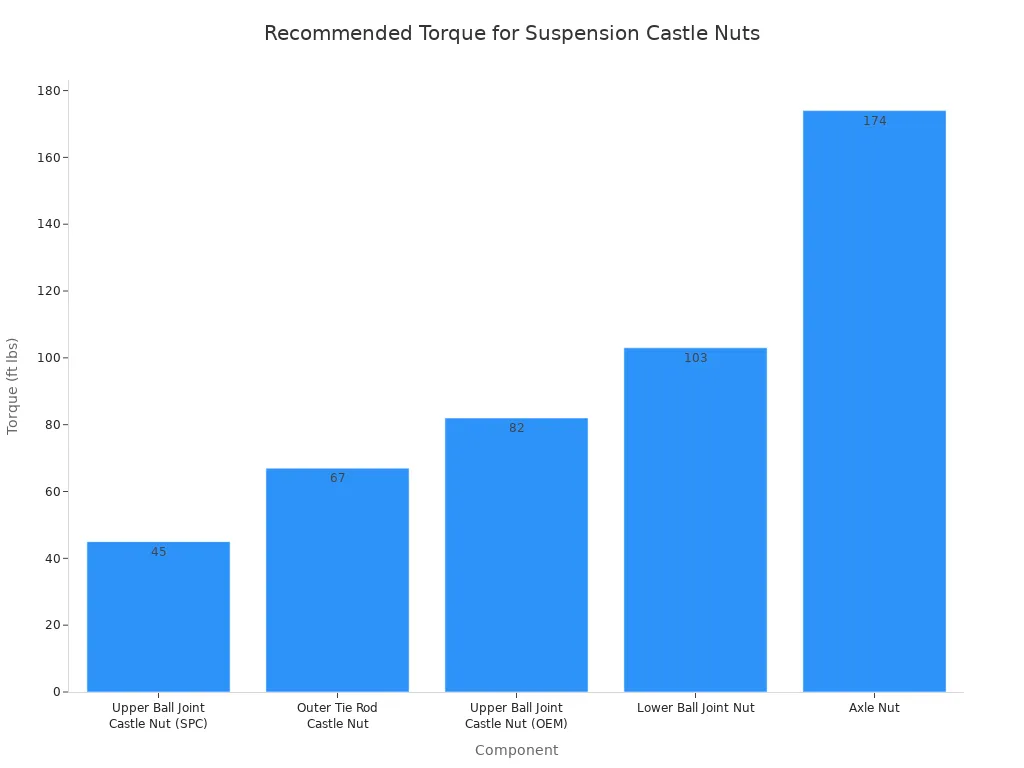
A calibrated torque wrench provides the only reliable method for achieving these values. Impact guns and guesswork lead to inconsistent results. Technicians should always consult the service manual for the specific vehicle or assembly. The torque specification accounts for thread size, material, lubrication, and joint design. Following the published value ensures the joint performs as designed.
Engineers seeking to understand what is a castle nut find a simple locking fastener. It secures joints where vibration, shock, or safety demand extra protection. Unlike friction-based fasteners, the castle nut relies on physical interference. A cotter pin blocks rotation; the pin creates a mechanical stop. Castle nuts excel in wheel bearings, suspension, and steering linkages.
Proper installation matters. Technicians must use a new pin and align each pin with the drilled hole. Never loosen the nut. Understanding the difference between a castle nut and a slotted nut guides fastener selection. The slotted nut serves similar but distinct applications.
Частые вопросы
What is a castle nut used for?
A Замковая гайка locks critical joints that face vibration or shock. Wheel bearings, steering linkages, and flight controls rely on this fastener. The cotter pin creates a physical stop that prevents rotation. Engineers choose it when safety demands a reliable mechanical lock.
Can a castle nut work without a cotter pin?
No. A castle nut needs a cotter pin or safety wire to lock. Without the pin, the nut behaves like an ordinary hex nut. Vibration will eventually loosen it. The pin provides the positive mechanical interference that defines this fastener.
Why do technicians never loosen a castle nut to align the slots?
Loosening the nut reduces the clamping force that holds the joint together. A loose joint moves under load, which causes wear and fatigue. Technicians must tighten the nut further until a slot aligns with the drilled hole.
How often should someone replace a cotter pin?
Replace the cotter pin every time the nut comes off. Bending and unbending the prongs causes work hardening. The metal becomes brittle and may shear under load. A new pin costs very little and ensures reliable locking.
What happens if the cotter pin is too small?
An undersized pin fits loosely inside the hole and slots. This looseness allows movement that damages the nut and bolt. The pin may also slip out under vibration. Always match the pin diameter to the hole size.
Are castle nuts and slotted nuts interchangeable?
Castle nuts and slotted nuts share nearly identical dimensions, so they often interchange in practice. The slot location differs. Castle nuts have slots in a raised crown. Slotted nuts have slots cut across the hex flats. Castle nuts offer better wrench engagement.
Can a castle nut go on a bolt without a drilled hole?
No. A castle nut requires a cross-drilled bolt hole for the cotter pin. Without this hole, the pin has nowhere to pass through. The nut offers no locking benefit. Always verify the bolt specification before assembly.
Do castle nuts work at high temperatures?
Yes. Castle nuts use an all-metal locking design. The cotter pin maintains its blocking action up to the temperature limit of the base metal. Nylon insert nuts lose effectiveness at high temperatures. Castle nuts remain reliable in hot environments.