Выбор правильного анкера имеет решающее значение для структурной целостности. Ведущие бренды 2026 года предлагают превосходные анкерные болты решения для различных потребностей. Данный анализ брендов распорных анкеров выделяет ключевые показатели эффективности. Вариант производитель крепежных изделий на заказ может предоставить специальные анкерные болты для уникальных проектов.
Лидеры 2026 года вкратце:
- Hilti Kwik Bolt TZ2**Hilti Kwik Bolt TZ2**: Лучший анкер по общей производительности.
- Simpson Strong-Tie Strong-Bolt 2**Simpson Strong-Tie Strong-Bolt 2**: Этот анкер лучше всего подходит для универсальности.
- DeWalt Power-Stud+ SD1**DeWalt Power-Stud+ SD1**: Ведущий анкер по оптимальному соотношению цены и доступности.
- Red Head Trubolt+**Red Head TruBolt**: Надежный анкер среди стандартных Анкерные болты.
Более детальный обзор ведущих брендов распорных анкеров
Подрядчикам и инженерам необходимо смотреть дальше маркетинговых заявлений, чтобы выбрать правильные компоненты. Подробный обзор ведущих брендов распорных анкеров выявляет их явные преимущества в производительности, сертификации и ценности. Каждый бренд ориентирован на конкретные потребности проектов с помощью специализированной продукции.
**Hilti: Эталон производительности**
Hilti укрепляет свои позиции как лидер отрасли в области анкерных технологий. Бренд является синонимом передовой инженерии, строгих испытаний и максимальной производительности. Профессионалы выбирают Hilti для критически важных применений, где недопустим отказ. Анкер **Kwik Bolt TZ2** олицетворяет вершину этой инженерной философии.
**Данные о производительности Kwik Bolt TZ2**
Анкер Hilti Kwik Bolt TZ2 обладает возможностями клинового анкера высшего класса. Он специально разработан для трещиноватого бетона и сейсмических применений. Данные о производительности подтверждают его пригодность для самых сложных задач, сейсмические испытания проведены в соответствии с ACI 355.2 и ICC-ES AC 193. Этот анкер обеспечивает превосходные характеристики на растяжение и срез в сложных условиях.
**Варианты материалов и покрытий**
Hilti предлагает Kwik Bolt TZ2 с материалами и допусками, подходящими для контролируемых внутренних сред. Прочная конструкция гарантирует надежность и прочность.
| Спецификация | Деталь |
|---|---|
| Материал, защита от коррозии | Углеродистая сталь, оцинкованная (мин. 5 микрон) |
| Конфигурация головки | С наружной резьбой |
| Допуски / Отчеты об испытаниях | FM, ICC-ES (бетон), ICC-ES (кладка), LABC, Ядерная промышленность (NQA-1), UL |
| Основные материалы | Бетон (трещиноватый, легкий, без трещин), Кладка (заполненные раствором бетонные блоки) |
| Условия окружающей среды | Сухие внутренние помещения |
**Уникальные особенности и инновации**
Инновации Hilti выходят за рамки самого анкера, предлагая полную систему. Бренд предоставляет интегрированные решения, такие как программное обеспечение для проектирования PROFIS Engineering. Это ПО помогает инженерам проектировать сложные схемы анкеровки. Hilti также указывает совместимые монтажные инструменты, например, перфоратор TE 6-22, чтобы гарантировать правильную установку и оптимальную производительность. Kwik Bolt TZ2 доступен в широком диапазоне диаметров и длин, предлагая непревзойденную гибкость проектирования.
**Доступные размеры:**
- Диаметры: от 1/4 дюйма до 1 дюйма
- Длины: от 2-1/8 дюйма до 12 дюймов
Такой широкий выбор позволяет проводить точную спецификацию, что делает его одним из самых универсальных высокопроизводительных болтов на рынке.
**Идеальные области применения**
Исключительная прочность и сейсмические характеристики Kwik Bolt TZ2 делают его идеальным анкером для:
- Критически важных соединений конструкционной стали
- Стадионов и высотных зданий
- Ядерных объектов и электростанций
- Безопасных креплений в зонах с трещиноватым бетоном
**Simpson Strong-Tie: Универсальный претендент**
Simpson Strong-Tie завоевал прочную репутацию благодаря универсальности и полному соответствию нормам. Бренд пользуется популярностью среди инженеров и инспекторов, которым требуются крепежные элементы с широкими, легко проверяемыми допусками. Клиновой анкер Strong-Bolt 2 является подтверждением этой приверженности.
**Данные о производительности Strong-Bolt 2**
Strong-Bolt 2 обеспечивает надежную и стабильную производительность в различных областях применения. Его конструкция оптимизирована для прочности как в трещиноватом, так и в нетрещиноватом бетоне. Хотя он хорошо конкурирует по прочности, его основное преимущество заключается в широком признании строительными органами.
**Широкий спектр нормативных допусков**
Соответствие нормам — вот где Strong-Bolt 2 действительно сияет. Этот анкер является проверенным решением для проектов со строгим контролем.
Ключевые одобрения: Анкер имеет ICC-ES ESR-3037 отчет ICC-ES ESR-3373. Этот документ подтверждает его испытания в соответствии с ACI 355.2 и ICC-ES AC193 для использования в трещиноватом бетоне и сейсмических условиях. Инженеры могут специфицировать этот анкер с высокой уверенностью в его статусе допуска.
**Интеграция с системой анкерного крепления (ATS)**
Simpson Strong-Tie предлагает полную экосистему конструкционных продуктов. Анкер Strong-Bolt 2 легко интегрируется с системой анкерного крепления (Anchor Tiedown Systems, ATS) компании для деревянного каркасного строительства. Этот системный подход упрощает проектирование и обеспечивает совместимость между соединителями, держателями и анкерами.
**Идеальные области применения**
Strong-Bolt 2 — отличный выбор для проектов, где соответствие нормам имеет первостепенное значение. Идеальные области применения включают:
- Коммерческое и жилое строительство
- Проекты сейсмического усиления
- Крепление обвязок и подокладных досок
- Любые применения, требующие предварительно одобренных крепежных элементов, внесенных в списки норм.
DeWalt (Powers): The Value Leader
DeWalt, incorporating the legacy of Powers Fasteners, emerges as the value leader in the fastener market. The brand excels at providing reliable, code-approved expansion bolts at a competitive price point. The Power-Stud+ SD1 is the flagship product that embodies this balance of cost and quality.
Power-Stud+ SD1 Performance Data
The Power-Stud+ SD1 offers excellent performance data for its price category. This fully-threaded wedge anchor is approved for use in uncracked concrete and provides dependable holding values for a majority of common construction tasks. Its performance makes it a go-to workhorse for countless jobsites.
Cost-to-Performance Ratio
The key advantage of the Power-Stud+ SD1 is its outstanding cost-to-performance ratio. It provides contractors with a certified and reliable anchor without the premium cost associated with top-tier specialty brands. For large projects with high-volume fastening needs, the cost savings become significant.
Availability and System Compatibility
DeWalt leverages its vast distribution network, making the Power-Stud+ SD1 one of the most accessible anchors available. Contractors can find it at major home improvement centers and construction supply houses. Furthermore, it is part of the larger DeWalt ecosystem, ensuring compatibility with DeWalt’s extensive line of rotary hammers and impact wrenches.
**Идеальные области применения**
The Power-Stud+ SD1 is the perfect anchor for cost-sensitive projects that still require certified reliability. Its ideal uses include:
- General purpose fastening in concrete
- High-volume MEP (Mechanical, Electrical, Plumbing) installations
- Fastening strut, conduit racks, and pipe supports
- Budget-conscious commercial and residential projects
Red Head: The Established Workhorse
Red Head holds a legacy position among expansion bolt brands. It is known for producing dependable, straightforward fasteners. The brand’s Trubolt+ wedge anchor is a fixture on jobsites across the country. It represents a reliable standard for many common applications, making it a true industry workhorse for general purpose expansion bolts.
Trubolt+ Performance Data
The Trubolt+ anchor provides solid, predictable performance for standard-duty applications. The performance data for this anchor confirms its suitability for uncracked concrete. It holds an ICC-ES ESR-22Trubolt+ anchor provides solid, predictable performance for standard-duty applications. The performance data for this anchor confirms its suitability for uncracked concrete. It holds an ICC-ES ESR-2232 report for uncracked concrete, giving engineers and contractors a baseline of certified holding values. While it does not match the ultimate loads of premium seismic anchors, its performance is more than adequate for a vast range of fastening tasks.
Industry Reputation and Reliability
Red Head built its reputation on decades of consistent quality. Contractors trust the Trubolt+ anchor because it is a known quantity. Its installation is simple, and its performance is predictable in the conditions for which it was designed. This long-standing reliability makes it a default choice for many experienced professionals who need a standard anchor they can depend on without extensive re-evaluation for every job.
A Trusted Standard: For many general contractors, the Trubolt+ is the go-to anchor for everyday concrete fastening. Its familiarity and consistent performance minimize guesswork on the jobsite.
Common Applications and Limitations
The Trubolt+ anchor has become an industry standard in numerous construction applications due to its reliability and ease of use. Its versatility in standard conditions makes this anchor a staple for securing a wide variety of fixtures and components. Common uses include:
- Structural steel columns and beams
- Railings and fencing
- Warehouse racking and conveyor systems
- Seismic bracing and hold downs
- Overhead ductwork, pipes, and cable trays
- Anchoring of equipment and machinery
However, it is critical to recognize the limitations of this anchor. The standard Trubolt+ anchor is primarily intended for use in uncracked concrete. It is generally not suitable for applications in cracked concrete zones or areas with high seismic design requirements, where a specialized anchor is necessary.
**Идеальные области применения**
The Trubolt+ anchor excels in projects where a reliable, code-compliant fastener is needed for non-critical applications in uncracked concrete. Its ideal uses are:
- General structural and non-structural connections
- High-volume fastening of building services
- Projects where cost-effectiveness is important but certification is still required
- Standard commercial and industrial construction
Head-to-Head Performance Comparison of Top Brands
A true vendor comparison moves beyond brand reputation and into the hard numbers. This section analyzes the performance data of the top expansion bolts to provide a clear picture of their capabilities. We will compare vendors based on critical performance metrics: ultimate tensile (pull-out) strength and ultimate shear (side-load) strength. The load capacity of an anchor is the ultimate measure of its engineering.
Ultimate Tensile Strength
Ultimate tensile strength measures the maximum pulling force an anchor can withstand before it fails. This is a critical metric for overhead applications or connections under direct tension. The performance data below is based on installation in 4,000 PSI uncracked concrete at standard embedment depth.
3/8″ Diameter Anchor Comparison
For smaller diameter applications, the performance differences are noticeable.
- Hilti Kwik Bolt TZ2: Leads with the highest load capacity, demonstrating superior grip.
- Simpson Strong-Bolt 2: Offers robust performance, closely trailing the leader.
- DeWalt Power-Stud+ SD1: Provides reliable strength, representing excellent value.
- Red Head Trubolt+: Delivers dependable performance for standard-duty tasks.
1/2″ Diameter Anchor Comparison
The 1/2″ diameter is one of the most common sizes for structural applications. In this category, the engineering of each anchor becomes even more apparent. Hilti continues to set the benchmark, but Simpson provides a highly competitive alternative. DeWalt’s anchor remains a strong contender, especially when project budget is a primary driver.
5/8″ Diameter Anchor Comparison
For heavy-duty connections, the 5/8″ anchor class shows significant separation in performance. The advanced expansion mechanism of the Hilti Kwik Bolt TZ2 allows it to achieve a higher load capacity. The Simpson Strong-Bolt 2 also provides exceptional strength, suitable for demanding structural jobs.
Analysis of Tensile Load Data
The analysis consistently shows a performance hierarchy. Hilti’s Kwik Bolt TZ2 establishes itself as the top performer across all diameters, justifying its premium position. Simpson’s Strong-Bolt 2 is a very close second, offering impressive strength combined with extensive approvals. The DeWalt Power-Stud+ SD1 provides the best balance of cost and performance, making it a smart choice for high-volume work. The Red Head Trubolt+ anchor offers predictable, certified strength for general-purpose applications where ultimate loads are not the primary design concern.
Ultimate Shear Strength
Ultimate shear strength measures the maximum side-load force an anchor can resist. This is vital for applications like seismic bracing, ledger boards, and base plates subject to lateral forces. The material of the anchor itself plays a significant role in its shear performance.
3/8″ Diameter Anchor Comparison
In shear tests, the steel composition of the anchor is a primary factor. All brands provide solid shear values, ensuring stability against lateral forces for smaller connections.
1/2″ Diameter Anchor Comparison
At the 1/2″ diameter, the differences in steel quality and bolt diameter precision become more evident. The premium brands generally exhibit higher shear capacities due to superior metallurgy and manufacturing tolerances.
5/8″ Diameter Anchor Comparison
For heavy shear loads, material choice is critical. While carbon steel is the standard, some applications demand the strength and corrosion resistance of stainless steel. The material properties of stainless steel can yield a higher shear capacity.
Material Impact on Shear Performance The shear strengths for carbon steel and stainless steel versions of an anchor differ because the materials possess distinct properties. For example, test values show a significant increase in shear strength when moving from a carbon steel anchor to a stainless steel version.
Anchor Example Материал Shear Strength (Vsa) Hilti HIT-Z Углеродистая сталь 5,886 lbs Hilti HIT-Z-R Нержавеющая сталь 8,026 lbs
Analysis of Shear Load Data
The shear load data reinforces the importance of the anchor’s material composition. While the brand hierarchy seen in tensile tests largely holds, engineers must also consider the specific steel type for the application. A stainless steel anchor from any leading brand will typically offer superior shear performance and corrosion resistance compared to its zinc-plated carbon steel counterpart, albeit at a higher cost.
Performance in Different Base Materials
An anchor is only as strong as the concrete it is installed in. The strength of the base material, measured in pounds per square inch (PSI), directly impacts the anchor’s achievable load capacity.
Load Values in 2,500 PSI Concrete
In lower-strength 2,500 PSI concrete, all anchors will have a reduced load capacity compared to their ratings in stronger concrete. The weaker base material becomes the limiting factor. In these situations, a higher-performance anchor may not provide a significant advantage over a standard anchor, as the concrete itself is more likely to fail first.
Load Values in 4,000 PSI Concrete
Standard commercial projects often specify 4,000 PSI concrete. In this stronger base material, the design and engineering of the anchor play a much larger role. A high-performance anchor like the Hilti Kwik Bolt TZ2 can engage the concrete more effectively, leading to a significantly higher load capacity compared to a standard anchor.
Performance in Lightweight Concrete
Lightweight and cracked concrete present the most challenging conditions for any anchor. The presence of cracks in concrete disrupts the even distribution of stress, which can severely reduce the failure loads.
Important Note on Concrete Condition: An anchor’s performance is highly dependent on the state of the concrete. For this reason, engineers should always design for cracked concrete conditions unless a specific analysis proves the concrete will remain uncracked for the life of the structure. The chosen anchor must have the proper approvals (e.g., an ICC-ES Report) for use in cracked concrete to ensure safety and code compliance.
Deep Dive into Wedge Anchor Bolts for Heavy-Duty Jobs
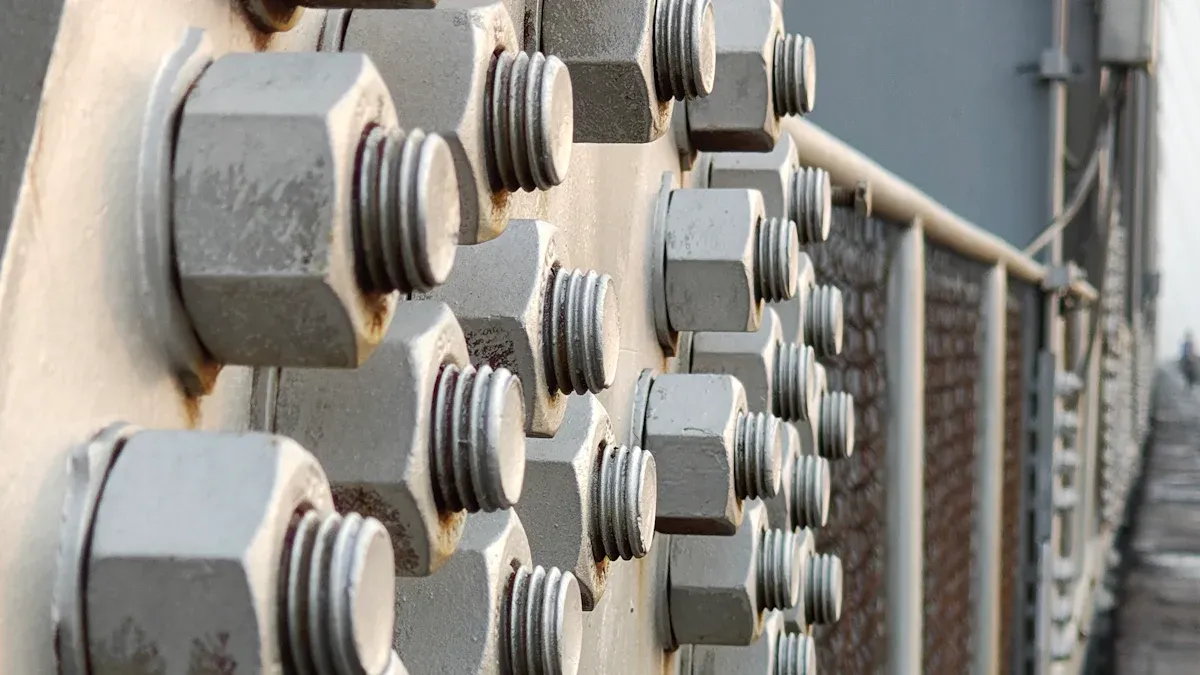
For heavy-duty structural applications, wedge anchor bolts are the industry’s fastener of choice. Their design provides superior strength and reliability in solid concrete, making them essential for securing everything from steel columns to heavy machinery. Understanding why they dominate and how top expansion bolts companies approach their design is key to proper specification.
Why Wedge Anchors Dominate Structural Use
The exceptional performance of wedge anchor bolts comes from a simple yet powerful mechanical principle. This mechanism ensures a secure connection capable of handling immense loads.
Unmatched Strength Mechanism
The strength of a wedge anchor originates from its unique expansion process. This process creates a powerful grip inside the concrete.
- Expansion Mechanism: Tightening the nut pulls a tapered cone on the anchor body into an expansion clip. This action forces the clip to expand outward.
- Frictional Forces: The expanding clip presses firmly against the walls of the drilled hole. This generates immense friction, which is the primary source of the anchor’s holding power.
- Mechanical Interlock: The clip also directly engages with the surface of the concrete, creating a mechanical interlock that further secures the anchor.
The final load capacity of any anchor depends on its diameter, its embedment depth, and the compressive strength of the concrete itself.
Reliability in Solid Concrete
Engineers trust wedge anchor bolts because of their proven track record in demanding environments. Case studies demonstrate their reliability. For example, these fasteners secure large hydraulic presses in steel plants and anchor large automated assembly lines in automotive facilities. In these applications, the anchor provides stability against extreme pressure and heavy loads. A report from the Portland Cement Association also notes that in seismic zones, using a wedge anchor can reduce failure rates significantly compared to other fastener types, highlighting their robust performance.
Comparing Top Expansion Bolts Companies for Wedge Anchors
Leading expansion bolt brands offer specialized wedge anchor bolts for heavy-duty work. Each brand has a distinct focus, from ultimate performance to code compliance.
Hilti’s Heavy-Duty Offerings
Hilti offers ultimate-performance wedge anchor bolts for the most critical jobs. Products like the HSL4 heavy-duty wedge anchor are designed for safety-relevant and dynamic applications. This anchor has approvals for use in nuclear power plants, for securing heavy equipment, and for resisting seismic and shock loads. These high-performance bolts represent the peak of anchor engineering for challenging concrete conditions.
Simpson’s Code-Compliant Options
Simpson Strong-Tie excels in providing wedge anchor bolts with extensive, verifiable code approvals. Their Strong-Bolt 2 anchor is a trusted solution for projects under strict regulatory oversight.
Approvals at a Glance The Strong-Bolt 2 holds an active ICC-ES report for use in both cracked concrete and seismic zones. This makes it a go-to anchor for engineers who need to meet stringent building codes with confidence.
DeWalt’s Value-Engineered Solutions
DeWalt provides value-engineered wedge anchor bolts that balance reliable performance with cost-effectiveness. While their standard expansion bolts are perfect for many general-purpose jobs in uncracked concrete, they may not carry the specialized seismic or cracked concrete approvals found with premium brands. This makes them an excellent choice for high-volume projects where ultimate load performance is not the primary design driver.
How to Choose the Right Expansion Bolts
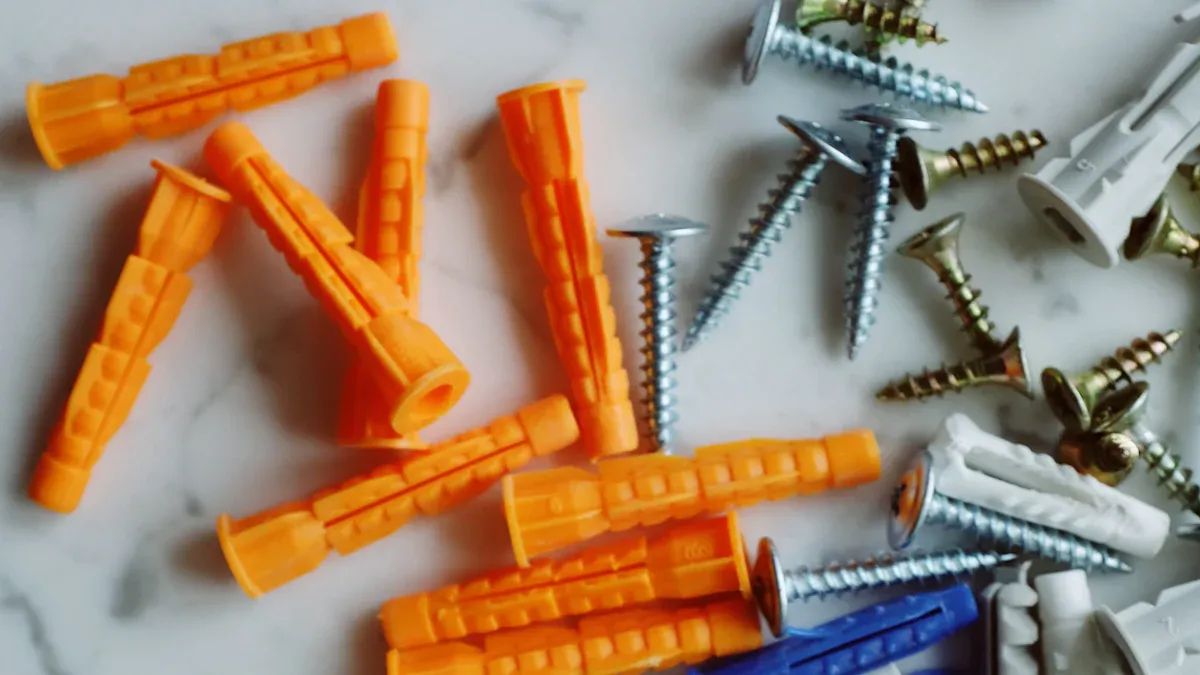
Selecting the correct expansion bolts involves more than just picking a brand. Professionals must align the anchor’s capabilities with specific project demands, technical factors, and code requirements. This ensures secure anchoring and long-term structural safety.
Matching Anchor to Your Project
Different jobs have unique load requirements and environmental conditions. Matching the anchor to the application is the first step toward a successful installation.
For High-Load Structural Connections
Structural connections for steel beams and columns demand the highest performance from an anchor. These applications involve immense forces.
- A single M20 high-strength bolt can carry approximately 100 kN.
- A stiffened steel section can sustain loads greater than 250 kN.
- Column splices often handle axial loads exceeding 2000 kN.
For these jobs, a premium anchor like the Hilti Kwik Bolt TZ2 or Simpson Strong-Bolt 2 is necessary to manage the high load requirements.
For General Purpose Fastening
Many projects involve fastening non-structural items like conduit, cable trays, or lightweight equipment. For these tasks, a standard, reliable anchor like the Red Head Trubolt+ provides sufficient performance and offers a dependable installation.
For Cost-Sensitive, High-Volume Jobs
Large-scale projects with thousands of fastening points require reliable fastening solutions that are also economical. The DeWalt Power-Stud+ SD1 offers an excellent balance of certified performance and cost-effectiveness, making it ideal for high-volume installation work.
For Seismic or Cracked Concrete Zones
Modern engineering recognizes that concrete can crack under load. Any installation in a seismic zone or a cracked concrete area requires a specially designed anchor. These anchors, which have specific key approvals and certifications, are engineered to maintain their load capacity even in compromised concrete.
Key Technical Factors to Consider
Beyond the application, technical specifications dictate the correct anchor selection and installation best practices.
Calculating Required Embedment Depth
The embedment depth of an anchor is critical to its load capacity. Engineers calculate this depth based on the load requirements and the concrete strength. ACI-318 Appendix D provides the industry standard for these calculations, which often involves analyzing the area of a 45-degree shear cone extending from the anchor in the concrete.
Safe Working Load vs. Ultimate Load
Manufacturers test an anchor to failure to find its ultimate load. However, for safety, engineers use a much lower safe working load.
To determine the safe working load, engineers apply a safety factor to the ultimate load. ACI 318 specifies strength reduction (phi) factors from 0.45 to 0.75 for concrete. General rigging often uses a 4:1 or 5:1 safety factor. This ensures the anchor is never stressed near its failure point. The safe working load is the most important number for any installation.
Правила расстояний между анкерами и до края
Every anchor needs a certain amount of concrete around it to achieve its full load capacity. Placing an anchor too close to another anchor or to the edge of the concrete can cause a blowout. Manufacturers provide strict guidelines for minimum spacing and edge distances for every anchor.
Material Selection: Zinc vs. Stainless Steel
The project environment determines the correct anchor material. Zinc-plated carbon steel anchors are suitable for dry, indoor conditions. For outdoor, wet, or corrosive environments, a stainless steel anchor is essential to prevent rust and ensure long-term performance.
Understanding Certifications and Approvals
Official certifications provide third-party verification of an anchor’s performance claims.
ICC-ES Reports Explained
An ICC-ES report is one of the most important key approvals and certifications for an anchor. It proves the product meets building code requirements and that its performance data has been independently verified.
Cracked Concrete Approval
An anchor with cracked concrete approval has been tested to perform reliably in concrete with existing cracks. This is a critical safety feature and a code requirement for many modern building projects. Matching anchor to concrete strength and condition is vital.
Seismic Design Categories
Regions with earthquake risk have specific seismic design requirements. An anchor used in these areas must have key approvals and certifications showing it has passed rigorous seismic testing.
When You Need Special Approvals
Critical applications, such as in hospitals, power plants, or high-rise buildings, often require special approvals beyond standard certifications. Always verify the project specifications to ensure the chosen anchor has the necessary qualifications.
Cost vs. Performance Analysis
A professional evaluation of expansion bolts must extend beyond technical data to include a thorough cost analysis. The initial price of an anchor is only one part of the equation. True value emerges when balancing upfront cost with installation efficiency, long-term performance, and risk mitigation. This price per anchor comparison reveals how brand positioning impacts project budgets.
Price Per Anchor Comparison
The sticker price of an anchor often reflects its engineering, material quality, and the extent of its certifications. A direct cost comparison highlights these differences clearly.
Cost of Standard 1/2″ x 5″ Anchors
The 1/2″ x 5″ zinc-plated клинового анкера is a common size, making it a useful benchmark for cost. The price per anchor can vary significantly between brands.
| Бренд | Flagship Anchor | Estimated Cost per Unit (2026) |
|---|---|---|
| Hilti | **Kwik Bolt TZ2** | $4.50 – $6.00 |
| Simpson | Strong-Bolt 2 | $3.75 – $5.25 |
| DeWalt | Power-Stud+ SD1 | $2.25 – $3.50 |
| Red Head | Trubolt+ | $2.00 – $3.25 |
Примечание: Prices are estimates for single units and can change based on supplier and region.
Premium vs. Economy Brand Pricing
Premium brands like Hilti and Simpson justify their higher cost with superior performance in demanding conditions, such as cracked concrete and seismic zones. This cost also covers extensive research and development. Economy brands like DeWalt and Red Head offer a lower cost per anchor, providing excellent value for standard applications in uncracked concrete.
Bulk Purchase Cost Savings
Contractors can significantly reduce the unit cost of any anchor through bulk purchasing. For large-scale projects, a 10-20% reduction in cost per anchor is common when buying by the case or pallet. This makes the overall cost more manageable.
Calculating Long-Term Value
The cheapest anchor is rarely the most economical choice over the project’s lifespan. Calculating long-term value and reliability involves looking at the total cost of ownership.
The Cost of Anchor Failure
An anchor failure creates costs that far exceed the price of the anchor itself. These expenses include structural repairs, equipment damage, project delays, and potential legal liability. The small additional cost for a higher-performance anchor is a wise investment against these catastrophic financial risks.
Labor Savings with Better Anchors
A well-designed anchor can reduce labor cost by streamlining installation. Some modern anchor systems offer features that boost efficiency on the jobsite.
- Они могут устранить необходимость в отдельных этапах таких как тщательная очистка отверстия.
- Оптимизированная конструкция позволяет быстрее устанавливать анкер с помощью стандартных инструментов.
- Это сокращает общее время, затрачиваемое на сверление и крепление каждого анкера.
Эта эффективность напрямую ведет к снижению трудозатрат, что может компенсировать более высокую начальную стоимость анкера.
Инвестиция в сертифицированную надежность
В конечном счете, более высокая стоимость премиального анкера — это инвестиция в сертифицированную производительность. Платить больше за анкер с обширными отчетами ICC-ES и специальными допусками — значит получать документально подтвержденные гарантии его возможностей. Эта инвестиция обеспечивает безопасность, соответствие нормам и душевное спокойствие.
Выбор правильного анкера от ведущих брендов имеет решающее значение. Профессионалы выбирают анкер среди этих брендов распорных болтов исходя из конкретных потребностей: Hilti для максимальной производительности, Simpson для универсального анкера, и DeWalt для анкера с оптимальным соотношением цены и качества.
| Бренд | Flagship Anchor | Ключевое преимущество | Идеальный случай применения |
|---|---|---|---|
| Hilti | **Kwik Bolt TZ2** | Максимальная производительность | Критически важные структурные работы |
| Simpson | Strong-Bolt 2 | Универсальность и допуски | Проекты, требующие соответствия нормам |
| DeWalt | Power-Stud+ SD1 | Лучшее соотношение цены и качества | Массовое крепление |
Лучший анкер — всегда тот, который соответствует конкретным инженерным, нагрузочным и нормативным требованиям вашего проекта.
Инвестиции в правильный, высококачественный анкер — это обязательная часть обеспечения структурной безопасности при использовании распорных болтов.
Частые вопросы
Какой фактор является самым важным для анкера в бетоне?
Прочность бетона — критический фактор. Высокопроизводительный анкер не может раскрыть свой потенциал в слабом бетоне. Выбор анкера должен соответствовать состоянию бетона. Качественный анкер требует прочного бетона для надежной установки. Анкер должен подходить для бетона. Этот анкер работает в этом бетоне.
Можно ли использовать любой анкер в трещиноватом бетоне?
Нет. Стандартные типы анкеров предназначены только для бетона без трещин. Для трещиноватого бетона требуется анкер со специальным допуском. Этот анкер имеет допуски для таких условий. Использование неподходящего анкера в трещиноватом бетоне небезопасно. Установка анкера должна производиться с использованием правильного анкера для конкретного применения в бетоне.
Как глубина заделки влияет на анкер?
Большая глубина заделки увеличивает удерживающую способность анкера в бетоне. Более глубокий анкер взаимодействует с большим объемом бетона, создавая конус сопротивления большего размера. Инструкции по установке анкера указывают необходимую глубину для его работы в бетоне. Неглубокая установка анкера в бетоне обеспечивает плохую производительность.
Почему важно расстояние между анкерами при установке?
Правильное расстояние предотвращает разрушение бетона. Анкер создает в бетоне конусы напряжений. Размещение анкера слишком близко к другому анкеру приводит к перекрытию этих конусов. Это перекрытие ослабляет бетон и снижает несущую способность каждого анкера. Установка анкера должна соблюдать правила расстановки.
Что произойдет, если отверстие для установки анкера слишком велико?
Слишком большое отверстие не позволяет анкеру работать. Распорная втулка анкера не может правильно расшириться, чтобы зацепиться за стенки бетона. Это приводит к неудачной установке. Анкер будет иметь низкую или нулевую удерживающую способность в бетоне. Правильное сверло для анкера крайне важно.
Всегда ли анкер из нержавеющей стали лучше?
Не всегда. Анкер из нержавеющей стали обеспечивает превосходную коррозионную стойкость для наружных или влажных бетонных сред. Для сухого бетона внутри помещений оцинкованный анкер из углеродистой стали обеспечивает достаточную производительность. Среда проекта диктует правильный материал анкера для установки в бетон. Выбирайте правильный анкер.
Требуется ли для каждой установки анкера динамометрический ключ?
Да, для анкеров клинового типа. Правильный момент затяжки обеспечивает правильное расклинивание анкера в бетоне. Перетягивание может повредить бетон или анкер. Недотягивание приводит к ослаблению анкера. Калиброванный динамометрический ключ жизненно важен для успешной установки анкера в бетон. Этот анкер требует правильной установки.
Совет по установке 💡.