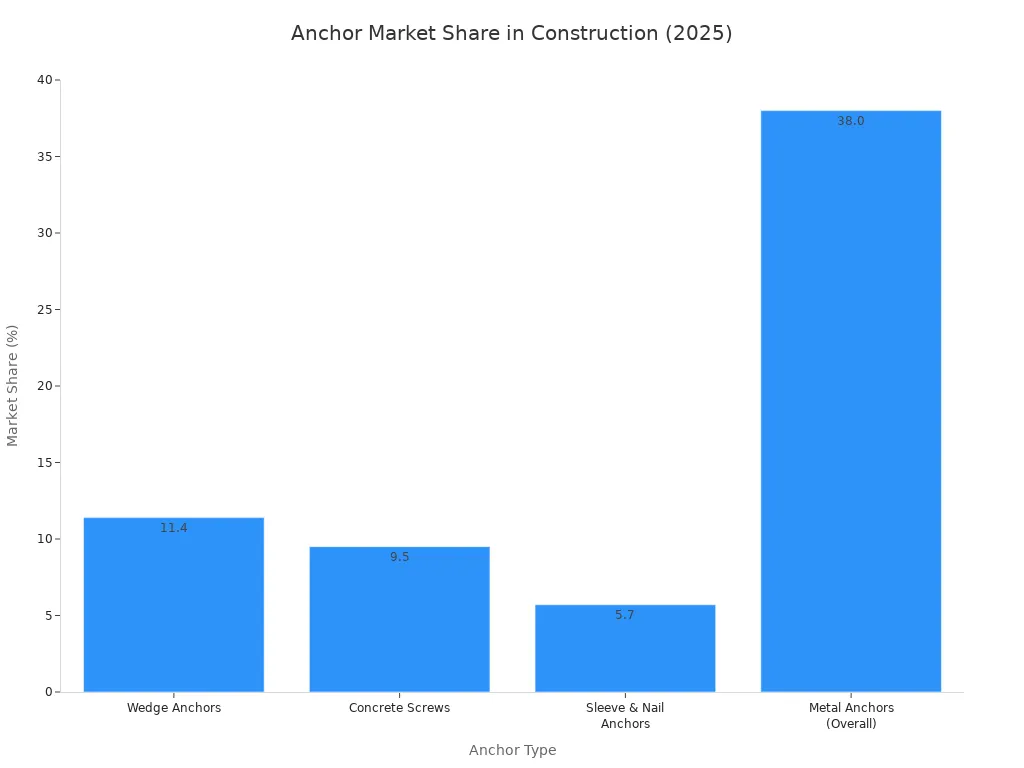
For heavy-duty structural connections in solid concrete, the клинового анкера remains the top choice in 2026. Its superior strength establishes its dominance among various types of concrete anchors. For medium-duty fixtures, a sleeve anchor offers better value, while concrete screws provide the fastest installation for light-duty tasks. The drop-in anchor is the ideal solution for specialized overhead applications. Market data shows the leading position of wedge anchors.
These common Анкерные болты and even специальные анкерные болты от производитель крепежных изделий на заказ address specific needs, though the convenience of the concrete screw and other concrete screws is undeniable.
The Wedge Anchor: Your Heavy-Duty Champion in 2026
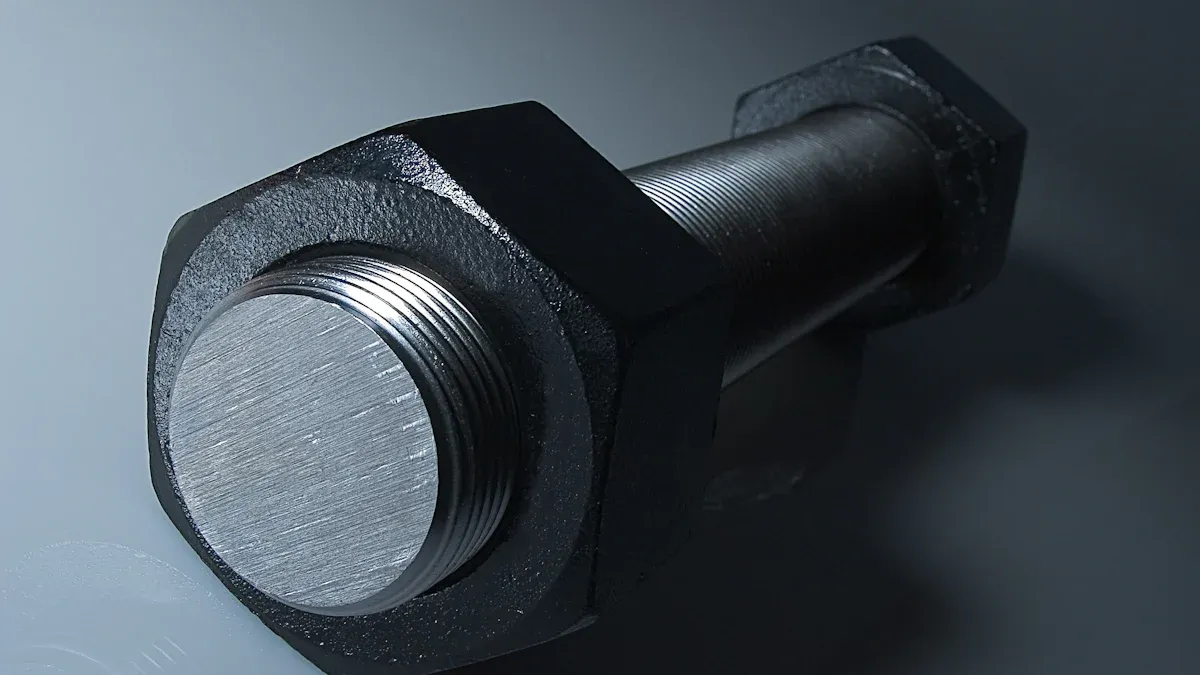
Стандарт DIN 933: объяснение клинового анкера, often called a through-bolt, excels in applications demanding immense holding power in solid concrete. Its design allows installation through a fixture directly into the concrete, making it a top choice for securing heavy loads permanently.
When to Choose a Wedge Anchor
Professionals select this anchor for safety-critical and structural purposes. These throughbolts are the standard for projects where failure is not an option. Some common applications include:
Structural Steel Connections
Installers use wedge anchors to fasten steel I-beams, support columns, and base plates directly to concrete foundations.
Тяжелой техники и оборудования
Factories and workshops rely on wedge anchors to secure heavy industrial machinery, preventing movement and vibration during operation.
Racking and Shelving Systems
Warehouse pallet racking and heavy-duty shelving systems require a secure footing, which these powerful throughbolts provide.
Guardrails and Safety Barriers
For highway guardrails, stadium railings, and industrial safety barriers, the reliable strength of wedge anchors ensures public and worker safety.
Key Advantages Driving its Dominance
The enduring popularity of the wedge anchor stems from several key performance characteristics that set it apart.
Непревзойденная прочность на растяжение и сдвиг
Wedge anchors deliver exceptional resistance to both pulling (tensile) and sideways (shear) forces, making them ideal for the most demanding loads.
Permanent and Secure Hold
Once torqued, the anchor’s expansion clip bites firmly into the concrete. This creates a permanent, non-slip connection that provides long-term peace of mind.
Надежность в трещиноватом и нетрещиноватом бетоне
Many modern wedge anchors are rated for use in both cracked and uncracked concrete, offering versatile and dependable performance across various job site conditions.
Ideal for Leveling and Shimming
The through-bolt design allows for shims to be placed between the fixture and the concrete surface, enabling precise leveling of equipment or base plates before final tightening.
Critical Limitations and Considerations
Despite its strengths, the wedge anchor is not a universal solution. Proper use requires understanding its specific limitations.
Not for Brick or Block
Using wedge anchors in base materials like brick, hollow block, or masonry is a critical mistake. These materials lack the solid mass and strength to handle the anchor’s expansion forces.
Brick is softer than concrete and more susceptible to crumbling. Hollow block contains large internal voids and has thin walls. If the anchor’s expansion clip ends up in a void or against a thin wall, it cannot generate the necessary grip, leading to catastrophic failure.
Precise Hole Depth is Non-Negotiable
The drilled hole must be the correct diameter and depth. An improperly sized hole will prevent the anchor from setting correctly, severely compromising its load capacity.
Installation Torque Requirements
Applying the correct torque with a calibrated torque wrench is essential. Under-torquing prevents proper expansion, while over-torquing can stress the concrete or the anchor itself, leading to failure.
Not Designed for Removability
These anchors create a permanent bond. Removing them is a destructive process that typically involves cutting the anchor flush with the concrete surface, leaving the anchor body embedded.
Exploring Other Types of Concrete Anchors

While the wedge anchor reigns supreme for heavy-duty jobs, other types of concrete anchors serve critical roles. Understanding their specific strengths and weaknesses is key to selecting the right fastener. Installers often choose from a wide variety of types of anchors, including the lag shield anchor and the split drive anchor, for specific situations.
The Sleeve Anchor: The Versatile All-Rounder
The sleeve anchor is a medium-duty fastener known for its adaptability. Its expansion mechanism exerts less concentrated force than a wedge anchor, making it suitable for a wider range of base materials.
Наилучшие сферы применения
This anchor excels in light to medium-duty applications where material integrity is a concern. Common uses include:
- Securing shelving units and handrails
- Mounting electrical boxes and signage
- Fastening wall cabinets or large flat-screen TVs
- Attaching grab bars in bathrooms
Key Advantages
The primary advantage of the sleeve anchor is its versatility. It performs reliably in solid concrete, but it is also one of the few mechanical anchors suitable for softer or hollow base materials like brick and concrete block. This makes it a go-to choice for many commercial and residential renovation projects.
Understanding its Limitations
The sleeve anchor’s versatility comes at the cost of ultimate strength. It does not possess the high tensile and shear capacity of a wedge anchor. Therefore, professionals avoid using it for structural connections or to support heavy, vibrating machinery.
The Concrete Screw: The Speed and Convenience King
For light-duty fastening, concrete screws are unmatched in installation efficiency. These fasteners, often sold under brand names like Tapcon®, are a favorite for projects where speed is paramount.
Наилучшие сферы применения
Installers use concrete screws for non-structural tasks that require a secure but potentially temporary hold. They are ideal for attaching electrical conduit straps, window frames, furring strips, and termite bait stations.
Key Advantages
The main benefit of concrete screws is their simple, fast installation. They feature a self-tapping design that threads directly into a pre-drilled hole using a standard power tool. This single-step process is significantly faster than setting expansion anchors. A single concrete screw is also easily removable, a key advantage for temporary fixtures.
Требуемый диаметр твердосплавного сверла Unlike expansion anchors, concrete screws can often be installed closer to a concrete edge without the risk of spalling, as they cut threads rather than exert outward pressure.
Where Concrete Screws Fall Short
The trade-off for speed and convenience is load capacity. Concrete screws offer the lowest holding power among these mechanical anchors. They are not suitable for heavy loads, overhead applications, or situations involving significant vibration, which can cause them to loosen over time.
The Drop-In Anchor: The Overhead Specialist
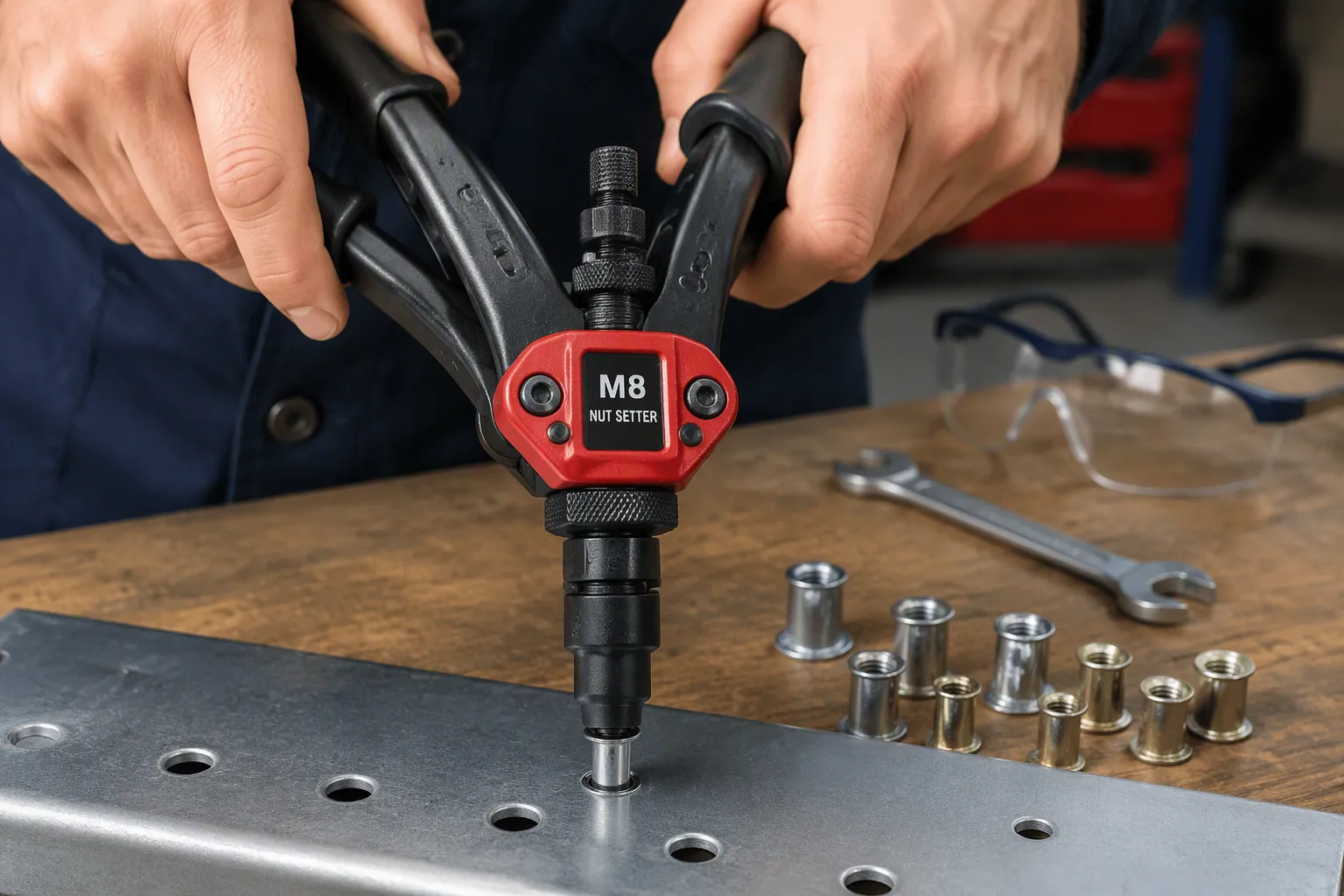
The drop-in anchor is a female anchor designed specifically for overhead applications in solid concrete. It requires a setting tool to expand the anchor within the hole.
Наилучшие сферы применения
A drop-in anchor is the preferred choice when suspending items from a concrete ceiling. Its design creates a flush surface, perfect for accepting threaded rods. Common applications include:
- Систем пожаротушения
- Suspending HVAC ductwork and pipe supports
- Hanging cable trays and electrical conduit
- Overhead lighting fixtures
Key Advantages
The key advantage is its flush-mount design. Once set, the anchor does not protrude from the concrete surface. This allows for a clean, professional installation of threaded rods for suspending utilities and equipment. These types of concrete anchors provide a reliable hold for static overhead loads.
Important Limitations to Know
Installation requires an extra step: using a specific setting tool to expand the anchor. Failure to use the tool correctly results in a failed connection. Furthermore, these anchors are permanent and designed exclusively for solid concrete.
Installation Best Practices for Flawless Performance
Proper anchor installation is the most critical factor in achieving maximum holding power and ensuring safety. The correct installation process guarantees that клиновые анкеры deliver their specified performance. Following manufacturer guidelines prevents catastrophic failures and ensures a secure, long-lasting connection.
How to Install Wedge Anchors Correctly
A precise, step-by-step approach is non-negotiable for these heavy-duty throughbolts. Each stage plays a vital role in the anchor’s final strength.
Сверление отверстия
Installers must use a hammer drill with an ANSI-standard carbide-tipped bit. The bit’s diameter must match the anchor’s diameter exactly. The hole should be drilled deeper than the anchor’s required embedment to accommodate dust and debris.
Cleaning the Hole
This step is crucial. Professionals use compressed air to blow out the hole, followed by scrubbing with a properly sized wire brush. They repeat this blow-brush-blow sequence until the hole is completely free of concrete dust.
Установка анкера
The installer places the fixture over the hole. They then gently tap the anchor with a hammer through the fixture and into the hole until the washer and nut are snug against the surface.
Applying Correct Torque
The final step is tightening the nut. A calibrated torque wrench is essential to apply the manufacturer’s specified torque value. This action pulls the anchor body up, engaging the expansion clip firmly against the concrete walls.
Распространенные ошибки монтажа, которых следует избегать
Even the best throughbolts will fail if installed incorrectly. Avoiding these common errors is just as important as following the correct procedure.
Incorrect Hole Diameter or Depth
A hole that is too wide will prevent the anchor from gripping the concrete. A hole that is too shallow will not allow the throughbolts to reach the required embedment depth, severely reducing their load capacity.
Недостаточная очистка отверстия
Debris left in the hole acts like a cushion, preventing the expansion clip from making full contact with the solid concrete. This oversight dramatically compromises the anchor’s holding power and is a leading cause of connection failure.
Over-Torquing or Under-Torquing
Under-torquing fails to expand the clip sufficiently, resulting in a loose connection. Over-torquing can damage the throughbolts themselves or place excessive stress on the concrete, causing it to crack and fail.
Ignoring Edge and Spacing Distances
Disregarding proper spacing for wedge anchors can result in a significant loss of capacity. When anchors are too close, the stress cones they create in the concrete overlap. This overlap causes the concrete between them to bear excessive tension, which can lead to splitting and a reduction in the capacity of both anchors. Similarly, an anchor installed too near an edge cannot develop its full stress cone, making the edge susceptible to cracking and premature failure.
Head-to-Head Comparison: Which Anchor Wins?
Choosing the correct anchor requires a direct comparison of their performance characteristics. Each fastener excels in a specific role. A head-to-head analysis reveals which anchor is the champion for your particular application.
Клиновой анкер и втулочный анкер
This comparison pits the heavy-duty specialist against the versatile all-rounder. The choice often comes down to the base material and the required load capacity.
Strength and Permanence
The wedge anchor provides superior holding power for permanent, heavy-duty installations in solid concrete. A sleeve anchor offers reliable strength for medium-duty jobs but does not match the ultimate tensile capacity of its heavy-duty counterpart. The data clearly shows the wedge anchor’s advantage.
| Тип анкера | Диаметр (дюймы) | Прочность на разрыв (фунты) |
|---|---|---|
| Клин-анкер | 1/2 | 5,500 |
| Рукавный анкер | 1/2 | 4,200 |
Base Material Versatility
Versatility is the sleeve anchor’s greatest strength. It functions well in solid concrete, brick, and even hollow block. The wedge anchor, however, is designed exclusively for solid concrete. Its powerful expansion forces can crack or destroy weaker base materials like brick. This makes the sleeve anchor a better choice for projects involving varied or unknown masonry, while other types of concrete anchors like the lag shield anchor also fill specific niches in softer materials.
Shear vs. Tensile Load Performance
Both anchors resist pulling (tensile) and sideways (shear) forces, but wedge anchors perform better under extreme loads.
- Wedge anchors deliver exceptional shear strength due to their expansion mechanism, which creates a secure, non-slip fit.
- They are the dependable option for demanding applications with heavy or dynamic shear loads.
- Sleeve anchors provide good performance for moderate loads but may be more susceptible to slipping under heavy shear forces.
Wedge Anchor vs. Concrete Screw
This matchup is a classic battle of strength versus speed. Professionals must weigh the need for ultimate load capacity against the benefits of rapid installation.
Скорость установки и возможность повторного использования
Concrete screws are the undisputed champions of installation speed. Installers drive them directly into a pre-drilled hole with a power tool, a process that saves significant time compared to setting expansion anchors. Heavy-duty concrete screws like the Titen HD® reduce overall installation time. In contrast, wedge anchors require more steps and are harder to install. Furthermore, concrete screws are easily removable, making them ideal for temporary fixtures. These throughbolts are permanent.
Reminder: Concrete screws cut threads into the concrete rather than expanding. This often allows them to be installed closer to an edge without causing the concrete to spall or crack.
Ultimate Load-Bearing Capability
While some concrete screws are rated for heavy duty, they cannot match the raw power of wedge anchors. Wedge anchors offer unparalleled holding power and are the correct choice for supporting substantial structural loads. They possess extremely high pull-out strength, making them the heavy-duty option when safety and load capacity are the top priorities.
Performance Near Concrete Edges
The installation method directly impacts performance near an edge. The expansion force of throughbolts creates a cone of stress in the concrete. Installing them too close to an edge can cause the concrete to break away. Because concrete screws cut threads and do not expand, they exert less outward pressure, giving them an advantage in applications near a concrete edge.
Клиновой анкер против анкерного вставки
This comparison highlights two specialists designed for different purposes. One builds from the ground up, while the other hangs from the ceiling down.
Application Type (Structural vs. Overhead)
The application dictates the choice here. Wedge anchors are throughbolts used for structural connections, fastening items like steel columns and heavy machinery до a concrete slab. Drop-in anchors are female anchors used for suspending items from a concrete ceiling, such as threaded rods for pipe supports, HVAC ducts, and sprinkler systems.
Installation Process and Tools
The installation process for these anchors differs significantly. A drop-in anchor requires a specific setting tool. An installer inserts this tool into the anchor and strikes it with a hammer to flare the anchor body, securing it in the hole. Wedge anchors do not need a special setting tool; tightening the nut with a torque wrench completes the installation.
Flush Finish vs. Through-Bolt Design
The final appearance is a key differentiator. A drop-in anchor sits flush with or just below the concrete surface, creating a clean look and leaving a threaded opening for a bolt or rod. A wedge anchor has a through-bolt design, meaning the threaded stud and nut remain exposed above the surface of the fixture.
Anchor Selection Guide for 2026: A Summary Table
An installer’s choice of anchor directly impacts the safety and longevity of a project. This guide simplifies the selection process by comparing the most common types of concrete anchors across critical performance factors. Making an informed decision requires a clear understanding of how each anchor type performs under different conditions.
Comparing Key Decision Factors
Each project presents unique challenges, from the weight of the object being fastened to the type of concrete used. The following breakdown examines the key attributes that differentiate the primary anchor types, helping professionals match the right fastener to the job.
Load Capacity (Tensile/Shear)
Load capacity is the most critical factor for structural and safety-related applications. It defines the maximum force an anchor can withstand before failure.
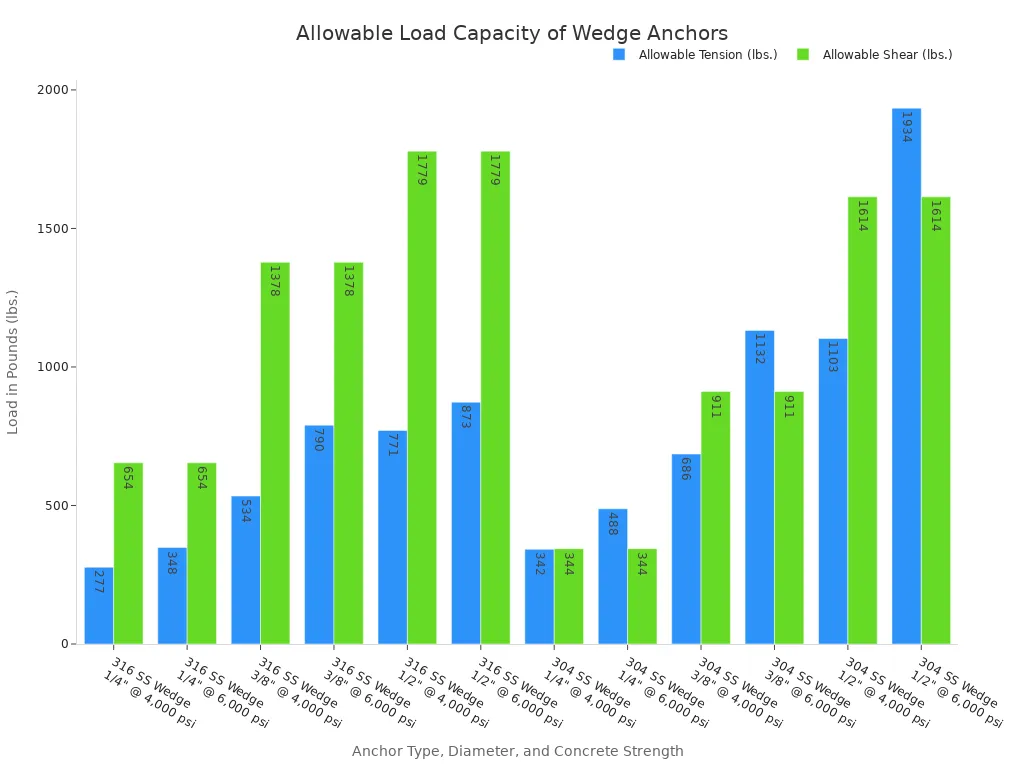
Клиновые анкеры: These anchors provide the highest tensile (pull-out) and shear (sideways) strength. They are the undisputed choice for heavy-duty structural loads. The material of the anchor, such as 316 or 304 stainless steel, and the compressive strength of the concrete significantly influence its ultimate capacity. For instance, a 1/2″ 304 SS wedge anchor in 6,000 psi concrete has an allowable tension load of 1934 фунта, a substantial increase over the 1,103 lbs it can hold in 4,000 psi concrete.

Important Note: Professionals calculate allowable loads by applying a safety factor to the ultimate load capacity. A minimum safety factor of 4.0 is standard, but critical applications like life safety systems may require a factor of 10 or more.
Распорные анкеры: These offer good, reliable strength for medium-duty applications. Their capacity is lower than that of wedge anchors.
Встраиваемые анкеры: They provide excellent tensile strength for static overhead loads, like suspending pipes or ductwork. Their shear performance is less critical for their intended use.
Винты по бетону: These fasteners have the lowest load capacity. They are suitable only for light-duty, non-structural applications.
Пригодность материала основания
The type of material an anchor is installed into is a decisive factor. Using the wrong anchor for a given base material is a recipe for failure.
- Wedge & Drop-In Anchors: These are specialists designed exclusively for solid, dense concrete. Their powerful expansion mechanisms can easily crack or destroy weaker materials like brick or hollow block. While some are rated for cracked concrete, it is crucial to verify that the chosen anchor has the appropriate approval (ETA) for the specific concrete condition. Drop-in anchors are generally ideal for uncracked concrete.
- Распорные анкеры: This is the most versatile option. The sleeve distributes expansion pressure more broadly, making it suitable for solid concrete, brick, and even some hollow block applications.
- Винты по бетону: These work well in solid concrete, brick, and block. Because they cut threads instead of expanding, they are often a safer choice in softer or more brittle masonry.
Простота монтажа
Time is money on any job site. The complexity and speed of installation vary significantly among these fasteners.
- Винт для бетона (Concrete Screw): The clear winner for speed. An installer simply drills a hole and drives the screw with a power tool.
- Рукавный анкер: Installation is straightforward. An installer drills a hole, taps the anchor in, and tightens the nut or screw.
- Клин-анкер: This requires more precision. The process involves drilling, thoroughly cleaning the hole, setting the anchor, and tightening to a specific torque value with a calibrated wrench.
- Забивной анкер: This anchor has the most involved process. It requires drilling, cleaning, inserting the anchor, and then using a special setting tool to expand it correctly before a bolt or rod can be installed.
Возможность снятия
The need for temporary or adjustable fixtures dictates whether a permanent or removable anchor is appropriate.
- Винты по бетону: These are the only truly removable anchors in this group. An installer can simply unscrew them, making them perfect for temporary installations like formwork or seasonal displays.
- Распорные анкеры: While not designed for reuse, they can often be removed with some effort. The fixture can be taken off by unthreading the bolt, but removing the anchor body itself can be difficult.
- Wedge & Drop-In Anchors: These are considered permanent. Once set, they cannot be removed without destroying the anchor and potentially damaging the surrounding concrete. The standard procedure is to cut the anchor flush with the surface.
Устойчивость к вибрации
Vibrating loads from machinery or dynamic forces can cause some anchors to loosen over time.
- Клиновые анкеры: They offer good resistance to vibration once properly torqued, as the expansion clip creates a tight, friction-based hold.
- Распорные анкеры: Their performance under vibration is moderate. They may not be suitable for heavy, constant vibrations.
- Винты по бетону: Professionals generally do not recommend concrete screws for applications with high levels of vibration, as the threads can potentially loosen.
- Epoxy/Adhesive Anchors (A Note on the Best): For extreme vibration, such as securing large industrial compressors, epoxy anchors are superior. The adhesive creates a monolithic bond with the concrete that is often stronger than the concrete itself.
Proximity to Edge
Installing an anchor too close to the edge of a concrete slab can cause the concrete to crack and spall, a failure known as “breakout.”
- Винты по бетону: These generally perform best near edges. Since they cut threads rather than expanding, they exert minimal outward pressure, reducing the risk of breakout.
- Распорные анкеры: They exert less concentrated force than wedge anchors, giving them moderate performance near edges.
- Wedge & Drop-In Anchors: These require the most care. Their powerful expansion forces necessitate strict adherence to manufacturer-specified minimum edge and spacing distances to prevent concrete failure.
Cost-Benefit Analysis: Which Anchor Offers the Best Value?
A smart decision on the job site goes beyond the initial price tag. Professionals must evaluate the total cost of an anchor over its entire service life. This analysis includes the anchor’s price, installation labor, and the potential cost of failure.
Первоначальные затраты против долгосрочной надежности
Самый дешевый вариант редко является наиболее выгодным, особенно в строительстве. Истинную ценность анкера определяет баланс между первоначальными затратами и долгосрочными эксплуатационными характеристиками.
Стоимость анкера за единицу
Стоимость одного анкера существенно варьируется в зависимости от типа, размера и материала. Общая иерархия затрат выглядит следующим образом:
- Винты по бетону: Как правило, наименее затратный вариант в расчете на единицу.
- Распорные анкеры: Занимают среднюю позицию по стоимости.
- Встраиваемые анкеры: Стоимость сопоставима с распорными анкерами, но требуют специального монтажного инструмента.
- Клиновые анкеры: Обычно самые дорогие, при этом нержавеющие версии имеют премиальную цену.
Затраты на рабочую силу и время монтажа
Рабочая сила — это основная статья расходов проекта. Более быстрая установка напрямую ведет к снижению затрат. Бетонные шурупы обеспечивают самый быстрый монтаж, сокращая трудозатраты. Распорные анкеры также относительно быстры. Клиновые и забивные анкеры требуют более точного, многоэтапного процесса, что увеличивает время и квалификацию, необходимые для правильной установки.
Стоимость отказа
Это самый важный финансовый аспект. Отказ анкера может иметь катастрофические последствия.
Стоимость разрушенного соединения никогда не ограничивается ценой нового анкера. Она включает трудозатраты на переделку, задержки проекта, потенциальный ущерб дорогостоящему оборудованию и, что наиболее критично, огромную ответственность, связанную с материальным ущербом или травмами людей. Финансовый и репутационный ущерб от разрушения конструкции намного превышает любую первоначальную экономию на более дешевом крепежа.
Почему клиновой анкер — разумная инвестиция
Для критически важных применений более высокая первоначальная стоимость качественного анкера — это необходимая и мудрая инвестиция. Она обеспечивает ценность, выходящую далеко за рамки его материальной стоимости.
Уверенность для критических нагрузок
Инженеры и монтажники обретают уверенность, используя анкер, рассчитанный на высокие нагрузки. Заявленная высокая прочность клинового анкера обеспечивает спокойствие. Эта уверенность бесценна для несущих соединений, где безопасность является главным приоритетом.
Долговечность и износостойкость
Эти анкеры созданы для постоянной работы. Высококачественные материалы, такие как оцинкованная или горячеоцинкованная сталь, обеспечивают отличную долговечность. Варианты из нержавеющей стали обеспечивают максимальную коррозионную стойкость для очень длительного срока службы, исключая будущие затраты на замену.
Снижение рисков в несущих конструкциях
Выбор правильного анкера является фундаментальной частью управления рисками. Использование крепежа с непревзойденной прочностью для несущих конструкций сводит к минимуму риск катастрофического отказа. Дополнительные расходы — это небольшая цена за обеспечение безопасности и целостности всей конструкции.
Будущее анкерного крепления: что ждет после 2026 года?
Мир строительного крепежа не стоит на месте. В то время как проверенные анкеры обеспечивают надежность, производители постоянно расширяют границы производительности и безопасности. Будущее указывает на более умные материалы, усовершенствованные конструкции и инновационные гибридные решения, обещающие большую прочность и универсальность.
Инновации в клиновых анкерах
Даже нынешний чемпион в области тяжелых нагрузок эволюционирует. Постоянные исследования и разработки сосредоточены на повышении долговечности и устойчивости клиновых анкеров для все более требовательных условий.
Усовершенствованные коррозионностойкие покрытия
Производители выходят за рамки традиционного цинкования и горячего цинкования. Появляются новые фирменные покрытия, обеспечивающие превосходную защиту от ржавчины и химического воздействия. Эти передовые покрытия обеспечивают долговечность, сопоставимую с нержавеющей сталью, по более конкурентоспособной цене, что делает их идеальными для инфраструктурных проектов в прибрежных регионах или на промышленных объектах.
Улучшенные сейсмостойкие конструкции
Инженеры совершенствуют конструкции анкеров для лучшей работы во время сейсмических событий. Будущие клиновые анкеры будут обладать улучшенной пластичностью, позволяющей им поглощать энергию и сохранять структурную целостность при циклических нагрузках во время землетрясения. Эти конструкции учитывают работу в трещиноватом бетоне — критический фактор безопасности в сейсмически активных зонах.
Новые анкерные технологии
Помимо улучшения существующих конструкций, отрасль разрабатывает совершенно новые категории анкерных решений. Эти технологии часто сочетают в себе преимущества различных типов анкеров.
Достижения в эпоксидных анкерах
Химические анкеры, в частности эпоксидные, быстро сокращают разрыв с механическими анкерами с точки зрения удобства. Технологический прогресс в химии клеев дает продукты с значительно более быстрым временем отверждения. Чистые эпоксидные составы обеспечивают самое прочное химическое сцепление и отличную устойчивость к воздействию окружающей среды. Хотя они все еще требуют периода отверждения, их превосходная несущая способность делает их мощной альтернативой.
| Критерий: Сертификаты | Механические анкеры | Химические анкеры |
|---|---|---|
| Возможность немедленной нагрузки | Да | Нет (требуется отверждение) |
| Грузоподъемность | Легкие–Средние | Средние–Тяжелые–Экстремальные |
Эти достижения делают химические анкеры более привлекательными для более широкого спектра применений, способствуя их внедрению на рынке.
Гибридные анкерные системы
Самое интересное направление — разработка гибридных систем, объединяющих механические и адгезионные принципы. Эти анкеры обеспечивают производительность, превышающую сумму их частей.
- Двойное действие (расклинивание и склеивание): Эта система использует винтовой анкер с капсулой клея. При закручивании винта монтажником происходит смешивание смолы и отвердителя. Клей заполняет зазоры и сцепляется с бетоном, в то время как резьба винта обеспечивает механическое сцепление.
- Адгезионный анкер с контролем крутящего момента (склеивание и распор): Этот анкер сочетает в себе клеевой состав со специальным коническим элементом. После отверждения клея затяжка анкера создает распорные усилия. Это двойное действие – склеивание и расширение – обеспечивает исключительно высокую несущую способность на вырыв.
Для тяжелых конструкционных задач эти сквозные анкеры (throughbolts) остаются лучшим выбором в 2026 году. Гильзовые анкеры обеспечивают превосходную универсальность для проектов, связанных с кирпичом или средними нагрузками. Монтажники выбирают бетонные шурупы из-за скорости и удобства установки. Эти бетонные шурупы также являются съемными. Простота использования бетонных шурупов делает их идеальными для легких задач, а профессионалы предпочитают их для временного крепления. В конечном счете, лучший тип бетонного анкера зависит от конкретной задачи. Профессионалы должны подбирать правильный крепеж из всех типов бетонных анкеров в соответствии с нагрузкой и материалом, будь то мощные сквозные анкеры или другие их виды.
Частые вопросы
Можно ли повторно использовать клиновые анкеры или бетонные шурупы?
Бетонные шурупы являются съемными и часто пригодны для повторного использования при временных работах. Клиновые анкеры, однако, являются постоянным креплением. Для их удаления монтажники должны срезать их заподлицо с поверхностью, что делает их одноразовым крепежом. Повторное использование клинового анкера небезопасно и не рекомендуется ни при каких обстоятельствах.
Зачем для клиновых анкеров необходим динамометрический ключ?
Динамометрический ключ обеспечивает правильную установку. Он прилагает точное вращательное усилие, необходимое для правильной фиксации распорной клипсы анкера.
Предупреждение Предупреждение: Недостаточный момент затяжки приводит к неплотной посадке. Превышение момента затяжки может повредить анкер или вызвать растрескивание бетона, что приведет к отказу соединения.
В чем разница между трещиноватым и нетрещиноватым бетоном?
- Нетрещиноватый бетон: Этот бетон находится только под сжатием.
- Трещиноватый бетон: Этот бетон испытывает растягивающие напряжения, что вызывает образование волосяных трещин.
Для применения в трещиноватом бетоне требуются специальные анкеры с сейсмическим рейтингом, чтобы гарантировать сохранение их удерживающей способности при расширении трещины.
Насколько важно очищать отверстие перед установкой?
Очистка отверстия является критически важным этапом. Бетонная пыль и мусор препятствуют полному контакту анкера с основным материалом. Это упущение значительно снижает удерживающую способность анкера и является основной причиной его отказа. Стандартной практикой является последовательность "продувка-щетка-продувка".
Почему клиновой анкер нельзя использовать в кирпиче?
Клиновые анкеры создают мощные распорные усилия. Кирпич – более мягкий и хрупкий материал по сравнению с монолитным бетоном. Расширение анкера может легко расколоть или разрушить кирпич, что не позволит обеспечить надежное соединение и приведет к отказу анкера при значительно меньшей нагрузке.
Для чего нужен установочный инструмент для забивных анкеров?
Установочный инструмент – это стальной пробойник, предназначенный для расклинивания забивного анкера. Монтажник помещает инструмент внутрь анкера и ударяет по нему молотком. Это действие раскрывает внутренний конус, надежно фиксируя корпус анкера в стенках отверстия.
Когда монтажнику следует выбрать нержавеющую сталь вместо оцинкованных анкеров?
Монтажники выбирают материал анкера в зависимости от окружающей среды.
- Оцинкованные / Гальванизированные: Лучший выбор для сухих помещений.
- Нержавеющая стальНержавеющая сталь.