
Анкерная гильза представляет собой предварительно собранный распорный крепёж. Она фиксирует объекты к твёрдым материалам, таким как бетон, кирпич и блоки. Анкер работает за счёт расширения металлической гильзы внутри предварительно просверленного отверстия при затягивании болта или гайки. Это расширение создаёт мощное фрикционное сцепление. Он обеспечивает прочную и надёжную точку крепления для применений от лёгких до тяжёлых, гарантируя высокую несущую способность.
Глобальный рынок нержавеющих анкерных гильз отражает их широкое применение. Рост отрасли подчёркивает спрос на надёжные крепёжные решения.
| Год | Размер рынка (млн долл. США) |
|---|---|
| 2024 | 243.66 |
| 2025 | 253.50 |
| 2032 | 591.40 |
Примечание: Ожидается, что рынок будет расти со среднегодовым темпом роста (CAGR) 11,72% с 2025 по 2032 год.
Анкерные болты являются критически важными компонентами во многих проектах. производитель крепежных изделий на заказ может даже производить специальные анкерные болты для соответствия конкретным требованиям работы и обеспечения достижения минимальных значений удерживающей способности.
Понимание устройства анкерных гильз
Чтобы понять, как гильзовые анкеры обеспечивают такое надёжное удержание, необходимо сначала разобраться в их отдельных частях. Каждый компонент играет определённую роль в механизме расширения. Анкер является предварительно собранным узлом, но его прочность проистекает из точного взаимодействия четырёх основных элементов.
Основные компоненты
Конструкция анкера проста, но высокоэффективна. Он состоит из резьбовой шпильки, распорной гильзы, конусной пробки, а также узла гайки и шайбы. Производители обычно изготавливают эти компоненты из прочных материалов для обеспечения надёжности и коррозионной стойкости.
- Оцинкованная углеродистая сталь
- Нержавеющая сталь марки 304
Резьбовой болт или шпилька
Центральным компонентом является резьбовой болт или шпилька. Эта часть проходит через всю сборку. Она обеспечивает резьбу, необходимую для зацепления гайки и приложения силы, которая инициирует процесс расширения.
Распорная гильза
Распорная гильза представляет собой цилиндрическую металлическую трубку, окружающую болт. Эта гильза часто имеет разрез или насечки. Эти особенности позволяют ей раскрываться наружу при приложении силы изнутри, формируя основную зажимную поверхность анкера.
Конусная распорная пробка
На нижнем конце болта, внутри гильзы, расположена конусная распорная пробка. Эта конусообразная гайка является ключом ко всему механизму. Её форма действует как клин, заставляя гильзу расширяться при её подтягивании вверх.
Узел шайбы и гайки
Шайба и гайка расположены в верхней части анкера. Шайба распределяет нагрузку от гайки по поверхности закрепляемого объекта. Затягивание гайки вытягивает резьбовой болт вверх, активируя анкер.
Как части работают вместе
Гениальность анкера заключается в том, как эти простые детали преобразуют вращательное усилие в мощное радиальное давление. Процесс начинается в момент затягивания гайки монтажником.
Механический принцип: Удерживающая способность анкера основана на преобразовании вытягивающего усилия на болт в распорное усилие от гильзы. Это создаёт огромную силу статического трения о стенки просверленного отверстия.
Роль конусной пробки
При затягивании гайки она вытягивает резьбовой болт из отверстия. Это действие втягивает конусную распорную пробку вверх в распорную гильзу. Коническая форма пробки заставляет стенки гильзы раскрываться.
Как гильза создаёт трение
Наружное расширение гильзы является завершающим этапом фиксации анкера. Это действие генерирует удерживающую способность анкера через чёткую последовательность событий.
- Вращение гайки вытягивает центральный болт наружу.
- Это вытягивание заставляет конусную распорную пробку войти в распорную гильзу.
- Гильза расширяется радиально, плотно прижимаясь к стенке отверстия.
- Это давление создаёт значительное статическое трение и локальное сжатие основного материала, надёжно фиксируя анкер на месте.
Как механизм расширения фиксирует анкер
Превращение свободно вставленного крепежа в несущий анкер происходит в три этапа: вставка, расширение и фрикционная фиксация. Понимание этой последовательности раскрывает простую физику, придающую анкерным гильзам их впечатляющую прочность.
Начальная фаза установки
Процесс начинается с правильно подготовленного основания. Чистое, точно соответствующее размеру отверстие необходимо для работы анкера в соответствии с проектом.
Установка анкера в отверстие
Монтажник вставляет предварительно собранный анкерный узел через монтажное приспособление в предварительно просверленное отверстие в бетоне или каменной кладке. Анкер должен входить с минимальным сопротивлением. Для его полной посадки может потребоваться лёгкий удар молотка, пока шайба не ляжет вровень с поверхностью закрепляемого материала.
Активация расширения
После установки анкера на место следующим шагом является активация механизма расширения. Это достигается путём приложения вращательного усилия к гайке или головке болта.
Действие затягивания гайки
Вращение гайки ключом запускает точную механическую последовательность. Это простое вращательное действие генерирует огромную удерживающую способность анкера. Активация следует чёткому порядку событий:
- Затягивание гайки вытягивает внутренний резьбовой болт или шпильку наружу, по направлению к монтажнику.
- Это действие втягивает конусную пробку в нижней части анкера вверх в распорную гильзу.
- Движение конуса вверх заставляет окружающую гильзу расширяться радиально наружу.
Заставляя гильзу раскрываться наружу
Основой механизма является взаимодействие между конусной пробкой и распорной гильзой. По мере того как конусообразная пробка подтягивается вверх, её увеличивающийся диаметр действует как клин. Это заставляет разрезы или швы в гильзе раскрываться, вызывая раскрытие гильзы по всей длине. Это создаёт полную контактную зону на 360 градусов между анкером и стенкой отверстия.
Достижение надёжного фрикционного закрепления
Заключительный этап — создание мощного, зафиксированного соединения. Давление расширенной гильзы наружу создаёт огромное трение о основной материал, обеспечивая надёжное удержание, сопротивляющееся вырывающим и срезающим усилиям.
Прижатие к основному материалу
Фиксирующее действие анкера основано на двух основных физических принципах, работающих совместно:
- Фрикционное сцепление: The immense outward force exerted by the expanding sleeve creates a high-friction bond with the interior walls of the hole. This friction is the main force that prevents the anchor from being pulled out under load.
- Keying or Undercutting: The expanding metal sleeve also presses into the small imperfections and pores of the concrete or brick. This creates a mechanical interlock, where the anchor is physically “keyed” into the base material, further increasing its resistance to movement.
The Importance of Torque
Achieving the manufacturer’s specified load capacity depends directly on applying the correct amount of rotational force, known as installation torque. Under-tightening prevents the sleeve from expanding fully, resulting in a weak hold. Over-tightening can damage the anchor’s threads or even crack the base material.
The anchor’s diameter and embedment depth directly influence its ultimate strength. As the diameter increases, so does its capacity to handle both pull-out (tension) and shear (sideways) loads.
| Диаметр | Вырыв (фунты) | Анкеровка опорных балок и подоконных досок |
|---|---|---|
| 1/4” (1” embedment) | 682 | 840 |
| .268” | 903 | 1770 |
| 3/8” | 1406 | 3082 |
| 1/2” | 1676 | 3645 |
| 5/8” | 3652 | 4218 |
| 3/4” | 3783 | 7059 |
Безопасность прежде всего: The values above represent ultimate failure points in 2000 PSI concrete. For safe working loads, engineers apply a safety factor, typically 4:1. This means the intended load should not exceed 25% of the anchor’s ultimate capacity.
The relationship between anchor size and strength is clear. Larger diameters provide a greater surface area for friction and can withstand significantly higher forces.
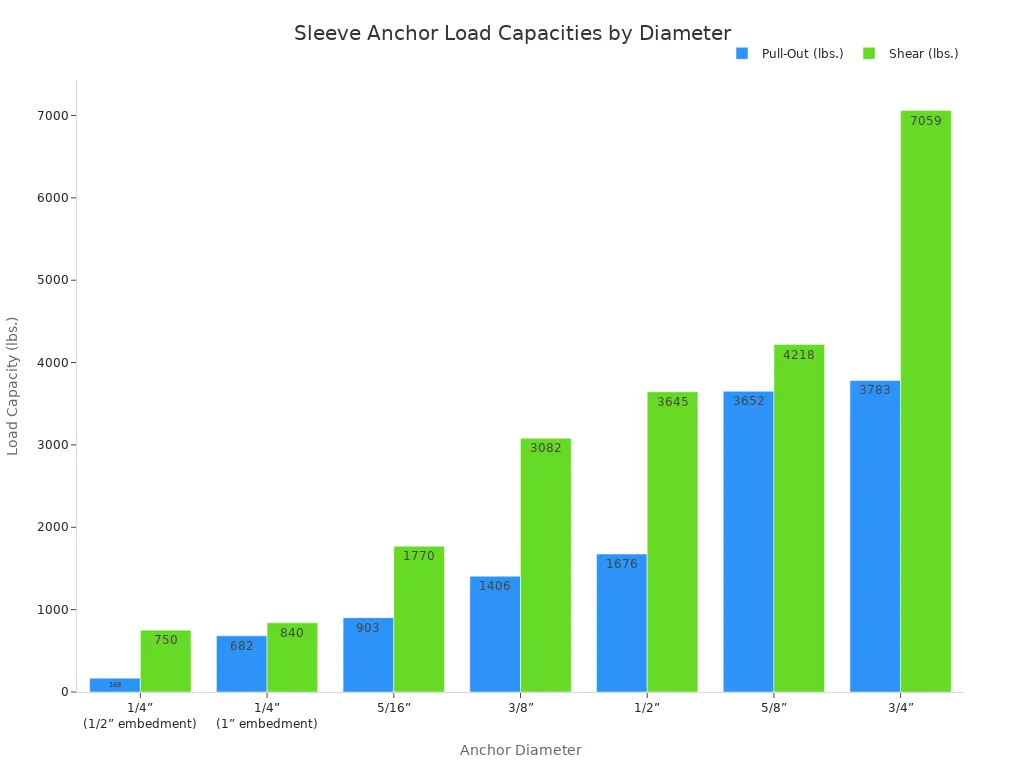
Following the manufacturer’s torque specifications ensures that these sleeve anchors perform reliably and safely.
Tools and Materials Needed for Installation
A successful sleeve anchor installation depends on using the correct tools and materials. Proper preparation and the right equipment ensure the anchor achieves its maximum holding power and provides a safe, reliable connection. Gathering these items before starting the project streamlines the entire process.
Основные инструменты
An installer needs a specific set of tools to work with masonry and properly set the anchor. Each tool performs a critical function, from drilling the hole to applying the final torque.
Перфоратор или отбойный молоток
A standard drill is not sufficient for concrete or brick. An installer must use a hammer drill or a more powerful rotary hammer. These tools combine rotation with a rapid hammering action. This percussive force pulverizes the masonry, allowing the drill bit to advance efficiently and create a clean, uniform hole.
Сверло по камню с твердосплавным наконечником
The drill bit must be specifically designed for masonry and feature a carbide tip. Carbide is an extremely hard material that can withstand the abrasive nature of concrete. The bit’s diameter must exactly match the diameter of the sleeve anchor. Using an incorrect size will compromise the anchor’s performance.
Гаечный ключ или набор головок
A wrench is necessary to tighten the nut and activate the anchor’s expansion mechanism. An adjustable wrench can work for various anchor sizes. However, a socket set with a torque wrench is the professional choice. It allows the installer to apply the precise amount of torque specified by the manufacturer, preventing under-tightening or over-tightening.
Проволочная щётка и сжатый воздух/продувочный насос
Cleaning the drilled hole is a non-negotiable step for a secure installation.
- Проволочная щетка: A narrow wire brush, matched to the hole’s diameter, scrubs the interior walls. This action loosens concrete dust and debris created during drilling.
- Compressed Air/Blower: After brushing, a blast of compressed air or a manual blower removes all loose particles from the hole.
Критический шаг: A clean hole ensures the expansion sleeve makes direct contact with the solid base material. Debris can act like tiny ball bearings, reducing friction and severely weakening the anchor’s grip.
👷
Working with masonry and power tools presents inherent risks. Using the proper personal protective equipment (PPE) is essential for preventing injury.
Средства защиты органов слуха: Перфоратор создает значительный шум, который со временем может повредить слух.
Drilling into concrete, brick, or block creates flying dust and sharp particles. High-quality, wrap-around safety glasses or goggles are mandatory. They protect the installer’s eyes from impact and irritation, which is a primary safety concern during any installation.
Сверление точного отверстия является основой надежной точки крепления. Диаметр и глубина отверстия должны соответствовать спецификациям производителя для конкретного используемого анкера. Этот шаг является фундаментальным при установке забивных анкеров.
Heavy-duty work gloves serve multiple protective functions. They shield the hands from scrapes and cuts from the rough masonry surface and the anchor’s metal threads. Gloves also help absorb some of the vibration from the hammer drill, reducing fatigue.
Step-by-Step Installation Guide for Sleeve Anchors

A successful and secure connection depends entirely on the correct installation of гильзовые анкеры. This step-by-step installation guide breaks down the procedure into clear, manageable actions. Following this sequence ensures the anchor achieves its full load-bearing capacity and provides a safe, lasting hold. The entire installation process is straightforward when an installer uses the right tools and techniques.
Шаг 1: Сверление отверстия
The first and most critical phase is creating a precise hole in the base material. The location and dimensions of this hole form the foundation for the anchor’s performance. To prevent the interaction of forces between anchors, installers should maintain a minimum spacing of ten anchor diameters between each anchor. When drilling near an unsupported edge, a minimum distance of five anchor diameters is the professional standard.
Match Drill Bit to Anchor Diameter
An installer must select a carbide-tipped masonry drill bit. The diameter of this bit must exactly match the diameter of the anchor. For example, a 3/8” anchor requires a 3/8” drill bit. Using a bit that is too small will prevent the anchor from fitting. A bit that is too large will create a loose hole where the sleeve cannot expand enough to create the necessary friction.
Drill to the Required Depth
The hole must be drilled to a specific depth to ensure proper installation. The required hole depth depends on the anchor’s length and the thickness of the material being fastened. A simple calculation determines the minimum hole depth:
Hole Depth = Thickness of Fixture + Minimum Embedment Depth
The anchor’s packaging or technical data sheet specifies the минимальную глубину заделки. This is the shortest length of the anchor that must be embedded in the base material to achieve its rated strength. The hole should be drilled slightly deeper than this calculated value to leave room for any small amount of dust that cannot be removed.
Шаг 2: Очистка отверстия
A clean hole is absolutely essential for a strong connection. Any dust or debris left inside will interfere with the expansion mechanism and severely compromise the anchor’s holding power.
Brush Away Dust and Debris
After drilling, an installer uses a narrow wire brush to scrub the interior walls of the hole. The brush’s diameter should match the hole’s diameter to ensure it makes full contact. This vigorous scrubbing action loosens all the fine concrete or brick dust that clings to the surface.
Blow Out Remaining Particles
Following the brushing, the installer must remove all loose particles. This is best accomplished with a blast of compressed air. A manual hand pump or blower is also an effective alternative. The installer repeats the brushing and blowing process until no more dust emerges from the hole. A clean hole allows the expansion sleeve to press directly against the solid base material.
Шаг 3: Установка анкера
With a clean, correctly sized hole, the anchor is ready for placement. The anchor is a pre-assembled unit, so an installer should not take it apart before insertion.
Tap the Anchor into Place
The installer first positions the object to be fastened over the hole. Then, they insert the anchor through the fixture and into the hole. The anchor should slide in smoothly. If it meets slight resistance, a light tap with a hammer on the nut will help seat it completely.
Ensure the Washer is Flush
The anchor is properly seated when the washer rests flat and snug against the surface of the fixture. The nut and the end of the threaded stud will protrude above the washer. This position confirms the anchor is at the correct depth and ready for the final tightening and expansion phase.
Step 4: Set the Anchor and Secure the Fixture
This final step is where the mechanical magic happens. The installer transforms the loosely placed fastener into a permanent, load-bearing anchor. Proper execution in this phase is critical for achieving the anchor’s full strength and ensuring a safe installation.
Position Your Fixture
Before setting the anchor, the installer confirms the fixture is correctly aligned over the drilled hole. The object being mounted, whether it’s a handrail bracket or a piece of machinery, should sit flat and stable against the base material. The anchor, already inserted through the fixture, is now ready for activation.
Tighten the Nut to Expand the Sleeve
Tightening the nut is the action that expands the sleeve and locks the anchor in place. The goal is not simply to make the nut feel tight; it is to apply a specific amount of force to achieve the required tension. Industry standards, such as those from the AISC Steel Construction Manual, require that bolts reach a “snug-tight” condition before final tightening. This means the nut is turned until it makes firm contact with the washer and fixture, bringing all surfaces into direct contact.
From this snug-tight point, professionals use one of several recognized methods to apply the final tension:
- Turn-of-the-Nut Method: After snug-tightening, the installer rotates the nut a specific, predetermined amount (e.g., one-third of a turn). This method, highlighted by the RCSC Specification, achieves the required tension by controlling the bolt’s elongation without needing to measure the load directly.
- Calibrated Wrench Method: This technique uses a calibrated torque wrench to apply a precise amount of rotational force. The installer tightens the nut until the wrench indicates that the specified installation torque value has been reached. This is the most common method for achieving accurate tension in sleeve anchors.
- Direct Tension Indicator (DTI) Method: This advanced method involves using a special washer with small protrusions. As the installer tightens the nut, the protrusions compress. The installer visually inspects the gap, and when it closes to a specified amount, the correct tension has been achieved.
Industry Insight: Professional standards from bodies like AASHTO and AISC provide detailed guidelines for bolt tension. A key principle is achieving a minimum tension, often 70% of the bolt’s ultimate strength, to create a rigid connection. This ensures the joint can resist vibration and load changes without loosening over time.
Applying the correct tension is the final, critical action. It draws the cone into the sleeve, forces the 360-degree expansion, and generates the immense frictional force that gives the anchor its powerful grip. This controlled process ensures the connection is both strong and reliable.
Common Applications for Sleeve Anchors
An installer can use гильзовые анкеры in a wide range of applications. Their versatility makes them a popular choice for fastening objects to various masonry surfaces. The anchor’s expansion mechanism works reliably in both dense and hollow base materials. This adaptability allows for their use in everything from light-duty residential projects to heavy-duty commercial installations.
Suitable Base Materials
Sleeve anchors are designed specifically for masonry. Their performance, however, can vary depending on the density and integrity of the base material. An installer must consider the material’s properties to ensure a secure connection.
Массивный бетон
Solid concrete is the ideal base material for sleeve anchors. Its high compressive strength provides a robust and uniform surface for the expansion sleeve to grip. In structural applications, building codes regulate the use of post-installed anchors.
- Стандарт DIN 933: объяснение California Building Code (Chapter 19A) requires specific testing for post-installed anchors to verify their performance.
- Отраслевые стандарты, такие как ACI 318 and ACI 355.2 provide design and qualification requirements for mechanical anchors in concrete. These codes ensure that only anchors proven through independent testing are used for critical connections.
Brick and Masonry
Installers frequently use sleeve anchors in solid brick and other dense masonry walls. The anchor’s 360-degree expansion creates a firm grip within the brick. It is crucial to drill into the solid part of the brick, not the mortar joints. Mortar is much weaker and will not provide adequate holding power.
Concrete Block (CMU)
Concrete Masonry Units (CMUs), or concrete blocks, are also suitable for these fasteners. An installer can place the anchor in either the solid sections or the hollow cells of the block. When anchoring in a hollow section, a longer sleeve anchor is necessary. The longer sleeve ensures the expansion occurs deeper inside the block, spanning the hollow cavity and engaging with the block’s inner and outer walls for a secure hold.
Типичное применение
The reliability and straightforward installation of sleeve anchors make them a go-to solution for many common fastening tasks. They are capable of supporting both static and dynamic loads across various settings.
Securing Handrails and Guardrails
Safety is paramount when installing handrails and guardrails. Installers use sleeve anchors to securely fasten the mounting flanges of these fixtures to concrete steps, walkways, and block walls. The anchor’s ability to resist both pull-out and shear forces ensures the railing remains stable and safe for public use. The anchor’s load capacity is a critical factor in these life-safety applications.
Mounting Brackets and Shelving
For both residential and commercial storage, these anchors provide a strong foundation for mounting heavy-duty brackets and shelving systems. An installer can use them to attach wall-mounted shelves in garages, warehouses, and workshops. The anchors ensure the shelving can support significant weight without pulling away from the wall, making them ideal for storing tools, equipment, and inventory.
Fastening Machinery to Floors
In industrial environments, securing machinery to concrete floors is essential to prevent movement and vibration. Sleeve anchors are an excellent choice for fastening the bases of light to medium-duty equipment. They provide the necessary strength to hold machinery in place, ensuring operational stability and workplace safety. For heavy loads, engineers select larger diameter anchors to meet the required minimum holding values and prevent equipment shifting during operation.
Choosing the Right Type of Sleeve Anchor
An installer’s choice of sleeve anchor head style directly impacts the project’s final appearance and functionality. While all sleeve anchors operate on the same expansion principle, manufacturers offer different head types to suit specific application requirements. Selecting the correct head ensures the fastener not only provides a secure connection but also meets the aesthetic and practical needs of the installation. From standard utility fastening to decorative architectural fixtures, there is a head style designed for the job.
Головка с шестигранной гайкой
The hex nut head is the most common and versatile type of sleeve anchor. Its design is purely functional, prioritizing ease of installation and high clamping force over aesthetics.
For Standard Applications
An installer uses a standard wrench or socket to tighten the external hex nut. This design allows for the application of precise torque, making it the go-to choice for a majority of light to heavy-duty fastening jobs. Its widespread use in securing structural elements, machinery, and utility brackets makes it the workhorse of the sleeve anchor family. The exposed nut and washer assembly provides a clear visual confirmation of a secure connection, which is critical in industrial and construction settings.
Flat Head (Countersunk)
The flat head sleeve anchor, also known as a countersunk anchor, is designed for applications where a smooth, flush surface is essential. The head is shaped like a cone, allowing it to sit level with or slightly below the surface of the fixture.
For a Flush Finish
This anchor type is the preferred choice when the fastener head must not protrude. A flush surface prevents snagging and provides a clean, finished look. To install it, an installer must create a countersunk hole in the material being fastened.
- Flush Surface Requirement: Installers select flat-headed sleeve anchors when the anchor’s head must be flush with the surface of the fastened material.
- Light to Medium-Duty Fastening: These anchors are well-suited for applications requiring light to medium-duty fastening strength.
- Specific Applications: Common uses include attaching door frames to block walls and securing stair treads to concrete steps, where a raised head would be a trip hazard.
Round Head
The round head sleeve anchor offers a compromise between the utility of a hex head and the low profile of a flat head. It features a smooth, domed head that provides a more finished look than an exposed nut.
For a Finished Appearance
Installers choose round head configurations to match aesthetic preferences, especially in visible locations. The clean, unobtrusive appearance makes this style a popular option for public-facing and architectural installations.
- Round head sleeve anchors are used for architectural fixtures where appearance is a key consideration.
- These options are available for various aesthetic applications, providing a more decorative and less industrial look than a standard hex nut. The smooth dome is also easier to clean and less likely to snag clothing or equipment.
Acorn Nut
The acorn nut sleeve anchor represents the fusion of structural integrity and aesthetic refinement. This anchor type provides the same reliable expansion mechanism as its utilitarian counterparts. Its defining feature is a domed cap nut that conceals the end of the threaded stud. This design choice elevates the fastener from a simple component to a deliberate design element. Professionals select this anchor when the final appearance of the connection is as important as its strength. The acorn nut offers a clean, safe, and finished look that standard hex nuts cannot match.
For Decorative Purposes
An installer chooses an acorn nut sleeve anchor for projects demanding a high-end, polished finish. The rounded head covers sharp threads, preventing snags and creating a smooth, touch-safe surface. This makes it an ideal solution for architectural and public-facing installations where every detail contributes to the overall design. The choice of head style often depends on the project’s specific aesthetic goals.
| Тип головки | What It Looks Like | **Наилучшее применение** |
|---|---|---|
| Грибовидная головка (Acorn) | Закругленная, куполообразная головка | Декоративные работы, где важен стиль |
Закругленный, куполообразный профиль головки типа «желудь» обеспечивает безупречный внешний вид. Эта характеристика делает его основным выбором для декоративных проектов, где ключевым фактором является эстетика. Монтажники используют эти анкеры для различных заметных применений:
- Архитектурные металлоконструкции: Крепление декоративных ограждений, декоративных решеток и индивидуальных вывесок.
- Элементы оснащения премиум-сегмента в розничной торговле: Монтаж витрин, стеллажей и бутикового оборудования, где крепеж является частью имиджа бренда.
- Общественное искусство и памятники: Крепление мемориальных досок, скульптур и парковых скамеек, где крепеж должен быть ненавязчивым и элегантным.
- Индивидуальная мебель: Крепление встроенных мебельных элементов к каменным стенам в элитных жилых или коммерческих интерьерах.
Требуемый диаметр твердосплавного сверла 💡 Установка анкера с насадкой-гайкой «желудь» требует двухэтапного процесса затяжки. Сначала монтажник использует стандартную шестигранную гайку для затяжки анкера до указанного значения крутящего момента. Это обеспечивает правильное раскрытие гильзы и достижение полной несущей способности. После установки анкера монтажник снимает временную шестигранную гайку и заменяет ее постоянной гайкой «желудь» для окончательного декоративного вида.
Этот метод гарантирует, что соединение является конструктивно прочным без ущерба для безупречной поверхности гайки «желудь». Этот анкер предлагает изысканное решение для дизайнеров и строителей, которые не готовы идти на компромисс ни в производительности, ни во внешнем виде.
Устранение неполадок при установке гильзовых анкеров
Даже при тщательной подготовке у монтажников могут возникнуть проблемы при установке гильзовых анкеров. Большинство проблем связано с несколькими распространенными ошибками на этапе сверления или очистки. Понимание того, как диагностировать и исправлять эти проблемы, обеспечивает надежный и безопасный монтаж.
Проблема: Анкер проворачивается в отверстии
Анкер, который свободно проворачивается в отверстии, является явным признаком того, что механизм расклинивания не сработал.. Гильза не создает достаточного трения об основной материал, чтобы позволить гайке затянуться и подтянуть конусный клин вверх.
Проверьте, не является ли отверстие слишком большим
Наиболее частой причиной проворачивания анкера является слишком большое отверстие. Эта проблема может возникнуть из-за нескольких ошибок в процессе сверления.
- Использование сверла неправильного диаметра..
- Неправильная установка перфоратора в соответствующий ударно-вращательный режим..
- Использование изношенного или некачественного сверла, не соответствующего стандартам ANSI по допуску отверстий.
Отверстие, которое даже на миллиметр больше требуемого, может помешать анкеру зацепиться. Втулка под головкой анкера рассчитана на определенный размер отверстия. Больший зазор позволяет всему узлу смещаться, препятствуя первоначальному закусыванию, необходимому для расклинивания. Лучшее решение — отказаться от этого отверстия и правильно просверлить новое.
Убедитесь, что отверстие чистое
Хотя для случая с проворачиванием это менее характерно, избыток пыли иногда может выступать в роли смазки. Если размер отверстия правильный, окончательная очистка проволочной щеткой и сжатым воздухом может обеспечить необходимое для срабатывания гильзы трение.
Проблема: Анкер не входит до конца
Анкер, который застревает до полной посадки, указывает на наличие препятствия или неправильно подготовленное отверстие. Монтажник никогда не должен применять чрезмерную силу, чтобы забить анкер на место.
Проверьте глубину отверстия
Просверленное отверстие должно быть достаточно глубоким, чтобы вместить как сам анкер, так и остаточную пыль. Распространенной ошибкой является сверление отверстия, длина которого в точности равна длине анкера.
Требуемый диаметр твердосплавного сверла 💡 Всегда сверлите отверстие как минимум на 1/2 дюйма (≈13 мм) глубже, чем требуемая глубина заделки анкера. Монтажник может отметить правильную глубину на сверле кусочком изоленты в качестве визуального ориентира, обеспечивая достаточный зазор.
Проверьте наличие засора
Бетонная пыль и осколки являются наиболее распространенными препятствиями. Если отверстие не очищено тщательно, на дне может образоваться плотная пробка из пыли, блокирующая анкер.
- Извлеките анкер из отверстия.
- Используйте проволочную щетку и сжатый воздух или пылесос для удаления всех частиц.
- Повторяйте процесс очистки, пока пыль не перестанет выходить. Идеально чистое отверстие критически важно для правильной установки и достижения заявленных несущих значений анкера.
Проблема: Гайка затянута, но крепёжное изделие ослаблено
Это критический отказ, указывающий на то, что анкер не закреплён надёжно, даже если гайка кажется затянутой. Крепёжное изделие небезопасно и не может выдерживать нагрузку. Данная проблема указывает на неправильный момент затяжки или нарушение целостности основного материала.
Подтвердите правильный момент затяжки
Ощущение “затянутости” может вводить в заблуждение. Если монтажник недотянул гайку, гильза не расширится достаточно для создания надёжной фиксации. И наоборот, чрезмерная затяжка может сорвать резьбу анкера или повредить конус, сделав его бесполезным. Использование калиброванного динамометрического ключа для приложения момента, указанного производителем, — единственный способ гарантировать правильное расклинивание.
Проверьте на предмет разрушения основного материала
Если момент затяжки правильный, но крепёжное изделие всё ещё ослаблено, вероятно, сам основной материал разрушился. Распорное давление расширяющейся гильзы могло разрушить слабый или пористый бетон, кирпич или блок. По сути, анкер находится в полости из разрушенного материала, не имея ничего твёрдого для сцепления. В этом сценарии единственным безопасным решением является удаление вышедшего из строя анкера и установка нового в другом месте с прочным основным материалом.
Гильзовые анкеры предлагают надёжное крепёжное решение для каменной кладки, основанное на простом распорном механизме. Однако успех и безопасность любого проекта полностью зависят от правильной установки. Следование пошаговому руководству помогает монтажникам избежать распространённых ошибок и создать надёжную точку крепления для самых разных проектов.
Ключевые выводы для безопасной установки:
- Всегда используйте сверло правильного диаметра чтобы предотвратить проворачивание анкера.
- Надевайте защитные очки и респиратор для защиты от вредной кремниевой пыли.
- Убедитесь, что анкер не расклинивается в пустотелой секции блока или кирпича.
Частые вопросы
Можно ли повторно использовать распорный анкер?
Нет, монтажник не может повторно использовать распорный анкер. Распорная гильза необратимо деформируется во время первоначальной установки. Повторное использование деформированного анкера серьёзно снижает его несущую способность и создаёт небезопасное соединение. Профессионалы всегда используют новый анкер для каждого применения.
В чём разница между распорным анкером и клиновым анкером?
Распорный анкер расклинивается по всей длине своего корпуса, что делает его идеальным для кирпича и блоков. Клиновой анкер расклинивается только у своего основания, обеспечивая превосходную прочность в цельном бетоне. Выбор полностью зависит от свойств основного материала.
Насколько близко к краю можно установить распорный анкер?
Монтажник должен соблюдать минимальное расстояние в пять диаметров анкера от неукреплённого края. Например, для анкера 1/2″ требуется зазор не менее 2,5 дюймов. Эта практика предотвращает растрескивание бетона под давлением.
Работают ли распорные анкеры в пустотелых блоках?
Да, они эффективны в пустотелых бетонных блоках (CMU). Монтажник должен выбрать более длинный анкер. Увеличенная длина гильзы гарантирует, что она перекрывает пустоту и расклинивается о внутреннюю и внешнюю стенки блока, создавая надёжное крепление.
Что произойдёт, если монтажник перетянет распорный анкер?
Чрезмерная затяжка — критическая ошибка. Она может сорвать резьбу анкера или разрушить основной материал, вызвав полный отказ. Использование калиброванного динамометрического ключа для соблюдения спецификаций производителя — единственный способ обеспечить правильной установки.
Как монтажник удаляет распорный анкер?
Монтажник может снять закреплённый объект, открутив гайку. Однако корпус анкера остаётся навсегда зафиксированным в бетоне. Лучшие варианты:
- Забить анкер глубже в отверстие.
- Срезать анкер заподлицо с поверхностью.
- Заделать отверстие после этого.
Водонепроницаемы ли распорные анкеры?
Сам анкер не является гидроизоляционным элементом. Для наружных работ или работ во влажной среде монтажник должен использовать анкер из нержавеющей стали для устойчивости к коррозии. Нанесение валика силиконового герметика вокруг крепёжного изделия может помочь минимизировать проникновение воды.