A фланцевый болт chart is a critical reference tool for any piping project. This chart specifies the correct number, diameter, and length for each bolt. Its primary function is to ensure proper assembly, gasket compression, and safety within industrial piping systems. Using the correct Flange Bolt specifications creates a secure, leak-free flange connection.
Примечание: A производитель крепежных изделий на заказ uses these standards for литье болтов. Procuring the specified bolt for your flange is non-negotiable, even when dealing with нестандартные крепежные элементы for a unique flange.
What is a Flange Bolt Chart?
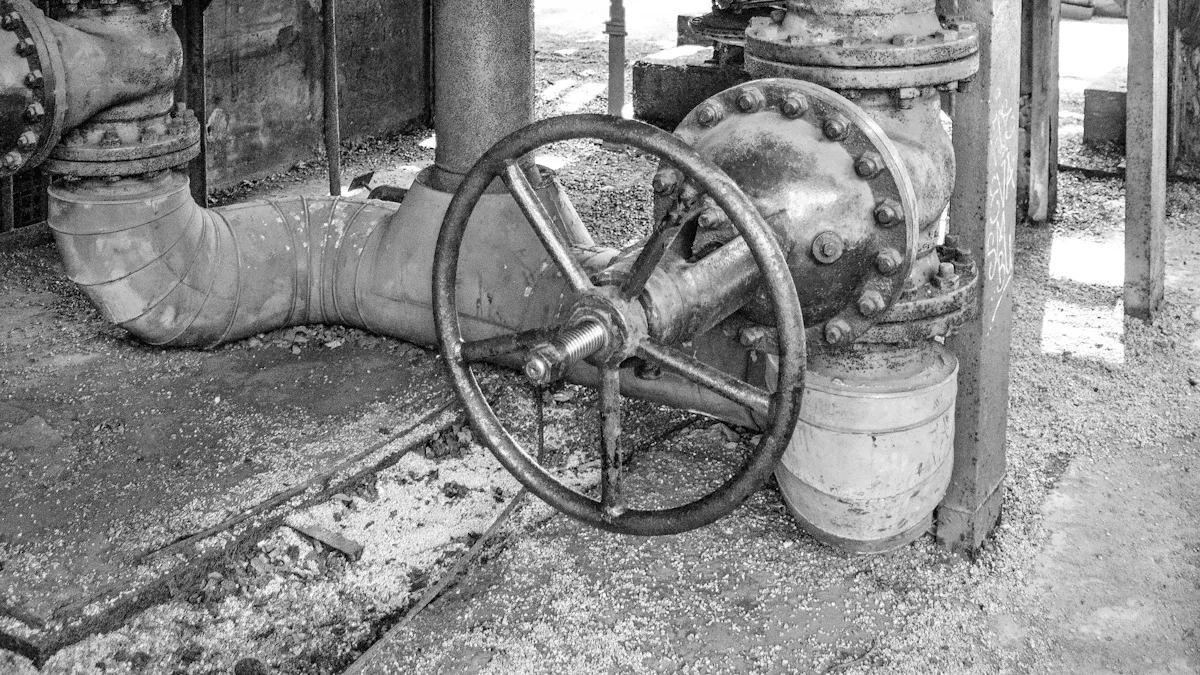
A flange bolt chart is an essential engineering document. It provides a standardized reference for the fasteners required to connect a specific flange. This tool removes guesswork and ensures every connection is assembled according to proven specifications. The chart details all critical data points for a given joint.
Key information found on a typical chart includes:
- Flange size and pressure class
- The total number of bolts required
- Стандарт DIN 933: объяснение диаметр каждого болта
- The size of the bolt holes on the flange
- Recommended bolt torque values
The Purpose of a Standardized Chart
Ensuring Interchangeability and Safety
Standardization is the cornerstone of modern industry. A standardized chart ensures that a 6-inch Class 150 flange from one manufacturer will use the same fasteners as one from another manufacturer anywhere in the world. This global consistency improves operational efficiency and system compatibility. It eliminates the need for costly and time-consuming custom engineering. Most importantly, it enhances safety by guaranteeing that components are compatible and reliable.
The Role of Standards like ASME B16.5
Organizations like the American Society of Mechanical Engineers (ASME) develop and maintain these critical standards. The ASME B16.5 standard, for example, governs pipe flanges and flanged fittings for sizes NPS ½ through NPS 24. It dictates the dimensions, tolerances, and materials, including the bolt patterns. Adhering to these specifications ensures the proper distribution of forces and load-carrying capacity, which is fundamental to preventing structural failures in industrial operations.
Why You Can’t Guess Flange Bolt Sizes
Attempting to select a flange bolt based on visual estimation or assumption is a dangerous practice. The specifications are precise for critical reasons related to mechanical engineering and safety principles.
Risks of Incorrect Bolt Selection
Using the wrong bolt introduces significant risk. An undersized bolt lacks the strength to handle the operational pressure, while an oversized bolt will not fit. Even a bolt that is slightly too short or too long can cause a connection failure.
Critical Alert: Incorrect flange bolt selection can lead to flange distortion, gasket damage, dangerous leaks of hazardous materials, and catastrophic system failure. There is no substitute for consulting the correct chart.
How It Guarantees Proper Gasket Sealing
A secure, leak-free seal depends on achieving correct and even gasket compression. The flange bolt chart specifies the exact number and diameter of bolts needed to apply a uniform clamping force around the entire flange face. This ensures the gasket is compressed enough to create a tight seal without being crushed or damaged. Using the specified bolt length also guarantees proper nut engagement without the risk of the bolt bottoming out or not having enough thread.
Decoding the Flange Bolt Chart: Key Data Columns
A flange bolt chart presents critical data in a structured table format. Technicians must understand each column to select the правильные крепежные элементы. The primary columns organize information by flange size, pressure capability, and the corresponding bolt specifications.
Nominal Pipe Size (NPS) and Flange Diameter
Identifying Your Flange Size
The first step in using the chart is identifying the correct flange size. This information is typically stamped directly onto the flange’s outer rim. The Nominal Pipe Size (NPS) is the North American standard for designating pipe sizes. It is crucial to locate this value to find the correct row in the data table.
How NPS Relates to the Chart
The NPS value serves as the primary identifier in the flange bolt chart. Each row in the chart corresponds to a specific NPS. For example, a technician working with a 6-inch pipe system would look for the row labeled “NPS 6” or “6”” to find the associated flange bolt requirements. This ensures the selected bolt specifications match the physical dimensions of the flange.
Flange Pressure Class Rating
Understanding Class 150, 300, 600, and Higher
The flange pressure class rating is a dimensionless number indicating a flange’s ability to withstand pressure at various temperatures. It is not a direct measurement in psi or bar. Within the ASME B16.5 standard, the terms ‘class’, ‘lb’, and ‘#’ are used interchangeably. A “Class 150” flange may also be referred to as “150 lb” or “150#”.
Key Concept: A pressure class rating represents the Maximum Allowable Working Pressure (MAWP) for a flange made of a specific material at a reference temperature. This pressure-handling capability decreases as the operating temperature of the system increases.
Key points about pressure class include:
- It is often designated by ‘#’, ‘Lb’, or ‘lbs’ (e.g., Class 300#).
- The rating does not directly equate to a pressure value (e.g., 150 lb does not mean 150 psi).
- Pressure-temperature ratings are material-specific. A Class 300 carbon steel flange has different ratings than a Class 300 stainless steel flange.
How Pressure Class Impacts Bolt Requirements
Pressure class directly influences the required flange bolt specifications. As the pressure class increases, the flange must contain greater forces. This requires a more robust connection. Consequently, a higher pressure class demands more bolts, a larger bolt diameter, and an increased bolt hole diameter. For instance, an NPS 12 flange in a 900# pressure class will have a greater number of bolt holes and a larger bolt hole diameter than a 600# flange of the same size. An NPS 12 2500# flange will have an even greater number of bolt holes and a larger bolt hole diameter to accommodate extreme pressures. This ensures the connection has the necessary strength and stability.
Number of Bolts Required
Ensuring Even Clamping Force
The specified number of bolts is essential for creating a secure, leak-free seal. Using the correct quantity of fasteners ensures the clamping force is distributed evenly across the gasket surface. This uniform pressure prevents gasket crushing and flange distortion. The number of required bolts is always a multiple of four (e.g., 4, 8, 12) to facilitate a symmetrical tightening pattern. This design principle ensures a balanced load on the flange connection.
Locating the Bolt Count on the Chart
Engineers can easily find the required bolt count on the chart. After locating the row for the correct NPS and the column for the specific pressure class, the intersecting cell will show the total number of bolts needed. For example, cross-referencing an NPS 8 flange with a Class 150 rating will reveal that it requires 8 bolts. This value is non-negotiable for a safe and reliable assembly.
Diameter of Flange Bolts
The flange bolt chart provides the precise nominal diameter for the bolts required for a specific connection. This dimension is fundamental to the joint’s integrity, as it determines the fastener’s strength and its fit within the flange.
Reading Imperial and Metric Dimensions
Flange bolt charts present dimensions in either Imperial (inches) or Metric (millimeters) units. The ASME B16.5 standard, which is prevalent in North America, primarily uses the Imperial system. A technician must pay close attention to the chart’s units to avoid procurement errors. For example, a chart might specify a ¾” bolt, which corresponds to a specific metric equivalent. Always verify the unit of measure before proceeding.
Matching Bolt Diameter to Flange Hole
A common point of confusion is the relationship between the bolt diameter and the bolt hole diameter. The bolt hole diameter on a flange is always slightly larger than the nominal diameter of the bolt itself. This intentional clearance, typically 1/8 inch (3 mm) for larger bolts and 1/16 inch (1.5 mm) for smaller ones, is critical.
Design Insight: The clearance provided by the larger bolt hole diameter facilitates easier alignment and installation of the flange bolt. It accommodates minor manufacturing tolerances without requiring force, which could damage the bolt threads or flange face.
The chart specifies the correct bolt diameter designed to fit the standardized bolt hole diameter for a given flange size and class. The bolt hole diameter is a fixed dimensional property of the flange. Engineers determine the bolt hole diameter during the flange design process. The specified bolt hole diameter ensures that the correct flange bolt can be inserted easily. A technician must never try to force an oversized bolt into a flange, as this indicates a mismatch with the intended bolt hole diameter. The integrity of the connection depends on using the correct bolt for the specified bolt hole diameter. The bolt hole diameter is a critical parameter for a secure fit. The bolt hole diameter is not a value to be guessed. The bolt hole diameter dictates the maximum size of the fastener. The bolt hole diameter is a non-negotiable dimension.
Требуемая длина шпилек
The chart also specifies the required length for stud bolts. A stud bolt is a threaded rod with nuts on both ends, and it is the preferred fastener for most flanged connections. Using the correct length is just as important as using the correct diameter. A bolt that is too short will not allow for proper nut engagement, while one that is too long can create a safety hazard or interfere with other equipment.
Raised Face (RF) vs. Flat Face (FF) Flanges
The type of flange face significantly impacts the required bolt length.
- Flat Face (FF): These flanges have a uniform, flat surface. The two flanges make direct contact across their entire face.
- Raised Face (RF): These flanges feature a small, raised surface around the bore where the gasket sits. When bolted together, the main bodies of the flanges do not touch, creating a gap.
This gap means that RF flanges require a longer bolt than FF flanges of the same size and class. The theoretical stud bolt length (L) for a raised face connection can be determined with a specific formula. The calculation is L = 2 (s + n + h + rf) + g. Each variable represents a critical dimension:
s= Free threads (allowance for thread protrusion, often 1/3 of the bolt diameter)n= Nut height (typically equal to the nominal bolt diameter)h= Flange thicknessrf= Height of the raised faceg= Gasket thickness
How Gasket Thickness Affects Bolt Length
Gasket thickness is a direct and critical component in determining the final stud bolt length. The total length of the bolt must account for the “grip length,” which is the distance between the inner faces of the two nuts when the joint is fully assembled. This distance includes the thickness of both flanges plus the thickness of the gasket.
The required bolt length calculation must therefore include several key components:
- Thickness of the first flange
- Thickness of the second flange
- Compressed gasket thickness
- Height of two nuts
- A small allowance for thread protrusion beyond each nut
For instance, a technician assembling a joint with two 18 mm thick flanges, a 3 mm gasket, and two 16 mm nuts would need a bolt longer than the sum of these parts. Adding a 5 mm protrusion allowance, the calculation becomes 18 + 18 + 3 + 16 + 16 + 5, resulting in a required bolt length of 76 mm. This example clearly shows how the gasket contributes directly to the final length calculation.
How to Use a Flange Bolt Chart: A Step-by-Step Guide
Using a flange bolt chart is a straightforward process that ensures accuracy and safety. A technician can confidently select the correct fasteners for any standard connection by following a systematic approach. This guide breaks the process down into three essential steps.
. Правильный выбор фланцевых болтов является основой целостности системы.
Before a technician can even look at a chart, they must gather all the critical specifications of the flange in question. This information is the key to unlocking the correct data. The required specifications are typically stamped on the flange itself.
Determine the Flange Standard (e.g., ASME B16.5)
The first piece of information is the governing standard. While ASME B16.5 is the most common standard for pipe flanges up to NPS 24, other standards exist for different applications. A technician must verify the correct one.
Other Common Flange Standards 📝
- ASME B16.47: This standard covers large diameter steel flanges from 26″ to 60″. It includes Series A and Series B types, which have different dimensions, including the bolt hole diameter and number of bolt holes.
- ASME B16.1: This standard applies to cast iron flanges and fittings. Its dimensions often align with other standards but are specific to lower-pressure cast iron systems. The bolt hole diameter is a critical dimension here.
- AWWA: These flanges are designed specifically for waterworks service and have their own set of dimensional standards, including a unique bolt hole diameter for each size.
Confirm the Nominal Pipe Size (NPS)
The Nominal Pipe Size (NPS) identifies the flange’s size. This value, such as “NPS 6” or “10””, is the primary row identifier in most charts. A technician must correctly identify the NPS to find the right data set. The NPS directly relates to the flange’s dimensions, including its bolt hole diameter.
Verify the Flange Pressure Class
The pressure class (e.g., 150#, 300#, 600#) indicates the flange’s pressure-temperature rating. A higher class means a more robust flange designed for greater pressure, which requires more or larger bolts. This is because the bolt hole diameter is larger on higher-class flanges to accommodate stronger fasteners. The bolt hole diameter is a fixed property for a given NPS and class.
Identify the Flange Face Type (RF or FF)
Finally, a technician must identify the flange face type. A Raised Face (RF) flange requires a longer bolt than a Flat Face (FF) flange to accommodate the gap between the flange bodies. This detail is crucial for determining the correct bolt length. The bolt hole diameter itself does not change between RF and FF types of the same size and class, but the required fastener length does.
Step 2: Locate the Correct Row in the Chart
With the flange specifications in hand, the technician can now turn to the data table. Finding the correct information is a simple matter of cross-referencing the known values.
Cross-Referencing Pipe Size and Class
A technician uses the chart by first finding the row that corresponds to the flange’s NPS. Next, they scan across that row to the columns that represent the different pressure classes. The intersection of the correct NPS row and the correct pressure class column contains all the necessary bolt data. This ensures the selected bolt is appropriate for the flange’s specific bolt hole diameter.
Example: Finding a 10″ Class 300 Flange
Imagine a technician needs to assemble a 10-inch Class 300 Raised Face (RF) flange. They would perform the following actions:
- Open the ASME B16.5 flange bolt chart.
- Navigate down the “Nominal Pipe Size” column to find the row for 10″.
- Переместитесь по этой строке к данным под Класс 150 заголовком.
Диаграмма предоставит точные спецификации, как показано в таблице ниже. Указанный диаметр болта разработан для идеального соответствия диаметру отверстия под болт на фланце.
| Номинальный диаметр трубы | Количество шпилек | Диаметр шпилек (дюймы) | Длина шпильки – RF (дюймы) |
|---|---|---|---|
| 10″ | 16 | 1″ | 6.25″ |
Это указывает технику на необходимость 16 шпилек, каждая диаметром 1 дюйм и длиной 6,25 дюйма. Болт диаметром 1″ является правильным размером для диаметра отверстия под болт на данном конкретном фланце.
Шаг 3: Извлечение данных о болтах фланца
Последний шаг — тщательно записать все необходимые данные о крепежных элементах из диаграммы. Эта информация критически важна для закупки и монтажа. Диаметр отверстия под болт на фланце определяет размер болта.
Отметьте необходимое количество болтов
Техник сначала записывает общее необходимое количество болтов. Для примера с фланцем 10″ класса 300 это 16. Использование меньшего количества болтов, чем указано, приведет к неравномерному сжатию прокладки и возможной утечке. Количество болтов соответствует количеству отверстий, а диаметр отверстия под болт стандартизирован.
Отметьте требуемый диаметр болтов
Далее техник отмечает указанный диаметр болта. В примере это 1 дюйм. Этот размер обеспечивает необходимую прочность болта фланца и его правильное прохождение через диаметр отверстия под болт на фланце. Зазор между болтом и диаметром отверстия под болт предусмотрен для удобства сборки.
Отметьте требуемую длину шпилек
Наконец, техник записывает требуемую длину, уделяя особое внимание типу поверхности фланца (RF или FF). Фланец 10″ класса 300 RF требует шпильку длиной 6,25 дюйма. Эта длина обеспечивает правильное зацепление резьбы на обеих гайках без чрезмерной короткости или длины болта. Извлечение этих трех ключевых параметров — количества, диаметра и длины — является основной целью использования диаграммы для безопасной сборки. Диаметр отверстия под болт является ключевой конструктивной особенностью, определяющей эти спецификации.
Шаг 4: Закупка правильных крепежных элементов
После извлечения размерных данных финальная задача техника — закупить правильные крепежные элементы. Этот шаг переходит от чтения диаграммы к созданию точной спецификации для закупки. Точность на этом этапе крайне важна для обеспечения того, чтобы поступившие на объект компоненты точно соответствовали требованиям для безопасного и надежного монтажа.
Спецификация болтов, гаек и шайб
Полный крепежный узел состоит не только из шпильки. Правильный заказ на закупку должен включать спецификацию на шпильку, две гайки и часто две шайбы. Каждый компонент играет жизненно важную роль в целостности фланцевого соединения.
Четкая спецификация предотвращает дорогостоящие ошибки и задержки проекта. Техник должен указать следующие детали для полного заказа:
- Тип крепежа: Шпилька
- Количество: Количество требуемых шпилек (из диаграммы)
- Диаметр: Номинальный диаметр (например, 1″)
- Длина: Требуемая длина для типа поверхности фланца (например, 6,25″ для RF)
- Спецификация гайки: Количество (вдвое больше числа шпилек), материал и класс прочности.
- Спецификация шайбы: Количество (вдвое больше числа шпилек) и материал.
Профессиональный совет ⚙️.
Учет требований к материалу и классу прочности
Диаграмма болтов фланца предоставляет размеры, но не указывает материал. Класс материала — это отдельное, не менее важное решение. Выбор полностью зависит от условий эксплуатации трубопроводной системы, включая рабочую температуру, давление и возможность коррозии.
Инженеры полагаются на стандартизированные спецификации для выбора подходящих материалов.
- ASTM A193 ASTM A193.
- ASTM A194 Использование правильного сочетания материалов болта и гайки является основополагающим. Гайка должна быть достаточно прочной, чтобы выдерживать натяжение, приложенное к болту, без срыва резьбы. Стандарт ASTM A194 предоставляет.
различные классы гаек разработанные для соответствия различным материалам болтов и условиям службы. 2H.
| Класс прочности | Материал | Типовые области применения |
|---|---|---|
| Общего назначения для высокотемпературной/высоконапорной службы | Углеродистая сталь | 2HM |
| Аналогичен 2H, но с обязательным контролем твердости 100% | Углеродистая сталь | Углеродистая молибденовая сталь |
| 4 | Соответствует болтам из молибденовой легированной стали | Хромомолибденовая сталь |
| 7 | Соответствует Cr-Mo болтам, таким как A193 B7 | 8/8M |
| Нержавеющая сталь (304/316) | Коррозионная стойкость и криогенные применения | Например, распространенной комбинацией на нефтеперерабатывающих заводах является болт ASTM A193 класса B7 с гайкой ASTM A194 класса 2H. Это сочетание обеспечивает отличную прочность для высокотемпературных применений. Техник всегда должен проверять требования к материалам в инженерных спецификациях проекта перед размещением заказа. |
Распространенные диаграммы болтов фланцев ASME B16.5.
Стандарт ASME B16.5 предоставляет подробные спецификации для различных классов давления. Техники чаще всего сталкиваются с классами 150, 300 и 600 в общих промышленных применениях. Каждый класс имеет уникальный набор требований к своим
болтам, которые подробно описаны в соответствующих таблицах. крепёжных элементов,, Диаграмма болтов фланцев класса 150.
Фланцы класса 150 предназначены для службы при низком давлении и низкой температуре. Они распространены в таких применениях, как распределение воды и системы охлаждения. Требования к крепежу здесь наименее строгие среди стандартных классов давления.
Данные для труб малого диаметра (NPS ½” до 2″).
Для трубопроводов малого диаметра количество болтов минимально. Маленькому фланцу требуется меньше крепежных элементов для достижения надлежащего уплотнения из-за меньшей площади поверхности. Например, фланец 2 дюйма класса 150 требует всего
четыре болта Пример: Фланец 2 дюйма класса 150 RF.
Техник, работающий с этим распространенным размером, найдет в диаграмме следующие спецификации. A technician working with this common size would find the following specifications in the chart.
Номинальный диаметр трубы Количество шпилек Диаметр шпилек (дюймы) Длина шпильки – RF (дюймы) 2″ 4 5/8″ 3.25″
Data for Medium Bore Pipes (NPS 2½” to 12″)
As the pipe size increases, the number and diameter of the required bolts also increase. This change ensures that the clamping force remains evenly distributed across the larger gasket area. An 8-inch Class 150 flange, for instance, requires 8 bolts, while a 12-inch flange needs 12 bolts.
Data for Large Bore Pipes (NPS 14″ to 24″)
Large bore pipes in Class 150 service demand a significant number of fasteners. A 24-inch flange requires 20 bolts to secure the connection properly. The flange bolt diameter also increases to handle the greater loads associated with these large connections.
Class 300 Flange Bolt Chart
Class 300 flanges are more robust than Class 150. They are built for applications with higher temperatures and pressures. This increased capability requires more substantial bolting.
Для трубопроводов малого диаметра количество болтов минимально. Маленькому фланцу требуется меньше крепежных элементов для достижения надлежащего уплотнения из-за меньшей площади поверхности. Например, фланец 2 дюйма класса 150 требует всего
Even at small sizes, a Class 300 flange requires more or larger bolts than its Class 150 counterpart. A 2-inch Class 300 flange uses 8 bolts, double the quantity needed for a Class 150 of the same size.
Data for Medium Bore Pipes (NPS 2½” to 12″)
The trend of increased bolting continues in the medium bore range. A 12-inch Class 300 flange uses 12 bolts, but their diameter is larger than those used on a Class 150 flange, providing greater clamping force.
Data for Large Bore Pipes (NPS 14″ to 24″)
For large diameter pipes, the specifications become even more demanding. A 24-inch Class 300 flange requires 24 bolts, each with a larger diameter to contain the higher operational pressures safely.
Class 600 Flange Bolt Chart
Class 600 flanges are intended for severe service conditions. The physical dimensions of the flange are thicker, and the bolting requirements are significantly more rigorous to ensure joint integrity under high stress.
Для трубопроводов малого диаметра количество болтов минимально. Маленькому фланцу требуется меньше крепежных элементов для достижения надлежащего уплотнения из-за меньшей площади поверхности. Например, фланец 2 дюйма класса 150 требует всего
The bolting for a small Class 600 flange is comparable to that of a much larger Class 150 flange. A 2-inch Class 600 flange uses 8 bolts, each with a substantial diameter.
Data for Medium Bore Pipes (NPS 2½” to 12″)
In this range, the number of bolts increases dramatically. A 12-inch Class 600 flange requires 20 bolts, a significant jump from the 12 bolts needed for a Class 300 of the same size.
Data for Large Bore Pipes (NPS 14″ to 24″)
Large bore Class 600 connections are heavily reinforced. A 24-inch Class 600 flange uses 24 bolts, but they are much larger in diameter and require significantly higher torque values to achieve a proper seal.
High-Pressure Charts (Class 900, 1500, 2500)
Engineers reserve ASME Class 900, 1500, and 2500 flanges for the most severe service conditions. These components operate under extreme pressures and temperatures where failure is not an option. The bolting specifications for these classes are far more rigorous than those for lower-pressure systems. A technician must consult specialized charts to ensure the integrity of these critical connections.
Key Differences in High-Pressure Flanges
High-pressure flanges differ significantly from their lower-class counterparts in both design and material. The increased pressure rating demands a much more robust construction to prevent leaks and catastrophic failure. These differences directly impact the fastener requirements.
Key distinctions include:
- Greater Mass and Thickness: A high-pressure flange is considerably thicker and heavier. This added mass provides the strength needed to withstand immense internal forces without distortion.
- Larger Bolt Circles and Diameters: The bolt circle diameter is larger to accommodate more and bigger bolts. This design ensures a higher, more evenly distributed clamping force.
- Increased Fastener Requirements: The number and diameter of the required flange bolt fasteners increase substantially. For example, a 12-inch Class 1500 flange requires 20 bolts, each with a very large diameter, compared to the 12 smaller bolts on a Class 300 flange.
- Ring Type Joint (RTJ) Faces: Many high-pressure flanges use an RTJ face instead of a Raised Face (RF). An RTJ flange has a specially machined groove that holds a solid metal ring gasket. This design creates an extremely reliable metal-to-metal seal capable of handling the highest pressures.
When to Use These Specialized Charts
Technicians use these high-pressure charts in industries where operational conditions are exceptionally demanding. Standard piping systems do not require this level of reinforcement. The use of Class 900 or higher flanges indicates a critical, high-risk application.
Critical Application Alert ⚠️ Using the correct chart for high-pressure systems is a matter of operational safety. The immense stored energy in these systems means a joint failure can have devastating consequences. There is no room for estimation.
Engineers specify these components in sectors such as:
- Oil and Gas Production: Wellhead equipment, high-pressure pipelines, and offshore platforms.
- Power Generation: High-pressure steam lines and boiler feedwater systems.
- Petrochemical and Refining: High-pressure reactor vessels and processing units.
- Subsea Systems: Deepwater pipelines and equipment subjected to extreme external and internal pressures.
In these environments, a technician must precisely follow the specifications for bolt material, grade, diameter, and length to guarantee a secure and lasting connection.
Advanced Considerations for Flange Bolt Selection
Selecting the correct flange bolt dimensions from a chart is only part of the process. Engineers must also consider several advanced factors to ensure a joint’s long-term safety and reliability. These considerations include material science, gasket interactions, and fastener design choices.
Bolt and Nut Materials
The material composition of a bolt and nut assembly is critical for performance under specific service conditions. The choice directly impacts the joint’s strength, corrosion resistance, and temperature limits.
Common Bolt Materials: ASTM A193 B7, B8, B8M
ASTM A193 is the governing specification for alloy and stainless steel bolting for high-temperature or high-pressure service.
- Grade B7: This is a heat-treated chromium-molybdenum steel. It is the most common grade for industrial plant applications due to its high tensile strength and excellent performance at moderate temperatures. A Grade B7 bolt has a minimum tensile strength of 125 ksi (860 MPa).
- Grade B8/B8M: These are stainless steel grades. Grade B8 (Type 304) and B8M (Type 316) offer superior corrosion resistance. Technicians use them in chemical processing and marine environments where carbon steel would quickly degrade.

Matching Nut Materials: ASTM A194 2H
A bolt is only as strong as its nut. The ASTM A194 standard specifies nuts designed to match the strength of high-performance bolts.
Key Pairing ⚙️ Гайки ASTM A194 класса 2H are the standard choice for pairing with ASTM A193 B7 bolts. These carbon steel nuts are quenched and tempered to achieve high hardness and strength, ensuring they can handle the high tensile loads applied to a B7 bolt without stripping.
Importance of Coatings for Corrosion Resistance
For carbon steel bolts in corrosive environments, a protective coating is essential. Coatings act as a barrier to prevent moisture and chemicals from reaching the steel surface. For marine environments, fluoropolymer coatings like PTFE or Xylan offer the most effective protection, especially for submerged components. Hot-dip galvanizing is a cost-effective alternative for atmospheric exposure.
Gasket Selection Impact
The gasket is the component that creates the actual seal. Its type and thickness directly influence the entire bolted joint assembly, including the required bolt length.
How Gasket Type Affects Sealing
Различные типы прокладок используют разные механизмы уплотнения. Спирально-навитая прокладка обеспечивает герметичность за счет сжатия мягкого наполнителя, тогда как прокладка кольцевого соединения (RTJ) создает высоконадежное уплотнение за счет контакта металла с металлом. Выбор зависит от типа фланца, давления и температуры.
Распространенные типы: Спирально-навитая и Кольцевого соединения (RTJ)
Два наиболее распространенных типа прокладок в промышленных трубопроводах имеют разные области применения.
| Характеристика | Спирально-навитая прокладка | Прокладка кольцевого соединения (RTJ) |
|---|---|---|
| Конструкция | Металлическая навивка с мягким наполнителем (например, графит) | Цельное металлическое кольцо (например, овальное, восьмиугольное) |
| Тип фланца | Выступающая поверхность (RF) и плоская поверхность (FF) | Требует специальных фланцев RTJ с канавками |
| Давление | Подходит для широкого диапазона давлений | Отлично подходит для экстремально высоких давлений |
| Уплотнение | Сжатие наполнителя создает уплотнение | Контакт металла с металлом в канавке |
Корректировка длины болта в зависимости от толщины прокладки
Толщина прокладки является критической переменной при расчете длины болта. Более толстая прокладка увеличивает расстояние между двумя фланцами, требуя более длинного болта для обеспечения надлежащего захвата гайки. Техники всегда должны учитывать сжатую толщину прокладки при определении окончательной длины крепежного элемента.
Шпильки против машинных болтов
Для большинства фланцевых соединений в промышленных трубопроводах предпочтительным крепежным элементом являются шпильки, а не традиционные машинные болты (болт с шестигранной головкой).
Почему шпильки предпочтительны для фланцевых соединений
Шпильки обладают несколькими преимуществами для сборки фланцев. Шпилька представляет собой полностью нарезной стержень, что позволяет производить натяжение с любой стороны. Эта особенность бесценна, когда доступ ограничен препятствиями. Их конструкция также обеспечивает более точное и равномерное распределение нагрузки при затяжке, что критически важно для достижения надежного уплотнения. Эта универсальность упрощает складской учет и монтаж.
Роль закаленных шайб
Закаленные шайбы являются важными компонентами в высоконапряженных болтовых соединениях. Изготовленные из высокопрочной термообработанной стали, они выполняют критическую функцию.
Функция закаленных шайб: Закаленная шайба распределяет зажимное усилие гайки по большей площади поверхности фланца. Это предотвращает врезание гайки в более мягкий материал фланца — проблему, известную как заедание. Она также обеспечивает гладкую, однородную поверхность для затяжки, что приводит к более точному предварительному натяжению и более безопасному соединению.
Натяжение болта и приложение крутящего момента
Приложение правильного усилия вращения, или крутящего момента, является завершающим и наиболее критическим этапом сборки фланца. Правильный крутящий момент растягивает болт, создавая зажимное усилие (натяжение), которое удерживает соединение и сжимает прокладку. Этот процесс требует точности и понимания взаимосвязи между крутящим моментом, характеристиками болта и смазкой.
Связь между размером болта и значением крутящего момента
Необходимый крутящий момент для крепежного элемента напрямую связан с его размером, материалом и трением в сборке. Инженеры рассчитывают целевой крутящий момент по формуле T = kDP, где ‘T’ — крутящий момент, ‘k’ — коэффициент трения (K-фактор), ‘D’ — диаметр болта, а ‘P’ — требуемое натяжение. K-фактор является критической переменной, учитывающей трение между резьбой и поверхностью гайки.
Ключевой вывод 💡.

В таблице ниже показано, как различные условия поверхности влияют на K-фактор, что, в свою очередь, изменяет требуемый крутящий момент.
| Состояние | K-фактор |
|---|---|
| Типичный стальной болт | 0.20 |
| Оцинкованная сталь | 0.20 |
| Со смазкой | 0.18 |
| Кадмированное покрытие | 0.16 |
Использование таблицы крутящих моментов вместе с таблицей фланцевых болтов
Техник использует таблицу фланцевых болтов для определения размеров крепежа и отдельную таблицу крутящих моментов для нахождения правильного значения крутящего момента. Таблица крутящих моментов предоставляет конкретные значения на основе диаметра болта, класса материала (например, A193 B7) и типа смазки. После установки динамометрического ключа техник прикладывает крутящий момент по определенной схеме. Правильная последовательность затяжки фланцевых болтов, часто по звездообразной или перекрестной схеме, обеспечивает равномерное приложение нагрузки. Эта последовательность затяжки предотвращает повреждение прокладки и коробление фланца. Соблюдение правильной последовательности затяжки фланцевых болтов необходимо для получения герметичного соединения без протечек.
Опасности неправильной затяжки
Применение неправильного крутящего момента создает значительные риски для целостности соединения и общей безопасности системы. Как недостаточная, так и чрезмерная затяжка могут привести к катастрофическому отказу. Точная последовательность затяжки фланцевых болтов помогает смягчить эти опасности, но только если значение крутящего момента верно.
Последствия неправильного крутящего момента включают:
- Недостаточный момент: Это приводит к недостаточному зажимному усилию, оставляя соединение ослабленным. Соединение становится уязвимым к вибрациям и перепадам давления, что может привести к утечкам или отказу крепежа.
- Чрезмерный момент: Применение чрезмерного крутящего момента может растянуть болт за пределы его упругого предела, вызывая необратимые повреждения или поломку. Это также может сорвать резьбу, расколоть фланец или раздавить прокладку, создав гарантированный путь для утечки.
В конечном счете, неправильный крутящий момент ставит под угрозу все соединение, приводя к дорогостоящим простоям и серьезным угрозам безопасности.
Таблица фланцевых болтов является незаменимым инструментом для безопасных трубопроводных проектов. Техник сначала определяет размер фланца, класс и тип поверхности, чтобы эффективно использовать таблицу. Соблюдение указанного количества болтов, их диаметра и длины является основополагающим для предотвращения утечек в трубопроводных системах. Успешный монтаж фланца всегда сочетает правильные данные по болтам с надлежащим выбором материалов и точным приложением крутящего момента.
Частые вопросы
Может ли техник повторно использовать болты для фланцев?
Нет, техник всегда должен использовать новые болты для сборки фланцев. Бывшие в употреблении болты могут иметь скрытые повреждения или растяжение от предыдущей затяжки. Эта усталость снижает их прочность и создает значительный риск для безопасности нового соединения.
Что означает символ ‘#’ на фланце?
Символ ‘#’ взаимозаменяем с обозначениями ‘Class’ или ‘lb’. Например, фланец 150# аналогичен фланцу Class 150. Он указывает на номинальное давление-температуру фланца в соответствии со стандартами, такими как ASME B16.5.
Почему у фланцев количество отверстий под болты кратно четырем?
Количество отверстий под болты у фланцев кратно четырем для обеспечения симметричной затяжки. Такая конструкция позволяет технику применять схему затяжки «звездой» или «крест-накрест». Этот метод равномерно распределяет прижимное усилие по прокладке, обеспечивая надежное и герметичное соединение.
Нужно ли техникам смазывать болты фланцев?
Да, смазка является критически важным этапом. Техник наносит смазку на резьбу болтов и контактные поверхности гаек перед затяжкой. Это снижает трение, предотвращает заедание и гарантирует, что приложенный момент затяжки создает правильное натяжение болта для надежного соединения.
Что произойдет, если использовать болт неправильной длины?
Использование болта неправильной длины создает опасное соединение. Слишком короткий болт не позволяет обеспечить правильное зацепление гайки. Слишком длинный болт может создавать риск зацепления или помехи оборудованию. Обе ошибки нарушают целостность соединения.
Что лучше для фланцев: шпилька или болт?
Для большинства фланцевых соединений техники предпочитают шпильки. Шпилька представляет собой резьбовую штангу, которая позволяет более точно регулировать натяжение с любого конца. Такая конструкция упрощает монтаж и обеспечивает более равномерное распределение нагрузки при затяжке.