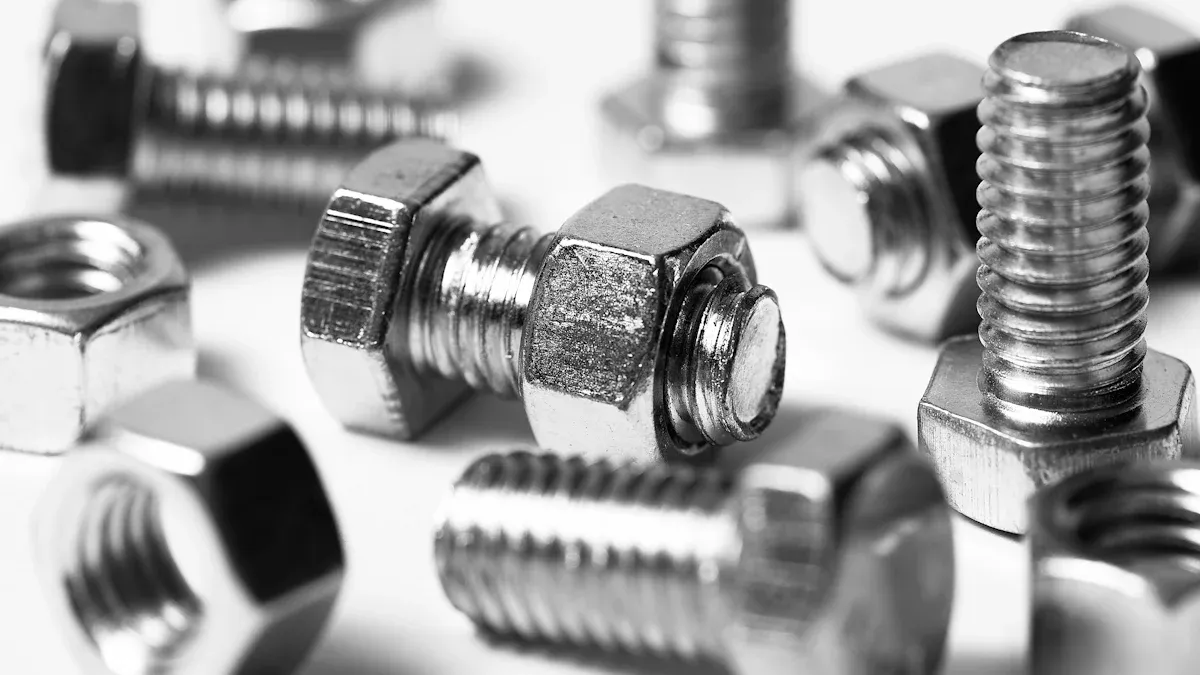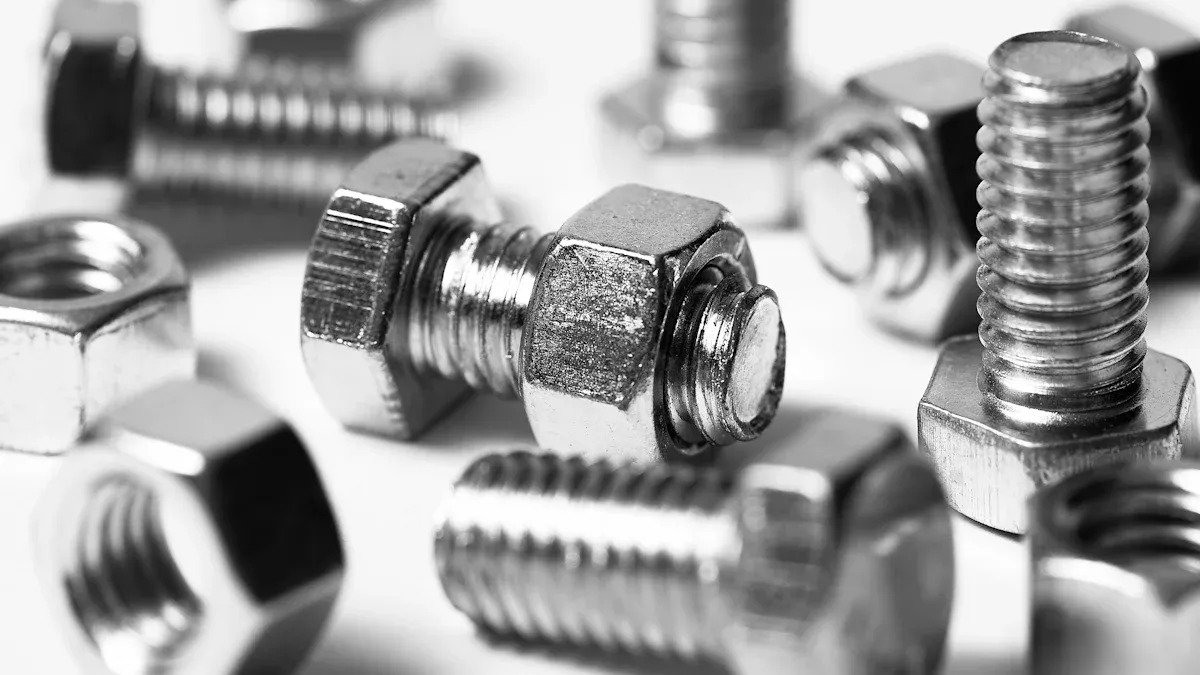
Открытый крюк Рым-болт is a fastener with a looped head, or “eye,” on one end and threads on the other. Its primary function is creating a strong, reliable attachment point for lifting, pulling, or securing objects. The demand for reliable eye bolt anchors is growing, with a производитель крепежных изделий на заказ often using advanced литье болтов to produce нестандартные крепежные элементы. Key sectors relying on these anchors включают:
- Строительстве
- Marine and Rigging
- Automotive and Agricultural
- Warehouses and Industrial settings
The industrial fastener market reflects this importance, with significant projected growth.
| Метрическая | 2023 (USD) | 2032 (USD) | CAGR (2023-2032) |
|---|---|---|---|
| Global Industrial Bolt Market | 35 Billion | 55 Billion | 5.2% |
What Is an Eye Bolt Anchor? A Beginner’s Guide
To use eye bolt anchors safely and effectively, a user must first understand their fundamental design and intended purpose. Each part of an eye bolt has a specific role. The combination of these parts creates a versatile tool for countless applications.
The Anatomy of an Eye Bolt
Открытый крюк рым-болт consists of three primary components. Each part contributes to its overall strength and function.
The Eye (Loop)
The eye is the looped head of the bolt. It serves as the connection point for hooks, shackles, or ropes. The construction of this loop is critical. For example, a simple bent wire eye is not load-rated for lifting. It can fail by straightening under excessive force.
Critical Failure Point: A non-forged eye bolt can straighten unexpectedly. In one documented case, a 1/4-inch eye bolt straightened “like a piece of spaghetti” with as little as 120 pounds of force, leading to system failure. This highlights why selecting the correct type is essential for safety.
Стержень — это цилиндрическое тело болта, идущее от головки. Он может быть частично или полностью нарезным.
The shank is the smooth or threaded shaft connecting the eye to the end of the bolt. Its diameter and length determine the bolt’s reach and contribute significantly to its strength. Manufacturers produce eye bolts according to strict industry standards to ensure reliability and interchangeability. These standards define precise dimensions for components like the shank.
Key international standards include:
| Стандартный | Организация |
|---|---|
| DIN 444 / DIN 580 | German Institute for Standardization (German) |
| ASME B18.15 | American Society of Mechanical Engineers (American) |
| UNI 6058 / UNI 2947 | Italian National Unification Body (Italian) |
Резьба — это винтовые выступы, спирально идущие вдоль стержня болта. Они являются основой для создания надёжного соединения.
The threads are the helical ridges at the end of the shank. They allow the bolt to grip a material. A user can screw the bolt into a tapped hole in metal, a pilot hole in wood, or pass it through a hole and secure it with a nut. The thread type—coarse or fine—affects its holding power and resistance to vibration.
The Main Purpose: Creating a Secure Anchor Point
The primary function of all anchor eye bolts is to establish a secure point for attaching other hardware. This simple purpose serves several distinct applications.
For Lifting and Rigging
In industrial environments, workers use shouldered eye bolts for lifting heavy loads. They attach them to machinery, engines, or large components. This allows cranes and hoists to safely lift and move objects weighing many tons.
For Tying Down and Securing
Eye bolts provide excellent tie-down points. People use them to secure cargo on truck beds, anchor tarps over equipment, or brace outdoor structures against wind. Their reliability makes them ideal for applications where tension and stability are necessary.
For Guiding Wires and Ropes
An eye bolt also functions as a guide. It can direct a wire for a plant trellis, create a path for a rope barrier, or support a tensioned cable in a suspension system. In these roles, the eye bolt manages the line of force and prevents cable sag.
The Two Fundamental Categories: Forged vs. Bent Eye Bolts
Understanding the two primary types of eye bolts is crucial for project safety and success. The manufacturing process directly determines an eye bolt’s strength and its appropriate application. These categories are forged eye bolts and bent eye bolts. Each serves a very different purpose.
Forged Eye Bolts for Heavy-Duty Lifting
Forged eye bolts are the industry standard for overhead lifting and handling heavy loads. Their construction provides superior strength and reliability for critical applications.
What “Forged” Means for Strength
Manufacturers create forged eye bolts by heating a single piece of steel and shaping it with a die. This process aligns the metal’s internal grain structure, making it continuous and unbroken. The result is a component with exceptional tensile strength and resistance to shock and fatigue. A forged eye is a solid, one-piece loop that will not open under its rated load.
The Critical Role of a Shoulder
Many forged lifting eye bolts feature a “shoulder.” This is the flat surface located directly underneath the eye. The shoulder serves a vital function: it braces the bolt against the mounting surface. This design allows the bolt to handle angular loads (pulls from the side) safely.
Совет по безопасности: An eye bolt without a shoulder must only be used for perfectly straight, in-line pulls. Applying an angular load to a non-shouldered bolt can bend or break it.
When to Use Forged Eye Bolts
A user should always select кованые проушины for any overhead lifting or rigging task. Their strength and design make them the only safe choice for these jobs.
- Lifting heavy machinery or engine blocks.
- Securing critical loads for transport.
- Creating anchor points in industrial rigging systems.
- Suspending equipment or structures.
Bent (Formed) Eye Bolts for Light-Duty Tasks
Bent eye bolts, also called wire eye bolts, are a common and economical hardware choice. However, they are strictly for light-duty, non-critical applications.
How They Are Made from Bent Rods
These types of eye bolts are made by simply bending a steel rod or wire into a loop. The end of the rod may be welded to the shank to close the eye, but often a small gap remains. This manufacturing method is quick and inexpensive, but it creates a significant structural weak point where the eye could straighten or open.
Why They Are for Light, Straight-Line Pulls Only
The bent eye design cannot withstand significant force, especially from an angle. An angular pull concentrates stress on the unwelded or lightly welded part of the eye, causing it to open easily. For this reason, a user must never use bent eye bolts for lifting or for any application where failure could cause injury or property damage.
Common Uses for Bent Eye Bolts
Bent eye bolts are suitable for static loads or light-duty tensioning where the force is applied in a straight line with the shank.
- Anchoring a guy wire for a small tree or antenna.
- Creating a tie-down point for a tarp.
- Guiding ropes for a decorative barrier.
- Hanging lightweight signs or decorations.
Изучение различных типов рым-болтов и их применения
While eye bolts fall into two main categories, several distinct designs exist for specific materials and jobs. Understanding the different types of eye bolts helps a user select the correct hardware for both safety and performance. Each design offers unique features tailored to its intended application.
Machinery Eye Bolts (Shouldered)
Machinery eye bolts are the premier choice for heavy-duty lifting and rigging. They are engineered for maximum strength and reliability in demanding industrial settings.
Key Features and Design
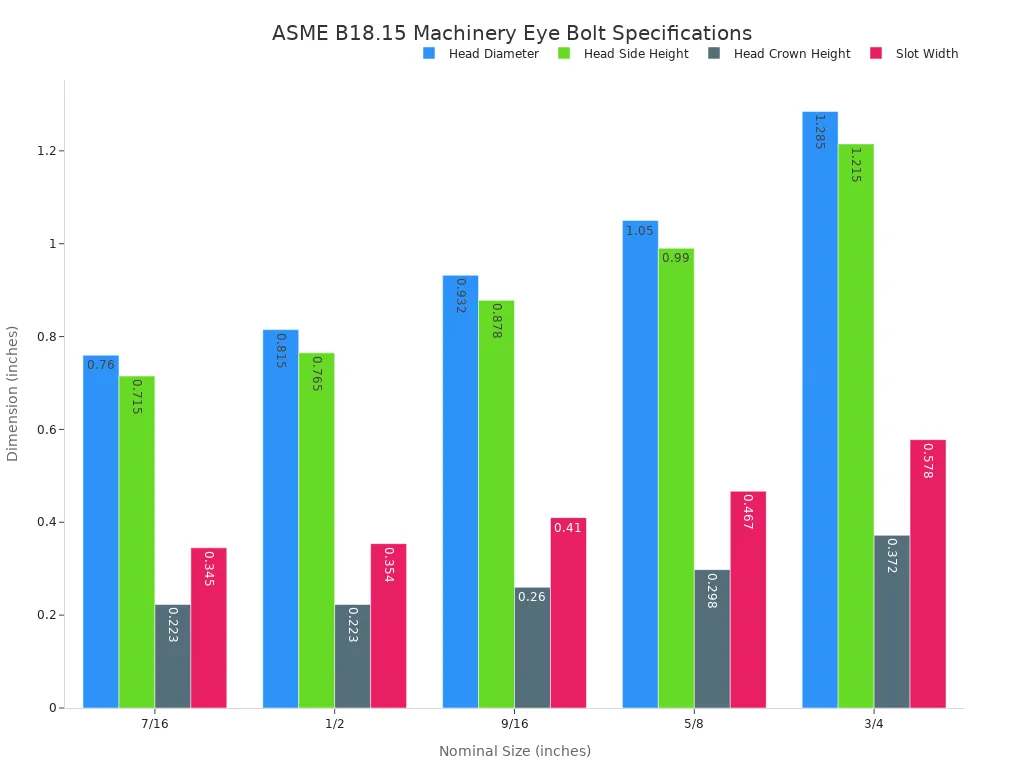
These bolts are always forged from a single piece of steel, creating a solid, unbroken grain structure. Their most important feature is the shoulder, which sits flush against the mounting surface to support angular loads. Manufacturers produce these components to exacting standards, such as ASME B18.15, which dictates precise dimensions for every part of the bolt.
To suit various operating environments, machinery eye bolts are available with numerous protective coatings. Common options include:
- Цинкование
- Горячее цинкование
- Кадмированное покрытие
- Black Phosphated
- Керамическое покрытие
- PTFE Coated
Typical Applications in Machinery
Professionals use machinery eye bolts almost exclusively for overhead lifting. Their robust, shouldered design makes them the only safe option for hoisting heavy and valuable equipment. Common applications include lifting motors, dies, and other large machine components for installation or maintenance.
Nut Eye Bolts
Nut eye bolts are a versatile fastener designed for through-hole applications. They provide a strong anchor point when a user can access both sides of the mounting surface.
Key Features and Design
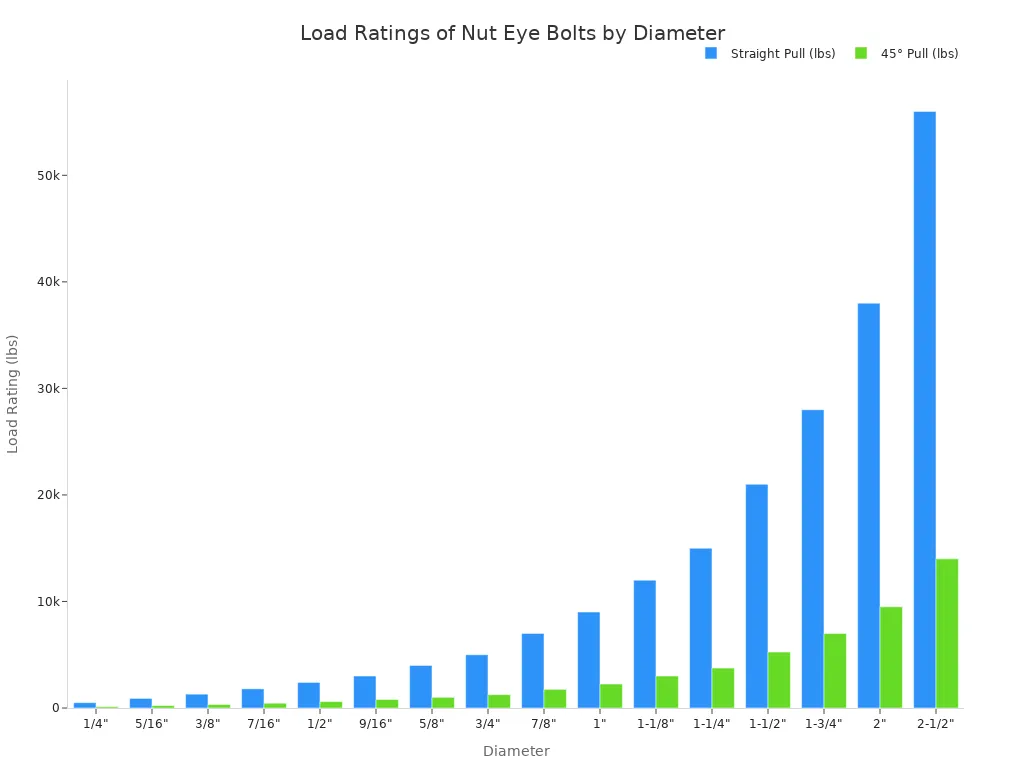
A nut eye bolt has a fully threaded shank that passes completely through a pre-drilled hole. A user secures it on the opposite side with a washer and nut. These types of eye bolts come in both shouldered and non-shouldered (plain pattern) varieties. The shouldered version is essential for any angular loading. As the load angle increases, the bolt’s capacity decreases dramatically.
Important Load Information: Working load limits are based on a straight vertical lift with a 5-to-1 safety factor. Angular lifts drastically reduce these limits. A user must use a properly seated shoulder pattern bolt for any angular pull, and the load must never exceed a 45-degree angle from the bolt shank.
В таблице ниже illustrates how significantly an angular pull reduces the safe working load.
| Диаметр | Straight Pull (lbs) | 45° Pull (Shoulder Only) (lbs) |
|---|---|---|
| 1/4″ | 500 | 125 |
| 3/8″ | 1,300 | 325 |
| 1/2″ | 2,400 | 600 |
| 3/4″ | 5,000 | 1,250 |
| 1″ | 9,000 | 2,250 |
| 1-1/2″ | 21,000 | 5,250 |
Typical Applications for Through-Holes
Installers use nut eye bolts to create anchor points on posts, beams, and plates. They are ideal for securing loads, attaching guy wires, or creating tie-downs where the bolt can pass through the material and be fastened securely from the back.
Lag Eye Bolts (Screw Eye Bolts)
Lag eye bolts, sometimes called screw eye bolts, are designed for anchoring directly into wood or into masonry using a lag shield.
Key Features and Design
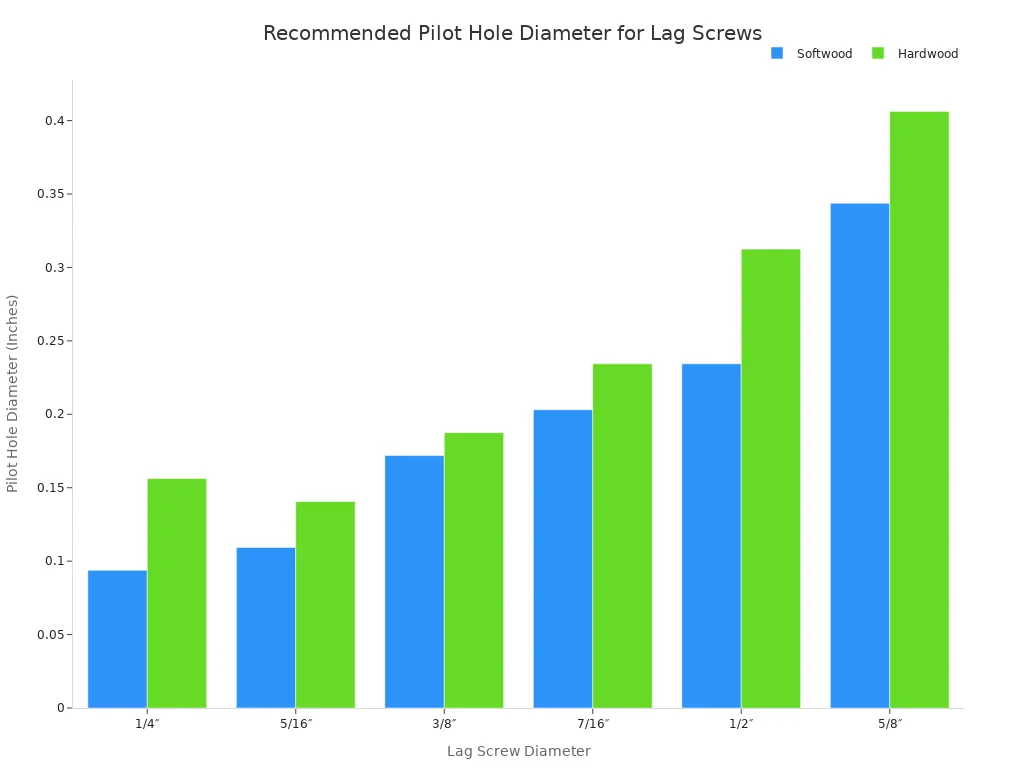
The defining feature of a lag eye bolt is its threading. It has coarse, tapered threads like a wood screw, which allows it to bite firmly into wood fibers. For a secure installation that prevents wood from splitting, a user must drill a pilot hole first. The correct pilot hole diameter depends on the bolt size and the wood’s hardness.
Правильная установка является ключом к надежности. People often use the terms ‘lag screw’ and ‘lag bolt’ interchangeably. A lag screw typically has a hex head and threads that bite into wood. Drilling the correct pilot hole is critical. A good rule is to drill a hole about two-thirds of the screw’s diameter in softwood and nearly the full core diameter in hardwood.
| Lag Screw Diameter | Pilot Hole in Softwood | Pilot Hole in Hardwood |
|---|---|---|
| 1/4" | 3/32″ | 5/32″ |
| 5/16" | 7/64″ | 9/64″ |
| 3/8" | 11/64″ | 3/16″ |
| 1/2" | 15/64″ | 5/16" |
Typical Applications in Wood
Lag eye bolts are excellent for creating light to medium-duty anchor points in wooden structures. Common uses for these different types of eye bolts include securing shade sails to posts, anchoring gate hardware, hanging heavy plants from beams, or creating tie-down points on wooden decks and walls.
Screw Eyes
Screw eyes represent the lightest-duty option among the different types of eye bolts. They are a common piece of hardware found in residential and craft settings, but a user must understand their significant limitations.
Key Features and Design
A screw eye is essentially a piece of wire bent into a loop with a threaded, pointed shank. The design is simple and economical.
- Строительство: They are formed from a bent wire, not forged. The eye is often not fully closed, creating a gap that can easily open under load.
- Threads: The shank has sharp, tapered threads similar to a wood screw, designed to be twisted directly into wood or other soft materials.
- Load Capacity: Screw eyes have no official load rating. They are not designed for lifting or supporting any significant weight. Applying force can cause the eye to unbend or the screw to pull out of the material.
Safety Warning: A user must never use a screw eye for any load-bearing or safety-critical application. Their design is intended only for static, lightweight decorative purposes. Failure under a minimal load is common and expected.
Typical Applications for Residential Use
Screw eyes are suitable only for tasks where the load is minimal and failure would not result in injury or damage. Their utility lies in their ease of installation for light-duty jobs around the home.
Common uses include:
- Hanging very light picture frames or artwork.
- Creating attachment points for craft projects.
- Направление тонких струн для внутреннего декора.
- Прокладка проводов малого сечения для электроники хобби-класса.
Откидные рым-болты с крыльями
Откидные рым-болты с крыльями — это специализированное решение для крепления в полых материалах, таких как гипсокартон, штукатурка или полые двери. Они являются одним из наиболее ingenious типов рым-болтов для современного строительства.
Key Features and Design
Эти крепежные элементы решают проблему монтажа объектов там, где нет сплошной стойки. Конструкция состоит из двух основных частей: рым-болта и пружинного откидного механизма.
- Рым-болт: Это стандартный болт с проушиной на одном конце и машинной резьбой на другом.
- Откидной механизм с крыльями: Это металлическая планка с резьбовым отверстием в центре. Она крепится к болту и снабжена пружиной, позволяющей складываться плоско.
Процесс установки уникален. Пользователь сверлит отверстие, достаточно большое для прохождения сложенного механизма. Затем механизм проталкивается в отверстие. Оказавшись внутри полости, пружина раскрывает крылья, создавая широкую опору на тыльной стороне стенового материала. Затягивание рым-болта плотно прижимает эту опору к внутренней поверхности, создавая надежную точку крепления.
Типичные применения в полых стенах
Откидные рым-болты с крыльями обеспечивают удивительно прочную точку крепления в материалах, которые в противном случае не выдержали бы крепеж. Они распределяют нагрузку на большую площадь тыльной стороны стены, предотвращая вырывание болта. Понимание этих различных типов рым-болтов позволяет надежно крепить на поверхностях, которые иначе были бы непригодны.
Типичные области применения включают:
- Подвешивание легких растений или светильников к потолку из гипсокартона.
- Крепление полок или кронштейнов на оштукатуренные стены.
- Фиксация зеркал или тяжелых картин на полых дверях.
- Крепление оборудования в коммерческих помещениях с конструкцией из металлических стоек и гипсокартона.
Ключевые факторы для выбора правильного рым-болта
Выбор правильного оборудования критически важен для безопасности и успеха проекта. Пользователь должен оценить несколько ключевых факторов перед выбором. eye bolt anchors. Эти факторы включают вес нагрузки, направление тяги и условия окружающей среды.
Понимание Предела Рабочей Нагрузки (ПРН)
Важнейшей характеристикой безопасности для любого подъемного оборудования является его Предел Рабочей Нагрузки (ПРН). Этот рейтинг лежит в основе безопасной такелажной и подъемной практики.
Что такое ПРН?
Предел Рабочей Нагрузки — это максимальная масса или сила, которую оборудование может безопасно выдерживать. Производители определяют этот предел.. Они рассчитывают Предел Рабочей Нагрузки, разделяя минимальную разрушающую прочность оборудования на коэффициент безопасности.. Для большинства рым-болты, этот коэффициент безопасности составляет 5:1. Например, болт, который разрушается при 10 000 фунтах, имеет Предел Рабочей Нагрузки 2 000 фунтов.
Почему его нельзя превышать
Превышение Предела Рабочей Нагрузки чрезвычайно опасно. Перегрузка является основной причиной выхода оборудования из строя, что может привести к серьезным травмам или смерти. Регулирующие органы устанавливают строгие правила для предотвращения таких аварий.
- ASME B30.26 требует минимальный коэффициент конструкции 5:1 для такелажного оборудования.
- OSHA 1926.251 предписывает, что оборудование должно использоваться в пределах его номинальной грузоподъемности.
- ANSI E1.4-1 определяет коэффициент конструкции 8:1 для определенных подвесных компонентов.
Где найти рейтинг ПРН
Производители обычно штампуют или маркируют Предел Рабочей Нагрузки непосредственно на кованых, сертифицированных рым-болтах. Пользователь также может найти эту информацию на упаковке продукта или в технических паспортах производителя. Если ПРН не указан, болт не сертифицирован для подъема.
Направление нагрузки: Угловая vs. Прямая тяга
Направление силы существенно влияет на грузоподъемность рым-болта. Пользователь должен учитывать, будет ли тяга прямой или под углом.
Определение прямых (осевых) нагрузок
Прямая или осевая нагрузка действует параллельно стержню болта. Это идеальное условие нагружения, позволяющее болту выдерживать полную номинальную грузоподъемность.
Определение угловых (сдвиговых) нагрузок
Угловая или сдвиговая нагрузка действует сбоку, под углом к стержню. Этот тип нагрузки создает изгибающие силы, которые значительно снижают прочность болта.
Какие болты выдерживают какие нагрузки
Только рым-болты с буртиком подходят для угловых нагрузок. Буртик должен плотно прилегать к монтажной поверхности для обеспечения опоры. Даже с буртиком грузоподъемность болта снижается с увеличением угла.
| Угол тяги (градусы) | Снижение грузоподъемности |
|---|---|
| 5° | 0° (Полная грузоподъемность) |
| 15° | 20% |
| 30° | 35% |
| 45° | 70% |
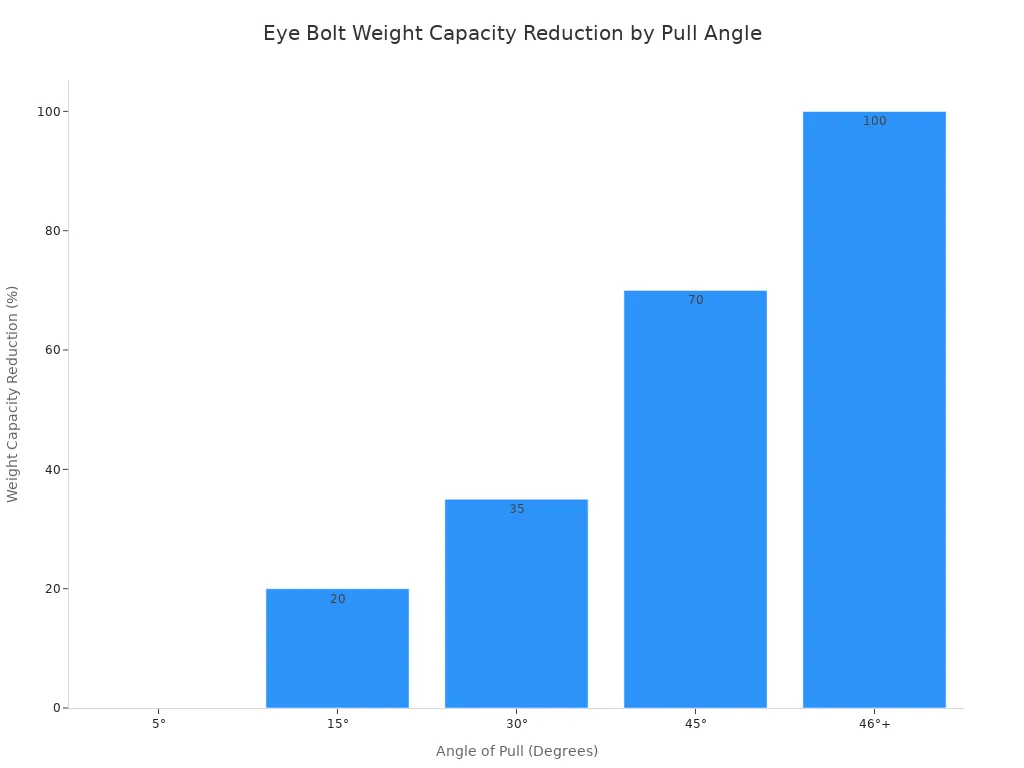
Важное примечание: Тяга под углом более 45 градусов небезопасна. Для таких применений пользователю следует рассмотреть вместо этого подъемное кольцо.
Выбор материала и покрытия
Материал и покрытие болта определяют его устойчивость к коррозии и пригодность для различных сред.
Нержавеющая сталь для устойчивости к коррозии
Нержавеющая сталь обеспечивает отличную защиту от ржавчины. Для морских или химических сред нержавеющая сталь 316 “морского класса” превосходит стандартный тип 304 благодаря содержанию молибдена, который устойчив к хлоридной коррозии.
| Характеристика | Нержавеющая сталь 304 | Нержавеющая сталь 316 |
|---|---|---|
| Коррозионная стойкость | Хорошая | Превосходна в соленой воде |
| Распространенное название | 18/8 нержавеющая | Морской класс |
| Стоимость | Менее дорогая | Более дорогая |
Оцинкованная сталь для сухих сред
Цинковое покрытие обеспечивает тонкий защитный слой, подходящий для внутренних или сухих применений. Оно обеспечивает минимальную коррозионную стойкость и не предназначено для использования на открытом воздухе.
Hot-Dipped Galvanized Steel for Outdoor Use
Hot-dipped galvanizing creates a much thicker, more durable zinc coating. This process provides long-lasting protection against the elements, making it the standard choice for outdoor and industrial construction. A galvanized coating can last over 60 years in some environments.
Basic Installation Guidelines for Eye Bolt Anchors
Правильная установка is just as important as selecting the right hardware. A correctly installed fastener ensures maximum strength and safety. The installation method varies significantly depending on the base material: wood, metal, or concrete.
Installing into Wood
Wood provides a solid base for lag-style eye bolts when a user follows the correct procedure. This process prevents splitting the wood and ensures a secure grip.
How to Drill a Pilot Hole
Drilling a pilot hole is a mandatory first step. A pilot hole clears a path for the bolt, preventing the wood from cracking under pressure. The hole’s diameter should be slightly smaller than the bolt’s shank to allow the threads to bite firmly. For an eye bolt anchor for wood, the pilot hole size depends on whether the wood is hard or soft.
Driving the Lag Eye Bolt Correctly
A user should thread the lag eye bolt into the pilot hole by hand to start. To finish, the user can insert a screwdriver or steel rod through the eye for leverage and turn the bolt until the shank is fully embedded. The bolt’s holding power depends on factors like wood type and embedment depth, though industry standards do not provide a universal rule for depth.
Installing into Metal
Metal applications require precision. A user can install eye bolts into a pre-tapped hole or through a hole with a nut and washer.
Using a Pre-Tapped Hole
For solid metal plates, a user must first drill and tap a hole. Tapping creates threads inside the hole that match the bolt’s threads. For a secure connection, professionals follow best practices.
- Drill the Correct Hole: The tap often specifies the required drill size. The goal is to achieve about 70% thread engagement for optimal strength.
- Apply Cutting Oil: A light coating of cutting oil on the tap reduces friction and helps create cleaner threads.
- Tap the Hole: A user inserts the tap perpendicularly and turns it slowly to cut the threads. This creates a secure base for machinery eye bolts.
Using a Through-Hole with a Nut
The simplest method for metal sheets or plates is a through-hole. A user drills a hole slightly larger than the bolt’s diameter, passes the bolt through, and secures it on the other side with a washer and nut. This is the standard method for installing nut eye bolts.
Installing into Masonry or Concrete
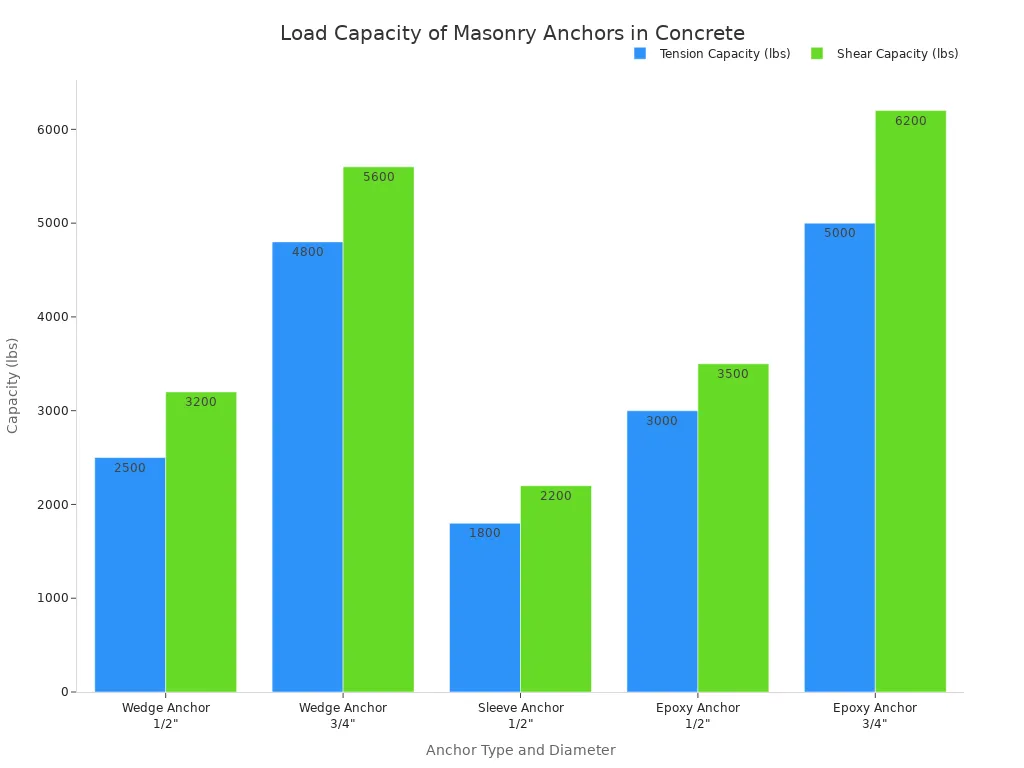
Concrete and masonry are strong but brittle, requiring specialized eye bolt anchors to create a secure point. Common solutions include mechanical anchors and chemical adhesives.
Using a Lag Shield Anchor
For light to medium-duty applications, a user can pair a lag eye bolt with a lag shield. These eye bolt shield anchors are metal sleeves inserted into a pre-drilled hole. As the lag bolt threads into the shield, the shield expands and presses firmly against the walls of the hole. Installers often use eye bolt shield anchors in brick or block.
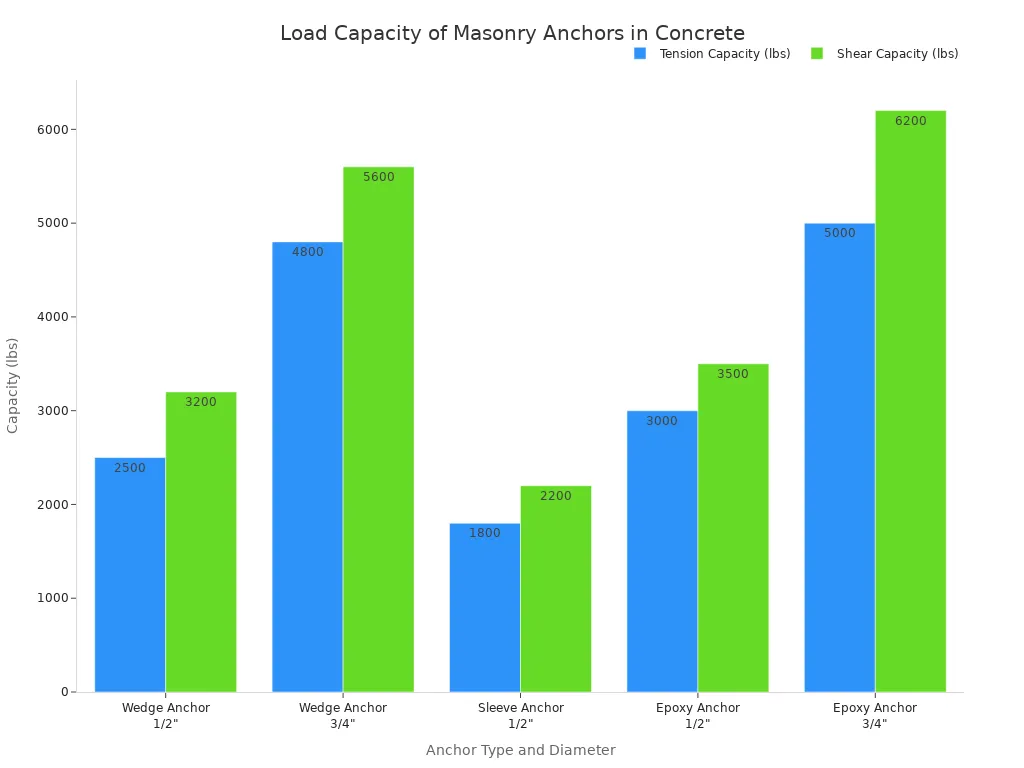
Using an Epoxy Anchor System
For the highest load capacity, an epoxy anchor system is the best choice. This method uses a two-part adhesive to bond a threaded rod or an eye bolt anchor for concrete directly to the masonry.
Требуемый диаметр твердосплавного сверла Always follow the manufacturer’s instructions for epoxy installation, as cure times and procedures can vary. A clean hole is critical for a strong bond.
A typical installation involves these steps:
- Тщательно очистите отверстие от всей пыли и мусора.
- Clean the hole thoroughly with a wire brush and compressed air to remove all dust and debris.
- Dispense the two-part epoxy into the hole, filling it about halfway from the bottom up.
- Slowly turn the threaded rod or bolt as you insert it to the bottom of the hole.
- Allow the epoxy to cure completely before applying any load.
Critical Safety Rules for Using All Types of Eye Bolts
Using eye bolts safely goes beyond correct selection and installation. A user must adopt a safety-first mindset. Adhering to strict safety protocols protects personnel, prevents equipment damage, and ensures project integrity. These rules apply to all different types of eye bolts.
Always Inspect Before Use
A visual inspection before every use is a non-negotiable safety step. Damage can occur during storage or previous use, compromising the bolt’s integrity.
Checking for Bends, Cracks, or Wear
A user should carefully examine the entire eye bolt for any signs of physical damage. Look for nicks, gouges, or cracks, especially in the eye and shank areas. Any bending or elongation of the eye indicates overloading, and the bolt must be discarded. Regulatory standards from organizations like OSHA and ASME B30.26 support these practices. These eye bolt testing regulations mandate that rigging equipment must be inspected before use on each shift. If a user finds any defect, they must remove the equipment from service immediately.
Inspecting Threads for Damage
The threads are critical for a secure connection. A user must inspect them for stripping, corrosion, or other damage. Damaged threads can prevent proper seating or fail under load. A bolt with compromised threads cannot achieve its rated capacity and poses a significant risk.
Never Modify an Eye Bolt
An eye bolt is an engineered component. Any unauthorized alteration will void its load rating and create a dangerous weak point.
How Welding or Grinding Affects Strength
Welding or applying excessive heat to a forged eye bolt destroys its internal grain structure. This alteration makes the metal brittle and unpredictable. Grinding away material to make a bolt fit also reduces its cross-sectional area, which directly lowers its strength and load-bearing capacity.
The Dangers of Unauthorized Alterations
Modifying certified lifting equipment carries severe consequences. A user who alters a bolt creates a hazardous situation with significant legal and financial exposure.
Warning: Potential Consequences of Modification ⚠️
- Compromised Integrity: The bolt’s structure is weakened, leading to unexpected failure.
- Аннулированные гарантии: Производитель более не несет ответственности за работоспособность изделия.
- Юридическая ответственность: В случае аварии лицо, осуществившее модификацию, может столкнуться с судебными исками и даже уголовным преследованием.
- Штрафы регулирующих органов: OSHA может наложить значительные штрафы за использование модифицированного оборудования, причем наказания за умышленные нарушения могут достигать свыше 165 000 долларов..
В случае сомнений обратитесь к специалисту
Осознание границ собственных знаний является ключевой частью безопасности. Для сложных или критически важных применений профессиональное руководство обязательно.
Знание своих пределов для новичка
Новичок должен выполнять только простые, некритичные задачи. Если ситуация связана с тяжелыми грузами, угловыми подъемами или незнакомыми условиями, пора остановиться и обратиться за советом к эксперту. Действия наугад в такелажных работах могут привести к катастрофическим последствиям.
Зачем консультироваться с инженером по критическим подъемам
Для любого подъема над головой, связанного с ценным оборудованием или потенциальным риском для человеческой жизни, пользователь должен проконсультироваться с квалифицированным инженером. Инженер может рассчитать нагрузки, указать правильное оборудование и разработать безопасный план подъема, соответствующий всем отраслевым стандартам.
Выбор пользователем рым-болтовых анкеров зависит от двух ключевых факторов: веса груза и направления тяги. Понимание различных types of eye bolts типов критически важно для безопасности.
Помните основное правило: Кованые рым-болты с буртом предназначены для тяжелых или угловых подъемов. Гнутые рым-болты — только для легких, прямолинейных тяг.
Пользователь всегда должен ставить безопасность на первое место. Это включает проверку рабочего предела нагрузки (WLL) и осмотр оборудования перед каждым использованием. Правильный выбор оборудования обеспечивает успех проекта и защищает всех участников.
Частые вопросы
Что такое рым-болт с буртом?
Рым-болт с буртом имеет плоскую поверхность под проушиной. Этот бурт упирается в монтажную поверхность, позволяя болту безопасно выдерживать угловые нагрузки. Пользователь должен использовать болты без бурта только для прямых, осевых тяг.
Можно ли повторно использовать рым-болты для подъема?
Да, но только после тщательного осмотра. Пользователь должен проверить наличие изгибов, трещин или повреждений резьбы. При обнаружении любого дефекта болт необходимо немедленно утилизировать. Стандарты безопасности требуют проведения осмотра перед каждым подъемом.
Что означает WLL?
WLL означает Рабочий Предел Нагрузки (Working Load Limit). Это максимальная безопасная сила, которую может выдержать изделие, определенная производителем. Пользователь никогда не должен превышать WLL, чтобы предотвратить отказ оборудования и обеспечить безопасность.
Почему направляющее отверстие важно для рым-болтов с лаг-резьбой?
Пользователь сверлит направляющее отверстие в дереве перед установкой рым-болта с лаг-резьбой. Это отверстие создает путь для резьбы болта. Оно предотвращает раскалывание древесины во время установки и обеспечивает надежное сцепление болта.
Можно ли использовать гнутый рым-болт для подъема? 🚫
Нет. Пользователь никогда не должен использовать гнутый (или проволочный) рым-болт для подъема. Его проушина может легко выпрямиться и не выдержать нагрузку. Эти болты предназначены только для легких, некритичных задач, таких как направление тросов или подвешивание декораций.
Как работает рым-болт с откидными крыльями (такелажный)?
Пользователь проталкивает сложенные откидные крылья через отверстие в полой стене. Крылья раскрываются внутри полости стены. Затягивание болта прижимает крылья к внутренней поверхности, создавая прочную точку крепления.
Какой материал лучше: нержавеющая сталь или оцинкованная?
Лучший материал зависит от окружающей среды.
Нержавеющая сталь**Нержавеющая сталь**: Обладает превосходной коррозионной стойкостью, что делает ее идеальной для морских или химических сред. Оцинкованный горячим способом**Оцинкованная сталь**: Обеспечивает долговечную защиту для общих наружных и промышленных строительных проектов.