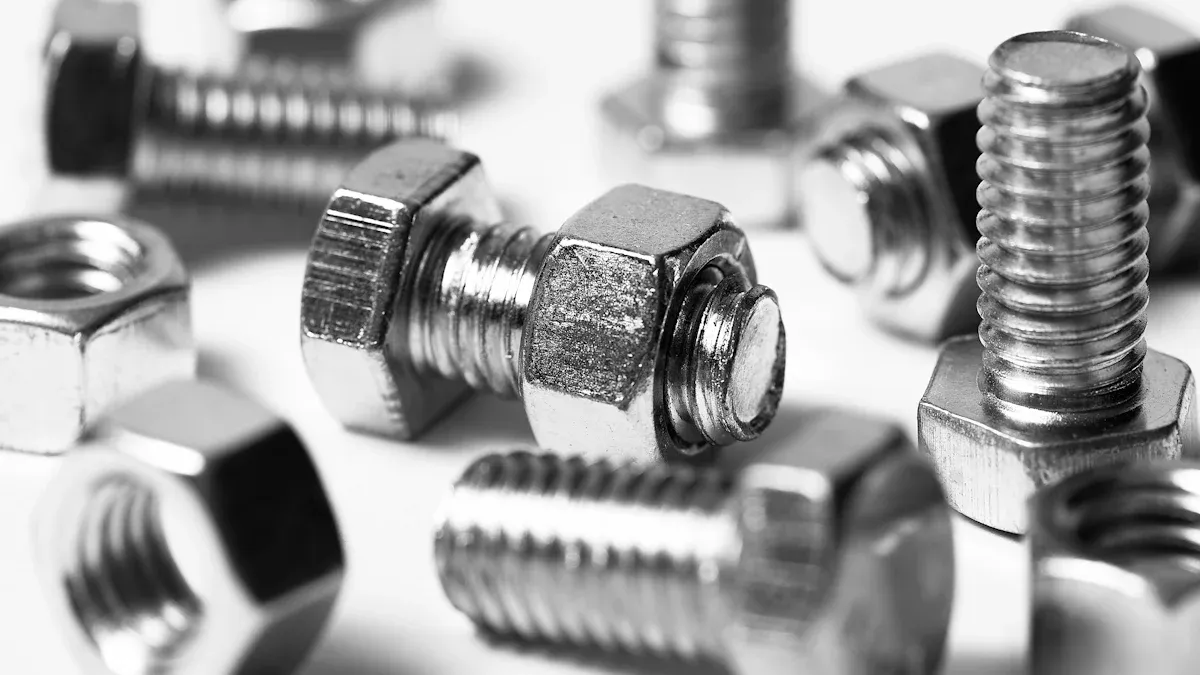

Бетон анкерные болты are heavy-duty fasteners engineered to securely attach steel to concrete. These anchor bolts transfer a fixture’s load into the base material. The anchor manages two primary forces: tensile load and shear load. Each anchor resists tensile (pull-out) forces, while the bolt itself resists shear (sideways) forces. This anchor bolt must handle a specific tensile load. The anchor’s design ensures it withstands the required tensile strength. Every bolt resists shear. This anchor has high shear capacity. The anchor bolt’s performance against tensile and shear forces is critical. A производитель крепежных изделий на заказ может произвести специальные анкерные болты и другом нестандартные крепежные элементы. The concrete anchor market is projected to reach USD 22.8 billion by 2033, showing the growing importance of this anchor.
Fundamental Types of Concrete Anchor Bolts
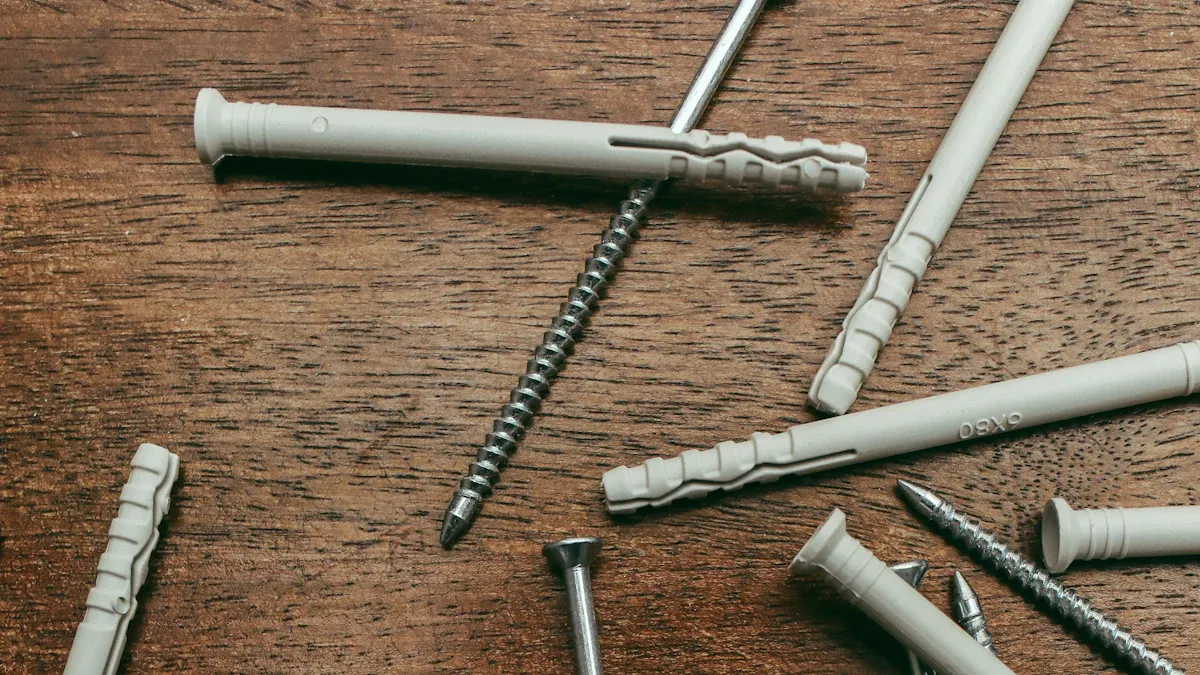
Engineers and builders select from three fundamental types of Анкерные болты для бетона. Each category operates on a different principle to create a secure connection. The choice depends on the application’s load requirements, environmental conditions, and base material. The main types are mechanical, adhesive, and screw-type anchors.
Механические анкеры
Mechanical anchors are the most common choice in the construction industry. Projections show this anchor type will continue to dominate the market due to its reliability and simple installation. These anchor bolts provide dependable connections, ensuring structural safety and stability. Their versatility allows for a wide range of uses. Common applications include:
- Жилые помещения: Securing fixtures like cabinets, shelves, and railings.
- Коммерческие объекты: Anchoring partitions, signage, and HVAC systems in office buildings and retail spaces.
- Промышленность: Fastening heavy machinery, pallet racking, and safety equipment in plants and warehouses.
- Infrastructure: Anchoring structural elements and safety barriers in bridges, tunnels, and highways.
Клиновые анкеры
A wedge anchor is a heavy-duty, torque-controlled expansion anchor. Installers insert the bolt into a pre-drilled hole. Tightening the nut pulls the bolt upward, forcing a clip at the bottom to expand and wedge tightly against the concrete. This mechanism gives the wedge anchor the highest holding power among mechanical expansion anchor bolts. They are ideal for heavy-duty structural applications.
| Тип анкера | Typical Load Capacity (lbs) |
|---|---|
| Рукавный анкер | 200-1000 |
| Клин-анкер | 6000 or more |
Распорные анкеры
A sleeve anchor is a versatile expansion anchor suitable for light to medium-duty applications in concrete, brick, and block. This bolt consists of a threaded bolt, a flared cone-shaped nut, and an expansion sleeve. As the installer tightens the bolt, the cone pulls into the sleeve. This action forces the sleeve to expand outward, pressing against the walls of the hole. This anchor has less holding power than a wedge anchor.
Встраиваемые анкеры
A drop-in anchor is a female (internally threaded) anchor designed for flush-mount applications. After an installer places the anchor in a pre-drilled hole, they use a special setting tool to drive an internal plug downward. This action expands the anchor body, locking it into the concrete. A separate machine bolt or threaded rod is then screwed into the anchor to attach the fixture. This design is excellent for overhead work like suspending pipe, conduit, and cable trays.
Ударные анкеры
A strike anchor, also known as a hammer-drive anchor, is a simple, impact-expansion anchor. It consists of a steel body, an expansion pin, and a nut and washer. An installer places the anchor into the hole and drives the internal pin with a hammer. The pin forces the anchor body to expand, creating a secure hold. This bolt is a permanent, tamper-proof fastener best suited for static, light to medium-duty applications.
Adhesive (Chemical) Anchors
Adhesive anchors, or chemical anchors, use a high-strength resin to bond a threaded rod or rebar to the concrete. These systems create a stress-free fastening, making them ideal for applications near concrete edges or where anchor spacing is tight. Their high bond strength and excellent load distribution contribute to their steady market growth. However, their performance is highly dependent on environmental conditions.
Примечание: Temperature and moisture significantly impact the curing process and final strength of an adhesive anchor. Installers must follow manufacturer guidelines closely for a reliable bond.
| Состояние | Effect on Anchor Performance | Best Practices |
|---|---|---|
| High Temperatures (above 30°C/86°F) | Accelerates resin curing, potentially causing improper bonding. | Use temperature-resistant epoxies; install during cooler times of the day. |
| Wet Conditions (Rain, High Humidity) | Interferes with the chemical bond, leading to poor performance. | Thoroughly clean and dry the hole; use a moisture-resistant adhesive. |
| Condensation | Can weaken the bond if it forms on the substrate during installation. | Use fast-curing resin to minimize exposure time. |
Epoxy-Based Systems
Epoxy anchors are two-component systems (a resin and a hardener) that offer the highest bond strength and chemical resistance. They have a longer cure time, which allows for deeper embedment and precise anchor alignment. Tensile tests show that high temperatures progressively decrease the adhesive’s strength and stiffness.
Hybrid and Vinylester Systems
Hybrid and vinylester systems also use a two-part resin but offer a much faster curing time than epoxies. This speed makes them popular for projects requiring a quick turnaround. While strong, they are generally more sensitive to installation conditions and may offer slightly lower load capacities than a pure epoxy anchor.
Screw-Type Anchors
Screw-type anchors are a unique category of concrete fasteners. They are valued for their ease of installation and removability. These types of anchor bolts are a popular choice for both temporary and permanent fixtures.
Self-Tapping Thread Design
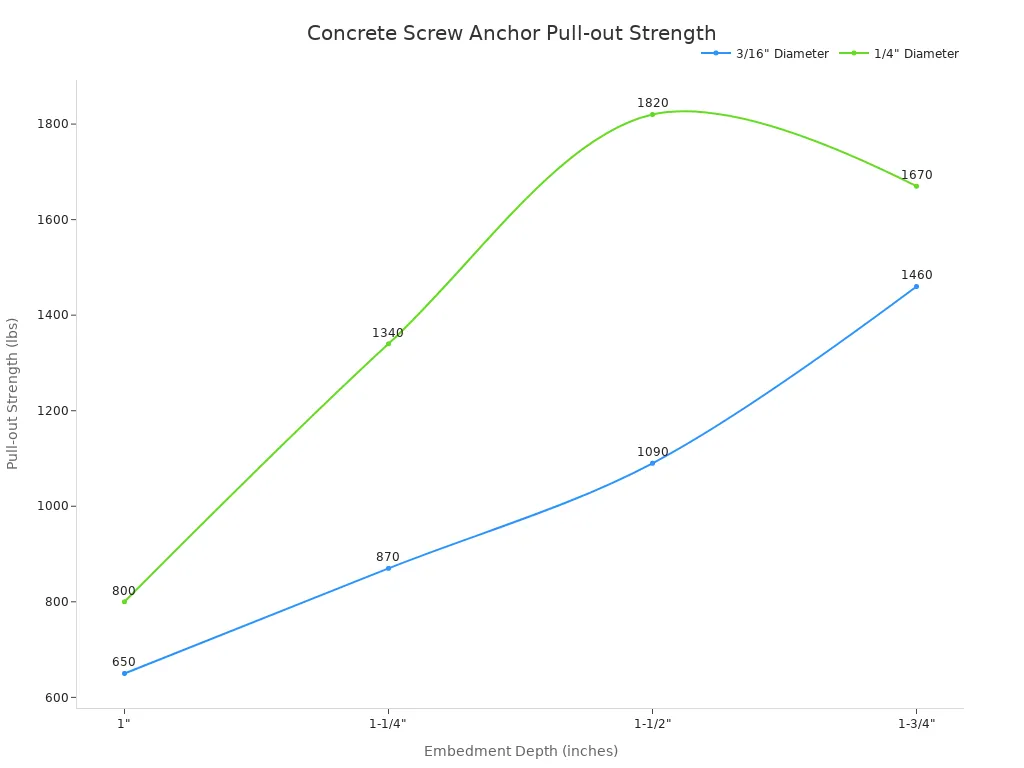
A concrete screw features a specialized, hardened thread designed to cut its own mating threads into concrete, brick, or block. An installer simply drills a pilot hole and drives the screw directly into the base material. This action creates a strong mechanical interlock. The anchor’s pull-out strength is directly related to its diameter and embedment depth, as shown in the data for 4000 PSI concrete.
| Диаметр | Embedment (inches) | Pull-out Strength (lbs) |
|---|---|---|
| 3/16″ | 1″ | 650 |
| 3/16″ | 1-3/4″ | 1460 |
| 1/4″ | 1″ | 800 |
| 1/4″ | 1-3/4″ | 1670 |
Возможность демонтажа и повторного использования
While a key feature of a screw-type anchor is its removability, reusing the bolt is strongly discouraged from a professional engineering and safety perspective.
The act of removing and reinstalling a concrete screw fundamentally compromises its holding power. It introduces risks of metal fatigue and voids all warranties and safety certifications. Even if a bolt appears visually undamaged, micro-fractures and dulled threads make a secure second installation impossible.
Reusing a screw-type bolt creates several critical issues:
- Снижение несущей способности: Процесс демонтажа повреждает резьбу, нарезанную в бетоне, и изнашивает собственную резьбу винта. Это приводит к резкому и непредсказуемому снижению удерживающей способности.
- Усталость металла: Интенсивные нагрузки при первоначальной установке могут создавать микротрещины в болте. Повторное затягивание болта может привести к росту этих трещин, что вызовет внезапное разрушение.
- Аннулирование соответствия: Повторное использование бетонного винта немедленно аннулирует любую гарантию производителя или Европейское техническое одобрение (ETA). Это действие может привести к значительной юридической ответственности и провалу проверок.
Для любых конструкционных или критически важных для безопасности применений профессионалы должны использовать абсолютно новый, правильно подобранный винт для каждой точки крепления.
Критическая характеристика анкерного болта: Несущая способность
Основное назначение анкерного болта — безопасно воспринимать приложенные нагрузки. Несущая способность является наиболее критической характеристикой анкерного болта. Инженеры должны соотносить прочность анкера с требованиями к нагрузке в конкретном применении. Это обеспечивает надежность соединения под напряжением. Общая производительность болта зависит от понимания этих сил и факторов, влияющих на его прочность.
Понимание нагрузок
На анкер действуют силы с разных направлений. Две основные силы — это растяжение и срез. Испытательные агентства используют стандартизированные методы для определения прочности анкерных болтов против каждого типа нагрузки.
Растягивающая нагрузка (Прочность на вырыв)
Растягивающая нагрузка, или прочность на вырыв, измеряет усилие, необходимое для выдергивания анкера прямо из основного материала. Это критический показатель производительности для любого анкера. Техники определяют предельную прочность анкера на растяжение с помощью “Испытания на вырыв”.”
- A Гидравлический насос прикладывает растягивающую нагрузку параллельно анкерному болту.
- Датчик перемещения измеряет движение болта в реальном времени.
- Этот метод испытаний соответствует стандарту ASTM E488-10 для измерения прочности на растяжение.
Этот тип испытания может быть разрушающим, когда болт нагружается до своего предельного значения, или неразрушающим, когда прикладывается пробная нагрузка для проверки установки без повреждения материала. Прочность анкера на растяжение должна превышать ожидаемые растягивающие нагрузки в применении.
Срезывающая нагрузка (Поперечная прочность)
Срезывающая нагрузка измеряет боковую силу, которую может выдержать анкер. Эта сила действует перпендикулярно длине болта. “Испытание на срез” определяет прочность анкера на срез. Гидравлический насос прикладывает нагрузку перпендикулярно болту до разрушения. Прочность на срез жизненно важна для применений, связанных с ветром, сейсмической активностью или настенными креплениями. Сам болт сопротивляется срезывающей нагрузке.
Совместное действие растяжения и среза
В большинстве реальных применений анкер подвергается одновременному воздействию как растягивающих, так и срезывающих сил. Инженеры рассчитывают это “Взаимодействие растяжения и среза”, чтобы убедиться, что анкер может выдержать комбинированную нагрузку. Для проверки работы анкера при таких комбинированных напряжениях используется сложная формула, (Nxua / φNxn)^(5/3) + (Vxua / φVxn)^(5/3), . Этот расчет подтверждает, что болт соответствует необходимым требованиям по нагрузке для безопасной конструкции.
Факторы, влияющие на несущую способность
Несколько факторов напрямую влияют на несущую способность и прочность бетонных анкерных болтов. Правильный подбор учитывает как сам анкер, так и бетон, в который он установлен.
Диаметр анкера и глубина заделки
Диаметр болта и его глубина заделки являются основополагающими для его прочности. Болт большего диаметра, как правило, обеспечивает большую прочность на растяжение и срез. Большая глубина заделки дает анкеру больше бетона для сцепления, что значительно увеличивает его прочность на растяжение. Правильная глубина заделки — ключевая характеристика для достижения требуемой производительности.
Прочность бетона на сжатие (PSI)
Прочность основного бетонного материала является важным фактором. Бетон с более высокой прочностью на сжатие (измеряемой в PSI) обеспечивает более прочное основание. Это позволяет анкеру передавать большую нагрузку и достигать более высоких значений прочности на растяжение и срез.
Условия треснувшего и нетреснувшего бетона
Со временем в бетоне могут образовываться мелкие трещины из-за растяжения, усадки или напряжения. Анкер, установленный в треснувший бетон, будет иметь значительно сниженную прочность на растяжение по сравнению с анкером в сплошном, нетреснувшем бетоне.
Важно: Для применений в треснувшем бетоне инженеры должны выбирать анкер, специально испытанный и одобренный для таких условий. Использование стандартного анкера в треснувшей зоне представляет серьезный риск для безопасности и не соответствует надлежащим требованиям по нагрузке.
Руководство по выбору материала и покрытия
Открытый крюк Материал и покрытие анкерного болта‘являются критически важной характеристикой, определяющей его долговечность и пригодность для конкретных условий окружающей среды. Выбор правильного материала предотвращает преждевременный выход из строя из-за коррозии, обеспечивая долгосрочную безопасность и целостность соединения. Выбор между анкерными болтами из углеродистой и нержавеющей стали полностью зависит от воздействия влаги и коррозионных элементов в конкретном применении.
Анкерные болты из углеродистой стали
Углеродистая сталь является распространенным материалом для анкерных болтов благодаря своей высокой прочности и экономической эффективности. Спецификация ASTM F1554 регулирует материальные свойства этих анкерных болтов, определяя марки в зависимости от их прочности. Химический состав и механическая прочность варьируются в зависимости от типа и размера, что позволяет инженерам выбирать подходящий болт для конкретных требований по нагрузке.
| Элемент | Углеродистая сталь | Углеродистая борсодержащая сталь | Легированная сталь | Легированная борсодержащая сталь |
|---|---|---|---|---|
| Углерод | 0.30 – 0.52% | 0.30 – 0.52% | 0.30 – 0.52% | 0.30 – 0.52% |
| Марганец, мин. | 0.60% | 0.60% | 0.60% | 0.60% |
| Фосфор, макс. | 0.040% | 0.040% | 0.035% | 0.035% |
| Сера, макс. | 0.050% | 0.050% | 0.040% | 0.040% |
Прочность на растяжение болта из углеродистой стали является ключевым показателем производительности. Эта прочность варьируется в зависимости от диаметра болта.
| Размер | Предел прочности на растяжение (ksi) | Предел текучести (ksi) |
|---|---|---|
| 1/4 – 1 | 120 мин. | 92 мин. |
| 1 1/8 – 1 1/2 | 105 мин. | 81 min |
| 1 5/8 – 3 | 90 min | 58 min |
Because carbon steel is susceptible to rust, it requires a protective coating. The type of coating determines where the anchor can be safely used.
Zinc-Plated Finish for Dry Conditions
A zinc-plated finish is a thin, electroplated coating applied to a carbon steel anchor. This coating provides a basic level of corrosion resistance suitable only for dry, interior applications. The zinc layer acts as a sacrificial barrier, but it wears away over time when exposed to any moisture. While suitable for indoor uses, the service life of a zinc-plated anchor is limited. For example, the typical service life of a carbon steel chemical anchor is around 10 years in a controlled environment. The zinc coating’s primary function is to prevent rust during shipping and in non-corrosive settings.
Hot-Dipped Galvanized (HDG) for Moist Environments
Hot-dip galvanizing involves immersing a carbon steel bolt in a bath of molten zinc. This process creates a much thicker and more durable protective layer than standard zinc plating. An HDG anchor offers good corrosion resistance, making it suitable for outdoor applications in moist or humid environments. This robust coating significantly extends the life of the bolt in settings where it might be exposed to rain or condensation.
Stainless Steel Anchor Bolts
Stainless steel anchor bolts provide superior corrosion resistance because the protective qualities are inherent to the material itself, not just a surface coating. This makes them the ideal choice for harsh, corrosive, or long-term outdoor applications. The two most common types are 304 and 316 stainless steel.
Type 304 for General Corrosion Resistance
Type 304 stainless steel is an excellent material for general-purpose corrosion resistance. It performs well in most outdoor environments and can withstand exposure to freshwater and typical atmospheric conditions. This type of anchor is a reliable choice for many exterior projects where the bolt will not be exposed to saltwater or harsh chemicals. Its inherent strength and durability make it a popular specification for quality construction.
Type 316 for Marine and Chemical Environments
Type 316 stainless steel contains an important element: molybdenum. This addition gives the material superior strength and resistance against chlorides, such as salt and de-icing chemicals.
Expert Tip: For any project near the coast or involving exposure to harsh chemicals, specifying Type 316 stainless steel is non-negotiable. Its ability to resist pitting and crevice corrosion is critical for safety and longevity.
Laboratory salt spray tests confirm the superior performance of a Type 316 anchor. In simulated saltwater environments, a Type 316 bolt can last up to 10 years, whereas a Type 304 bolt may show significant corrosion within just one year. This makes Type 316 the only acceptable choice for:
- Marine and coastal environments
- Очистные сооружения сточных вод
- Areas with heavy use of de-icing salts
- Химические производственные предприятия
Selecting Materials Based on Application
The final material specification for concrete anchor bolts must align with the environmental conditions of the installation site. The ISO 9223 standard classifies environments into corrosivity categories, from C1 (Very Low) to CX (Extreme), which helps guide material selection.
| ISO Category | General Description | Recommended Anchor Material |
|---|---|---|
| C1-C2 | Dry interiors, rural areas | Оцинкованная углеродистая сталь |
| C3 | Urban areas, some humidity | Hot-Dipped Galvanized, Type 304 Stainless |
| C4 | Industrial areas, coastal areas | Нержавеющая сталь типа 316 |
| C5-CX | Heavy industrial, marine splash zones | Type 316 Stainless Steel or higher grade alloy |
Interior and Dry Applications
For indoor applications with controlled humidity and no exposure to moisture, zinc-plated carbon steel anchor bolts offer sufficient strength and protection. These are cost-effective for securing fixtures in dry, stable environments.
Exterior and Humid Applications
For general outdoor uses or in humid interior spaces like unconditioned warehouses, a hot-dipped galvanized anchor or a Type 304 stainless steel anchor is necessary. These materials provide the required strength and corrosion resistance to withstand moisture and temperature fluctuations.
Corrosive and Coastal Applications
In environments classified as C4 or C5, such as coastal regions, industrial zones, or areas with chemical exposure, only Type 316 stainless steel should be used. This material’s enhanced corrosion resistance is essential for maintaining the anchor’s structural strength and ensuring a safe, long-lasting installation.
Anchor Bolt Dimensions: Diameter, Length, and Threading
Selecting the correct physical dimensions is a fundamental anchor bolt specification. The diameter, length, and threading of an anchor bolt directly influence its installation success and load-bearing strength. Engineers must carefully define each dimension to ensure a safe and effective connection.
Anchor Diameter Specification
The diameter of the anchor is a primary driver of its performance. This specification affects both strength and compatibility.
Влияние на несущую способность
An anchor’s diameter has a direct correlation with its strength. A larger diameter bolt possesses a greater cross-sectional area. This increased area enhances the anchor’s capacity to resist both tensile and shear forces. A bolt with a larger diameter can handle a heavier load, making it a critical factor for achieving the required structural strength.
Matching Diameter to Fixture Hole Size
Installers must match the anchor diameter to the hole size of the fixture being attached. A proper fit ensures the load transfers correctly from the fixture to the anchor. An oversized hole can cause movement and reduce the connection’s overall strength, while an undersized hole makes installation impossible.
Determining Correct Anchor Length
The correct anchor length is essential for achieving the necessary embedment and securing the fixture. The total length of the bolt must be carefully calculated.
Расчет требуемой длины болта
Professionals determine the required bolt length by considering the fixture’s thickness and the anchor’s embedment depth. The goal is to select a bolt with a length that falls within an approved range. The basic formulas are:
In this calculation,
tfixrepresents the thickness of the fixture. The valuesls,minиls,maxrepresent the minimum and maximum anchor length values based on the specific anchor’s approval assessment. This ensures the anchor has the proper length for its application.
Relationship Between Length and Embedment
A longer bolt does not automatically provide greater strength. The anchor’s pull-out strength comes from its embedment depth into the concrete. A bolt’s length must be sufficient to achieve the minimum required embedment while also passing through the fixture and accommodating the nut and washer. The correct length enables the proper embedment, which is key to the anchor’s holding strength.
Thread Specification
The thread specification of anchor bolts dictates how the fixture is secured and how the anchor performs under certain conditions.
Usable Thread for Fixture Attachment
An anchor has a specific length of usable thread. The overall bolt length specification must ensure enough thread protrudes past the fixture. This allows for the full engagement of the nut and washer, which is necessary to apply the correct torque and secure the load.
Coarse vs. Fine Thread Considerations
The choice between Coarse Thread (UNC) and Fine Thread (UNF) affects the anchor’s performance. UNC threads are the standard for most concrete anchor bolts.
- Прочность: UNC threads have a larger cross-section, giving them higher shear strength and better performance when bearing a large tensile load or impact forces.
- Монтаж: Coarse threads are faster to install and more tolerant of debris, which is common on construction sites.
- Vibration: UNF threads offer better tightness and resistance to loosening from vibration due to a smaller helix angle. However, UNC threads are generally preferred for their overall robust strength in static structural connections.
Essential Installation Specifications for Anchor Bolts

An anchor bolt’s performance is only as good as its installation. Following precise installation specifications is not just a recommendation; it is a fundamental requirement for safety and structural integrity. A successful anchor bolt installation depends on three core areas: correct hole preparation, adherence to placement geometry, and proper tightening. Each step is a critical anchor bolt specification that ensures the fastener achieves its designed load capacity and provides a reliable, long-term connection.
Hole Preparation Requirements
The installation process begins with creating a precise hole in the concrete. The quality of this hole directly impacts the anchor’s ability to function correctly. Every detail, from the drill bit used to the final cleaning, contributes to the overall strength of the connection.
Correct Drill Bit and Hole Diameter
Selecting the correct drill bit and creating a hole of the proper diameter is the first critical step. The anchor manufacturer specifies the required hole diameter, which must be strictly followed. Using the wrong size has significant consequences for the anchor’s performance.
- не позволяет анкеру эффективно сцепляться с бетоном. Анкер будет проворачиваться в отверстии или не сможет правильно расшириться, что приведет к резкому снижению удерживающей способности. can damage the anchor during installation or lead to anchor failure under load.
- A hole that is excessively large will compromise the holding strength of the anchor.
- A properly sized hole allows the anchor to fit snugly, which is essential for achieving its full holding capacity.
- This secure fit enhances the anchor’s holding power and ensures its long-term stability.
The type of drill bit is also important. For most anchor bolt installation procedures, a carbide-tipped bit that meets ANSI standards is the professional requirement.
Proper Hole Depth
The depth of the drilled hole is another crucial specification. The hole must be deep enough to accommodate the full embedment of the anchor plus a small amount of extra space for any dust that might settle at the bottom. Drilling a hole that is too shallow will prevent the anchor from reaching its required embedment depth, severely reducing its pull-out strength. Conversely, drilling an excessively deep hole is inefficient and can be problematic for certain anchor types. The manufacturer’s instructions provide the exact hole depth requirement for each anchor size.
Critical Hole Cleaning Procedures
A clean hole is absolutely essential for achieving maximum anchor strength, especially for adhesive anchors. Concrete dust and debris left in the hole act as a bond-breaker, preventing the anchor from making full contact with the base material. This drastically reduces its holding power. Professionals use a systematic cleaning process to ensure a perfect installation.
Требуемый диаметр твердосплавного сверла Immediate hole cleaning after drilling is crucial. Debris like dust or loose rock must be removed to promote strong adhesion and optimize the bond between the anchor and the surrounding material.
A reliable cleaning method involves a sequence of blowing and brushing. The “2x2x2” procedure is a common industry best practice:
- Продувка: Use a hand pump or oil-free compressed air (minimum 90 psi) to blow dust out of the hole. Always blow from the back of the hole forward.
- Чистка щеткой: Use a stiff wire brush with a diameter matching the hole size. Insert the brush to the bottom and twist it as you pull it out.
- Повторная продувка: Repeat the blowing step to remove all loosened particles.
- Repeat: Perform this entire blow-brush-blow cycle a second time to guarantee a completely clean hole for the anchor installation.
For an even more efficient installation, systems like the Hilti Safe Set use a hollow drill bit connected to a vacuum, cleaning the hole as it is being drilled. Regardless of the method, the goal is to create a pristine surface for the anchor to bond with, maximizing its strength.
Embedment, Spacing, and Edge Distance
The placement of an anchor within the concrete slab is governed by three geometric specifications: embedment depth, spacing between anchors, and distance from a concrete edge. Ignoring these parameters can lead to premature concrete failure and compromise the entire connection’s strength.
для достижения номинальной прочности на вырыв. Большая глубина заделки, как правило, приводит к
Minimum embedment depth is the shortest distance an anchor must be installed into the concrete to achieve its specified holding strength. This is a critical specification determined by several factors:
- Anchor Type and Diameter: Different anchor types (mechanical vs. adhesive) and larger diameter bolts require greater embedment to develop their full strength.
- Concrete Strength: Weaker concrete may require a deeper embedment to achieve the same load capacity as an anchor in stronger concrete.
- Load Type: Heavy tension loads demand a deeper embedment to resist pull-out forces.
- Environmental Factors: Applications subject to vibration may need a deeper embedment for added stability.
Engineers consult standards like ACI 318 and manufacturer data to determine the correct embedment requirement for a specific application. A deeper embedment gives the anchor more concrete to engage, which is fundamental to its pull-out strength.
Minimum Anchor Spacing Distance
When multiple anchors are installed in a group, they must be spaced far enough apart to prevent their load zones from overlapping. If anchors are too close, the concrete between them can fail before the bolts reach their full capacity. This interaction significantly reduces the strength of the entire anchor group. The ACI 318 building code provides formulas and tables for calculating the minimum spacing requirement. As a general rule, placing anchors too close together has a significant negative impact on their collective strength.
Minimum Concrete Edge Distance
The distance from an anchor to the nearest edge of the concrete is another critical installation parameter. An anchor installed too close to an edge can cause the concrete to break out sideways, a failure mode known as “concrete edge breakout.” This type of failure can occur at a much lower load than the anchor’s rated strength. ACI 318 устанавливает минимальные требования к расстоянию до края, отмечая, что малое расстояние до края оказывает еще более негативное влияние на несущую способность анкера, чем близкое расстояние между анкерами. Для любой структурной установки соблюдение указанного расстояния до края является безусловным требованием безопасности.
Спецификация крутящего момента и затяжки
Заключительным этапом установки механического анкера является приложение правильного крутящего момента. Крутящий момент — это вращающая сила, которая активирует расширительный механизм анкера и создает предварительную нагрузку на болт, обеспечивая надежную зажимную силу на креплении.
Соблюдение значений крутящего момента от производителя
Для фирменных анкерных болтов, устанавливаемых после бетонирования, производители указывают конкретное значение монтажного крутящего момента. Это значение рассчитано так, чтобы правильно установить анкер, не повреждая болт или бетон. Монтажники должны использовать откалиброванный динамометрический ключ для приложения точно этой силы. Для универсальных анкерных болтов, таких как закладные стержни, Руководство по стальному строительству AISC часто рекомендует затяжку до состояния “плотной посадки”. Это достигается усилиями монтажника с использованием стандартного гаечного ключа. Любые требования к специальному предварительному натяжению должны быть явно определены проектировщиком.
Риски неправильного приложения крутящего момента
Применение неправильного значения крутящего момента создает значительные риски и может привести к отказу соединения.
- Недотяжка: Недотянутый болт не будет иметь должной предварительной нагрузки. Это может привести к ослаблению под воздействием вибрации и, в конечном итоге, к усталостному разрушению, которое является наиболее распространенным видом разрушения болтов. Анкер не достигнет расчетной зажимной силы или удерживающей способности.
- Перетяжка: Приложение слишком большого крутящего момента может привести к текучести или разрушению болта, что известно как разрыв стали. Это также может повредить расширительный механизм анкера или даже вызвать растрескивание окружающего бетона, полностью нарушив целостность установки и ее прочность.
Соблюдение правильной спецификации по крутящему моменту является заключительной проверкой качества, которая гарантирует работу анкера в соответствии с проектом.
Понимание одобрений и сертификаций
Одобрения и сертификаты являются критически важной спецификацией для бетонных анкерных болтов. Они предоставляют независимое подтверждение того, что анкер соответствует установленным стандартам безопасности и производительности. Инженеры и инспекторы полагаются на эти документы, чтобы убедиться, что выбранный анкер подходит для своей цели, особенно в несущих конструкциях. Сертифицированный анкер гарантирует, что заявленные данные о его прочности и производительности надежны.
Ключевые отраслевые стандарты
В Соединенных Штатах требования к проектированию и характеристикам анкеров определяются двумя основными источниками. Эти стандарты лежат в основе почти всех процессов спецификации и одобрения анкерных болтов.
Отчеты Международного совета по кодексам (ICC-ES)
Отчет Службы оценки Международного совета по кодексам (ICC-ES) — это документ, подтверждающий соответствие конкретного анкерного продукта требованиям строительных норм. Производители представляют свою продукцию для тщательного тестирования, чтобы получить отчет ICC-ES. Этот отчет предоставляет инженерам основные данные о характеристиках анкера, включая его прочность при различных условиях. Он служит надежным сторонним доказательством того, что анкер работает так, как заявлено, обеспечивая безопасность и надежность.
Требования строительных норм ACI 318
“Требования строительных норм к конструкционному бетону” ACI 318 Американского института бетона является основным кодексом для проектирования бетонных конструкций. Этот кодекс содержит подробные положения по проектированию анкеров для обеспечения структурной безопасности.
Ключевым принципом кодекса ACI 318 является предположение, что бетон в зонах растяжения треснувший. Этот консервативный подход обеспечивает более высокий уровень безопасности, поскольку трещины могут снизить предельную нагрузочную способность анкера.
Кодекс определяет несколько критически важных требований:
- Сейсмическое проектирование: Кодекс определяет особые требования к сейсмическому проектированию анкеров для конструкций в зонах высокой сейсмической опасности.
- Квалификационные испытания: Анкеры, устанавливаемые после бетонирования, должны проходить квалификационные испытания в треснувшем бетоне для проверки их работы в условиях сейсмических нагрузок.
- Снижение прочности: Кодекс требует применения коэффициента снижения прочности к номинальной прочности анкера. Это учитывает потенциальное повреждение бетона во время сейсмического события и различает пластичный и хрупкий виды разрушения стали для определения правильной расчетной прочности.
Важность сертифицированных анкеров
Использование сертифицированного анкера является безусловным требованием для обеспечения безопасности и соответствия нормам в современном строительстве. Маркировка сертификации на болте указывает на его проверенную прочность и предсказуемую работу.
Обеспечение производительности и безопасности
Сертификация гарантирует, что анкер прошел стандартизированные испытания на прочность и долговечность. Этот процесс подтверждает заявления производителя о характеристиках, давая проектировщикам уверенность в том, что болт выдержит указанные нагрузки. Эта проверка является основополагающей для безопасности соединения. Сертифицированный анкер обеспечивает известный уровень производительности, что крайне важно для защиты имущества и жизней.
Соответствие для несущих конструкций
Для большинства несущих конструкций строительные нормы предписывают использование сертифицированной продукции. Использование несертифицированного анкера может привести к провалу проверок, дорогостоящим переделкам и значительной юридической ответственности. Указание сертифицированного анкера обеспечивает соответствие действующим строительным нормам. Следование признанной спецификации является завершающим шагом в гарантии безопасной, надежной и профессионально выполненной установки.
Бетонные анкерные болты являются важнейшими крепежными элементами, которые безопасно передают нагрузку от крепления на бетонное основание. Успешная установка анкерного болта критически важна для его работы.
Выбор правильного анкерного болта требует тщательного учета нагрузки, материала анкерного болта и монтажной спецификации. Монтажный кодекс для материала анкерного болта гарантирует, что анкерный болт сможет выдержать нагрузку. Этот монтажный кодекс также определяет глубину заделки анкерного болта для обеспечения безопасности. Установка каждого анкерного болта должна соответствовать кодексу по материалу и монтажному кодексу для соблюдения нормативов и безопасности. Эта монтажная спецификация гарантирует, что анкерный болт обеспечит безопасность при своей расчетной нагрузке. Установка и заделка каждого анкерного болта являются критически важной частью монтажа.
Частые вопросы
Какой фактор является наиболее важным при выборе анкера?
Основным фактором являются требования к нагрузке приложения. Инженер должен выбрать анкер с достаточной прочностью на растяжение, чтобы выдерживать ожидаемую нагрузку. Это обеспечивает безопасную и надежную установку анкера.
Почему чистое отверстие критически важно для установки анкера?
Чистое отверстие обеспечивает максимальный контакт анкера. Загрязнения снижают прочность анкера на растяжение и общую производительность. Чистая установка необходима для достижения проектной прочности и несущей способности анкера на растяжение.
Можно ли повторно использовать винтовой анкер для бетона?
Специалисты не рекомендуют повторно использовать винтовой анкер. Процесс повторной установки нарушает резьбу анкера. Это снижает прочность анкера на растяжение и удерживающую способность, создавая риск для безопасности.
Что охватывает спецификация ASTM F1554?
Спецификация ASTM F1554 определяет механические свойства стального анкера. ASTM F1554 устанавливает требования к анкеру, включая его прочность на растяжение. ASTM F1554 гарантирует, что материал анкера обладает правильной прочностью на растяжение. ASTM F1554 является ключевым стандартом для анкеров.
Как глубина заделки влияет на прочность анкера?
Большая глубина заделки обеспечивает анкеру больше бетона для сцепления. Это увеличивает его несущую способность и прочность на растяжение. Правильная глубина установки критически важна для того, чтобы анкер соответствовал указанной нагрузочной способности и общей прочности на растяжение.
Почему требование ASTM F1554 важно для анкера?
Требование ASTM F1554 гарантирует, что анкер соответствует конкретным нагрузочным требованиям. ASTM F1554 регулирует прочность материала анкера на растяжение. Соблюдение ASTM F1554 жизненно важно для безопасной установки. Этот стандарт на болты, ASTM F1554, гарантирует качество и прочность анкера.
В чем разница между растягивающей нагрузкой и сдвигающей нагрузкой?
Конструкция анкера обеспечивает прочность на растяжение против вырывной нагрузки. Само тело анкера сопротивляется сдвигающей нагрузке. Эта двойная способность делает анкер универсальным крепежным элементом. Анкер является критически важным компонентом.