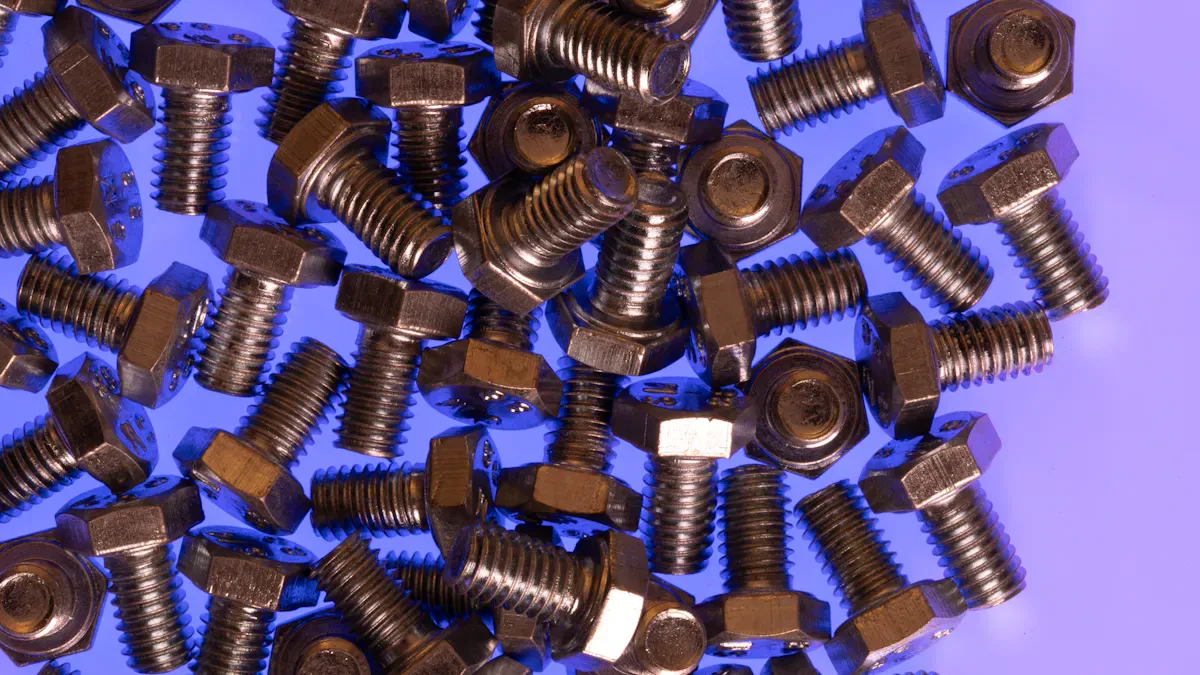

Выбор правильных анкерные болты is critical for safety in heavy-duty applications. Professionals select a specific anchor based on the base material and required load capacity.
- A Wedge Anchor provides maximum strength in solid concrete.
- A Sleeve Anchor offers excellent versatility for both concrete and masonry.
Для уникальных проектов производитель крепежных изделий на заказ может произвести специальные анкерные болты. The correct selection of Анкерные болты ensures a secure and lasting installation, matching the fastener to the job’s specific demands.
Top Expansion Bolts for Heavy-Duty Applications
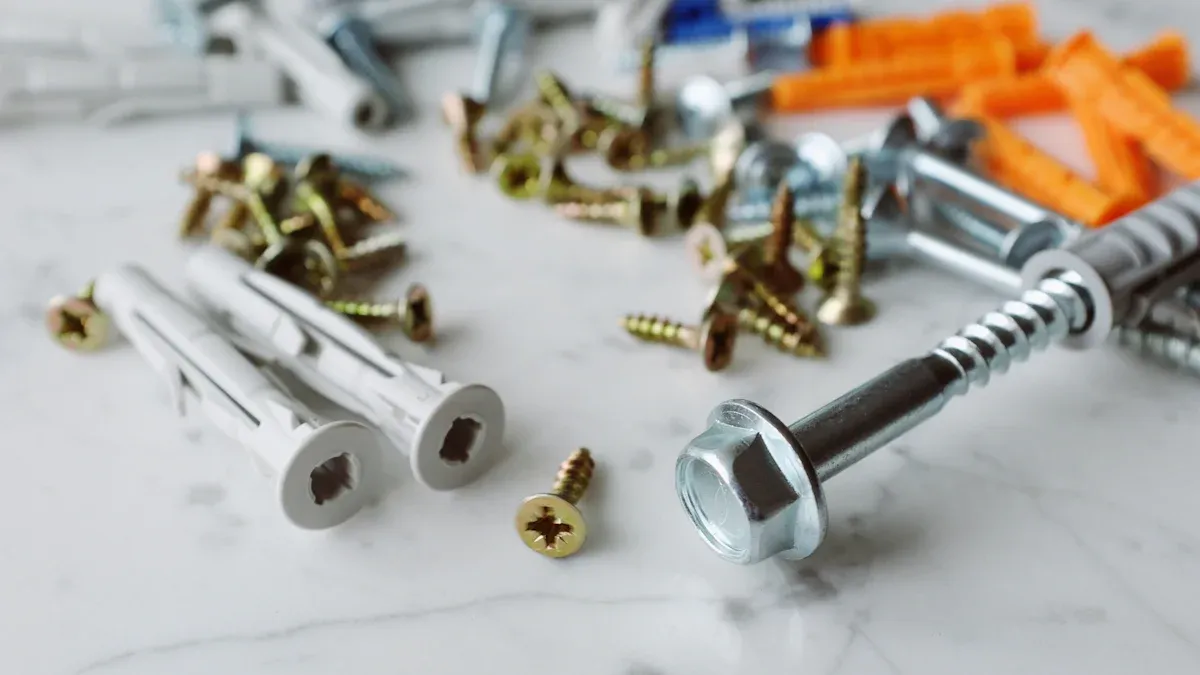
Selecting the best anchor bolts for a project requires understanding the primary types of anchor bolts and their specific strengths. Professionals evaluate each anchor based on its design, holding power, and suitability for the base material. This section explores the most common анкерные болты для тяжёлых условий эксплуатации.
Wedge Anchors: The Gold Standard for Concrete
What Are Wedge Anchors?
Wedge anchors are high-performance mechanical expansion anchors designed exclusively for solid concrete. They consist of a threaded stud, a nut, a washer, and an expansion clip. When a user tightens the nut, it pulls the stud upward, forcing the expansion clip to wedge tightly against the walls of the pre-drilled hole. This action generates immense friction and holding power by compressing the concrete.
Key Features and Benefits
Клиновые анкеры are renowned for their exceptional tensile (pull-out) and shear (side-to-side) load capacities. Their simple, one-piece design makes installation straightforward and reliable. These concrete anchors are available in various materials, including zinc-plated carbon steel for indoor use, hot-dipped galvanized steel for moist environments, and stainless steel for maximum corrosion resistance. Many high-quality wedge anchors are tested to rigorous industry standards, such as ACI 355.2 и AC193, ensuring their performance and safety.
Требуемый диаметр твердосплавного сверла The holding power of a wedge anchor is directly related to its diameter and embedment depth. Deeper embedment and larger diameters provide significantly higher load values.
The following table illustrates the ultimate load capacities for carbon steel wedge anchors in 4000 PSI concrete, showing how strength increases with size and depth.
| Диаметр анкера (дюйм) | Embed. Depth (in.) | Tension (LB) in 4000 PSI | Shear (LB) in 4000 PSI |
|---|---|---|---|
| 1/4 | 1-1/8 | 1771 | 1813 |
| 3/8 | 1-1/2 | 3636 | 5121 |
| 1/2 | 2-1/4 | 6714 | 9377 |
| 5/8 | 3-3/4 | 8747 | 12928 |
| 3/4 | 3-1/4 | 11314 | 17050 |
| 1 | 4-1/2 | 18250 | 27605 |
| 1-1/4 | 5-1/2 | 22971 | 42690 |
Note: These are ultimate loads. A safety factor of 4:1 is recommended for calculating safe working loads.
Этот высококачественный крепеж превосходно подходит для ситуаций, где безопасность не подлежит обсуждению. Его поведение в сейсмических зонах делает его основным выбором для:
The superior strength of the wedge anchor makes it the top choice for securing heavy loads to solid concrete. Common applications include:
- Attaching structural steel columns and beams.
- Anchoring heavy machinery and industrial equipment.
- Securing racking systems in warehouses.
- Fastening guardrails, handrails, and support ledgers.
Limitations and When to Avoid
A wedge anchor is not suitable for all materials. Its powerful expansion mechanism can crack or break weaker base materials.
- Avoid using in brick, block (CMU), or other masonry. The expansion force is too concentrated and will likely cause the material to fail.
- Not for shallow concrete. A wedge anchor requires a minimum embedment depth to achieve its rated load capacity.
- Not removable. Once set, a wedge anchor cannot be removed without damaging the concrete.
Sleeve Anchors: The Best Masonry Anchors for Versatility
What Are Sleeve Anchors?
Sleeve anchors are versatile expansion anchors suitable for a wide range of base materials, including concrete, brick, and concrete block. A sleeve anchor consists of a threaded bolt, a nut, a washer, and a full-length expandable sleeve. As the user tightens the bolt, it draws a cone-shaped expander into the sleeve, causing the sleeve to flare out and press against the interior of the drilled hole. This mechanism distributes the load over a larger surface area compared to a wedge anchor.
Key Features and Benefits
The primary benefit of a sleeve anchor is its versatility. It is one of the best anchor bolts for projects involving multiple base materials. The sleeve’s expansion provides a secure grip in both solid and hollow materials without exerting the intense, focused pressure of a wedge anchor. This makes it ideal for more brittle materials like brick. Sleeve anchors are available in various head styles, including hex nut, flat head, and round head, to suit different finishing requirements.
Ideal Applications in Masonry
The sleeve anchor excels in medium-duty applications in masonry materials.
- Сплошной кирпич: The anchor expands gently, providing a secure hold without cracking the brick.
- Hollow Block (CMU): The sleeve can expand within the hollow cavity, offering reliable fastening for items like window frames, signage, and shelving brackets.
- Solid Concrete: It provides good holding power, though typically less than a wedge anchor of the same diameter.
Limitations and Performance in Concrete
While versatile, a sleeve anchor has lower ultimate load capacities than a wedge anchor in solid concrete. For true heavy-duty structural connections in concrete, a wedge anchor is the superior choice. In hollow block applications, a sleeve anchor is effective for medium loads, but for heavier loads, professionals may consider chemical anchors with screen tubes, which provide a stronger bond within the block’s cavity.
Drop-In Anchors: For Flush-Mounted Applications
What Are Drop-In Anchors?
A drop-in anchor is a female-threaded anchor designed for flush mounting in solid concrete. It consists of a short, cylindrical steel tube with an internal expander plug. After the user places the anchor in a pre-drilled hole, they use a special setting tool to drive the internal plug downward. This action forces the anchor’s sides to expand and lock it into the concrete. The internal threads then accept a standard machine bolt or threaded rod.
Key Features and Benefits
The key advantage of a drop-in anchor is its flush-mount design. Once set, nothing protrudes from the concrete surface, allowing for easy removal of the fixture and a clean finish. This makes it ideal for applications where machinery or equipment may need to be moved later. The anchor remains permanently in the concrete, ready for re-use. Many drop-in anchors, such as the 3/8″ Mini Dropin™, carry FM Global и UL approvals, certifying them for overhead use in fire sprinkler and electrical systems.
Этот высококачественный крепеж превосходно подходит для ситуаций, где безопасность не подлежит обсуждению. Его поведение в сейсмических зонах делает его основным выбором для:
Drop-in anchors are excellent for medium-to-heavy-duty overhead applications.
- Suspending pipe hangers for plumbing, HVAC, and fire sprinkler systems.
- Hanging cable trays and electrical conduits from concrete ceilings.
- Anchoring machinery that requires a flush surface when removed.
Installation Nuances and Tooling
Proper installation of a drop-in anchor is critical and requires a specific tool.
- Drill a hole to the specified depth.
- Вставьте анкерный болт до тех пор, пока шайба и гайка не будут плотно прилегать к креплению.
- Insert the anchor, threaded-end-up, until it is flush with the surface.
- Insert the correct setting tool and strike it firmly with a hammer until the tool’s shoulder meets the top of the anchor. This ensures the anchor is fully set.
⚠️ Предупреждение: Failure to use the proper setting tool can result in an improperly set anchor, leading to significantly reduced holding power and potential failure.
Strike Anchors: Fast and Simple Installation
What Are Strike Anchors?
A strike anchor is a pre-assembled mechanical anchor designed for rapid installation in solid concrete. Its design includes a cylindrical steel body, a nut and washer, and an internal expansion pin at the bottom. The user installs the anchor by drilling a hole, inserting the anchor, and driving the internal pin flush with a hammer. This action forces the anchor body to expand, creating a secure, friction-based hold against the concrete.
Key Features and Benefits
The primary advantage of strike anchors is their installation speed. In a time-trial study, strike anchors demonstrate a significantly faster installation speed compared to wedge anchors. Data from construction projects indicates that strike anchors can reduce installation duration by approximately 25-40% relative to traditional methods. This efficiency comes from the anchor having fewer installation steps. Conversely, wedge anchors’ setting process can be more time-consuming. Once set, the pin sits flush, making the anchor tamper-resistant.
Требуемый диаметр твердосплавного сверла The tamper-resistant nature of a set strike anchor makes it a good choice for securing fixtures in public spaces where preventing unauthorized removal is a priority.
Этот высококачественный крепеж превосходно подходит для ситуаций, где безопасность не подлежит обсуждению. Его поведение в сейсмических зонах делает его основным выбором для:
The speed of strike anchors makes them ideal for projects with many fastening points, where reducing labor time is critical. They perform best in static load situations in solid concrete. Common heavy-duty applications include:
- Fastening wood sill plates to concrete foundations.
- Securing electrical junction boxes and conduit straps.
- Anchoring support brackets for shelving and fixtures.
Performance Considerations
While fast and effective, strike anchors have specific performance limitations that professionals must consider. Their design is not suitable for all conditions or load types. These expansion bolts are best used for static loads where vibration is not a factor.
- Strike anchors are generally not recommended for overhead installations due to the risk of loosening under vibration.
- This anchor may be less effective in cracked concrete or under dynamic loads.
- While strike anchors offer high short-term load capacity in solid concrete, chemical anchors can achieve higher long-term capacities in cracked concrete or under dynamic loads.
Ultimately, their simple installation makes them a valuable option, but users must match them to the correct application to ensure safety and long-term performance.
How to Select the Right Heavy-Duty Expansion Bolts
Choosing the best anchor bolts involves more than just picking a size. A professional evaluates the load, the base material, and the environment to ensure a safe and durable connection. This systematic approach guarantees the selected anchor performs as expected.
Assess Your Load Capacity Requirements
Понимание растягивающих и сдвиговых нагрузок
Every anchor must resist two primary forces. Tensile load is the pull-out force trying to extract the anchor from the wall. Shear load is the side-to-side force acting perpendicular to the anchor. Many applications involve a combination of both. Professionals use a standard interaction formula to ensure the combined forces do not exceed the anchor’s capabilities.
- Ts и Ss are the actual tensile and shear loads applied.
- Ta и Sa are the permissible tensile and shear loads for the anchor.
How to Read Manufacturer Load Charts
Manufacturers provide charts detailing the ultimate load capacity of their products. These charts specify the maximum force an anchor can withstand before failure in a specific base material. Users must consult these charts to match an anchor’s strength to the project’s demands.
Factoring in Safety Margins
Engineers never design to an anchor’s ultimate load. They apply a safety factor to determine a safe working load. A common safety factor is 4:1, meaning the safe load is 25% of the ultimate capacity. The American Concrete Institute (ACI) provides detailed guidance on strength reduction factors, ensuring professionals account for installation variables and material conditions.
Match the Bolt to Your Base Material
Крепление в монолитном бетоне
Solid concrete provides the highest holding power for concrete anchors. The compressive strength of the concrete directly impacts performance. Studies show a clear correlation between higher concrete strength and the force required to pull out an anchor, meaning a stronger base material allows for a stronger connection.
Крепление в бетонных блоках (CMU)
Бетонный блок менее прочен и часто имеет пустоты. Для этого материала лучше выбрать гильзовые анкеры, чем клиновые, клиновые анкеры поскольку они распределяют усилие расширения на большую площадь, снижая риск разрушения блока.
Крепление в кирпиче и других каменных материалах
Кирпич хрупкий и может легко треснуть под высоким сосредоточенным давлением клинового анкера. Гильзовые анкеры также идеально подходят здесь, так как их плавное расширение по всей длине обеспечивает надежную фиксацию без повреждения основного материала.
Особые соображения для треснувшего бетона
В бетоне под напряжением могут возникать микротрещины, которые могут значительно снизить удерживающую способность стандартных распорных болтов. В таких ситуациях монтажники должны использовать анкеры, специально рассчитанные на применение в треснувшем бетоне.
- Клиновые анкеры: Некоторые клиновые анкеры разработаны так, чтобы сохранять свою удерживающую способность даже при образовании трещины.
- Бетонные шурупы: Анкеры, такие как JC2-ST, используют специальную геометрию резьбы для обеспечения надежной фиксации в треснувших основаниях.
Учет факторов окружающей среды
Использование внутри и снаружи помещений
Материал и покрытие анкера должны соответствовать условиям эксплуатации, чтобы предотвратить коррозию и отказ.
Оцинкованная сталь для сухих сред
Оцинкованная сталь является стандартом для сухих помещений. Она обеспечивает базовую защиту от ржавчины, но быстро корродирует при воздействии влаги.
Горячее цинкование для влажных сред
Для наружного использования или во влажных местах анкеры с горячим цинкованием обеспечивают гораздо более толстое защитное покрытие. Это покрытие значительно продлевает срок службы анкера в коррозионных условиях..
| Тип покрытия | Срок службы в прибрежной/соленой атмосфере |
|---|---|
| Оцинкованная сталь | Несколько месяцев |
| Горячее цинкование | 5-15 лет |
Нержавеющая сталь для максимальной коррозионной стойкости
Для самых суровых условий нержавеющая сталь является лучшим выбором. Нержавеющая сталь марки 316 рекомендуется для применения в морской, прибрежной среде и на химических заводах. Она содержит молибден — элемент, обеспечивающий превосходную стойкость к коррозии от морской воды и промышленных химикатов, что делает ее более выгодным долгосрочным вложением для этих требовательных условий..
Выбор диаметра и длины
Правильный подбор размеров распорного болта так же важен, как и выбор правильного типа. Профессионалы определяют правильный диаметр и длину, анализируя крепежную деталь, основной материал и спецификации производителя, чтобы гарантировать надежный и соответствующий нормам монтаж.
Определение диаметра болта
Диаметр анкера часто определяется требованиями закрепляемого объекта. Толщина закрепляемого материала может влиять на выбор диаметра анкера. Инженеры указывают определенный размер болта в своих планах, или монтажные отверстия на оборудовании диктуют требуемый диаметр. Необходимая для применения нагрузочная способность также играет значительную роль, так как большие диаметры обеспечивают большую удерживающую силу.
Требуемый диаметр твердосплавного сверла При установке анкера через крепежную деталь отверстие в детали должно быть больше номинального диаметра анкера. Например, для клинового анкера 1/2 дюйма требуется отверстие 5/8 дюйма в крепежной детали, а для анкера 1/4 дюйма нужно отверстие 5/16 дюйма. Этот зазор позволяет анкеру свободно проходить.
Расчет требуемой длины болта
Расчет правильной длины болта предотвращает неудачную установку. Минимально необходимая длина представляет собой сумму нескольких ключевых размеров. Монтажники должны учитывать толщину крепежной детали, требуемую глубину заделки в основной материал, а также высоту гайки и шайбы.
Простая формула помогает определить необходимую длину:
Толщина детали + Минимальная глубина заделки + Высота гайки и шайбы = Минимальная длина болта
Производители часто указывают минимальную и максимальную глубину заделки (ls,min и ls,max). Это создает диапазон для требуемой длины болта.
- Минимальная длина болта =
tfix(толщина детали) +ls,min - Максимальная длина болта =
tfix(толщина детали) +ls,max
Выбор болта в пределах этого расчетного диапазона гарантирует, что он достаточно длинный для достижения правильной заделки, не будучи излишне длинным.
Понимание минимальной глубины заделки
Минимальная глубина заделки — это наименьшая глубина, на которую анкер может быть установлен в основной материал для достижения заявленных значений нагрузки. Эта спецификация является одним из наиболее критических факторов для безопасной установки. Производители тщательно тестируют свои анкеры, чтобы определить это значение.
⚠️ Предупреждение: Никогда не устанавливайте анкер на глубину меньше указанной минимальной заделки. Недостаточная глубина заделки резко снижает растягивающую и сдвиговую способность анкера, создавая значительный риск вырывания под нагрузкой.
Например, минимальная длина клинового анкера (MLWA) находится по формуле: FT + ME + NW = MLWA.. Здесь FT — толщина детали, ME — минимальная глубина заделки, а NW — высота гайки и шайбы. Соблюдение этой глубины необходимо для того, чтобы анкер функционировал, как задумано.
Дополнительные соображения для профессионального применения
Профессионалам в требовательных областях необходимо выходить за рамки базовых спецификаций. Выбор лучших анкерных болтов для критически важных тяжелых условий эксплуатации требует понимания специфических характеристик продукции, сейсмических норм и альтернативных анкерных технологий.
Рекомендации по продуктам высшего класса
Hilti Kwik Bolt TZ2 для сейсмических нагрузок
The Hilti Kwik Bolt TZ2 is a premier expansion anchor renowned for its outstanding performance in seismic conditions. Engineers specify this anchor for its reliability in cracked concrete and its compliance with the most stringent building codes.
Simpson Strong-Tie Strong-Bolt 2
The Simpson Strong-Tie Strong-Bolt 2 is a high-performance wedge anchor trusted for its consistent strength and ease of installation. It is a go-to choice for structural connections, offering extensive testing and code approvals.
High-Strength Grade 12.9 Bolts
For ultimate tensile strength, professionals often turn to Grade 12.9 threaded rods used with chemical anchors. This combination creates a powerful bond that can exceed the strength of many mechanical concrete anchors.
Understanding Seismic and Dynamic Loads
What Are Seismic Ratings?
A seismic rating indicates an anchor has been tested to perform reliably under the dynamic forces of an earthquake. Building codes like the International Building Code (IBC) reference ACI 318 standards, which require anchors in Seismic Design Categories C, D, E, or F to be qualified for use in cracked concrete. This ensures the anchor maintains its load capacity even if the base material is compromised.
When Are Seismic-Rated Anchors Required?
Building codes mandate the use of a seismic-rated anchor in regions prone to earthquakes. The IBC provides specific provisions for these situations.
- IBC Chapter 19 outlines design requirements for anchors in concrete.
- It allows exceptions for wall out-of-plane forces if the anchor’s design strength meets specific ASCE/SEI 7 equations.
- It also provides exceptions for shear loads on anchor bolts securing wood sill plates or steel tracks, provided they meet strict diameter, embedment, and edge distance rules.
Expansion Bolts vs. Other Heavy-Duty Anchors
Comparison with Adhesive (Epoxy) Anchors
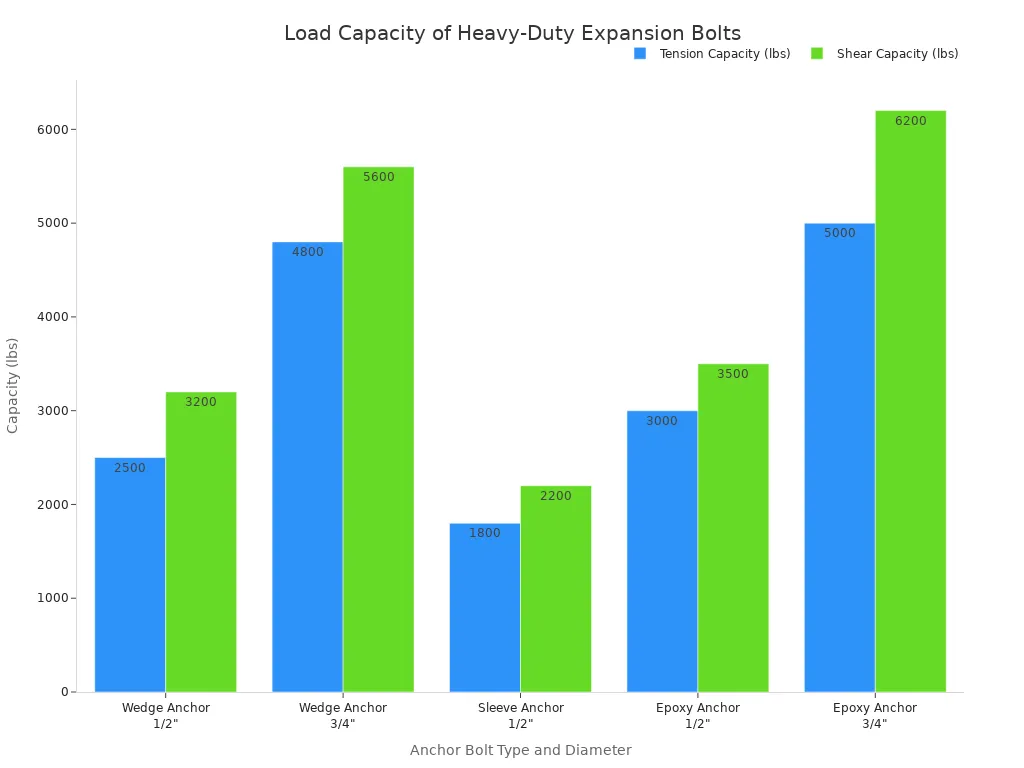
Expansion bolts create a frictional hold, whereas chemical anchors (epoxy) form a bond with the concrete. This gives epoxy systems a higher tensile strength, making them superior for tension-zone applications.
Adhesives offer different cure times. Fast-cure types increase job site efficiency, while slow-cure options allow more working time for deep holes or large-diameter bars.
Comparison with Concrete Screws
Concrete screw anchors offer a distinct advantage in speed and removability. Unlike expansion anchors, they cut their own threads into the concrete, providing a secure hold without expansion forces. This makes screw anchors a versatile option for temporary or permanent installations where minimal stress on the base material is desired. The choice between expansion bolts and these alternatives depends entirely on the specific load and application requirements.
Step-by-Step Installation Guide for a Secure Anchor
A successful installation is the foundation of an anchor’s performance. Professionals follow a precise procedure to guarantee safety and reliability. This guide details the essential steps on how to install anchor bolts correctly.
Step 1: Drill the Hole Correctly
Selecting the Right Carbide Drill Bit
Installers must use a carbide-tipped drill bit that meets ANSI standards. The bit’s diameter must match the specified diameter for the anchor. A bit that is too large creates a loose hole, preventing the anchor from gripping properly. A bit that is too small will not allow the anchor to be inserted.
Drilling to the Proper Depth
The hole must be drilled to the depth specified by the manufacturer. This depth ensures the anchor achieves its required minimum embedment. Professionals often wrap tape around the drill bit or use a rotary hammer with a depth gauge to mark the correct depth, preventing an overly shallow or deep hole.
Ensuring a Perpendicular Hole
The installer drills the hole as straight and perpendicular to the surface as possible. An angled hole can cause uneven load distribution on the anchor. This misalignment compromises the anchor’s shear and tensile capacity, creating a potential point of failure.
Step 2: Thoroughly Clean the Hole
Why Cleaning is Critical for Grip
Concrete dust and debris left in the hole act as a barrier. This debris prevents the expansion mechanism from making full contact with the base material. Inadequate cleaning significantly reduces the anchor’s frictional grip and overall holding power.
Использование проволочной щетки и сжатого воздуха
The most effective cleaning method involves specific tools. A stiff wire brush scrubs the interior walls of the hole to loosen fine particles. High-pressure compressed air then blows the dislodged debris out of the hole.
The “Brush-Blow-Brush-Blow” Method
Professionals rely on a proven sequence to ensure a completely clean hole. This repetition is critical for maximum performance.
- Чистка щеткой: Insert the wire brush and scrub the hole thoroughly.
- Продувка: Use compressed air to blow all debris out.
- Чистка щеткой: Repeat the scrubbing action to dislodge any remaining dust.
- Продувка: Blow the hole clean one final time.
Step 3: Insert and Set the Anchor
Tapping the Anchor into Place
The installer places the anchor into the clean hole. It should be a snug fit. A hammer is used to gently tap the anchor until the nut and washer are flush against the surface or the anchor reaches the required depth.
Using a Setting Tool for Drop-In Anchors
Drop-in anchors require a special setting tool. After inserting the anchor, the installer places the tool into the anchor body and strikes it with a hammer. This action drives the internal plug down, expanding the anchor body correctly.
Confirming Proper Seating
Proper seating is essential for a secure fastening. For a drop-in anchor, the shoulder of the setting tool will meet the top of the anchor when it is fully set. For a wedge anchor, tightening the nut to the specified torque value confirms that the anchor is properly seated and engaged with the concrete.
Step 4: Tighten to the Recommended Torque
The final step in the installation process is applying the correct amount of rotational force, or torque. This action is what sets the expansion mechanism and creates the anchor’s holding power. Proper torque application is not a suggestion; it is a critical requirement for a safe and secure fastening. Professionals understand that this step transforms a loose piece of metal into a reliable structural component.
Why Torque Specification Matters
Torque specification is the manufacturer’s instruction for achieving the optimal expansion force. Each anchor size and type has a specific torque value, measured in foot-pounds (ft./lbs.), required to function correctly. Applying this precise force ensures the expansion clip or sleeve presses against the concrete with enough pressure to create the necessary friction. For example, a manufacturer may specify that a 5/8-inch wedge anchor requires a torque value between 75 and 90 ft./lbs. This is typically achieved by turning the nut 3 to 4 times after it is snug. Following this guidance is essential for the anchor to meet its published load capacities.
Использование калиброванного динамометрического ключа
Guesswork has no place in heavy-duty installations. Professionals must use a calibrated torque wrench to tighten the nut. This specialized tool allows the installer to set the exact torque value required by the manufacturer. As the installer tightens the nut, the wrench will click or signal when the preset torque is reached, preventing both under-tightening and over-tightening. Using a standard wrench makes it impossible to know if the correct force has been applied, introducing significant risk into the installation. A torque wrench is the only tool that guarantees precision.
The Risk of Over-Torquing
Applying too much torque is just as dangerous as applying too little. Over-torquing an expansion anchor can lead to immediate or long-term failure. The excessive force can stretch and weaken the bolt, potentially causing it to snap. It can also create extreme stress within the concrete, leading to spalling, cracking, or complete failure of the base material around the anchor. This damage permanently compromises the connection point.
⚠️ Предупреждение: Over-tightening a wedge anchor can cause the concrete to develop a cone-shaped fracture below the surface. This type of failure drastically reduces holding power and is often invisible from the outside, creating a hidden and severe safety hazard.
Common Mistakes to Avoid with Expansion Bolts
An expansion bolt’s performance depends heavily on correct installation. Even the highest quality anchor will fail if the installer makes critical errors. Professionals avoid common mistakes to ensure every connection is secure and reliable. Understanding these pitfalls is the first step toward guaranteeing a safe, long-lasting installation.
Using the Wrong Drill Bit Size
The relationship between the drill bit and the anchor is precise. Using the wrong size bit is one of the most frequent and critical installation errors. It directly compromises the anchor’s ability to function as designed.
Effects of a Hole That Is Too Large
An oversized hole prevents the anchor’s expansion mechanism from making firm contact with the concrete. The anchor will feel loose and may spin in the hole during tightening. This lack of friction means the anchor cannot achieve its required holding power. The connection will be weak and unreliable, posing a significant safety risk.
Effects of a Hole That Is Too Small
An undersized hole makes installation difficult or impossible. An installer might try to force the anchor into the hole, which can damage the anchor’s threads or expansion clip. If the anchor does go in, it will be so tight that the expansion mechanism cannot set correctly when torqued, resulting in a poor connection.
Недостаточная очистка отверстия
A clean hole is non-negotiable for a secure installation. Concrete dust and debris left inside the hole create a barrier between the anchor and the base material, leading to a weak bond.
Как мусор снижает удерживающую способность
Dust and debris inside the hole can prevent the anchor from expanding correctly, dramatically weakening the hold. This fine powder acts like a lubricant, reducing the friction necessary for a strong grip. The expansion sleeve or clip will press against the loose debris instead of the solid concrete, severely diminishing the anchor’s load capacity.
Риск вырывания анкера
Наиболее серьезным последствием загрязненного отверстия является вырывание анкера. Сниженное трение может привести к опасному явлению, известному как “проскальзывание в неочищенных отверстиях.”. Под нагрузкой анкер может просто выскользнуть из отверстия, поскольку он так и не достиг надлежащего сцепления. Такой тип отказа происходит внезапно и может иметь катастрофические последствия, особенно при потолочном монтаже или в критически важных конструкциях.
Неправильная глубина заделки
Глубина заделки — это расстояние, на которое анкер устанавливается в основной материал. Производители указывают минимальную требуемую глубину заделки для достижения заявленных нагрузочных характеристик. Отклонение от этой спецификации является серьезной ошибкой.
Опасности недостаточной глубины заделки
Установка анкера на глубину меньше указанного минимума чрезвычайно опасна. Недостаточная глубина заделки не обеспечивает необходимого объема материала для сцепления анкера. Это резко снижает его сопротивление вырыванию и делает его склонным к образованию конусообразного разрушения в бетоне при нагрузке, значительно меньшей расчетной.
Проблемы с избыточной глубиной заделки
Хотя и менее распространено, сверление слишком глубокого отверстия также может вызвать проблемы. Если анкер установлен слишком глубоко, верхняя часть болта может оказаться ниже поверхности бетона. Это может сделать невозможным правильное крепление детали, гайки и шайбы, что сделает установку бесполезной. Крайне важно следовать рекомендациям производителя как по минимальной, так и по максимальной глубине заделки.
Неправильная затяжка и крутящий момент
Применение правильного крутящего момента — это завершающий, критически важный этап, который активирует анкер. Как чрезмерная, так и недостаточная сила могут привести к катастрофическому отказу. Профессионалы знают, что точность на этом этапе не является опцией; это фундаментальное требование для безопасного и надежного соединения.
Опасности чрезмерной затяжки анкера
Чрезмерная затяжка распорного болта — распространенная, но опасная ошибка. Монтажник, прикладывающий избыточное усилие, может вызвать несколько типов отказов. Крайняя вращательная сила может растянуть сталь болта за предел ее текучести, необратимо ослабив его или вызвав его разрыв. Это повреждение может произойти сразу во время установки или привести к отсроченному отказу под нагрузкой.
Основной материал также подвергается риску. Огромное давление от перераскрытого механизма создает точки концентрации напряжений внутри бетона. Это может вызвать скол или растрескивание поверхности вокруг точки установки. В наиболее тяжелых случаях это приводит к скрытому режиму разрушения.
⚠️ Конусное разрушение бетона: Чрезмерная затяжка может разрушить бетон под поверхностью, создав конусообразный вырыв. Теперь анкер держится за отколотый кусок бетона, а не за цельное основание. Это резко снижает его удерживающую способность и создает серьезную, невидимую угрозу безопасности.
Проблемы, вызванные недостаточной затяжкой
Недостаточная затяжка не менее проблематична, хотя и создает иной тип отказа. Монтажник, прикладывающий недостаточный крутящий момент, не может правильно установить распорный механизм. Клипса или гильза анкера не раскрывается достаточно, чтобы создать необходимое трение о стенки отверстия. Соединение будет казаться слабым и не достигнет своей заявленной несущей способности.
Эта ошибка приводит к нескольким критическим проблемам:
- Сниженная удерживающая способность: Анкер не может выдерживать заявленные нагрузки на растяжение и срез.
- Ослабление от вибрации: Соединение крайне подвержено ослаблению под действием динамических нагрузок или вибраций от оборудования.
- Проскальзывание анкера: Под значительной нагрузкой весь анкер может проскальзывать внутри отверстия, что приводит к полному вырыванию.
Недостаточно затянутое соединение создает ложное чувство безопасности. Оно может казаться стабильным изначально, но является слабым местом в конструкции, которое откажет при приложении реальной нагрузки. Использование калиброванного динамометрического ключа — единственный способ гарантировать приложение точного требуемого усилия.
Профессионалы признают Клиновые анкеры и гильзовые анкеры лучшим выбором для тяжелых проектов. Успешный результат зависит от нескольких ключевых принципов.
- Монтажники достигают надежного крепления, подбирая анкер под конкретный основной материал.
- Они должны оценить требования проекта к несущей способности, чтобы выбрать правильный крепеж.
- Следование рекомендациям производителя по сверлению, очистке и крутящему моменту необходимо для безопасности и производительности.
Частые вопросы
В чем основное различие между клиновым анкером и втулочным анкером?
Клиновые анкеры обеспечивают максимальную прочность исключительно в цельном бетоне. Гильзовые анкеры демонстрируют универсальные характеристики в бетоне, кирпиче и блоках. Профессионалы выбирают анкер на основе основного материала и требований к нагрузке.
Можно ли повторно использовать распорный болт?
Нет, большинство распорных болтов предназначены для постоянной установки. Попытка удалить его обычно повреждает как сам анкер, так и бетон. Анкеры типа Drop-in позволяют снимать крепежную деталь, но сам корпус анкера остается зафиксированным в бетоне.
Почему так важно очищать просверленное отверстие?
Бетонная пыль препятствует полному контакту анкера с основным материалом. Этот мусор снижает трение, необходимое для надежного сцепления. Чистое отверстие необходимо для достижения полной удерживающей способности анкера и предотвращения его вырывания.
Что произойдет, если не использовать динамометрический ключ?
Без динамометрического ключа монтажник не может приложить правильное усилие затяжки. Недостаточная затяжка приводит к слабому соединению. Чрезмерная затяжка может сломать анкер или бетон. Обе ошибки создают значительную угрозу безопасности.
Какой анкерный болт лучше всего подходит для кирпича?
Гильзовые анкеры являются идеальным выбором для кирпича и других каменных материалов. Их расширительный механизм равномерно распределяет давление по длине анкера. Такая конструкция предотвращает растрескивание хрупкого кирпича во время установки.
На каком минимальном расстоянии от края бетона можно устанавливать анкер?
Монтажники должны соблюдать минимальное расстояние до края, указанное производителем. Установка анкера слишком близко к краю или другому анкеру может привести к разрушению бетона под нагрузкой и выходу соединения из строя.
Требуется ли специальное сверло для установки?
Да, профессионалы используют твердосплавное сверло, соответствующее стандарту ANSI. Диаметр сверла должен точно соответствовать указанному размеру отверстия для анкера. Использование правильного сверла критически важно для обеспечения точной посадки и надежного крепления.