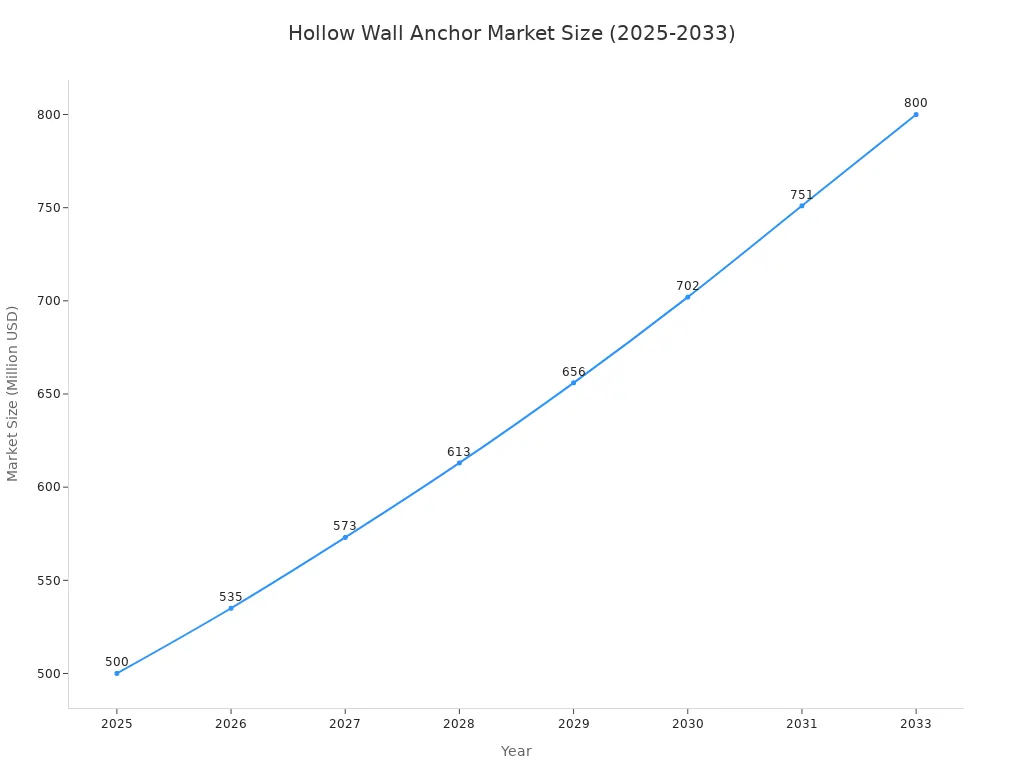
The market for reliable анкеров для полых стен is growing, increasing the demand for quality drywall anchors in home projects.
The E-Z Ancor Twist-N-Lock 75 is a leading solution for most tasks. These self-drilling drywall anchors reliably support up to 75 pounds. Heavier tasks demand robust heavy-duty toggle bolts like the TOGGLER SNAPTOGGLE, which holds up to 265 pounds.
Требуемый диаметр твердосплавного сверла While these top-rated drywall anchors cover most needs, complex structural jobs may require specialized Анкерные болты or even специальные анкерные болты sourced from a производитель крепежных изделий на заказ.
Top 5 Rated Hollow Wall Anchors for Your Home
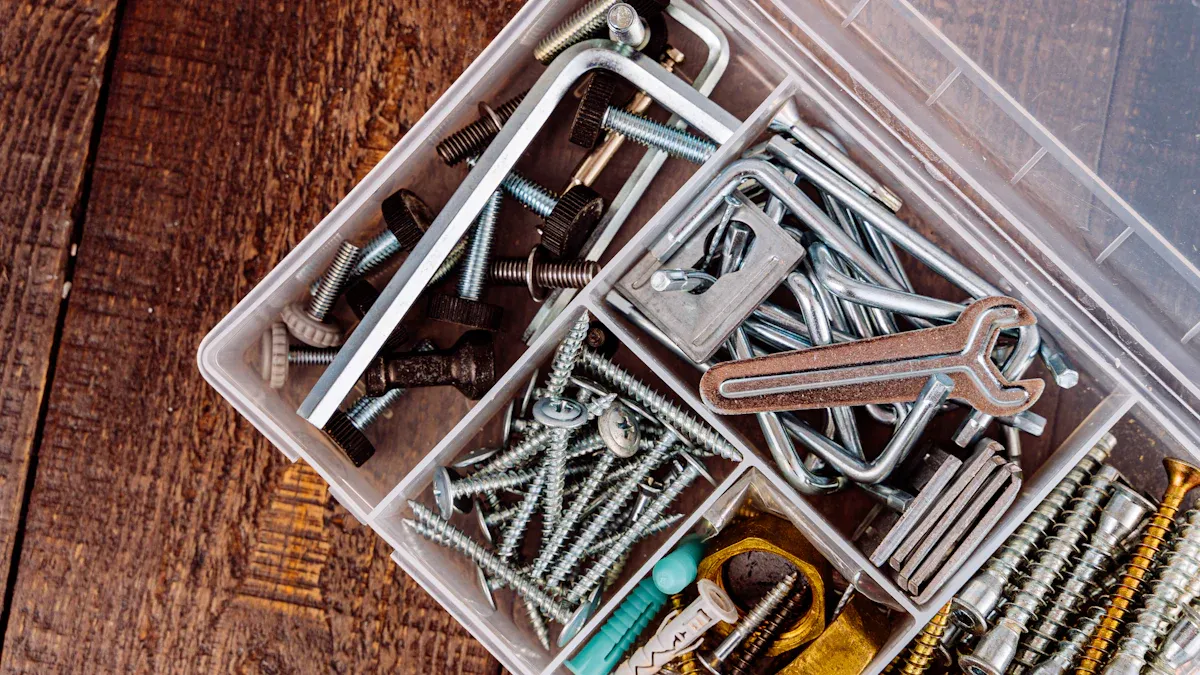
Selecting the right anchor is the most critical step for a secure installation. This guide breaks down the top-rated options, detailing their specific strengths and ideal applications to help you make an informed choice.
Best Overall: E-Z Ancor Twist-N-Lock 75
The E-Z Ancor Twist-N-Lock 75 earns its spot as the best overall choice due to its excellent balance of strength, reliability, and user-friendliness. It is one of the best drywall anchors for a wide range of common household projects.
Ideal Use Cases
These anchors are perfect for medium-weight applications where you need a secure hold without complex installation.
- Medium to large picture frames and artwork
- Small decorative shelves
- Light curtain rods and window treatments
- Bathroom hardware like hand towel holders
Key Features and Benefits
The primary benefit is its self-drilling design. The sharp tip cuts cleanly through drywall, eliminating the need for a separate drill bit in most cases. These zinc self-drilling drywall anchors provide a much stronger hold than traditional plastic anchors. The deep threads grip the gypsum securely, preventing the anchor from pulling out under load.
Weight Capacity Details
The “75” in its name denotes its holding power.
Holding Power: Each anchor supports up to 75 pounds in 1/2-inch thick drywall. This rating typically refers to shear strength (the force pulling downward, parallel to the wall).
Installation Quick Guide
- Mark the Location: Use a pencil to mark the precise spot on the wall.
- Drive the Anchor: Place the tip of the anchor on the mark. Using a #2 Phillips screwdriver, apply firm pressure and turn clockwise. The anchor will drill its own hole and drive flush with the wall.
- Insert the Screw: Place your item over the anchor and drive the provided screw into the anchor until it is snug.
Best for Heavy Duty: TOGGLER SNAPTOGGLE BB Toggle Anchor
When a project involves significant weight, standard drywall anchors are not sufficient. The TOGGLER SNAPTOGGLE is the professional-grade solution for maximum holding power in hollow walls.
Ideal Use Cases
These heavy-duty toggle bolts are the go-to solution for securing heavy and high-value items.
- Flat-screen TV wall mounts
- Heavy mirrors and cabinets
- Floating shelves intended for books or kitchenware
- Safety grab bars and handrails
Key Features and Benefits
The SNAPTOGGLE uses a high-strength metal channel that flips into position behind the drywall, distributing the load over a wide area. This design provides exceptional tensile and shear strength. Professional reviews frequently recommend metal toggle bolt anchors for hollow walls when maximum strength is essential, as they outperform plastic alternatives. These heavy-duty drywall anchors provide peace of mind for critical applications.
Weight Capacity Details
The SNAPTOGGLE offers industry-leading strength for hollow wall anchors.
| Wall Material | Tensile Strength (Pull) | Shear Strength (Down) |
|---|---|---|
| 1/2″ Drywall | 265 lbs | 356 lbs |
| 5/8″ Drywall | 356 lbs | 504 lbs |
Installation Quick Guide
Proper installation of heavy-duty toggle bolts is critical for safety.
- Сверление отверстия: Drill a 1/2-inch hole at your marked location.
- Insert the Toggle: Holding the metal channel flat against the plastic straps, insert it through the hole.
- Фиксация анкера: Pull the plastic straps toward you until the metal channel rests flush against the back of the drywall. Slide the plastic cap down the straps until it is flush with the wall face.
- Snap and Mount: Snap the straps off level with the flange of the cap. Your item can now be mounted with the included machine bolt.
Best for Quick Installation: Hillman Group Ribbed Plastic Anchor
For lightweight tasks where speed and simplicity are the priority, the classic ribbed plastic anchor is a reliable and economical choice. They are often included in the best anchor kits for general home use.
Ideal Use Cases
These drywall anchors are designed exclusively for very light objects. Using them for anything heavy is a common and dangerous mistake.
- Small, lightweight picture frames
- Wall clocks under 5 pounds
- Holiday string lights and other temporary decor
- Smoke detectors and carbon monoxide alarms
Key Features and Benefits
The key feature is simplicity. A small pilot hole is drilled, the anchor is tapped into place, and a screw is inserted. The ribs on the anchor’s body expand as the screw is driven, which prevents the anchor from spinning in the hole. This makes them faster to install than any other type of anchor.
Weight Capacity Details
Внимание: Weight ratings for these drywall anchors are very low. Always check the manufacturer’s packaging, but a general guideline is 10 to 25 pounds in 1/2-inch drywall under ideal conditions. Never use them for items that could cause injury if they fall.
Installation Quick Guide
- Drill a Pilot Hole: Select a drill bit that matches the diameter of the anchor (usually indicated on the packaging) and drill a hole.
- Установка анкера: Gently tap the plastic anchor with a hammer until its head is flush with the wall.
- Drive the Screw: Place your item over the hole and drive the appropriate size screw into the anchor. Stop when the screw feels snug to avoid stripping the plastic.
Best for Plaster Walls: Arrow Molly Bolt
Plaster and lath walls present a unique challenge because the material is more brittle than modern drywall. The Arrow Molly Bolt is a classic sleeve-type anchor specifically engineered to provide a secure hold in these less forgiving surfaces. Its design prevents the crumbling and cracking often caused by other types of drywall anchors.
Ideal Use Cases
Molly bolts are the superior choice for adding fixtures to older homes with plaster walls.
- Towel bars and toilet paper holders
- Medium-weight shelving units
- Heavy wall clocks or decorative mirrors
- Window curtain rod brackets
Key Features and Benefits
The Molly Bolt’s primary advantage comes from its metal expansion mechanism. Unlike plastic anchors that rely on friction, a Molly Bolt creates a mechanical lock behind the wall material. This provides a much more reliable grip in brittle plaster. The design difference is significant:
- Molly Bolts: Данные анкеров для полых стен feature a metal sleeve that compresses and expands, forming four “legs” that brace against the back of the wall. This distributes the load across a wide surface area for a powerful hold.
- Plastic Anchors: These anchors expand within the drilled hole. Their holding power depends entirely on friction, which is less effective in plaster that can easily crumble or widen.
Another key benefit is that the screw can be removed and reinserted multiple times without compromising the anchor’s integrity, making it ideal for items that may need to be taken down for cleaning or painting. This makes them one of the best drywall anchors for long-term installations.
Weight Capacity Details
A Molly Bolt’s capacity in plaster depends heavily on the wall’s condition. In solid 1/2-inch plaster, it can typically hold от 25 до 50 фунтов (≈11,3–22,7 кг). Always start with the smallest possible pilot hole to ensure a snug fit.
Installation Quick Guide
- Drill a Pilot Hole: Drill a hole just large enough for the Molly Bolt’s sleeve to fit through.
- Insert the Molly Bolt: Gently tap the anchor into the hole until its flange is flush with the wall.
- Expand the Sleeve: Turn the screw clockwise. This will draw the end of the sleeve toward the front, causing the sides to expand and grip the back of the wall. Stop when you feel strong resistance.
- Mount Your Item: Unscrew the bolt, position your item over the anchor, and re-drive the screw to secure it.
Best Value Pack: Qualihome Drywall Anchor Assortment Kit
For the prepared homeowner, having a variety of fasteners on hand is essential. The Qualihome Drywall Anchor Assortment Kit offers an economical and convenient solution for numerous light-duty hanging projects. These are often considered among the best anchor kits for general household readiness.
Ideal Use Cases
This kit is designed for the many small tasks that pop up around a home. It provides a range of small drywall anchors perfect for lightweight objects.
- Hanging small art or family photos
- Securing smoke alarms and thermostats
- Mounting power strips to the wall
- Organizing lightweight tools on a pegboard
What’s Included in the Kit
Assortment kits typically provide a well-organized collection of the most common light-duty fasteners. A standard kit includes:
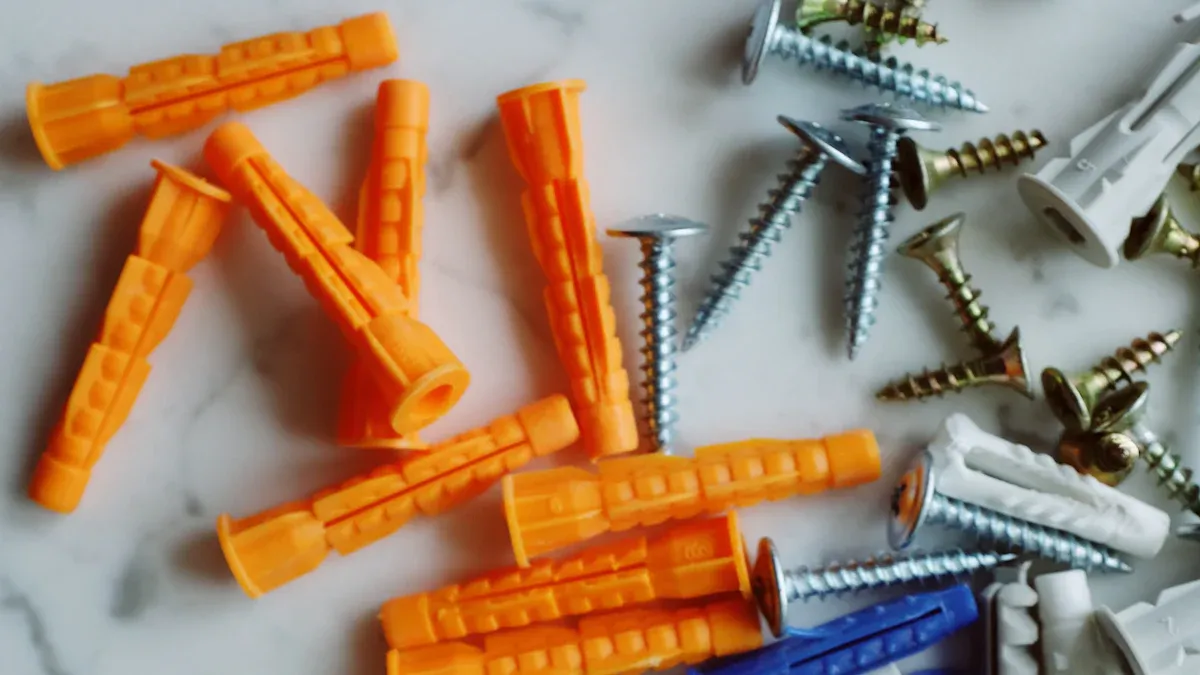
- Multiple sizes of ribbed plastic drywall anchors.
- A corresponding set of screws perfectly matched to each anchor size.
Benefits of an Assortment
The main benefit is convenience. An assortment eliminates last-minute trips to the hardware store for a single anchor. It also solves the common problem of mismatched screws and anchors, as the included screws are correctly sized for optimal holding power. Having a variety of sizes ensures you have the right drywall anchors for different minor projects.
General Weight Capacity Range
Важно: The drywall anchors in these kits are for light-duty use only. Their holding power generally ranges from 5 to 25 pounds. Never use them to hang valuable, heavy, or potentially hazardous items like mirrors or large shelves.
How to Choose the Right Hollow Wall Anchors
Selecting the correct hardware is more important than the installation itself. A mismatched anchor can lead to property damage or personal injury. This guide explains how to evaluate weight ratings, match an anchor to your wall material, and choose the right product for common projects. Understanding these factors ensures every item you hang remains secure.
Understanding Anchor Weight Ratings
Manufacturers provide weight ratings to guide users, but these numbers require context. The listed capacity represents the anchor’s performance under ideal laboratory conditions.
What is Shear Strength?
Shear strength measures an anchor’s ability to resist a downward force parallel to the wall surface. This is the most common force for hanging items like picture frames, mirrors, and clocks. The weight of the object pulls directly downward on the screw.
What is Tensile Strength?
Tensile strength measures an anchor’s ability to resist a force pulling straight out from the wall. This is critical for items like grab bars, handrails, or shelves that might be pulled on. The force attempts to extract the anchor from the drywall.
How Ratings Are Tested Manufacturers determine these ratings through a controlled process. Third-party tests confirm that most drywall anchors meet or exceed their stated claims. The typical test involves:
- Installing the anchor in standard 1/2-inch drywall.
- Hanging a tension scale from the anchor.
- Connecting the scale to a fixed point, often a 2×4 secured to wall studs.
- Slowly increasing tension with a turnbuckle.
- Recording the force at which the anchor fails.
Why You Should Never Max Out the Rating
The number on the package is the ultimate failure point, not a recommended daily load. For safe, real-world applications, professionals use a safety factor.
- A standard safety factor for static loads (items that do not move) is 4:1. This means an anchor rated for 80 pounds should only be used to hold a 20-pound object.
- For dynamic loads (items that may be pulled or moved) or in situations concerning public safety, a higher safety factor of 5:1 or more is appropriate.
This margin accounts for variables like installation errors, vibrations, and inconsistencies in drywall quality.
The Role of Drywall Thickness
Standard residential drywall is 1/2-inch thick. Most weight ratings for drywall anchors are based on this thickness. Thicker 5/8-inch drywall can often support more weight, while thinner 3/8-inch drywall will support significantly less. Always verify your wall’s thickness before selecting from the various types of drywall anchors.
Matching the Anchor to Your Wall Type
The material of your wall is just as important as the weight of the object you are hanging. Different materials require different types of drywall anchors.
Standard Drywall (Gypsum Board)
This is the most common wall material in modern homes. Its soft gypsum core is easy to drill but offers little holding power on its own. Self-drilling drywall anchors (like the E-Z Ancor) and toggle bolts (like the SNAPTOGGLE) are designed specifically for this material.
Plaster and Lath Walls
Found in older homes, plaster is much harder and more brittle than drywall. Using the wrong anchor can cause it to crack and crumble. Sleeve-type anchors, or Molly bolts, are the best choice here. They expand behind the plaster to create a mechanical lock without putting excessive pressure on the brittle material.
Double-Layer Drywall
Some walls, particularly those needing extra fire resistance or soundproofing, have two layers of drywall. This extra thickness can prevent some anchors, like shorter Molly bolts, from expanding properly. Heavy-duty toggle bolts are an excellent choice, as their long straps and robust mechanism work perfectly in thicker walls.
Hollow Core Doors
Hollow core doors are light and have a thin wood veneer over an empty or cardboard-filled interior. Standard screws will not hold. Hollow wall anchors, especially light-duty plastic expansion drywall anchors or small Molly bolts, are specifically designed for this application and provide a secure mounting point for hooks or small organizers.
Quick-Reference Project Table
Use this table to quickly match your project with a recommended anchor. Always double-check your item’s specific weight.
| Project | Typical Weight | Recommended Anchor |
|---|---|---|
| Large Mirror | 15-40 lbs | E-Z Ancor Twist-N-Lock |
| Floating Shelf | 30-60 lbs | TOGGLER SNAPTOGGLE |
| Flat Screen TV | 40-100+ lbs | TOGGLER SNAPTOGGLE |
| Towel Bar | 5-15 lbs | E-Z Ancor or Molly Bolt |
| Small Clock | Under 10 lbs | Hillman Ribbed Plastic Anchor |
Step-by-Step Installation Guides for Drywall Anchors
Proper installation is the key to unlocking the full strength of drywall anchors. Following the correct procedure prevents wall damage and ensures a secure hold. These guides detail the professional method for installing the most common types of drywall anchors.
How to Install a Self-Drilling Anchor (E-Z Ancor)
These self-drilling drywall anchors are popular for their speed and simplicity. They combine the drilling and anchoring steps into one motion.
Tools You Will Need
- Pencil
- Tape measure
- #2 Phillips screwdriver (manual or powered)
Step 1: Mark Your Spot
A user first measures and marks the precise hanging location on the wall with a pencil. Accuracy at this stage ensures the final object is positioned correctly.
Step 2: Drive the Anchor
The user places the sharp tip of the anchor on the pencil mark. They apply firm, steady pressure with a screwdriver, turning it clockwise. The anchor drills its own hole and threads itself into the wall until its head is flush with the drywall surface.
Step 3: Insert the Screw
Finally, the user positions the item over the installed anchor. They drive the provided screw through the item’s mounting hole and into the anchor until it feels snug. Over-tightening these self-drilling drywall anchors can strip their grip.
How to Install a Toggle Bolt Anchor (SNAPTOGGLE)
For heavy items, heavy-duty toggle bolts provide unmatched security. Their installation requires a larger hole but offers superior holding power.
Tools You Will Need
- Pencil
- Tape measure
- Power drill
- 1/2-inch drill bit
Шаг 1: Сверление отверстия
The user drills a 1/2-inch hole at the marked location. This hole must be large enough for the metal toggle channel to pass through.
Step 2: Insert the Toggle
The user holds the metal channel flat against the plastic straps and pushes it through the hole. The channel will spring open behind the drywall.
Step 3: Set the Anchor
The user pulls the plastic straps toward themself. This action seats the metal channel firmly against the back of the wall. They then slide the plastic cap down the straps until it is flush with the wall.
Step 4: Mount Your Item
The user snaps the straps off level with the cap. This leaves a threaded receptacle ready for the item. They then mount the object using the included machine bolt. These are some of the strongest drywall anchors available.
How to Install a Molly Bolt (Sleeve-Type Anchor)
Molly bolts are excellent expansion drywall anchors for plaster or drywall. They create a strong mechanical lock behind the wall surface.
Tools You Will Need
- Pencil
- Power drill and appropriate drill bit
- Молоток
- Screwdriver
Step 1: Drill a Pilot Hole
A user drills a pilot hole just large enough for the anchor’s sleeve to fit snugly. The packaging for the drywall anchors will specify the correct drill bit size.
Step 2: Insert the Molly Bolt
The user gently taps the anchor into the hole with a hammer. The sharp tips on the underside of the anchor’s flange grip the wall to prevent spinning.
Step 3: Expand the Sleeve
The user tightens the screw with a screwdriver. This action pulls the anchor arms forward, causing them to expand and brace against the back of the wall. The more the bolt is fastened, the more secure the hold becomes. Strong resistance indicates the anchor is fully set.
Step 4: Mount Your Item
The user removes the screw, places the item over the now-permanent anchor, and re-drives the screw to secure it. This feature makes these drywall anchors ideal for items that may need occasional removal. Many professionals prefer these drywall anchors for their reliability.
Common Mistakes to Avoid When Using Wall Anchors
Even the best drywall anchors can fail if installed incorrectly. A successful project requires avoiding a few common but critical errors. Understanding these pitfalls ensures every installation is safe, secure, and professional.
Choosing the Wrong Anchor for the Weight
Selecting an anchor based on convenience rather than capacity is a frequent and dangerous mistake. The weight rating is the most important factor for a secure hold.
The Dangers of Under-Specifying
Using an anchor that is not rated for the object’s weight can lead to catastrophic failure. A tragic example from Boston’s Big Dig project illustrates this danger on a massive scale. A 26-ton concrete ceiling panel collapsed because the wrong type of epoxy anchor was used, leading to a fatal structural failure. While a home project is smaller, the principle is the same. An under-specified anchor can lead to:
- Bolt tensile failure: The screw or bolt itself snaps under the load.
- Pullout failure: The entire anchor is ripped out of the wall.
- Property damage: The falling object breaks, and the wall is left with a large, torn hole.
When to Over-Specify for Safety
Professionals always build in a safety margin. A smart practice is to choose an anchor with a weight rating at least four times the actual weight of the object. For a 20-pound mirror, a user should select drywall anchors rated for 80 pounds or more. This “over-specifying” accounts for wall imperfections, vibrations, and accidental bumps, providing long-term peace of mind.
Drilling the Wrong Size Hole
The pilot hole is the foundation of the installation. Its size must be precise, as an incorrect diameter directly compromises the anchor’s performance.
What Happens if the Hole is Too Big
A hole that is too large prevents the anchor from gripping the drywall correctly. The anchor may spin in place during installation or fail to expand properly. This significantly reduces its holding strength. The anchor relies on a snug fit to function, and any gap between the anchor and the wall material creates a weak point.
What Happens if the Hole is Too Small
Forcing an anchor into a pilot hole that is too small can cause damage to the anchor itself. Plastic anchors can deform or break, while the threads on metal drywall anchors can be stripped. This damage compromises the anchor’s structural integrity before it even takes on a load. The design engineer specifies a hole size for a reason; deviating from it negatively impacts the anchor’s load-bearing capability.
Over-Tightening the Screw
Many people believe tighter is always better, but this is not true for drywall anchors. Applying too much force with the screwdriver can destroy the installation.
Damaging the Anchor
Over-tightening is a primary cause of failure. It can strip the internal threads of the anchor, causing the screw to spin freely without tightening. Once stripped, the anchor loses its ability to hold weight effectively. The screw might feel tight initially, but the connection is compromised and will likely fail under load.
Damaging the Drywall
Excessive force does not just harm the anchor; it harms the wall. As a user tightens the screw too much, the pressure can crush the soft gypsum core of the drywall around the anchor. This creates a “blowout” on the back of the wall, widening the hole and destroying the very material the anchor needs for support.
Ignoring the Wall Material
An anchor’s performance is directly tied to the wall it’s installed in. A user who ignores the wall material is setting up a project for failure. The properties of drywall, plaster, and wood studs are fundamentally different, and each requires a specific approach for a secure installation.
Why Drywall Anchors Fail in Plaster
Standard drywall anchors are engineered for the soft, consistent gypsum core of modern drywall. They fail in plaster because the materials behave differently under stress. Plaster is hard and brittle, while drywall is soft and crushable. An anchor designed for drywall exerts forces that cause plaster to pulverize and crumble instead of providing a firm grip. This material incompatibility leads to a significant reduction in load capacity and a high risk of wall damage.
The table below highlights the key differences that cause these failures.
| Свойство | Drywall | Plaster |
|---|---|---|
| Материал | Gypsum core with paper facing | Lime, sand, and water mixture |
| Texture | Soft, crushable, consistent | Hard, brittle, inconsistent |
| Anchor Grip | Anchors bite or expand effectively | Crumbles or pulverizes under pressure |
| Lath Presence | No lath | Often contains wood or metal lath |
| Характер разрушения | Anchor pulls out if overloaded | Material crumbles, anchor loses grip |
Using standard drywall anchors in plaster often results in a loose fitting that cannot support the intended weight, leading to a complete failure where the anchor and a chunk of the wall pull out. For this reason, sleeve-type anchors like Molly bolts are the professional choice for plaster walls.
Hitting a Stud Unexpectedly
Sometimes, a user drilling a hole for an anchor will unexpectedly hit a solid wood stud behind the drywall. This is actually a fortunate discovery. A wood stud provides the most secure mounting point possible, far superior to any анкер для полых стен.
Требуемый диаметр твердосплавного сверла When a drill bit stops after penetrating the drywall and produces wood shavings, the user has found a stud. They should stop drilling immediately.
Attempting to force дюбели для гипсокартона into a stud is a mistake. The anchor will not install correctly and will be damaged. Instead, the user should abandon the anchor entirely and use a standard wood screw. Driving a screw directly into the center of a stud creates an exceptionally strong connection, perfect for hanging heavy items. This method eliminates the need for any drywall anchors and provides maximum safety and stability.
Metal vs. Plastic: Finding the Best Drywall Anchors
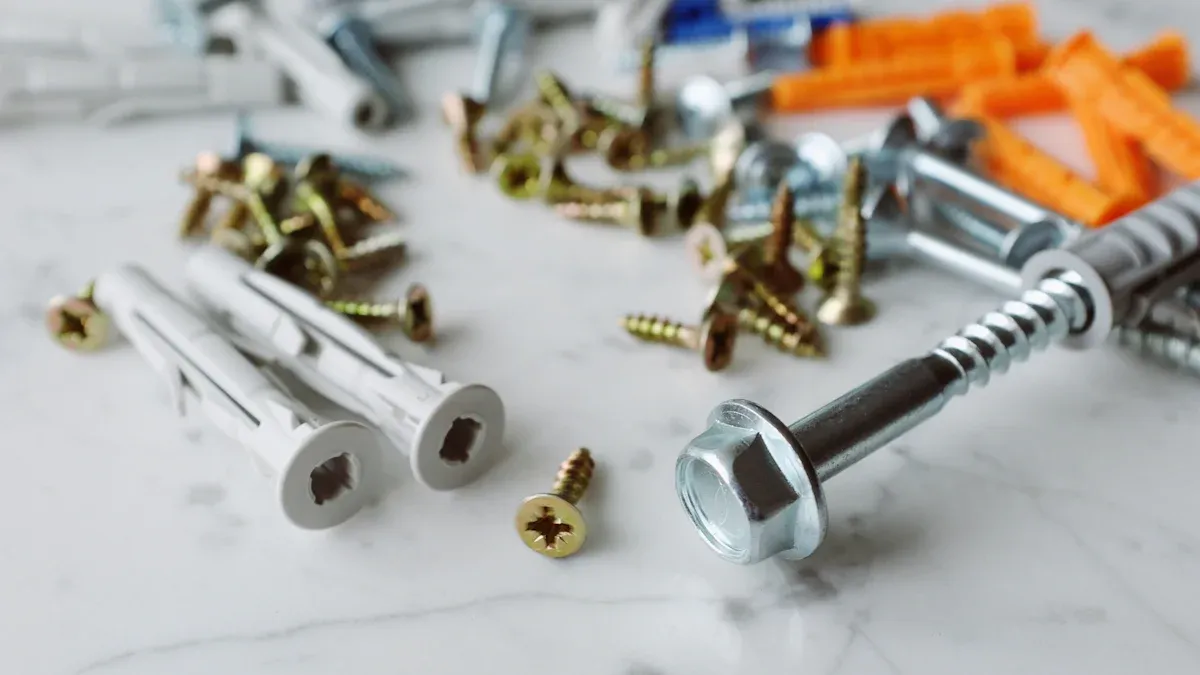
The material of an anchor is a primary factor in its performance, strength, and ideal application. The choice between plastic and metal is one of the most fundamental decisions a user makes when selecting hardware. Understanding the distinct advantages and limitations of these two main types of drywall anchors is crucial for a secure installation.
When to Use Plastic Anchors
Plastic anchors are common, inexpensive, and suitable for a narrow range of light-duty tasks. They are often found in assortment kits and are useful for quick, low-risk projects.
Benefits of Plastic
The main advantages of plastic anchors stem from their material properties. They are an excellent choice for specific, non-critical situations.
- Коррозионная стойкость: Plastic is inherently resistant to moisture and chemicals, making it suitable for use in bathrooms or kitchens.
- Non-Conductive: Being non-metallic, they are electrically insulating and safe to use near wiring.
- Lightweight: Their low weight makes them easy to handle and store.
Common Limitations
The limitations of plastic drywall anchors are significant. They are not recommended for structural or load-bearing applications because they can deform under stress. They are also susceptible to deterioration in extreme temperatures and are not nearly as strong as their metallic counterparts.
When to Use Metal Anchors
For any application involving significant weight, value, or safety, metal anchors are the professional standard. Their robust construction provides superior strength and long-term reliability.
Benefits of Metal
Metal anchors offer improved structural integrity and a high load capacity. Constructed from materials like zinc-plated steel, they are designed to handle high tensile loads and withstand harsh conditions. This durability ensures long-term effectiveness, making them a cost-effective safety solution by preventing accidents and costly repairs. Their ability to secure heavy items makes them essential for mounting televisions, cabinets, and grab bars.
Considerations for Metal
While superior in strength, metal anchors have a few considerations. The table below compares their features against plastic alternatives.
| Характеристика | Plastic Anchors (Nylon/Polypropylene) | Metal Anchors (Zinc-Plated Steel) |
|---|---|---|
| Прочность | Not for load-bearing; may deform | Superior strength; handles high tensile loads |
| Electrical Insulation | Excellent (non-conductive) | Conductive; not insulating |
| Temperature Tolerance | May deform under extreme heat | High temperature tolerance |
| Монтаж | Requires a small pilot hole | Often requires a larger, precise hole |
Verdict: Which Material is Superior?
Neither material is universally superior; their value is determined by the task. Plastic drywall anchors are sufficient for hanging very light objects like small clocks or smoke detectors. For everything else, metal is the clear winner. The best drywall anchors are always the ones correctly matched to the weight of the object and the wall material. When safety and strength are priorities, a user should always choose metal. Understanding these two basic types of drywall anchors empowers a homeowner to complete any project with confidence.
Advanced Anchoring: Furniture Anchor Kits and Safety
Securing items to a wall extends beyond pictures and shelves. Heavy furniture like dressers, bookcases, and TV stands presents a significant safety risk if left unsecured. Advanced anchoring techniques using specialized kits are essential for creating a safe home environment, especially for families with children.
Why You Need to Anchor Furniture
The stability of freestanding furniture can be deceptive. An open drawer or a child’s attempt to climb can easily shift an item’s center of gravity, leading to a dangerous tip-over event.
Tip-Over Dangers
The risk of furniture tip-overs is a documented and serious hazard. From 2017 to 2019, an estimated 25,500 individuals annually required treatment in U.S. hospital emergency departments for injuries related to furniture, television, or appliance tip-overs. These incidents can cause severe injury or death, making preventative anchoring a critical safety measure in any home.
Peace of Mind for Families
Anchoring heavy furniture provides invaluable peace of mind. For parents and caregivers, it removes a major household hazard. A properly secured dresser or bookshelf allows children to play more safely in their environment. This simple, one-time installation offers lasting protection against preventable accidents.
Choosing the Right Furniture Anchor Kits
Selecting a reliable restraint is crucial for effective anchoring. Consumers should look for products that meet established safety standards to ensure they are not defective.
Safety Standard: The CPSC has adopted ASTM F2057-23 as a mandatory safety standard for clothing storage units. Furthermore, consumers should ensure any tip restraints comply with the industry standard ASTM F3096-23 to prevent tip-over hazards.
Strap-Style Anchors
These kits typically use durable nylon straps to connect the furniture to the wall. One bracket screws into the furniture, and the other screws into the wall. The strap connects the two.
- Pros: Often adjustable, allowing for some space between the furniture and the wall.
- Cons: The plastic buckles can be a weak point if not made from high-quality material.
Cable-Style Anchors
These anchors use steel cables for the connection, offering a more rigid solution. They function similarly to strap-style anchors, with brackets on the furniture and the wall connected by a strong steel wire.
- Pros: Extremely high tensile strength and resistance to cutting or chewing.
- Cons: Less flexible than straps and may require the furniture to be closer to the wall.
Installation Tips for Maximum Safety
Proper installation of furniture anchor kits is non-negotiable for them to function correctly.
- Locate a Stud: The most secure installation involves driving the wall-side screw directly into a wood stud. A user should always use a stud finder to locate one.
- Use a Strong Anchor: If a stud is not available, a user must use a high-capacity анкер для полых стен, such as a TOGGLER SNAPTOGGLE. A simple plastic anchor is not sufficient for this task.
- Secure to a Solid Part: The user should attach the furniture-side bracket to a solid wood part of the item, like the top rail or a side panel, not the thin backboard.
- Check for Tension: After installation, the user should ensure the strap or cable is taut, with minimal slack. This prevents the furniture from gaining momentum if it starts to tip.
Following these guidelines when installing furniture anchor kits ensures maximum stability and safety.
A user finds the E-Z Ancor Twist-N-Lock 75 to be the most reliable choice for everyday projects. These self-drilling drywall anchors offer a great balance of strength and ease. For hanging heavy items, a user should always upgrade to heavy-duty toggle bolts like the TOGGLER SNAPTOGGLE for maximum security.
Choosing the correct rated дюбели для гипсокартона is the most important step. A user guarantees a secure, professional-quality result with all hollow wall anchors by matching the right drywall anchors to the weight and wall type. These are the best drywall anchors for any home project.
Частые вопросы
Can a user reuse a wall anchor?
A user cannot reuse most plastic anchors once removed. Metal Molly bolts and SNAPTOGGLEs, however, allow a user to remove and reinsert the screw multiple times. The anchor body itself remains permanently fixed inside the wall.
Что следует сделать пользователю, если он попал в деревянную стойку?
Hitting a stud is a good thing. 💡 A user should stop drilling for the anchor immediately. They can then drive a standard wood screw directly into the stud for a superior, stronger hold without needing any анкер для полых стен.
How does a user remove an old wall anchor?
A user can sometimes back out self-drilling anchors with a screwdriver. For toggle bolts or Molly bolts, the anchor body remains in the wall. The best option is to tap the flange slightly below the surface and patch over it with spackle.
Do all drywall anchors require a drill?
No, a drill is not always required. Self-drilling anchors install with just a screwdriver. Most other types of drywall anchors, including ribbed plastic anchors and toggle bolts, need a precisely sized pilot hole made with a power drill.
Почему мой анкер вырвался из стены?
Anchor failure typically happens for three reasons:
- The anchor’s weight rating was too low for the object.
- The drilled pilot hole was too large.
- The user over-tightened the screw, damaging the drywall.
Can a user install drywall anchors in a ceiling?
A user must be extremely cautious with ceilings. The constant pull of gravity requires maximum strength. Only heavy-duty toggle bolts specifically rated for ceiling applications are safe. A user should never use standard plastic anchors for this purpose.