Choosing the correct hex head bolt is a critical decision in construction. This single fastener directly impacts the safety, durability, and strength of large-scale projects. A производитель крепежных изделий на заказ often provides specialized fastening solutions, from unique литье болтов methods to a specific bolt grade. Selecting the right шестигранный болт requires careful consideration. Every bolt must guarantee secure fastening, especially when using нестандартные крепежные элементы for critical applications.
The Anatomy of a Hex Head Bolt
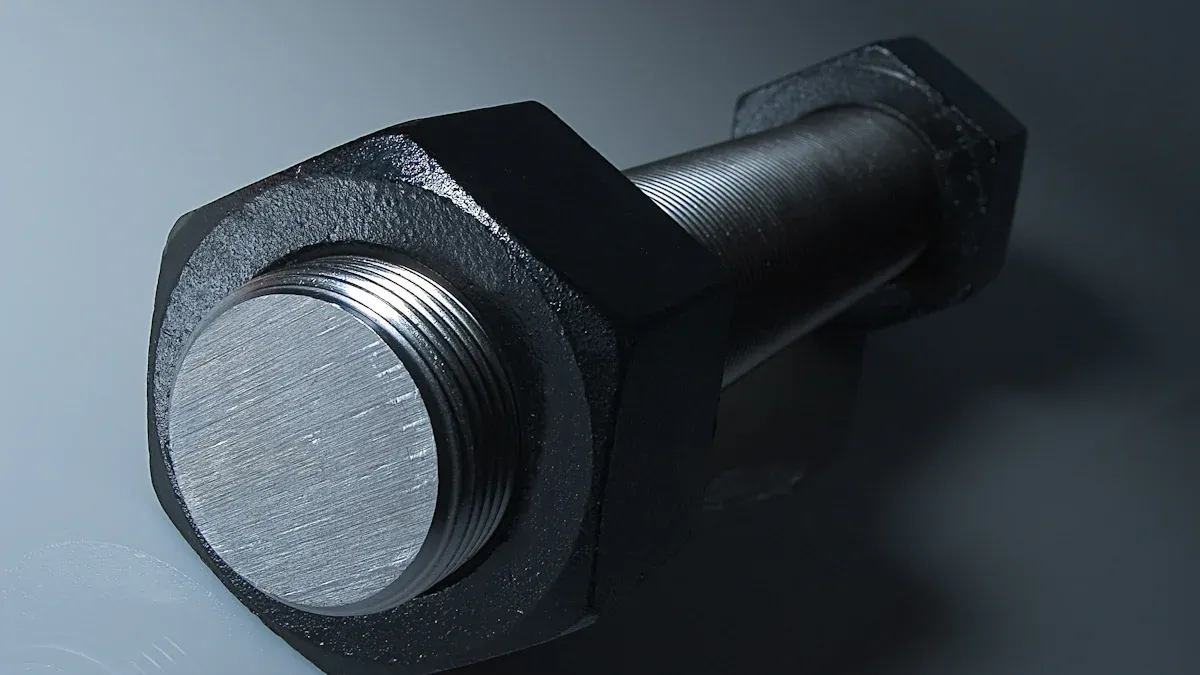
Understanding a hex head bolt begins with its basic components. Each part serves a distinct function that contributes to its overall performance in a structural connection. A project’s success often depends on selecting a bolt with the right anatomy for the job.
The Six-Sided Head
Designed for High-Torque Wrenching
The most recognizable feature is the six-sided head. This hexagonal shape provides multiple points of contact for wrenches and sockets. It allows for the application of significant torque without stripping or damaging the fastener. The amount of torque a bolt can handle is directly related to its material grade and size. Higher grades require more torque to achieve the proper tension, a critical factor in structural integrity.
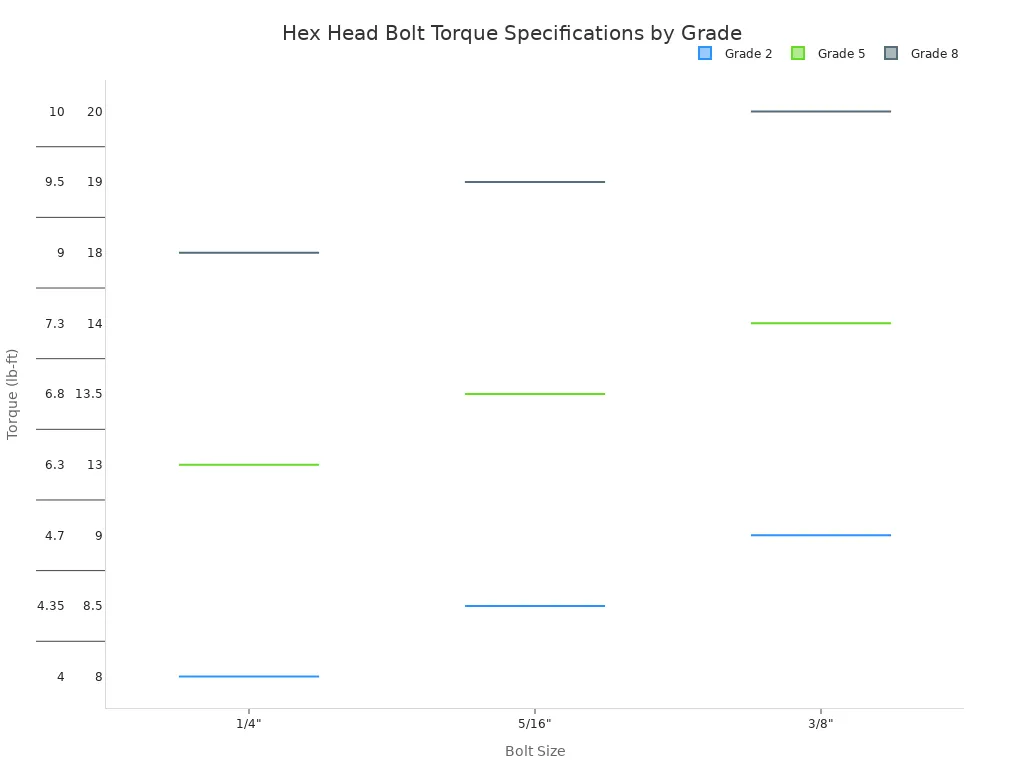
Torque Reference Guide (Dry Steel Bolts) The following table provides general torque values. For critical applications, always verify specifications, as factors like lubrication can alter requirements by ±25%.
Размер болта Grade 5 (lb-ft) Grade 8 (lb-ft) 1/4″ 6.3-7.3 9-10 3/8″ 23-26 33-37 1/2″ 57-64 80-90 3/4″ 200-223 282-315 1″ 483-541 682-764
Reading Grade Markings on the Head
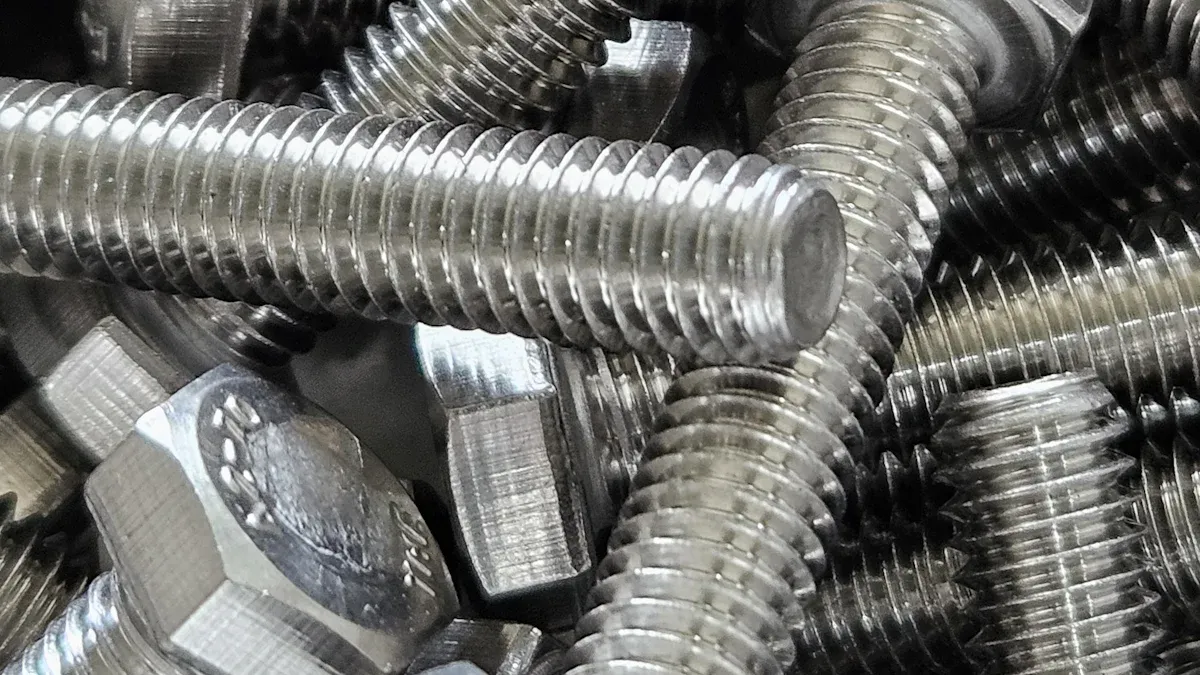
The top of the hexagonal head bolt contains important information. Manufacturers stamp radial lines or numbers on the head to indicate the bolt’s strength grade. These markings allow for quick visual identification on a job site, ensuring the correct fastener is used for a specific load requirement.
The Shank and Its Purpose
The shank is the body of the bolt, located between the head and the threads. It comes in two primary configurations.
Partially Threaded Bolts for Shear Strength
Partially threaded hex bolts have a solid, unthreaded portion of the shank. This design is superior for applications involving shear forces, which are lateral stresses that try to slice a fastener in half. The unthreaded shank provides a full-diameter cross-section to resist these forces, making it much stronger than a threaded section in shear. For this reason, engineers specify partially threaded hex bolts for critical connections like motor mounts and structural steel joints.
Fully Threaded Bolts for Grip Strength
In contrast, fully threaded hex bolts have threads running their entire length. This design maximizes grip strength, making them ideal for applications where materials are clamped together tightly. They are used when the bolt’s primary function is to create tension, pulling two components together, rather than resisting shear.
Understanding Bolt Threads
The helical ridges on a bolt are its threads. They engage with a nut to create a secure connection. Threads are defined by their pitch, which is the distance between adjacent threads.
Coarse Threads (UNC) for Faster Assembly
Unified National Coarse (UNC) threads are the standard in construction. Their deeper, wider profile makes them:
- Quicker to install and remove.
- Less susceptible to cross-threading or damage in rough environments.
- More tolerant of minor nicks or debris.
These characteristics make coarse-threaded bolts a practical choice for most general construction tasks.
Fine Threads (UNF) for Precision and Vibration Resistance
Unified National Fine (UNF) threads are spaced closer together. This design provides distinct advantages in specific scenarios. Fine threads have a larger minor diameter, which gives them slightly higher tensile and shear strength compared to coarse threads of the same size. Their shallow helix angle also makes them more resistant to loosening from vibration, a key benefit in machinery and automotive applications.
| Тип резьбы | Minor Diameter (in) | Tensile Strength (lbf) @ 100 ksi |
|---|---|---|
| 1/4-20 Coarse | 0.200 | 3140 |
| 1/4-28 Fine | 0.214 | 3600 |
Step 1: Match the Bolt Material to the Project Environment
Selecting the right material is the foundation of choosing a reliable bolt. The surrounding environment—whether it is a dry interior, a humid coastline, or a chemical plant—dictates which material will provide the necessary longevity and performance for the application.
Carbon Steel: The Workhorse of Construction
Carbon steel is the most common material for bolts due to its excellent strength-to-cost ratio. Its properties are determined by the amount of carbon it contains.
Low-Carbon Steel (Mild Steel)
Low-carbon steel is an economical and versatile material. It is easy to form and weld but offers the lowest strength. Bolts made from this material are suitable for temporary structures or light-duty, non-structural fastening.
Medium-Carbon Steel
Adding more carbon to the steel increases its hardness and strength through heat treatment. Medium-carbon steel provides a good balance of durability and ductility, making it a reliable choice for many general-purpose construction needs.
When to Use a Carbon Steel Bolt
Its balance of strength and cost makes carbon steel a staple in countless projects. Engineers specify these bolts for a wide range of structural and mechanical assemblies. Common uses include:
- Erection of steel frames in buildings and skyscrapers
- Connecting structural members in bridges and cranes
- Assembly of heavy industrial machinery
- General infrastructure and piping projects
Нержавеющая сталь для устойчивости к коррозии
When a connection is exposed to moisture or corrosive elements, stainless steel is the superior choice. It contains chromium, which forms a passive, rust-resistant layer on the surface.
304 Stainless Steel for General Use
304 stainless steel is the most common stainless grade. It offers excellent corrosion resistance against atmospheric conditions, making it ideal for outdoor architectural features, kitchen equipment, and general fastening in damp environments.
316 Stainless Steel for Marine and Chemical Exposure
For extreme conditions, 316 stainless steel provides enhanced protection. It contains molybdenum, an alloy that significantly increases its resistance to chlorides and acids. This makes it essential for marine hardware, wastewater treatment plants, and chemical processing facilities.
Требуемый диаметр твердосплавного сверла Always use 316 stainless steel for projects near saltwater or in contact with harsh industrial chemicals to prevent premature failure from corrosion.
When to Choose a Stainless Steel Hex Head Bolt
A stainless steel hex head bolt is the correct choice whenever moisture, salt, or chemicals are present. While more expensive than carbon steel, its longevity in harsh environments prevents costly future repairs and ensures structural integrity.
Alloy Steel for Extreme Strength
Alloy steel contains additional elements like manganese, chromium, and molybdenum to achieve mechanical properties unattainable with carbon steel alone. These bolts are designed for the most demanding jobs.
Properties of Alloy Steel
The added alloys give these bolts exceptional hardness, toughness, and tensile strength. They can withstand extreme temperatures and immense loads without stretching or breaking.
Common Alloys like Chromium and Molybdenum
Chromium increases hardness and corrosion resistance, while molybdenum enhances toughness and strength at high temperatures. A common material like AISI 4140 high-tensile steel exhibits a tensile strength of 95 ksi.
When to Use High-Strength Alloy Steel
High-strength alloy steel is reserved for critical, high-stress joints where failure is not an option. This includes engine components, suspension systems, and major structural connections that bear immense loads. The following table shows the impressive strength of common high-grade alloy steel bolts.
| Bolt Grade | Материал | Tensile Strength (psi) | Yield Strength (psi) |
|---|---|---|---|
| 10.9 | Alloy steel | 170,000 | 136,000 |
| 12.9 | High-grade alloy steel | 190,000 | 152,000 |
Specialty Materials for Unique Conditions
Beyond steel, some construction scenarios demand bolts made from specialty materials. These alloys provide unique properties that standard fasteners cannot, ensuring performance and safety in specific, challenging environments.
Silicon Bronze for Marine and Electrical Use
Silicon bronze is a copper-based alloy prized for its exceptional durability in corrosive settings. Adding silicon to the traditional copper-tin bronze mixture significantly enhances its strength and resistance to wear. This material is a top choice for projects exposed to saltwater, harsh chemicals, and constant moisture. Its self-lubricating nature also helps prevent galling, where threads seize during tightening.
Engineers select specific silicon bronze grades for their distinct advantages:
- Превосходная коррозионная стойкость: Both Grade 651 and Grade 655 exhibit excellent resistance to corrosion, making them ideal for marine hardware, shipbuilding, and coastal construction.
- High Electrical Conductivity: The alloy maintains good electrical and thermal conductivity. Grade 651, with its lower silicon content, offers better electrical conductivity and is frequently specified for electrical grounding rods, switchgear, and other electronic components.
- Enhanced Strength: While not as strong as alloy steel, silicon bronze provides robust strength suitable for many structural and mechanical applications where corrosion is the primary concern.
Brass for Aesthetic and Low-Friction Applications
Brass, an alloy of copper and zinc, is well-known for its bright, gold-like appearance. Builders often choose brass hex head bolts for decorative and architectural purposes where visual appeal is paramount. Common applications include high-end cabinetry, vintage restorations, and ornamental fixtures.
Beyond its looks, brass offers important functional benefits. It is a low-friction material, which makes it useful for moving parts where smooth operation is necessary. Furthermore, brass is non-sparking, a critical safety feature for equipment used in explosive or flammable atmospheres. This makes it a required material in certain gas and petrochemical industry applications.
Important Consideration: Brass bolts possess lower tensile strength compared to steel and are not suitable for high-load structural applications. Their use should be limited to light-duty fastening, decorative work, or applications where their unique non-sparking and corrosion-resistant properties are the main requirement.
Step 2: Select the Correct Grade for Required Strength
After material selection, the next critical step is choosing the correct bolt grade. A grade defines a fastener’s mechanical properties, including its tensile strength—the maximum stress it can withstand before breaking. Using the wrong grade can lead to catastrophic structural failure.
Decoding SAE J429 Grade Markings
The Society of Automotive Engineers (SAE) J429 standard is common for inch-series bolts. It uses radial lines on the bolt head for easy identification.
Grade 2 Bolts for Non-Structural Loads
A Grade 2 bolt has no head markings and is made from low-carbon steel. These bolts offer the lowest strength and cost. They are suitable for light-duty assemblies and non-structural connections where high loads are not a concern.
Grade 5 Bolts for Moderate Strength
Grade 5 bolts are identified by three radial lines on the head. They are made from medium-carbon steel that has been quenched and tempered for increased durability. This grade provides good tensile strength for many automotive and machinery applications.
Grade 8 Bolts for High-Stress Applications
Featuring six radial lines, Grade 8 bolts are made from medium-carbon alloy steel. They undergo additional heat treatment to achieve superior hardness and strength. Engineers specify these bolts for the most demanding jobs, such as heavy equipment assembly and critical suspension components.
Understanding Key ASTM Specifications for a Structural Bolt
For building construction, ASTM International standards are paramount. These specifications often require heavy hex bolts, which have a larger head for a greater bearing surface.
ASTM A307: The Standard Carbon Steel Bolt
ASTM A307 bolts are the carbon steel workhorse for general-purpose fastening. They are similar in strength to SAE Grade 2 and are used for non-structural connections, анкерные болты, and light-duty framing.
ASTM A325: High-Strength Heavy Hex Bolts
ASTM A325 specifies high-strength heavy hex bolts designed for steel-to-steel structural connections. These are heat-treated, medium-carbon steel bolts that provide reliable performance in buildings and bridges.
ASTM A490: Stronger Than A325 for Extreme Loads
ASTM A490 bolts are similar in design to A325 but are made from alloy steel. This gives them a higher tensile strength, making them the choice for connections under extreme stress. These advanced fastening solutions are essential where the highest performance is non-negotiable.
Matching the Bolt Grade to Your Application
Selecting the correct grade ensures both safety and cost-effectiveness for any application. Over-specifying increases costs unnecessarily, while under-specifying creates a significant safety risk.
| Bolt Application Category | Typical Load-Bearing Examples |
|---|---|
| Легкая категория | Non-structural applications, light-duty assemblies, cost-effective projects, non-critical connections |
| General | Automotive applications, structural connections, machinery assembly, most general applications |
| Critical High-Stress | Critical structural joints, high-stress applications, racing/performance vehicles, heavy machinery |
Light-Duty Fastening (e.g., temporary structures)
For temporary fencing, signage, or interior fixtures, a low-strength bolt like ASTM A307 or SAE Grade 2 is sufficient.
General Structural Connections (e.g., framing)
Most steel framing and machinery assembly projects require the moderate strength of an SAE Grade 5 or ASTM A325 bolt.
Critical High-Stress Joints (e.g., bridges, heavy machinery)
For critical joints in bridges, cranes, and high-pressure equipment, only the highest-grade bolts, such as SAE Grade 8 or ASTM A490, provide the necessary safety margin.
Step 3: Determine the Right Hex Head Bolt Size
Proper sizing is as crucial as selecting the right material and grade. A bolt that is too short, long, thin, or thick can compromise the integrity of a connection. Correctly measuring a hex head bolt ensures it performs as designed.
Measuring Bolt Diameter
The diameter is the thickness of the bolt’s shank. This measurement is fundamental to the fastener’s overall capability.
Matching Diameter to Pre-Drilled Hole Size
Installers must drill holes slightly larger than the bolt’s nominal diameter. This clearance allows the bolt to be inserted without binding but is tight enough to prevent excessive movement. A typical rule is to add 1/16 inch to the bolt diameter for the hole size.
How Diameter Impacts Shear and Tensile Strength
A bolt’s diameter directly influences its strength. A larger diameter provides a greater cross-sectional area, which significantly increases its capacity to resist both tensile (pulling) and shear (slicing) forces. Doubling the diameter can quadruple the strength.
Standard (Imperial) vs. Metric Diameters
Fasteners follow either Standard (Imperial) or Metric systems. It is critical to use a consistent system for all components—bolts, nuts, and tools—to avoid mismatches. This adherence to standardized sizing prevents installation issues and ensures compatibility on the job site.
Calculating Correct Bolt Length
Calculating the correct bolt length requires accounting for all materials in the joint.
Понимание длины захвата
The grip length is the unthreaded portion of the shank. This smooth section should extend through all materials being fastened. Threads are designed for tension, not shear, so placing them within a joint creates a weak point. The smooth shank provides maximum shear resistance.
Factoring in Nut and Washer Thickness
The total length of a bolt must accommodate the thickness of the materials, plus the height of the nut and any washers. If an exact grip length is unavailable, a slightly longer bolt can be used. Installers can add washers under the nut to compensate for the extra length and ensure the nut does not bottom out on the shank.
The “Two-Thread” Rule for Proper Engagement
A widely accepted guideline is the “two-thread” rule. After tightening, at least two full threads should extend past the nut. This visual check confirms full nut engagement, guaranteeing the connection can achieve its required clamping force.
Thread Pitch: Coarse (UNC) vs. Fine (UNF)
Thread pitch determines how many threads exist per inch. The choice between coarse and fine threads impacts installation speed and performance.
Advantages of Coarse Threads in Construction
Unified National Coarse (UNC) threads are the default for most construction applications. Their benefits include:
- Faster Installation: The wider pitch allows for quicker assembly and disassembly.
- Damage Tolerance: They are less susceptible to cross-threading and are more tolerant of debris or minor thread damage.
- Durability: The deeper thread profile provides higher resistance to stripping, making these bolts ideal for heavy-duty connections in steel framing and machinery.
When Fine Threads Are Necessary
Fine (UNF) threads offer higher tensile strength and better resistance to loosening from vibration. Engineers specify them for precision machinery, engines, and aerospace applications where these characteristics are critical.
Step 4: Choose a Protective Coating for Longevity
A bolt’s material provides its core strength, but a protective coating ensures its long-term durability. Coatings shield the base metal from moisture, chemicals, and other corrosive elements that can compromise a connection over time. The right coating is essential for the lifespan of any hex head bolt.
Sacrificial Coatings for Steel Protection
Sacrificial coatings contain a metal, usually zinc, that corrodes in place of the steel bolt. This process, known as galvanic protection, significantly extends the service life of the fastener.
Zinc Plating for Indoor Use
Zinc plating, or electroplating, involves applying a thin layer of zinc to the steel. This coating provides a bright, uniform finish and offers adequate corrosion resistance for dry, indoor environments. It is a cost-effective option for applications not exposed to weather. Installers should follow standards like ASTM B633 for these electrodeposited coatings.
Hot-Dip Galvanization for Outdoor and Harsh Environments
Hot-dip galvanization (HDG) immerses bolts in a bath of molten zinc. This process creates a thick, durable, and metallurgically bonded coating. HDG is the standard for outdoor structures, infrastructure, and coastal applications. While salt spray tests show both zinc-plated and hot-dip galvanized fasteners corrode after 2,000 hours, these tests are not accurate predictors for HDG. The continuous fog prevents the formation of a protective zinc patina, attacking the zinc directly and misrepresenting its superior real-world performance.
Barrier and Conversion Coatings
These coatings work by creating a physical barrier between the steel and the environment. They offer varying levels of protection and are often chosen for specific functional or aesthetic reasons.
Phosphate & Oil Finish
A phosphate and oil finish is a light conversion coating that provides mild corrosion resistance and a dark gray or black appearance. It is primarily used to prevent galling and is suitable for dry, indoor storage and use.
Black Oxide for Mild Resistance and Appearance
Black oxide is a conversion coating that offers minimal corrosion protection on its own. It is mostly used for aesthetic purposes, providing a clean, matte black finish. A post-treatment with oil or wax is necessary to improve its resistance.
Geomet or Magni Coatings as Modern Alternatives
Modern non-electrolytic systems like Magni coatings offer an excellent alternative. These zinc-aluminum coatings are applied without electricity, which eliminates the risk of hydrogen embrittlement in high-strength bolts. They provide exceptional corrosion resistance and are widely used in automotive and power generation industries.
Coating Selection Guide by Environment
Matching the coating to the environment is a critical final check.
Требуемый диаметр твердосплавного сверла Never mix and match coatings. Using a galvanized bolt with a plain steel nut can accelerate corrosion. Always use fasteners with compatible protective finishes.
| Окружающая среда | Recommended Coating |
|---|---|
| Dry, Climate-Controlled Interiors | Zinc Plating, Phosphate & Oil, Black Oxide |
| Humid, Outdoor, Pressure-Treated Wood | Hot-Dip Galvanization (ASTM A153) |
| Coastal, Marine, Chemical Exposure | Hot-Dip Galvanization, Stainless Steel, Zinc-Nickel |
For Dry, Climate-Controlled Interiors
For indoor projects shielded from moisture, a simple zinc plating or phosphate finish provides sufficient protection at a low cost.
For Humid, Outdoor, or Pressure-Treated Wood
Outdoor exposure demands a robust coating. Hot-dip galvanization is the required choice for fasteners used with pressure-treated wood, according to building codes. Standard zinc plating is not sufficient. For these applications, the coating on the bolts must comply with standards like ASTM A153.
For Coastal, Marine, and Chemical Exposure
In the most aggressive environments, only the best protection will suffice. Hot-dip galvanization offers decades of service. For extreme conditions or when using high-strength fasteners, advanced options like zinc-nickel or specialty materials like stainless steel become necessary.
Step 5: Pair with the Correct Nut and Washer
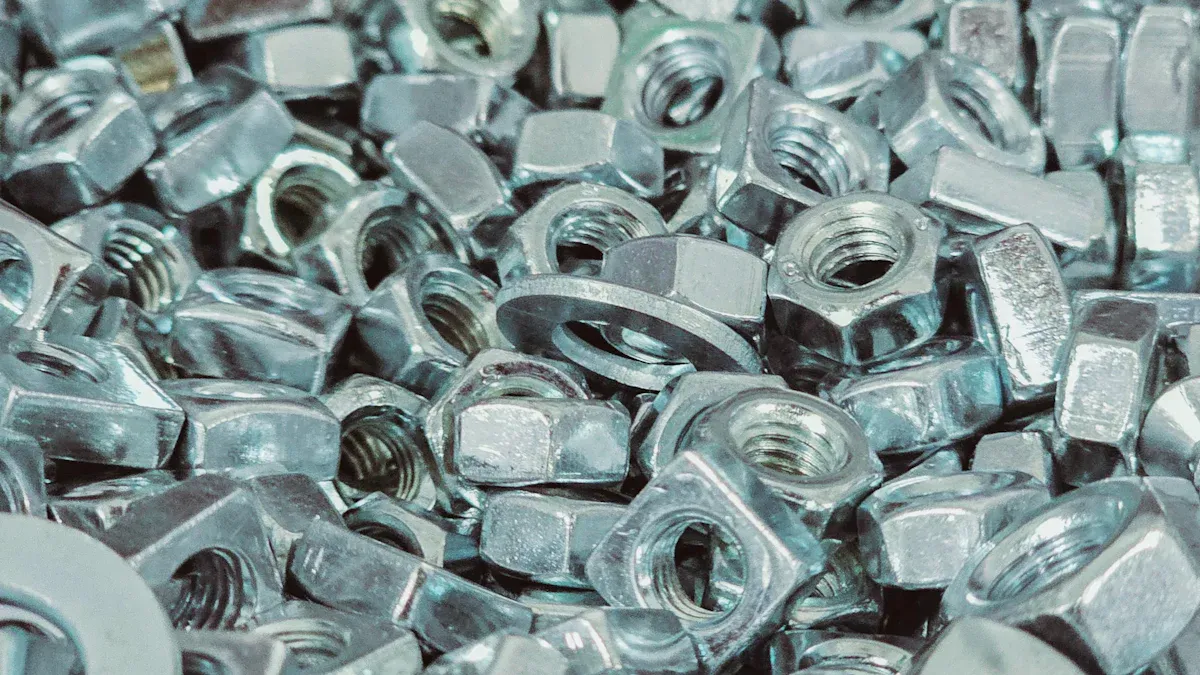
A bolt is only one part of a complete fastening system. The nut and washer are equally critical components that must be correctly matched to the bolt to achieve secure fastening. Selecting the right companions for your bolts ensures the connection performs as designed under load.
The Importance of Using Matched Components
A structural connection is only as strong as its weakest link. Using mismatched components compromises the integrity of the entire assembly. Engineers design these fastening solutions as a system where each part works together to handle specific loads.
Why Nut Grade Must Match or Exceed Bolt Grade
A fundamental rule in bolting is that the nut’s grade must match or exceed the bolt’s grade. The nut must be strong enough to develop the full tensile strength of the bolt. If the nut is weaker, it can fail before the bolt is properly tensioned, rendering the connection unreliable.
Using 2H Nuts with A325 Heavy Hex Bolts
A classic example of proper pairing is in structural steel connections. ASTM A325 heavy hex bolts must be paired with ASTM A563 Grade 2H nuts. This specific combination is engineered to ensure the nut can handle the high tension required to properly install the high-strength fastener.
The Dangers of Using a Low-Grade Nut on a High-Strength Bolt
Using a low-grade nut on a high-strength bolt is a critical safety error. This mismatch creates a significant risk of thread shear failure. For instance, pairing a Grade 8.8 bolt with a nut graded below 8 means the nut’s load capacity could be less than 70% of the bolt’s capability. The nut’s threads will strip out long before the bolt reaches its required tension, leading to a sudden and catastrophic joint failure.
Selecting the Right Type of Washer
Washers are not just simple spacers; they perform essential functions within a bolted joint. They distribute pressure, protect surfaces, and can help prevent loosening.
Flat Washers for Distributing Load
A standard flat washer’s primary job is to distribute the clamping force of the nut and bolt head over a wider surface area. This is especially important when fastening softer materials, preventing the fastener from pulling through the material.
Lock Washers to Prevent Vibrational Loosening
In applications with vibration, lock washers are essential. They apply pressure or create friction to stop a nut from backing off. Common types include:
- Split Lock Washers: A split ring that acts like a spring, creating tension against the nut.
- Toothed Lock Washers: These have teeth that dig into the nut and the joint surface, creating a physical barrier to rotation.
- Nord-Lock Washers: An advanced system using a pair of washers with cams that create a wedge effect, securely locking the joint against extreme vibration.
Hardened Structural Washers (ASTM F436)
High-strength structural bolts, such as ASTM A325 and A490, require hardened washers specified by ASTM F436. These washers are heat-treated to withstand the immense compressive forces generated during tensioning. They prevent galling (seizing) and ensure the load is distributed evenly under the nut and bolt head.
Advanced Considerations for Structural Connections
Beyond the basics, professional installers must understand advanced concepts for high-strength bolting. These principles ensure that critical connections perform safely under immense stress and meet stringent industry standards.
Heavy Hex Bolts vs. Standard Hex Bolts
The choice between a standard and a heavy hex bolt depends entirely on the application’s load requirements. While they look similar, their capabilities differ significantly.
Larger Head for Increased Bearing Surface
Heavy hex bolts feature a larger and thicker head compared to standard hex bolts. This increased size provides a greater bearing surface. The larger surface area distributes the clamping force more effectively, which enhances the joint’s ability to resist high loads and shearing forces.
Common Use in Steel-to-Steel Connections
Engineers specify heavy hex bolts for demanding, тяжелых условий эксплуатации. Their superior strength and load-bearing capacity make them the standard for structural steel connections in bridges, buildings, and large-scale industrial machinery.
Pretensioned vs. Snug-Tight Joints
The amount of tension applied during installation defines the joint type. The Engineer of Record specifies whether a joint should be snug-tightened or fully pretensioned.
Understanding Snug-Tight Installation
A snug-tight joint is the most common type. Installers achieve this condition with the full effort of an ironworker using a spud wrench or a few impacts from an impact wrench. The connection is firm, and the nut cannot be removed by hand. This level of tightness is sufficient for most static connections.
When Pretensioning is Required
The American Institute of Steel Construction (AISC) requires pretensioning for specific high-stress situations. Full pretension is necessary for:
- Joints subject to significant load reversal or fatigue.
- Connections using ASTM A325 bolts under tensile fatigue.
- All joints using ASTM A490 bolts that experience tension or combined shear and tension.
Installation Methods for High-Strength Bolts
Proper installation is critical for achieving the required pretension in high-strength bolts. Installers use several approved methods for this process.
Turn-of-Nut Method
Стандарт DIN 933: объяснение turn-of-nut method is a reliable way of installing a hex head bolt. After snug-tightening the connection, the installer marks the nut, bolt, and steel plate. Then, they rotate the nut a specific amount based on the bolt’s length and diameter. This rotation stretches the bolt to achieve the correct tension.
| Bolt Length (L) | Required Nut Rotation |
|---|---|
| L ≤ 4d | 1/3 turn (120°) |
| 4d < L ≤ 8d | 1/2 turn (180°) |
| 8d < L ≤ 12d | 2/3 turn (240°) |
Calibrated Wrench Method
This method uses a specially calibrated torque wrench to apply a predetermined torque value to the nut. The installation requires careful pre-installation verification to ensure the torque reading accurately corresponds to the target tension, as friction can affect results.
Direct Tension Indicator (DTI) Washers
DTI washers are a specialized tool for visual inspection. These hardened washers have small protrusions that compress as the bolt is tightened. An installer uses a feeler gauge to measure the gap, confirming that the protrusions have flattened enough to indicate proper tension has been achieved.
Common Mistakes to Avoid When Selecting a Hex Head Bolt
Even experienced professionals can make errors during fastener selection. Avoiding these common mistakes is crucial for ensuring the safety and longevity of any construction project. A careful review of project requirements prevents costly rework and dangerous structural failures.
Over-Specifying or Under-Specifying Grade
Choosing the wrong grade is a critical error. Under-specifying, or selecting a bolt with a lower strength than required, creates an obvious risk of failure under design loads. However, over-specifying a grade can be equally dangerous. A higher-grade hex head bolt is not always better.
Предупреждение: High-strength bolts often have lower toughness and ductility. They are more susceptible to certain types of failure compared to their lower-grade counterparts.
- Brittle Fracture: High-strength bolts (e.g., Grade 10.9) have reduced elongation. They can fracture suddenly without warning when overloaded, unlike ordinary bolts that deform first.
- Fatigue Cracks: Under frequent vibration or alternating loads, these bolts are prone to fatigue cracks at stress points like the thread roots, which can lead to unexpected failure.
- Torque Sensitivity: The pre-tightening force is highly sensitive to friction. Inaccurate torque application or excess lubrication can cause the bolt to be either too loose or stressed to the point of fracture.
Ignoring Environmental Factors
The project environment dictates the necessary material and coating. Ignoring exposure to moisture, chemicals, or salt is a recipe for premature failure. A standard carbon steel bolt will quickly corrode in a humid or coastal setting, compromising the joint’s integrity. This oversight can lead to severe consequences.
- Stress Corrosion Cracking: This failure occurs when tensile stress from tightening combines with a corrosive environment, causing brittle cracks to form in the fasteners.
- Pitting and Crevice Corrosion: Moisture and chemicals can accumulate in tight spaces, such as under bolt heads and within threads. This leads to localized corrosion that creates pits, which act as stress concentrators and weaken the bolts from the inside out.
Using the Wrong Length or Diameter
Proper sizing is non-negotiable. Using the wrong dimensions can compromise a connection’s strength and create installation headaches. Even a small dimensional error can cause an uneven load distribution, leading to loosening over time.
- A bolt that is too short will not have enough thread engagement with the nut, failing to create the necessary clamping force.
- A bolt that is too long can “bottom out,” where the nut tightens against the shank’s thread runout instead of the joint surface, leaving the connection loose.
- An incorrect diameter will not fit the pre-drilled hole correctly, resulting in alignment issues or excessive play that compromises shear strength. These compatibility issues often lead to costly delays and rework on the job site.
Reusing One-Time-Use Structural Bolts
The temptation to reuse fasteners on a construction site can be strong, especially for cost-conscious projects. However, high-strength structural bolts are engineered for a single installation. Attempting to reuse them introduces a significant and unacceptable safety risk. This practice is not about thrift; it is about understanding the physics of a properly tensioned connection.
When installers tighten a high-strength bolt to its required pretension, the bolt stretches slightly. This stretching, known as inelastic elongation, is what creates the powerful clamping force that holds a structural joint together. The bolt has been intentionally stressed beyond its elastic limit and into its “plastic zone.” Once it enters this zone, the elongation is permanent. The bolt will not return to its original length after the load is removed. Reusing a bolt that has already been permanently stretched compromises its ability to achieve the correct clamping force in a new installation, making it highly susceptible to premature failure.
Стандарт DIN 933: объяснение Research Council on Structural Connections (RCSC) provides clear directives on this matter. These guidelines are the industry standard for ensuring structural integrity.
Reuse: ASTM A490 bolts and galvanized ASTM A325 bolts shall not be reused. When approved by the Engineer of Record, plain finish ASTM A325 bolts are permitted to be reused. Touching up or re-tightening bolts that may have been loosened by the installation of adjacent bolts shall not be considered to be a reuse.
This rule establishes a clear hierarchy for reuse:
- Never Reuse: ASTM A490 bolts and any hot-dip galvanized ASTM A325 bolts. These fasteners do not have the consistent ductility to endure a second pretensioned installation.
- Conditional Reuse: Plain (uncoated) ASTM A325 bolts. These may be reused only with the explicit approval of the project’s Engineer of Record.
A simple field test can help determine if a plain A325 bolt is potentially reusable. An installer should be able to run the nut up the bolt’s threads by hand. If the nut binds or requires a wrench, the threads have likely deformed, and the bolt must be discarded. The decision to reuse any structural fastener should never be taken lightly. The cost of a new bolt is insignificant compared to the potential liability and catastrophic consequences of a joint failure. ⚠️
A final checklist is the best tool for selecting the correct hex head bolt. Following these steps ensures structural integrity for all construction projects.
- Environment: Match the material and coating to environmental exposure.
- Прочность: Verify structural loads to select the proper grade for all bolts.
- Dimensions: Measure material thickness to determine the correct bolt length.
- Совместимость: Always pair high-strength bolts with matching nuts and washers.
When in doubt, project-specific engineering specifications provide the ultimate guidance. Consulting a qualified structural engineer ensures both safety and compliance.
Частые вопросы
What happens if a bolt is over-tightened?
Over-tightening, or exceeding the specified torque, can stretch a bolt beyond its yield point. This action permanently damages the fastener. It reduces the bolt’s clamping force and can cause it to fracture suddenly under load, leading to a critical connection failure.
Can installers mix different grades of bolts and nuts?
No, installers must never use a lower-grade nut on a higher-grade bolt. The nut must have a grade equal to or greater than the bolt’s grade. A weaker nut will strip its threads before the bolt reaches its required tension, compromising the joint’s safety.
How can someone identify an unmarked hex head bolt?
An unmarked bolt head typically indicates an SAE Grade 2 or ASTM A307 bolt. These are low-carbon steel fasteners suitable only for light-duty, non-structural applications. They possess the lowest tensile strength among common grades and should not be used for critical loads.
Why is hot-dip galvanization preferred for outdoor use?
Hot-dip galvanization (HDG) creates a thick, metallurgically bonded zinc coating. This coating provides superior sacrificial protection against moisture and corrosion. It significantly extends the service life of steel bolts in harsh outdoor, humid, or coastal environments compared to standard zinc plating.
What is the purpose of the “two-thread” rule?
The “two-thread” rule is a visual check for proper installation. It requires at least two full threads to extend past the nut after tightening. This guideline confirms full thread engagement, ensuring the connection can achieve its designed clamping force and strength. ✅
Are heavy hex bolts and standard hex bolts interchangeable?
No, they are not interchangeable. Heavy hex bolts have a larger, thicker head for a greater bearing surface. Engineers specify them for high-strength, steel-to-steel structural connections. Standard hex bolts are for general-purpose, lower-load applications.
Is it safe to reuse high-strength structural bolts?
Reusing high-strength bolts is extremely dangerous. ⚠️ Tightening stretches them permanently. A reused bolt cannot achieve the correct tension again, creating a significant failure risk. The RCSC prohibits reusing ASTM A490 and all galvanized A325 bolts.