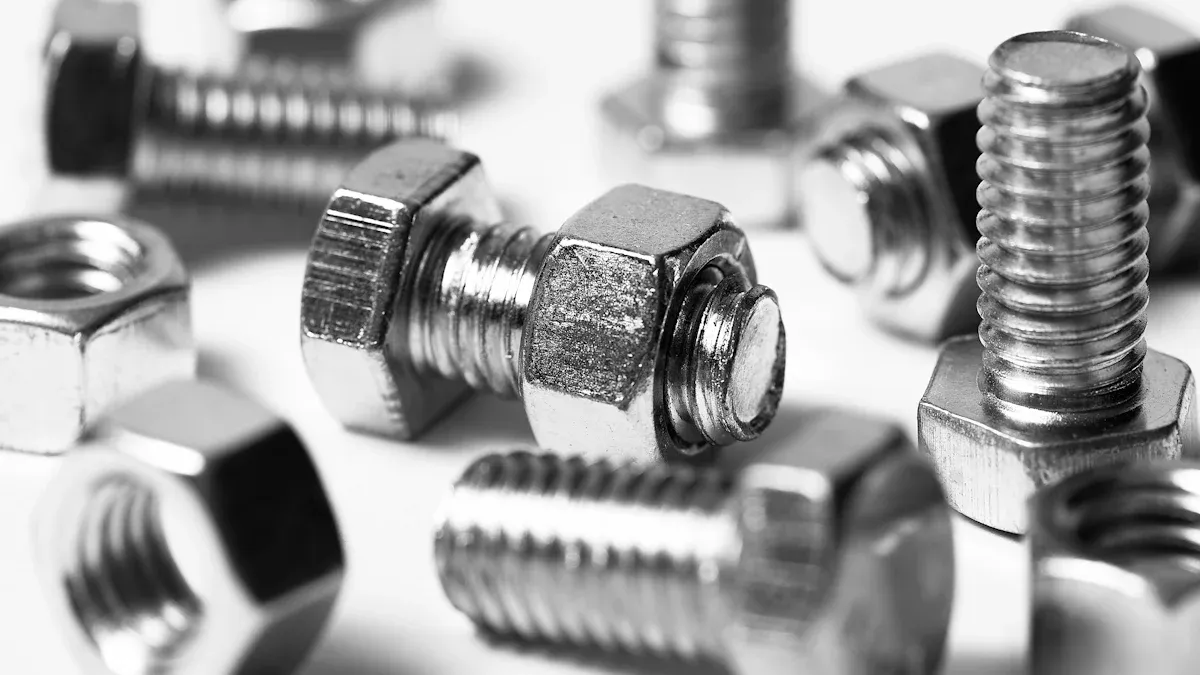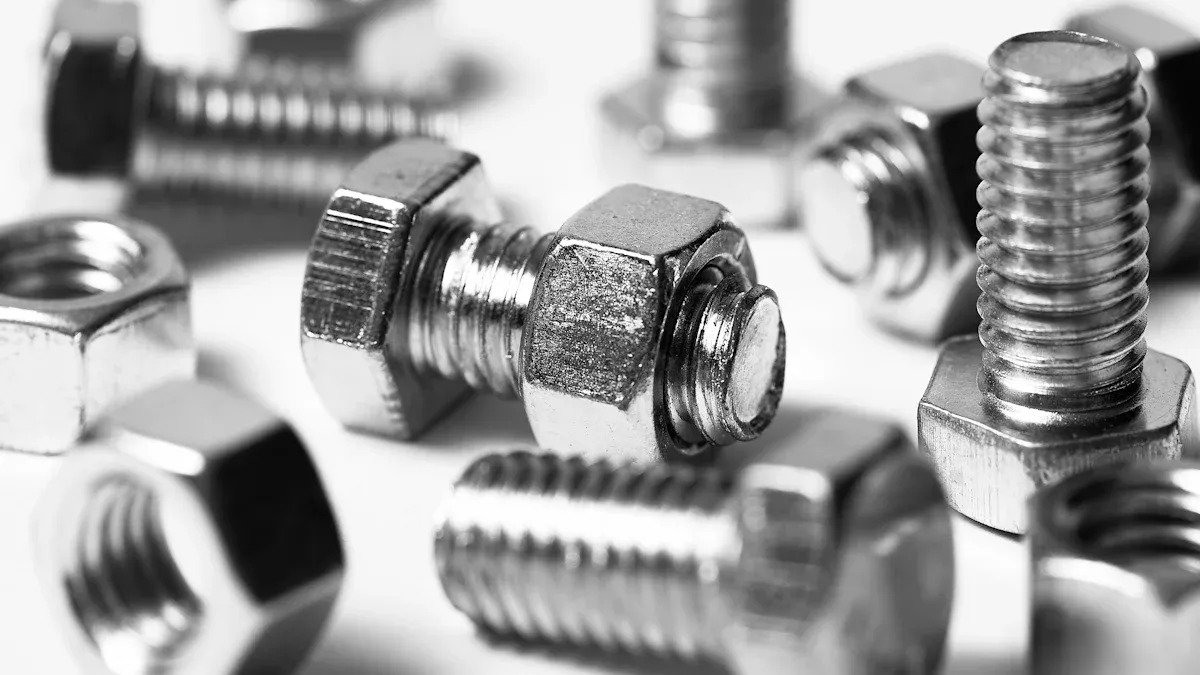
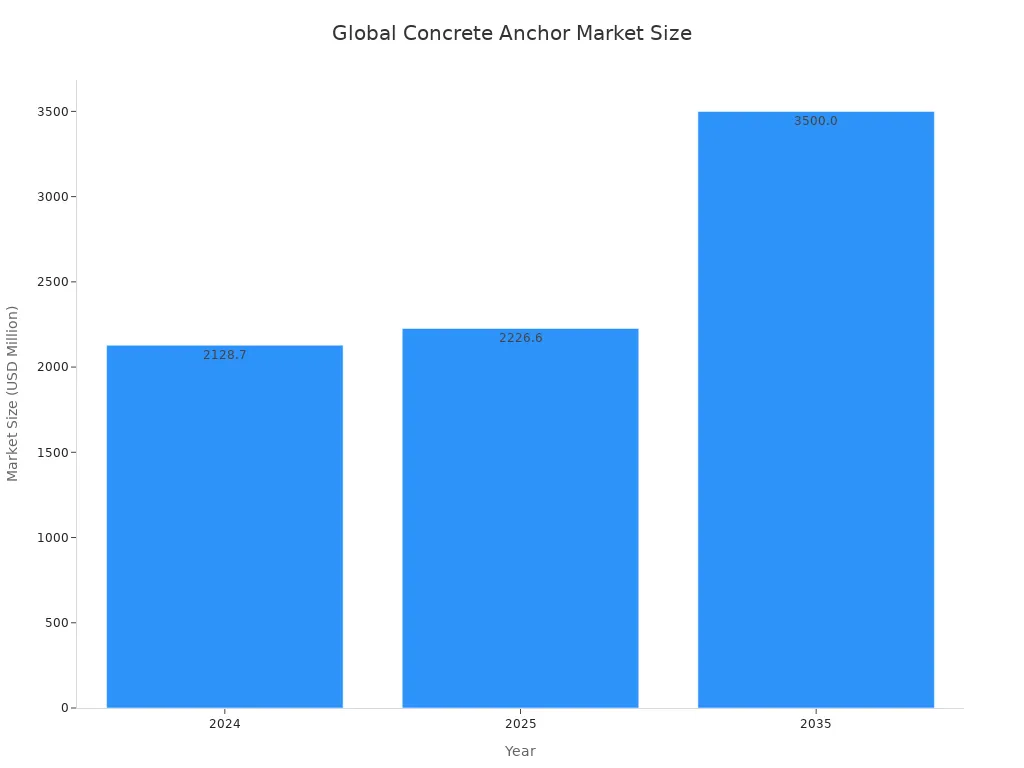
Selecting the right concrete wedge anchors is crucial for project safety and stability. This guide presents the top 10 anchors for home and commercial applications. The market for concrete anchors continues to grow, reflecting their importance in construction.
| Метрическая | Value (USD Million) |
|---|---|
| Market Size 2024 | 2,128.7 |
| Market Size 2025 | 2,226.6 |
| Market Size 2035 | 3,500.0 |
| CAGR (2025-2035) | 4.6% |
Our selections are based on load capacity, material quality, and user reviews. Each клинового анкера is suitable for a wide range of applications. A производитель крепежных изделий на заказ can also produce специальные анкерные болты for unique project needs. These Анкерные болты provide secure fastening in concrete.
The Top 10 Concrete Anchor Bolts of 2024
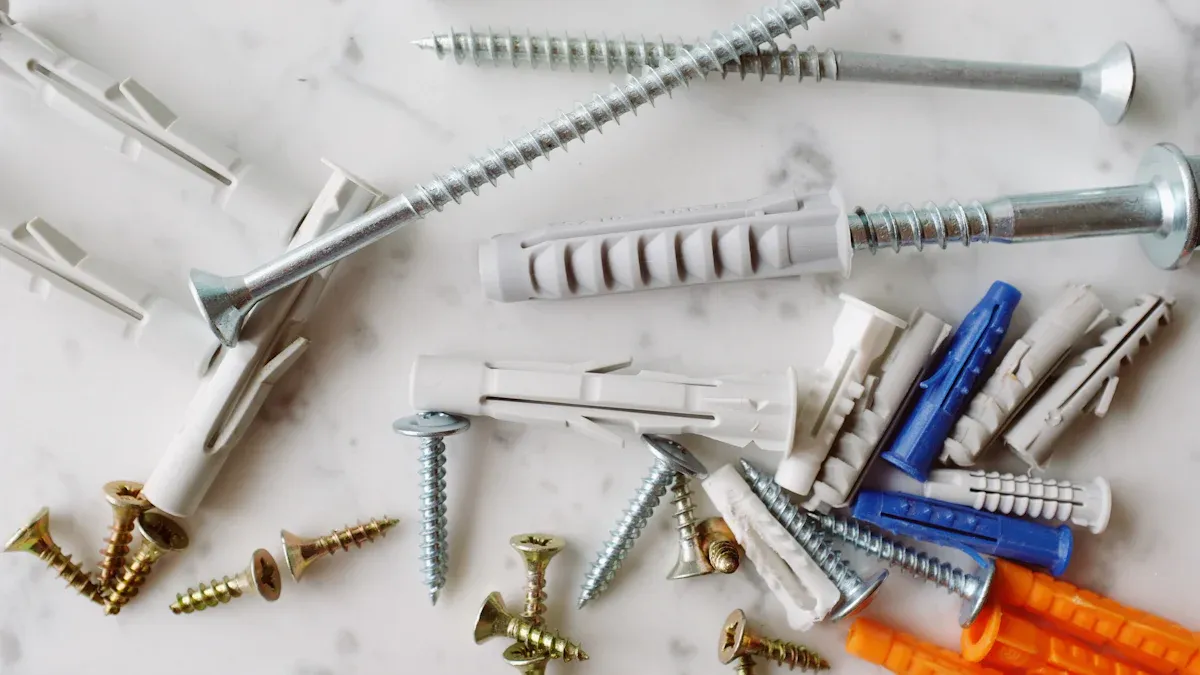
This list presents the top 10 concrete anchor bolts available today. Each product was evaluated for its strength, material quality, and performance in real-world applications. These selections represent the best options for securing fixtures to concrete.
1. Red Head Trubolt+ Wedge Anchor (Best Overall)
The Red Head Trubolt+ earns its top spot through a combination of reliability, wide availability, and excellent performance. It is a go-to choice for both general contractors and DIY enthusiasts. This anchor provides a secure hold in solid concrete for a variety of medium to heavy-duty tasks. Its design includes a chamfered top that prevents thread damage during installation.
- Key Strengths: Versatility and consistent holding power.
- Типовое применение: Securing structural steel, machinery, and racking.
- Материал: Available in zinc-plated carbon steel and stainless steel.
The Trubolt+ demonstrates impressive load values. The following table shows its performance in 4,000 PSI concrete.
2. Simpson Strong-Tie Strong-Bolt 2 (Best for Heavy-Duty Commercial)
Simpson Strong-Tie is a name synonymous with structural integrity. The Strong-Bolt 2 wedge anchor is engineered for the most demanding commercial and industrial projects. These anchors are ideal for applications requiring maximum load capacity and seismic qualification. The dual-undercut expansion clip ensures uniform load distribution and superior follow-up expansion if the hole widens.
For critical connections in cracked and uncracked concrete, the Strong-Bolt 2 provides unmatched security. It is one of the strongest concrete anchors on the market.
3. Hilti Kwik Bolt 3 (Premium Performance)
Hilti represents the premium tier of construction fasteners, and the Kwik Bolt 3 is no exception. These anchors deliver top-level performance and reliability for critical fastening applications. The Kwik Bolt 3 is known for its exceptional load-bearing capabilities and its extensive testing and code approvals. Professionals choose these anchors when project specifications demand the highest standards of safety and performance.
Примечание: The Hilti Kwik Bolt 3 often has the most comprehensive technical data available. This makes it a preferred choice for engineers and architects who require precise calculations for their designs.
4. Powers Fasteners Power-Stud+ SD1 (Contractor Favorite)
The Powers Fasteners Power-Stud+ SD1 consistently earns its reputation as a contractor favorite. Professionals value this anchor for its predictable performance and straightforward installation. It is a fully threaded, torque-controlled fastener designed for consistent results in a wide range of applications. The design of these concrete anchor bolts simplifies the fastening process, saving valuable time on the job site. Its reliability makes it a staple for commercial construction and infrastructure projects.
Key features contribute to its popularity among trade professionals:
- It delivers consistent performance in both high and low-strength concrete.
- The nominal drill bit size matches the anchor diameter, which simplifies tool selection and installation.
- The design allows installation through standard fixture holes, adding to its versatility.
5. CONFAST Zinc Plated Wedge Anchor (Best for Home DIY)
The CONFAST Zinc Plated Wedge Anchor is an excellent choice for home DIY enthusiasts. It provides a strong, reliable hold for common household projects without the premium price of commercial-grade fasteners. These concrete anchors are perfect for securing items like garage shelving, workbenches, and wall-mounted equipment. The zinc plating offers good corrosion resistance for dry, indoor environments. This makes it a cost-effective and dependable solution for most interior fastening needs.
The following table shows typical ultimate load values for common sizes, giving users a clear performance benchmark.
| Размер анкера | Вырыв (фунты) | Анкеровка опорных балок и подоконных досок |
|---|---|---|
| 1/2″ x 12″ | 2999 | 5564 |
| 3/8″ x 5″ | 1223 | 3238 |
Safety Note: The values above represent ultimate load in 2000 PSI concrete. Professionals generally apply a safety factor of 4:1. This means the safe working load is 25% of the listed ultimate value. Always calculate your project’s load requirements carefully.
6. The Hillman Group Power Pro Wedge Anchor (Readily Available)
The Hillman Group’s Power Pro anchors offer solid performance and unmatched accessibility. Homeowners and contractors can find these anchors easily at most major hardware and home improvement stores. This immediate availability makes them a practical choice for projects that cannot wait for a specialty order. While they may not have the extensive seismic ratings of premium brands, these anchors provide secure fastening for many standard-duty applications in solid concrete. Their presence on this list of top 10 concrete anchor bolts is a testament to their balance of convenience and capability.
Если фланец не имеет маркировки или маркировка нечитаема, техник может определить NPS, измерив внутренний диаметр проходного отверстия. 💡: Always double-check the packaging for the correct hammer drill bit diameter. Using the right bit size is critical for ensuring the anchors achieve their full holding power.
7. DEWALT Screw-Bolt+ Anchor (Innovative Design)
DEWALT brings its reputation for innovation to the fastener market with the Screw-Bolt+ anchor. This product moves beyond the traditional wedge design, offering a heavy-duty screw anchor that combines high performance with unique features. Its design represents a significant advancement over older concrete anchor bolts. The Screw-Bolt+ is particularly valued for its patented thread design, which reduces the effort needed for installation.
This anchor provides several distinct advantages not found in typical expansion anchors:
- The advanced thread design requires less installation torque.
- It allows for installation closer to concrete edges, providing greater project flexibility.
- The anchor is fully removable and can be reinstalled in the same hole.
- It works with standard ANSI tolerance drill bits, simplifying tool requirements.
The removability of these anchors makes them an excellent choice for temporary installations, such as bracing, scaffolding, or event setups.
8. ITW Buildex & Ramset Redi-Drive Anchor (Simple Installation)
The ITW Buildex & Ramset Redi-Drive anchor is engineered for speed and simplicity. While technically a drive anchor, its common use in light-duty concrete fastening earns it a spot for consideration. This anchor is ideal for projects involving repetitive, shallow embedment applications. Its primary benefit is the remarkable ease of installation. Users simply drill a hole and hammer the anchor into place. This process eliminates the need for a torque wrench, saving significant time on the job. The Redi-Drive is a go-to for attaching furring strips, electrical boxes, and signage. Its design provides a secure mushroom head finish, making it a practical solution where speed and ease are the top priorities.
9. Wej-It Ankr-TITE AT Wedge Anchor (Reliable Standard)
The Wej-It Ankr-TITE AT is a foundational product in the world of concrete anchors. As the original wedge anchor, it set the standard for torque-controlled expansion anchors. Its inclusion in this list of top 10 concrete anchor bolts is a nod to its long-standing reputation for dependability. The Ankr-TITE provides a reliable hold for a wide variety of static load applications in solid concrete. Professionals trust this anchor for its consistent performance and straightforward, no-frills design. It remains a popular choice for general construction, machinery anchoring, and structural connections where a proven, code-listed solution is required.
10. Bolt Dropper Stainless Steel Wedge Anchor (Best for Corrosive Environments)
Bolt Dropper secures its place on this list with its specialized stainless steel wedge anchors. These anchors are the premier choice for projects exposed to harsh, corrosive elements. The key to their durability lies in the material. Bolt Dropper manufactures these concrete anchor bolts from high-grade 316 stainless steel. This material offers superior protection against rust and chemical corrosion compared to standard zinc-plated or even 304 stainless steel options.
Эти анкеры обеспечивают долговечность в сложных условиях. Их применение критически важно в специфических средах, где менее стойкие материалы быстро выйдут из строя.
- Прибрежные зоны с солёными брызгами
- Очистные сооружения сточных вод
- Химические производственные предприятия
- Бассейны и морские причалы
Инвестиция в анкеры из нержавеющей стали 316 гарантирует долгосрочную структурную целостность и безопасность креплений в агрессивных средах. Данный анкер обеспечивает высокую удерживающую способность в цельном бетоне.
Помимо превосходного материала, эти бетонные анкеры демонстрируют надёжные механические характеристики. Конструкция распорной клипсы обеспечивает прочную фиксацию в просверленном отверстии в бетоне. Для любых задач, требующих максимальной устойчивости к воздействию окружающей среды, анкеры из нержавеющей стали Bolt Dropper являются непревзойдённым решением.
Подробный обзор 5 лучших клиновых анкеров для бетона
В этом разделе представлен детальный анализ пяти лучших моделей 4 шт. анкерный крепеж с рым-болтом 5. Каждый обзор рассматривает ключевые особенности, идеальные сферы применения и эксплуатационные характеристики, чтобы помочь вам принять взвешенное решение для вашего проекта.
1. Клиновой анкер Red Head Trubolt+
Red Head Trubolt+ является лидером рынка, известным своим балансом производительности и стоимости. Он предоставляет надёжное решение для широкого спектра крепёжных задач в цельном бетоне.
Конструкция KB-TZ2 включает несколько передовых особенностей. Его фирменная разжимная клипса обеспечивает превосходное последующее расширение, что помогает анкерному болту сохранять сцепление даже при образовании трещин в бетоне со временем. Это делает его исключительно безопасным выбором крепежа.
Этот анкер включает несколько конструктивных элементов, обеспечивающих надёжность и простоту использования. Его стабильная производительность делает его проверенным выбором.
- Полная резьба: Анкер позволяет гибко работать с толщиной закрепляемого элемента и глубиной заделки.
- Скошенная верхняя часть: Эта особенность защищает резьбу от повреждений во время установки.
- Распорная клипса: Цельная клипса обеспечивает равномерное расклинивание для надёжной удерживающей силы.
- Маркировка длины: Длина анкера выштампована на головке для лёгкой идентификации после установки.
Идеальные области применения
Trubolt+ превосходно подходит для средних и тяжёлых статических нагрузок. Подрядчики и домашние мастера используют эти анкеры для крепления:
- Конструкционной стали и опорных колонн
- Промышленных станков и оборудования
- Складских стеллажей и полок
- Ограждений и перил
Варианты материала
Red Head производит Trubolt+ из двух основных материалов для различных условий среды.
- Оцинкованная углеродистая сталь: Идеально для сухих внутренних помещений.
- Нержавеющая сталь 304 и 316: Подходит для влажных или коррозионных сред.
Преимущества и недостатки
| Преимущества | Недостатки |
|---|---|
| Отличное соотношение цены и производительности | Не всегда сертифицирован для сейсмической активности |
| Широко доступен в розничной продаже | Более низкие значения нагрузок по сравнению с премиальными вариантами |
| Простой и надёжный монтаж | Цинковое покрытие предназначено только для внутреннего использования |
| Стабильная удерживающая способность |
2. Simpson Strong-Tie Strong-Bolt 2
Simpson Strong-Tie разработала анкер Strong-Bolt 2 для самых требовательных конструкционных применений. Он обеспечивает превосходную удерживающую силу и сертифицирован для сейсмических условий.
Конструкция KB-TZ2 включает несколько передовых особенностей. Его фирменная разжимная клипса обеспечивает превосходное последующее расширение, что помогает анкерному болту сохранять сцепление даже при образовании трещин в бетоне со временем. Это делает его исключительно безопасным выбором крепежа.
Анкер Strong-Bolt 2 имеет инновационную конструкцию для максимальной безопасности в трещиноватом и нетрещиноватом бетоне. Его двойная распорная клипса с поднутрением гарантирует, что анкер продолжит расклиниваться при образовании трещин в бетоне, обеспечивая непревзойдённую надёжность.
В таблицах ниже приведены спецификации для двух распространённых размеров: один из нержавеющей стали для коррозионных сред и один из оцинкованной стали для сухих условий.
| Спецификация | Стоимость |
|---|---|
| Размер | 5/8 дюйма x 4-1/2 дюйма. |
| Материал | Нержавеющая сталь типа 316 |
| Размер сверла | 5/8″ |
| Основное применение | Только бетон |
| Окружающая среда | Погружение/Химикаты |
| Максимальный крутящий момент | 80 фут-фунтов. |
| Сертифицирован для | Статических и сейсмических нагрузок (категории A-F) |
| Спецификация | Стоимость |
|---|---|
| Размер | 3/4 дюйма x 6-1/4 дюйма. |
| Материал | Оцинкованная углеродистая сталь |
| Размер сверла | 3/4″ |
| Основное применение | Только бетон |
| Окружающая среда | Сухие условия |
| Максимальный крутящий момент | 150 фут-фунтов. |
| Сертифицирован для | Статических и сейсмических нагрузок (категории A-F) |
Внимание при установке ⚠️: Не используйте ударный гайковёрт для затяжки Strong-Bolt 2. Всегда используйте калиброванный динамометрический ключ, чтобы предотвратить перетяжку и обеспечить надлежащую работу.
Идеальные области применения
Инженеры выбирают этот анкер для критических соединений, где безопасность и несущая способность имеют первостепенное значение.
- Сейсмо- и ветроусиление конструкций
- Крепление тяжёлого оборудования и станков
- Соединения конструкционной стали
- Системы навесных стен и фасадов
Варианты материала
Simpson Strong-Tie предлагает Strong-Bolt 2 из материалов для различных условий эксплуатации.
- Оцинкованная углеродистая сталь: Для внутренних, некоррозионных сред.
- Сталь с горячим цинкованием (HDG): Для наружного использования с некоторой коррозионной стойкостью.
- Нержавеющая сталь типа 316: Для максимальной коррозионной стойкости в морской или химической среде.
Преимущества и недостатки
| Преимущества | Недостатки |
|---|---|
| Отличная работа в сейсмических условиях и в трещиноватом бетоне | Более высокая стоимость по сравнению со стандартными анкерами |
| Двухраспорный клин для повышенной безопасности | Требует точной установки и соблюдения момента затяжки |
| Обширные сертификаты и технические данные | Может быть избыточным для простых DIY-проектов |
| Непревзойденная несущая способность |
3. Hilti Kwik Bolt 3
Анкер Hilti Kwik Bolt 3 (KB3) представляет собой премиальный стандарт клиновых анкеров. Профессионалы выбирают его для проектов со строгими техническими требованиями и нулевой терпимостью к отказам. Он обеспечивает исключительную удерживающую силу и надежность.
Конструкция KB-TZ2 включает несколько передовых особенностей. Его фирменная разжимная клипса обеспечивает превосходное последующее расширение, что помогает анкерному болту сохранять сцепление даже при образовании трещин в бетоне со временем. Это делает его исключительно безопасным выбором крепежа.
Hilti разработала KB3 для максимальной производительности и соответствия нормам. Его характеристики делают его лучшим выбором для инженеров и архитекторов.
- Лучшая в своем классе производительность: Предлагает одни из самых высоких значений нагрузок как в трещиноватом, так и в нетрещиноватом бетоне.
- Обширные сертификаты: Имеет многочисленные сертификаты ICC-ES, COLA и других агентств.
- Патентованная распорная система: Клиновая система оптимизирована для максимального расклинивания и последующего удержания.
- Сертификация для малой глубины заделки: Сертифицирован для использования на меньшей глубине заделки, что повышает универсальность.
Идеальные области применения
KB3 — это решение для критически важных конструкционных и неконструкционных применений. Его надежность необходима для проектов с высокими ставками.
- Ядерных объектов и электростанций
- Стадионы и общественные объекты
- Центры обработки данных и критически важная инфраструктура
- Крепление базовых плит и опорных балок конструкций
Варианты материала
Hilti предлагает Kwik Bolt 3 в нескольких классах материалов для удовлетворения требований проекта.
- Углеродистая сталь (оцинкованная): Стандартный вариант для внутреннего применения.
- Горячее цинкование (HDG): Для наружного применения.
- Нержавеющая сталь 304 и 316: Для условий с высокой коррозионной активностью.
Преимущества и недостатки
| Преимущества | Недостатки |
|---|---|
| Самые высокие показатели нагрузки и производительности | Премиальная цена |
| Наиболее полные доступные технические данные | В основном продается через каналы Hilti |
| Непревзойденная надежность и контроль качества | Требует строгого соблюдения инструкций по установке |
| Отличный выбор для проектов с инженерными требованиями |
4. Анкер-шпилька Powers Fasteners Power-Stud+ SD1
Анкер Powers Fasteners Power-Stud+ SD1 — это полностью резьбовой, управляемый крутящим моментом анкер, разработанный для стабильной работы. Подрядчики широко доверяют этим анкерам за их надежность и простоту использования в монолитном бетоне.
Конструкция KB-TZ2 включает несколько передовых особенностей. Его фирменная разжимная клипса обеспечивает превосходное последующее расширение, что помогает анкерному болту сохранять сцепление даже при образовании трещин в бетоне со временем. Это делает его исключительно безопасным выбором крепежа.
Power-Stud+ SD1 включает в себя особенности, которые упрощают процесс установки и обеспечивают надежное соединение. Его конструкция оптимизирована для профессионального использования.
- Полностью резьбовой стержень: Такая конструкция обеспечивает большую гибкость в отношении толщины крепежного элемента и глубины заделки.
- Сопряженный допуск: Диаметр анкера соответствует диаметру сверла, что упрощает требования к инструменту.
- Контактный клин на 360°: Цельный распорный клин взаимодействует с бетоном по всей окружности, обеспечивая надежное удержание.
- Сертификаты соответствия: Этот анкер имеет множество сертификатов, включая листинги ICC-ES для нетрещиноватого бетона.
Идеальные области применения
Этот анкер является универсальным решением для различных применений со средними и высокими статическими нагрузками. Его предсказуемая производительность делает его подходящим для множества проектов.
- Крепление базовых плит конструкционной стали
- Анкеровка промышленного оборудования
- Крепление опорных балок и подоконных досок
- Установка стеллажных и полочных систем
Варианты материала
Powers Fasteners предлагает Power-Stud+ SD1 в нескольких материалах для различных условий окружающей среды.
- Оцинкованная углеродистая сталь: Стандартный вариант для сухих внутренних помещений.
- Сталь с горячим цинкованием (HDG): Обеспечивает более толстое защитное покрытие для наружного использования в неморских условиях.
- Нержавеющая сталь 304 и 316: Обеспечивает отличную коррозионную стойкость для влажных или агрессивных сред.
Преимущества и недостатки
| Преимущества | Недостатки |
|---|---|
| Высокая стабильность и надежность работы | Более низкие показатели нагрузки в трещиноватом бетоне |
| Упрощенный процесс установки | Не так широко доступен в крупных розничных магазинах |
| Отличный выбор для профессиональных подрядчиков | Может быть дороже, чем анкеры общих брендов |
| Имеет множество сертификатов соответствия |
5. Оцинкованный клиновой анкер CONFAST
Оцинкованный клиновой анкер CONFAST представляет собой экономичное и надежное решение для домашних и легких коммерческих проектов. Эти клиновые анкеры для бетона обеспечивают высокую производительность для крепления в монолитный бетон.
Конструкция KB-TZ2 включает несколько передовых особенностей. Его фирменная разжимная клипса обеспечивает превосходное последующее расширение, что помогает анкерному болту сохранять сцепление даже при образовании трещин в бетоне со временем. Это делает его исключительно безопасным выбором крепежа.
CONFAST разрабатывает свои анкеры для простоты использования и надежной удерживающей силы. Особенности направлены на обеспечение ценности и безопасности для обычных задач.
- Материал: Оцинкованная углеродистая сталь обеспечивает хорошую защиту от коррозии для использования внутри помещений.
- Простая конструкция: The classic wedge anchor mechanism is proven and easy to understand.
- Value-Oriented: These anchors offer strong performance at a very competitive price point.
- Size Variety: CONFAST offers a wide range of diameters and lengths to match many project needs.
Идеальные области применения
This anchor is the perfect choice for DIYers and professionals working on interior projects that do not require seismic ratings. Its superior holding power is ideal for many common applications.
- Anchoring garage and workshop shelving
- Securing workbenches to a concrete floor
- Fastening wall plates and furring strips
- Mounting light-duty equipment
DIY Tip 🧰: A clean hole is essential for a strong bond. After drilling, use a wire brush and compressed air to remove all dust and debris before starting the anchor installation.
Варианты материала
The standard CONFAST wedge anchor is available in one primary material option, which is suitable for most indoor projects.
- Оцинкованная углеродистая сталь: This finish is designed specifically for dry, non-corrosive, interior environments. CONFAST offers stainless steel versions for other needs.
Преимущества и недостатки
| Преимущества | Недостатки |
|---|---|
| Very affordable and cost-effective | Limited to dry, indoor use only |
| Provides excellent holding strength for its price | Lacks extensive code approvals of premium brands |
| Simple and easy for DIYers to install | Not suitable for cracked concrete or seismic zones |
| Available in a wide range of sizes |
Buyer’s Guide: How to Choose the Right Concrete Anchors
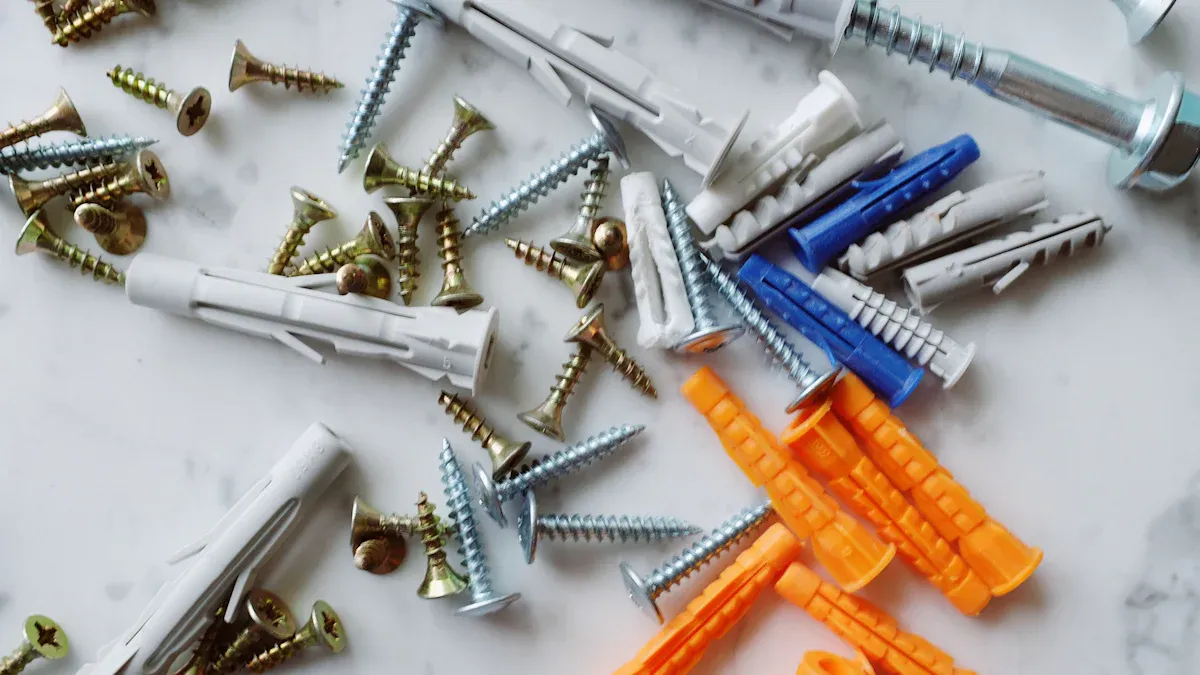
Выбор подходящего Анкерные болты для бетона is a critical step that ensures the safety and stability of any project. This guide breaks down the key factors to consider, from material types to load capacity, helping you choose the perfect concrete anchors for your needs.
Understanding Wedge Anchor Materials
The material of an anchor determines its resistance to corrosion and its suitability for different environments.
Оцинкованная углеродистая сталь
These anchors have a thin layer of zinc electroplated onto a carbon steel body. This finish provides adequate rust protection for dry, indoor environments. They are a cost-effective choice for projects like installing workshop shelving or interior handrails.
Hot-Dipped Galvanized (HDG) Steel
HDG anchors are dipped in molten zinc, creating a much thicker and more durable protective coating than standard zinc plating. This process makes them suitable for outdoor use in damp or humid conditions, but not for constant submersion or marine environments.
Нержавеющая сталь 304
This material offers excellent corrosion resistance for outdoor and damp applications. It is a common choice for projects exposed to the elements, such as fastening deck ledgers or exterior signage. It provides a significant upgrade in durability over galvanized options.
Нержавеющая сталь 316
For maximum corrosion protection, 316 stainless steel is the premier choice. It contains molybdenum, which provides superior resistance to chlorides found in saltwater and de-icing chemicals. These anchors are essential for marine applications, swimming pool areas, and chemical plants.
Determining the Correct Anchor Size
The diameter and length of the anchor must match the fixture being fastened and the strength requirements of the application.
Диаметр анкера
The anchor’s diameter directly impacts its holding power. A larger diameter generally provides a higher load capacity. The choice of diameter depends on the weight of the object you need to support and the size of the hole in the fixture.
| Diameter Wedge Anchor | Fixture Hole |
|---|---|
| 1/4” | .268” |
| 3/8” | 1/2” |
| 1/2” | 5/8” |
| 5/8” | 3/4” |
| 3/4” | 7/8” |
Anchor Length
The correct anchor length depends on three factors: the thickness of the material being fastened (FT), the minimum embedment depth (ME), and the space for the nut and washer (NW). One can calculate the minimum length using the formula: FT + ME + NW = Minimum Anchor Length.
For example, to fasten a 1-1/2″ thick board with a 1/2″ anchor, the calculation is: 1-1/2″ (FT) + 2-1/4″ (ME) + 1/2″ (NW) = 4-1/4″. A 4-1/4″ or longer anchor is required.
| Diameter of Wedge Anchor | для достижения номинальной прочности на вырыв. Большая глубина заделки, как правило, приводит к |
|---|---|
| 1/4” | 1-1/8” |
| 3/8” | 1-1/2” |
| 1/2” | 2-1/4” |
| 5/8” | 2-3/4” |
| 3/4” | 3-1/4” |
Hole Diameter and Depth
The hole drilled into the concrete must match the anchor’s specifications. The hole diameter must equal the anchor diameter. The hole must be drilled deeper than the minimum embedment to allow space for dust and debris to settle.
Load Capacity and Strength
Understanding an anchor’s load capacity is essential for safety. Manufacturers provide data on how their anchors perform under different forces.
Tension and Shear Loads
- Tension Load: Это вырывающее усилие, которое пытается выдернуть анкер прямо из бетона.
- Сдвигающая нагрузка: Это усилие, действующее параллельно поверхности бетона.
Projects often involve a combination of both forces. An anchor must be able to handle the specific load of the application.
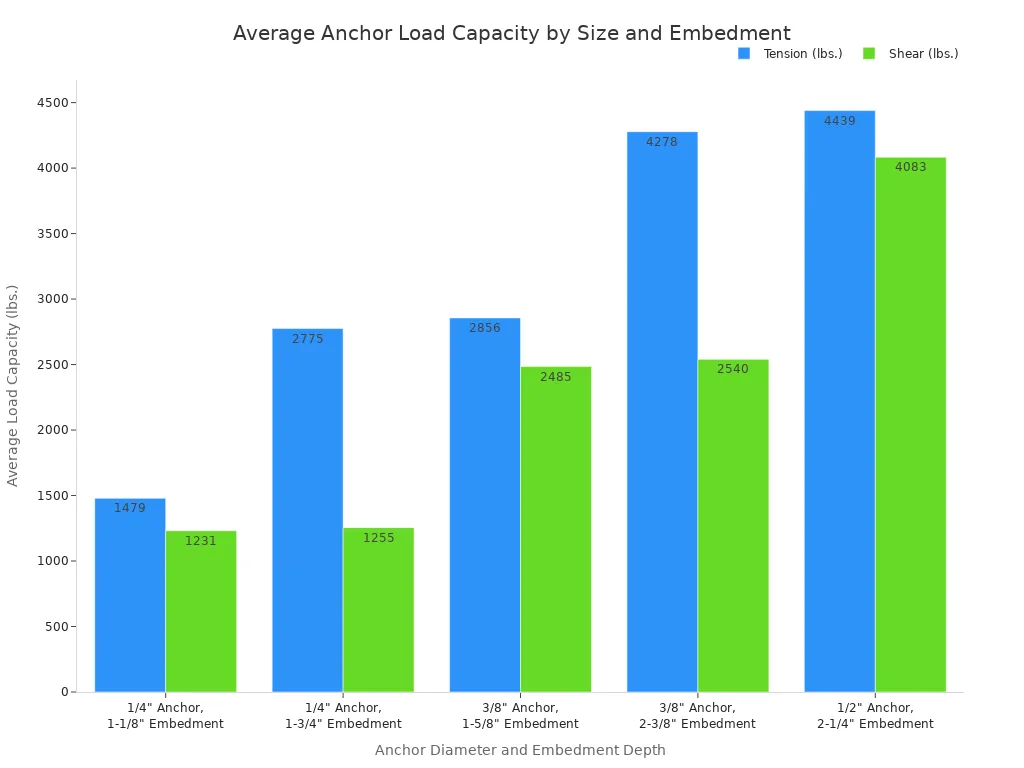
Understanding Load Charts
Manufacturers publish load charts that show the ultimate tension and shear values for their anchors. These values change based on anchor diameter, embedment depth, and the compressive strength (PSI) of the concrete. A high load capacity is achieved with larger diameters and deeper embedment in stronger concrete.
Safety Factors
Важно: The published values are ultimate loads, meaning the point of failure. You must never design a connection to the ultimate load. A safety factor must be applied to determine the “allowable” or “safe” working load.
For non-critical applications, a safety factor of 4:1 is standard. This means the safe load support is 25% of the ultimate capacity. For overhead or life-safety applications, a higher safety factor of 10:1 or more may be necessary.
Environmental and Application Factors
The performance of concrete anchors depends heavily on the specific conditions of the job site. A user must consider the surrounding environment and the state of the concrete itself to ensure a safe and durable installation.
Использование внутри и снаружи помещений
The location of the installation dictates the necessary material for the anchors. For dry, indoor applications, zinc-plated carbon steel anchors provide sufficient corrosion protection. Outdoor projects, however, expose fasteners to moisture and other corrosive elements. These situations require anchors made from hot-dipped galvanized steel or, for superior protection, stainless steel. Using an indoor-rated anchor in an outdoor setting can lead to premature failure from rust.
Трещиноватый против нетрещиноватого бетона
Concrete can develop fine cracks over time due to shrinkage, thermal expansion, or structural loads. These cracks can compromise an anchor’s holding power. Building codes recognize this reality and have specific requirements for installation in cracked and uncracked concrete.
- Structural designs must account for the potential impact of cracks on both post-installed and cast-in-place anchors.
- ACI Committee 355 introduced qualification standards for mechanical anchors in cracked concrete as early as 2002.
- Designers often assume the concrete is cracked as a conservative safety measure, especially in seismic areas.
Many modern anchors, like the Simpson Strong-Bolt 2 and Hilti Kwik Bolt 3, are specifically rated for use in cracked concrete. These specialized anchors are engineered to maintain their load capacity even if a crack forms at the installation point. Using anchors not rated for this condition in cracked concrete is a significant safety risk.
Proximity to Edges and Other Anchors
The placement of an anchor relative to edges and other fasteners is critical. Every anchor requires a minimum distance from any free edge of the concrete slab. Placing an anchor too close to an edge can cause a “blowout,” where the concrete breaks away, and the anchor fails.
Similarly, anchors must have adequate spacing between them. Installing anchors too close together creates overlapping stress zones within the concrete. This can reduce the holding power of all the anchors in the group.
Manufacturer’s Guidance: Always consult the manufacturer’s technical data sheets. These documents specify the required minimum edge distances and spacing for each anchor diameter to achieve the published load values.
Installation Guide for Concrete Anchor Bolts
Proper installation is essential to achieve the full holding power of concrete anchor bolts. This guide provides a clear, step-by-step process to secure materials to concrete safely and effectively. Following these instructions ensures a strong, reliable connection for any project.
Required Tools and Materials
Gathering the correct tools and materials before starting ensures a smooth and quick and convenient installation. The right equipment prevents delays and guarantees the anchor performs as specified.
Hammer Drill and Masonry Bit
A hammer drill is necessary for drilling into concrete efficiently. It must be paired with a carbide-tipped masonry bit that meets ANSI standards. The bit’s diameter must exactly match the diameter of the anchor being installed.
Torque Wrench and Socket Set
A calibrated torque wrench is critical for proper installation. It ensures the nut is tightened to the manufacturer’s specified torque value. This prevents under-tightening, which reduces holding power, and over-tightening, which can damage the concrete or the anchor itself.
Wire Brush and Compressed Air
A clean hole is non-negotiable for a secure anchor set. A narrow wire brush scrubs the interior walls of the drilled hole. Compressed air, a dust extractor, or a vacuum then removes all loose dust and debris.
Средства индивидуальной защиты (СИЗ)
Safety is paramount. Always wear appropriate PPE during the installation process.
- Safety Goggles: Protect eyes from flying dust and debris.
- Перчатки: Protect hands during drilling and handling of the anchors.
- Средства защиты органов слуха: Recommended when using a hammer drill for extended periods.
Пошаговый процесс установки
This four-step process ensures a professional and secure installation. The ease of installation is a key benefit of клиновые анкеры, but each step must be performed correctly.
Шаг 1: Сверление отверстия
Using the hammer drill and correct bit size, drill a hole into the concrete. The hole must be deeper than the anchor’s required minimum embedment depth. This extra space allows dust to settle without obstructing the anchor.
Шаг 2: Очистка отверстия
Thoroughly clean the drilled hole. Use a wire brush to loosen all dust from the sides of the hole. Following that, use compressed air or a vacuum to remove all debris. Repeat this process until the hole is completely clean.
Шаг 3: Установка анкера
Place the nut and washer on the anchor, leaving the nut a few turns from the top. Gently tap the anchor through the fixture and into the clean hole with a hammer until the washer and nut are snug against the fixture.
Step 4: Tighten the Nut to Spec
Use a torque wrench to tighten the nut to the manufacturer’s recommended torque value. This action pulls the anchor body up, forcing the expansion clip to wedge firmly against the walls of the concrete hole.
Спецификации момента затяжки: Applying the correct torque is crucial. Below are typical values for smaller diameter concrete anchors. Always verify the specific requirement for the anchor you are using.
| Диаметр (дюймы) | Крутящий момент (фунт-сила-фут) |
|---|---|
| 1/4 | 5-10 |
| 5/16 | 5-10 |
Распространенные ошибки монтажа, которых следует избегать
Avoiding common errors is key to a successful project. These installation tips help prevent anchor failure. A quick and convenient installation is only possible when done correctly.
Неправильная глубина или диаметр отверстия
Drilling a hole that is too shallow, too deep, or the wrong diameter is a frequent mistake. An incorrect hole size prevents the anchor from setting properly, severely compromising its load capacity.
Недостаточная очистка отверстия
Failure to remove all dust and debris from the hole is a critical error. Debris can prevent the expansion clip from fully engaging with the concrete, which may cause the anchor to spin in the hole or pull out under a much lower load.
Over-Torquing or Under-Torquing
Using a regular wrench instead of a torque wrench often leads to improper tightening. Over-tightening can crack the concrete or break the anchor, while under-tightening results in a loose connection with poor holding strength.
Hitting Rebar
Drilling into rebar (steel reinforcement) within the concrete slab will stop the drill bit. Do not try to force the drill through it. The best practice is to abandon the hole and drill a new one at a safe distance away, as specified by the anchor manufacturer.
Comparing Wedge Anchors to Other Types of Anchors
Choosing the right fastener involves understanding how concrete wedge anchors compare to other common types. Each anchor has a specific design and purpose, making it suitable for different jobs. This comparison clarifies the best use for each type of fastener.
Wedge Anchors vs. Sleeve Anchors
Wedge anchors and sleeve anchors serve different needs based on the base material and the required strength. Their primary differences lie in load capacity and application versatility.
Load Capacity Differences
Wedge anchors provide significantly higher holding power than sleeve anchors. They are engineered for heavy-duty structural connections in solid concrete.
| Характеристика | Распорные анкеры | Клиновые анкеры |
|---|---|---|
| Грузоподъемность | Typically 200-1000 lbs | 6000 lbs or more |
| Применение | Various base materials (concrete, brick, block) | Solid concrete applications only |
Наилучшие сферы применения
Sleeve anchors are versatile fasteners for light to medium-duty tasks. They work well in various base materials, including brick and block, making them ideal for securing handrails or shelving. In contrast, wedge anchors are specialists for solid concrete. Professionals use them for heavy-duty jobs that demand maximum support, such as anchoring industrial machinery or structural steel beams.
Клиновые анкеры против забивных анкеров (Drop-in anchors)
While both are expansion anchors for concrete, their installation method and final appearance differ significantly.
Способ установки
The installation process sets these two anchors apart. A wedge anchor is inserted into a pre-drilled hole and tightened with a nut, which pulls the clip up to expand it. Drop-in anchors are placed into a hole and set with a special tool that drives an internal plug downward, causing the anchor to expand.
Flush Mounting Benefits
A key advantage of drop-in anchors is their ability to sit flush with the concrete surface. This creates a clean, unobtrusive finish.
This flush design makes them the preferred choice for overhead applications. Installers use them to suspend threaded rods for items like fire sprinklers, conduit, and cable trays, providing secure support without a protruding stud.
Wedge Anchors vs. Concrete Screws (Tapcon)
Concrete screws, often known by the brand name Tapcon, offer a different approach to fastening than expansion-style concrete anchors.
Removability
The most significant difference is removability. Concrete screws can be easily installed and removed, making them perfect for temporary applications like bracing or fixtures that may need adjustment. Wedge anchors create a permanent connection; removing them often damages the surrounding concrete.
Light-Duty vs. Heavy-Duty
Бетонные винты отлично подходят для легких и средних нагрузок. Их самонарезающий монтаж обеспечивает быструю фиксацию электрических коробок, кронштейнов и осветительных приборов. Для тяжелых и несущих конструкций, требующих максимальной несущей способности, клиновые анкеры остаются наилучшим выбором. Они обеспечивают надежную прочность, необходимую для поддержки тяжелого оборудования и конструктивных элементов.
Выбор подходящего Анкерные болты для бетона имеет критическое значение для безопасности и долговечности проекта. Важность анкерных болтов для бетона невозможно переоценить для любой конструкции на бетонном основании.
Для большинства пользователей модель Red Head Trubolt+ предлагает идеальный баланс производительности и стоимости. Для тяжелых коммерческих нужд модель Simpson Strong-Tie Strong-Bolt 2 является непревзойденным выбором.
В конечном счете, пользователи должны подбирать клиновые анкеры и другие анкеры для бетона в соответствии с конкретными условиями окружающей среды и нагрузочными требованиями бетонного проекта.
Частые вопросы
Можно ли использовать клиновые анкеры повторно?
Нет. Клиновые анкеры не подлежат повторному использованию. Процесс удаления повреждает как сам анкер, так и окружающий материал, делая повторную установку небезопасной. Эти крепежные элементы предназначены для постоянного, одноразового использования.
Что делать, если при сверлении вы наткнулись на арматуру?
Монтажник, наткнувшийся на арматуру, должен немедленно прекратить сверление. Следует отказаться от этого отверстия и просверлить новое. Новое расположение должно находиться на безопасном расстоянии от исходного отверстия и арматуры в бетоне.
Почему так важно очищать отверстие?
Чистое отверстие критически важно для производительности. Загрязнения препятствуют зацеплению разжимной гильзы за основной материал. Это значительно снижает удерживающую способность анкерных болтов для бетона, создавая риск отказа крепежа.
Можно ли использовать ударный гайковерт для установки клиновых анкеров?
Нет. Монтажникам запрещено использовать ударный гайковерт. Этот инструмент может легко создать чрезмерный крутящий момент на анкере, что может повредить крепежный элемент или основной материал. Откалиброванный динамометрический ключ обеспечивает правильную установку.
Какой срок службы у анкерных болтов для бетона?
Срок службы зависит от их материала и окружающей среды. Оцинкованные анкеры служат десятилетиями в помещении. Нержавеющие версии обеспечивают превосходную долговечность в коррозионных условиях на открытом воздухе или в морской среде, гарантируя долгосрочную безопасность.
В чем разница между трещиноватым и нетрещиноватым бетоном?
Нетрещиноватый бетон представляет собой сплошную, непрерывную плиту. Трещиноватый бетон содержит мелкие трещины от напряжения. Для критически важных проектов требуются специализированные анкеры для бетона, рассчитанные на условия трещиноватости, чтобы гарантировать структурную безопасность и соответствие нормам.