
Выбор правильного анкера имеет решающее значение для безопасности и устойчивости проекта. Профессионалы выбирают клиновые анкеры для особо ответственных конструкционных нагрузок исключительно в цельном бетоне. В то же время, гильзовые анкеры предоставляют универсальность для крепления средних нагрузок в таких материалах, как бетон, кирпич и блоки. Рынок Анкерные болты отражает эту специализацию, где различные типы служат конкретным потребностям. производитель крепежных изделий на заказ часто производит как стандартные типы, так и специальные анкерные болты для уникальных требований.
Обзор отрасли: Доля рынка металлических анкеров Эти данные подчеркивают распространенность различных типов анкеров в строительстве.
| Тип анкера | Доля рынка |
|---|---|
| Клиновые анкеры | 11.4% |
| Винты по бетону | 9.5% |
| Распорные и гвоздевые анкеры | 5.7% |
| Забивные анкеры | 4.6% |
Краткий ответ: Когда использовать каждый анкер
Выбор правильного анкера предотвращает неудачу проекта. Решение между клиновыми и распорными анкерами полностью зависит от требований к нагрузке и основного материала.
Используйте клиновые анкеры для…
Профессионалы выбирают клиновые анкеры для самых ответственных задач, где прочность и долговечность не подлежат обсуждению. Эти крепежные элементы являются специалистами, а не универсалами.
Особо ответственные конструкционные нагрузки
Клиновые анкеры спроектированы для восприятия значительных тяжелых нагрузок. Они являются стандартом для критически важных конструкционных соединений, таких как крепление стальных колонн, опорных балок и стеллажных систем. Их конструкция обеспечивает мощное сцепление для этих критически важных применений.
Только монолитный бетон
Удерживающая способность этого анкера зависит от твердого, плотного бетона. Монтажники никогда не должны использовать клиновые анкеры в более мягких или пустотелых материалах, таких как кирпич или шлакоблок. Распорное усилие может расколоть или разрушить эти более слабые основные материалы, что приведет к полному отказу соединения.
Постоянные установки
Клиновой анкер обеспечивает постоянное конструкционное соединение. После установки и затяжки он не предназначен для демонтажа. Это делает его идеальным для креплений, которые останутся на месте в течение всего срока службы здания.
Крепление тяжелого оборудования
В промышленных условиях часто требуется прикреплять тяжелое оборудование к бетонным полам. Огромная прочность клиновых анкеров на растяжение и срез делает их единственным подходящим выбором для крепления токарных станков, прессов и другого крупного оборудования, создающего значительную вибрацию и нагрузки.
Используйте распорные анкеры для…
Распорные анкеры предлагают отличную универсальность для широкого спектра обычных проектов. Они обеспечивают надежную удерживающую способность в различных материалах, где клиновой анкер был бы неприемлем.
Средние неконструкционные нагрузки
Распорные анкеры превосходно подходят для применений, не связанных с основным конструкционным креплением. Их несущая способность подходит для многих повседневных нужд. Например, некоторые типы, такие как анкеры Молли, выдерживают нагрузки 11-23 кг. Более крупные распорные анкеры предлагают значительно большую прочность.
| Тип анкерного болта | Диаметр (дюймы) | Несущая способность на растяжение (фунты) | Несущая способность на сдвиг (фунты) |
|---|---|---|---|
| Рукавный анкер | 1/2″ | 1,800 | 2,200 |
Примечание: Всегда сверяйтесь со спецификациями производителя и применяйте коэффициенты безопасности. Приведенные выше значения носят иллюстративный характер для цельногобетона.
Универсальные каменные материалы
Ключевое преимущество этого анкера — его адаптивность. Он эффективно функционирует в цельном бетоне, кирпиче, а также в пустотелых или заполненных раствором шлакоблоках (CMU). Расширяющаяся гильза обеспечивает надежное сцепление с широким спектром каменных материалов.
Съемные или временные крепления
В отличие от своих постоянных аналогов, распорные анкеры можно удалить после использования. Монтажник может открутить болт или гайку, что позволяет снять крепление. Сама гильза может остаться в отверстии, но соединение не является постоянным.
Монтаж поручней и полок
Обычные проекты, такие как установка поручней, настенных полок и оконных решеток, идеально подходят для распорных анкеров. Они обеспечивают прочное, надежное крепление для этих креплений средней нагрузки в бетонных или кирпичных стенах.
Понимание механики: Как они сцепляются

Эффективность анкера зависит от его механической конструкции. Клиновые и распорные анкеры используют различные методы расширения для создания надежного сцепления внутри каменной кладки.
Как клиновые анкеры создают надежное сцепление
Клиновые анкеры создают огромное усилие за счет простого, но мощного механического действия, что делает их специалистами для цельногобетона.
Механизм расширительной клипсы
Конструкция анкера создает мощный клиновой эффект внутри бетона. Процесс установки следует точной последовательности:
- Монтажник помещает анкер в предварительно просверленное отверстие.
- Затягивание гайки тянет резьбовую часть анкера вверх.
- Это движение вверх заставляет расширительную клипсу перемещаться вниз по коническому концу анкера.
- Клипса расширяется наружу, плотно заклиниваясь между телом анкера и стенкой бетонного отверстия.
Роль крутящего момента и трения
Приложение правильного крутящего момента к гайке критически важно. Это вращательное усилие создает тянущее действие, которое расширяет клипсу. Удерживающая способность анкера возникает в результате трения и механического зацепления. Зубья клипсы врезаются в бетон, создавая мощное сцепление, сопротивляющееся вырывающим усилиям.
Почему им нужен цельнобетон
Интенсивное, сконцентрированное усилие от расширяющейся клипсы требует твердого, высокопрочного основного материала. Вот почему монтажники должны использовать клиновые анкеры только в цельном бетоне. Использование этого анкера в более мягких или пустотелых материалах, таких как кирпич или блок, приведет к растрескиванию и разрушению основного материала.
Передача нагрузки в бетон
Правильно установленный клиновой анкер создает надежное крепление, эффективно передавая нагрузки. Усилие от закрепленного элемента передается вниз по телу анкера и распределяется в бетоне через расширенную клипсу, обеспечивая стабильное и постоянное соединение.
Как распорные анкеры адаптируются и расширяются
Распорные анкеры предлагают большую универсальность, используя другой метод расширения, подходящий для более широкого спектра материалов.
360-градусное расширение гильзы
Конструкция распорных анкеров обеспечивает полную 360-градусную площадь контакта внутри отверстия. Эта особенность гарантирует равномерное распределение напряжения по основному материалу. Это сбалансированное давление имеет решающее значение для его эффективного сцепления в различных типах каменной кладки, от цельногобетона до пустотелых блоков.
Сцепление в пустотах или неровных полостях
Способность гильзы расширяться по всей своей длине позволяет ей работать в пустотелых материалах. По мере расширения гильза может перекрывать пустоты внутри шлакоблока или адаптироваться к небольшим неровностям просверленного отверстия, обеспечивая надежное сцепление там, где другие анкеры не справятся.
Как работает конический болт
The expansion mechanism is straightforward. As an installer tightens the head of the bolt or nut, it pulls a tapered, cone-shaped expander plug up into the sleeve. This action forces the sleeve to flare outwards, pressing it firmly against the walls of the hole.
Performance in Softer Masonry
The even pressure from the 360-degree expansion makes sleeve anchors ideal for softer or more brittle masonry. The force is spread over a larger surface area, significantly reducing the risk of cracking or damaging brick or older concrete.
Comparative Analysis: Sleeve Anchors vs. Wedge Anchors
This comparative analysis explores the key differences and selection criteria between these two popular fasteners. A professional’s choice depends on a deep understanding of each anchor’s advantages and limitations. The primary factors are holding power and load capacity, followed closely by base material compatibility.
Holding Strength and Load Capacity
The most critical distinction between these anchors lies in their ability to handle weight. The load-bearing requirements of a project will immediately narrow the selection. Examining the holding power and load capacity reveals why each anchor has a specific role.
Wedge Anchor: Ultimate Tensile Strength
Клиновые анкеры provide the highest ultimate tensile and shear strength among common mechanical anchors. Their design is optimized for heavy structural applications where failure is not an option. The anchor’s performance is directly tied to its diameter and the strength of the concrete it is set in.
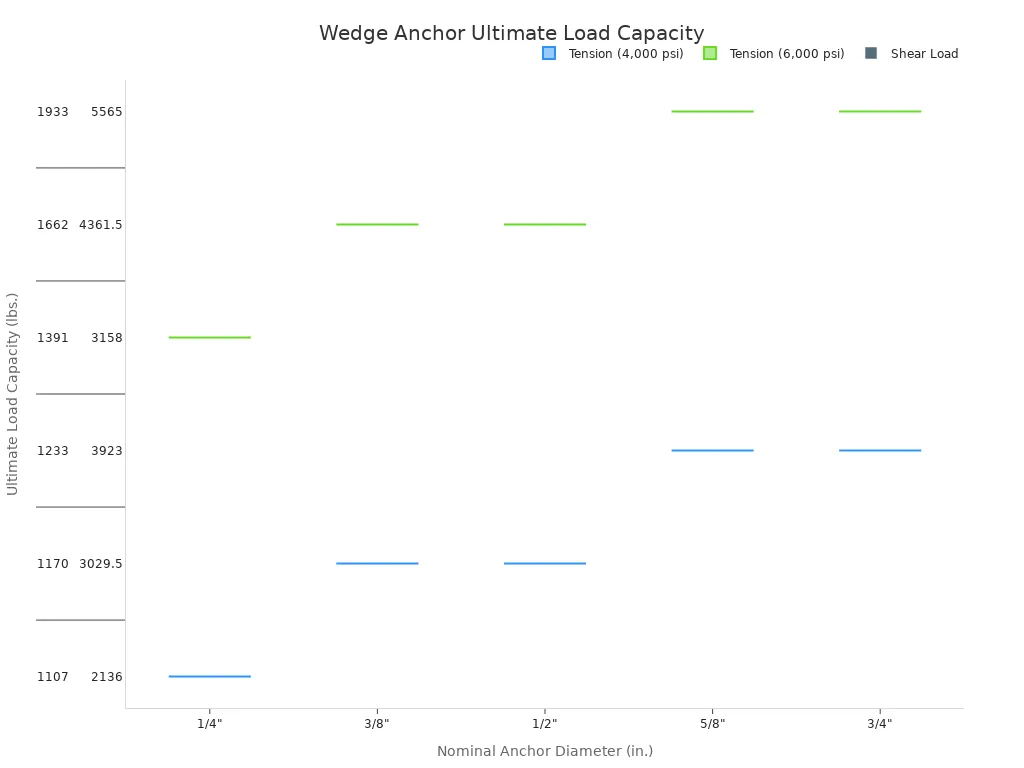
The following data illustrates the immense load capacity of wedge anchors in different concrete strengths.
| Номинальный диаметр анкера (дюйм) | Прочность бетона на сжатие (psi) | Ultimate Tension Load Capacity (lbs.) | Ultimate Shear Load Capacity (lbs.) |
|---|---|---|---|
| 1/4″ | 4,000 | 1,107 – 1,233 | 2,615 |
| 3/8″ | 4,000 | 2,136 – 3,923 | 5,510 |
| 1/2″ | 4,000 | 3,084 – 4,587 | 7,116 |
| 5/8″ | 4,000 | 6,054 – 9,155 | 9,043 |
| 3/4″ | 4,000 | 7,971 – 8,304 | 15,723 |
Sleeve Anchor: Reliable Medium-Duty Performance
Гильзовые анкеры offer dependable performance for medium-duty applications. They are not intended for primary structural connections. Their holding power is more than sufficient for tasks like securing handrails, conduit, or shelving. The 360-degree expansion of the sleeve provides a consistent and reliable grip, but it cannot match the raw power of a wedge anchor’s focused expansion clip.
Understanding Shear vs. Tensile Loads
An anchor must resist two primary types of forces. Understanding these key differences is essential for proper selection.
- Растягивающая нагрузка: This is a pull-out force that tries to pull the anchor straight out of the hole. Hanging a heavy object from the ceiling would apply a tensile load.
- Сдвигающая нагрузка: This is a side-to-side force that acts perpendicular to the anchor. Attaching a ledger board to a wall creates a shear load.
An anchor’s capacity for each load type can be very different. For example, a 1/2″ wedge anchor might have an ultimate shear capacity of 7,116 lbs but a lower ultimate tension capacity of 4,587 lbs.
Applying Safety Factors
Manufacturers publish “ultimate” load values. These represent the point of failure in lab conditions. Professionals never design a connection to an anchor’s ultimate load.
Безопасность прежде всего: Always apply a safety factor. The industry standard is a 4:1 ratio. This means you should divide the ultimate load by four to determine the safe “working load.” For an anchor with an ultimate tension of 4,000 lbs, the safe working load is 1,000 lbs.
Совместимость с основным материалом
The material you are drilling into is just as important as the load you are fastening. The interaction between the anchor and the base material determines the success or failure of the installation.
Wedge Anchors: The Concrete Specialist
Wedge anchors are specialists. They are engineered for one material only: solid concrete. Their expansion mechanism generates immense, localized pressure. This requires a dense, strong substrate that can withstand these forces without cracking or spalling. They are the premier choice for any heavy-duty fastening into a solid concrete slab or wall.
Sleeve Anchors: The Masonry All-Rounder
Sleeve anchors are versatile generalists. Their gentle, 360-degree expansion mechanism makes them suitable for a wide range of masonry materials. Installers can confidently use them in:
- Массивный бетон
- Brick
- Hollow Cinder Block (CMU)
- Grout-Filled Block
This adaptability makes sleeve anchors a go-to solution for many commercial and residential projects where the base material is not solid concrete.
Why Wedge Anchors Fail in Brick and Block
Using a wedge anchor in brick or hollow block is a critical mistake that leads to connection failure. The intense point pressure from the expansion clip will overwhelm the weaker material. Common failure modes include:
- Masonry Breakout: The anchor pulls out a cone-shaped chunk of the brick or block.
- Brick Edge Failure: The expansion force cracks the face shell of a hollow block or the edge of a brick.
- Masonry Crushing: The material directly under the expansion clip is crushed, eliminating the anchor’s grip.
These failure modes demonstrate why the anchor’s force must be matched to the material’s strength.
Impact of Concrete PSI Strength
The compressive strength of concrete, measured in Pounds per Square Inch (PSI), directly affects an anchor’s holding power and load capacity. Stronger concrete provides a more robust base for the anchor to grip. As the data shows, increasing concrete strength from 4,000 PSI to 6,000 PSI significantly boosts the ultimate tension capacity of a wedge anchor.
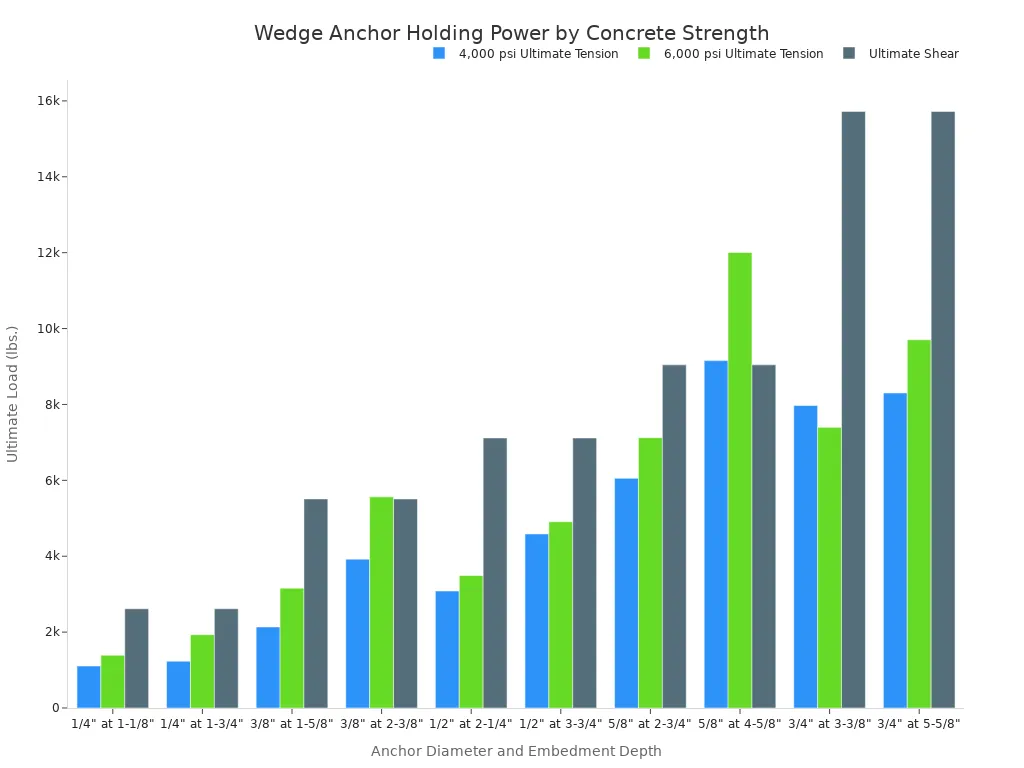
Interestingly, shear capacity is often determined by the strength of the anchor’s steel bolt itself, not the concrete. This is why shear values may remain constant even when concrete PSI increases.
Key Differences in Design and Variation
Beyond holding power, the key differences in anchor design affect installation and application suitability. Both wedge anchors and sleeve anchors come in various types, head styles, and materials. Professionals select a specific variation to match the project’s unique demands for fixture thickness, finished appearance, and environmental exposure.
Common Types of Wedge Anchors
Wedge anchors are primarily differentiated by their threading. This design choice impacts the anchor’s versatility during installation.
Полностью резьбовые
A fully threaded wedge anchor has threads running along most of its body. This design provides maximum flexibility. Installers can use it for a wide range of fixture thicknesses. The nut can be threaded down to any point on the anchor body to secure the material.
Неполная резьба
A partially threaded wedge anchor has a smooth, unthreaded shank between the threads and the tapered end. This design is for applications requiring a specific embedment depth. The unthreaded portion ensures the anchor is set correctly without the threads interfering with the fixture.
Common Head Styles for Sleeve Anchors
Sleeve anchors offer a variety of head styles. This allows them to secure different types of fixtures while providing a specific finished look.
Головка типа Hex (под ключ)
The hex head is the most common style. It allows for easy and secure tightening with a standard wrench or socket. This style is ideal for general-purpose fastening where the head will remain exposed.
Flat Head (Countersunk)
A flat head, or countersunk, style is designed to sit flush with the surface of the material. Installers use a Phillips or slotted driver to tighten it. This creates a clean, professional finish, making it perfect for installing signs, thresholds, and door frames.
Round Head
The round head provides a low-profile, finished appearance. It is often used for attaching fixtures where a smooth, non-snagging surface is desirable. A Phillips driver is typically used for installation.
Грибовидная головка (Acorn)
The acorn head features a high-crown, dome-shaped nut. This design offers a decorative finish and protects the threads from damage or corrosion. It is an excellent choice for applications where aesthetics are important, such as installing handrails or architectural elements.
**Варианты материалов и покрытий**
The material and coating of an anchor determine its durability and resistance to corrosion. Choosing the correct material is critical for the long-term safety and integrity of the connection.
Условия вашего проекта диктуют наилучший материал для крепежа. Каждый вариант предлагает разный уровень защиты от коррозии.
Zinc-plated steel is the standard, most economical option. The zinc coating provides a basic level of corrosion resistance. It is suitable only for dry, indoor environments where the anchor will not be exposed to moisture or corrosive elements.
Hot-Dipped Galvanized for Outdoor Use
Hot-dipped galvanized (HDG) anchors have a thick, protective layer of zinc. This coating offers substantial corrosion resistance for outdoor use in non-marine environments. The galvanizing process is governed by strict industry standards to ensure quality and performance.
Industry Standards for Galvanizing Professionals rely on established specifications to ensure coating quality. Key standards include:
- ASTM A153/A153M: This specification covers the hot-dip zinc coating on iron and steel hardware.
- AASHTO M 232M/M 232: This standard from the American Association of State Highway and Transportation Officials also governs zinc coatings for hardware.
Stainless Steel for Corrosive Environments
Stainless steel offers the highest level of corrosion protection. It is the required material for applications involving exposure to chemicals, salt water, or other highly corrosive agents. While more expensive, stainless steel ensures maximum longevity and safety in harsh conditions.
Installation Guide: Step-by-Step Instructions
Proper installation is just as critical as selecting the right fastener. Following the correct installation procedures ensures the anchor achieves its specified load capacity and provides a secure connection. A flawed installation process can compromise even the strongest anchor.
How to Install Wedge Anchors Correctly
The installation of wedge anchors demands precision. Each step is crucial for creating the immense holding power required for heavy-duty applications.
Step 1: Select the Right Carbide Bit
An installer must use a hammer drill and a carbide-tipped drill bit that meets ANSI standards. The diameter of the bit must match the diameter of the anchor.
Эмпирическое правило: For a 1/2″ wedge anchor, use a 1/2″ carbide bit. There is no exception to this rule.
Step 2: Drill a Precise Hole
Drill a hole into the solid concrete to the specified depth. The hole must be at least 1/2″ deeper than the anchor’s required embedment. This extra space allows room for dust and debris that may settle at the bottom.
Step 3: Clean the Hole Thoroughly
Cleaning the hole is a non-negotiable step. An installer removes all concrete dust and debris using a wire brush and compressed air. This action ensures the expansion clip makes direct contact with the solid concrete, which is essential for achieving ultimate holding power.
Step 4: Drive and Torque the Anchor
Place the nut on the end of the anchor to protect the threads. Drive the anchor into the clean hole until the nut and washer are snug against the fixture. Use a torque wrench to tighten the nut to the manufacturer’s specified value. For proprietary post-installed anchors, it is necessary to refer to the manufacturer’s specific recommendations for torque values. For a 3/4″ wedge anchor, this value is often between 150 – 175 ft./lbs.
| Диаметр (дюймы) | Крутящий момент (фунт-сила-фут) |
|---|---|
| 1/4 | 5-10 |
| 5/16 | 5-10 |
How to Install Sleeve Anchors Properly
The installation procedures for sleeve anchors are more forgiving, reflecting their versatility across different masonry materials.
Step 1: Choose the Correct Bit Size
Select a carbide-tipped bit with a diameter that matches the sleeve anchor’s diameter. For example, a 3/8″ anchor requires a 3/8″ bit. Using a slightly larger bit, such as a 5/8″ bit for a 1/2″ anchor, can sometimes help with alignment.
Step 2: Drill to the Required Depth
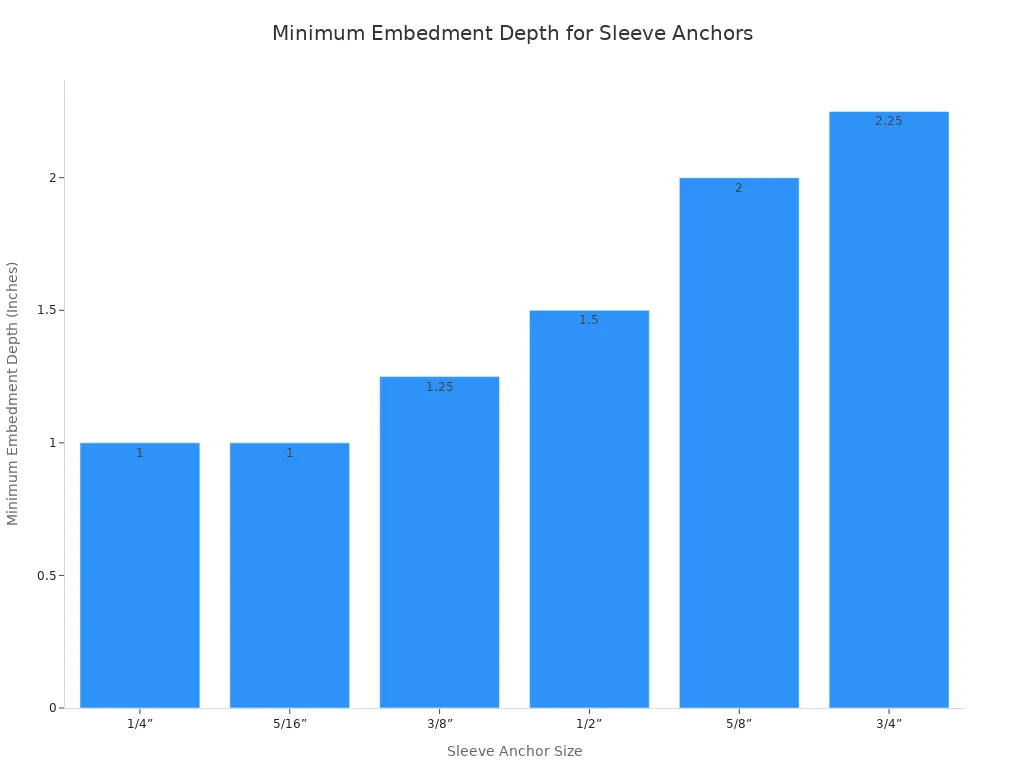
Drill a hole to the required minimum embedment depth. Professionals recommend drilling the hole at least 1/2″ deeper than the anchor’s embedment to accommodate any remaining dust. The hole depth should be at least the length of the anchor minus the thickness of the material being fastened.
| Sleeve Anchor Size | Recommended Drill Bit Diameter | для достижения номинальной прочности на вырыв. Большая глубина заделки, как правило, приводит к |
|---|---|---|
| 1/4” | 1/4” | 1/2” or 1” |
| 3/8” | 3/8” | 1-1/4” |
| 1/2” | 1/2” | 1-1/2” |
| 3/4” | 3/4” | 2-1/4” |
Step 3: Clean the Hole (Recommended)
While not as critical as with wedge anchors, cleaning the hole of excess debris is still a good practice. This ensures the sleeve can expand evenly against the walls of the base material.
Step 4: Insert and Tighten the Anchor
Insert the sleeve anchor through the fixture and into the pre-drilled hole. Tighten the head of the bolt or nut. This action pulls the cone-shaped expander into the sleeve, forcing it to expand and grip the base material securely.
Critical Installation Mistakes to Avoid
Even the best анкер can fail if installed incorrectly. An installer’s attention to detail is paramount for ensuring a safe and durable connection. Avoiding common errors is the key to unlocking an anchor’s full performance potential.
Common Errors with Wedge Anchors
Precision is mandatory when installing wedge anchors. Small mistakes can lead to significant failures due to the high forces involved.
Over-Torquing or Under-Torquing
Applying the correct torque is a critical final step. Over-torquing an expansion anchor can damage the concrete, the anchor itself, or the fixture being fastened. Conversely, under-tightening results in a loose connection. The item may rattle or become misaligned, as the anchor has not achieved its required tension. Adhering to manufacturer-specified torque values is essential for reliable performance.
Неправильная глубина или диаметр отверстия
An installer must use a carbide bit with a diameter that exactly matches the anchor diameter. A hole that is too large will prevent the expansion clip from gripping. A hole that is too shallow will prevent the anchor from reaching its required embedment depth, severely compromising its load capacity.
Failure to Clean Debris from the Hole
Drilling creates a significant amount of concrete dust. If an installer fails to clean the hole thoroughly with a wire brush and compressed air, this debris will prevent the expansion clip from making solid contact with the concrete. This oversight dramatically reduces the anchor’s holding power.
Installing Too Close to an Edge
Wedge anchors exert immense outward pressure. Installing one too close to an unsupported edge or too near another anchor will cause the concrete to crack and fail.
Правила расстояний между анкерами и до края Inadequate edge distance is a primary cause of anchor failure. Professionals follow strict guidelines:
- Минимальное расстояние между анкерами: Ten anchor diameters center-to-center.
- Минимальное расстояние до края: Five anchor diameters from an unsupported edge. For a 1/2-inch anchor, this means a minimum spacing of 5 inches and an edge distance of 2.5 inches.
Common Errors with Sleeve Anchors
While more forgiving, sleeve anchors also have critical installation requirements that installers must respect.
Drilling a Hole That is Too Loose
The 360-degree expansion of a sleeve anchor requires a snug fit. If the drilled hole is too wide or becomes oblong, the sleeve cannot expand properly to grip the base material. This results in a spinning anchor that will never tighten.
Not Engaging the Threads Properly
An installer must tighten the bolt or nut sufficiently to pull the cone into the sleeve, causing expansion. If the threads are not engaged enough, the sleeve will not flare, and the anchor will provide little to no holding power.
Using in Weak or Crumbly Material
Sleeve anchors are versatile, but they have limits. Using them in very soft, old, or crumbly brick or block is a mistake. The base material must be solid enough to withstand the sleeve’s expansion pressure without crumbling away.
Недооценка нагрузочных требований
These fasteners are for medium-duty applications. An installer commits a serious error by using sleeve anchors for heavy structural loads that demand the strength of wedge anchors. Always match the anchor to the project’s specific weight demands.
Project-Specific Recommendations and Benefits
Applying theoretical knowledge to real-world scenarios clarifies the distinct advantages of each fastener. The choice of anchor directly impacts the safety and longevity of any installation. This section provides specific recommendations for common projects, highlighting the benefits of выбора правильного крепежа for the job.
Best Anchor for Solid Concrete Projects
Solid concrete provides the ideal base for heavy-duty fastening. For these critical applications, the unparalleled strength of wedge anchors is the professional standard. The benefits of their use in this material are unmatched strength and permanence.
Закрепление конструкционных балок
Installers must use wedge anchors for securing structural steel or wood beams to concrete footings or walls. These connections are fundamental to a building’s integrity. The immense tensile and shear capacity of a wedge anchor ensures it can handle these permanent, heavy structural loads without fail.
Anchoring Heavy Equipment
Industrial settings require machinery to be anchored securely. The benefits of using the right fastener include operator safety and equipment stability. Professionals choose wedge anchors for this task. Key considerations include:
- Understanding all forces the anchor must resist, including tensile, shear, and dynamic vibration.
- Applying correct safety factors and adhering to design codes like AISC or ASTM standards.
- Consulting a structural engineer for complex or high-risk installations.
While wedge anchors are a top choice, other heavy-duty fasteners for these critical applications include:
- ACME thread rods for systems requiring fine adjustments.
- Foundation bolts embedded directly into fresh concrete.
- Heavy hex bolts for high-stress industrial fastening.
Mounting a Workbench
A heavy-duty workbench in a garage or workshop must be completely stable. A professional secures the legs to the concrete floor using wedge anchors. This prevents any movement, rocking, or shifting, even under heavy hammering or vise work, providing significant safety benefits.
Installing Garage Lifts
Automotive lifts are a prime example of a heavy, dynamic load. The anchor connection must be flawless. Wedge anchors provide the necessary holding power to safely support the weight of a vehicle. Their performance in solid concrete offers peace of mind for such a high-stakes application.
Best Anchor for Brick Wall Projects
Brick requires an anchor that distributes pressure evenly to avoid cracking the material. Sleeve anchors are the superior choice for these applications, offering versatile and reliable performance.
Mounting Shelves or Cabinets
Sleeve anchors provide a secure hold in solid brick for medium-duty shelving and cabinets. Their 360-degree expansion distributes the load, a key feature for preventing pull-out. For a successful project, an installer should:
- Drill directly into the brick face, not the weaker mortar joints.
- Use a hammer drill with a proper masonry bit.
- Clean all dust from the hole before inserting the anchor.
Load Matching is Key Professionals match the anchor to the weight of the fixture. While sleeve anchors are excellent for many items, lighter or heavier loads may require different solutions. For items over 50 pounds, toggle bolts used in hollow walls or studs are often recommended.
Securing Window Guards
Window guards add a layer of security to a building. An installer uses sleeve anchors to attach the guard’s frame firmly to the surrounding brick facade. The anchor provides a strong connection that resists tampering or pull-out forces.
Attaching Conduit Straps
Electricians frequently run electrical conduit along the surface of brick walls. They use sleeve anchors to secure the conduit straps. This method is fast, reliable, and provides a sturdy hold for both interior and exterior applications.
Why Not to Use a Wedge Anchor in Brick
An installer must never use a wedge anchor in brick. The intense, focused pressure from its expansion clip will crack the brick, causing a catastrophic failure known as “breakout.” The material is simply not strong enough to handle the force, eliminating all benefits of the anchor.
Best Anchor for Cinder Block (CMU) Walls
Cinder block walls, whether hollow or grout-filled, present a unique challenge. The versatile design of sleeve anchors makes them the ideal solution for securing fixtures to CMU.
Mounting a TV
Mounting a heavy television onto a cinder block wall requires careful planning. A sleeve anchor provides a dependable grip in both hollow and solid block. An installer must:
- Select a TV mount rated for the television’s weight and size.
- Use a hammer drill with a sharp masonry bit.
- Verify VESA compatibility between the mount and the TV.
- Always use the correct type and number of anchors specified by the mount manufacturer.
Securing a Gate Hinge
Ворота, закрепленные на столбе из CMU-блоков, создают значительные динамические сдвиговые и растягивающие нагрузки. Использование распорных анкеров для монтажа петель обеспечивает надежное соединение. Широкая распорная зона анкера создает стабильную основу, способную выдерживать повторяющиеся нагрузки от открывания и закрывания ворот.
Крепление электротехнических коробок
Крепление распределительных коробок к стене из шлакоблока — распространенная задача. Распорные анкеры предлагают быстрый и надежный метод. Преимущества включают заподлицо монтаж и прочное соединение, которое не ослабнет со временем.
Факторы: пустотелые блоки против блоков с заполнением
Работа распорного анкера меняется в зависимости от типа блока. Понимание этой разницы крайне важно для обеспечения надежной фиксации.
Распорные анкеры — это механические анкеры распорного типа для крепления к бетону, кирпичной кладке, пустотелому блоку или блоку с заполнением.
В блоке с заполнением анкер работает практически так же, как в цельном бетоне. В пустотелом блоке механизм адаптируется, чтобы по-другому зацепиться за материал, обеспечивая уникальные преимущества.
| Характеристика | Пустотелый шлакоблок | Шлакоблок с заполнением |
|---|---|---|
| Механизм | Механизм складывающейся гильзы | Распорные усилия и трение |
| Точка опоры | Опирается на тыльную сторону лицевой стенки | Опирается на стенки просверленного отверстия |
| Функция | Использует складывающуюся гильзу для зацепления за лицевую стенку | Аналогично другим распорным анкерам, создает трение |
Стоимость, доступность и возможность демонтажа
Помимо характеристик, практические факторы, такие как стоимость, доступность и возможность демонтажа, являются важными соображениями. Эти ключевые различия могут повлиять на окончательное решение по проекту, затрагивая как бюджет, так и будущую гибкость.
Взгляд на стоимость
Монтажник должен балансировать первоначальные затраты с долгосрочной надежностью при выборе крепежа. Начальная стоимость анкера не всегда отражает его общую ценность.
Сравнение цены за единицу
Как правило, распорные анкеры имеют более низкую стоимость за единицу, чем клиновые анкеры сопоставимого размера. Это делает их экономичным выбором для проектов средней нагрузки с большим количеством точек крепления. Разница в цене становится более значительной при выборе специализированных материалов.
Долгосрочная ценность против первоначальной стоимости
Выбор между материалами подчеркивает компромисс между начальной стоимостью и долгосрочной ценностью. Оцинкованные стальные анкеры предлагают привлекательную начальную стоимость, часто почти вдвое меньшую цену по сравнению с нержавеющей сталью. Однако нержавеющая сталь обеспечивает превосходную долговечность и защиту от коррозии. Ее более высокая начальная стоимость часто компенсируется минимальным обслуживанием и более длительным сроком службы, особенно в суровых условиях. Более низкая начальная стоимость оцинкованного анкера может привести к будущим расходам на замену, если его защитное покрытие износится.
| Характеристика | Нержавеющая сталь | Оцинкованная сталь |
|---|---|---|
| Стоимость | Выше первоначальные затраты, но низкие эксплуатационные расходы | Дешевле изначально, но может потребовать повторного покрытия |
Где их найти
Оба типа анкеров легко доступны как для профессионалов, так и для энтузиастов DIY. Их широкое использование гарантирует, что они есть в наличии у большинства поставщиков крепежа.
Доступность клиновых анкеров
Монтажники могут найти клиновые анкеры в любом крупном магазине товаров для дома, магазине электротехники или у дистрибьютора промышленного крепежа. Они являются стандартным товаром для любого ритейлера, обслуживающего сферу бетонного строительства.
Доступность распорных анкеров
Распорные анкеры столь же распространены. Их универсальность делает их основным товаром в хозяйственных магазинах и строительных центрах. Широкий диапазон размеров и типов головок, как правило, доступен в наличии.
Сложность демонтажа анкера
Возможность демонтировать анкер — это ключевое различие. Один тип предлагает гибкость, в то время как другой обеспечивает постоянство.
Как удалить распорный анкер
Монтажник может удалить распорные анкеры, если необходимо переместить конструкцию. Процесс требует некоторых усилий, но не является разрушительным.
- Проникающее масло: Распылите продукт, такой как WD-40 , чтобы ослабить ржавчину. Затем монтажник может использовать молоток и прочный болт, чтобы вбить конус анкера обратно в отверстие, ослабив хват гильзы для удаления плоскогубцами.
- Сверление: Используйте кобальтовое сверло немного меньше гильзы, чтобы высверлить болт. Это ослабляет гильзу, позволяя смять ее внутрь с помощью отвертки и удалить.
Почему клиновые анкеры являются постоянными
Правильно установленные клиновые анкеры не предназначены для демонтажа. Их механизм затягивается сильнее при вытягивании, что делает извлечение практически невозможным без повреждения бетона. Попытка насильственного удаления анкера, скорее всего, приведет к разрушению основного материала, вырвав большой конусообразный кусок бетона. Этот разрушительный результат подтверждает их роль в качестве постоянного крепежного решения.
Профессионалы выбирают клиновые анкеры для максимальной прочности в цельном бетоне. Надежным решением для универсальных работ средней нагрузки в кирпиче или блоке является распорный анкер. Ассоциация строительного крепежа (CFA) отмечает, что отказы часто происходят из-за неправильного выбора. Поэтому соответствие анкера основному материалу и нагрузке является наиболее критическим шагом для безопасного проекта. Этот правильный выбор обеспечивает долговечную и надежную установку.
Изучение примеров из практики: Ассоциация CFA задокументировала случаи отказов креплений, подчеркивая реальные последствия неправильного использования анкеров.
- Пример из практики CFA 1: Отказы креплений
- Пример из практики CFA 2: Отказы креплений
Частые вопросы
Можно ли использовать клиновой анкер в кирпиче?
Нет. Монтажник никогда не должен использовать клиновой анкер в кирпиче или блоке. Интенсивное распорное усилие анкера расколет более слабый кладочный материал. Это приведет к полному отказу соединения. Распорные анкеры являются правильным выбором для кирпича.
Какой анкер лучше для временных установок?
Распорные анкеры — лучший выбор для временных конструкций. Монтажник может удалить болт или гайку, позволяя снять конструкцию. Клиновые анкеры создают постоянное соединение и не предназначены для демонтажа.
Действительно ли необходимо очищать просверленное отверстие?
Да, очистка отверстия является критически важным этапом. Монтажник должен удалить всю пыль и загрязнения, особенно для клиновых анкеров. Чистое отверстие гарантирует, что расширительный механизм анкера вступит в прямой контакт с основным материалом, обеспечивая полную несущую способность.
Что произойдет, если анкер установлен слишком близко к краю?
Установка анкера слишком близко к неподдерживаемому краю бетона является серьезной ошибкой. Расширительное усилие анкера может привести к растрескиванию и откалыванию бетона. Этот вид разрушения известен как “откол” или “вырыв” и ставит под угрозу всю установку.
Можно ли повторно использовать гильзовый анкер после извлечения?
Повторное использование гильзового анкера не рекомендуется. Хотя болт можно извлечь, сама гильза часто повреждается или остается в отверстии в процессе удаления. Для новой установки профессионалы всегда используют новую анкерную сборку..
Почему показатель PSI бетона важен для клиновых анкеров?
Прочность бетона на сжатие (PSI) напрямую влияет на работу клинового анкера. Бетон с более высоким PSI обеспечивает более прочную и плотную основу. Это позволяет расширительной клипсе анкера закрепляться надежнее, значительно увеличивая его предельную вырывную (растягивающую) нагрузку.