Metal Fram Anchor

Metal Fram Anchor

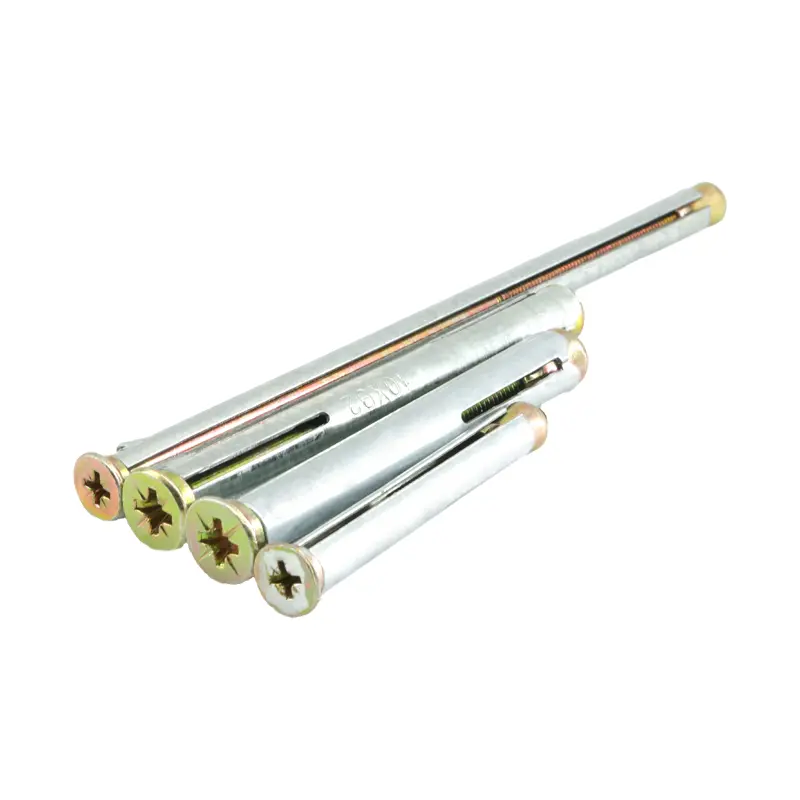
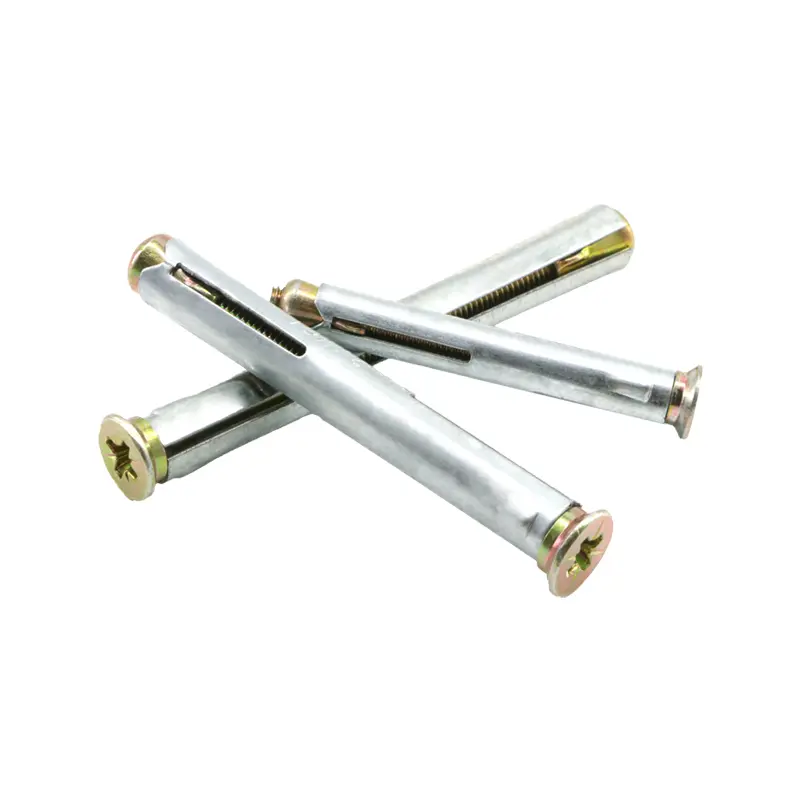
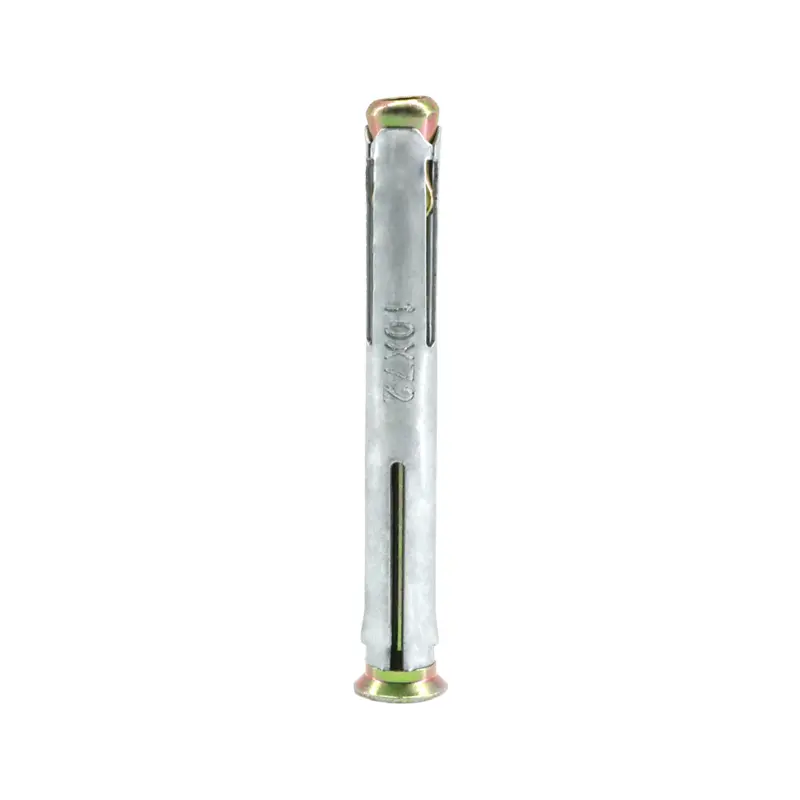
The Duojia Metal Frame Anchor is a specialized, long-format expansion anchor designed specifically for the secure and stress-free installation of window and door frames. It is engineered to fasten frames made of metal, wood, or uPVC directly to a wide range of base materials, including concrete, solid brick, and blockwork. Manufactured from high-grade carbon steel and finished with a protective White Zinc Plating, this anchor provides a durable, corrosion-resistant, and stable fixing solution that is essential for modern construction and renovation projects.

Clarification on Anchor Type and Functionality

This product is a specialized type of sleeve anchor, commonly referred to as a “frame fixing” or “frame anchor.” Its unique design sets it apart from standard anchors:

  • Through-Fixing Design: It is designed to be installed directly through the pre-drilled frame and into the wall in a single, efficient step.
  • Stress-Free Fastening: The key feature is its long sleeve, which acts as a non-expanding spacer. When the screw is tightened, only the very end of the anchor expands within the base material (the wall). The rest of the sleeve bridges the gap between the frame and the wall, preventing the tightening force from pulling on and distorting or crushing the window or door frame. This ensures the frame remains square and operates correctly after installation.

Product Mechanism and Installation

The anchor provides a secure hold by expanding only at the tip, deep within the base material.

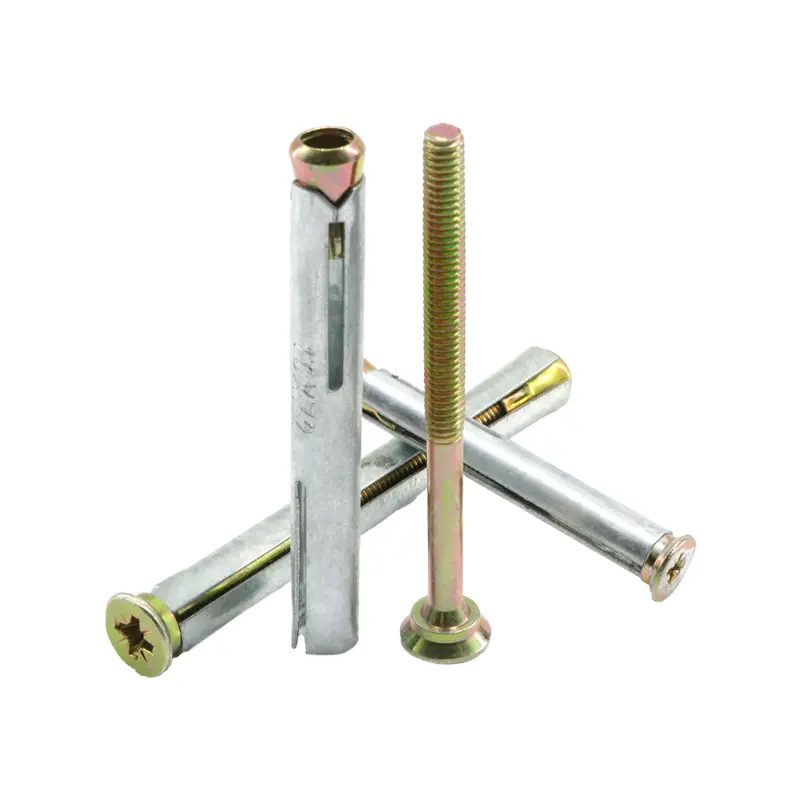
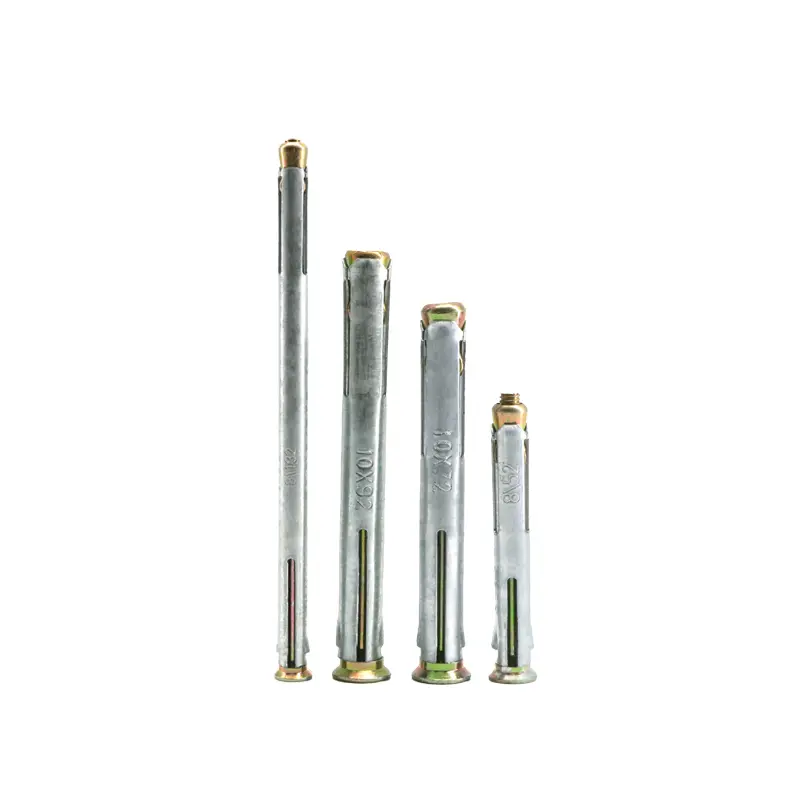
  • Mechanism: The anchor consists of a long, countersunk head screw and a corresponding long, split expansion sleeve. When the screw is turned, it pulls a conical plug (or its own tapered end) into the tip of the sleeve. This forces the end of the sleeve to expand and grip the inside of the drilled hole in the concrete or brick. The main body of the sleeve remains unexpanded, providing a stable, pressure-free connection through the frame.
  • Installation Process:
    1. Position the window or door frame and drill a hole of the correct diameter through the frame and into the base material (wall) in one single operation.
    2. Insert the entire Metal Frame Anchor assembly through the hole in the frame until the countersunk head is flush.
    3. Using the appropriate tool (e.g., a screwdriver or wrench, depending on the screw head type), tighten the screw.
    4. Continue tightening until the anchor is secure. The frame will be held firmly in place without being subjected to compressive stress.

Product Parameters

Parameter ItemSpecification Description
Product NameMetal Fram Anchor
Brand NameDuojia
Place of OriginHebei, China
MaterialCarbon Steel
Surface TreatmentWhite Zinc Plated
Available SizesM6-M20 (Note: The product title mentions up to M30, suggesting custom sizes may be available upon request).
Strength Grades4.8, 8.8, 10.9, 12.9, A2-70, A4-70, A4-80 etc.
Measurement SystemMetric
ApplicationHeavy Industry, General Industry, Construction Framing
CertificationsISO9001, ISO14001, ISO45001, SGS
Packaging OptionsSmall Pack + Carton + Pallet; Bag/Box with Pallet

Key Features

  • Stress-Free Frame Installation: The anchor’s primary benefit is its ability to fix frames securely without exerting crushing pressure, preventing distortion.
  • Flush Finish: The countersunk head allows the screw to sit flush with the frame surface for a neat and professional appearance.
  • Efficient Through-Fixing: Simplifies and speeds up installation by allowing drilling and fixing in one continuous process.
  • Reliable Hold: Provides a strong and stable anchor point in a variety of common construction substrates like concrete and brick.
  • Corrosion Resistance: The white zinc plating offers good protection against rust in indoor and sheltered outdoor environments.

Common Applications

The Metal Frame Anchor is the industry standard for a variety of framing applications.
  • Installing window and door frames (metal, wood, and uPVC).
  • Securing wooden battens and subframes to concrete or masonry walls.
  • Anchoring building frameworks and structural framing elements.
  • Fixing machinery housing frames and other industrial structures.