hot dip galvanized eye bolt

hot dip galvanized eye bolt

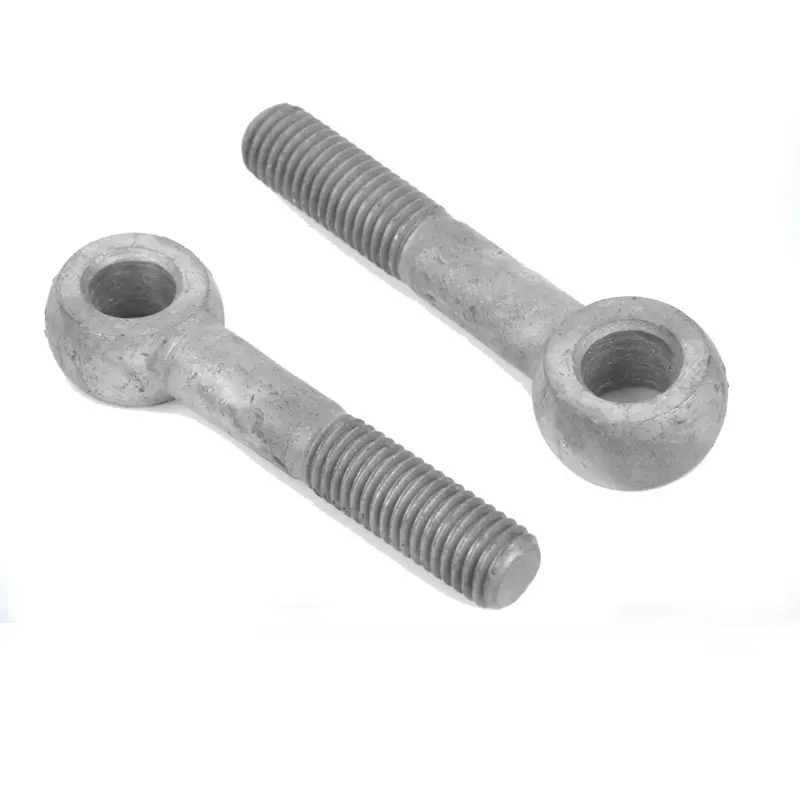
The Duojia Hot-Dip Galvanized DIN 444 Eye Bolt, also referred to as a “Live Bolt” or “Fish-Eye Bolt,” is a heavy-duty fastener engineered for maximum corrosion resistance in outdoor and harsh environments. Conforming to the DIN 444 dimensional standard, this bolt features a threaded shank and an elongated eye designed for flexible connections with pins, rods, or cables.The key feature of this product is its Hot-Dip Galvanized (HDG) coating. This process involves immersing the carbon steel bolt in a bath of molten zinc, creating a thick, durable, and metallurgically bonded layer that provides superior protection against rust and weathering compared to standard zinc plating. This makes it the ideal choice for applications in construction, agriculture, and marine industries.

Crucial Clarifications on Product Specifications

The product page contains several conflicting or generic data points. The following clarifications provide a precise and accurate understanding of this specific product:

  • Finish (HDG vs. Zinc Plated): The product title and “Surface treatment” field correctly identify the finish as “hot-dip galvanized”. The “Finish” field’s listing of “Zinc Plated” is a generic term. Hot-Dip Galvanizing is a specific, more robust process than standard electro-zinc plating, resulting in a much thicker and more protective coating.
  • Material (Carbon Steel vs. Stainless Steel): The “Material” field lists both “Stainless Steel” and “Carbon Steel”. The hot-dip galvanizing process is applied to Carbon Steel to protect it from corrosion. Stainless steel is inherently corrosion-resistant and is not galvanized. Therefore, for this specific HDG product, the material is Carbon Steel.
  • Grade Inconsistency: The “Grade” field lists both carbon steel classes (4.8, 8.8, 10.9, 12.9) and stainless steel grades (A2-70, A4-80). As this is a carbon steel product, only the carbon steel property classes are applicable.
  • Thread Fit: The thick coating of HDG requires special consideration for mating parts. The corresponding nut must have its threads tapped oversize to accommodate the added thickness of the zinc on the bolt’s threads. Standard nuts will not fit on an HDG bolt.
  • Lifting Safety: While often used in heavy industry and available in high-strength grades (e.g., 8.8), the DIN 444 standard is dimensional, not a lifting performance standard. The Working Load Limit (WLL) must be confirmed with the manufacturer for the specific size and grade before using these bolts for any overhead lifting or critical load-bearing applications.

Product Parameters (Corrected and Clarified)

Parameter ItemSpecification Description
Product NameHot-Dip Galvanized (HDG) Eye Bolt DIN 444
StandardDIN 444
Brand NameDuojia
Place of OriginHebei, China
MaterialCarbon Steel
Grades4.8 (Standard), 8.8, 10.9, 12.9 (High-Strength)
FinishHot-Dip Galvanized (HDG)
Size RangeM4 to M24 (and larger, up to M36 as per the dimensional table)
Measurement SystemMetric
ApplicationHeavy Industry, General Industry, Outdoor Construction, Marine, Agriculture
⚠️ Safety NoteWorking Load Limit (WLL) must be confirmed before lifting. Use with oversized tapped HDG nuts.

Key Features

  • Superior Corrosion Resistance: The thick HDG coating provides exceptional, long-lasting protection against rust, making it perfect for outdoor, coastal, and high-moisture environments.
  • Ideal for Outdoor Use: Specifically designed to withstand the elements in applications like construction scaffolding, agricultural machinery, and telecommunication towers.
  • High-Strength Options: Available in high-tensile carbon steel grades (8.8, 10.9, 12.9) for reliable load-bearing and demanding industrial use.
  • Flexible Connection: The “Live Bolt” design allows for pivoting or rotational connections when used with a pin or clevis.
  • Standardized Dimensions: Manufactured to DIN 444 specifications for consistent and predictable fitment in jigs, fixtures, and machinery.

Typical Applications

  • Construction: Securing scaffolding, bracing, and anchoring structural elements exposed to weather.
  • Agriculture: Linkages on tractors and other farm equipment that require a robust, pivoting connection.
  • Utilities: Mounting hardware on utility poles and communication towers.
  • Marine: Used in docks and other near-water structures where high corrosion resistance is essential.
  • Industrial: Creating heavy-duty, adjustable anchor points in manufacturing plants.