Clarification on Anchor Type and Variations
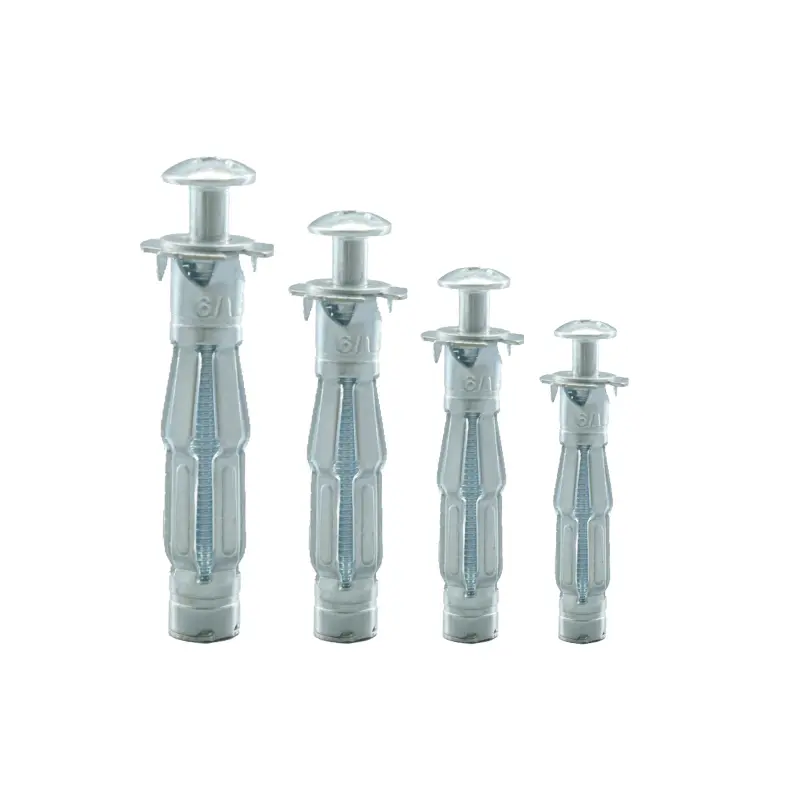
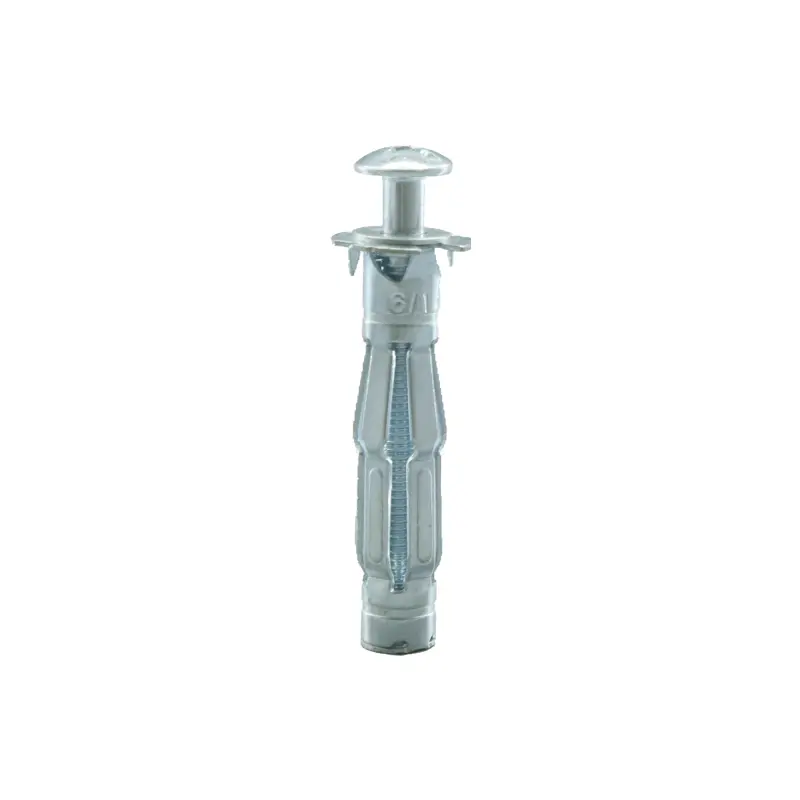
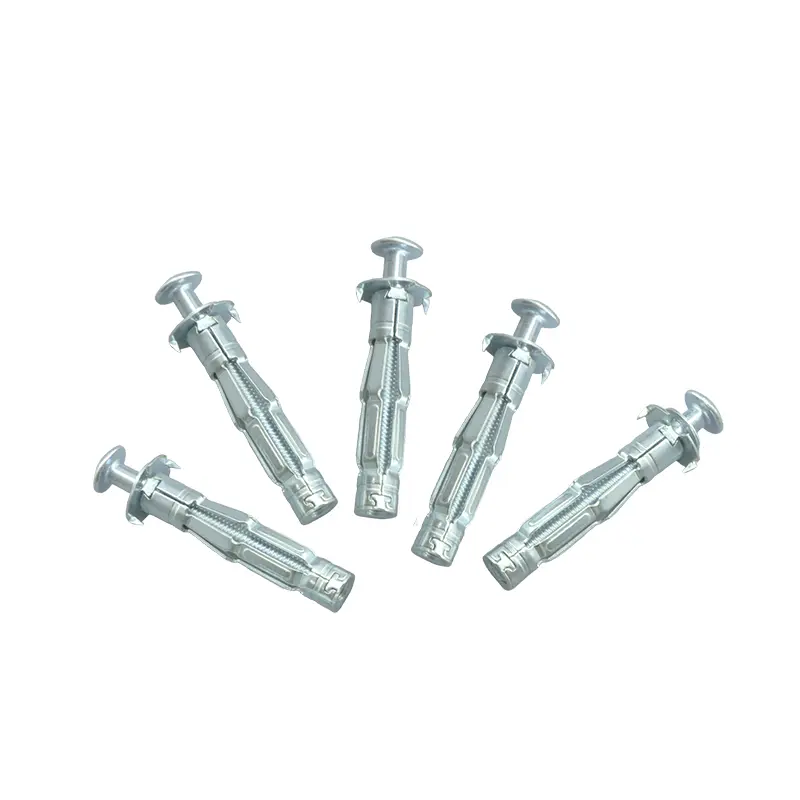
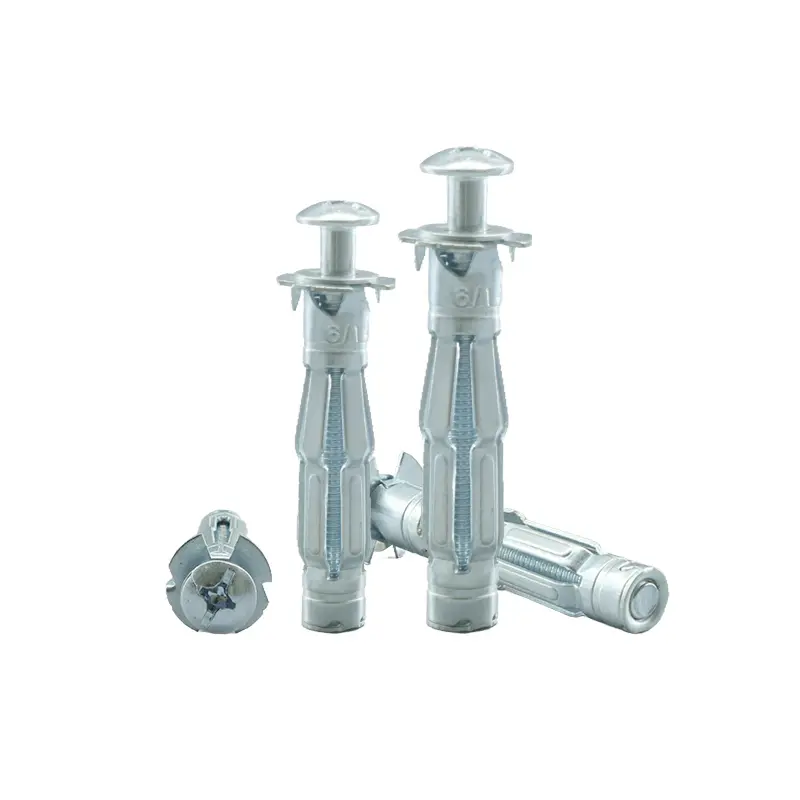
This product is a specific variation of the classic hollow wall anchor (often called a “Molly Bolt”), distinguished by its head shape. The “Cross Semi-Circular Flat Head” description indicates a countersunk head with a Phillips (cross) drive. This design is ideal for applications where a smooth surface is required after installation.
As indicated by the “Related Products” section on the webpage, the same expanding anchor body is also available from the manufacturer with different bolt types to suit various needs:
- Semi-Round Head: A standard, low-profile Phillips head bolt.
- L-Bolt (Hook Bolt): For creating a direct hanging point.
- Eye Bolt: For applications requiring a closed loop for suspension.
- Hex Head Bolt: For high-torque installation with a wrench.
Product Mechanism and Installation
This anchor utilizes a proven expansion mechanism to create a secure hold by clamping onto the back of the hollow wall material.
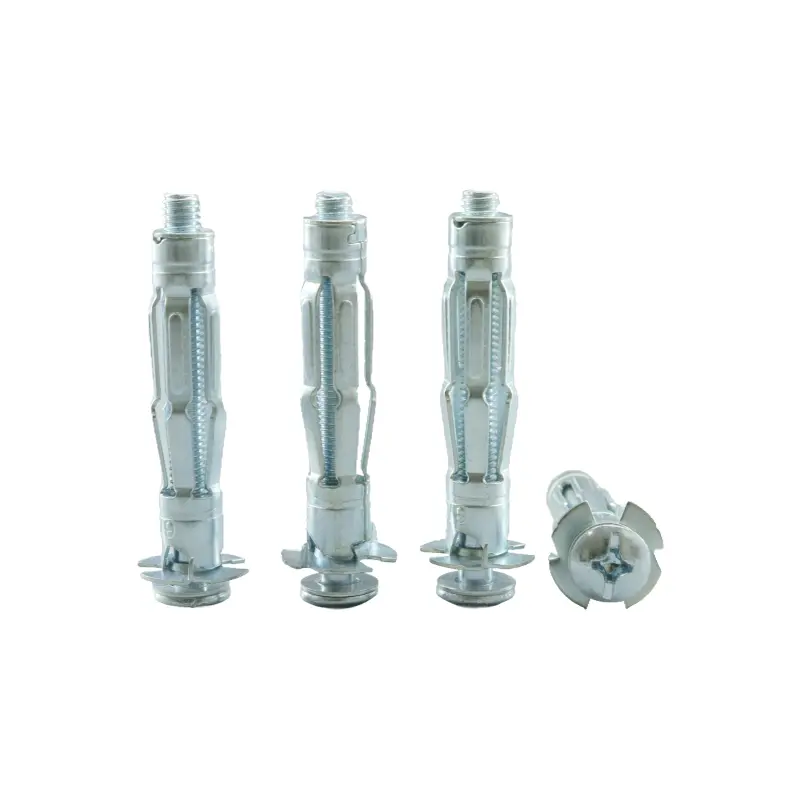
- Mechanism: The anchor consists of a cylindrical, slotted sleeve with an integrated flange and a pre-inserted countersunk cross-head bolt. The flange has small teeth on its underside designed to bite into the wall surface, preventing the anchor from spinning during installation. When the bolt is tightened, it draws the threaded part of the sleeve towards the front, causing the slotted body to collapse and expand into a set of “legs” that clamp firmly against the back of the wall.
- Installation Process:
- Drill a hole in the wall to the diameter specified for the anchor size.
- For a perfectly flush finish, use a countersink bit to create a slight bevel in the drywall that matches the angle of the anchor’s head.
- Gently tap the entire anchor assembly into the hole until the head is flush with the wall surface. The anti-rotation teeth will grip the wall.
- Use a standard cross-head (Phillips) screwdriver to turn the bolt clockwise. You will feel resistance as the anchor body expands and secures itself behind the wall. Continue tightening until the anchor is firmly set.
- Key Feature: Once the anchor is set, the bolt can be completely removed to position your fixture. The anchor body will remain securely expanded in the wall.
- Place your fixture over the anchor and re-insert the bolt, tightening it to secure the item.
Product Parameters
| Parameter Item | Specification Description |
|---|
| Product Name | Hollow-wall-anchor-cross-semi-circular-flat-head-bolt |
| Brand Name | Duojia |
| Place of Origin | Hebei, China |
| Material | Carbon Steel |
| Surface Treatment | White Zinc Plated (Galvanized) |
| Available Sizes | M6-M20 |
| Strength Grades | 4.8, 8.8, 10.9, 12.9, A2-70, A4-70, A4-80 etc. |
| Measurement System | Metric |
| Application | Heavy Industry, General Industry, Construction, Renovation |
| Certifications | ISO9001, ISO14001, ISO45001, SGS |
| Packaging Options | Small Pack + Carton + Pallet; Bag/Box with Pallet |
Key Features
- Flush Finish: The countersunk flat head allows the anchor to sit flush with the wall surface, ideal for applications requiring a smooth, unobtrusive finish.
- High Load Capacity: The expansion mechanism distributes the load over a wide area behind the wall, providing a strong and dependable hold for medium to heavy loads.
- Removable Bolt: The bolt can be removed and re-inserted after the anchor is set, making it exceptionally convenient for mounting fixtures.
- Durable Construction: Made from carbon steel with a corrosion-resistant white zinc finish for longevity.
- Anti-Rotation Flange: The toothed flange prevents the anchor body from spinning in the hole during tightening, ensuring a proper and secure set.
- Standard Drive: The cross head is compatible with standard Phillips screwdrivers, making installation easy with common tools.
Common Applications
This anchor is the perfect choice when a secure fixing is needed without a protruding bolt head.
- Mounting signs, nameplates, or thin panels directly to the wall.
- Attaching brackets or fixtures where a flush surface is required for the object being mounted.
- Securing trim, baseboards, or other decorative elements.
- Installing electrical faceplates or low-profile fixtures.
- Any application where a smooth, snag-free surface is aesthetically or functionally important.