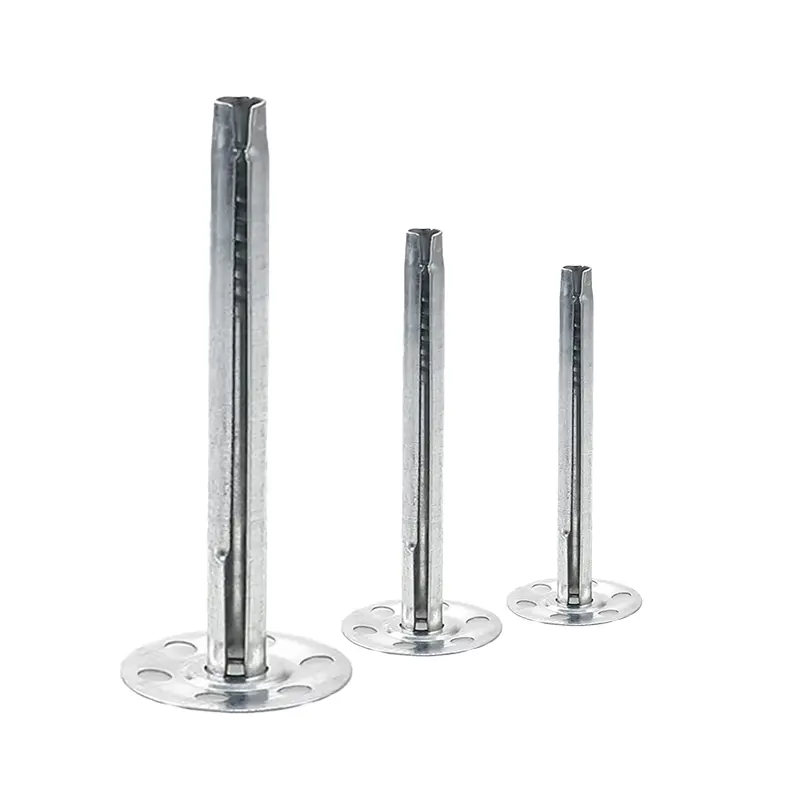
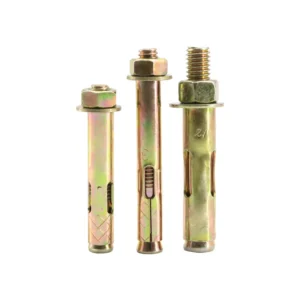
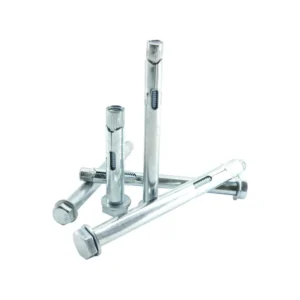
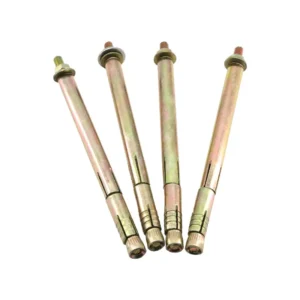
Clarification on Anchor Type and Terminology
It is important to clarify the information presented on the product page, as it contains conflicting terminology.
- Contradictory Description: The page title mentions “Drywall Use Concrete Fixing,” and the description refers to use in “drywall, concrete, brick.” These are fundamentally different applications. Drywall is a hollow cavity wall requiring anchors that expand behind the board (like a Molly Bolt or toggle), while concrete is a solid base material requiring an expansion anchor that grips the inside of a drilled hole.
- Conclusion based on Specifications: The product’s technical parameters provide a clearer picture. The available size range of M6 to M20 and the listed application for “Heavy Industry, General Industry” are characteristic of anchors designed for solid, load-bearing materials like concrete and brick. A large M20 anchor, for instance, would be far too large and heavy for standard drywall and would immediately fail.
Therefore, based on the specifications and the general mechanism described (“the anchor expands inside the wall”), this product is a type of Sleeve Anchor, which is a common and versatile expansion anchor for solid walls. The references to “drywall” are likely a translation error or an attempt at keyword stuffing and should be disregarded for this specific product.
Product Mechanism and Installation (as a Sleeve Anchor)
The anchor works by expanding a metal sleeve to create a strong friction-hold against the walls of the drilled hole.
- Mechanism: The anchor assembly typically consists of a bolt or screw, a split expansion sleeve that covers the bolt, and a conical expander nut at the base. When the bolt is tightened, it pulls the conical nut up into the sleeve. This action forces the sections of the sleeve to expand outwards, pressing firmly against the surrounding concrete or brick and creating a secure anchor point.
- Installation Process:
- Select the correct anchor size for your application. Drill a hole into the concrete or brick base material that matches the diameter of the anchor.
- Thoroughly clean the hole of all dust and debris using a brush and blower to ensure maximum holding power.
- Insert the anchor assembly through the fixture you are mounting and into the pre-drilled hole. Lightly tap it with a hammer if necessary until it is seated.
- Using the appropriate wrench or screwdriver, tighten the bolt/screw. Continue tightening until you feel firm resistance, which indicates the anchor is fully expanded and secure.
Product Parameters
| Parameter Item | Specification Description |
|---|
| Product Name | Wall Anchor |
| Brand Name | Duojia |
| Place of Origin | Hebei, China |
| Material | Carbon Steel |
| Surface Treatment | White Zinc Plated |
| Available Sizes | M6-M20 |
| Strength Grades | 4.8, 8.8, 10.9, 12.9, A2-70, A4-70, A4-80 etc. |
| Measurement System | Metric |
| Application | Heavy Industry, General Industry |
| Certifications | ISO9001, ISO14001, ISO45001, SGS |
| Packaging Options | Small Pack + Carton + Pallet; Bag/Box with Pallet |
Key Features
- Reliable Hold in Solid Materials: The expansion mechanism provides a strong and secure anchor point in concrete, brick, and block.
- Versatility: Suitable for a wide range of medium-duty fastening applications in construction and industrial settings.
- Through-Fixing Design: Simplifies and speeds up installation by allowing the anchor to be installed directly through the item being fastened.
- Corrosion Resistance: The white zinc plating provides a protective layer against rust for indoor and sheltered applications.
- Wide Size Range: Available in sizes from M6 to M20 to accommodate various load requirements.
Common Applications (for a Sleeve Anchor)
- Fastening brackets, handrails, and supports to concrete or masonry walls.
- Anchoring electrical conduit straps, junction boxes, and machinery.
- Securing shelving and racking in garages and warehouses.
- General construction, renovation, and DIY projects involving fastening to solid walls.