tie wire anchor

tie wire anchor

The Duojia Tie Wire Anchor is a specialized fastener designed specifically to create a secure, overhead suspension point in solid base materials like concrete. It is the go-to anchor for applications involving the hanging and securing of tie wires, suspension wires, cables, and chains. Manufactured from high-strength carbon steel and protected with a White Zinc Plating for corrosion resistance, this anchor is an essential component in construction, electrical, and mechanical trades for installing suspended systems.

Clarification on Anchor Type and Mechanism

This anchor is a variation of a drop-in anchor, designed for a very specific purpose.

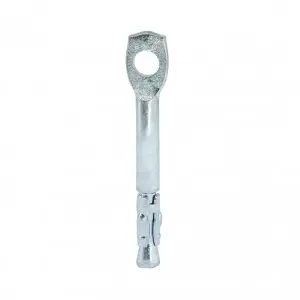
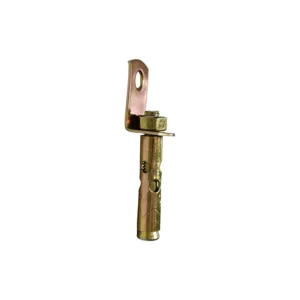
  • Anchor Type: It is an internally-threaded expansion anchor that has been pre-assembled with a bent wire form, creating a loop or “eye” for the easy attachment of tie wires.
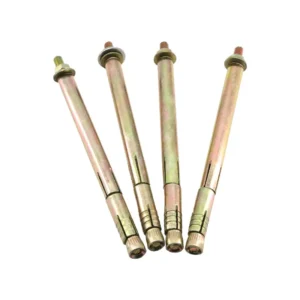
  • Mechanism: The anchor functions by expanding within a pre-drilled hole in a solid material like concrete. The anchor body is a cylindrical sleeve with four slits at its base and an internal conical plug. After the anchor is placed in the hole, a dedicated setting tool (a steel punch) is inserted into the anchor. When the setting tool is struck with a hammer, it drives the internal plug down into the anchor’s base. This forces the slitted sections of the sleeve to expand outwards, creating a powerful friction-hold against the walls of the concrete hole. This provides a permanent and reliable anchor point.

Product Installation Instructions

The installation process is designed to be fast and efficient, especially for repetitive overhead work.

  1. Drill the Hole: Using a hammer drill and a carbide-tipped bit that matches the specified diameter of the anchor, drill a hole into the concrete ceiling or wall to the required depth.
  2. Clean the Hole: Thoroughly clean the hole of all dust and debris using a wire brush and compressed air or a blower. A clean hole is critical for achieving the anchor’s maximum holding capacity.
  3. Insert the Anchor: Place the Tie Wire Anchor into the clean hole. The top of the anchor should be flush with or slightly below the concrete surface.
  4. Set the Anchor: Insert the proper setting tool into the anchor until it makes contact with the internal expansion plug. Strike the end of the setting tool firmly with a hammer until the anchor is fully expanded. The shoulder of the setting tool will make contact with the top of the anchor, indicating it is properly set.
  5. Attach Wires: The anchor is now securely set and ready for tie wires, cables, or chains to be threaded through the integrated wire loop.

Product Parameters

Parameter ItemSpecification Description
Product NameTie Wire Anchor
Brand NameDuojia
Place of OriginHebei, China
MaterialCarbon Steel
Surface TreatmentWhite Zinc Plated
Available SizesM6-M20
Strength Grades4.8, 8.8, 10.9, 12.9, etc. (Note: A2/A4 grades listed on the page typically refer to stainless steel, which may be available as a custom option).
Measurement SystemMetric
ApplicationHeavy Industry, General Industry, Construction
CertificationsISO9001, ISO14001, ISO45001, SGS
Packaging OptionsSmall Pack + Carton + Pallet; Bag/Box with Pallet

Key Features

  • Specialized for Suspension: The integrated wire loop is specifically designed for the quick and secure attachment of tie wires, making it ideal for suspended ceiling applications.
  • Secure Hold in Concrete: The expansion mechanism provides a strong and permanent anchor point in solid concrete, suitable for overhead loads.
  • Flush Installation: The anchor sits flush with the concrete surface, providing a neat and unobtrusive fixing point.
  • Easy and Fast Installation: The simple “drill, insert, set” process is efficient for large-scale projects with many anchor points.
  • Corrosion Resistance: The white zinc plating offers good protection against rust in typical indoor construction environments.

Common Applications

The Tie Wire Anchor is essential for a variety of overhead suspension tasks in commercial and industrial construction:

  • Suspended Ceilings: The primary application is for hanging the grid system (T-bars) for acoustical tile ceilings.
  • Lighting Fixtures: Suspending industrial or commercial light fixtures.
  • HVAC Ductwork: Providing support points for hanging lightweight ductwork.
  • Cable Management: Securing overhead cable trays, conduit, and electrical wiring.
  • Signage: Hanging lightweight signs and banners from concrete ceilings.