Hollow Wall Anchor Eye Bolt

Hollow Wall Anchor Eye Bolt

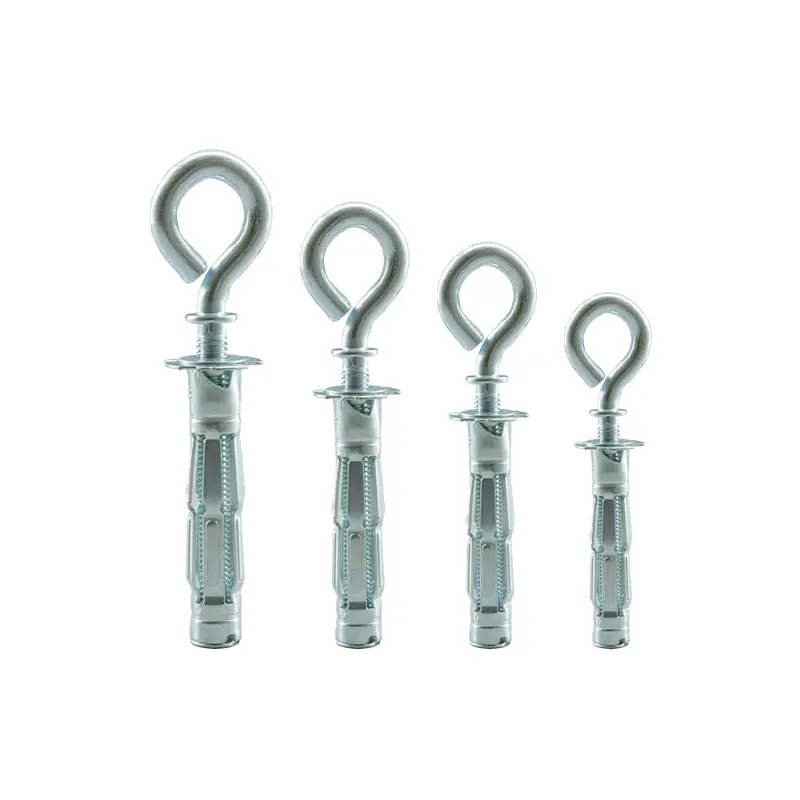
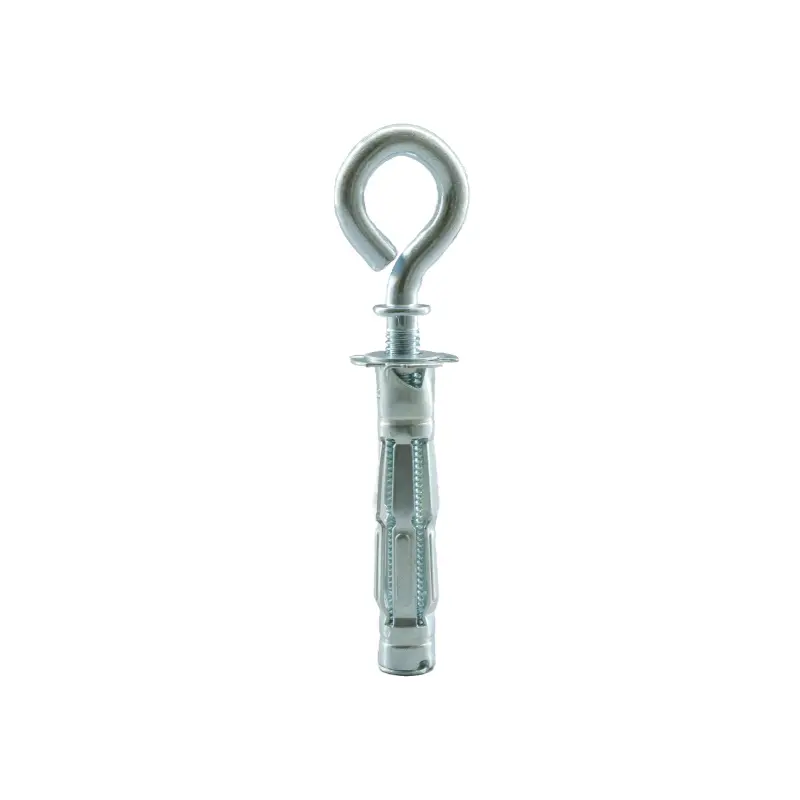
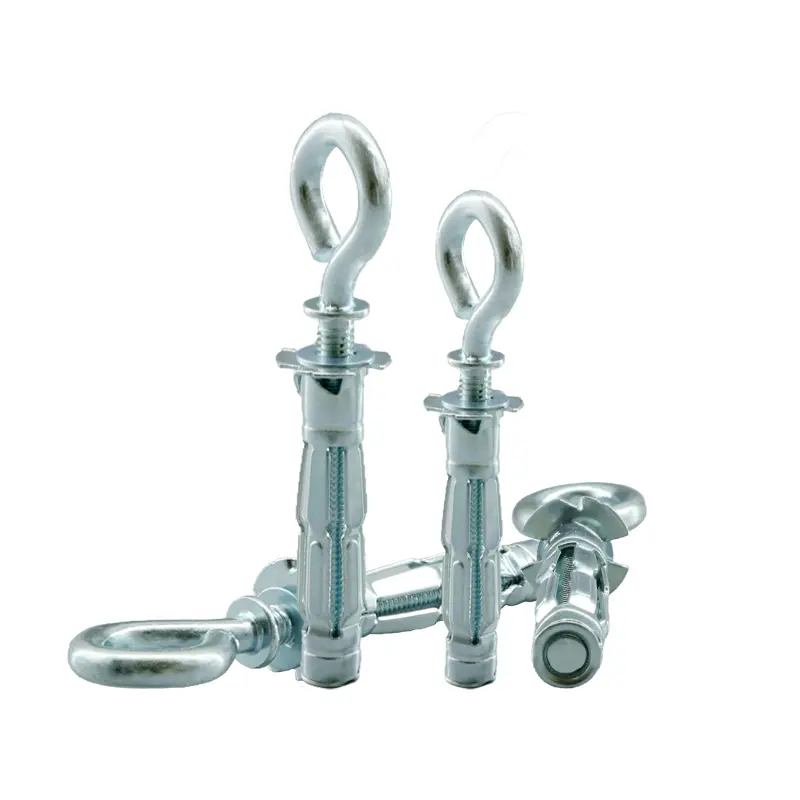
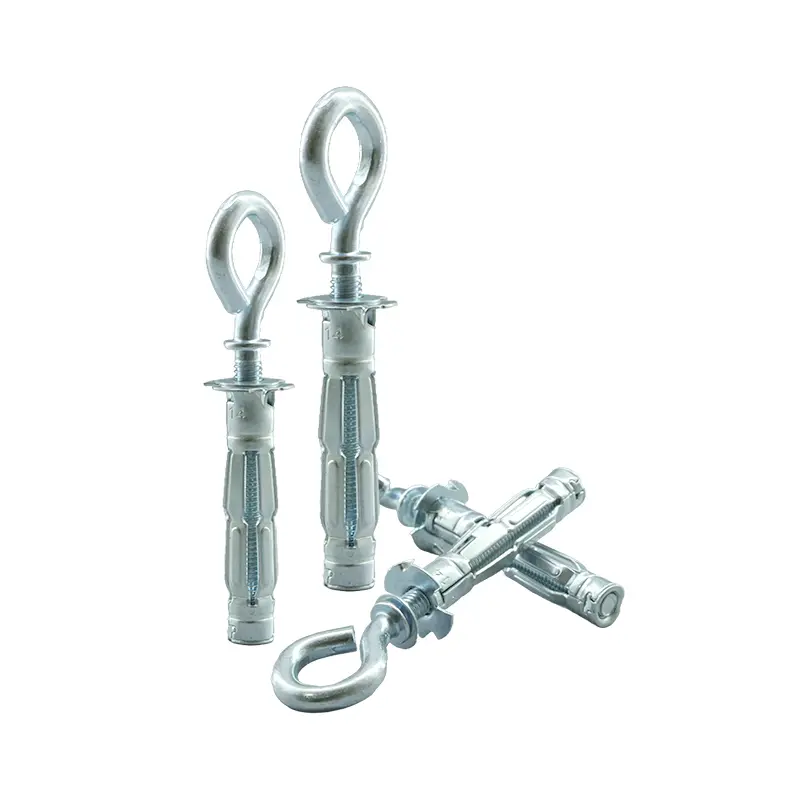
The Duojia Hollow Wall Anchor with an integrated Eye Bolt is a specialized fastener designed to create a strong and reliable attachment point for hanging and suspension applications on hollow surfaces like drywall, plasterboard, and hollow-core doors. Manufactured from high-grade carbon steel and finished with a protective White Zinc Plating, this anchor offers excellent durability and corrosion resistance for indoor use. Its robust expansion mechanism combined with a built-in closed loop makes it an all-in-one solution for securely attaching wires, chains, ropes, or S-hooks.

Clarification on Anchor Type and Variations

This product is a specific variation of the classic hollow wall anchor (often referred to as a “Molly Bolt”). Instead of a standard removable screw, this version comes pre-assembled with a permanent, closed-loop eye bolt. This design is ideal for applications where a secure loop is needed for suspension or attachment.

As indicated by the “Related Products” section on the webpage, the same expanding anchor body is also available from the manufacturer with different bolt types to suit various needs, including:

  • L-Bolt (Hook Bolt): For direct hanging of items.
  • Hex Head Bolt: For high-torque installation with a wrench.
  • Cross Head (Phillips/Slotted) Bolt: For standard screwdriver installation.

Product Mechanism and Installation

This anchor utilizes a proven expansion mechanism to create a secure hold by clamping onto the back of the hollow wall material.

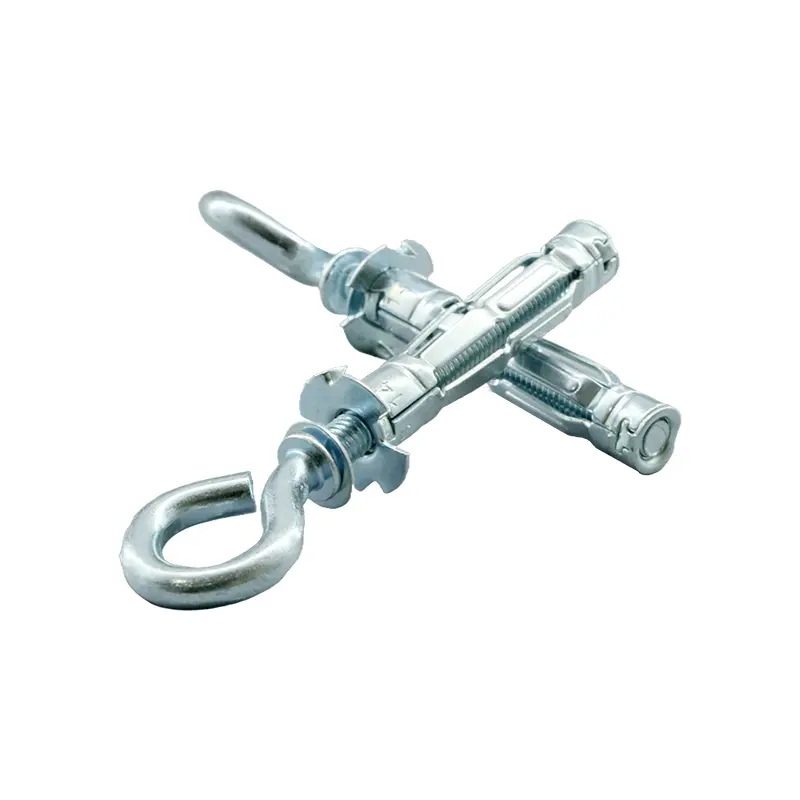
  • Mechanism: The anchor consists of a cylindrical, slotted sleeve with an integrated flange and a pre-inserted eye bolt. The flange is equipped with small teeth on its underside that are designed to bite into the wall surface, preventing the anchor from spinning during installation. When the eye bolt is turned, it pulls the threaded section of the sleeve forward, causing the slotted body to collapse and expand into a set of “legs” that clamp firmly against the back of the wall.
  • Installation Process:
    1. Drill a hole in the wall to the diameter specified for the anchor size.
    2. Gently tap the entire anchor assembly into the hole until the flange is flush with the wall surface. The anti-rotation teeth will grip the wall.
    3. Begin tightening the eye bolt by turning it clockwise. This can be done by hand initially.
    4. To apply sufficient torque to set the anchor, insert a screwdriver or a similar rod through the eye bolt to use as a lever. Continue turning until you feel firm resistance, which indicates the anchor has fully expanded and is securely set behind the wall.
    5. The eye bolt is now a permanent, secure attachment point ready for use.

Product Parameters

Parameter ItemSpecification Description
Product NameHollow Wall Anchor Eye Bolt
Brand NameDuojia
Place of OriginHebei, China
MaterialCarbon Steel
Surface TreatmentWhite Zinc Plated
Available SizesM6-M20
Strength Grades4.8, 8.8, 10.9, 12.9, A2-70, A4-70, A4-80 etc.
Measurement SystemMetric
ApplicationHeavy Industry, General Industry, Interior Decoration
CertificationsISO9001, ISO14001, ISO45001, SGS
Packaging OptionsSmall Pack + Carton + Pallet; Bag/Box with Pallet

Key Features

  • Integrated Attachment Loop: The eye bolt provides a ready-to-use closed loop for securely attaching wires, ropes, chains, and hooks.
  • High Load Capacity: The expansion mechanism distributes the load over a wide area behind the wall, providing a much stronger hold than simple screws or plastic anchors.
  • Durable Construction: Made from high-grade carbon steel with a corrosion-resistant white zinc finish.
  • Anti-Rotation Flange: The toothed flange prevents the anchor body from spinning in the hole during tightening, ensuring a proper and secure set.
  • Secure and Permanent: Once installed, the anchor provides a reliable and permanent fixing point for suspension tasks.

Common Applications

This anchor is the perfect solution for suspending items from ceilings or walls made of drywall and other hollow materials.

  • Hanging lightweight chandeliers or pendant lights.
  • Suspending potted plants and other decorative items.
  • Creating attachment points for indoor clotheslines or drying racks.
  • Securing guide wires for indoor trellises or decorative displays.
  • Attaching safety chains or tethers for items like baby gates or room dividers.